

 English
 Português
 لالعربية
 Русский
 Bahasa Indonesia
 Français
 Türkçe
 Bahasa Melayu


100GBASE QSFP28 DWDM PAM4 Módulo Óptico
¿Qué hace que YRTFIBER 100G DWDM QSFP28 sea la elección correcta?
Los transceptores YRTFIBER 100G DWDM QSFP28 PAM4 convierten una señal eléctrica de 100G en una señal óptica DWDM de longitud de onda única para enlaces de alta capacidad sobre la infraestructura de multiplexación de división de longitud de onda existente. Diseñados para aplicaciones pasivas DWDM, los módulos soportan transmisión de hasta 80 km y están disponibles con conectores ópticos dúplex LC o compacto dúplex CS.
Cuando se integra en un enlace correctamente diseñado con multiplexores DWDM compatibles, amplificadores ópticos y compensación de dispersión, la solución puede soportar distancias de hasta 120 km. La planificación de longitud de onda personalizada, equipment-compatible la codificación de firmware y el etiquetado OEM están disponibles para redes de interconexión de centros de datos, metro, telecomunicaciones y proveedores de servicios.
100GBASE QSFP28 DWDM PAM4 Módulo Óptico Parámetros de especificación
- Parámetros de especificación
- CARACTERÍSTICAS ÓPTICAS
| Número De Parte | Tasa de datos | Longitud de onda | TX | Sensibilidad | Distancia | Conector | Temperatura | Hoja de datos |
| AE-QSFP28-D80-XX | 100G | DWDM | -1 ~ 4dBm | -12,5dBm | 80 KM | LC dúplex | 0 ~ 70C |  |
| AE-QSFP28-D80-XXXX | 100G | DWDM | -1 ~ 4dBm | -12,5dBm | 80 KM | LC dúplex | 0 ~ 70C | |
Estructura y Composición del Producto
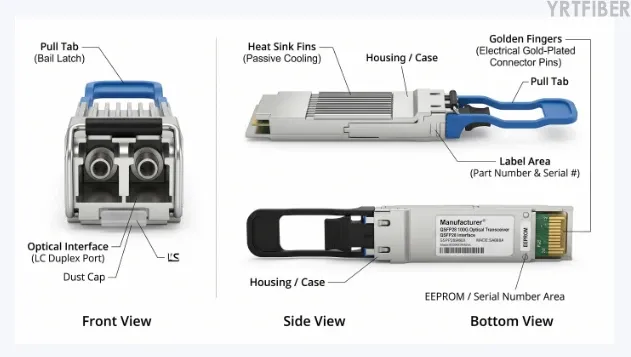
La carcasa compacta QSFP28 integra cuatro carriles eléctricos de clase 25G, procesamiento de señal PAM4, un wavelength-stabilized transmisor óptico DWDM, receptor óptico, circuito de monitoreo de diagnóstico digital y un conector host de alta velocidad. El módulo convierte la entrada eléctrica paralela en una longitud de onda óptica PAM4 de 100G para transmisión a través de una red DWDM.
Beneficios de 100GBASE QSFP28 DWDM PAM4 Módulo Óptico
Agregue más enlaces de 100G a la fibra existente
Cada transceptor lleva una señal PAM4 de 100G en una longitud de onda DWDM dedicada.
Múltiples longitudes de onda pueden compartir el mismo par de fibra a través de un multiplexor DWDM compatible, aumentando la capacidad total sin instalar un par de fibra separado por cada servicio de 100G.

Reducir la complejidad de la red de larga distancia
El módulo QSFP28 produce una señal óptica de 100G de longitud de onda única que se puede conectar directamente a la infraestructura DWDM pasiva compatible.
Este enfoque compacto puede reducir la necesidad de transpondedores separados en diseños de red compatibles y simplificar el espacio de bastidor, el cableado y la planificación de energía.

Admite conexiones de metro y de alcance extendido
El transceptor admite enlaces de hasta 80 km cuando se cumplen los límites de presupuesto óptico y dispersión.
Con equipo de amplificación EDFA y DCM correctamente seleccionado, un sistema DWDM diseñado puede extender la distancia total de enlace hasta 120 km.
Elija conectividad LC o CS que ahorra espacio
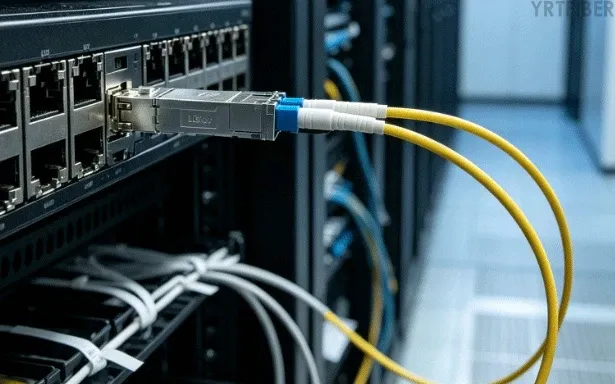
Duplex LC se adapta a sistemas de parches ópticos ampliamente desplegados, mientras que duplex CS proporciona una huella de conector más pequeña para paneles de alta densidad compatibles.
Las dos opciones de interfaz ayudan a los diseñadores de redes a hacer coincidir el módulo con el cableado existente o los requisitos de densidad futuros.
Simplificar la implementación de múltiples proveedores
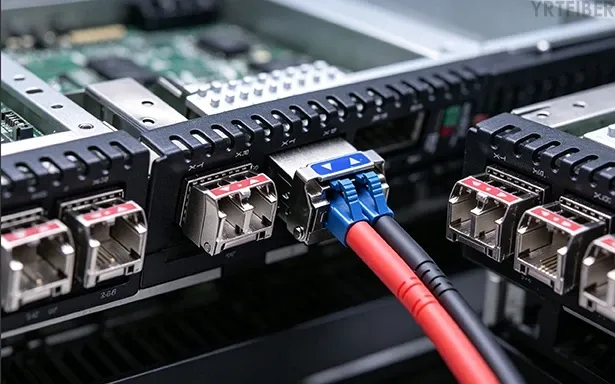
La codificación de firmware personalizada se puede preparar para conmutadores, enrutadores y plataformas de transporte específicos.
La codificación correcta ayuda al equipo host a reconocer el módulo y reduce los problemas de compatibilidad durante la instalación y el reemplazo.
Aplicaciones de Ingeniería 100GBASE QSFP28 DWDM PAM4 Módulo Óptico
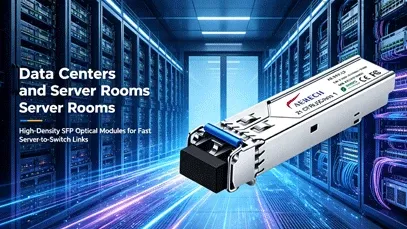
Interconexión del centro de datos
Transporte múltiples conexiones de 100G entre sitios de centros de datos sobre un par de fibra DWDM compartido.
El factor de forma QSFP28 ayuda a reducir la huella del equipo en conmutadores y enrutadores compatibles.
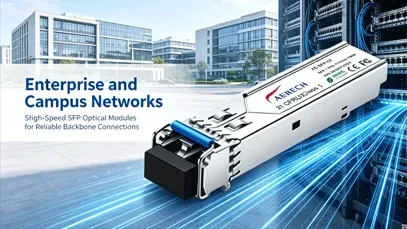
Metro y redes regionales
Implemente enlaces 100G basados en longitud de onda entre sitios de agregación, oficinas centrales y nodos de red metropolitana.
Elija el canal adecuado, el plan de amplificación y la estrategia de dispersión según la ruta.
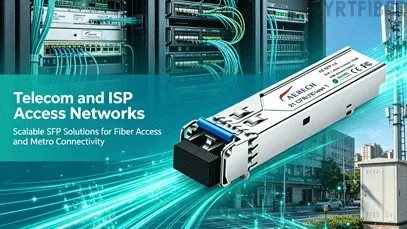
Expansión de la columna vertebral de las telecomunicaciones y los ISP
Agregue servicios de 100G a la infraestructura DWDM adecuada sin dedicar un par de fibra separado a cada conexión.
Múltiples longitudes de onda permiten un crecimiento escalable de la capacidad a medida que aumenta la demanda de tráfico.

Enlaces Punto a Punto de Alcance Extendido
Construya enlaces de hasta 80 km dentro del presupuesto del módulo admitido o extienda un sistema correctamente diseñado hasta 120 km con equipo EDFA y DCM compatible.
Realizar un cálculo completo de potencia óptica y dispersión antes de la instalación.
Envío y embalaje
Each 100G DWDM QSFP28 transceiver is protected by anti-static packaging and labeled with its model, wavelength channel, connector, reach and compatibility information. Protective inner packing and reinforced export cartons help prevent electrostatic, impact and moisture damage during storage and international transportation.
Individual anti-static protective packaging
DWDM channel, wavelength, connector and compatibility identification
Protective inner tray or box and reinforced export carton
OEM label, serial number, barcode and packaging customization
Express, air-freight and sea-freight delivery support
Comparación de productos:
100G DWDM QSFP28 LC vs CS and 80km vs 120km Solutions
| Comparison | 80km Duplex LC | 80km Duplex CS | Engineered System up to 120km |
|---|---|---|---|
| Typical Module | AE-QSFP28-D80-XX | AE-QSFP28-D80-XXXX | Compatible 100G DWDM QSFP28 PAM4 |
| Data Rate | 100Gbps | 100Gbps | 100Gbps per wavelength |
| Optical Signal | Single-wavelength DWDM PAM4 | Single-wavelength DWDM PAM4 | Single-wavelength DWDM PAM4 |
| Connector | Duplex LC | Duplex CS | LC or CS according to the selected module |
| Nominal Reach | Up to 80km | Up to 80km | Up to 120km for a complete engineered link |
| External EDFA | Depends on link budget | Depends on link budget | Required as determined by link design |
| External DCM | Depends on accumulated dispersion | Depends on accumulated dispersion | Required as determined by link design |
| Best For | Standard-density LC infrastructure | High-density CS patching | Extended metro and regional connections |
100GBASE QSFP28 DWDM PAM4 Módulo Óptico Guía de selección
How to Select a 100G DWDM QSFP28 Transceiver
Confirm the host interface: Verify that the switch, router or transport platform supports 100G QSFP28 PAM4 DWDM operation.
Choose the DWDM channel: Assign a matching wavelength for each end of the point-to-point link and coordinate all channels with the DWDM multiplexer plan.
Select the connector: Choose duplex LC for common optical patching systems or duplex CS for compatible high-density infrastructure.
Measure the route: Confirm the fiber length, fiber attenuation, connector loss, splice loss and passive DWDM insertion loss.
Calculate the optical budget: Compare total link loss with transmitter power, receiver sensitivity and receiver overload limits while retaining an engineering margin.
Check chromatic dispersion: Calculate accumulated dispersion at the selected wavelength and add a suitable DCM when the route exceeds the supported dispersion tolerance.
Plan optical amplification: For extended links, position compatible EDFA equipment according to the link design and verify that amplifier noise and output power remain acceptable.
Confirm equipment compatibility: Provide the host manufacturer, exact model and software version for the correct firmware coding.
Check the environment: The referenced modules are specified for commercial operation from 0 to 70°C.
How to Install a 100G DWDM QSFP28 Transceiver
Wear an anti-static wrist strap and verify the host compatibility, DWDM wavelength, connector type and link design before installation. Confirm that the transceivers at both ends use the same assigned channel, then keep the module latch closed, align the QSFP28 module with the port and gently push it into place until fully seated. Do not touch the optical interface or force the module into the host port.
Clean and inspect the duplex LC or CS connectors before connecting the transmit and receive fibers through the correct DWDM multiplexer ports. Install any specified EDFA, DCM and optical attenuator according to the approved link plan. After power-up, verify host recognition, wavelength routing, transmit and receive optical power, FEC status, link stability and error counters. Keep dust caps installed whenever a module or fiber connector is disconnected.
Descarga el catálogo de productos de YRTFIBER
Disparo Real De Fábrica
Preguntas Frecuentes y Consulta Rápida
100GBASE QSFP28 DWDM PAM4 Módulo Óptico FAQ
What is a 100G DWDM QSFP28 PAM4 transceiver?
It is a hot-pluggable optical module that converts a 100G electrical interface into a single-wavelength PAM4 optical signal for transmission through a compatible DWDM network.
What is the maximum transmission distance?
The referenced transceiver models support links up to 80km when the optical budget and dispersion conditions are satisfied. A complete system can reach up to 120km when correctly engineered with compatible EDFA and DCM equipment.
Does the transceiver alone provide a 120km link?
No. The 120km figure applies to a complete engineered optical system. It normally requires suitable amplification, dispersion compensation, passive DWDM components and a verified end-to-end link budget.
What is the difference between the LC and CS versions?
Both versions carry the same type of 100G DWDM PAM4 signal. Duplex LC is widely used in existing fiber systems, while duplex CS offers a smaller connector footprint for compatible high-density patching equipment.
Can multiple 100G links share one fiber pair?
Yes. Each link uses an assigned DWDM wavelength, and compatible DWDM multiplexers combine multiple wavelengths onto the same fiber pair. The channel plan and optical budget must be checked for the complete system.
Are EDFA and DCM always required?
No. Their use depends on fiber length, total insertion loss, accumulated chromatic dispersion and the required system margin. An optical-link calculation must determine whether amplification or dispersion compensation is needed.
Can the module be coded for my switch or router?
Yes. Custom compatibility coding is available. Provide the equipment manufacturer, exact model and software or firmware version before ordering.
Can a long-reach DWDM module be used on a short link?
Only after checking the receiver overload limit and total link loss. An optical attenuator may be required when the received power is too high.
Why does the 100G DWDM link remain down after installation?
Check host compatibility, port configuration, FEC requirements, wavelength assignment, MUX/DEMUX channel routing, LC or CS transmit/receive direction, connector cleanliness, optical power, EDFA direction and DCM placement.
What information is required for a quotation?
Please provide the quantity, host equipment brand and model, DWDM channel or wavelength, connector type, fiber distance, passive component losses, EDFA and DCM requirements, operating temperature, OEM labeling needs and delivery destination.
Envíe Su Consulta
Rellene el siguiente formulario y nos pondremos en contacto con usted en un plazo de 24 horas.


