

 English
 Español
 Português
 لالعربية
 Русский
 Bahasa Indonesia
 Türkçe
 Bahasa Melayu


Module optique 100GBASE QSFP28 DWDM PAM4
Qu'est-ce qui fait de YRTFIBER 100G DWDM QSFP28 le bon choix?
Les émetteurs-récepteurs YRTFIBER 100G DWDM QSFP28 PAM4 convertissent un signal électrique 100G en un signal optique DWDM à une seule longueur d'onde pour des liaisons haute capacité sur l'infrastructure de multiplexage par répartition en longueur d'onde existante. Conçus pour les applications DWDM passives, les modules prennent en charge une transmission jusqu'à 80 km et sont disponibles avec des connecteurs optiques duplex LC ou duplex CS compacts.
Lorsqu'elle est intégrée dans une liaison correctement conçue avec des multiplexeurs DWDM compatibles, des amplificateurs optiques et une compensation de dispersion, la solution peut prendre en charge des distances allant jusqu'à 120 km. La planification personnalisée de la longueur d'onde, equipment-compatible le codage du micrologiciel et l'étiquetage OEM sont disponibles pour les réseaux d'interconnexion de centres de données, de métro, de télécommunications et de fournisseurs de services.
Module optique 100GBASE QSFP28 DWDM PAM4 Paramètres de spécification
- Paramètres de spécification
- CARACTÉRISTIQUES OPTIQUES
| Numéro de pièce | Débit de données | Longueur d'onde | TX | Sensibilité | Distance | Connecteur | Température | Fiche technique |
| AE-QSFP28-D80-XX | 100G | DWDM | -1 ~ 4dBm | -12,5dBm | 80KM | Duplex LC | 0 ~ 70C |  |
| AE-QSFP28-D80-XXXX | 100G | DWDM | -1 ~ 4dBm | -12,5dBm | 80KM | Duplex LC | 0 ~ 70C | |
Structure et composition du produit
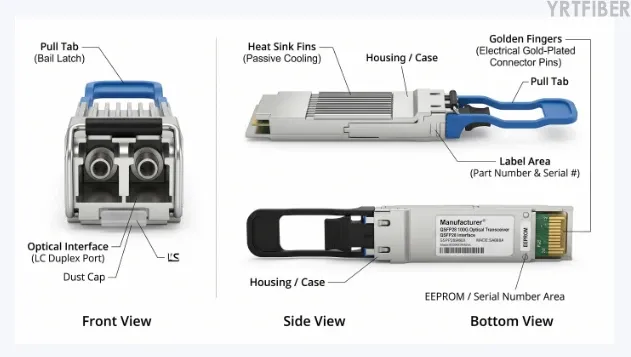
Le boîtier compact QSFP28 intègre quatre voies électriques de classe 25G, un traitement du signal PAM4, un wavelength-stabilized émetteur optique DWDM, un récepteur optique, des circuits de surveillance de diagnostic numérique et un connecteur hôte haute vitesse. Le module convertit l'entrée électrique parallèle en une longueur d'onde optique PAM4 100G pour une transmission via un réseau DWDM.
Avantages de Module optique 100GBASE QSFP28 DWDM PAM4
Ajoutez plus de liens 100G à la fibre existante
Chaque émetteur-récepteur transporte un signal PAM4 100G sur une longueur d'onde DWDM dédiée.
Plusieurs longueurs d'onde peuvent partager la même paire de fibres via un multiplexeur DWDM compatible, augmentant la capacité totale sans installer une paire de fibres séparée pour chaque service 100G.

Réduire la complexité du réseau long-courrier
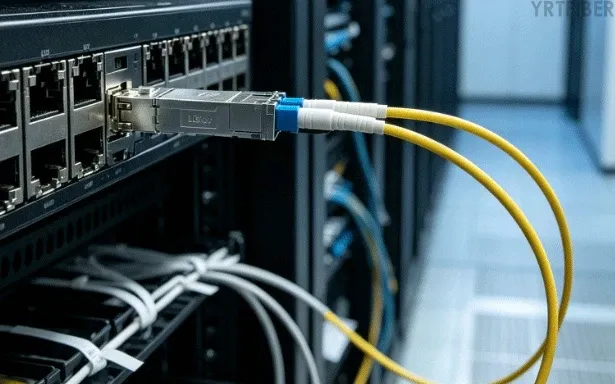
Le module QSFP28 produit un signal optique 100G à une seule longueur d'onde qui peut se connecter directement à l'infrastructure DWDM passive prise en charge.
Cette approche compacte peut réduire le besoin de transpondeurs séparés dans les conceptions de réseau compatibles et simplifier l'espace rack, le câblage et la planification de l'alimentation.

Prise en charge des connexions métropolitaines et à portée étendue
L'émetteur-récepteur prend en charge des liaisons jusqu'à 80 km lorsque le budget optique et les limites de dispersion sont satisfaits.
Avec un équipement d'amplification EDFA et DCM correctement sélectionné, un système DWDM conçu peut étendre la distance totale de liaison jusqu'à 120 km.
Choisissez LC ou Connectivité CS peu encombrante
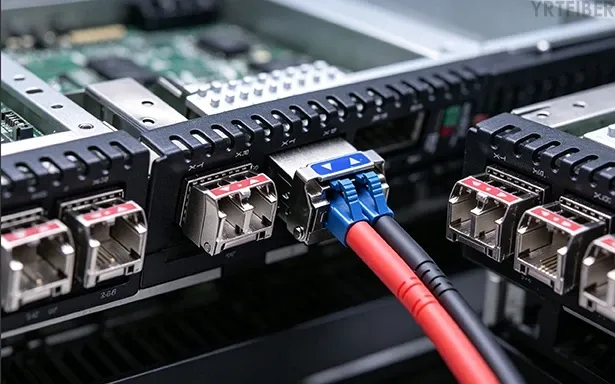
Duplex LC s'adapte aux systèmes de correction optique largement déployés, tandis que le duplex CS offre une empreinte de connecteur plus petite pour les panneaux haute densité compatibles.
Les deux options d'interface aident les concepteurs de réseaux à adapter le module au câblage existant ou aux exigences de densité futures.
Simplifier le déploiement multi-fournisseurs
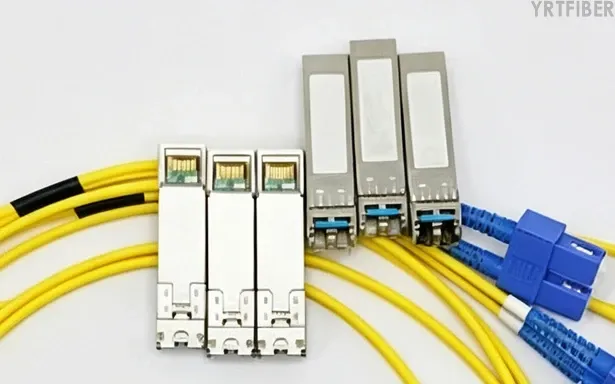
Un codage de micrologiciel personnalisé peut être préparé pour des commutateurs, des routeurs et des plates-formes de transport spécifiés.
Un codage correct aide l'équipement hôte à reconnaître le module et réduit les problèmes de compatibilité pendant l'installation et le remplacement.
Applications d'ingénierie Module optique 100GBASE QSFP28 DWDM PAM4
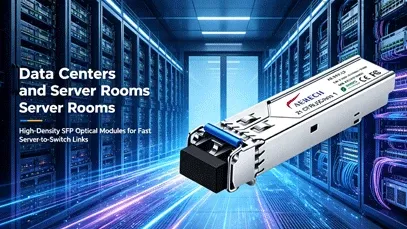
Interconnexion des centres de données
Transportez plusieurs connexions 100G entre les sites de centres de données sur une paire de fibres DWDM partagée.
Le facteur de forme QSFP28 aide à réduire l'encombrement de l'équipement dans les commutateurs et routeurs compatibles.
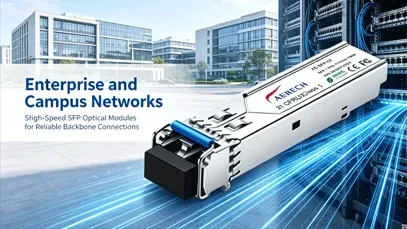
Métro et réseaux régionaux
Déployez des liaisons 100G basées sur la longueur d'onde entre les sites d'agrégation, les bureaux centraux et les nœuds du réseau métropolitain.
Choisissez le canal, le plan d'amplification et la stratégie de dispersion appropriés en fonction de l'itinéraire.
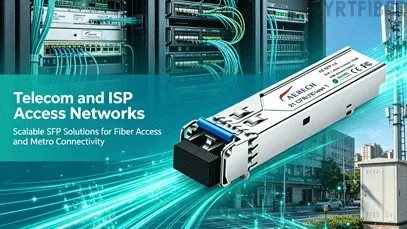
Expansion de la dorsale des télécommunications et des FAI
Ajoutez des services 100G à une infrastructure DWDM appropriée sans dédier une paire de fibres distincte à chaque connexion.
Plusieurs longueurs d'onde permettent une croissance évolutive de la capacité à mesure que la demande de trafic augmente.

Liens point à point à portée étendue
Créez des liens jusqu'à 80 km dans les limites du budget du module pris en charge ou étendez un système correctement conçu jusqu'à 120 km avec des équipements EDFA et DCM compatibles.
Effectuez un calcul complet de la puissance optique et de la dispersion avant l'installation.
Expédition et emballage
Each 100G DWDM QSFP28 transceiver is protected by anti-static packaging and labeled with its model, wavelength channel, connector, reach and compatibility information. Protective inner packing and reinforced export cartons help prevent electrostatic, impact and moisture damage during storage and international transportation.
Individual anti-static protective packaging
DWDM channel, wavelength, connector and compatibility identification
Protective inner tray or box and reinforced export carton
OEM label, serial number, barcode and packaging customization
Express, air-freight and sea-freight delivery support
Comparaison des produits:
100G DWDM QSFP28 LC vs CS and 80km vs 120km Solutions
| Comparison | 80km Duplex LC | 80km Duplex CS | Engineered System up to 120km |
|---|---|---|---|
| Typical Module | AE-QSFP28-D80-XX | AE-QSFP28-D80-XXXX | Compatible 100G DWDM QSFP28 PAM4 |
| Data Rate | 100Gbps | 100Gbps | 100Gbps per wavelength |
| Optical Signal | Single-wavelength DWDM PAM4 | Single-wavelength DWDM PAM4 | Single-wavelength DWDM PAM4 |
| Connector | Duplex LC | Duplex CS | LC or CS according to the selected module |
| Nominal Reach | Up to 80km | Up to 80km | Up to 120km for a complete engineered link |
| External EDFA | Depends on link budget | Depends on link budget | Required as determined by link design |
| External DCM | Depends on accumulated dispersion | Depends on accumulated dispersion | Required as determined by link design |
| Best For | Standard-density LC infrastructure | High-density CS patching | Extended metro and regional connections |
Module optique 100GBASE QSFP28 DWDM PAM4 Guide de sélection
How to Select a 100G DWDM QSFP28 Transceiver
Confirm the host interface: Verify that the switch, router or transport platform supports 100G QSFP28 PAM4 DWDM operation.
Choose the DWDM channel: Assign a matching wavelength for each end of the point-to-point link and coordinate all channels with the DWDM multiplexer plan.
Select the connector: Choose duplex LC for common optical patching systems or duplex CS for compatible high-density infrastructure.
Measure the route: Confirm the fiber length, fiber attenuation, connector loss, splice loss and passive DWDM insertion loss.
Calculate the optical budget: Compare total link loss with transmitter power, receiver sensitivity and receiver overload limits while retaining an engineering margin.
Check chromatic dispersion: Calculate accumulated dispersion at the selected wavelength and add a suitable DCM when the route exceeds the supported dispersion tolerance.
Plan optical amplification: For extended links, position compatible EDFA equipment according to the link design and verify that amplifier noise and output power remain acceptable.
Confirm equipment compatibility: Provide the host manufacturer, exact model and software version for the correct firmware coding.
Check the environment: The referenced modules are specified for commercial operation from 0 to 70°C.
How to Install a 100G DWDM QSFP28 Transceiver
Wear an anti-static wrist strap and verify the host compatibility, DWDM wavelength, connector type and link design before installation. Confirm that the transceivers at both ends use the same assigned channel, then keep the module latch closed, align the QSFP28 module with the port and gently push it into place until fully seated. Do not touch the optical interface or force the module into the host port.
Clean and inspect the duplex LC or CS connectors before connecting the transmit and receive fibers through the correct DWDM multiplexer ports. Install any specified EDFA, DCM and optical attenuator according to the approved link plan. After power-up, verify host recognition, wavelength routing, transmit and receive optical power, FEC status, link stability and error counters. Keep dust caps installed whenever a module or fiber connector is disconnected.
Télécharger le catalogue de produits YRTFIBER
Prise de vue réelle d'usine
Foire aux questions et enquête rapide
Module optique 100GBASE QSFP28 DWDM PAM4 FAQ
What is a 100G DWDM QSFP28 PAM4 transceiver?
It is a hot-pluggable optical module that converts a 100G electrical interface into a single-wavelength PAM4 optical signal for transmission through a compatible DWDM network.
What is the maximum transmission distance?
The referenced transceiver models support links up to 80km when the optical budget and dispersion conditions are satisfied. A complete system can reach up to 120km when correctly engineered with compatible EDFA and DCM equipment.
Does the transceiver alone provide a 120km link?
No. The 120km figure applies to a complete engineered optical system. It normally requires suitable amplification, dispersion compensation, passive DWDM components and a verified end-to-end link budget.
What is the difference between the LC and CS versions?
Both versions carry the same type of 100G DWDM PAM4 signal. Duplex LC is widely used in existing fiber systems, while duplex CS offers a smaller connector footprint for compatible high-density patching equipment.
Can multiple 100G links share one fiber pair?
Yes. Each link uses an assigned DWDM wavelength, and compatible DWDM multiplexers combine multiple wavelengths onto the same fiber pair. The channel plan and optical budget must be checked for the complete system.
Are EDFA and DCM always required?
No. Their use depends on fiber length, total insertion loss, accumulated chromatic dispersion and the required system margin. An optical-link calculation must determine whether amplification or dispersion compensation is needed.
Can the module be coded for my switch or router?
Yes. Custom compatibility coding is available. Provide the equipment manufacturer, exact model and software or firmware version before ordering.
Can a long-reach DWDM module be used on a short link?
Only after checking the receiver overload limit and total link loss. An optical attenuator may be required when the received power is too high.
Why does the 100G DWDM link remain down after installation?
Check host compatibility, port configuration, FEC requirements, wavelength assignment, MUX/DEMUX channel routing, LC or CS transmit/receive direction, connector cleanliness, optical power, EDFA direction and DCM placement.
What information is required for a quotation?
Please provide the quantity, host equipment brand and model, DWDM channel or wavelength, connector type, fiber distance, passive component losses, EDFA and DCM requirements, operating temperature, OEM labeling needs and delivery destination.
Envoyez votre demande
Remplissez le formulaire ci-dessous et nous vous répondrons dans les 24 heures.


