

 English
 Español
 Português
 لالعربية
 Русский
 Français
 Türkçe
 Bahasa Melayu


100GBASE QSFP28 DWDM Modul Optik PAM4
Apa yang Membuat YRTFIBER 100G DWDM QSFP28 menjadi Pilihan yang Tepat?
Transceiver YRTFIBER 100G DWDM QSFP28 PAM4 mengubah sinyal listrik 100G menjadi sinyal optik DWDM panjang gelombang tunggal untuk tautan berkapasitas tinggi di atas infrastruktur multiplexing pembagian panjang gelombang yang ada. Dirancang untuk aplikasi DWDM pasif, modul mendukung transmisi hingga 80km dan tersedia dengan konektor optik LC dupleks atau CS dupleks kompak.
Ketika diintegrasikan ke dalam tautan yang direkayasa dengan benar dengan multiplexers DWDM yang kompatibel, amplifier optik dan kompensasi dispersi, solusi dapat mendukung jarak hingga 120km. Perencanaan panjang gelombang khusus, pengkodean firmware equipment-compatible dan pelabelan OEM tersedia untuk jaringan interkoneksi pusat data, metro, telekomunikasi, dan penyedia layanan.
100GBASE QSFP28 DWDM Modul Optik PAM4 Spesifikasi parameter
- Spesifikasi parameter
- KARAKTERISTIK OPTIK
| Nomor bagian | Tingkat Data | Panjang gelombang | TX | Sensitivitas | Jarak | Konektor | Suhu | Lembar Data |
| AE-QSFP28-D80-XX | 100G | DWDM | -1 ~ 4dBm | -12.5dBm | 80KM | Duplex LC | 0 ~ 70C |  |
| AE-QSFP28-D80-XXXX | 100G | DWDM | -1 ~ 4dBm | -12.5dBm | 80KM | Duplex LC | 0 ~ 70C | |
Struktur & Komposisi Produk
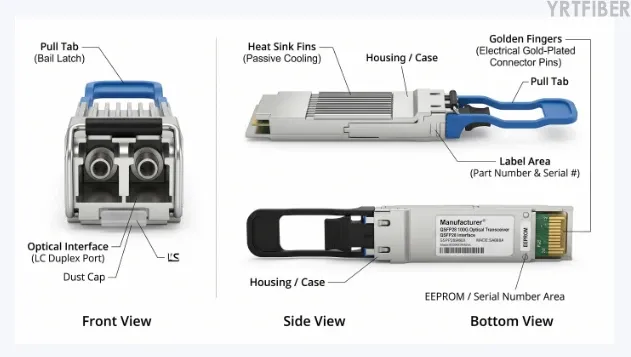
Perumahan QSFP28 kompak mengintegrasikan empat jalur listrik kelas 25G, pemrosesan sinyal PAM4, pemancar optik DWDM wavelength-stabilized , penerima optik, sirkuit pemantauan diagnostik digital dan konektor host berkecepatan tinggi. Modul mengubah input listrik paralel menjadi satu panjang gelombang optik 100G PAM4 untuk transmisi melalui jaringan DWDM.
Manfaat dari 100GBASE QSFP28 DWDM Modul Optik PAM4
Tambahkan Lebih Banyak Tautan 100G ke Serat yang Ada
Setiap transceiver membawa sinyal 100G PAM4 pada panjang gelombang DWDM khusus.
Beberapa panjang gelombang dapat berbagi pasangan serat yang sama melalui multiplexer DWDM yang kompatibel, meningkatkan kapasitas total tanpa memasang pasangan serat terpisah untuk setiap layanan 100G.

Kurangi Kompleksitas Jaringan Jarak Jauh
Modul QSFP28 menghasilkan sinyal optik 100G panjang gelombang tunggal yang dapat terhubung langsung ke infrastruktur DWDM pasif yang didukung.
Pendekatan ringkas ini dapat mengurangi kebutuhan akan transponder terpisah dalam desain jaringan yang kompatibel dan menyederhanakan ruang rak, pemasangan kabel, dan perencanaan daya.

Mendukung Koneksi Metro dan Jangkauan Diperpanjang
Transceiver mendukung tautan hingga 80km ketika anggaran optik dan batas dispersi terpenuhi.
Dengan amplifikasi EDFA dan peralatan DCM yang dipilih dengan benar, sistem DWDM yang direkayasa dapat memperpanjang total jarak tautan hingga 120km.
Pilih Konektivitas LC atau Space-Saving CS
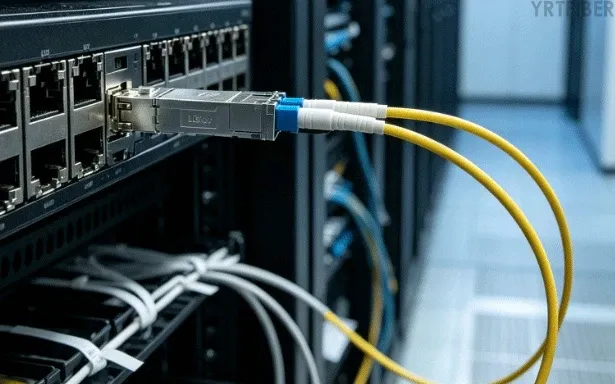
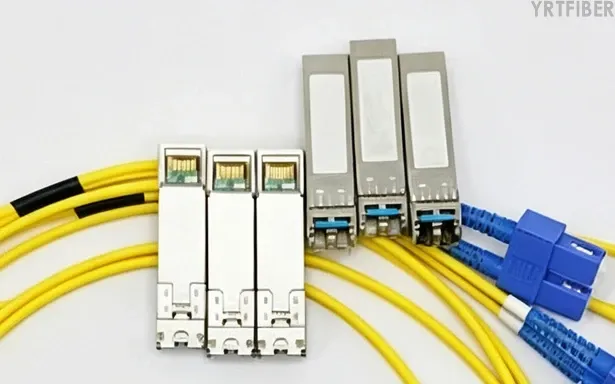
Duplex LC cocok untuk sistem penambalan optik yang banyak digunakan, sementara duplex CS menyediakan jejak konektor yang lebih kecil untuk panel kepadatan tinggi yang kompatibel.
Dua opsi antarmuka membantu desainer jaringan mencocokkan modul dengan kabel yang ada atau persyaratan kepadatan di masa depan.
Sederhanakan Penyebaran Multi-Vendor
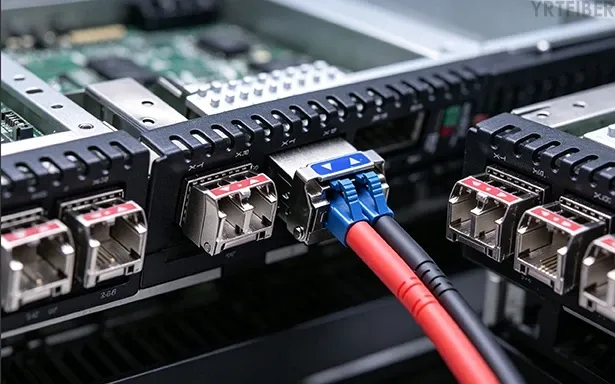
Pengkodean firmware khusus dapat disiapkan untuk sakelar, router, dan platform transportasi tertentu.
Pengkodean yang benar membantu peralatan host mengenali modul dan mengurangi masalah kompatibilitas selama pemasangan dan penggantian.
Aplikasi Rekayasa 100GBASE QSFP28 DWDM Modul Optik PAM4
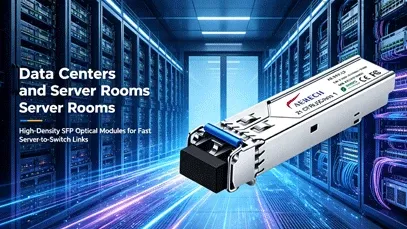
Interkoneksi Pusat Data
Mengangkut beberapa koneksi 100G antara situs pusat data melalui pasangan serat DWDM bersama.
Faktor bentuk QSFP28 membantu mengurangi jejak peralatan dalam sakelar dan router yang kompatibel.
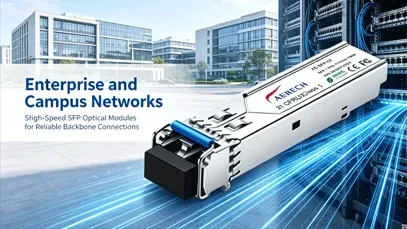
Jaringan Metro dan Regional
Menyebarkan hubungan 100G berbasis panjang gelombang antara situs agregasi, kantor pusat dan simpul jaringan metropolitan.
Pilih saluran yang sesuai, rencana amplifikasi dan strategi dispersi sesuai rute.
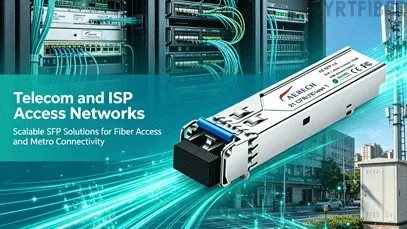
Ekspansi Backbone Telecom dan ISP
Tambahkan layanan 100G ke infrastruktur DWDM yang sesuai tanpa mendedikasikan pasangan serat terpisah untuk setiap koneksi.
Beberapa panjang gelombang memungkinkan pertumbuhan kapasitas yang dapat diskalakan seiring dengan meningkatnya permintaan lalu lintas.

Tautan Titik-ke-Titik yang Diperluas
Bangun tautan hingga 80km dalam anggaran modul yang didukung atau perluas sistem yang direkayasa dengan benar hingga 120km dengan peralatan EDFA dan DCM yang kompatibel.
Lakukan perhitungan daya optik dan dispersi lengkap sebelum pemasangan.
Pengiriman & Kemasan
Each 100G DWDM QSFP28 transceiver is protected by anti-static packaging and labeled with its model, wavelength channel, connector, reach and compatibility information. Protective inner packing and reinforced export cartons help prevent electrostatic, impact and moisture damage during storage and international transportation.
Individual anti-static protective packaging
DWDM channel, wavelength, connector and compatibility identification
Protective inner tray or box and reinforced export carton
OEM label, serial number, barcode and packaging customization
Express, air-freight and sea-freight delivery support
Perbandingan Produk:
100G DWDM QSFP28 LC vs CS and 80km vs 120km Solutions
| Comparison | 80km Duplex LC | 80km Duplex CS | Engineered System up to 120km |
|---|---|---|---|
| Typical Module | AE-QSFP28-D80-XX | AE-QSFP28-D80-XXXX | Compatible 100G DWDM QSFP28 PAM4 |
| Data Rate | 100Gbps | 100Gbps | 100Gbps per wavelength |
| Optical Signal | Single-wavelength DWDM PAM4 | Single-wavelength DWDM PAM4 | Single-wavelength DWDM PAM4 |
| Connector | Duplex LC | Duplex CS | LC or CS according to the selected module |
| Nominal Reach | Up to 80km | Up to 80km | Up to 120km for a complete engineered link |
| External EDFA | Depends on link budget | Depends on link budget | Required as determined by link design |
| External DCM | Depends on accumulated dispersion | Depends on accumulated dispersion | Required as determined by link design |
| Best For | Standard-density LC infrastructure | High-density CS patching | Extended metro and regional connections |
100GBASE QSFP28 DWDM Modul Optik PAM4 Panduan Seleksi
How to Select a 100G DWDM QSFP28 Transceiver
Confirm the host interface: Verify that the switch, router or transport platform supports 100G QSFP28 PAM4 DWDM operation.
Choose the DWDM channel: Assign a matching wavelength for each end of the point-to-point link and coordinate all channels with the DWDM multiplexer plan.
Select the connector: Choose duplex LC for common optical patching systems or duplex CS for compatible high-density infrastructure.
Measure the route: Confirm the fiber length, fiber attenuation, connector loss, splice loss and passive DWDM insertion loss.
Calculate the optical budget: Compare total link loss with transmitter power, receiver sensitivity and receiver overload limits while retaining an engineering margin.
Check chromatic dispersion: Calculate accumulated dispersion at the selected wavelength and add a suitable DCM when the route exceeds the supported dispersion tolerance.
Plan optical amplification: For extended links, position compatible EDFA equipment according to the link design and verify that amplifier noise and output power remain acceptable.
Confirm equipment compatibility: Provide the host manufacturer, exact model and software version for the correct firmware coding.
Check the environment: The referenced modules are specified for commercial operation from 0 to 70°C.
How to Install a 100G DWDM QSFP28 Transceiver
Wear an anti-static wrist strap and verify the host compatibility, DWDM wavelength, connector type and link design before installation. Confirm that the transceivers at both ends use the same assigned channel, then keep the module latch closed, align the QSFP28 module with the port and gently push it into place until fully seated. Do not touch the optical interface or force the module into the host port.
Clean and inspect the duplex LC or CS connectors before connecting the transmit and receive fibers through the correct DWDM multiplexer ports. Install any specified EDFA, DCM and optical attenuator according to the approved link plan. After power-up, verify host recognition, wavelength routing, transmit and receive optical power, FEC status, link stability and error counters. Keep dust caps installed whenever a module or fiber connector is disconnected.
Unduh Katalog Produk YRTFIBER
Tembakan Nyata Pabrik
Pertanyaan yang Sering Diajukan & Pertanyaan Cepat
100GBASE QSFP28 DWDM Modul Optik PAM4 FAQ
What is a 100G DWDM QSFP28 PAM4 transceiver?
It is a hot-pluggable optical module that converts a 100G electrical interface into a single-wavelength PAM4 optical signal for transmission through a compatible DWDM network.
What is the maximum transmission distance?
The referenced transceiver models support links up to 80km when the optical budget and dispersion conditions are satisfied. A complete system can reach up to 120km when correctly engineered with compatible EDFA and DCM equipment.
Does the transceiver alone provide a 120km link?
No. The 120km figure applies to a complete engineered optical system. It normally requires suitable amplification, dispersion compensation, passive DWDM components and a verified end-to-end link budget.
What is the difference between the LC and CS versions?
Both versions carry the same type of 100G DWDM PAM4 signal. Duplex LC is widely used in existing fiber systems, while duplex CS offers a smaller connector footprint for compatible high-density patching equipment.
Can multiple 100G links share one fiber pair?
Yes. Each link uses an assigned DWDM wavelength, and compatible DWDM multiplexers combine multiple wavelengths onto the same fiber pair. The channel plan and optical budget must be checked for the complete system.
Are EDFA and DCM always required?
No. Their use depends on fiber length, total insertion loss, accumulated chromatic dispersion and the required system margin. An optical-link calculation must determine whether amplification or dispersion compensation is needed.
Can the module be coded for my switch or router?
Yes. Custom compatibility coding is available. Provide the equipment manufacturer, exact model and software or firmware version before ordering.
Can a long-reach DWDM module be used on a short link?
Only after checking the receiver overload limit and total link loss. An optical attenuator may be required when the received power is too high.
Why does the 100G DWDM link remain down after installation?
Check host compatibility, port configuration, FEC requirements, wavelength assignment, MUX/DEMUX channel routing, LC or CS transmit/receive direction, connector cleanliness, optical power, EDFA direction and DCM placement.
What information is required for a quotation?
Please provide the quantity, host equipment brand and model, DWDM channel or wavelength, connector type, fiber distance, passive component losses, EDFA and DCM requirements, operating temperature, OEM labeling needs and delivery destination.
Kirim Pertanyaan Anda
Isi formulir di bawah ini dan kami akan menghubungi Anda kembali dalam waktu 24 jam.


