

 English
 Español
 لالعربية
 Русский
 Bahasa Indonesia
 Français
 Türkçe
 Bahasa Melayu


Módulo óptico 100GBASE QSFP28 DWDM PAM4
O que torna o YRTFIBER 100G DWDM QSFP28 a escolha certa?
Os transceptores YRTFIBER 100G DWDM QSFP28 PAM4 convertem um sinal elétrico de 100G em um sinal óptico DWDM de comprimento de onda único para links de alta capacidade sobre a infraestrutura de multiplexação de divisão de comprimento de onda existente. Projetados para aplicações DWDM passivas, os módulos suportam transmissão de até 80 km e estão disponíveis com conectores ópticos duplex LC ou duplex CS compactos.
Quando integrada em um link projetado corretamente com multiplexadores DWDM compatíveis, amplificadores ópticos e compensação de dispersão, a solução pode suportar distâncias de até 120 km. Planejamento de comprimento de onda personalizado, equipment-compatible codificação de firmware e rotulagem OEM estão disponíveis para interconexão de data center, metrô, telecomunicações e redes de provedores de serviços.
Módulo óptico 100GBASE QSFP28 DWDM PAM4 Parâmetros de especificação
- Parâmetros de especificação
- CARACTERÍSTICAS ÓPTICAS
| Número da peça | Taxa de Dados | Comprimento de onda | TX | Sensibilidade | Distância | Conector | Temperatura | Ficha técnica |
| AE-QSFP28-D80-XX | 100G | DWDM | -1 ~ 4dBm | -12,5dBm | 80KM | LC Duplex | 0 ~ 70C |  |
| AE-QSFP28-D80-XXXX | 100G | DWDM | -1 ~ 4dBm | -12,5dBm | 80KM | LC Duplex | 0 ~ 70C | |
Estrutura e Composição do Produto
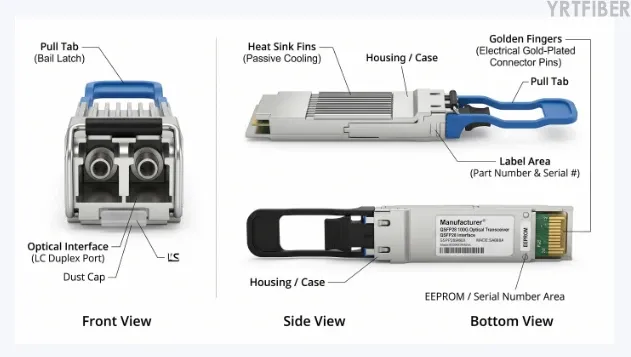
A caixa compacta QSFP28 integra quatro pistas elétricas de classe 25G, processamento de sinal PAM4, um wavelength-stabilized transmissor óptico DWDM, receptor óptico, circuito de monitoramento de diagnóstico digital e um conector host de alta velocidade. O módulo converte a entrada elétrica paralela em um comprimento de onda óptico PAM4 de 100G para transmissão através de uma rede DWDM.
Benefícios de Módulo óptico 100GBASE QSFP28 DWDM PAM4
Adicionar mais links de 100G à fibra existente
Cada transceptor carrega um sinal 100G PAM4 em um comprimento de onda DWDM dedicado.
Vários comprimentos de onda podem compartilhar o mesmo par de fibras por meio de um multiplexador DWDM compatível, aumentando a capacidade total sem instalar um par de fibras separado para cada serviço de 100G.

Reduza a complexidade da rede de longo curso
O módulo QSFP28 produz um sinal óptico 100G de comprimento de onda único que pode se conectar diretamente à infraestrutura DWDM passiva suportada.
Esta abordagem compacta pode reduzir a necessidade de transponders separados em projetos de rede compatíveis e simplificar o espaço em rack, cabeamento e planejamento de energia.

Suporte a conexões metropolitanas e de alcance estendido
O transceptor suporta links de até 80 km quando o orçamento óptico e os limites de dispersão são satisfeitos.
Com amplificação EDFA e equipamento DCM selecionados corretamente, um sistema DWDM projetado pode estender a distância total do link até 120 km.
Escolha Conectividade LC ou CS com economia de espaço
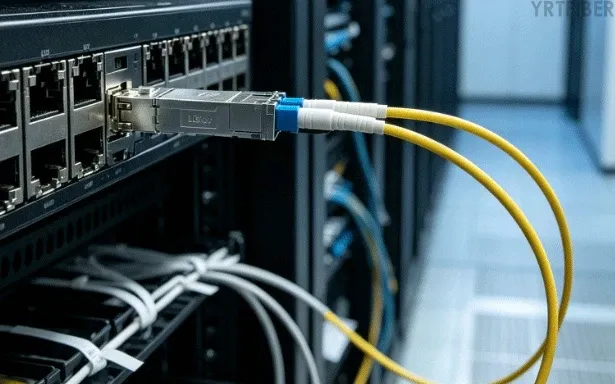
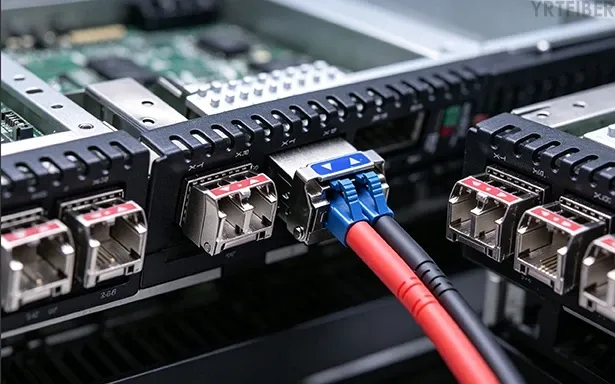
O Duplex LC se encaixa em sistemas de patches ópticos amplamente implantados, enquanto o duplex CS fornece um espaço de conector menor para painéis de alta densidade compatíveis.
As duas opções de interface ajudam os projetistas de rede a combinar o módulo com os requisitos de densidade existentes ou futuros.
Simplifique a implantação de vários fornecedores
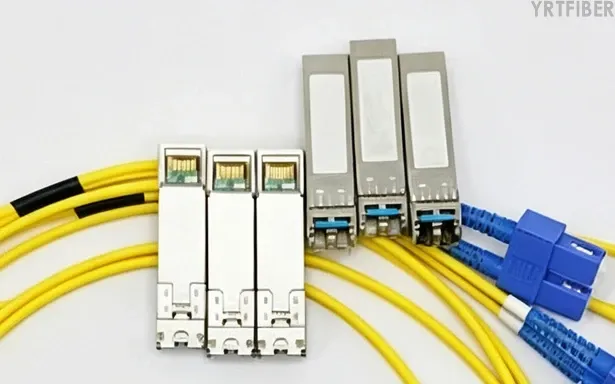
A codificação de firmware personalizada pode ser preparada para switches, roteadores e plataformas de transporte especificados.
A codificação correta ajuda o equipamento host a reconhecer o módulo e reduz os problemas de compatibilidade durante a instalação e substituição.
Aplicações de Engenharia Módulo óptico 100GBASE QSFP28 DWDM PAM4
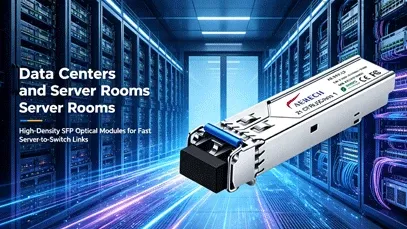
Interconexão de data center
Transporte várias conexões 100G entre sites de data center em um par de fibra DWDM compartilhado.
O fator de forma QSFP28 ajuda a reduzir a pegada de equipamentos em switches e roteadores compatíveis.
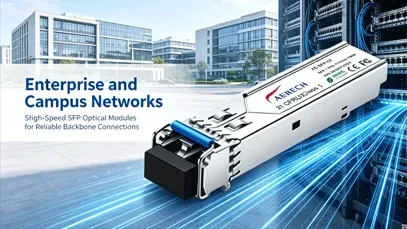
Redes Metropolitanas e Regionais
Implemente links 100G baseados em comprimento de onda entre sites de agregação, escritórios centrais e nós de rede metropolitana.
Escolha o canal apropriado, plano de amplificação e estratégia de dispersão de acordo com a rota.
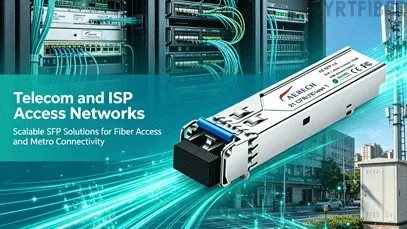
Expansão do Backbone de Telecomunicações e ISP
Adicione serviços 100G à infraestrutura DWDM adequada sem dedicar um par de fibras separado a cada conexão.
Vários comprimentos de onda permitem o crescimento escalável da capacidade à medida que a demanda de tráfego aumenta.

Links Ponto a Ponto de Alcance Estendido
Construa links de até 80 km dentro do orçamento do módulo suportado ou estenda um sistema devidamente projetado até 120 km com equipamentos EDFA e DCM compatíveis.
Execute um cálculo completo de potência óptica e dispersão antes da instalação.
Envio & Embalagem
Each 100G DWDM QSFP28 transceiver is protected by anti-static packaging and labeled with its model, wavelength channel, connector, reach and compatibility information. Protective inner packing and reinforced export cartons help prevent electrostatic, impact and moisture damage during storage and international transportation.
Individual anti-static protective packaging
DWDM channel, wavelength, connector and compatibility identification
Protective inner tray or box and reinforced export carton
OEM label, serial number, barcode and packaging customization
Express, air-freight and sea-freight delivery support
Comparação de produtos:
100G DWDM QSFP28 LC vs CS and 80km vs 120km Solutions
| Comparison | 80km Duplex LC | 80km Duplex CS | Engineered System up to 120km |
|---|---|---|---|
| Typical Module | AE-QSFP28-D80-XX | AE-QSFP28-D80-XXXX | Compatible 100G DWDM QSFP28 PAM4 |
| Data Rate | 100Gbps | 100Gbps | 100Gbps per wavelength |
| Optical Signal | Single-wavelength DWDM PAM4 | Single-wavelength DWDM PAM4 | Single-wavelength DWDM PAM4 |
| Connector | Duplex LC | Duplex CS | LC or CS according to the selected module |
| Nominal Reach | Up to 80km | Up to 80km | Up to 120km for a complete engineered link |
| External EDFA | Depends on link budget | Depends on link budget | Required as determined by link design |
| External DCM | Depends on accumulated dispersion | Depends on accumulated dispersion | Required as determined by link design |
| Best For | Standard-density LC infrastructure | High-density CS patching | Extended metro and regional connections |
Módulo óptico 100GBASE QSFP28 DWDM PAM4 Guia de Seleção
How to Select a 100G DWDM QSFP28 Transceiver
Confirm the host interface: Verify that the switch, router or transport platform supports 100G QSFP28 PAM4 DWDM operation.
Choose the DWDM channel: Assign a matching wavelength for each end of the point-to-point link and coordinate all channels with the DWDM multiplexer plan.
Select the connector: Choose duplex LC for common optical patching systems or duplex CS for compatible high-density infrastructure.
Measure the route: Confirm the fiber length, fiber attenuation, connector loss, splice loss and passive DWDM insertion loss.
Calculate the optical budget: Compare total link loss with transmitter power, receiver sensitivity and receiver overload limits while retaining an engineering margin.
Check chromatic dispersion: Calculate accumulated dispersion at the selected wavelength and add a suitable DCM when the route exceeds the supported dispersion tolerance.
Plan optical amplification: For extended links, position compatible EDFA equipment according to the link design and verify that amplifier noise and output power remain acceptable.
Confirm equipment compatibility: Provide the host manufacturer, exact model and software version for the correct firmware coding.
Check the environment: The referenced modules are specified for commercial operation from 0 to 70°C.
How to Install a 100G DWDM QSFP28 Transceiver
Wear an anti-static wrist strap and verify the host compatibility, DWDM wavelength, connector type and link design before installation. Confirm that the transceivers at both ends use the same assigned channel, then keep the module latch closed, align the QSFP28 module with the port and gently push it into place until fully seated. Do not touch the optical interface or force the module into the host port.
Clean and inspect the duplex LC or CS connectors before connecting the transmit and receive fibers through the correct DWDM multiplexer ports. Install any specified EDFA, DCM and optical attenuator according to the approved link plan. After power-up, verify host recognition, wavelength routing, transmit and receive optical power, FEC status, link stability and error counters. Keep dust caps installed whenever a module or fiber connector is disconnected.
Baixar Catálogo de Produtos YRTFIBER
Tiro Real De Fábrica
Perguntas mais frequentes e consulta rápida
Módulo óptico 100GBASE QSFP28 DWDM PAM4 FAQ
What is a 100G DWDM QSFP28 PAM4 transceiver?
It is a hot-pluggable optical module that converts a 100G electrical interface into a single-wavelength PAM4 optical signal for transmission through a compatible DWDM network.
What is the maximum transmission distance?
The referenced transceiver models support links up to 80km when the optical budget and dispersion conditions are satisfied. A complete system can reach up to 120km when correctly engineered with compatible EDFA and DCM equipment.
Does the transceiver alone provide a 120km link?
No. The 120km figure applies to a complete engineered optical system. It normally requires suitable amplification, dispersion compensation, passive DWDM components and a verified end-to-end link budget.
What is the difference between the LC and CS versions?
Both versions carry the same type of 100G DWDM PAM4 signal. Duplex LC is widely used in existing fiber systems, while duplex CS offers a smaller connector footprint for compatible high-density patching equipment.
Can multiple 100G links share one fiber pair?
Yes. Each link uses an assigned DWDM wavelength, and compatible DWDM multiplexers combine multiple wavelengths onto the same fiber pair. The channel plan and optical budget must be checked for the complete system.
Are EDFA and DCM always required?
No. Their use depends on fiber length, total insertion loss, accumulated chromatic dispersion and the required system margin. An optical-link calculation must determine whether amplification or dispersion compensation is needed.
Can the module be coded for my switch or router?
Yes. Custom compatibility coding is available. Provide the equipment manufacturer, exact model and software or firmware version before ordering.
Can a long-reach DWDM module be used on a short link?
Only after checking the receiver overload limit and total link loss. An optical attenuator may be required when the received power is too high.
Why does the 100G DWDM link remain down after installation?
Check host compatibility, port configuration, FEC requirements, wavelength assignment, MUX/DEMUX channel routing, LC or CS transmit/receive direction, connector cleanliness, optical power, EDFA direction and DCM placement.
What information is required for a quotation?
Please provide the quantity, host equipment brand and model, DWDM channel or wavelength, connector type, fiber distance, passive component losses, EDFA and DCM requirements, operating temperature, OEM labeling needs and delivery destination.
Envie sua pergunta
Preencha o formulário abaixo e entraremos em contato com você em 24 horas.


