

 English
 Español
 Português
 لالعربية
 Русский
 Bahasa Indonesia
 Türkçe
 Bahasa Melayu

Câble à fibre optique aérien gytc8s fig-8 | g.652d / g.655 | câble extérieur autoportant avec messager en acier
Good mechanical and temperature properties
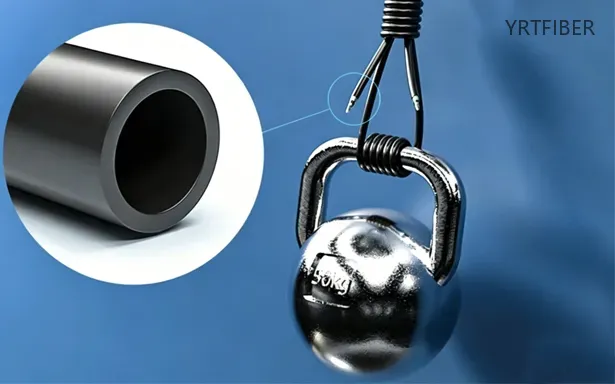
The stranded wire has high tensile strength, meeting self-supporting requirements and reducing installation costs
Special casing fillers ensure critical protection for optical fibers
Good extrusion resistance and flexibility
PSP enhanced moisture resistance
Steel wire as a central reinforcing member
What is GYTC8S Aerial Armored fiber optic cable
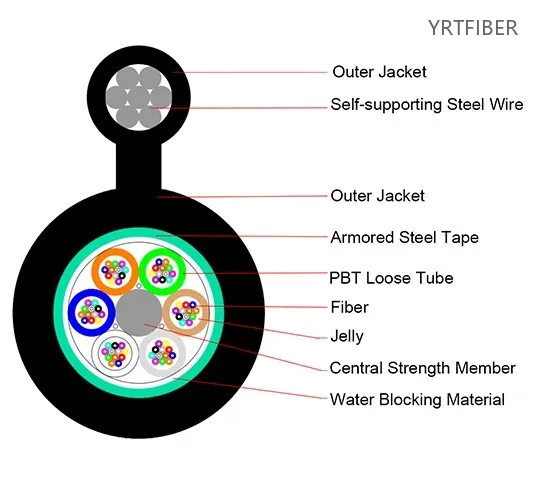
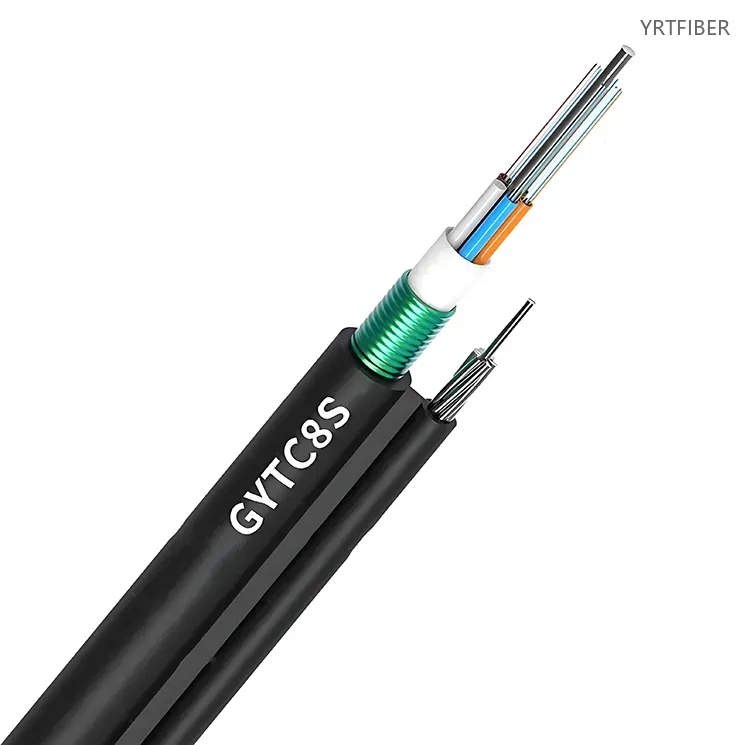
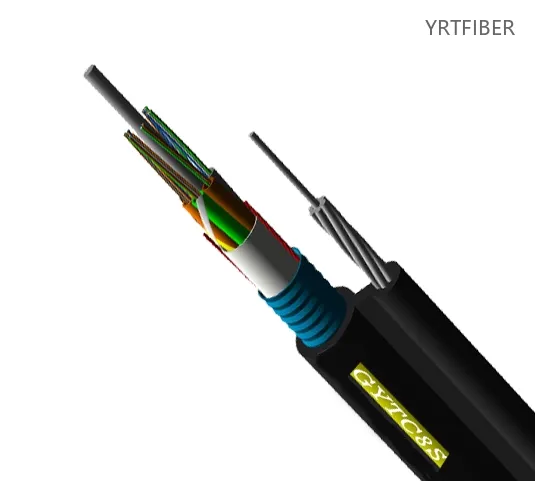
GYTC8S is a figure-8 self-supporting aerial armored fiber optic cable designed for outdoor aerial installations. It combines a steel messenger wire and the fiber optic unit into a single integrated structure with a characteristic “figure-8” cross-section. The fiber unit typically contains several loose tubes stranded around a central strength member, with optical fibers housed inside and protected by water-blocking gel. The cable core is further wrapped with corrugated steel tape armor and covered by a black polyethylene outer sheath. This armored construction provides excellent resistance to moisture, rodent damage, and mechanical stress caused by wind, ice, and temperature changes. Thanks to the built-in messenger wire, GYTC8S can be installed directly on poles without the need for a separate suspension strand, making it a reliable and cost-effective solution for long-span aerial communication networks.
GYTC8S Aerial Armored Fiber Optic Cable Paramètres de spécification
- Paramètres de spécification
- CARACTÉRISTIQUES OPTIQUES
propriétés optiques
| G.652 | G.655 | 50/125μm | 62.5/125μm | |
|---|---|---|---|---|
| Atténuation (+ 20 ℃) | ≤ 3,0 dB / km @ 850 nm | ≤ 3,0 dB / km @ 850 nm | ||
| ≤ 1,0 dB / km @ 1300nm | ≤ 1,0 dB / km @ 1300nm | |||
| ≤ 0,36 dB / km @ 1310nm | ≤ 0,40 dB / km @ 1310nm | |||
| ≤ 0,22 dB / km @ 1550nm | ≤ 0,23 dB / km @ 1550nm | |||
| Bande passante (classe A) | ≥ 500 MHz · km @ 850 nm | ≥ 200 MHz · km @ 850 nm | ||
| ≥ 1000 MHz · km @ 1300nm | ≥ 600 MHz · km @ 1300nm | |||
| Ouverture numérique | 0,200 ± 0,015NA | 0,275 ± 0,015NA | ||
| Longueur d'onde de coupure de câble | ≤ 1260nm | ≤ 1480nm | ||
| Stockage / Température de fonctionnement | -40℃ ~ +70℃ | |||
ParamètresTechnical
| Modèle | Nombre de fibres | Tubes | Diamètre extérieur (mm) | Poids (kg / km) | Résistance à la traction à long / court terme N | Résistance à l'écrasement N / 100mm | Rayon de courbure Statique / Dynamique mm |
| GYTC8S-2 ~ 6F | 2~6 | 1 | 9.2*18 | 215 | 600/1500 | 300/1000 | 10D / 20D |
| GYTC8S-8 ~ 12F | 8~12 | 2 | 9.2*18 | 215 | 600/1500 | 300/1000 | 10D / 20D |
| GYTC8S-14 ~ 18F | 14~18 | 3 | 9.2*18 | 215 | 600/1500 | 300/1000 | 10D / 20D |
| GYTC8S-20 ~ 24F | 20~24 | 4 | 9.2*18 | 215 | 600/1500 | 300/1000 | 10D / 20D |
| GYTC8S-26 ~ 30F | 26~30 | 5 | 9.2*18 | 215 | 600/1500 | 300/1000 | 10D / 20D |
Structure et composition du produit
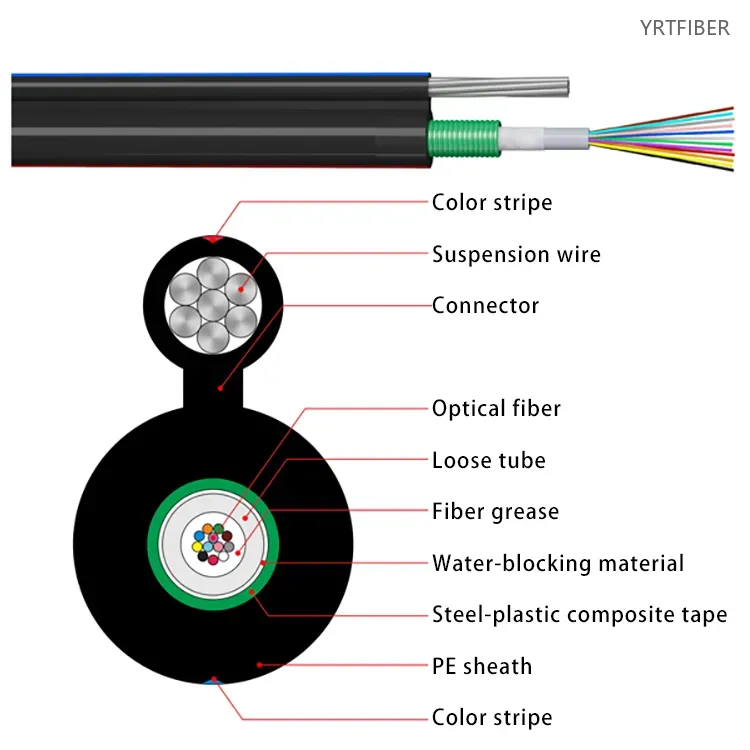
Color stripe – Colored stripes embedded in the PE sheath for quick cable identification and polarity distinction.
Suspension wire – Stranded high-carbon steel messenger wire providing self-supporting tensile strength.
Connector – The PE web (neck) linking the messenger unit and the fiber unit into a figure‑8 shape.
Optical fiber – The core silica glass fiber carrying the optical signal.
Loose tube – A buffer tube housing the fibers and giving them freedom from strain.
Fiber grease – Thixotropic water‑blocking gel inside the loose tube, protecting fibers from moisture and stress.
Water‑blocking material – Cable‑filling compound or water‑swellable yarns preventing longitudinal water migration in the core.
Steel‑plastic composite tape – Corrugated steel tape with copolymer coating applied as armor for rodent resistance and crush protection.
PE sheath – Black high‑density polyethylene outer jacket providing weather, UV and moisture resistance

Avantages de GYTC8S Aerial Armored Fiber Optic Cable
Mechanical and Temperature Reliability
GYTC8S aerial armored fiber optic cable delivers good mechanical and temperature performance, making it suitable for demanding outdoor aerial installations.
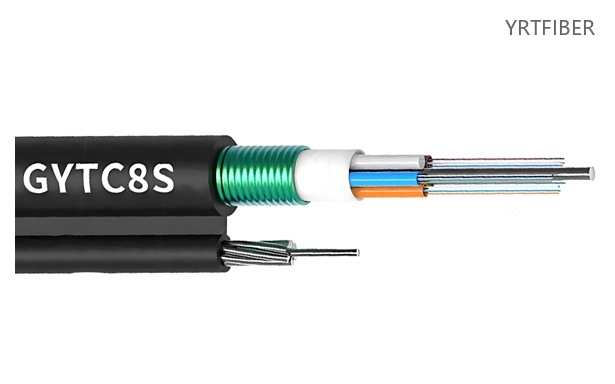
Self-Supporting Figure‑8 Design
Its figure‑8 self‑supporting design features a high‑tensile stranded steel messenger wire integrated with the fiber unit, which eliminates the need for a separate suspension strand and significantly reduces installation costs. A central steel wire further reinforces the core, adding structural stability.
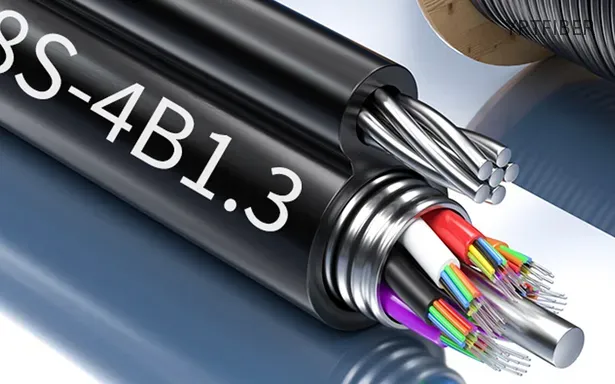
Armor with Crush and Moisture Resistance
The corrugated steel‑plastic composite tape (PSP) armor provides excellent crush resistance and flexibility, while also enhancing moisture protection for the entire cable construction.
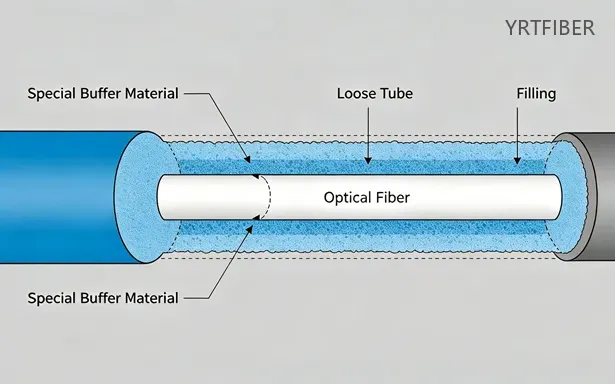
Critical Optical Fiber Protection
Special filling compounds applied in the loose tubes and cable core ensure critical protection for the optical fibers, safeguarding them against water ingress and mechanical stress.
Applications d'ingénierie GYTC8S Aerial Armored Fiber Optic Cable
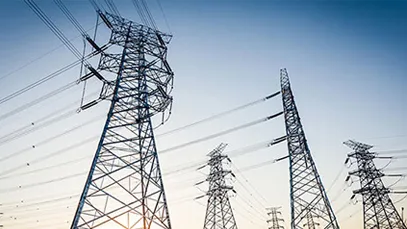
Aerial (self-supporting):
Installed without a separate messenger wire. Ideal for rural FTTx and last-mile access. One-step pulling reduces labor and time.Duct:
Can be pulled into microducts or standard conduits. The compact figure-8 design still fits, though the steel messenger adds some stiffness. Suitable for short urban duct sections.
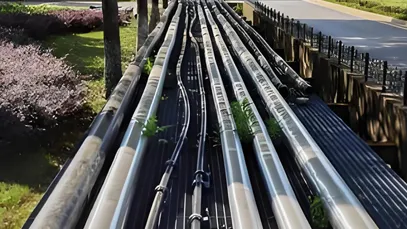
Duct:
Can be pulled into microducts or standard conduits. The compact figure-8 design still fits, though the steel messenger adds some stiffness. Suitable for short urban duct sections.
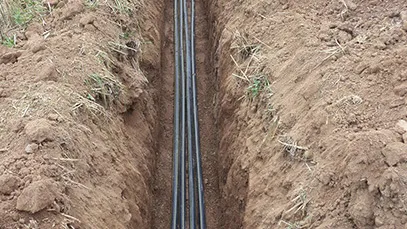
Direct burial:
Resistant to rodents due to the steel messenger and PE sheath. However, rocky terrain may require additional sand bedding or protective conduit. Not the first choice for long burial runs – GYTS is better for high crush environments.
Expédition et emballage
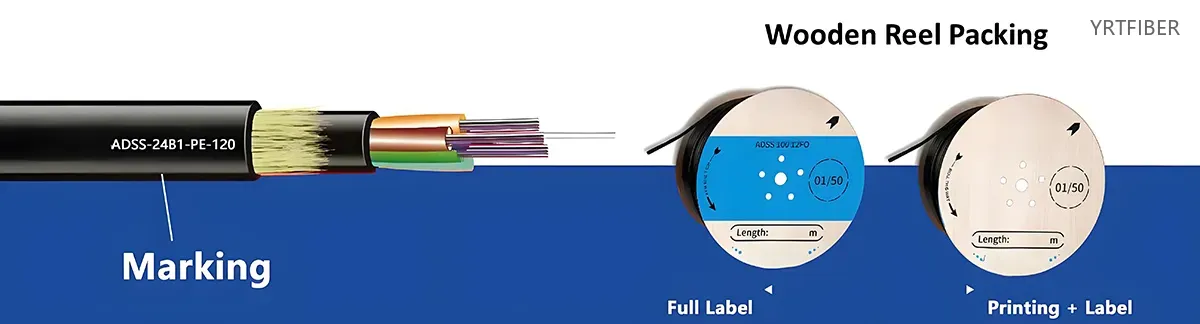
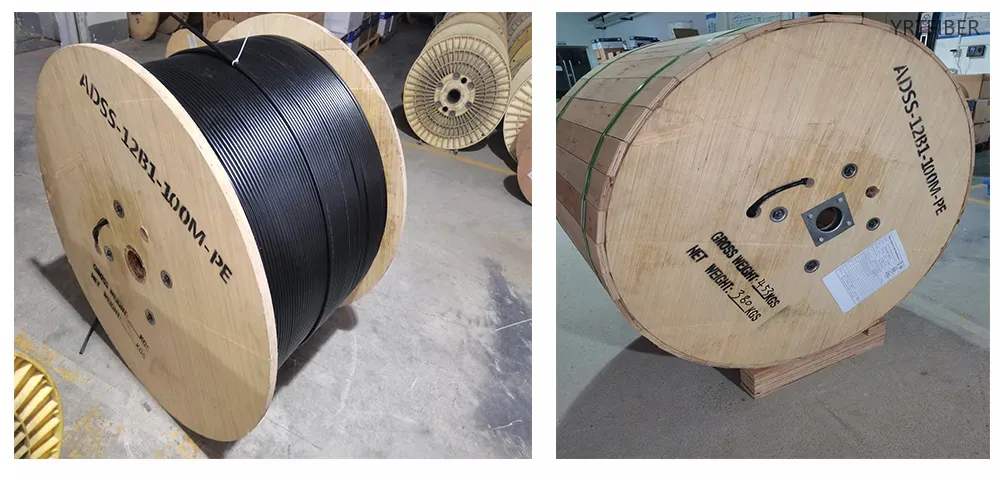
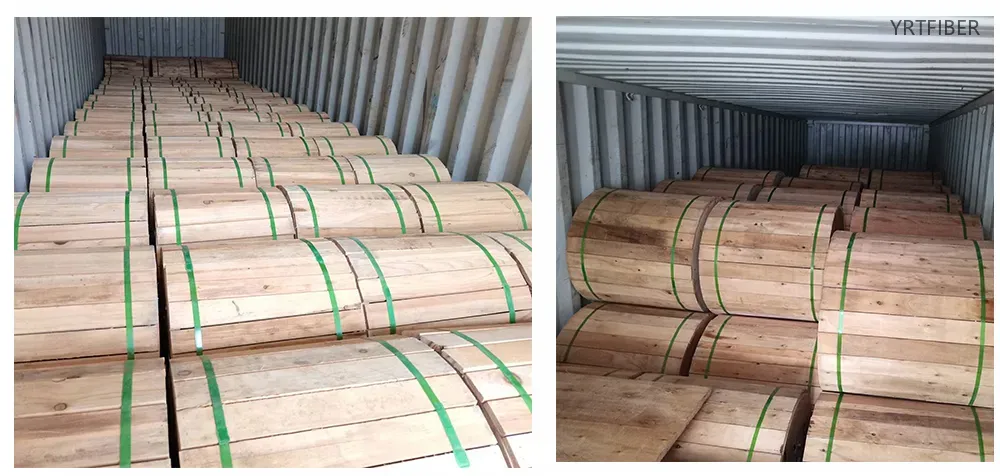
ExigencesPackaging :
- 1 : Tous les câbles doivent être enroulés sur des bobines en bois traitées qui ne sont pas retournables
- 2 : Les extrémités des câbles doivent être solidement fixées à la bobine et protégées par waterproof capuchons rétractables
- 3 : Chaque bobine doit inclure :
Une couche extérieure protectrice d'emballage plastique
Renforcement des lattes de bois pour assurer la stabilité
Au moins 1 mètre d'extrémité de câble libre réservé aux tests
Une longueur de bobine standard de 3000 mm (avec une tolérance autorisée de ± 2 %)
Cable Identification:
The outer jacket must display:
- 1、Unique sequential numbering every 1m (±1% variance permitted)
- 2、 Additional repeating markings at 1m intervals showing:
Product code and fiber count
Manufacturer identification
Production date (month/year)
Total cable length
Standard Packaging Dimensions:
| Length | Container | Size (L×W×H) | Net Mass | Total Mass |
|---|---|---|---|---|
| 2 km | Wood spool | 90×75×90 cm | 156 kg | 220 kg |
| 3 km | Wood spool | 100×68×100 cm | 240 kg | 280 kg |
| 4 km | Wood spool | 109×75×109 cm | 300 kg | 368 kg |
| 5 km | Wood spool | 129×72×129 cm | 400 kg | 480 kg |
Technical Reference:
- 1、 Standard cable diameter: 10.0mm
- 2、Maximum span distance: 100m
- 3、Contact sales team for complete technical specifications
Spool Marking Standards:
Permanent markings (minimum 25-30mm height) must appear on both sides of each spool:
- 1、 Company name and trademark
- 2、Contained cable length
- 3、Cable specifications (type/fiber count)
- 4、Winding orientation
- 5、Weight measurements (gross/net)
Note: All wooden packaging materials must undergo proper fumigation treatment prior to use.
Comparaison des produits:
GYTC8S vs GYXTC8Y vs ADSS
| Feature / Dimension | GYTC8S (Stranded Steel + PSP Armor) | GYXTC8Y (Central Tube Loose Lightweight) | ADSS (All-Dielectric Self-Supporting) |
|---|---|---|---|
| Structure Type | Stranded loose tube around central metal strength member; PSP steel tape armor; integrated steel messenger; PE sheath; “8” shaped cross-section. | Central loose tube with two parallel steel wires; steel messenger integrated; smaller diameter; lightweight; “8” shaped cross-section. | Non-metallic; aramid yarn or FRP strength members; no metallic components; single/double sheath; UV-stabilized PE or AT outer sheath. |
| Strength / Armor | Central steel strength member + PSP steel tape armor + steel messenger. Robust mechanical protection, excellent crush resistance, anti-rodent, bullet-resistant. | Two parallel steel wires + steel messenger. No steel tape armor, lower side pressure resistance, more flexible but less mechanical protection. | Aramid yarn as strength element; no metallic armor; relies on high-tensile aramid for span capability; no rodent/bullet protection. |
| Fiber Core Capacity | 2 – 288 cores. Stranded design accommodates high core counts. | 2 – 60 cores. Central tube design limited to smaller core counts. | 2 – 288 cores (or higher). Stranded design supports high core counts. |
| Typical Applications | Self-supporting aerial, duct, light direct burial. Ideal for long-haul backbone, metropolitan networks, rural/urban access, harsh mechanical environments. | Self-supporting aerial, duct. Best for access networks, FTTH, low-core-count aerial deployments where lightweight and cost are primary concerns. | Self-supporting aerial near power lines (110kV+). Power utility communication, cross-river/valley spans, lightning-prone areas, high EMI environments. |
| Engineering Pros | ① High crush and tensile strength (short-term 8000N, long-term 3000N); ② PSP steel tape armor provides excellent moisture barrier, rodent/bullet resistance; ③ Stranded design supports large core counts up to 288 cores; ④ Integrated steel messenger enables fast one-time installation; ⑤ Good sag performance under wind/ice loads. | ① Lightweight (~70% of GYTC8S weight), easier to handle; ② Lower material cost – economical for small core count projects; ③ Small diameter, low wind/ice load; ④ Faster installation in low-stress routes; ⑤ Suitable for 50-100m typical spans. | ① Fully dielectric – no grounding required; ② Immune to EMI and lightning strikes, safe near high-voltage lines; ③ Long span capability (up to 1000m+); ④ Excellent environmental durability (corrosion-free, UV resistant); ⑤ Low long-term maintenance when properly installed. |
| Engineering Cons | ① Heavier than ADSS and GYXTC8Y – higher transport cost, more labor for handling; ② Steel components require grounding near power lines; ③ Susceptible to galvanic corrosion in coastal/humid environments if sheath damaged; ④ Steel messenger adds wind/ice load. | ① Limited core count, not suitable for backbone/high fiber demand; ② No steel tape armor – vulnerable to rodent attack and side pressure; ③ Not recommended for direct burial or harsh environments; ④ Shorter lifespan in corrosive environments due to steel messenger. | ① Higher material and hardware cost (specialized fittings, dampers); ② Requires precise sag-tension engineering – complex installation; ③ Aramid strength element susceptible to creep over decades; ④ AT sheath required for voltages >110kV, increasing cost; ⑤ Not suitable for direct burial or mechanical protection applications. |
| Cost (Relative) | Medium to high – stranded design, steel tape armor, and high tensile strength increase manufacturing cost. Higher than GYXTC8Y but lower than ADSS for equivalent core counts. Ideal for applications balancing mechanical robustness and cost. | Lowest – central tube design requires less material, lightweight reduces transport cost. Most economical choice for low-core-count (≤60 cores) aerial projects without extreme mechanical demands. | Highest – aramid yarn and precision engineering increase material cost; specialized hardware and dampers add project expense; higher upfront investment but lower TCO over 30-year lifespan. |
| Maintenance Difficulty | Moderate – PSP steel armor reduces fault rate; steel messenger requires periodic inspection for corrosion; need to check grounding connections; heavier structure makes mid-span repairs more difficult. | Low – simple structure, lightweight, easy to handle. However, lack of armor means higher risk of rodent/impact damage, requiring more frequent visual inspections. | Low – no corrosion risk; periodic sag inspection sufficient; specialized repair requires trained personnel; no grounding maintenance needed. Lowest long-term maintenance workload. |
| Span Capability (typical) | 100 – 500 meters (depends on core count and design). e.g., 100m span for 2-30 cores at 0.5% sag. | 50 – 100 meters (standard design). Optimized for short span aerial access routes. | Up to 1000+ meters (with appropriate aramid content). Can exceed 500m in standard designs; special designs for river crossings. |
| Flame Retardancy | None – PE sheath burns with smoke. Not suitable for indoor or fire-sensitive areas. Flame-retardant variant (GYTCZS) available with LSZH. | None – PE sheath, same as GYTC8S. | None (standard). Flame-retardant variant available with LSZH or AT sheath. |
GYTC8S Aerial Armored Fiber Optic Cable Guide de sélection
Engineering selection between GYTC8S, GYXTC8Y, and ADSS:
For general outdoor aerial deployment where mechanical robustness and medium-to-high core counts are required, GYTC8S is the preferred choice. Its stranded loose tube design supports up to 288 fibers, and the PSP steel tape armor provides excellent crush resistance and moisture barrier, making it suitable for rural backbone networks, metropolitan area networks, and routes where rodent protection is necessary. For low-core-count aerial projects with tight budget constraints and short spans (50–100m), GYXTC8Y offers the most economical solution. Its lightweight central tube design reduces transport and handling costs, making it ideal for FTTH drop segments, small-scale access networks, and low-density rural deployments where mechanical stress is minimal.
For high-voltage power utility communication, cross-river or valley spans (up to 1000m+), and environments with severe lightning or electromagnetic interference, ADSS is the mandatory choice. Its all-dielectric construction eliminates induced currents and grounding requirements, ensuring safety near energized lines. ADSS dominates in corrosive coastal areas and extreme weather regions, offering the longest maintenance-free lifespan over 30 years, though its upfront material and installation costs are highest.
Environmental and power line considerations:
GYTC8S and GYXTC8Y contain steel messengers and cannot be used on power line poles without proper grounding and electrical clearance. They are designed for standalone telecommunications poles in rural roadsides, urban streets, and dedicated telecom rights-of-way. ADSS, being fully dielectric, can be directly attached to power line structures (110kV+), providing a unique advantage in power utility networks.
Cost‑performance summary:
GYXTC8Y offers the lowest initial cost for small-core-count aerial deployments and is the fastest to install, but has the shortest service life in harsh conditions.
GYTC8S provides the best balance of cost, mechanical protection, and core capacity for general outdoor backbone networks, with a design life of 20–25 years when properly maintained.
ADSS requires the highest upfront investment but delivers the lowest total cost of ownership over 30 years in demanding long-span, corrosive, or high‑voltage environments, especially when factoring in reduced maintenance and elimination of grounding costs.
installation instruction for GYTC8S cable:
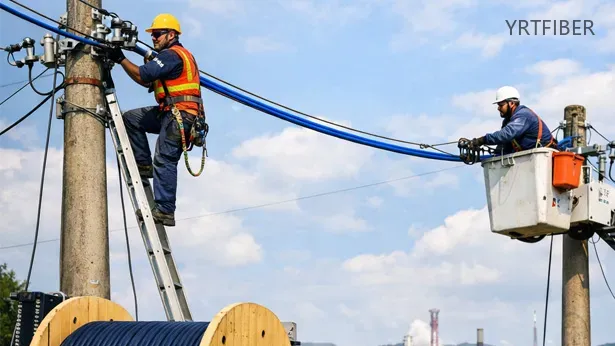
GYTC8S cable is installed by directly suspending its integrated steel messenger wire between poles using suspension clamps and dead-end hardware—no separate support strand is needed. The fiber unit hangs below, and proper sag and tension must be maintained. After stringing, fibers are accessed and connected inside weatherproof splice closures at designated points. Standard aerial installation practices apply, with care taken to avoid excessive bending, twisting, or mechanical damage.
Télécharger le catalogue de produits YRTFIBER
Prise de vue réelle d'usine
Foire aux questions et enquête rapide
GYTC8S Aerial Armored Fiber Optic Cable FAQ
1. Qu'est-ce qu'un câble à fibre optique Fig-8 et pourquoi choisir GYTC8S?
GYTC8S est un câble autoportant Fig-8 combinant le noyau de fibre optique et le fil messager en acier en une seule structure. Cette conception le rend idéal pour une installation aérienne sur des poteaux électriques, simplifiant le déploiement et réduisant les coûts.
2. Quel est le rôle du fil messager en acier dans ce câble?
Le galvanized fil messager en acier fournit un support mechanical , permettant au câble d'être directement suspendu entre les poteaux sans avoir besoin de matériel de support externe. Il convient particulièrement aux portées de 50 à 150 mètres.
3. GYTC8S résiste-t-il aux défis environnementaux?
Oui. Il dispose d'une stranded structure tubulaire lâche, water-blocking gel, d'une gaine extérieure PE, et est blindé pour UV, humidité et résistance mécanique, ce qui le rend adapté à une utilisation en extérieur dans des climats variés.
4. Quels types et capacités de fibres sont disponibles?
GYTC8S prend en charge les fibres monomodes G.652D et G.655, généralement avec 2 à 144 cœurs, ce qui répond aux exigences du réseau d'accès et de distribution.
5. Où ce câble est-il le plus couramment utilisé?
Ce câble est largement utilisé dans :
Déploiements du dernier kilomètre FTTx
Déploiements du haut débit en milieu rural ou suburbain
Installations montées sur poteau de télécommunications ou de services publics
Low-cost routes de fibres aériennes
Envoyez votre demande
Remplissez le formulaire ci-dessous et nous vous répondrons dans les 24 heures.


