

 English
 Español
 لالعربية
 Русский
 Bahasa Indonesia
 Français
 Türkçe
 Bahasa Melayu

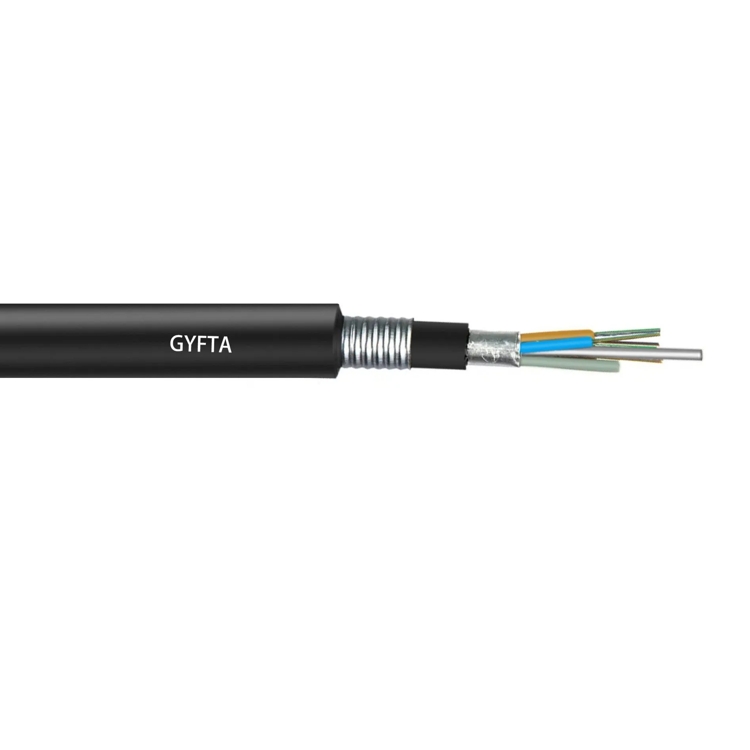
Cabo de fibra óptica de fita de alumínio GYTA | Design de tubo solto anti-EMI | G.652D / G.655 para redes de dutos
Good mechanical properties, good high temperature resistance
High-strength loose casing, resistant to hydrolysis
Special casing fillers play a key role in protecting optical fibers
Specially designed compact structure prevents loose casing shrinkage
Excellent PE sheath protects fiber optic cable from UV radiation
Aluminum polyethylene laminate as a moisture barrier
What is GYTA Fiber Optic Cable
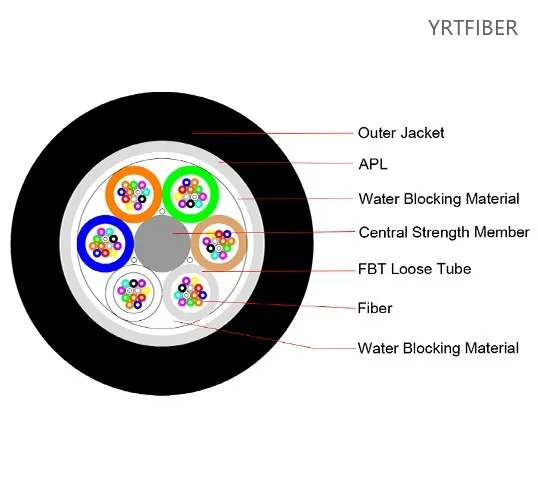
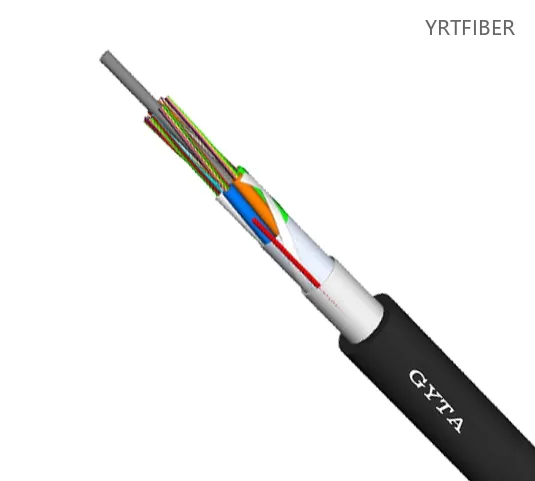
The GYTA cable places a 250 μm fiber in a loose sleeve made of high modulus plastic. The sleeve is filled with waterproof filler, and there is a steel wire in the center as a metal reinforcement. For high-core cables, PE is sometimes coated. The sleeve and filler are twisted around the reinforcement to form a compact round cable core. The cable core is covered with a layer of APL and filled with waterproof filler to prevent water from penetrating. Finally, the cable is completed with a PE jacket.
GYTA armored Fiber Optic Cable Parâmetros de especificação
- Parâmetros de especificação
- CARACTERÍSTICAS ÓPTICAS
| G.652 | G.655 | 50 / 125µm | 62.5/125 | ||
| Atenuação (+ 20 glass) | @ 850nm | ≤ 3,0 dB / km | ≤ 3,0 dB / km | ||
| @ 1300nm | ≤ 1,0 dB / km | ≤ 1,0 dB / km | |||
| @ 1310nm | ≤ 0,36 dB / km | ≤ 0,40 dB / km | |||
| @ 1550nm | ≤ 0,22 dB / km | ≤ 0,23dB / km | |||
| Largura de banda (Classe A) | @ 850nm | ≥ 500 MHz · km | ≥ 200 MHz · km | ||
| @ 1300nm | ≥ 1000 MHz · km | ≥ 600 MHz · km | |||
| Abertura numérica | 0,200 ± 0,015NA | 0,275 ± 0,015NA | |||
| Comprimento de onda de corte do cabo | ≤ 1260nm | ≤ 1480nm | |||
| Temperatura de armazenamento / operação | -40℃ ~+70℃ | ||||
Parâmetros técnicos
| Modelo | Núcleos de fibra | Tubos | Diâmetro (mm) | Peso (kgs) | Tensão (N) | Esmagar (N) | Raio de dobra | ||
| Longo prazo | Curto prazo | Longo prazo | Curto prazo | Estático / Dinâmico | |||||
| GYTA-12 ~ 36F | 12~36 | 2~6 | 9.2 | 80 | 800 | 1500 | 300 | 1000 | 10D / 20D |
| GYTA-38 ~ 72F | 38~72 | 2~6 | 10.5 | 80 | 1000 | 3000 | 300 | 1000 | 10D / 20D |
| GYTA-74 ~ 96F | 74~96 | 7~8 | 13.2 | 125 | 1500 | 3000 | 300 | 1000 | 10D / 20D |
| GYTA-98 ~ 120F | 98~120 | 9~10 | 14.6 | 180 | 1800 | 3000 | 300 | 1000 | 10D / 20D |
| GYTA-122 ~ 144F | 122~144 | 11~12 | 16.5 | 220 | 2000 | 3000 | 300 | 1000 | 10D / 20D |
Estrutura e Composição do Produto
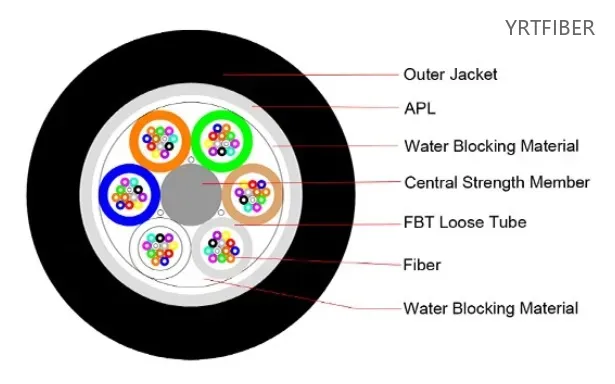
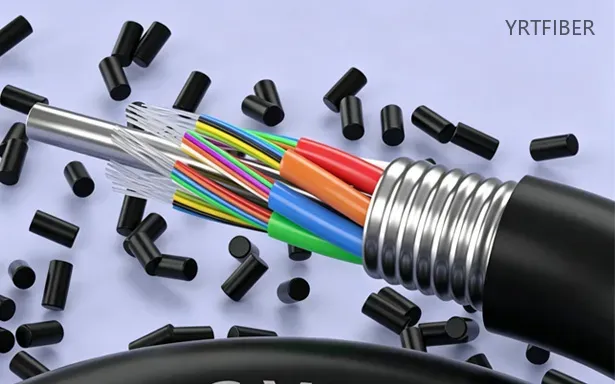
Outer Jacket (Outer Sheath):The outermost black polyethylene (PE) sheath provides UV resistance, corrosion resistance, and abrasion resistance, protecting the optical cable from external damage in conduits, aerials, and other environments.
APL (Aluminum-Plastic Composite Tape):This is a longitudinally wrapped double-sided plastic-coated corrugated aluminum tape that provides moisture resistance, water blocking, and certain crush resistance capabilities, and can also serve as an electrical shielding layer to prevent external electromagnetic interference.
Water Blocking Material:Located on the inner side of the aluminum tape, the water-blocking tape or yarn swells rapidly when in contact with water, blocking moisture from penetrating longitudinally along the cable and keeping the internal fibers dry.
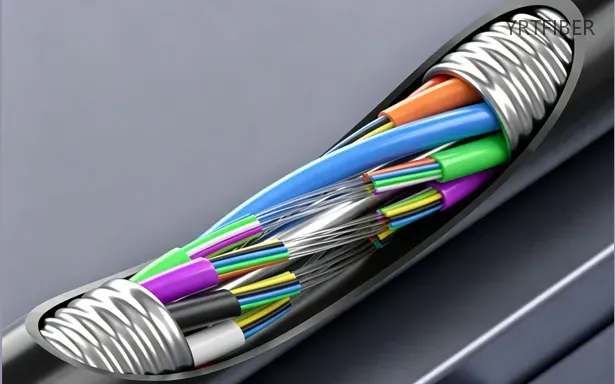
Central Strength Member:Usually a single steel wire or glass fiber-reinforced plastic (FRP) rod, located at the center of the cable, it bears the tensile loads during installation and operation, preventing fiber breakage due to stress.
FBT Loose Tube:Here, FBT may refer to a "fiber optic loose tube" (e.g., made of PBT material). The tube loosely accommodates multiple fibers and can be filled with water-blocking material, allowing the fibers to move freely and buffering external stress.
Fiber:The core component for transmitting optical signals, generally single-mode fibers such as G.652D or G.655. responsible for low-loss, high-bandwidth data transmission.
Water Blocking Material:Here it refers to the thixotropic gel filled inside the loose tube, which suspends and protects the fibers, prevents moisture from entering the tube, and does not affect the micro-bending performance of the fibers.
Benefícios de GYTA armored Fiber Optic Cable
1. Excellent mechanical and environmental protection
It offers good mechanical strength and high temperature resistance. The high-quality PE outer jacket provides effective UV protection, while the aluminum‑polyethylene laminate (APL) acts as a reliable moisture barrier.
2. Advanced fiber protection and structural design
It features a high‑strength, hydrolysis‑resistant loose tube. Special filling compounds inside the tube play a key role in protecting the optical fibers. The specially designed compact structure prevents loose tube shrinkage, ensuring long‑term stability.
Aplicações de Engenharia GYTA armored Fiber Optic Cable
1. Highway pipeline projects
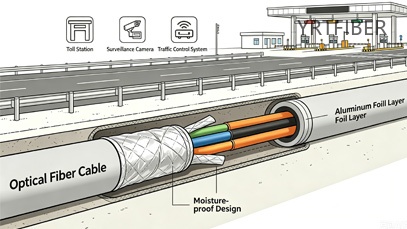
In highway electromechanical projects, GYTA cable is widely laid in underground ducts along the roadside. Its aluminum-laminated tape and moisture-blocking design protect the fibers from groundwater and soil corrosion, ensuring reliable transmission for toll stations, surveillance cameras, and traffic control systems.
2. Large-scale water conservancy
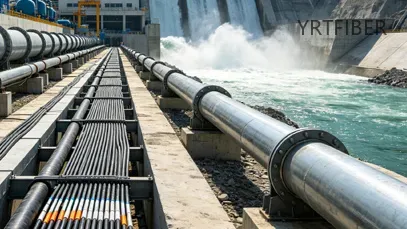
For major water diversion or irrigation schemes, GYTA cable serves as the backbone of the communication network. The cable’s resistance to side pressure and temperature variation guarantees stable data exchange between remote pumping stations, valves, and central dispatch centers, even in humid or submerged environments.
3. Overhead relocation in urban renovation
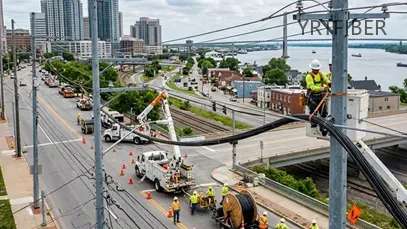
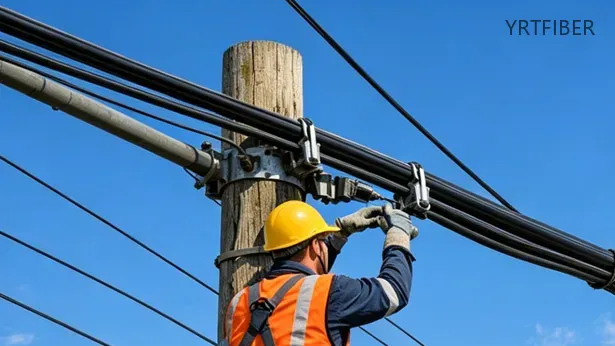
During town road upgrades or rural infrastructure projects, GYTA cable is often installed aerially on existing poles. The aluminum armor provides sufficient protection against falling debris and light impacts, while the lightweight design and fast deployment make it cost-effective for temporary or congested areas.
4. Industrial monitoring and harsh environments
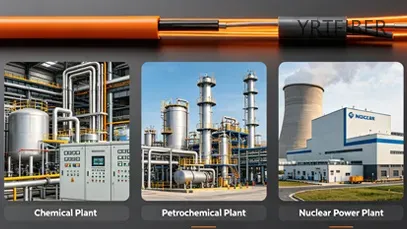
In steel plants or chemical facilities, GYTA cable can be suspended on high-temperature bridge racks to carry gas or vibration sensor data. For extreme climates such as plateau railways or frozen soil regions, armored variants like GYTA53 withstand sub‑zero temperatures and mechanical stress, ensuring long‑term operation of critical communication links.
Envio & Embalagem
Packaging Requisitos:
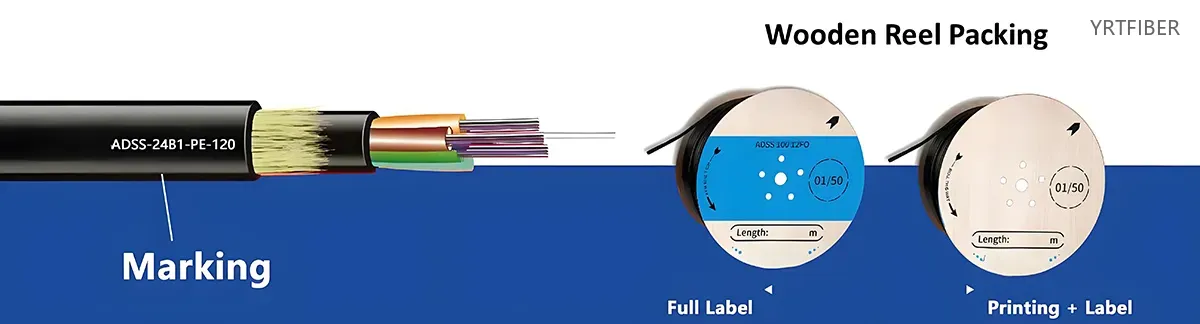
- 1: Todos os cabos devem ser enrolados em carretéis de madeira tratados que não sejam retornáveis
- 2: As extremidades do cabo devem ser firmemente presas ao carretel e protegidas com waterproof tampas retráteis
- 3: Cada carretel deve incluir:
Uma camada externa protetora de embalagem de plástico
Reforço de ripas de madeira para garantir estabilidade
Pelo menos 1 metro de extremidade do cabo livre reservado para teste
Comprimento padrão do carretel de 3000mm (com uma tolerância permitida de ± 2%)
Identificação do cabo:
O revestimento exterior deve apresentar:
- 1 、 Numeração sequencial única a cada 1m (variação de ± 1% permitida)
2 、 Marcações repetidas adicionais em intervalos de 1m mostrando:
Código de produto e contagem de fibras
Identificação do fabricante
Data de produção (mês / ano)
Comprimento total do cabo
Standard Dimensões da Embalagem:
| Length | Container | Size (L×W×H) | Net Mass | Total Mass |
|---|---|---|---|---|
| 2 km | Carretel de madeira | 90 × 75 × 90 cm | 156Kg | 220Kg |
| 3 km | Carretel de madeira | 100 × 68 × 100 cm | 240Kg | 280Kg |
| 4 km | Carretel de madeira | 109 × 75 × 109 cm | 300Kg | 368Kg |
| 5 km | Carretel de madeira | 129 × 72 × 129 cm | 400Kg | 480Kg |
Technical Referência:
- 1 、 Diâmetro padrão do cabo: 10,0 mm
- 2 、 Distância máxima do vão: 100m
- 3 、 Entre em contato com a equipe de vendas para especificações técnicas completas
Padrões de marcação de spool:
As marcações permanentes (altura mínima de 25-30 mm) devem aparecer em ambos os lados de cada carretel:
- 1 、 Nome da empresa e marca comercial
- 2 、 Comprimento do cabo contido
- 3 、 Especificações do cabo (tipo / contagem de fibra)
- 4 、 Orientação do enrolamento
- 5 、 Medidas de peso (bruto / líquido)
Nota: Todos os materiais de embalagem de madeira devem ser submetidos a um tratamento de fumigação adequado antes da utilização.
Comparação de produtos:
GYTA vs GYTS vs GYXTW
| Feature / Dimension | GYTA (Aluminum Tape Armor) | GYTS (Steel Tape Armor) | GYXTW (Central Tube, Steel Tape Armor) |
|---|---|---|---|
| Structure Type | Stranded loose tube around central metal strength member | Stranded loose tube around central metal strength member | Central tube with two parallel steel wires |
| Armor Material | Corrugated aluminum tape (APL) | Corrugated steel tape (PSP) | Corrugated steel tape (PSP) |
| Outer Sheath | Polyethylene (PE) – UV resistant | Polyethylene (PE) – UV resistant | Polyethylene (PE) – UV resistant |
| Fiber Core Capacity | 2 – 144 cores (up to 432 cores in some designs) | 2 – 288 cores (up to 576 cores) | 2 – 24 cores (max 48 cores) |
| Typical Applications | Duct, aerial (with messenger), direct burial (light duty). Preferred for wet or coastal areas due to corrosion resistance. | Duct, aerial (with messenger), direct burial. Suitable for harsh environments requiring high crush resistance. | Aerial (with messenger), duct, light direct burial. Ideal for low‑core‑count access networks and FTTH. |
| Engineering Pros | Excellent moisture barrier and corrosion resistance (aluminum does not rust). Lighter than steel armor. Good for long‑term duct installation. | High crush and tensile strength, excellent mechanical protection (rodent, bullet). Robust for direct burial and rocky terrain. | Compact, small diameter, light weight, low cost. Easy to install in ducts or on poles. Simple structure reduces installation time. |
| Engineering Cons | Lower crush resistance than steel armor. Aluminum is softer – not suitable for extreme mechanical stress. Requires careful handling during backfill. | Heavier and stiffer than GYTA. Steel tape can corrode if sheath is damaged. Larger bending radius. | Limited core count, poor crush resistance compared to stranded designs. Not recommended for long direct burial or high‑stress environments. |
| Corrosion / Moisture Resistance | Excellent (aluminum naturally resistant, full water‑blocking compound) | Good, but steel can rust when coating is damaged; moisture ingress possible at cut points | Good, same as GYTS (steel tape), but shorter water blocking path due to central tube |
| Crush Resistance | Moderate (typical 1000 N/100mm) | High (typical 3000 N/100mm or more) | Moderate (similar to GYTA, but central tube structure less tolerant) |
| Installation Flexibility | More flexible than GYTS, easier to handle in ducts | Stiffer, requires larger pulling force and bend radius | Very flexible due to small diameter, easy to route in congested ducts |
| Cost (Relative) | Medium (aluminum tape is cheaper than steel tape) | Medium to high (steel armor increases material and transport cost) | Low (simple construction, best cost‑performance for low fiber counts) |
| Maintenance Difficulty | Low – corrosion resistance reduces long‑term issues; mid‑span access easier than steel armor | Moderate – heavier armor makes repairs harder; must inspect for rust at sheath damage points | Low – simple structure, easy to splice and maintain, but limited protection may lead to higher fault rate in harsh environments |
GYTA armored Fiber Optic Cable Guia de Seleção
Engineering selection between GYTA and GYTS:
GYTA uses aluminum tape armor, offering superior corrosion and moisture resistance compared to GYTS. This makes GYTA ideal for wet environments, coastal areas, or long‑term duct installation where rust is a concern. GYTS, on the other hand, uses steel tape armor, providing much higher crush resistance, better protection against rodents and bullets. It is preferred for direct burial in rocky terrain, aerial routes with high mechanical stress, or any application where side pressure is a major factor.
Flame retardancy and UV resistance considerations:
For outdoor long‑term exposure (aerial or duct), both GYTA and GYTS have PE sheaths with excellent UV resistance, but they are not flame‑retardant. They should NOT be used indoors (e.g., equipment rooms, tunnels, high‑rise buildings) unless a flame‑retardant variant (GYTZA or GYTZS) is specified. For core network entry sections (typically ≥500 m per segment) or fire‑sensitive areas, always choose LSZH‑sheathed cables (GYTZA/GYTZS) instead of standard GYTA/GYTS.
Non‑flame‑retardant cable applications:
GYTA is a classic “duct cable” – its PE sheath provides excellent UV resistance and long‑term outdoor reliability, but it burns when exposed to fire and is unsuitable for indoor fire‑rated spaces. GYXTW is the most compact and lowest‑cost option, ideal for low‑core‑count (≤24 cores) aerial or light‑duty duct installations. However, it also lacks flame retardancy and its crush resistance is limited – not recommended for direct burial or harsh mechanical environments.
GYTA Optical Cable – Installation Instructions
Minimum bending radius:During installation: 20 × cable diameter; after installation: 10 × cable diameter.
Tensile load:Maximum allowable pulling force: 1500–3000 N (depending on core count). Use a proper pulling grip to avoid stress on the fibers.
Crushing resistance:Short-term: 3000 N/100 mm; long-term: 1000 N/100 mm. Do not crush or impact the cable sharply.
Installation methods:Suitable for duct, aerial (with messenger wire), and direct burial (if additional protection is applied). Avoid sharp edges and excessive twisting.
Temperature range:Installation: –20°C to +60°C; operation: –40°C to +70°C.
Handling notes:Do not exceed the rated pulling force. Use lubricant for long duct runs. Keep the cable end sealed against moisture during and after installation.
Baixar Catálogo de Produtos YRTFIBER
Tiro Real De Fábrica
Advanced In‑House Testing & Quality Assurance
Every production stage is validated: fiber attenuation (OTDR), loose tube dimensional check, aluminum tape lap‑welding integrity, and PE sheath spark test. A fully equipped mechanical lab performs tensile, crush, impact, and water‑blocking tests per IEC/TIA standards — no third‑party bottleneck.
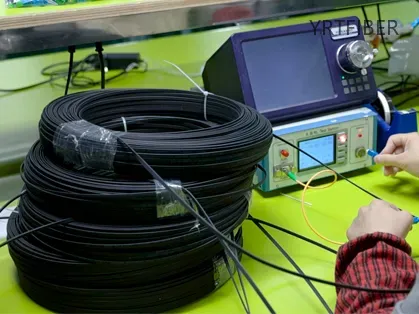
High‑Volume Production with Automated Lines
Dedicated SZ stranding lines, dual‑parallel sheathing extruders, and automatic take‑up systems run 24/7. Daily output exceeds 150 km of GYTA cable (up to 144 fibers). Real‑time line monitoring and data logging ensure consistent quality across every kilometer.

Robust Raw Material Supply Chain
On‑site silos for PE compounds, climate‑controlled storage for aluminum tapes and water‑blocking yarns, and just‑in‑time replenishment from qualified suppliers. No material substitution without customer approval — full lot traceability from fiber preform to final drum.
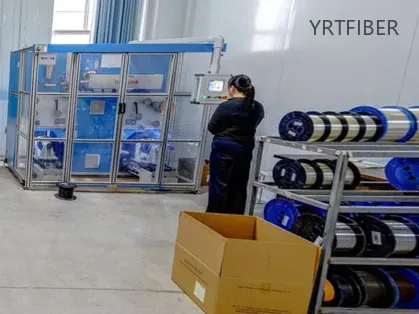
Fully Integrated Optical Cable Manufacturing Facility
End‑to‑end process chain under one roof: fiber coloring, secondary coating, loose tube stranding, dual‑layer sheath extrusion. Segregated clean zones (coloring, extrusion, stranding, armoring, testing) ensure zero cross‑contamination and full traceability.

Perguntas mais frequentes e consulta rápida
GYTA armored Fiber Optic Cable FAQ
Q1: O que significa “GYTA ”?
GYTA denota um cabo de tubo solto encalhado com aluminum-polyethylene armadura laminada (APL) leve, resistente à ferrugem e ideal para implantação de dutos / antenas.
Q2: Este cabo pode resistir à umidade e corrosão?
Sim, a blindagem de alumínio fornece resistência superior à corrosão e a estrutura de tubo solto bloqueadora de água garante forte proteção contra umidade.
Q3: Quais tipos de fibra estão disponíveis?
Suporta as variantes de fibra G.652D e G.655, garantindo excelente transmissão de longa distância e baixa perda.
Q4: Que condições ambientais ele pode suportar?
Construído para uso robusto: resistente ao esmagamento, estável aos raios UV e operacional entre -40 ° C e + 70 ° C.
Q5: Onde o GYTA é mais comumente implantado?
Ideal para implantações de dutos e telecomunicações aéreas, incluindo FTTH, redes corporativas e aplicativos de uso industrial, especialmente onde a resistência à umidade é crítica.
Envie sua pergunta
Preencha o formulário abaixo e entraremos em contato com você em 24 horas.


