

 English
 Español
 Português
 لالعربية
 Русский
 Bahasa Indonesia
 Türkçe
 Bahasa Melayu

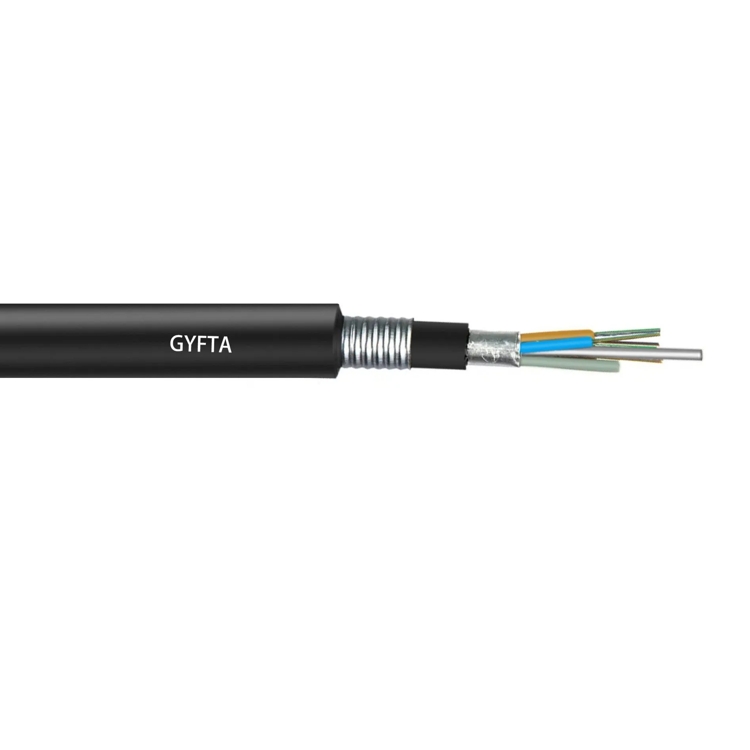
Câble de fibre optique à bande d'aluminium gyta | conception de tube lâche anti-emi | g.652d / g.655 pour les réseaux de conduits
Good mechanical properties, good high temperature resistance
High-strength loose casing, resistant to hydrolysis
Special casing fillers play a key role in protecting optical fibers
Specially designed compact structure prevents loose casing shrinkage
Excellent PE sheath protects fiber optic cable from UV radiation
Aluminum polyethylene laminate as a moisture barrier
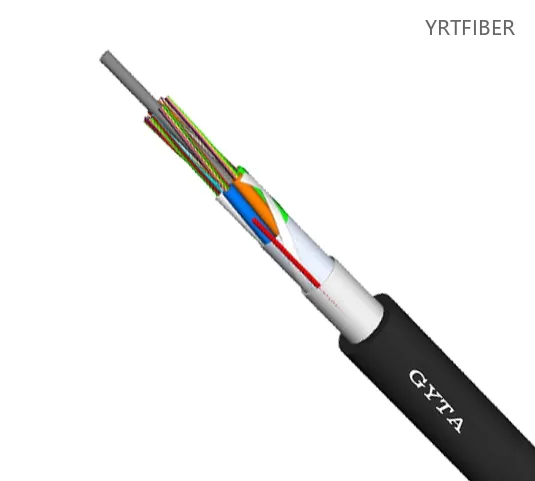
What is GYTA Fiber Optic Cable
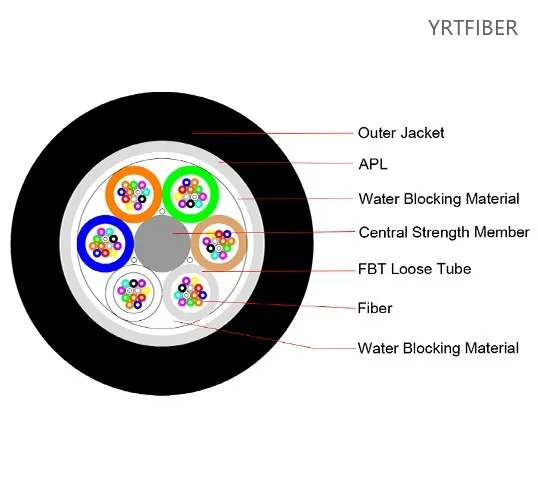
The GYTA cable places a 250 μm fiber in a loose sleeve made of high modulus plastic. The sleeve is filled with waterproof filler, and there is a steel wire in the center as a metal reinforcement. For high-core cables, PE is sometimes coated. The sleeve and filler are twisted around the reinforcement to form a compact round cable core. The cable core is covered with a layer of APL and filled with waterproof filler to prevent water from penetrating. Finally, the cable is completed with a PE jacket.
GYTA armored Fiber Optic Cable Paramètres de spécification
- Paramètres de spécification
- CARACTÉRISTIQUES OPTIQUES
| G.652 | G.655 | 50 / 125μm | 62.5/125 μm | ||
| Atténuation (+ 20 ℃) | @ 850nm | ≤ 3,0 dB / km | ≤ 3,0 dB / km | ||
| @ 1300nm | ≤ 1,0 dB / km | ≤ 1,0 dB / km | |||
| @ 1310nm | ≤ 0,36 dB / km | ≤ 0,40 dB / km | |||
| @ 1550nm | ≤ 0,22 dB / km | ≤ 0,23 dB / km | |||
| Bande passante (classe A) | @ 850nm | ≥ 500 MHz · km | ≥ 200 MHz · km | ||
| @ 1300nm | ≥ 1000 MHz · km | ≥ 600 MHz · km | |||
| Ouverture numérique | 0,200 ± 0,015NA | 0,275 ± 0,015NA | |||
| Longueur d'onde de coupure de câble | ≤ 1260nm | ≤ 1480nm | |||
| Stockage / Température de fonctionnement | -40℃ ~+70℃ | ||||
Paramètres techniques
| Modèle | Noyaux de fibres | Tubes | Diamètre (mm) | Poids (kg) | Tension (N) | Écraser (N) | Rayon de flexion | ||
| Long terme | Court terme | Long terme | Court terme | Statique / dynamique | |||||
| GYTA-12 ~ 36F | 12~36 | 2~6 | 9.2 | 80 | 800 | 1500 | 300 | 1000 | 10D / 20D |
| GYTA-38 ~ 72F | 38~72 | 2~6 | 10.5 | 80 | 1000 | 3000 | 300 | 1000 | 10D / 20D |
| GYTA-74 ~ 96F | 74~96 | 7~8 | 13.2 | 125 | 1500 | 3000 | 300 | 1000 | 10D / 20D |
| GYTA-98 ~ 120F | 98~120 | 9~10 | 14.6 | 180 | 1800 | 3000 | 300 | 1000 | 10D / 20D |
| GYTA-122 ~ 144F | 122~144 | 11~12 | 16.5 | 220 | 2000 | 3000 | 300 | 1000 | 10D / 20D |
Structure et composition du produit
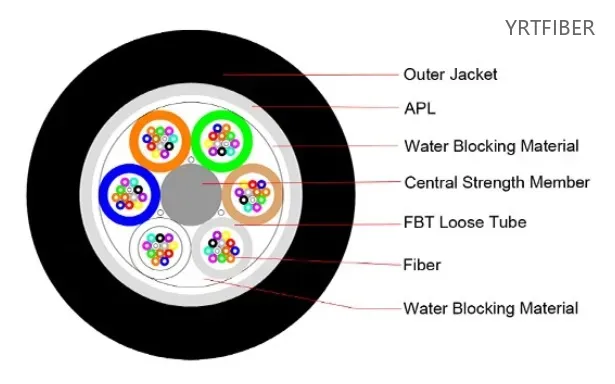
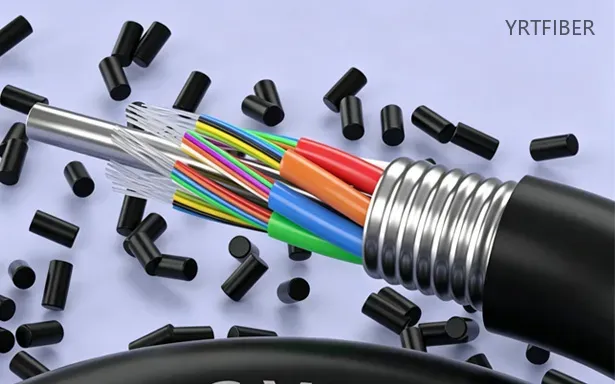
Outer Jacket (Outer Sheath):The outermost black polyethylene (PE) sheath provides UV resistance, corrosion resistance, and abrasion resistance, protecting the optical cable from external damage in conduits, aerials, and other environments.
APL (Aluminum-Plastic Composite Tape):This is a longitudinally wrapped double-sided plastic-coated corrugated aluminum tape that provides moisture resistance, water blocking, and certain crush resistance capabilities, and can also serve as an electrical shielding layer to prevent external electromagnetic interference.
Water Blocking Material:Located on the inner side of the aluminum tape, the water-blocking tape or yarn swells rapidly when in contact with water, blocking moisture from penetrating longitudinally along the cable and keeping the internal fibers dry.
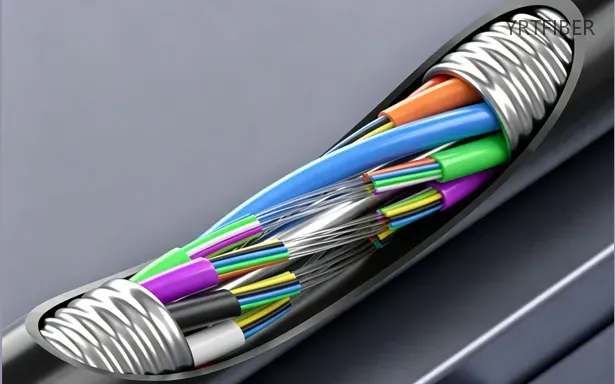
Central Strength Member:Usually a single steel wire or glass fiber-reinforced plastic (FRP) rod, located at the center of the cable, it bears the tensile loads during installation and operation, preventing fiber breakage due to stress.
FBT Loose Tube:Here, FBT may refer to a "fiber optic loose tube" (e.g., made of PBT material). The tube loosely accommodates multiple fibers and can be filled with water-blocking material, allowing the fibers to move freely and buffering external stress.
Fiber:The core component for transmitting optical signals, generally single-mode fibers such as G.652D or G.655. responsible for low-loss, high-bandwidth data transmission.
Water Blocking Material:Here it refers to the thixotropic gel filled inside the loose tube, which suspends and protects the fibers, prevents moisture from entering the tube, and does not affect the micro-bending performance of the fibers.
Avantages de GYTA armored Fiber Optic Cable
1. Excellent mechanical and environmental protection
It offers good mechanical strength and high temperature resistance. The high-quality PE outer jacket provides effective UV protection, while the aluminum‑polyethylene laminate (APL) acts as a reliable moisture barrier.
2. Advanced fiber protection and structural design
It features a high‑strength, hydrolysis‑resistant loose tube. Special filling compounds inside the tube play a key role in protecting the optical fibers. The specially designed compact structure prevents loose tube shrinkage, ensuring long‑term stability.
Applications d'ingénierie GYTA armored Fiber Optic Cable
1. Highway pipeline projects
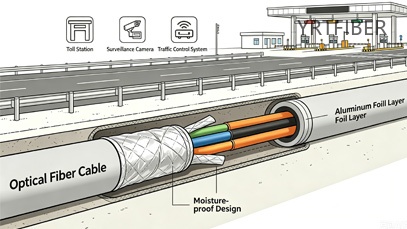
In highway electromechanical projects, GYTA cable is widely laid in underground ducts along the roadside. Its aluminum-laminated tape and moisture-blocking design protect the fibers from groundwater and soil corrosion, ensuring reliable transmission for toll stations, surveillance cameras, and traffic control systems.
2. Large-scale water conservancy
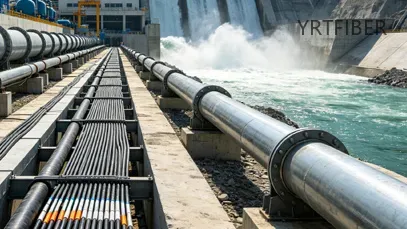
For major water diversion or irrigation schemes, GYTA cable serves as the backbone of the communication network. The cable’s resistance to side pressure and temperature variation guarantees stable data exchange between remote pumping stations, valves, and central dispatch centers, even in humid or submerged environments.
3. Overhead relocation in urban renovation
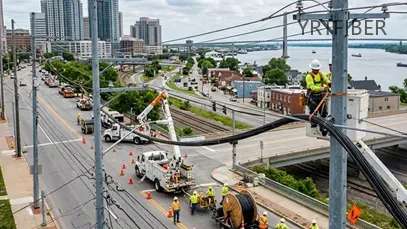
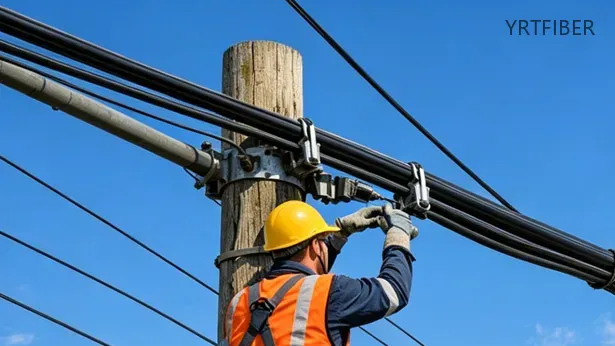
During town road upgrades or rural infrastructure projects, GYTA cable is often installed aerially on existing poles. The aluminum armor provides sufficient protection against falling debris and light impacts, while the lightweight design and fast deployment make it cost-effective for temporary or congested areas.
4. Industrial monitoring and harsh environments
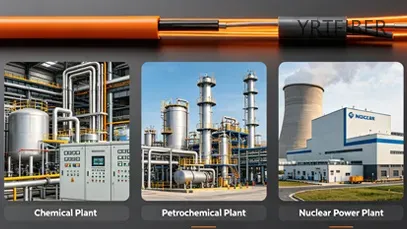
In steel plants or chemical facilities, GYTA cable can be suspended on high-temperature bridge racks to carry gas or vibration sensor data. For extreme climates such as plateau railways or frozen soil regions, armored variants like GYTA53 withstand sub‑zero temperatures and mechanical stress, ensuring long‑term operation of critical communication links.
Expédition et emballage
ExigencesPackaging :
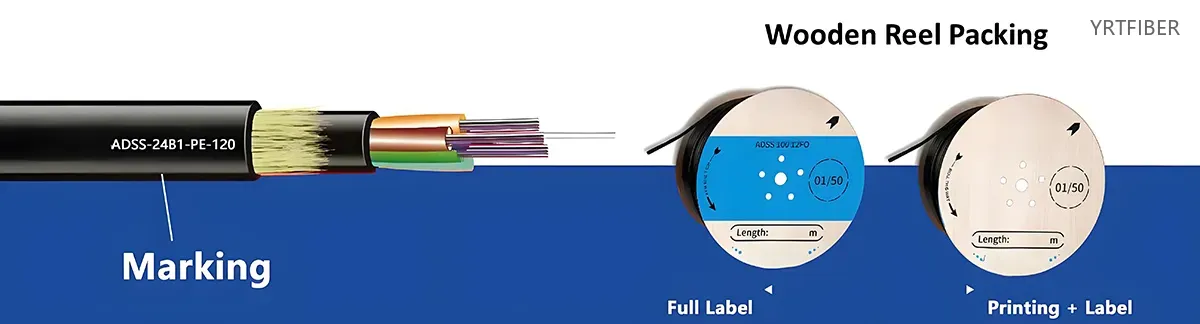
- 1 : Tous les câbles doivent être enroulés sur des bobines en bois traitées qui ne sont pas retournables
- 2 : Les extrémités des câbles doivent être solidement fixées à la bobine et protégées par waterproof capuchons rétractables
- 3 : Chaque bobine doit inclure :
Une couche extérieure protectrice d'emballage plastique
Renforcement des lattes de bois pour assurer la stabilité
Au moins 1 mètre d'extrémité de câble libre réservé aux tests
Une longueur de bobine standard de 3000 mm (avec une tolérance autorisée de ± 2 %)
Identification du câble :
La veste extérieure doit afficher :
- 1 Numérotation séquentielle unique tous les 1m (± 1 % de variance autorisée)
2 Marquages répétés supplémentaires à des intervalles de 1 m montrant :
Code produit et nombre de fibres
Identification du fabricant
Date de production (mois / année)
Longueur totale du câble
Standard dimensions de l'emballage :
| Length | Container | Size (L×W×H) | Net Mass | Total Mass |
|---|---|---|---|---|
| 2 km | Bobine en bois | 90 × 75 × 90 cm | 156 kg | 220 kg |
| 3 km | Bobine en bois | 100 × 68 × 100 cm | 240 kg | 280 kg |
| 4 km | Bobine en bois | 109 × 75 × 109 cm | 300 kg | 368 kg |
| 5 km | Bobine en bois | 129 × 72 × 129 cm | 400 kg | 480 kg |
Technical Référence :
- 1 Diamètre du câble standard : 10,0 mm
- 2 Distance maximale de la portée : 100m
- 3 Contactez l'équipe de vente pour les spécifications techniques complètes
Normes de marquage des bobines :
Des marques permanentes (hauteur minimale de 25 à 30 mm) doivent apparaître des deux côtés de chaque bobine :
- 1 Nom et marque de l'entreprise
- 2 Longueur du câble contenue
- 3 Spécifications du câble (type / nombre de fibres)
- 4 Orientation de l'enroulement
- 5 Mesures de poids (brut / net)
Remarque : Tous les matériaux d'emballage en bois doivent subir un traitement de fumigation approprié avant d'être utilisés.
Comparaison des produits:
GYTA vs GYTS vs GYXTW
| Feature / Dimension | GYTA (Aluminum Tape Armor) | GYTS (Steel Tape Armor) | GYXTW (Central Tube, Steel Tape Armor) |
|---|---|---|---|
| Structure Type | Stranded loose tube around central metal strength member | Stranded loose tube around central metal strength member | Central tube with two parallel steel wires |
| Armor Material | Corrugated aluminum tape (APL) | Corrugated steel tape (PSP) | Corrugated steel tape (PSP) |
| Outer Sheath | Polyethylene (PE) – UV resistant | Polyethylene (PE) – UV resistant | Polyethylene (PE) – UV resistant |
| Fiber Core Capacity | 2 – 144 cores (up to 432 cores in some designs) | 2 – 288 cores (up to 576 cores) | 2 – 24 cores (max 48 cores) |
| Typical Applications | Duct, aerial (with messenger), direct burial (light duty). Preferred for wet or coastal areas due to corrosion resistance. | Duct, aerial (with messenger), direct burial. Suitable for harsh environments requiring high crush resistance. | Aerial (with messenger), duct, light direct burial. Ideal for low‑core‑count access networks and FTTH. |
| Engineering Pros | Excellent moisture barrier and corrosion resistance (aluminum does not rust). Lighter than steel armor. Good for long‑term duct installation. | High crush and tensile strength, excellent mechanical protection (rodent, bullet). Robust for direct burial and rocky terrain. | Compact, small diameter, light weight, low cost. Easy to install in ducts or on poles. Simple structure reduces installation time. |
| Engineering Cons | Lower crush resistance than steel armor. Aluminum is softer – not suitable for extreme mechanical stress. Requires careful handling during backfill. | Heavier and stiffer than GYTA. Steel tape can corrode if sheath is damaged. Larger bending radius. | Limited core count, poor crush resistance compared to stranded designs. Not recommended for long direct burial or high‑stress environments. |
| Corrosion / Moisture Resistance | Excellent (aluminum naturally resistant, full water‑blocking compound) | Good, but steel can rust when coating is damaged; moisture ingress possible at cut points | Good, same as GYTS (steel tape), but shorter water blocking path due to central tube |
| Crush Resistance | Moderate (typical 1000 N/100mm) | High (typical 3000 N/100mm or more) | Moderate (similar to GYTA, but central tube structure less tolerant) |
| Installation Flexibility | More flexible than GYTS, easier to handle in ducts | Stiffer, requires larger pulling force and bend radius | Very flexible due to small diameter, easy to route in congested ducts |
| Cost (Relative) | Medium (aluminum tape is cheaper than steel tape) | Medium to high (steel armor increases material and transport cost) | Low (simple construction, best cost‑performance for low fiber counts) |
| Maintenance Difficulty | Low – corrosion resistance reduces long‑term issues; mid‑span access easier than steel armor | Moderate – heavier armor makes repairs harder; must inspect for rust at sheath damage points | Low – simple structure, easy to splice and maintain, but limited protection may lead to higher fault rate in harsh environments |
GYTA armored Fiber Optic Cable Guide de sélection
Engineering selection between GYTA and GYTS:
GYTA uses aluminum tape armor, offering superior corrosion and moisture resistance compared to GYTS. This makes GYTA ideal for wet environments, coastal areas, or long‑term duct installation where rust is a concern. GYTS, on the other hand, uses steel tape armor, providing much higher crush resistance, better protection against rodents and bullets. It is preferred for direct burial in rocky terrain, aerial routes with high mechanical stress, or any application where side pressure is a major factor.
Flame retardancy and UV resistance considerations:
For outdoor long‑term exposure (aerial or duct), both GYTA and GYTS have PE sheaths with excellent UV resistance, but they are not flame‑retardant. They should NOT be used indoors (e.g., equipment rooms, tunnels, high‑rise buildings) unless a flame‑retardant variant (GYTZA or GYTZS) is specified. For core network entry sections (typically ≥500 m per segment) or fire‑sensitive areas, always choose LSZH‑sheathed cables (GYTZA/GYTZS) instead of standard GYTA/GYTS.
Non‑flame‑retardant cable applications:
GYTA is a classic “duct cable” – its PE sheath provides excellent UV resistance and long‑term outdoor reliability, but it burns when exposed to fire and is unsuitable for indoor fire‑rated spaces. GYXTW is the most compact and lowest‑cost option, ideal for low‑core‑count (≤24 cores) aerial or light‑duty duct installations. However, it also lacks flame retardancy and its crush resistance is limited – not recommended for direct burial or harsh mechanical environments.
GYTA Optical Cable – Installation Instructions
Minimum bending radius:During installation: 20 × cable diameter; after installation: 10 × cable diameter.
Tensile load:Maximum allowable pulling force: 1500–3000 N (depending on core count). Use a proper pulling grip to avoid stress on the fibers.
Crushing resistance:Short-term: 3000 N/100 mm; long-term: 1000 N/100 mm. Do not crush or impact the cable sharply.
Installation methods:Suitable for duct, aerial (with messenger wire), and direct burial (if additional protection is applied). Avoid sharp edges and excessive twisting.
Temperature range:Installation: –20°C to +60°C; operation: –40°C to +70°C.
Handling notes:Do not exceed the rated pulling force. Use lubricant for long duct runs. Keep the cable end sealed against moisture during and after installation.
Télécharger le catalogue de produits YRTFIBER
Prise de vue réelle d'usine
Advanced In‑House Testing & Quality Assurance
Every production stage is validated: fiber attenuation (OTDR), loose tube dimensional check, aluminum tape lap‑welding integrity, and PE sheath spark test. A fully equipped mechanical lab performs tensile, crush, impact, and water‑blocking tests per IEC/TIA standards — no third‑party bottleneck.
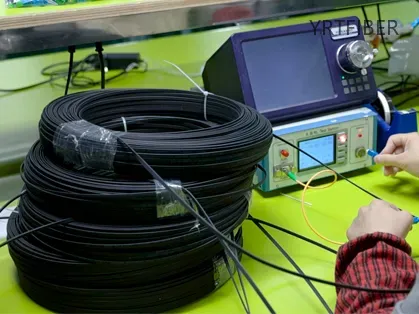
High‑Volume Production with Automated Lines
Dedicated SZ stranding lines, dual‑parallel sheathing extruders, and automatic take‑up systems run 24/7. Daily output exceeds 150 km of GYTA cable (up to 144 fibers). Real‑time line monitoring and data logging ensure consistent quality across every kilometer.

Robust Raw Material Supply Chain
On‑site silos for PE compounds, climate‑controlled storage for aluminum tapes and water‑blocking yarns, and just‑in‑time replenishment from qualified suppliers. No material substitution without customer approval — full lot traceability from fiber preform to final drum.
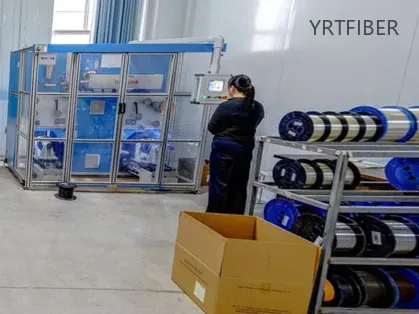
Fully Integrated Optical Cable Manufacturing Facility
End‑to‑end process chain under one roof: fiber coloring, secondary coating, loose tube stranding, dual‑layer sheath extrusion. Segregated clean zones (coloring, extrusion, stranding, armoring, testing) ensure zero cross‑contamination and full traceability.

Foire aux questions et enquête rapide
GYTA armored Fiber Optic Cable FAQ
Q1 : Que signifie "GYTA"?
GYTA désigne un câble toronné à tube lâche avec blindage en stratifié aluminum-polyethylene (APL) - léger, résistant à la rouille et idéal pour un déploiement en conduit / aérien.
Q2 : Ce câble peut-il résister à l'humidité et à la corrosion?
Oui - le blindage en aluminium offre une résistance à la corrosion supérieure, et la structure à tube lâche bloquant l'eau assure une forte protection contre l'humidité.
Q3 : Quels types de fibres sont disponibles?
Prend en charge les variantes de fibre G.652D et G.655, assurant une excellente transmission longue distance à faible perte.
Q4 : Quelles conditions environnementales peut-il supporter?
Conçu pour une utilisation robuste : résistant à l'écrasement, stable aux UV et opérationnel entre -40 ° C et + 70 ° C.
Q5 : Où GYTA est-il le plus couramment déployé?
Idéal pour les déploiements de conduits et de télécommunications aériennes - y compris FTTH, réseaux d'entreprise et utilisation industrielle - en particulier là où la résistance à l'humidité est essentielle.
Envoyez votre demande
Remplissez le formulaire ci-dessous et nous vous répondrons dans les 24 heures.


