

 English
 Português
 لالعربية
 Русский
 Bahasa Indonesia
 Français
 Türkçe
 Bahasa Melayu

Cable de fibra blindada ignífugo GYXTZW | 2-24 núcleos | Uni-Tube G.652D / G.655 para uso en interiores y exteriores
1:Good mechanical properties, good high temperature resistance
2:Loose casing with high strength and resistance to hydrolysis
3:Special casing filler plays a key role in protecting optical fibers
4:Anti-extrusion, good flexibility
5:PSP enhanced moisture resistance
6:Two parallel wires ensure tensile strength
7:Small diameter, light weight, easy installation
8:Special sheath material, good flame retardancy
What is GYXTZW optical cable
GYXTZW optical cable is an outdoor armored optical cable that adopts a central tube structure, filled with waterproof grease, longitudinally wrapped with plastic-coated steel tape (PSP) and embedded with parallel steel wires as reinforcement, while using low-smoke, halogen-free flame-retardant (LSZH) material for the outer sheath. It combines excellent resistance to lateral pressure and tensile performance with flame-retardant, low-smoke, and halogen-free characteristics, and is widely used in subways, tunnels, chemical plants, and other scenarios with high fire safety requirements.
GYXTZW Armored Fiber Cable Parámetros de especificación
- Parámetros de especificación
- CARACTERÍSTICAS ÓPTICAS
Propiedades ópticas
| G.652 | G.655 | 50/125μm | 62.5/125μm | |
|---|---|---|---|---|
| Atenuación (+ 20º C) | ≤ 3,0 dB / km @ 850nm | ≤ 3,0 dB / km @ 850nm | ||
| ≤ 1,0 dB / km @ 1300nm | ≤ 1,0 dB / km @ 1300nm | |||
| ≤ 0,36 dB / km @ 1310nm | ≤ 0,40 dB / km @ 1310nm | |||
| ≤ 0,22 dB / km @ 1550nm | ≤ 0,23 dB / km @ 1550nm | |||
| Ancho de banda (Clase A) | ≥ 500 MHz · km @ 850nm | ≥ 200 MHz · km @ 850nm | ||
| ≥ 1000 MHz · km @ 1300nm | ≥ 600 MHz · km @ 1300nm | |||
| Apertura numérica | 0,200 ± 0,015NA | 0,275 ± 0,015NA | ||
| Longitud de onda de corte de cable | ≤ 1260nm | ≤ 1480nm | ||
| Temperatura de almacenamiento / funcionamiento | -40ºC ~ +70ºC | |||
Technical Parámetros
| Modelo | Recuento De Fibras | Diámetro exterior (mm) | Peso (kg / km) | Resistencia a la tracción | Enamoramiento | Radio de flexión |
| GYXTZW-2 ~ 12 | 2~12 | 9.2 | 152 | 600/1500 | 300/1000 | 10D / 20D |
| GYXTZW-14 ~ 24 | 14~24 | 12.2 | 195 | 600/1500 | 1000/3000 | 10D / 20D |
| GYXTZW-2 ~ 12 | 2~12 | 10.8 | 172 | 1000/3000 | 1000/3000 | 10D / 20D |
| GYXTZW-14 ~ 24 | 14~24 | 12.2 | 215 | 1000/3000 | 1000/3000 | 10D / 20D |
Estructura y Composición del Producto
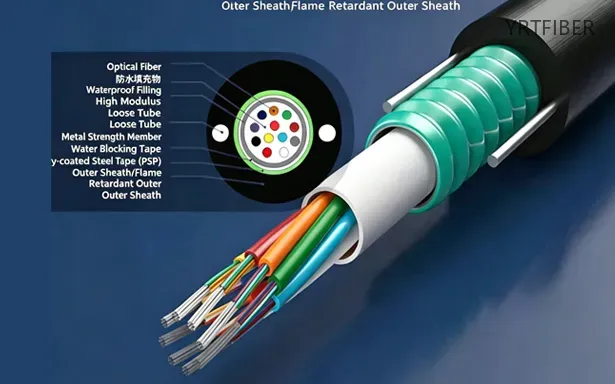
Optical Fiber (250μm, e.g., G652D or G655)
Waterproof filler (thixotropic water-blocking compound inside the loose tube)
High modulus plastic loose tube (PBT, containing the optical fibers and waterproof filler)
Metal strength member (two parallel steel wires placed on both sides of the steel strip)
Water blocking tape (added between the PSP and the loose tube to ensure compactness and waterproofing)
Coated steel tape (PSP) (longitudinally wrapped around the loose tube for moisture resistance and anti-extrusion)
Flame-retardant outer sheath (LSZH material, providing low smoke, halogen-free, and flame-retardant properties)
Beneficios de GYXTZW Armored Fiber Cable
Excellent mechanical performance and high-temperature resistance:
resistant to extrusion, flexible, and capable of withstanding high temperatures.
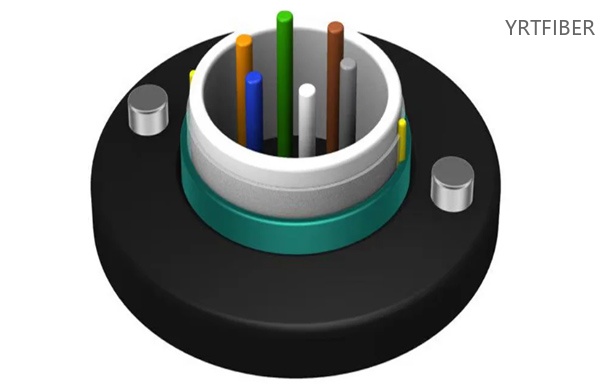
High-strength, hydrolysis-resistant loose tubes and special filling grease:
the loose tubes are high-strength and hydrolysis-resistant, and the special filling grease inside the tubes effectively protects the optical fibers.
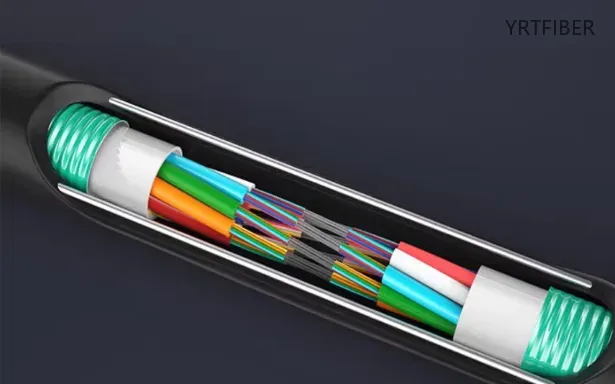
Multiple protective structures enhance tensile and moisture resistance:
PSP coated steel tape improves moisture resistance, while parallel steel wires on both sides ensure tensile strength.
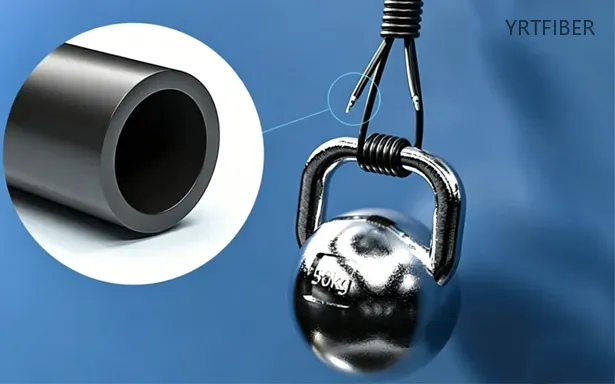
Lightweight and compact, flame-retardant and easy to install:
small outer diameter, light weight, easy to install, and uses special flame-retardant jacket material with excellent fire performance.
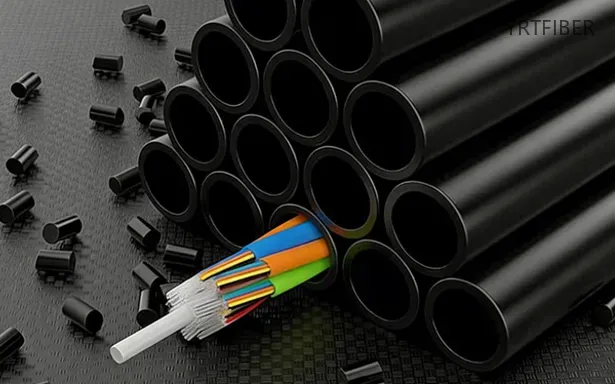
Aplicaciones de Ingeniería GYXTZW Armored Fiber Cable
Urban rail transit field:
Used for communication network monitoring systems in subway tunnels, along rail transit lines, and inside subway stations. Its LSZH sheath emits low smoke and is non-toxic in the event of a fire in confined spaces, while the armored structure can withstand frequent vibrations and humid environments in tunnels.
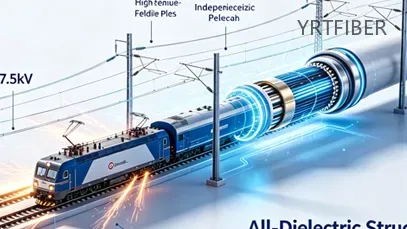
Petrochemical and power fields:
Widely used in chemical plants, petrochemical plants, power plants, nuclear power stations, and steel mills, as well as other flammable and explosive areas. Its flame-retardant performance can effectively prevent fire from spreading along the optical cable, and it does not release corrosive gases, thereby protecting surrounding precision equipment.
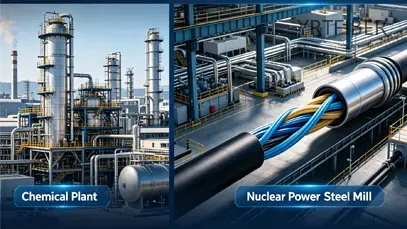
Special industries and facilities:
Including underground communication systems in mines, large foreign-invested factories, and industrial park security monitoring networks, which require both fire and water safety in confined spaces.
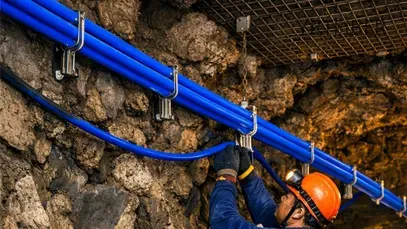
Communication backbone network:
Carries long-distance and inter-office communication tasks. The number of optical fibers ranges from 2 to 24 cores, suitable for medium and small-scale communication access, campus networks, and urban-rural area access scenarios.

Envío y embalaje
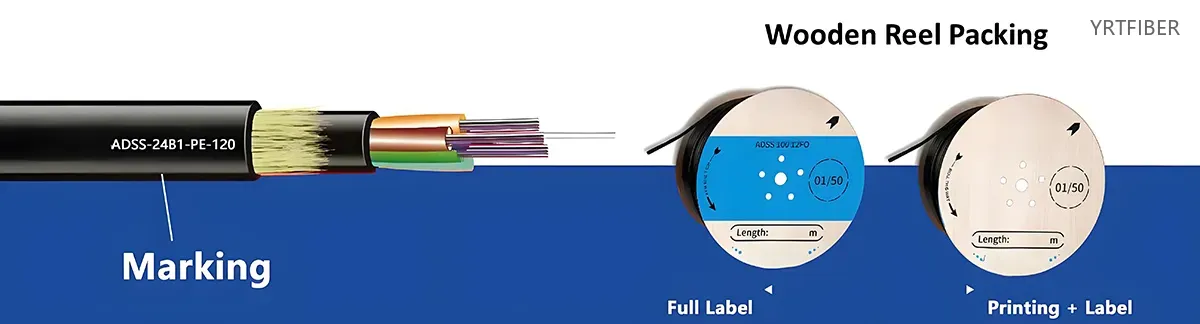
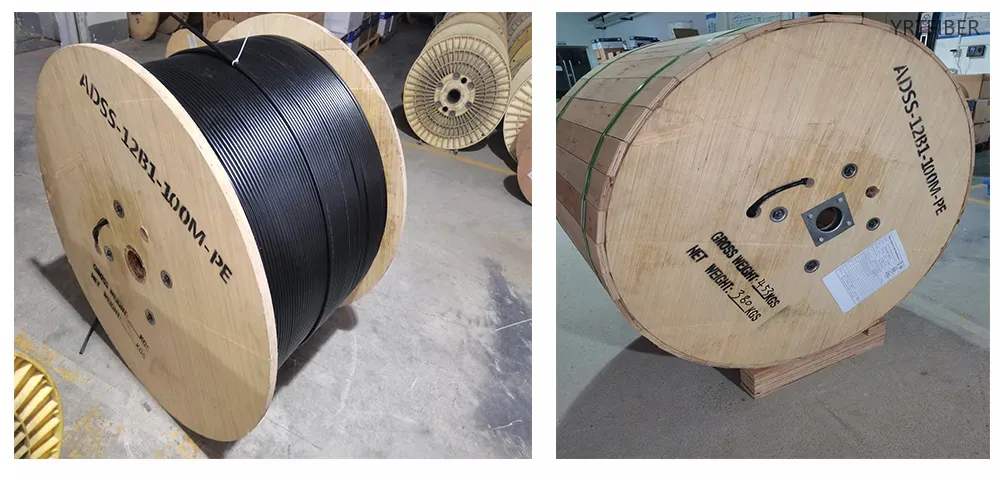
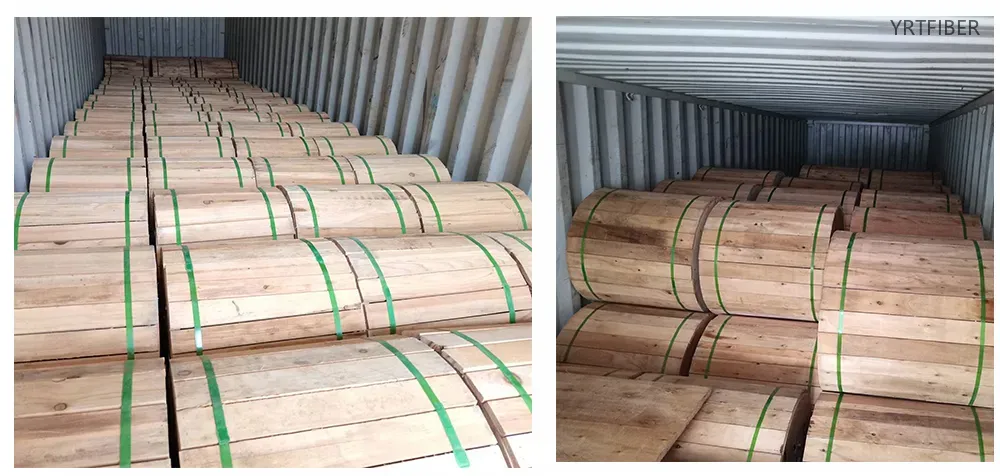
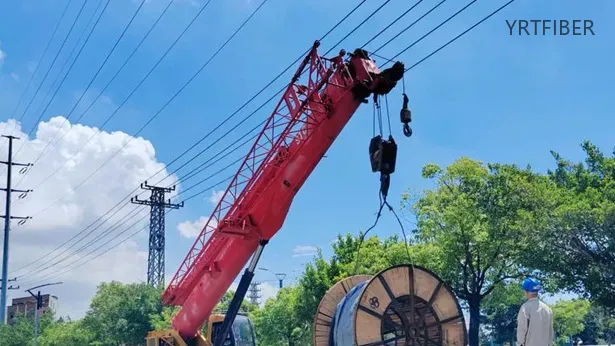
Packaging Requisitos:
- 1: Todos los cables se enrollarán en carretes de madera tratados que no se puedan devolver
- 2: Los extremos del cable deben estar firmemente asegurados al carrete y protegidos con waterproof tapas retráctiles
- 3: Cada carrete debe incluir:
- 1、 Protective plastic wrapping layer
- 2、 Reinforcing wooden slats for stability
- 3、 Minimum 1m of free cable end for testing purposes
- 4、 Standard spool length: 3000mm (±2% tolerance allowed)
Identificación del cable:
La chaqueta exterior debe mostrar:
- 1, Numeración secuencial única cada 1m (+ 1% de varianza permitida)
- 2, Marcas adicionales repetidas a intervalos de 1 m que muestran:
- 1、 Product code and fiber count
- 2、 Manufacturer identification
- 3、 Production date (month/year)
- 4、Total cable length
Standard Dimensiones del embalaje:
| Length | Container | Size (L×W×H) | Net Mass | Total Mass |
|---|---|---|---|---|
| 2 km | Carrete de madera | 90 × 75 × 90 cm | 156 kg | 220 kg |
| 3 km | Carrete de madera | 100 × 68 × 100 cm | 240 kg | 280 kg |
| 4 km | Carrete de madera | 109 × 75 × 109 cm | 300 kg | 368 kg |
| 5 km | Carrete de madera | 129 × 72 × 129 cm | 400 kg | 480 kg |
Technical Referencia:
- 1, diámetro del cable estándar: 10,0 mm
- 2, Distancia máxima de span: 100 m
- 3, Póngase en contacto con el equipo de ventas para obtener especificaciones técnicas completas.
Estándares de marcado de carrete:
Las marcas permanentes (altura mínima de 25-30 mm) deben aparecer en ambos lados de cada carrete:
- 1 。 Nombre de la empresa y marca registrada
- 2, Longitud del cable incluida
- 3, Especificaciones del cable (tipo / recuento de fibra)
- 4, Orientación de bobinado
- 5, Medidas de peso (bruto / neto)
Nota: Todos los materiales de embalaje de madera deben someterse a un tratamiento de fumigación adecuado antes de su uso.
Comparación de productos:
GYXTZW vs GYXTW vs GYXTY vs GYTS
| Feature / Dimension | GYXTZW (Central Tube, Steel Tape Armor, LSZH) | GYXTW (Central Tube, Steel Tape Armor) | GYXTY (Central Tube, Non-Armored) | GYTS (Stranded, Steel Tape Armor) |
|---|---|---|---|---|
| Structure Type | Central loose tube, steel tape armor (PSP), two parallel steel wires, LSZH outer sheath. | Central loose tube, steel tape armor (PSP), two parallel steel wires, PE outer sheath. | Central loose tube, two parallel steel wires, PE outer sheath. No steel tape armor. | Stranded loose tubes around central metal strength member, steel tape armor (PSP), PE outer sheath. |
| Armor / Protection | Steel tape armor (double-sided coated) – provides crush resistance, rodent protection, bullet resistance. | Steel tape armor (double-sided coated) – provides crush resistance, rodent protection, bullet resistance. | No steel tape armor – only two parallel steel wires as strength members. Minimal mechanical protection. | Steel tape armor (corrugated PSP) – excellent crush resistance, rodent protection, bullet resistance. |
| Outer Sheath | LSZH (Low Smoke Zero Halogen) – flame-retardant, low smoke, halogen-free, UV resistant. | PE (Polyethylene) – UV resistant, weather resistant, but not flame-retardant (burns with smoke). | PE (Polyethylene) – UV resistant, weather resistant, not flame-retardant. | PE (Polyethylene) – UV resistant, weather resistant, not flame-retardant. |
| Fiber Core Capacity | 2 – 24 cores (typical), up to 48 cores in some designs. | 2 – 144 cores. | 2 – 24 cores (typical). | 2 – 288 cores (up to 432 cores in some designs). |
| Typical Applications | Aerial (with messenger), duct, direct burial. Suitable for fire-sensitive areas: tunnels, subways, power plants, chemical plants, nuclear facilities, high-rise building entry sections. | Aerial (with messenger), duct, direct burial. General outdoor access networks, FTTH, low-core-count links. | Aerial (with messenger), duct. Low-cost outdoor access networks, low mechanical stress environments. | Aerial (with messenger), duct, direct burial. Core networks, trunk lines, long-haul backbone, harsh environments requiring high crush resistance. |
| Engineering Pros | ① LSZH sheath – low smoke, halogen-free, self-extinguishing, safe for indoor/confined spaces; ② Steel tape provides excellent crush and rodent resistance; ③ Small diameter, light weight, easy handling; ④ Full-section water blocking – good moisture protection; ⑤ Suitable for both outdoor and indoor fire-rated environments. | ① Steel tape provides good crush and rodent resistance; ② Compact, small diameter, light weight; ③ Cost-effective for low core counts; ④ Full-section water blocking. | ① Lowest cost among central tube types; ② Lightweight and small diameter, easy to install; ③ PE sheath provides good UV resistance. | ① Stranded design supports very high core counts; ② Superior mechanical strength – excellent crush, tensile, and impact resistance; ③ Good moisture barrier; ④ Suitable for long-haul backbone networks. |
| Engineering Cons | ① Limited core count (≤24 cores typical); ② LSZH sheath has slightly lower UV resistance than PE for long-term outdoor exposure; ③ Higher cost than GYXTW and GYXTY due to LSZH material. | ① Not flame-retardant – cannot be used in fire-sensitive areas; ② Limited core count compared to stranded designs; ③ PE sheath not suitable for indoor/confined spaces. | ① No steel tape armor – vulnerable to rodent attack and side pressure; ② Not suitable for direct burial or harsh mechanical environments; ③ Poor crush resistance. | ① Larger diameter and heavier – harder to handle in congested ducts; ② Higher material and shipping cost; ③ Not flame-retardant; ④ More complex mid-span maintenance. |
| Flame Retardancy | LSZH – flame-retardant, low smoke, halogen-free. Suitable for tunnels, subways, high-rise entry sections (≥500m per segment). | None – PE sheath burns with smoke. Not suitable for indoor or fire-sensitive spaces. | None – same as GYXTW. | None – same as GYXTW. Flame-retardant variant available as GYTZS (LSZH). |
| Cost (Relative) | Medium to high – LSZH material and steel tape armor increase cost, but provides fire safety and mechanical protection. | Low to medium – cost-effective for low-core-count outdoor access applications. | Low – most economical option, but least protection. | Medium to high – stranded design with high core count capability increases cost. |
| Maintenance Difficulty | Low – LSZH sheath resists chemical degradation and UV; steel armor reduces fault rate; no grounding required. | Low – simple structure, easy to splice and maintain. Steel armor reduces damage risk. | Low – very easy to handle and maintain, but higher risk of damage due to lack of armor, requiring more frequent inspections. | Moderate – heavier and stiffer, harder to access mid-span; must inspect steel tape for corrosion at sheath damage points. |
GYXTZW Armored Fiber Cable Guía de selección
Fire-retardant cable engineering selection between GYXTZW and GYXTW/GYXTY/GYTS:
GYXTZW features steel tape armor combined with an LSZH (Low Smoke Zero Halogen) outer sheath, providing both mechanical protection and flame retardancy. It is specifically designed for outdoor installation scenarios that also require fire safety, such as cable entry sections into buildings, tunnels, subways, power plants, chemical plants, and other confined spaces where low smoke and halogen-free properties are mandatory. GYXTW, GYXTY, and GYTS all use PE sheaths which are UV-resistant and suitable for long-term outdoor exposure, but they are not flame-retardant and should never be used indoors or in fire-sensitive areas.
Fire safety and entry section requirements:
For core network entry sections (typically ≥500 meters per segment) into equipment rooms, central offices, high-rise buildings, tunnels, and other fire-rated spaces, GYXTZW with LSZH sheath is the mandatory choice. The LSZH material produces minimal smoke and no toxic halogen gases when burned, ensuring personnel safety and equipment protection in confined spaces. Standard GYXTW, GYXTY, and GYTS with PE sheaths are strictly for outdoor use only – they will burn and produce dense smoke if exposed to fire, failing building code requirements for indoor/plenum areas.
Non-flame-retardant cable applications:
GYXTW is a classic "central tube armored outdoor cable" – its PE sheath provides excellent UV resistance and long-term outdoor reliability, with steel tape armor offering good crush and rodent protection. However, it cannot be used in fire-sensitive spaces. GYXTY is the most economical option for low-core-count aerial or duct installations where mechanical stress is minimal and fire safety is not a concern – its lack of steel tape armor makes it unsuitable for direct burial or rodent-prone areas. GYTS, with its stranded loose tube design, supports much higher fiber counts (up to 288 cores or more) and offers superior mechanical strength for trunk lines and long-haul backbone networks, but it also lacks flame retardancy. For applications requiring both high mechanical strength and flame retardancy, a GYTZS (stranded, steel tape armor, LSZH) variant would be the appropriate choice.
GYXTZW Optical Cable – Brief Installation Instructions
Cable Handling – Avoid twisting or crushing. Do not exceed the rated tensile load (typically 600N short term, 300N long term).
Bending Radius – Maintain min. bending radius of 10× cable OD during installation, 20× during pulling.
Pulling – Use a pulling grip or friction-type pulling eye attached to the strength members (parallel steel wires + PSP tape).
Stripping – Remove the LSZH sheath and PSP tape carefully. Do not nick the loose tube or fibers.
Grounding – The steel wires and PSP are metallic; ground them properly at one end if required.
Flame Retardant Note – The LSZH sheath provides low smoke & halogen-free protection; avoid excessive heat during termination.
Installation Types – Suitable for aerial, duct, or direct burial (with extra protection if needed).
Descarga el catálogo de productos de YRTFIBER
Disparo Real De Fábrica
Factory Overview and Qualification Strength
Our factory has been specializing in fiber optic cable manufacturing for more than ten years and is recognized as a high-tech enterprise. The factory covers an area of over 30.000 square meters and features a Class 10.000 cleanroom and fully automated production lines. The company has obtained ISO9001. ISO14001. and ISO45001 certifications, and its products comply with IEC, ITU-T, and GB/T standards. The GYXTZW series has passed the national flame-retardant rating and LSZH environmental certifications.
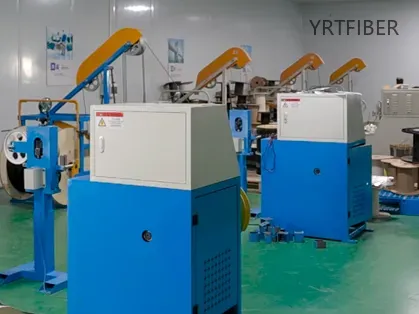
Advanced Production Equipment and Process Capabilities
Core processes utilize high-speed fiber coloring machines, secondary coating production lines, steel tape longitudinal wrapping units, and parallel steel wire payoff racks. For the GYXTZW structure, we are equipped with dual-channel automatic grease filling systems and PSP steel tape longitudinal wrapping molds. We have the capability to deliver 2-24 core full-series batches, meeting the needs of large-scale projects and urgent orders.
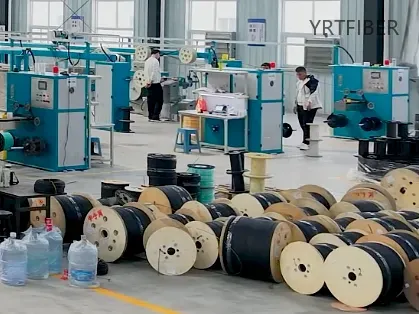
Strict Quality Control and Testing Capabilities
The testing center is equipped with fiber geometric parameter testers, OTDR, tensile testing machines, high and low temperature cyclic humidity chambers, and vertical combustion testers. Each reel of GYXTZW cable undergoes mechanical property sampling tests such as tension, flattening, impact, and torsion, as well as high and low temperature cycle tests from -40°C to 70°C and flame-retardant smoke density tests. A three-level quality inspection system has been established to ensure consistency.
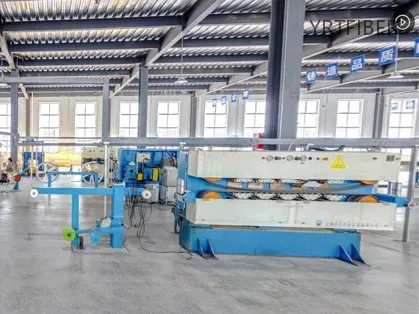
R&D Innovation and Customization Services
The R&D team continuously collaborates with universities and research institutes to optimize the GYXTZW flame-retardant formulas and armoring processes. We offer customizable options for sheath color, printing, fiber type (such as G652D, G655), and core combinations, and provide fire rating upgrade solutions. With rapid sample production and professional technical support, we have served multiple metro, petrochemical, and utility tunnel projects.
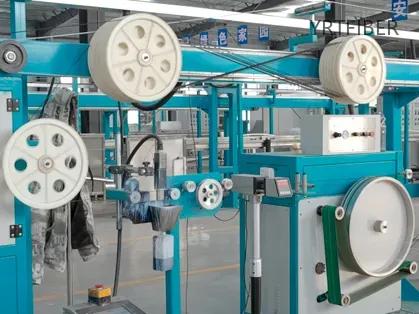
Preguntas Frecuentes y Consulta Rápida
GYXTZW Armored Fiber Cable FAQ
1. ¿Cuál es el caso de uso principal para el cable de fibra ignífuga GYXTZW?
GYXTZW es ideal para indoor-outdoor escenarios híbridos como building-to-building, substations, o túneles, donde cumplimiento de seguridad contra incendios y protección mecánica básica son esenciales.
2. ¿Qué hace que GYXTZW sea diferente de los cables GYXTW o GYXTY estándar?
A diferencia de GYXTW o GYXTY, GYXTZW utiliza una funda exterior ignífuga que cumple con los estándares de protección contra incendios (IEC 60332, etc.), lo que la hace adecuada para su uso en fire-regulated entornos. También tiene una armadura de cinta de acero para mayor resistencia al aplastamiento.
3. ¿Cuál es la capacidad y estructura de la fibra?
El cable admite 2 a 24 núcleos de fibra monomodo G.652D o G.655 en un gel bloqueador de agua con lleno de uni-tubo central. Dos alambres de acero paralelos proporcionan resistencia a la tracción, mientras que la cinta de acero agrega protección.
4. ¿Es GYXTZW adecuado para entierro directo?
No se recomienda para enterramiento directo sin conducto, debido al recuento limitado de núcleos y la estructura más delgada. Se usa mejor en conductos, elevadores, bandejas o tuberías protectoras , especialmente donde la seguridad contra incendios es una preocupación.
5. ¿Qué entornos se benefician más de este cable?
GYXTZW es perfecto para:
Substations y edificios de servicios públicos
Indoor-to-outdoor transiciones de fibra
Túneles de metro y ejes de cables
Commercial campus que requieren cable con clasificación de llama
Envíe Su Consulta
Rellene el siguiente formulario y nos pondremos en contacto con usted en un plazo de 24 horas.


