

 English
 Español
 Português
 لالعربية
 Русский
 Bahasa Indonesia
 Türkçe
 Bahasa Melayu

Câble fibre blindé ignifuge gyxtzw | 2-24 cœurs | uni-tube g.652d / g.655 pour une utilisation intérieure-extérieure
1:Good mechanical properties, good high temperature resistance
2:Loose casing with high strength and resistance to hydrolysis
3:Special casing filler plays a key role in protecting optical fibers
4:Anti-extrusion, good flexibility
5:PSP enhanced moisture resistance
6:Two parallel wires ensure tensile strength
7:Small diameter, light weight, easy installation
8:Special sheath material, good flame retardancy
What is GYXTZW optical cable
GYXTZW optical cable is an outdoor armored optical cable that adopts a central tube structure, filled with waterproof grease, longitudinally wrapped with plastic-coated steel tape (PSP) and embedded with parallel steel wires as reinforcement, while using low-smoke, halogen-free flame-retardant (LSZH) material for the outer sheath. It combines excellent resistance to lateral pressure and tensile performance with flame-retardant, low-smoke, and halogen-free characteristics, and is widely used in subways, tunnels, chemical plants, and other scenarios with high fire safety requirements.
GYXTZW Armored Fiber Cable Paramètres de spécification
- Paramètres de spécification
- CARACTÉRISTIQUES OPTIQUES
propriétés optiques
| G.652 | G.655 | 50/125μm | 62.5/125μm | |
|---|---|---|---|---|
| Atténuation (+ 20ºC) | ≤ 3,0 dB / km @ 850 nm | ≤ 3,0 dB / km @ 850 nm | ||
| ≤ 1,0 dB / km @ 1300nm | ≤ 1,0 dB / km @ 1300nm | |||
| ≤ 0,36 dB / km @ 1310nm | ≤ 0,40 dB / km @ 1310nm | |||
| ≤ 0,22 dB / km @ 1550nm | ≤ 0,23 dB / km @ 1550nm | |||
| Bande passante (classe A) | ≥ 500 MHz · km @ 850 nm | ≥ 200 MHz · km @ 850 nm | ||
| ≥ 1000 MHz · km @ 1300nm | ≥ 600 MHz · km @ 1300nm | |||
| Ouverture numérique | 0,200 ± 0,015NA | 0,275 ± 0,015NA | ||
| Longueur d'onde de coupure de câble | ≤ 1260nm | ≤ 1480nm | ||
| Stockage / Température de fonctionnement | -40oC ~ + 70oC | |||
ParamètresTechnical
| Modèle | Nombre de fibres | Diamètre extérieur (mm) | Poids (kg / km) | Résistance à la traction | Écraser | Rayon de flexion |
| GYXTZW-2 ~ 12 | 2~12 | 9.2 | 152 | 600/1500 | 300/1000 | 10D / 20D |
| GYXTZW-14 ~ 24 | 14~24 | 12.2 | 195 | 600/1500 | 1000/3000 | 10D / 20D |
| GYXTZW-2 ~ 12 | 2~12 | 10.8 | 172 | 1000/3000 | 1000/3000 | 10D / 20D |
| GYXTZW-14 ~ 24 | 14~24 | 12.2 | 215 | 1000/3000 | 1000/3000 | 10D / 20D |
Structure et composition du produit
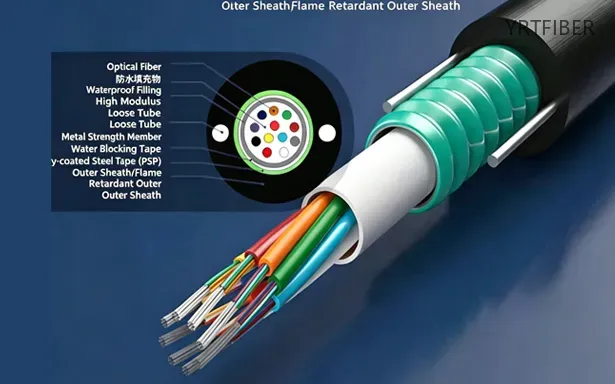
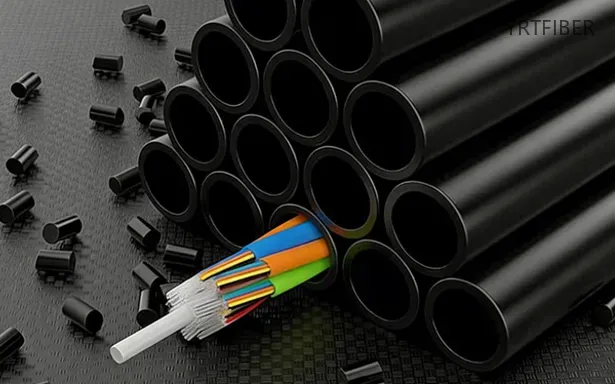
Optical Fiber (250μm, e.g., G652D or G655)
Waterproof filler (thixotropic water-blocking compound inside the loose tube)
High modulus plastic loose tube (PBT, containing the optical fibers and waterproof filler)
Metal strength member (two parallel steel wires placed on both sides of the steel strip)
Water blocking tape (added between the PSP and the loose tube to ensure compactness and waterproofing)
Coated steel tape (PSP) (longitudinally wrapped around the loose tube for moisture resistance and anti-extrusion)
Flame-retardant outer sheath (LSZH material, providing low smoke, halogen-free, and flame-retardant properties)
Avantages de GYXTZW Armored Fiber Cable
Excellent mechanical performance and high-temperature resistance:
resistant to extrusion, flexible, and capable of withstanding high temperatures.
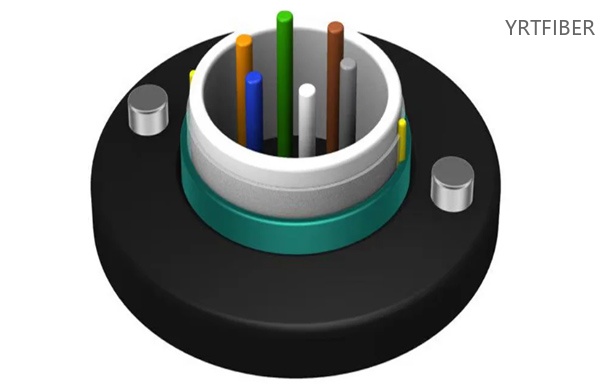
High-strength, hydrolysis-resistant loose tubes and special filling grease:
the loose tubes are high-strength and hydrolysis-resistant, and the special filling grease inside the tubes effectively protects the optical fibers.
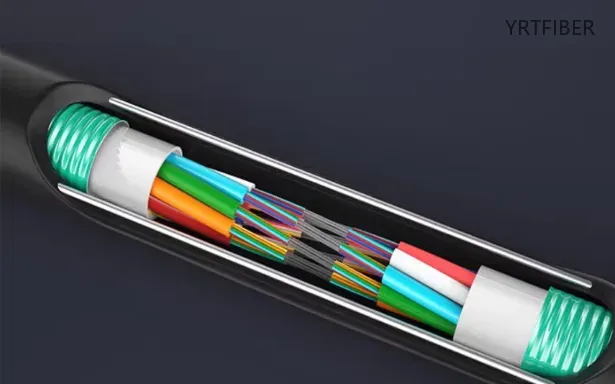
Multiple protective structures enhance tensile and moisture resistance:
PSP coated steel tape improves moisture resistance, while parallel steel wires on both sides ensure tensile strength.
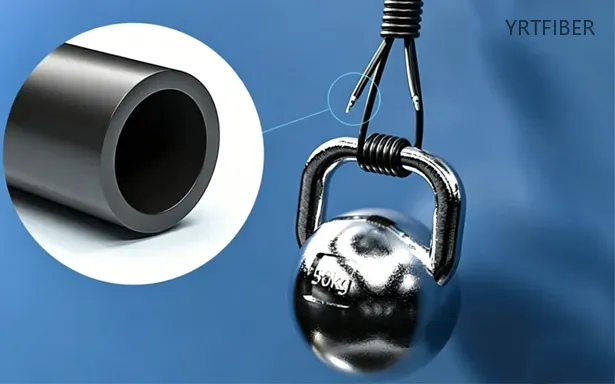
Lightweight and compact, flame-retardant and easy to install:
small outer diameter, light weight, easy to install, and uses special flame-retardant jacket material with excellent fire performance.
Applications d'ingénierie GYXTZW Armored Fiber Cable
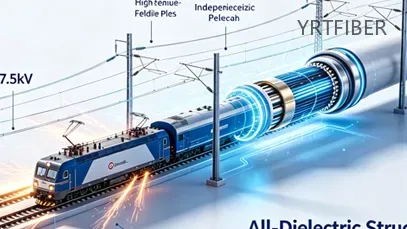
Urban rail transit field:
Used for communication network monitoring systems in subway tunnels, along rail transit lines, and inside subway stations. Its LSZH sheath emits low smoke and is non-toxic in the event of a fire in confined spaces, while the armored structure can withstand frequent vibrations and humid environments in tunnels.
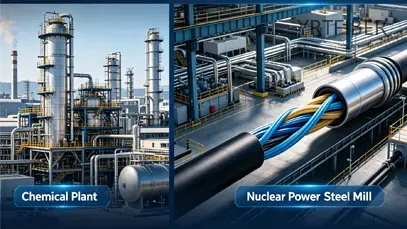
Petrochemical and power fields:
Widely used in chemical plants, petrochemical plants, power plants, nuclear power stations, and steel mills, as well as other flammable and explosive areas. Its flame-retardant performance can effectively prevent fire from spreading along the optical cable, and it does not release corrosive gases, thereby protecting surrounding precision equipment.
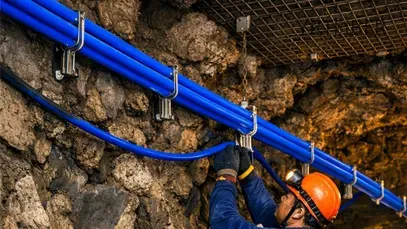
Special industries and facilities:
Including underground communication systems in mines, large foreign-invested factories, and industrial park security monitoring networks, which require both fire and water safety in confined spaces.
Communication backbone network:
Carries long-distance and inter-office communication tasks. The number of optical fibers ranges from 2 to 24 cores, suitable for medium and small-scale communication access, campus networks, and urban-rural area access scenarios.

Expédition et emballage
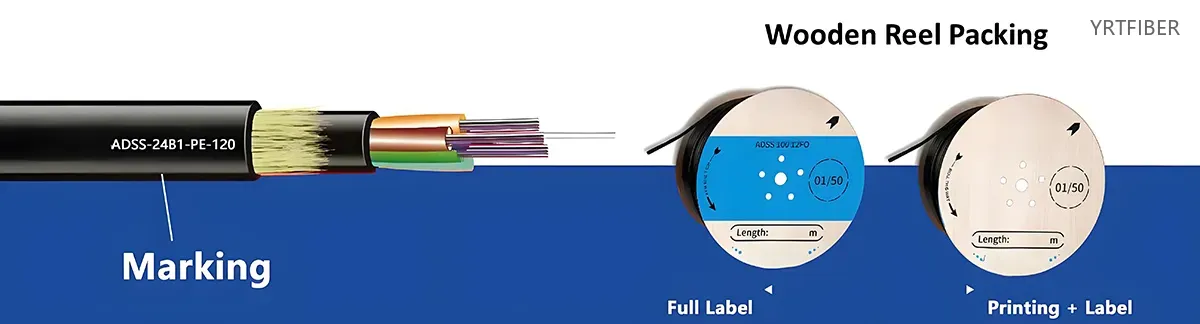
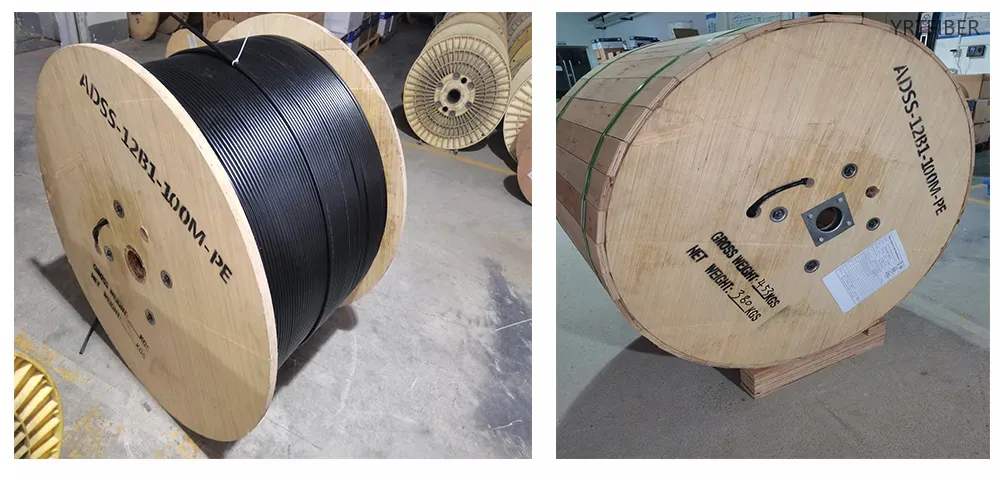
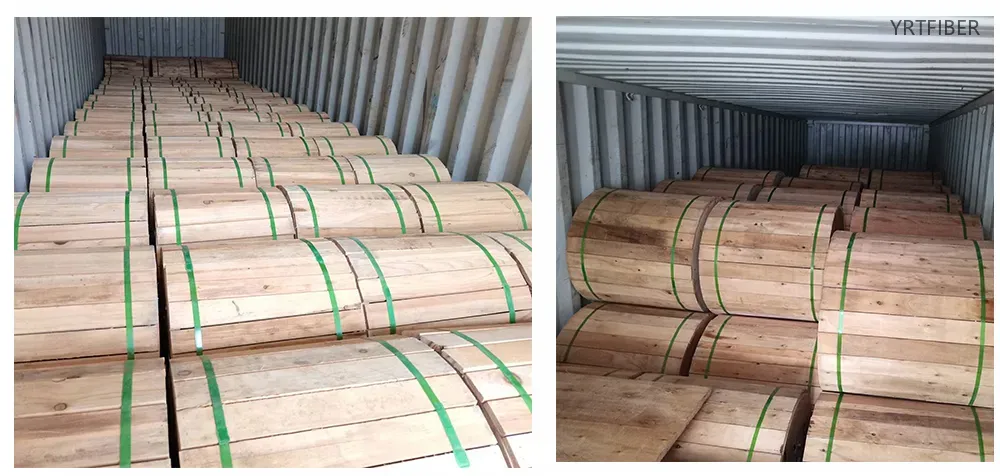
ExigencesPackaging :
- 1 : Tous les câbles doivent être enroulés sur des bobines en bois traitées qui ne sont pas retournables
- 2 : Les extrémités des câbles doivent être solidement fixées à la bobine et protégées par waterproof capuchons rétractables
- 3 : Chaque bobine doit inclure :
- 1、 Protective plastic wrapping layer
- 2、 Reinforcing wooden slats for stability
- 3、 Minimum 1m of free cable end for testing purposes
- 4、 Standard spool length: 3000mm (±2% tolerance allowed)
Identification du câble :
La veste extérieure doit afficher :
- 1 Numérotation séquentielle unique tous les 1m (± 1 % de variance autorisée)
- 2 Marquages répétés supplémentaires à des intervalles de 1 m montrant :
- 1、 Product code and fiber count
- 2、 Manufacturer identification
- 3、 Production date (month/year)
- 4、Total cable length
Standard dimensions de l'emballage :
| Length | Container | Size (L×W×H) | Net Mass | Total Mass |
|---|---|---|---|---|
| 2 km | Bobine en bois | 90 × 75 × 90 cm | 156 kg | 220 kg |
| 3 km | Bobine en bois | 100 × 68 × 100 cm | 240 kg | 280 kg |
| 4 km | Bobine en bois | 109 × 75 × 109 cm | 300 kg | 368 kg |
| 5 km | Bobine en bois | 129 × 72 × 129 cm | 400 kg | 480 kg |
Technical Référence :
- 1 Diamètre du câble standard : 10,0 mm
- 2 Distance maximale de la portée : 100m
- 3 Contactez l'équipe de vente pour les spécifications techniques complètes
Normes de marquage des bobines :
Des marques permanentes (hauteur minimale de 25 à 30 mm) doivent apparaître des deux côtés de chaque bobine :
- 1 Nom et marque de l'entreprise
- 2 Longueur du câble contenue
- 3 Spécifications du câble (type / nombre de fibres)
- 4 Orientation de l'enroulement
- 5 Mesures de poids (brut / net)
Remarque : Tous les matériaux d'emballage en bois doivent subir un traitement de fumigation approprié avant d'être utilisés.
Comparaison des produits:
GYXTZW vs GYXTW vs GYXTY vs GYTS
| Feature / Dimension | GYXTZW (Central Tube, Steel Tape Armor, LSZH) | GYXTW (Central Tube, Steel Tape Armor) | GYXTY (Central Tube, Non-Armored) | GYTS (Stranded, Steel Tape Armor) |
|---|---|---|---|---|
| Structure Type | Central loose tube, steel tape armor (PSP), two parallel steel wires, LSZH outer sheath. | Central loose tube, steel tape armor (PSP), two parallel steel wires, PE outer sheath. | Central loose tube, two parallel steel wires, PE outer sheath. No steel tape armor. | Stranded loose tubes around central metal strength member, steel tape armor (PSP), PE outer sheath. |
| Armor / Protection | Steel tape armor (double-sided coated) – provides crush resistance, rodent protection, bullet resistance. | Steel tape armor (double-sided coated) – provides crush resistance, rodent protection, bullet resistance. | No steel tape armor – only two parallel steel wires as strength members. Minimal mechanical protection. | Steel tape armor (corrugated PSP) – excellent crush resistance, rodent protection, bullet resistance. |
| Outer Sheath | LSZH (Low Smoke Zero Halogen) – flame-retardant, low smoke, halogen-free, UV resistant. | PE (Polyethylene) – UV resistant, weather resistant, but not flame-retardant (burns with smoke). | PE (Polyethylene) – UV resistant, weather resistant, not flame-retardant. | PE (Polyethylene) – UV resistant, weather resistant, not flame-retardant. |
| Fiber Core Capacity | 2 – 24 cores (typical), up to 48 cores in some designs. | 2 – 144 cores. | 2 – 24 cores (typical). | 2 – 288 cores (up to 432 cores in some designs). |
| Typical Applications | Aerial (with messenger), duct, direct burial. Suitable for fire-sensitive areas: tunnels, subways, power plants, chemical plants, nuclear facilities, high-rise building entry sections. | Aerial (with messenger), duct, direct burial. General outdoor access networks, FTTH, low-core-count links. | Aerial (with messenger), duct. Low-cost outdoor access networks, low mechanical stress environments. | Aerial (with messenger), duct, direct burial. Core networks, trunk lines, long-haul backbone, harsh environments requiring high crush resistance. |
| Engineering Pros | ① LSZH sheath – low smoke, halogen-free, self-extinguishing, safe for indoor/confined spaces; ② Steel tape provides excellent crush and rodent resistance; ③ Small diameter, light weight, easy handling; ④ Full-section water blocking – good moisture protection; ⑤ Suitable for both outdoor and indoor fire-rated environments. | ① Steel tape provides good crush and rodent resistance; ② Compact, small diameter, light weight; ③ Cost-effective for low core counts; ④ Full-section water blocking. | ① Lowest cost among central tube types; ② Lightweight and small diameter, easy to install; ③ PE sheath provides good UV resistance. | ① Stranded design supports very high core counts; ② Superior mechanical strength – excellent crush, tensile, and impact resistance; ③ Good moisture barrier; ④ Suitable for long-haul backbone networks. |
| Engineering Cons | ① Limited core count (≤24 cores typical); ② LSZH sheath has slightly lower UV resistance than PE for long-term outdoor exposure; ③ Higher cost than GYXTW and GYXTY due to LSZH material. | ① Not flame-retardant – cannot be used in fire-sensitive areas; ② Limited core count compared to stranded designs; ③ PE sheath not suitable for indoor/confined spaces. | ① No steel tape armor – vulnerable to rodent attack and side pressure; ② Not suitable for direct burial or harsh mechanical environments; ③ Poor crush resistance. | ① Larger diameter and heavier – harder to handle in congested ducts; ② Higher material and shipping cost; ③ Not flame-retardant; ④ More complex mid-span maintenance. |
| Flame Retardancy | LSZH – flame-retardant, low smoke, halogen-free. Suitable for tunnels, subways, high-rise entry sections (≥500m per segment). | None – PE sheath burns with smoke. Not suitable for indoor or fire-sensitive spaces. | None – same as GYXTW. | None – same as GYXTW. Flame-retardant variant available as GYTZS (LSZH). |
| Cost (Relative) | Medium to high – LSZH material and steel tape armor increase cost, but provides fire safety and mechanical protection. | Low to medium – cost-effective for low-core-count outdoor access applications. | Low – most economical option, but least protection. | Medium to high – stranded design with high core count capability increases cost. |
| Maintenance Difficulty | Low – LSZH sheath resists chemical degradation and UV; steel armor reduces fault rate; no grounding required. | Low – simple structure, easy to splice and maintain. Steel armor reduces damage risk. | Low – very easy to handle and maintain, but higher risk of damage due to lack of armor, requiring more frequent inspections. | Moderate – heavier and stiffer, harder to access mid-span; must inspect steel tape for corrosion at sheath damage points. |
GYXTZW Armored Fiber Cable Guide de sélection
Fire-retardant cable engineering selection between GYXTZW and GYXTW/GYXTY/GYTS:
GYXTZW features steel tape armor combined with an LSZH (Low Smoke Zero Halogen) outer sheath, providing both mechanical protection and flame retardancy. It is specifically designed for outdoor installation scenarios that also require fire safety, such as cable entry sections into buildings, tunnels, subways, power plants, chemical plants, and other confined spaces where low smoke and halogen-free properties are mandatory. GYXTW, GYXTY, and GYTS all use PE sheaths which are UV-resistant and suitable for long-term outdoor exposure, but they are not flame-retardant and should never be used indoors or in fire-sensitive areas.
Fire safety and entry section requirements:
For core network entry sections (typically ≥500 meters per segment) into equipment rooms, central offices, high-rise buildings, tunnels, and other fire-rated spaces, GYXTZW with LSZH sheath is the mandatory choice. The LSZH material produces minimal smoke and no toxic halogen gases when burned, ensuring personnel safety and equipment protection in confined spaces. Standard GYXTW, GYXTY, and GYTS with PE sheaths are strictly for outdoor use only – they will burn and produce dense smoke if exposed to fire, failing building code requirements for indoor/plenum areas.
Non-flame-retardant cable applications:
GYXTW is a classic "central tube armored outdoor cable" – its PE sheath provides excellent UV resistance and long-term outdoor reliability, with steel tape armor offering good crush and rodent protection. However, it cannot be used in fire-sensitive spaces. GYXTY is the most economical option for low-core-count aerial or duct installations where mechanical stress is minimal and fire safety is not a concern – its lack of steel tape armor makes it unsuitable for direct burial or rodent-prone areas. GYTS, with its stranded loose tube design, supports much higher fiber counts (up to 288 cores or more) and offers superior mechanical strength for trunk lines and long-haul backbone networks, but it also lacks flame retardancy. For applications requiring both high mechanical strength and flame retardancy, a GYTZS (stranded, steel tape armor, LSZH) variant would be the appropriate choice.
GYXTZW Optical Cable – Brief Installation Instructions
Cable Handling – Avoid twisting or crushing. Do not exceed the rated tensile load (typically 600N short term, 300N long term).
Bending Radius – Maintain min. bending radius of 10× cable OD during installation, 20× during pulling.
Pulling – Use a pulling grip or friction-type pulling eye attached to the strength members (parallel steel wires + PSP tape).
Stripping – Remove the LSZH sheath and PSP tape carefully. Do not nick the loose tube or fibers.
Grounding – The steel wires and PSP are metallic; ground them properly at one end if required.
Flame Retardant Note – The LSZH sheath provides low smoke & halogen-free protection; avoid excessive heat during termination.
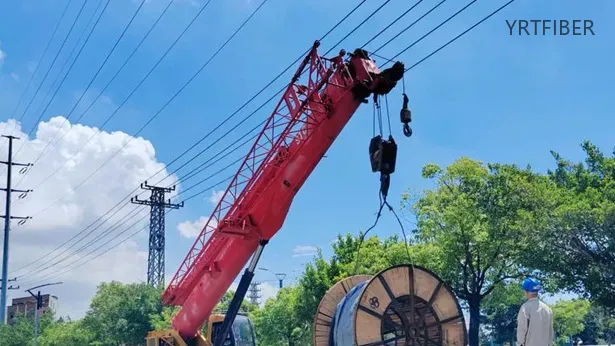
Installation Types – Suitable for aerial, duct, or direct burial (with extra protection if needed).
Télécharger le catalogue de produits YRTFIBER
Prise de vue réelle d'usine
Factory Overview and Qualification Strength
Our factory has been specializing in fiber optic cable manufacturing for more than ten years and is recognized as a high-tech enterprise. The factory covers an area of over 30.000 square meters and features a Class 10.000 cleanroom and fully automated production lines. The company has obtained ISO9001. ISO14001. and ISO45001 certifications, and its products comply with IEC, ITU-T, and GB/T standards. The GYXTZW series has passed the national flame-retardant rating and LSZH environmental certifications.
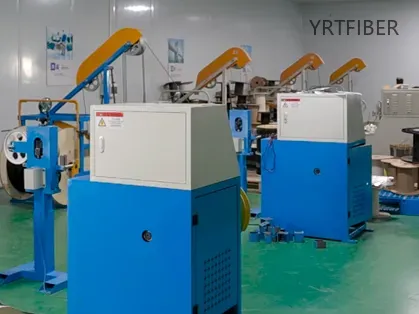
Advanced Production Equipment and Process Capabilities
Core processes utilize high-speed fiber coloring machines, secondary coating production lines, steel tape longitudinal wrapping units, and parallel steel wire payoff racks. For the GYXTZW structure, we are equipped with dual-channel automatic grease filling systems and PSP steel tape longitudinal wrapping molds. We have the capability to deliver 2-24 core full-series batches, meeting the needs of large-scale projects and urgent orders.
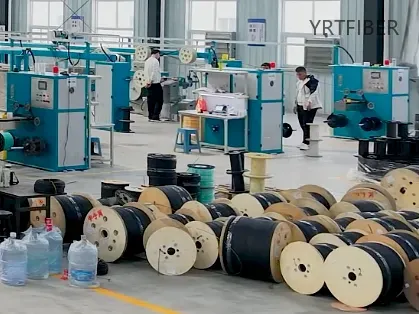
Strict Quality Control and Testing Capabilities
The testing center is equipped with fiber geometric parameter testers, OTDR, tensile testing machines, high and low temperature cyclic humidity chambers, and vertical combustion testers. Each reel of GYXTZW cable undergoes mechanical property sampling tests such as tension, flattening, impact, and torsion, as well as high and low temperature cycle tests from -40°C to 70°C and flame-retardant smoke density tests. A three-level quality inspection system has been established to ensure consistency.
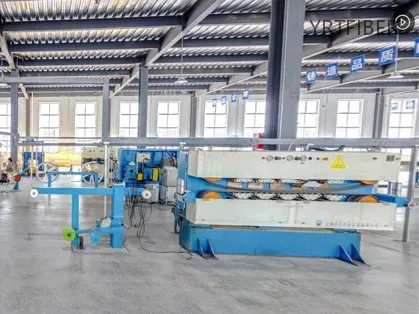
R&D Innovation and Customization Services
The R&D team continuously collaborates with universities and research institutes to optimize the GYXTZW flame-retardant formulas and armoring processes. We offer customizable options for sheath color, printing, fiber type (such as G652D, G655), and core combinations, and provide fire rating upgrade solutions. With rapid sample production and professional technical support, we have served multiple metro, petrochemical, and utility tunnel projects.
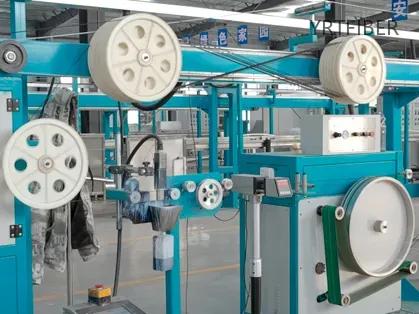
Foire aux questions et enquête rapide
GYXTZW Armored Fiber Cable FAQ
1. Quel est le cas d'utilisation principal du câble fibre ignifuge GYXTZW?
GYXTZW est idéal pour indoor-outdoor scénarios hybrides tels que building-to-building, substations ou , où la conformité en matière de sécurité incendie et la protection mécanique de base sont toutes deux essentielles.
2. Qu'est-ce qui différencie GYXTZW des câbles GYXTW ou GYXTY standard?
Contrairement à GYXTW ou GYXTY, GYXTZW utilise une gaine extérieure ignifuge qui répond aux normes de protection contre les incendies (IEC 60332, etc.), ce qui la rend appropriée pour une utilisation dans des environnements fire-regulated . Il dispose également d'un blindage en ruban d'acier pour une résistance accrue à l'écrasement.
3. Quelle est la capacité et la structure de la fibre?
Le câble prend en charge 2 à 24 cœurs de fibre monomode G.652D ou G.655 dans un tube uni central rempli de gel bloquant l'eau. Deux fils d'acier parallèles fournissent une résistance à la traction, tandis que le ruban d'acier ajoute une protection.
4. GYXTZW convient-il à l'inhumation directe?
Il n'est pas recommandé pour un enfouissement direct sans conduit, en raison du nombre limité de noyaux et de la structure plus mince. Il est mieux utilisé dans les conduits, les colonnes montantes, les plateaux ou les tuyauteries de protection , en particulier lorsque la sécurité incendie est un problème.
5. Quels environnements bénéficient le plus de ce câble?
GYXTZW est parfait pour :
Substations et bâtiments utilitaires
Indoor-to-outdoor transitions de fibres
Tunnels de métro et puits de câbles
Commercial campus nécessitant un câble ignifuge
Envoyez votre demande
Remplissez le formulaire ci-dessous et nous vous répondrons dans les 24 heures.


