

 English
 Español
 Português
 لالعربية
 Русский
 Bahasa Indonesia
 Français
 Türkçe

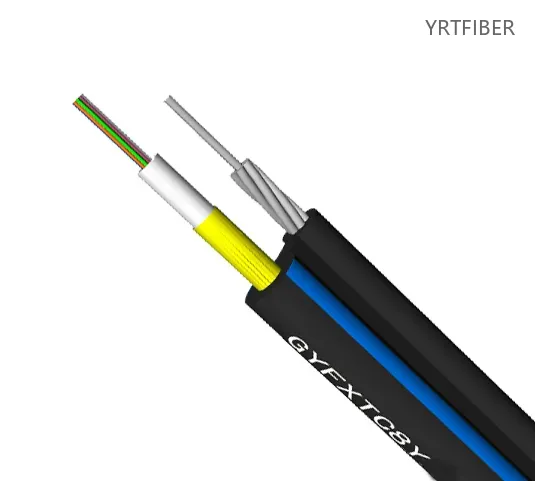
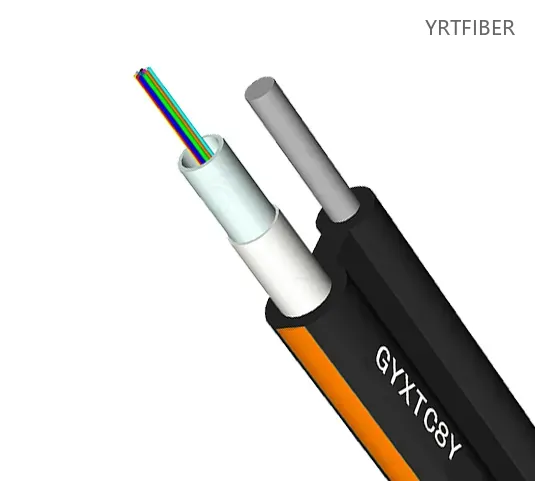
GYXTC-8Y Menyokong Sendiri Rajah 8 Kabel Gentian Optik Udara Uni-Tiub
G652D/G657 fibers - Low loss, high bandwidth
Self-supporting figure-8 design - Easy aerial installation
Steel wire reinforcement - Strong & durable
UV & weather-resistant - Suitable for harsh environments
Loose tube structure - Enhanced fiber protection
What is GYXTC‑8Y Fiber Optic Cable Used For?
GYXTC‑8Y is a figure‑8 self‑supporting aerial optical cable designed for short‑span outdoor deployments. Its integrated steel messenger wire eliminates the need for separate support strands, allowing direct pole‑to‑pole installation with spans typically up to 50 meters. The central loose tube construction keeps the cable lightweight and compact, making it ideal for FTTH drop connections, inter‑building links, rural access networks, and CATV distribution. With a UV‑resistant PE sheath and a wide operating temperature range of -40°C to +70°C, GYXTC‑8Y provides a cost‑effective, easy‑to‑install solution for last‑mile aerial fiber connectivity.
GYXTC-8Y Aerial Fiber Optic Cable Parameter spesifikasi
- Parameter spesifikasi
- CIRI-CIRI OPTIK
Ciri Optik
| G.652 | G.657 | ||
|---|---|---|---|
| Pengecilan | @ 1310nm | ≤0.45 dB / km | ≤0.45 dB / km |
| @ 1550nm | ≤0.30 dB / km | ≤0.30 dB / km | |
| Panjang Gelombang Potongan Kabel | ≤1260nm | ≤1480nm | |
| Suhu Penyimpanan / Operasi | -20℃ ~ +60℃ | ||
Parameter teknikal
| Model | Kiraan Gentian | Diameter Kawat Keluli (mm) | Berat (kg / km) | Kekuatan TeganganJangka Panjang / Pendek (N) | Rintangan Hancur (N / 100mm) | Lenturan RadiusStatik / Dinamik (mm) |
|---|---|---|---|---|---|---|
| GYXTC-8Y-4 | 4 | 1.6 | 47 | 400/1000 | 1000/2000 | 10D / 20D |
| GYXTC-8Y-6 | 6 | 1.6 | 47 | 400/1000 | 1000/2000 | 10D / 20D |
| GYXTC-8Y-8 | 8 | 1.6 | 47 | 400/1000 | 1000/2000 | 10D / 20D |
| GYXTC-8Y-12 | 12 | 1.6 | 47 | 400/1000 | 1000/2000 | 10D / 20D |
Struktur & Komposisi Produk
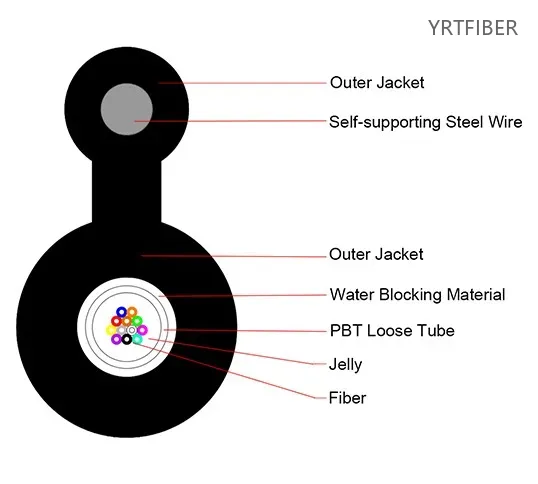
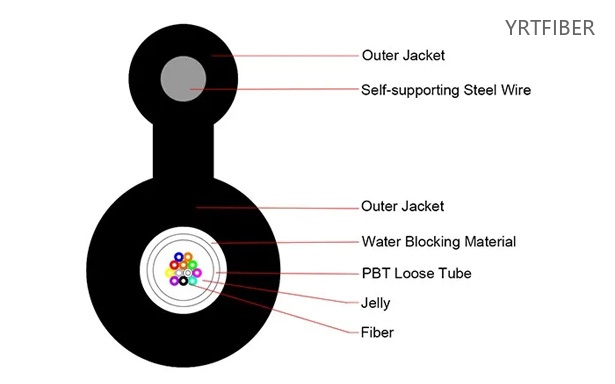
Outer jacket — Flame‑retardant, UV‑resistant polymer sheath that protects the cable from weather, abrasion and fire spread.
Self‑supporting steel wire / central strength member — A metallic rod or strand that provides longitudinal support and tensile strength for aerial or pulling applications.
Secondary outer jacket (main cable jacket) — Protective outer layer around the cable core, providing mechanical protection and environmental sealing.
Water‑blocking material / filling compound — Gel or water‑swellable tapes/compounds that prevent water ingress and migration along the cable.
Loose tube (PBT) with jelly — Polymer loose tube(s) filled with jelly that cushion and isolate the optical fibers, allowing thermal movement and protecting against moisture.
Optical fibers — Color‑coated single fibers or fiber bundles located inside the loose tube(s) that carry optical signals.
Ripcords and fillers — Ripcords for easy jacket removal and non‑metallic fillers to maintain circular geometry and add mechanical stability.
Faedah daripada GYXTC-8Y Aerial Fiber Optic Cable
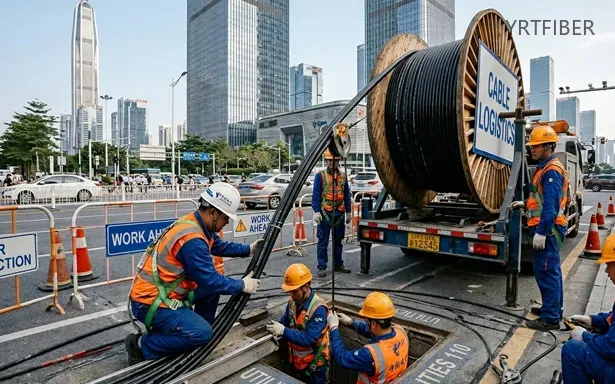
Metropolitan Area Backbone and Inter-office Links
Used for long-distance transmission in urban trunk lines or between offices, connecting switching centers, data centers, and backbone nodes. With its multi-core design and good mechanical strength, it is suitable for duct or direct burial installation, meeting high bandwidth and high reliability requirements.
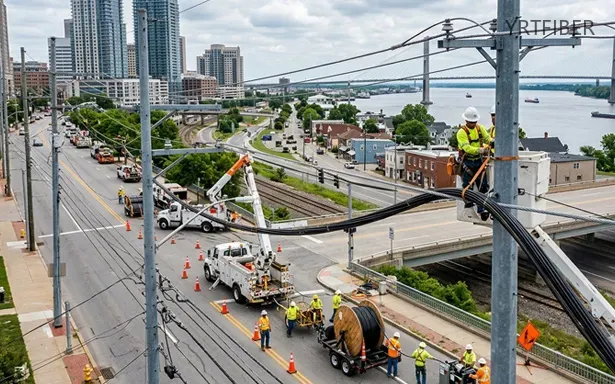
Overhead Lines and Pole Lines
Used in rural or urban pole lines as non-self-supporting or self-supporting installations. It can be suspended with steel strand, adapting to long spans across roads and rivers, facilitating rapid installation and maintenance.
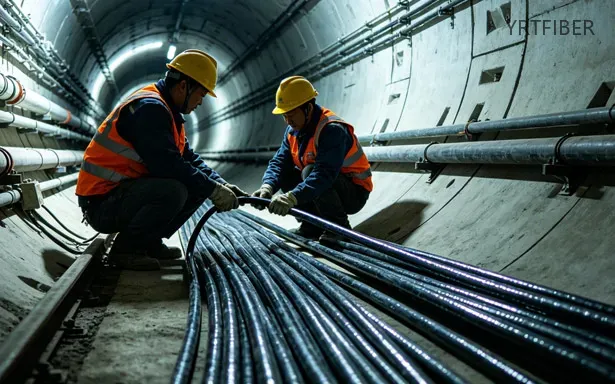
Subways, Tunnels, and Integrated Utility Tunnels
Used in enclosed or semi-enclosed environments for communication loops, monitoring, and signal transmission. Its flame-retardant and low-smoke halogen-free sheath reduces risk in fire scenarios, while steel strip armor or additional protection resists lateral pressure and mechanical impact.
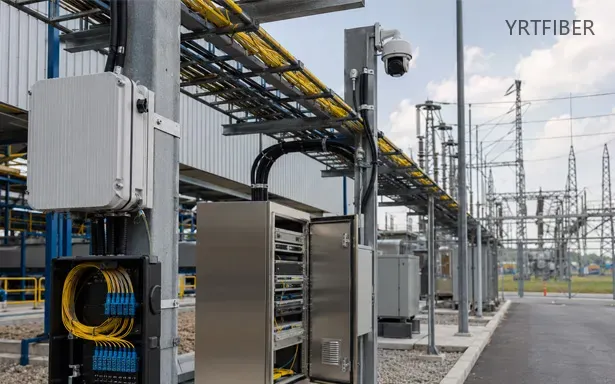
Industrial Parks and Power Systems
Used for power system communication, substation interconnection, monitoring and SCADA links, as well as industrial automation networks. Its anti-interference, weather-resistant, and anti-tooth properties make it suitable for long-term operation in chemical, mining, or high electromagnetic interference environments.
Aplikasi Kejuruteraan GYXTC-8Y Aerial Fiber Optic Cable
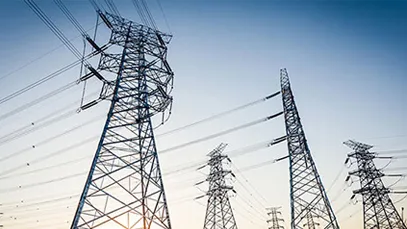
Aerial (self-supporting):
Installed without a separate messenger wire. Ideal for rural FTTx and last-mile access. One-step pulling reduces labor and time.Duct:
Can be pulled into microducts or standard conduits. The compact figure-8 design still fits, though the steel messenger adds some stiffness. Suitable for short urban duct sections.
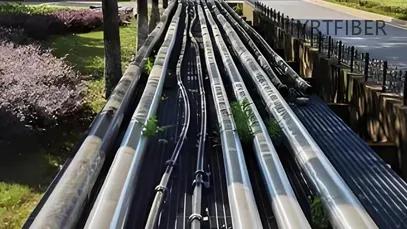
Duct:
Can be pulled into microducts or standard conduits. The compact figure-8 design still fits, though the steel messenger adds some stiffness. Suitable for short urban duct sections.
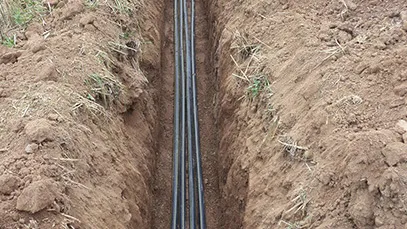
Direct burial:
Resistant to rodents due to the steel messenger and PE sheath. However, rocky terrain may require additional sand bedding or protective conduit. Not the first choice for long burial runs – GYTS is better for high crush environments.
Penghantaran & Pembungkusan
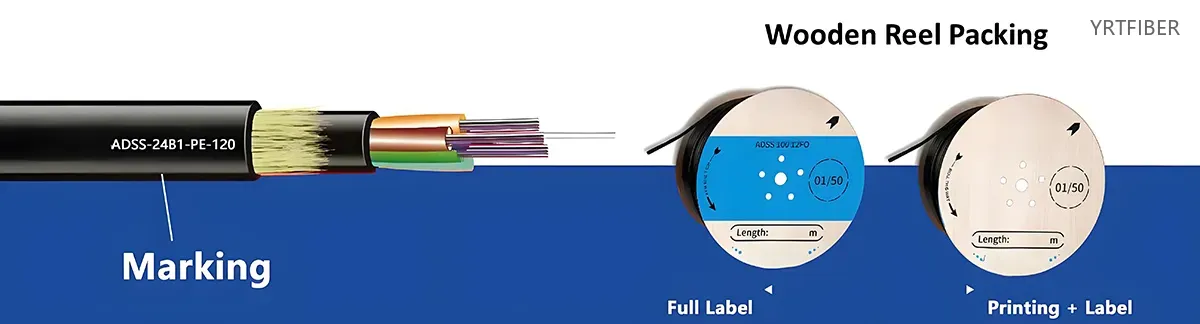
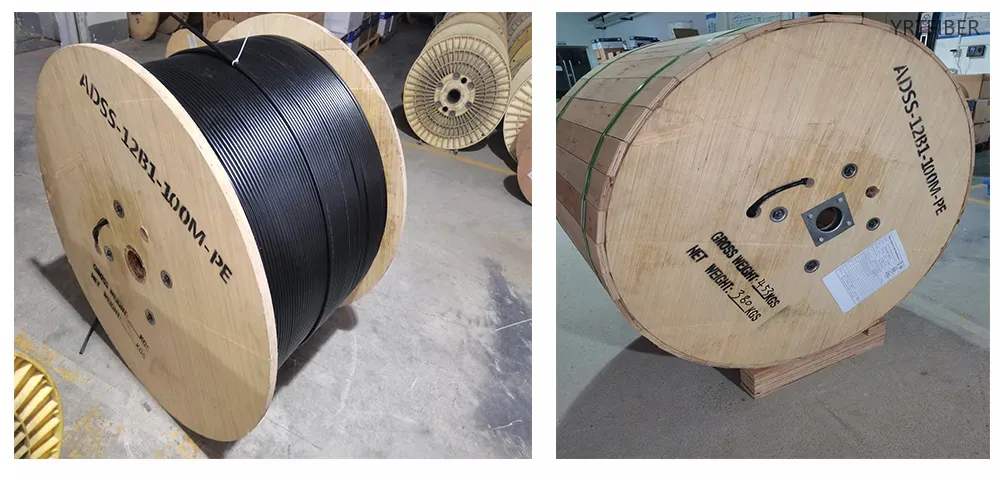
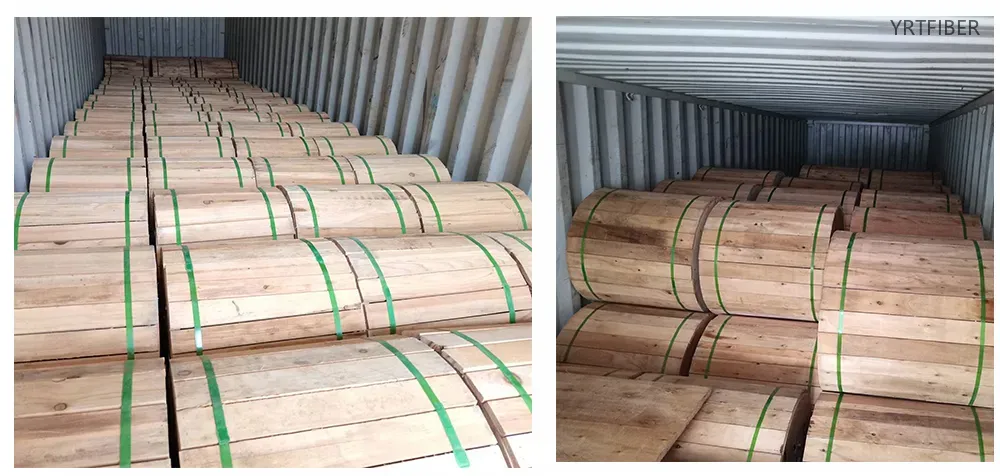
Packaging Requirements:
1:All cables shall be wound on treated wooden spools that are not returnable
2:Cable ends must be firmly secured to the spool and protected with waterproof shrink caps
3:Each spool must include:
1、 Protective plastic wrapping layer
2、 Reinforcing wooden slats for stability
3、 Minimum 1m of free cable end for testing purposes
4、 Standard spool length: 3000mm (±2% tolerance allowed)
Cable Identification:
The outer jacket must display:
1、Unique sequential numbering every 1m (±1% variance permitted)
2、 Additional repeating markings at 1m intervals showing:
1、 Product code and fiber count
2、 Manufacturer identification
3、 Production date (month/year)
4、Total cable length
Standard Packaging Dimensions:
| Length | Container | Size (L×W×H) | Net Mass | Total Mass |
|---|---|---|---|---|
| 2 km | Wood spool | 90×75×90 cm | 156 kg | 220 kg |
| 3 km | Wood spool | 100×68×100 cm | 240 kg | 280 kg |
| 4 km | Wood spool | 109×75×109 cm | 300 kg | 368 kg |
| 5 km | Wood spool | 129×72×129 cm | 400 kg | 480 kg |
Technical Reference:
1、 Standard cable diameter: 10.0mm
2、Maximum span distance: 100m
3、Contact sales team for complete technical specifications
Spool Marking Standards:
Permanent markings (minimum 25-30mm height) must appear on both sides of each spool:
1、 Company name and trademark
2、Contained cable length
3、Cable specifications (type/fiber count)
4、Winding orientation
5、Weight measurements (gross/net)
Note: All wooden packaging materials must undergo proper fumigation treatment prior to use.
Perbandingan Produk:
GYXTC - 8Y VS GYTA (Perisai Pita Aluminium) VS GYTS VS ADSS
| Ciri / Dimensi | GYXTC - 8Y (Rajah - 8 Menyokong Diri) | GYTA (Perisai Pita Aluminium) | GYTS (Perisai Pita Keluli) | ADSS (Semua "Dielektrik Diri" Menyokong) |
|---|---|---|---|---|
| Aplikasi Biasa | Udara (menyokong diri), saluran, pengebumian terus. Akses luar bandar, FTTx, batu terakhir. | Saluran luar, atas kepala (dengan utusan), tulang belakang jarak jauh, rangkaian bandar. | Udara (dengan utusan), saluran, pengebumian terus. Garisan batang, persekitaran yang keras. | Udara (rentang panjang, berhampiran talian kuasa), tulang belakang FTTH, kawasan yang memerlukan penebat elektrik. |
| Pemasangan | Satu kali menarik / menegangkan; tiada wayar utusan yang berasingan. Lebih pantas untuk garisan tiang. | Memerlukan utusan atau saluran keluli berasingan. Pengendalian yang lebih berat, lebih banyak perkakasan. | Sama seperti GYTA; perisai keluli menambah berat. Memerlukan wayar atau saluran utusan. | Terus tiang "ke" tiang; tiada komponen logam. Memerlukan perkakasan khas dan pengiraan ketegangan yang teliti. |
| Kelebihan dalam Kejuruteraan | Masa pemasangan yang rendah, tiada utusan tambahan, bagus untuk rentang panjang (sehingga ~ 100m), tahan tikus (sokongan dawai keluli). | Penghalang lembapan yang baik (pita aluminium), perisai ringan, fleksibel untuk saluran. | Kekuatan remuk & tegangan tinggi, perlindungan tikus / mekanikal yang sangat baik, tahan lama untuk pengebumian terus. | Tiada bahagian logam yang kebal kepada EMI / kilat, selamat pada tiang kuasa, keupayaan rentang yang sangat panjang (sehingga 1500m). |
| Keburukan dalam Kejuruteraan | Beban angin / ais yang lebih tinggi daripada ADSS, rentang terhad lwn ADSS, keluli utusan boleh terhakis jika rosak. | Rintangan menghancurkan lebih buruk daripada perisai keluli; pita aluminium boleh rosak di tanah berbatu. | Lebih berat, kos penghantaran lebih tinggi, lebih kaku - lebih sukar untuk dikendalikan dalam saluran. Kakisan galvanik mungkin jika salutan rosak. | Perkakasan yang lebih mahal (kelengkapan khas), memerlukan reka bentuk kendur / tegangan yang tepat, sarung sensitif UV. |
| Kos (Relatif) | Sederhana (lebih rendah daripada ADSS tetapi lebih tinggi daripada GYTA tanpa utusan). Utusan bersepadu mengurangkan tenaga kerja. | Rendah ke Sederhana (kos kabel rendah, tetapi perkakasan utusan menambah kos). | Sederhana (perisai keluli meningkatkan kos bahan dan penghantaran). | Tinggi (bahan khas, pembuatan kompleks, kelengkapan unik). |
| Kesukaran Penyelenggaraan | Sederhana - angka mudah dibaiki - 8 (utusan dan gentian berasingan). Periksa keluli untuk karat. | Rendah - reka bentuk ringkas, tetapi akses saluran mungkin diperlukan. Pita aluminium tahan kakisan. | Sederhana - perisai berat menjadikan akses rentang pertengahan lebih sukar. Kemungkinan karat pada titik potong. | Rendah hingga Sederhana - tiada kakisan logam, tetapi pemeriksaan kendur berkala diperlukan; pembaikan memerlukan penyambungan khas. |
| Keupayaan Span (biasa) | 50 - 100 m (bergantung kepada zon angin / ais). | 30 - 60 m (dengan utusan berasingan). | 30 - 60 m (dengan utusan). | Sehingga 1500 m (dengan reka bentuk yang betul). |
| Kepekaan Kilat / EMI | Sederhana (utusan keluli boleh menjalankan, mungkin memerlukan pembumian). | Sederhana (pita aluminium mengalir, memerlukan ikatan / pembumian). | Tinggi (pita keluli mengalirkan kilat, memerlukan pembumian yang betul). | Tiada (dielektrik sepenuhnya, tiada pembumian diperlukan). |
GYXTC-8Y Aerial Fiber Optic Cable Panduan Pemilihan
Pilih GYXTC - 8Y untuk penggunaan udara pantas (50 - 100m rentang) di mana tiada utusan berasingan dikehendaki. Helai keluli bersepadunya mengurangkan masa pemasangan dan kos buruh, menjadikannya sesuai untuk FTTx luar bandar dan akses batu terakhir. Walau bagaimanapun, elakkan jika rentang melebihi 100m atau jika kakisan menjadi kebimbangan.
Pilih GYTA untuk laluan saluran atau udara di mana rintangan lembapan dan berat ringan menjadi keutamaan. Ia mempunyai kos bahan yang lebih rendah daripada alternatif berperisai, tetapi memerlukan utusan yang berasingan dan hanya menawarkan perlindungan penghancuran sederhana - terbaik untuk tulang belakang bandar dan persekitaran basah.
Pilih GYTS apabila perlindungan mekanikal maksimum diperlukan - pengebumian terus, rupa bumi berbatu atau kawasan rawan tikus. Perisai pita kelulinya memberikan kekuatan remuk dan tegangan yang tinggi, tetapi menambah berat dan memerlukan utusan yang berasingan, meningkatkan kerumitan dan kos pemasangan.
Pilih ADSS untuk laluan udara rentang panjang (sehingga 1500m) dan persekitaran berhampiran talian kuasa voltan tinggi. Pembinaan semua dielektriknya menghapuskan isu pembumian dan EMI, tetapi dilengkapi dengan kos bahan yang lebih tinggi, perkakasan khusus dan reka bentuk kendur yang teliti. Sesuai untuk rangkaian utiliti dan aplikasi rentang melampau.
Ringkasan pantas:
Udara (pendek, pantas) GYXTC - 8YDuct / kawasan basah GYTAHarsh / pengebumian GYTSSpan panjang / talian kuasa ADSS
GYXTC-8Y Installation Guide (Short)
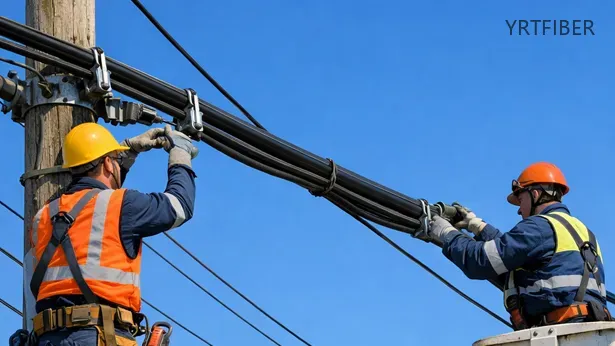
Pre‑pull check – Inspect the cable for sheath/messenger damage. Ensure no sharp edges on poles or hardware.
Pole preparation – Install suitable suspension clamps (e.g., fixed or drop clamps) at designed intervals (typically 50–100 m).
Cable payout – Use a cable trailer or rotating reel stand. Avoid twisting the figure‑8 section.
Tensioning – Pull the steel messenger (not the optical core) with a tension meter. Apply recommended sag (e.g., 1–2% of span length) based on local wind/ice loads.
Clamping – Secure the messenger into suspension clamps. Do not over‑compress the fiber part.
Grounding – Bond the steel messenger to pole ground at regular intervals (every 200–300 m) for lightning protection.
Storage & splicing – Leave service loops at splice points. Store excess cable on poles with figure‑8 brackets.
Final test – Perform OTDR and visual inspection after installation.
Note: Never clamp directly on the optical fiber section – always clamp the integrated steel messenger.
Muat turun Katalog Produk YRTFIBER
Tembakan Sebenar Kilang
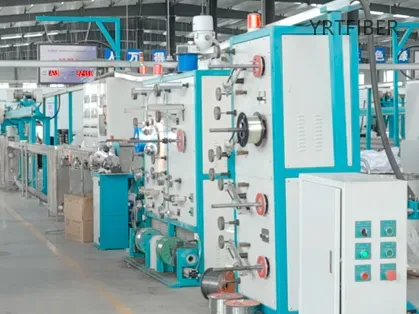
Advanced Manufacturing Lines
Our factory is equipped with fully automated optical fiber coloring, loose tube extrusion, stranding, and double-sheathing lines.
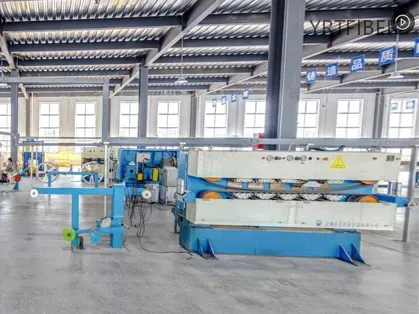
Manufacturing Plant Overview
A clean and well‑organized production floor.
Raw Material Storage
FRP rods, loose tubes, steel tape, and PE compounds.
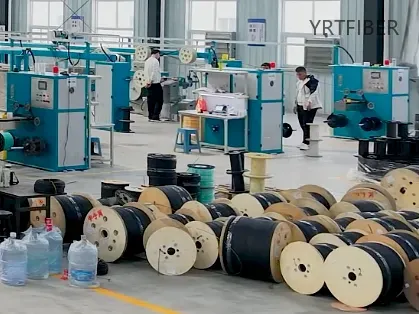
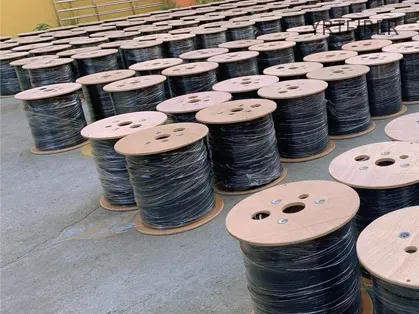
Factory Warehouse & Dispatch
Ready‑to‑ship fiber cable coils awaiting delivery.
Soalan Lazim & Pertanyaan Pantas
GYXTC-8Y Aerial Fiber Optic Cable FAQ
Q: Can you provide samples?
A: Yes, we can provide samples of a certain value.
1. What is the fundamental difference in installation between GYXTC‑8Y and other aerial cables (such as GYTS and ADSS)?
GYXTC‑8Y is a figure‑eight self‑supporting cable in which the steel messenger and the optical cable are factory‑integrated into a single unit. For aerial installation it does not require a separate messenger wire and can be installed in one operation, eliminating the step of tying the cable to a messenger with thin steel wire. GYTS is not self‑supporting and requires an independent steel messenger to be installed first, then the cable must be lashed to that messenger, which increases construction steps, time and overall installation cost. ADSS (all‑dielectric self‑supporting) also does not need a separate messenger, but it uses a non‑metallic, non‑conductive structure and is commonly used on poles shared with power lines; ADSS can span much longer distances than typical GYXTC‑8Y spans. Selection among the three depends on project needs: GYXTC‑8Y is fast to install and cost‑effective for standard aerial scenarios; GYTS, used with a messenger, offers stronger lateral protection and is suitable where higher mechanical protection is required; ADSS is preferred for long spans or live‑line environments.
2. How well does GYXTC‑8Y adapt to harsh environments? Can it operate reliably in extreme cold, intense sun and heavy snow?
GYXTC‑8Y has good environmental adaptability. Its polyethylene (PE) outer sheath provides strong UV resistance for prolonged outdoor sun exposure. Typical operating temperature ranges are around –20°C to +60°C, with some variants rated for extremes such as –40°C to +70°C. For ice and snow loads, the cable’s design accounts for additional loads on sag, and engineering calculations must include ice accretion and wind pressure as added tension. Note that installation temperature limits are generally between –15°C and +50°C; below –15°C the sheath can become brittle and bending may cause irreversible damage, so avoid installation in very low temperatures.
3. What is the maximum span for GYXTC‑8Y, and how are sag and tension calculated during installation?
Typical spans for GYXTC‑8Y are in the range of 50–100 meters, but the exact allowable span must be determined by engineering calculations that consider local ice and wind loads rather than relying on typical values. Sag and tension are calculated using catenary principles: sag is proportional to the cable’s weight per unit length and the square of the span, and inversely proportional to horizontal tension; ice and wind loads must be superimposed. During installation, the steel messenger is tensioned in stages—coarse tensioning followed by fine sag adjustment—to ensure the final sag meets safety requirements while keeping fiber strain within design limits (typically ≤0.6%).
4. What special tools are required for installing GYXTC‑8Y, and how are the steel messenger and fiber portions separated at poles?
Installation requires specialized figure‑eight preformed anchor devices that clamp directly onto the steel messenger for rapid fixation. Other common aerial tools include pulleys, pulling ropes, sag/tension meters, suspension hooks and grounding clamps. At terminal poles, a splitter or separation tool is used to separate the steel messenger from the optical cable within the figure‑eight assembly. The messenger is then anchored with preformed tension clamps or compression strand vises, while the fiber portion is coiled for reserve and the separation point is resealed with weatherproof tape to prevent moisture ingress into the cable core.
5. How should GYXTC‑8Y be maintained and serviced during long‑term operation?
Maintenance focuses on inspecting the steel messenger for corrosion and periodically checking cable sag. Because the messenger is exposed outdoors, inspect the zinc coating and any signs of rust or coating loss every two to three years, paying special attention to grounding connections where electrochemical corrosion is more likely. After severe wind or ice events, check for abnormal increases in sag or uneven loading and, if necessary, remeasure tension and adjust sag. If a cable section fails due to aging or external damage, use the reserved coil length for splicing and repair; when stripping the messenger and fiber sheath, keep the environment dry and clean to avoid moisture entering the loose tubes. With proper maintenance, GYXTC‑8Y is typically designed for a service life of 25 years or more, and can exceed 30 years under good conditions.
6. When should GYXTC‑8Y be chosen over GYTS or ADSS? What are the selection guidelines?
Selection guidance by scenario: – GYXTC‑8Y (preferred): ideal for short‑ to medium‑distance urban and rural aerial deployments, FTTx access in towns and sparsely populated areas, and projects requiring rapid installation. Its one‑step installation shortens construction time and reduces labor costs; it is compact and lightweight. – GYTS (with messenger): suitable for mixed aerial and duct routes or projects demanding higher mechanical protection (better lateral crush and rodent resistance). GYTS uses steel‑tape armor for stronger mechanical protection but requires a separate messenger, increasing installation time and cost. – ADSS (specific cases): chosen when cables must be installed on the same poles as high‑voltage power lines and complete electrical insulation is required to avoid induced currents. ADSS supports much longer spans but involves higher material and hardware costs and more complex sag design, making it suitable for power‑line communication networks and other specialized applications.
Hantar Pertanyaan Anda
Isi borang di bawah dan kami akan kembali kepada anda dalam masa 24 jam.
Artikel Berkaitan

GYXTC8S Menyokong Sendiri Rajah 8 Kabel Gentian Optik Udara - G.652D / G.657
GYXTC8S Menyokong Sendiri Rajah 8 Kabel Gentian Optik Udara - G.652D / G.657


