

 English
 Español
 Português
 لالعربية
 Русский
 Bahasa Indonesia
 Türkçe
 Bahasa Melayu

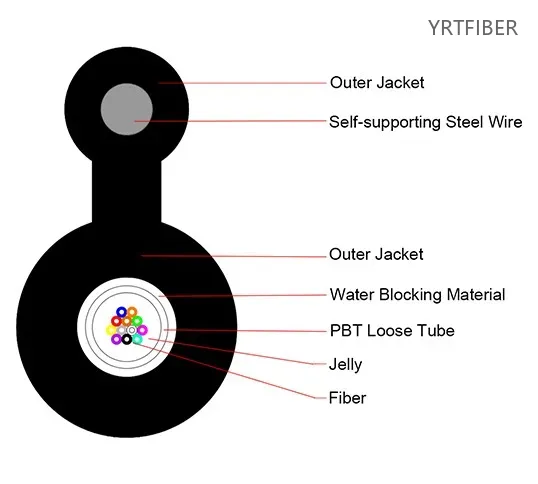
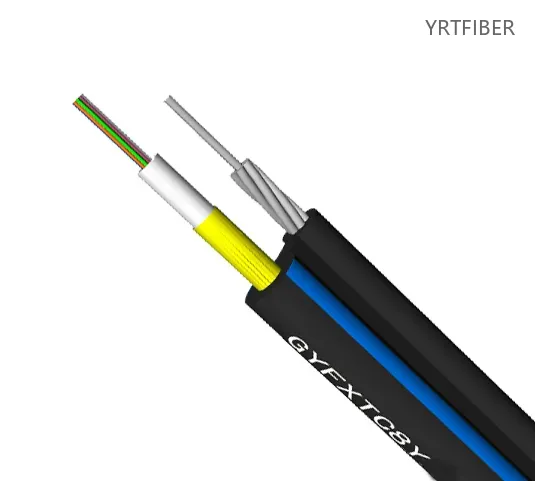
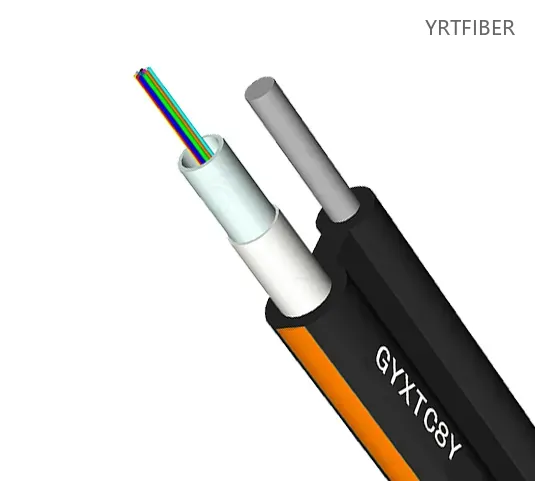
Gyxtc-8y figure 8 autoportante câble à fibre optique aérien uni-tube
G652D/G657 fibers - Low loss, high bandwidth
Self-supporting figure-8 design - Easy aerial installation
Steel wire reinforcement - Strong & durable
UV & weather-resistant - Suitable for harsh environments
Loose tube structure - Enhanced fiber protection
What is GYXTC‑8Y Fiber Optic Cable Used For?
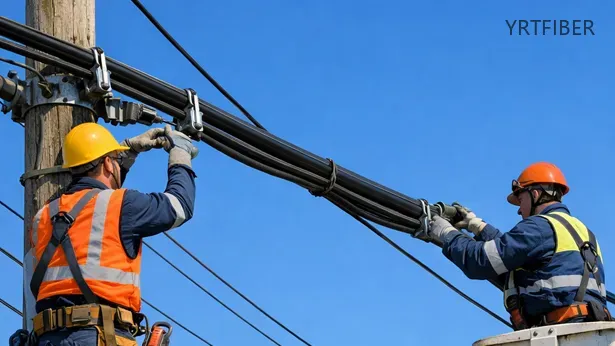
GYXTC‑8Y is a figure‑8 self‑supporting aerial optical cable designed for short‑span outdoor deployments. Its integrated steel messenger wire eliminates the need for separate support strands, allowing direct pole‑to‑pole installation with spans typically up to 50 meters. The central loose tube construction keeps the cable lightweight and compact, making it ideal for FTTH drop connections, inter‑building links, rural access networks, and CATV distribution. With a UV‑resistant PE sheath and a wide operating temperature range of -40°C to +70°C, GYXTC‑8Y provides a cost‑effective, easy‑to‑install solution for last‑mile aerial fiber connectivity.
GYXTC-8Y Aerial Fiber Optic Cable Paramètres de spécification
- Paramètres de spécification
- CARACTÉRISTIQUES OPTIQUES
Propriétés optiques
| G.652 | G.657 | ||
|---|---|---|---|
| Atténuation | @ 1310nm | ≤0,45 dB / km | ≤0,45 dB / km |
| @ 1550nm | ≤0,30 dB / km | ≤0,30 dB / km | |
| Longueur d'onde de coupure de câble | ≤1260nm | ≤1480nm | |
| Température de stockage / de fonctionnement | -20℃ ~ +60℃ | ||
Paramètres techniques
| Modèle | Nombre de fibres | Diamètre du fil d'acier (mm) | Poids (kg / km) | Renforcement en traction à long / court terme (N) | Résistance à l'écrasement (N / 100mm) | Rayon de courbure Statique / Dynamique (mm) |
|---|---|---|---|---|---|---|
| GYXTC-8Y-4 | 4 | 1.6 | 47 | 400/1000 | 1000/2000 | 10D / 20D |
| GYXTC-8Y-6 | 6 | 1.6 | 47 | 400/1000 | 1000/2000 | 10D / 20D |
| GYXTC-8Y-8 | 8 | 1.6 | 47 | 400/1000 | 1000/2000 | 10D / 20D |
| GYXTC-8Y-12 | 12 | 1.6 | 47 | 400/1000 | 1000/2000 | 10D / 20D |
Structure et composition du produit
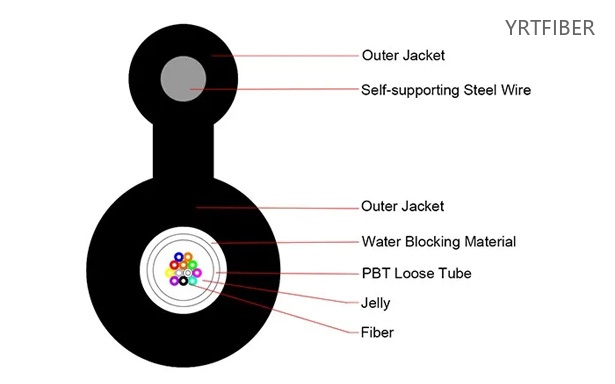
Outer jacket — Flame‑retardant, UV‑resistant polymer sheath that protects the cable from weather, abrasion and fire spread.
Self‑supporting steel wire / central strength member — A metallic rod or strand that provides longitudinal support and tensile strength for aerial or pulling applications.
Secondary outer jacket (main cable jacket) — Protective outer layer around the cable core, providing mechanical protection and environmental sealing.
Water‑blocking material / filling compound — Gel or water‑swellable tapes/compounds that prevent water ingress and migration along the cable.
Loose tube (PBT) with jelly — Polymer loose tube(s) filled with jelly that cushion and isolate the optical fibers, allowing thermal movement and protecting against moisture.
Optical fibers — Color‑coated single fibers or fiber bundles located inside the loose tube(s) that carry optical signals.
Ripcords and fillers — Ripcords for easy jacket removal and non‑metallic fillers to maintain circular geometry and add mechanical stability.
Avantages de GYXTC-8Y Aerial Fiber Optic Cable
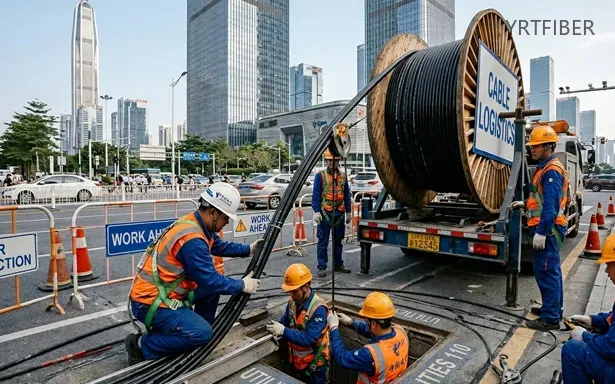
Metropolitan Area Backbone and Inter-office Links
Used for long-distance transmission in urban trunk lines or between offices, connecting switching centers, data centers, and backbone nodes. With its multi-core design and good mechanical strength, it is suitable for duct or direct burial installation, meeting high bandwidth and high reliability requirements.
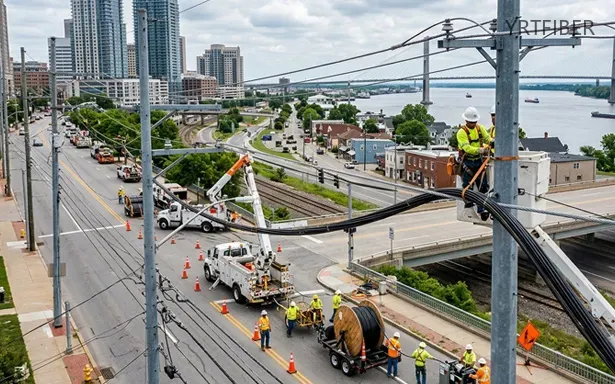
Overhead Lines and Pole Lines
Used in rural or urban pole lines as non-self-supporting or self-supporting installations. It can be suspended with steel strand, adapting to long spans across roads and rivers, facilitating rapid installation and maintenance.
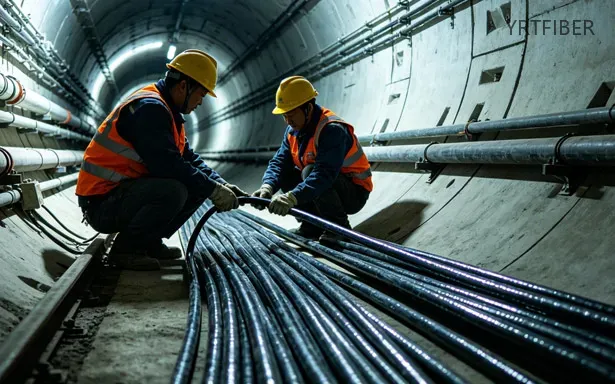
Subways, Tunnels, and Integrated Utility Tunnels
Used in enclosed or semi-enclosed environments for communication loops, monitoring, and signal transmission. Its flame-retardant and low-smoke halogen-free sheath reduces risk in fire scenarios, while steel strip armor or additional protection resists lateral pressure and mechanical impact.
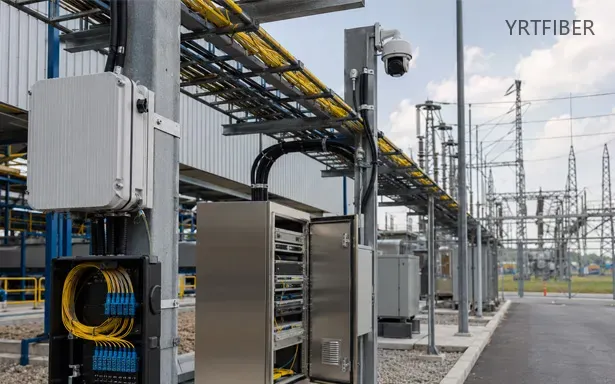
Industrial Parks and Power Systems
Used for power system communication, substation interconnection, monitoring and SCADA links, as well as industrial automation networks. Its anti-interference, weather-resistant, and anti-tooth properties make it suitable for long-term operation in chemical, mining, or high electromagnetic interference environments.
Applications d'ingénierie GYXTC-8Y Aerial Fiber Optic Cable
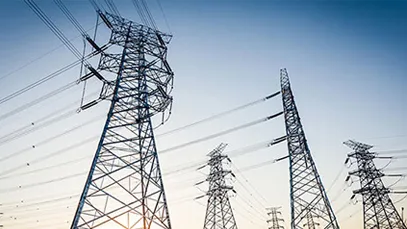
Aerial (self-supporting):
Installed without a separate messenger wire. Ideal for rural FTTx and last-mile access. One-step pulling reduces labor and time.Duct:
Can be pulled into microducts or standard conduits. The compact figure-8 design still fits, though the steel messenger adds some stiffness. Suitable for short urban duct sections.
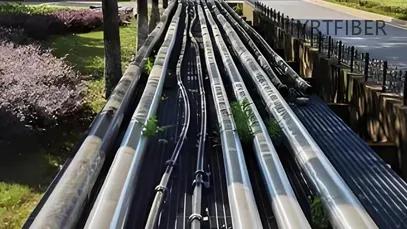
Duct:
Can be pulled into microducts or standard conduits. The compact figure-8 design still fits, though the steel messenger adds some stiffness. Suitable for short urban duct sections.
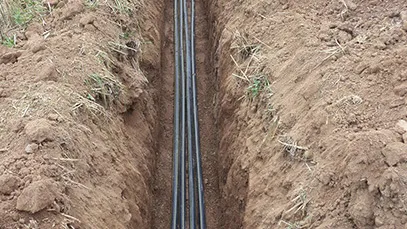
Direct burial:
Resistant to rodents due to the steel messenger and PE sheath. However, rocky terrain may require additional sand bedding or protective conduit. Not the first choice for long burial runs – GYTS is better for high crush environments.
Expédition et emballage
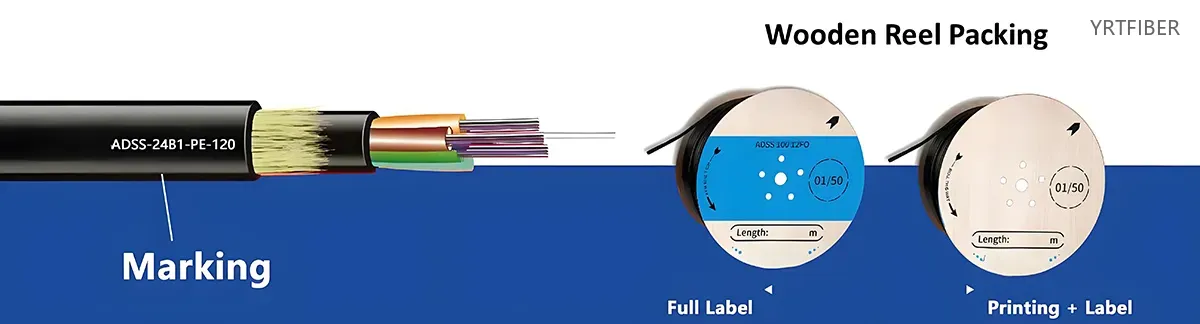
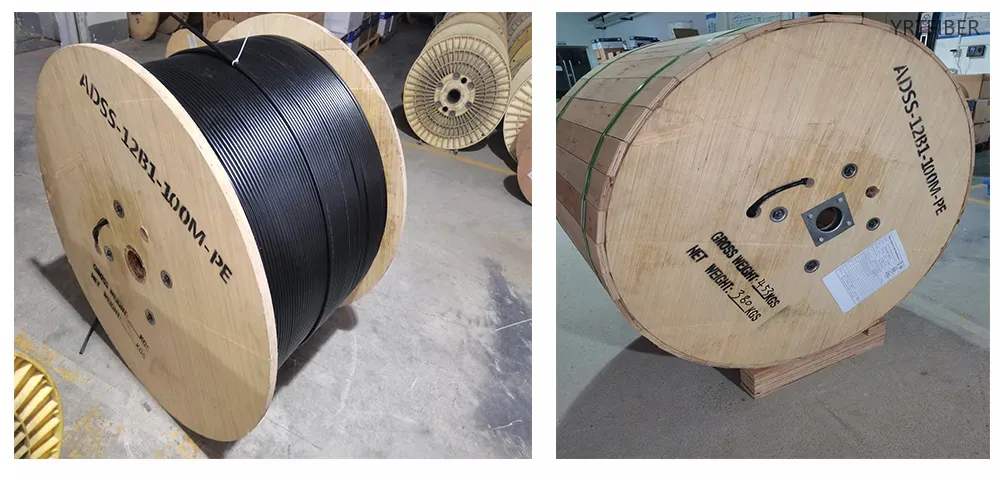
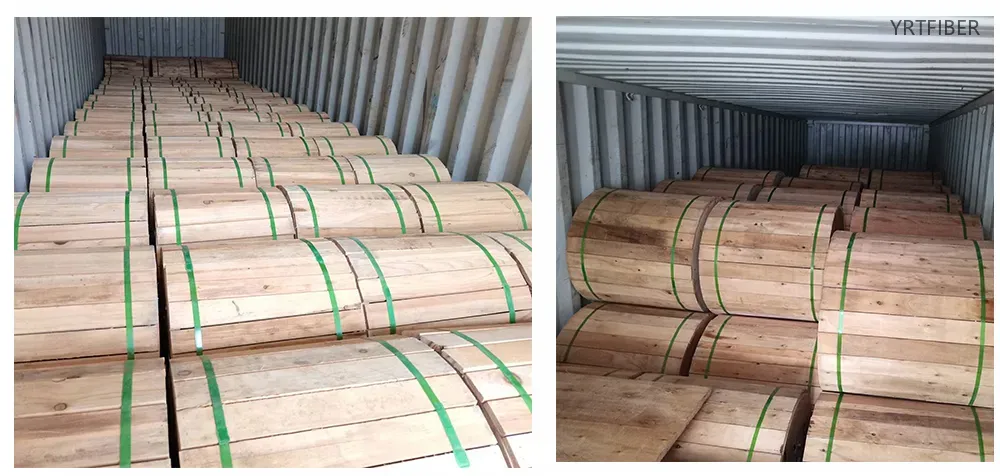
ExigencesPackaging :
- 1 : Tous les câbles doivent être enroulés sur des bobines en bois traitées qui ne sont pas retournables
- 2 : Les extrémités des câbles doivent être solidement fixées à la bobine et protégées par waterproof capuchons rétractables
- 3 : Chaque bobine doit inclure :
- 1、 Protective plastic wrapping layer
- 2、 Reinforcing wooden slats for stability
- 3、 Minimum 1m of free cable end for testing purposes
- 4、 Standard spool length: 3000mm (±2% tolerance allowed)
Identification du câble :
La veste extérieure doit afficher :
- 1 Numérotation séquentielle unique tous les 1m (± 1 % de variance autorisée)
- 2 Marquages répétés supplémentaires à des intervalles de 1 m montrant :
- 1、 Product code and fiber count
- 2、 Manufacturer identification
- 3、 Production date (month/year)
- 4、Total cable length
Standard dimensions de l'emballage :
| Length | Container | Size (L×W×H) | Net Mass | Total Mass |
|---|---|---|---|---|
| 2 km | Bobine en bois | 90 × 75 × 90 cm | 156 kg | 220 kg |
| 3 km | Bobine en bois | 100 × 68 × 100 cm | 240 kg | 280 kg |
| 4 km | Bobine en bois | 109 × 75 × 109 cm | 300 kg | 368 kg |
| 5 km | Bobine en bois | 129 × 72 × 129 cm | 400 kg | 480 kg |
Technical Référence :
- 1 Diamètre du câble standard : 10,0 mm
- 2 Distance maximale de la portée : 100m
- 3 Contactez l'équipe de vente pour les spécifications techniques complètes
Normes de marquage des bobines :
Des marques permanentes (hauteur minimale de 25 à 30 mm) doivent apparaître des deux côtés de chaque bobine :
- 1 Nom et marque de l'entreprise
- 2 Longueur du câble contenue
- 3 Spécifications du câble (type / nombre de fibres)
- 4 Orientation de l'enroulement
- 5 Mesures de poids (brut / net)
Remarque : Tous les matériaux d'emballage en bois doivent subir un traitement de fumigation approprié avant d'être utilisés.
Comparaison des produits:
GYXTC-8Y VS GYTA (armure à ruban en aluminium) VS GYTS VS ADSS
| Caractéristique / Dimension | GYXTC-8Y (Figure-8 autoportante) | GYTA (armure en ruban d'aluminium) | GYTS (Armure à ruban d'acier) | ADSS (tout-diélectrique autoportant) |
|---|---|---|---|---|
| Applications typiques | Aérienne (autoportante), conduit, enterrement direct. Accès rural, FTTx, dernier kilomètre. | Conduit extérieur, aérien (avec messager), dorsale long-courrier, réseaux urbains. | Aérienne (avec messager), conduit, enterrement direct. Lignes de tronc, environnements difficiles. | Aérienne (longues portées, à proximité des lignes électriques), dorsale FTTH, zones nécessitant une isolation électrique. |
| Installation | Tirage / tension unique ; pas de fil messager séparé. Plus rapide pour les lignes de poteaux. | Nécessite un messager ou un conduit en acier séparé. Manipulation plus lourde, plus de matériel. | Similaire à GYTA ; l'armure en acier ajoute du poids. Nécessite un fil de messager ou un conduit. | Direct pôle à pôle ; pas de composants métalliques. Nécessite un matériel spécial et un calcul minutieux de la tension. |
| Pros en ingénierie | Faible temps d'installation, pas de messager supplémentaire, bon pour les longues portées (jusqu'à ~ 100m), résistant aux rongeurs (support en fil d'acier). | Bonne barrière contre l'humidité (ruban d'aluminium), blindage léger, flexible pour les conduits. | Haute résistance à l'écrasement et à la traction, excellente protection contre les rongeurs / mécanique, durable pour un enterrement direct. | Pas de pièces métalliques immunisées contre les EMI / la foudre, sûres sur les poteaux électriques, capacité de très longue portée (jusqu'à 1500 m). |
| Inconvénients en ingénierie | Charge de vent / glace plus élevée que l'ADSS, portée limitée par rapport à l'ADSS, l'acier messager peut se corroder s'il est endommagé. | Résistance à l'écrasement moins bonne que l'armure en acier ; le ruban d'aluminium peut être endommagé dans un sol rocheux. | Plus lourd, coût d'expédition plus élevé, plus rigide - plus difficile à manipuler dans les conduits. Corrosion galvanique possible si le revêtement est endommagé. | Matériel plus coûteux (raccords spéciaux), nécessite une conception précise de l'affaissement / de la tension, une gaine sensible aux UV. |
| Coût (relatif) | Moyen (inférieur à l'ADSS mais supérieur à GYTA sans messager). Messenger intégré réduit le travail. | Faible à moyen (coût du câble faible, mais le matériel de messagerie ajoute des coûts). | Moyen (l'armure en acier augmente le coût des matériaux et l'expédition). | Élevé (matériaux spéciaux, fabrication complexe, raccords uniques). |
| Difficulté de maintenance | Modéré - facile à réparer figure-8 (messager et fibre séparés). Vérifiez la rouille de l'acier. | Faible - conception simple, mais un accès au conduit peut être nécessaire. Le ruban en aluminium résiste à la corrosion. | Modéré - l'armure lourde rend l'accès à mi-portée plus difficile. Possible rouille aux points de coupure. | Faible à modéré - pas de corrosion métallique, mais une inspection périodique de l'affaissement est nécessaire ; la réparation nécessite un épissage spécial. |
| Capacité de portée (typique) | 50-100 m (dépend de la zone de vent / glace). | 30-60 m (avec messager séparé). | 30-60 m (avec messager). | Jusqu'à 1500 m (avec une conception appropriée). |
| Sensibilité à la foudre / EMI | Modéré (un messager en acier peut conduire, peut nécessiter une mise à la terre). | Modéré (le ruban d'aluminium conduit, nécessite un collage / une mise à la terre). | Élevé (le ruban d'acier conduit la foudre, nécessite une mise à la terre appropriée). | Aucun (entièrement diélectrique, aucune mise à la terre requise). |
GYXTC-8Y Aerial Fiber Optic Cable Guide de sélection
Choisissez GYXTC-8Y pour des déploiements aériens rapides (portées de 50 à 100 m) où aucun messager séparé n'est souhaité. Son brin d'acier intégré réduit le temps d'installation et le coût de la main-d'œuvre, ce qui le rend idéal pour le FTTx rural et l'accès au dernier kilomètre. Cependant, évitez si les portées dépassent 100 m ou si la corrosion est un problème.
Choisissez GYTA pour les conduits ou les routes aériennes où la résistance à l'humidité et la légèreté sont des priorités. Il a un coût matériel inférieur à celui des alternatives blindées, mais nécessite un messager séparé et n'offre qu'une protection contre l'écrasement modérée - la meilleure pour les dorsales urbaines et les environnements humides.
Choisissez GYTS lorsqu'une protection mécanique maximale est nécessaire - enterrement direct, terrain rocheux ou zones sujettes aux rongeurs. Son blindage en ruban d'acier offre une résistance à l'écrasement et à la traction élevée, mais ajoute du poids et nécessite un messager séparé, ce qui augmente la complexité et le coût de l'installation.
Choisissez ADSS pour les routes aériennes à longue portée (jusqu'à 1500 m) et les environnements à proximité des lignes électriques à haute tension. Sa construction entièrement diélectrique élimine les problèmes de mise à la terre et d'EMI, mais s'accompagne d'un coût matériel plus élevé, d'un matériel spécialisé et d'une conception soignée de l'affaissement. Idéal pour les réseaux de services publics et les applications à portée extrême.
Résumé rapide :
Aérienne (courte, rapide) GYXTC-8YDuct / zones humides GYTAHarsh / enterrement GYTSLongues portées / lignes électriques ADSS
GYXTC-8Y Installation Guide (Short)
Pre‑pull check – Inspect the cable for sheath/messenger damage. Ensure no sharp edges on poles or hardware.
Pole preparation – Install suitable suspension clamps (e.g., fixed or drop clamps) at designed intervals (typically 50–100 m).
Cable payout – Use a cable trailer or rotating reel stand. Avoid twisting the figure‑8 section.
Tensioning – Pull the steel messenger (not the optical core) with a tension meter. Apply recommended sag (e.g., 1–2% of span length) based on local wind/ice loads.
Clamping – Secure the messenger into suspension clamps. Do not over‑compress the fiber part.
Grounding – Bond the steel messenger to pole ground at regular intervals (every 200–300 m) for lightning protection.
Storage & splicing – Leave service loops at splice points. Store excess cable on poles with figure‑8 brackets.
Final test – Perform OTDR and visual inspection after installation.
Note: Never clamp directly on the optical fiber section – always clamp the integrated steel messenger.
Télécharger le catalogue de produits YRTFIBER
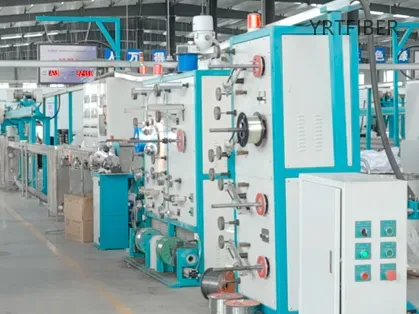
Prise de vue réelle d'usine
Advanced Manufacturing Lines
Our factory is equipped with fully automated optical fiber coloring, loose tube extrusion, stranding, and double-sheathing lines.
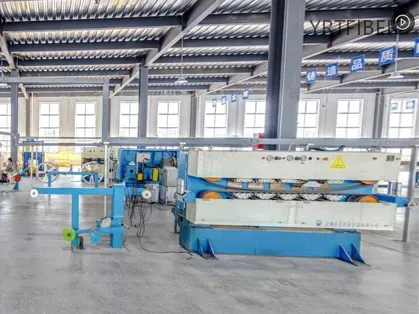
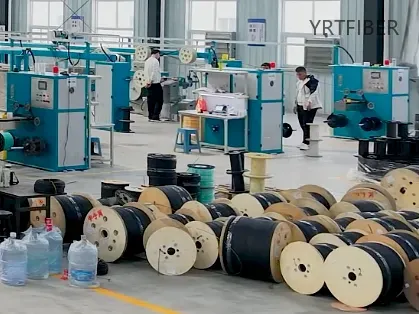
Manufacturing Plant Overview
A clean and well‑organized production floor.
Raw Material Storage
FRP rods, loose tubes, steel tape, and PE compounds.
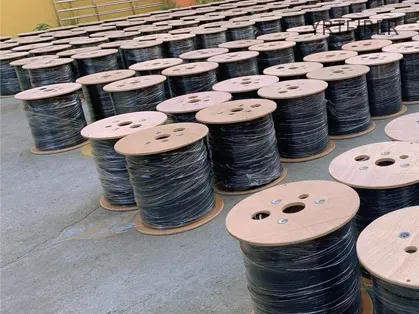
Factory Warehouse & Dispatch
Ready‑to‑ship fiber cable coils awaiting delivery.
Foire aux questions et enquête rapide
GYXTC-8Y Aerial Fiber Optic Cable FAQ
Q : Pouvez-vous fournir des échantillons?
R : Oui, nous pouvons fournir des échantillons d'une certaine valeur.
Q : Quand la commande d'échantillons peut-elle être livrée?
R : Habituellement dans les 7 jours après la confirmation.
Q : Quel est le délai de livraison pour les commandes groupées?
R : Habituellement, il est de 15 à 20 jours à compter de la date de passation de la commande, mais cela dépend également de la quantité de la commande. Vous devez confirmer le délai de livraison spécifique avec le directeur des ventes.
Envoyez votre demande
Remplissez le formulaire ci-dessous et nous vous répondrons dans les 24 heures.
Articles connexes

Câble à fibre optique aérien gyxtc8s autoportant figure 8 - g.652d / g.657
Câble à fibre optique aérien gyxtc8s autoportant figure 8 - g.652d / g.657


