

 English
 Español
 لالعربية
 Русский
 Bahasa Indonesia
 Français
 Türkçe
 Bahasa Melayu

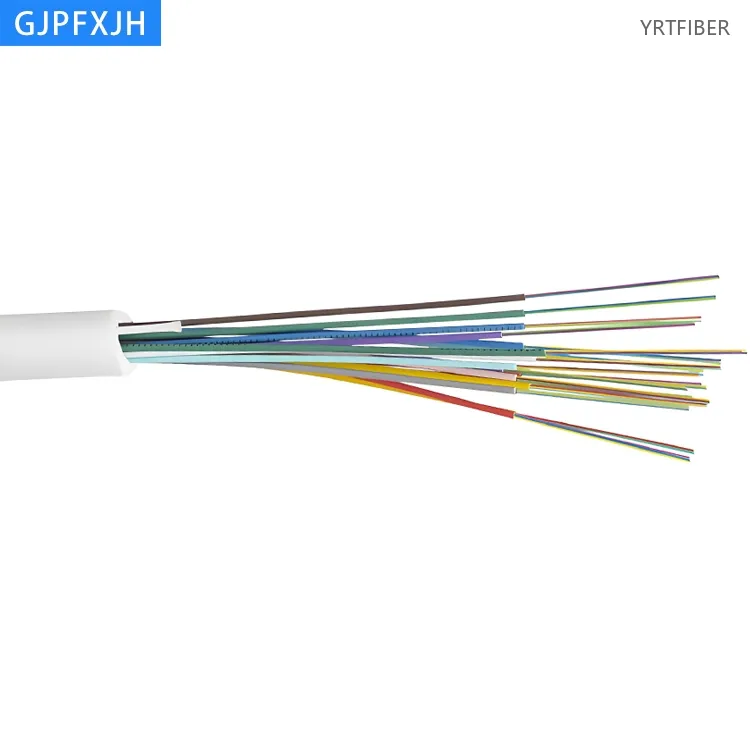
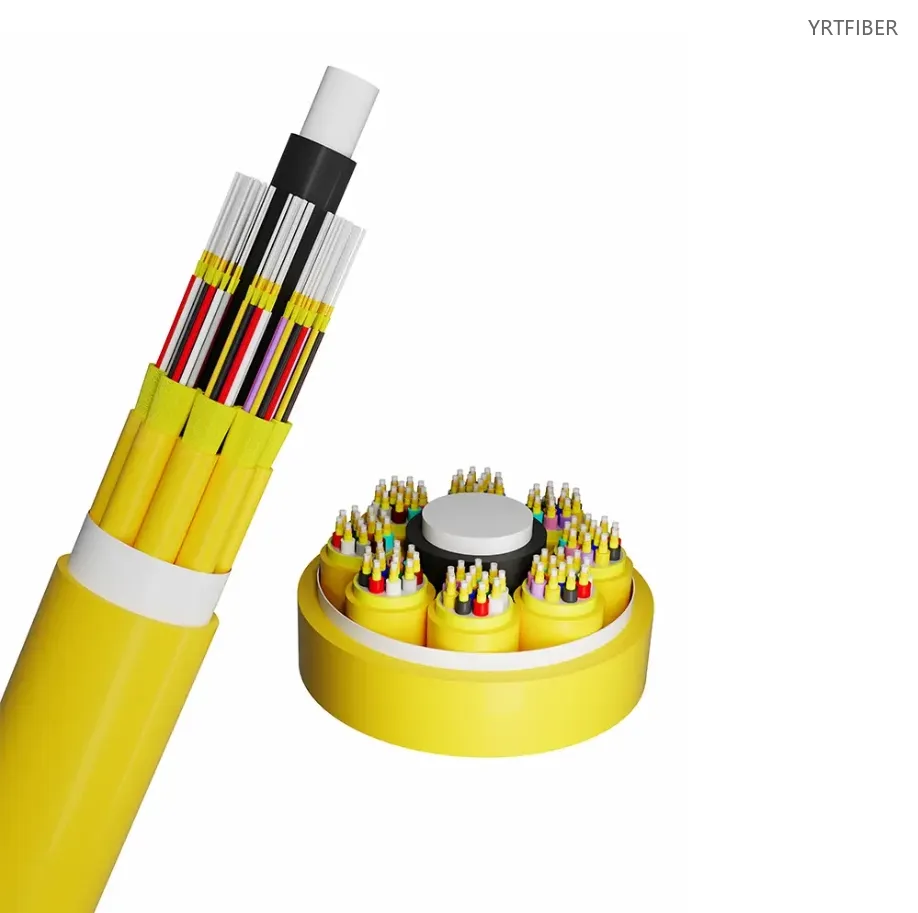
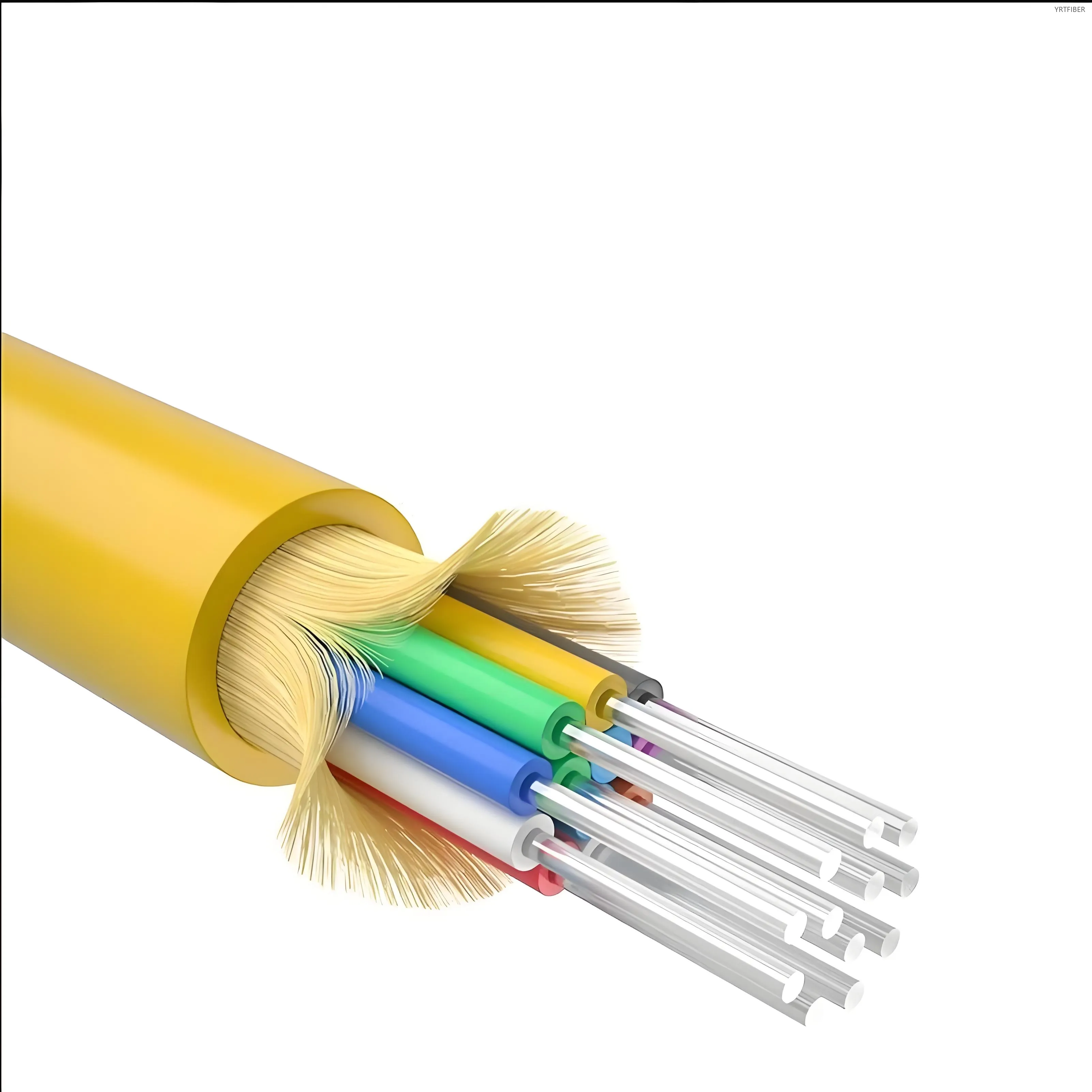
GJPFXJH Cabo de Fibra Óptica de Riser Interior Retardador de Chama | G.652D / G.657A / B | Cabo Vertical In-Building
Fiber Type: ITU-T-G652D, G657A Fiber, G657B Fiber
It has good mechanical and environmental properties
Flame retardant (or non-flame retardant) performance meets standard requirements
The mechanical and physical properties of the sheath meet the requirements of relevant standards. Soft, flexible and convenient
The structure is well designed and easy to branch and connect Small size, light weight, easy installation
LSZH sheath ensures good flame retardancy
Especially suitable for building vertical wiring
What is GJPFXJH fiber optic cable
GJPFXJH is a robust, compact fiber-optic cable designed for high-reliability transmission in building backbones, campus networks, and equipment interconnects. It combines tightly protected fibers with non-metallic strength elements to resist pulling and micro-bending during installation, while maintaining low attenuation across long runs. The outer sheath is flame-retardant and low-smoke, suitable for use in densely occupied spaces and modern structured cabling environments. GJPFXJH supports high bandwidth applications such as 10/40/100G Ethernet, offers stable performance under everyday mechanical stress, and accommodates both horizontal and vertical routing in trays, conduits, and risers. Its clean, easy-to-terminate design helps reduce installation time and simplifies maintenance, making it a practical choice for upgrades or new deployments where safety, space efficiency, and long-term durability are priorities.
GJPFXJH Flame-Retardant Indoor Fiber Optic Cable Parâmetros de especificação
- Parâmetros de especificação
- CARACTERÍSTICAS ÓPTICAS
| Characteristics | Conditions | Specified Values | Units |
|---|---|---|---|
| Características geométricas | |||
| Diâmetro do revestimento | 125.0±0.7 | Μm | |
| Revestimento não circularidade | ≤0.7 | % | |
| Diâmetro do revestimento | 242±5 | Μm | |
| Erro de concentricidade do revestimento / revestimento | <12 | Μm | |
| Erro de concentricidade do núcleo / revestimento | ≤0.5 | Μm | |
| Enrolar | ≥4 | M | |
| Características ópticas | |||
| Atenuação | 1310Nm | ≤0.4 | dB / km |
| 1383Nm | ≤0.4 | dB / km | |
| 1490Nm | ≤0.3 | dB / km | |
| 1550Nm | ≤0.3 | dB / km | |
| 1625Nm | ≤0.3 | dB / km | |
| Atenuação vs. Wavelength max. Uma diferença | 1285 ~ 1330nm | ≤0.03 | MHz · km |
| 1525 ~ 1575nm | ≤0.02 | MHz · km | |
| Coeficiente de dispersão | 1550Nm | ≤18 | Ps / (nm · km) |
| 1625Nm | ≤22 | Ps / (nm · km) | |
| Comprimento de onda de dispersão zero | 1304~1324 | Nm | |
| Declive de dispersão zero | ≤0.092 | Ps / (nm² · km) | |
| Dispersão do modo de polarização | |||
| PMD fibra individual máxima | ≤0.1 | Ps / kmEstás / ² | |
| PMD design link value trabalhos | ≤0.04 | Ps / kmEstás / ² | |
| Cabo cortado comprimento de onda | ≤1260 | Nm | |
| Diâmetro do campo de modo | 1310Nm | 8.8~9.6 | Μm |
| 1550Nm | 9.9~10.9 | Μm | |
| Índice de refração do grupo | 1310Nm | 1.4691 | |
| 1550Nm | 1.4696 | ||
| Características ambientais | 1310Nm 、 1550nm e 1625nm | ||
| Ciclo de temperatura | -60 a + 85 | ≤0.05 | dB / km |
| Temperature-humidity ciclismo | -10 a + 85 glass / 4% a 98% RH | ≤0.05 | dB / km |
| Imersão em água | 23 glass, 30 dias | ≤0.05 | dB / km |
| Calor seco | 85 glass, 30 dias | ≤0.05 | dB / km |
| Calor úmido | 85 glass, 85% RH, 30 dias | ≤0.05 | dB / km |
| Especificação mecânica | |||
| Teste de prova | ≥100 | Kpsi | |
| Perda induzida por flexão macro | |||
| 1 Volta @ 10mm de Raio | 1550Nm | ≤0.5 | dB |
| 1 Volta @ 10mm de Raio | 1625Nm | ≤1.5 | dB |
| 10 Voltas @ Raio de 15mm | 1550Nm | ≤0.05 | dB |
| 10 Voltas @ Raio de 15mm | 1625Nm | ≤0.30 | dB |
| 100 Voltas @ Raio de 25mm | 1310 e 1550 e 1625nm | ≤0.01 | dB |
| Parâmetro dinâmico de susceptibilidade à corrosão sob tensão | 20 | ||
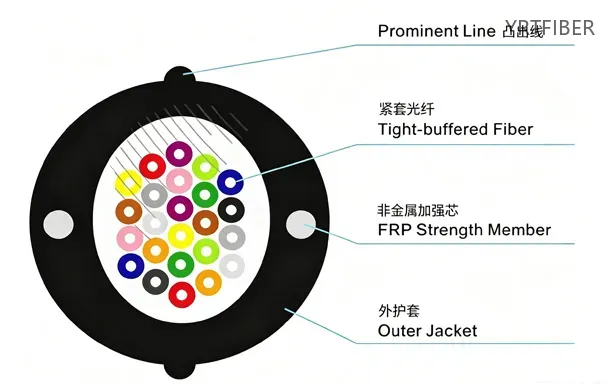
Estrutura e Composição do Produto
Benefícios de GJPFXJH Flame-Retardant Indoor Fiber Optic Cable
Fiber Types & Mechanical/Environmental Performance
Supports ITU-T G652D, G657A, and G657B fiber types. Exhibits excellent mechanical and environmental properties, meeting all standard requirements.
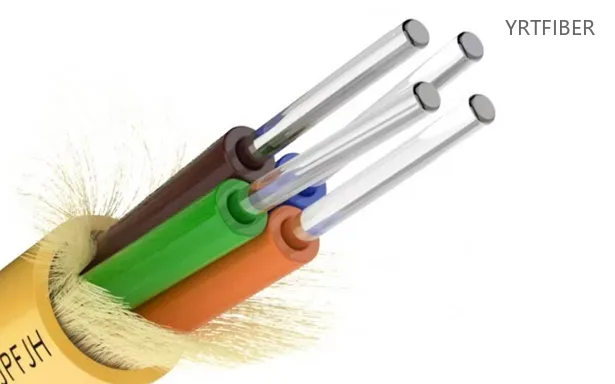
Sheath Flexibility & Compliance
Soft, flexible, and easy to handle. The sheath's mechanical and physical properties comply with relevant standards, with flame retardant or non-flame retardant options meeting requirements.

Compact Design & Easy Installation
Well-designed structure allows easy branching and connection. Small size and light weight facilitate convenient installation.
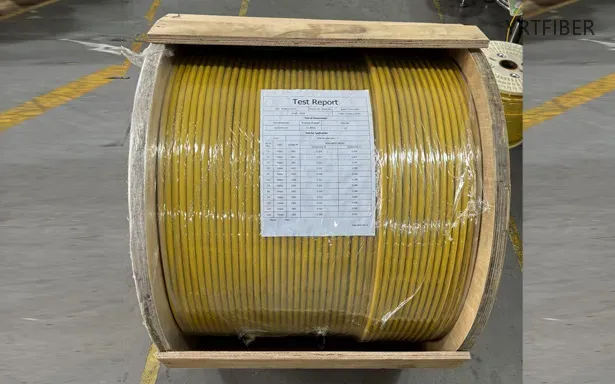
LSZH Flame Retardancy & Vertical Wiring Application
LSZH sheath ensures good flame retardancy. Particularly suitable for building vertical wiring applications.
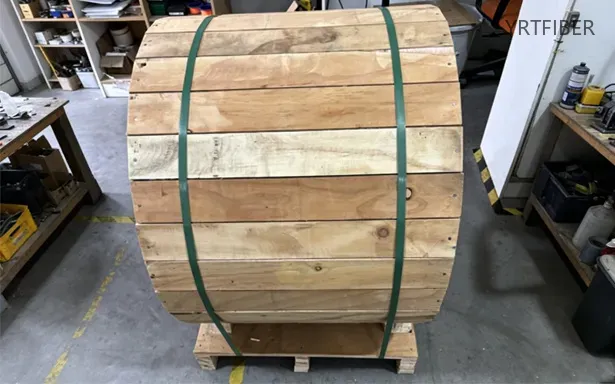
Aplicações de Engenharia GJPFXJH Flame-Retardant Indoor Fiber Optic Cable
Envio & Embalagem
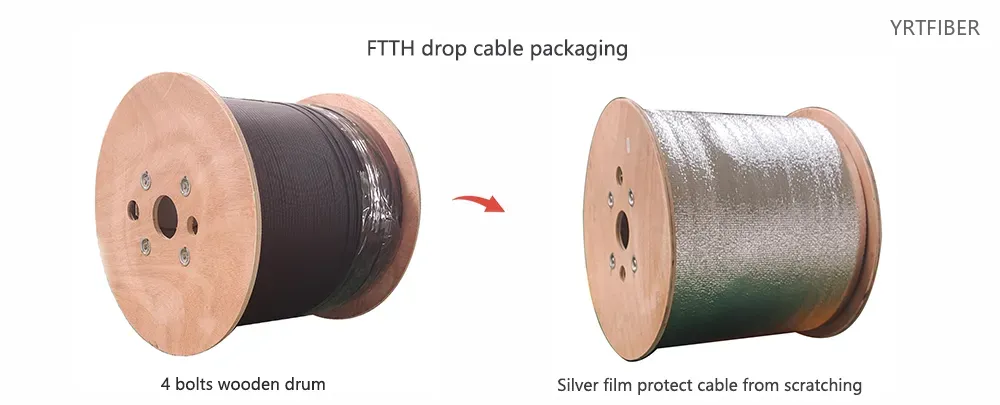
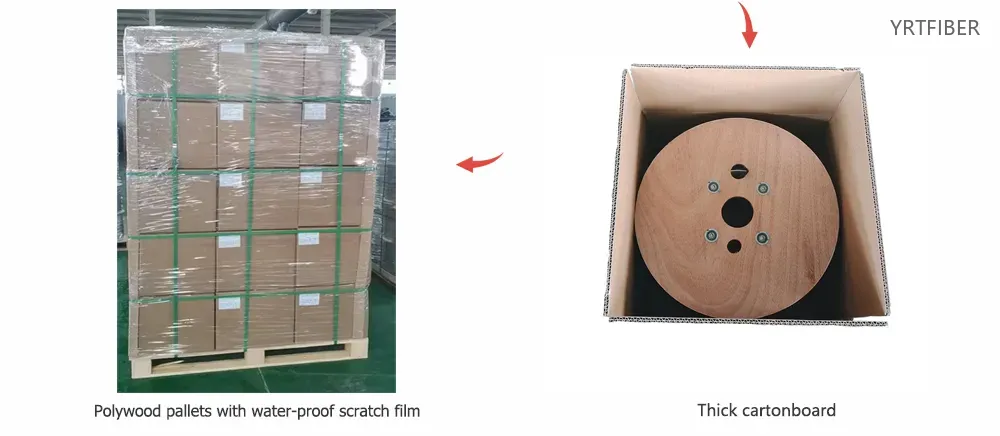
Packaging Detalhes
Cada rolo contém 1 5 KM de cabo, normalmente embalado em tambores de aço. Soluções de embalagem personalizadas estão disponíveis mediante solicitação do cliente.
Marcação da Bainha
O recuo da folha branca quente é aplicado em intervalos de 1 metro com as seguintes informações:
A. Nome do fornecedor: Guanglian (ou conforme especificado pelo cliente)
b. Código padrão incluindo tipo de produto, tipo de fibra e contagem de fibra
c. Ano de fabricação (válido por 7 anos)
d. Indicação do comprimento em metros
Porto de embarque
Portos disponíveis: Qingdao, Guangzhou, Shenzhen
Tempo de entrega estimado
| Quantity (KM) | Estimated Delivery Time |
|---|---|
| 1–300 | Aprox. 15 dias |
| ≥300 | Prazo de entrega a negociar |
Nota
Os detalhes da embalagem acima são apenas para referência. O tamanho e o peso finais da embalagem serão confirmados antes do envio.
Comparação de produtos:
GJPFXJH vs GJFJH vs GJFJBV
| Feature / Dimension | GJPFXJH (Indoor Breakout) | GJFJH (Distribution Cable) | GJFJBV (Duplex Flat Cable) |
|---|---|---|---|
| Structural Features | Several 900μm tight buffered fibres housed in an LSZH sheath with a special cross‑section. Two parallel FRPs placed as strength members. External mark indicates opening direction. All‑dry design, no gel. | Multiple 900μm tight buffered fibres, aramid yarn as strength member, FRP central strength member (optional), PVC or LSZH outer sheath. Dry‑type water‑blocking between fibres and sheath. | Two 900μm or 600μm tight buffered fibres, each with an inner PVC sheath, covered with aramid yarns, then extruded with a flat PVC or LSZH outer sheath. “Duplex” figure‑8 cross‑section. |
| Strength Member | Two parallel FRP (Fiber Reinforced Plastic) rods – non‑metallic, high tensile stiffness, good bending resistance. | Aramid yarns (high tensile strength, flexibility) + central FRP (optional). Excellent tensile performance, low stretch, and resistance to micro‑bending. | Aramid yarns (excellent tensile performance, flexibility). Flat structure for compact fibre arrangement. |
| Outer Sheath | LSZH (Low Smoke Zero Halogen) – flame‑retardant, low smoke emission, halogen‑free, UV‑resistant variant available for outdoor use. | PVC or LSZH. PVC offers lower cost and good flexibility but releases halogen smoke when burned. LSZH provides flame‑retardancy for fire‑sensitive areas. | PVC (standard) or LSZH (on request). PVC provides good flame‑retardancy, durability, and UV resistance for indoor riser environments. |
| Fiber Core Capacity | 2 – 288 cores (typical: 2–24 cores in standard designs). | 2 – 144 cores, up to 288 cores in some designs. | 2 cores (duplex) – typical design for patch cords and jumpers. |
| Typical Applications | Vertical and horizontal building cabling, telecommunications/comms building backbone, campus networks, equipment interconnects, pre‑connection applications, riser cabling, indoor/outdoor distribution (with UV‑resistant sheath). | Indoor distribution, backbone cabling inside large buildings, entrance facilities, equipment room patching, horizontal cabling, FTTB (Fiber‑to‑the‑Building) applications. | Duplex optical fibre connecting jumpers/pigtails, indoor riser level and vertical cabling, interconnection between instruments and communication equipment, patch cord assemblies. |
| Engineering Pros | ① Easy branching and stripping – all‑dry design, no messy gel, clean termination; ② Flame‑retardant LSZH sheath, safe for densely occupied/fire‑sensitive spaces; ③ Non‑metallic, all‑dielectric structure – immune to EMI, no grounding required; ④ Small size, lightweight, easy installation; ⑤ Good mechanical and environmental performance; ⑥ FRP strength members resist bending and stretching; ⑦ Especially suited for pre‑connection – use only required fibres without cutting entire cable length. | ① Good flexibility and bend performance – aramid yarns resist micro‑bending; ② Wide range of fibre counts (2–144 cores) for varied applications; ③ Versatile – available in PVC (cost‑effective) or LSZH (fire‑safe); ④ Each sub‑cable contains aramid yarn, easy construction and connection; ⑤ Dry‑type water‑blocking, no gel, cleaner termination; ⑥ Central FRP adds structural integrity; ⑦ OFNR rating (UL approval) for riser applications. | ① Very low cost – economical for low fibre count patch cords; ② Compact flat structure – fibres arranged tightly; ③ Good flame‑retardant performance (PVC/LSZH jacket); ④ Tight buffered fibres with excellent strippability; ⑤ Aramid yarns provide high tensile strength; ⑥ Flexible and easy to handle – suitable for tight spaces; ⑦ Anti‑corrosion, water‑blocking, environment‑friendly; ⑧ Meets YDT1258.2‑2009 standard. |
| Engineering Cons | ① FRP strength members lack long‑term creep resistance of aramid (suitable for static indoor applications, not high‑dynamic flexing); ② LSZH sheath has slightly lower UV resistance than PVC for long‑term outdoor exposure; ③ Higher cost than PVC alternatives. | ① Aramid yarns can be more challenging to strip cleanly than FRP – loose fibres; ② No special extraction channel – requires more effort for mid‑span access; ③ PVC variant not suitable for plenum/riser spaces where LSZH is mandated; ④ Higher cost than GJPFXJH for low fibre counts; ⑤ LSZH sheath adds cost over PVC. | ① Limited to 2 fibres – not suitable for higher core counts; ② Flat shape less suited for bundled installations in conduits (awkward pulling); ③ Lower tensile strength (100–200N) compared to GJPFXJH/GJFJH; ④ Higher bend radius (60/30mm static/dynamic vs 20D/10D) – less flexible for tight corner routing; ⑤ PVC jacket not flame‑retardant to LSZH level, may not meet strict fire codes in some regions; ⑥ More common as patch cord/assembly cable, not designed for long‑haul backbone runs. |
| All‑Dielectric (Non‑Metallic) | Yes – FRP strength members, LSZH sheath, no metal components. | Yes – aramid yarns, FRP central member, LSZH/PVC sheath. | Yes – aramid yarns, PVC/LSZH sheath, no metal components. |
| Flame Retardancy | LSZH – low smoke, halogen‑free, flame‑retardant; meets OFNR/OFCR riser rating. Suitable for plenum/riser spaces in buildings. | LSZH variant – same low smoke, halogen‑free performance; meets UL OFNR requirements. PVC variant – flame‑retardant but produces dense smoke and halogen gases when burned. | PVC/LSZH – flame‑retardant; PVC variant UL94 V‑0 rated, LSZH variant meets IEC 60754‑2 for low halogen emission. |
GJPFXJH Flame-Retardant Indoor Fiber Optic Cable Guia de Seleção
Building vertical and horizontal cabling between GJPFXJH, GJFJH and GJFJBV:
For building backbone cabling (riser and horizontal runs) where space is limited, safety is critical, and ease of field termination matters, GJPFXJH is recommended. Its special cross‑section with a marked opening direction allows quick access to individual 900μm tight‑buffered fibres, and the all‑dry design contains no messy gel, simplifying both installation and maintenance. The two parallel FRP strength members provide mechanical robustness for vertical riser installations, and LSZH sheathing ensures flame‑retardancy in densely occupied buildings. Typical applications include telecommunications and mobile‑communications building backbones, campus networks, and pre‑connection projects where only a subset of fibres need immediate termination on specific floors.
For general indoor distribution cabling in equipment rooms, patching areas, and entrance facilities that require versatility across a wide fibre count range (2–144 cores), GJFJH is a solid choice. Aramid yarn strength members give the cable high tensile strength and good bending performance, while the optional LSZH sheath provides flame‑retardancy comparable to GJPFXJH. However, GJFJH lacks the same easy‑access extraction channel, making mid‑span fibre branching more labour‑intensive. Choose GJFJH‑LSZH for fire‑sensitive riser environments where cost is a secondary concern.
For patch cords, pigtails, and short jumpers between communication equipment where only two fibres are required, GJFJBV is the most economical and flexible solution. Its flat duplex configuration is purpose‑built for interconnection applications, offering excellent strippability and compact arrangement. However, it is not suitable for backbone cabling, multi‑core distribution, or routing that requires multiple bends in conduits due to its larger bend radius requirements (60/30 mm compared to 20D/10D for GJPFXJH and GJFJH). Use GJFJBV only for low‑fibre‑count, short‑distance connectivity within racks and patching fields.
Fire‑retardancy and safety considerations:
Choose LSZH‑sheathed cables (GJPFXJH, GJFJH‑LSZH) for buildings with strict fire safety codes, plenum and riser spaces, or where smoke hazards are a concern. LSZH sheathing emits minimal smoke and no halogen gases, minimising harm to personnel and equipment in the event of a fire.
Choose PVC‑sheathed cables (GJFJH‑PVC, GJFJBV) for general indoor areas with moderate fire regulations (e.g., under‑floor, office LANs, residential buildings) where cost is a priority. PVC sheathing is flame‑retardant but releases dense smoke and halogen gases when burned – not suitable for high‑occupancy or confined spaces.
UV exposure and mixed indoor/outdoor deployments:
For applications that transition from indoor risers to outdoor routing (e.g., building‑to‑building links), GJPFXJH offers a UV‑resistant LSZH variant, providing flame‑retardancy and long‑term solar resistance. Standard GJFJH LSZH and PVC variants are not rated for continuous outdoor UV exposure without additional jacketing or conduit protection.
Core count and deployment strategy:
When installing pre‑connection or mid‑span access cabling where individual floors may require fibre termination without cutting the whole cable, GJPFXJH is the preferred choice. Its design allows clean extraction of specific fibre cores without disrupting the rest of the line, significantly saving construction time and reducing waste. GJFJH is better suited for scenarios requiring entire cable termination or patching at both ends, while GJFJBV is best for direct device‑to‑device connections in crowded equipment racks.
GJPFXJH Indoor Optical Cable Installation Instructions
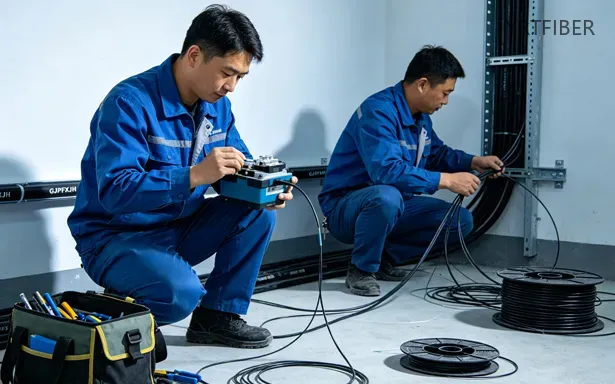
Keep the cable’s bend radius at least 10 times the cable diameter during pulling and installation. Do not exceed the recommended tensile load (typically ≤200N for short-term pulling). Avoid crushing, kinking, or twisting the cable. When stripping the sheath, take care not to damage the internal tight-buffered fibers. For vertical riser runs, secure the cable at intervals of no more than 1.5 meters using proper clips or ties. After installation, clean and inspect all connectors before termination. Ensure the cable is routed away from heat sources and sharp edges.
Baixar Catálogo de Produtos YRTFIBER
Tiro Real De Fábrica
Perguntas mais frequentes e consulta rápida
GJPFXJH Flame-Retardant Indoor Fiber Optic Cable FAQ
1. O que significa "cabo riser" e onde ele é usado?
“Riser ” refere-se ao vertical roteamento de cabos entre pisos, geralmente em building eixos ou salas de riser de cabos. GJPFXJH foi projetado para atender aos padrões de segurança contra incêndio exigidos para esses caminhos verticais internos.
2. Este cabo é retardador de chamas ou à prova de fogo?
GJPFXJH usa uma flame-retardant jaqueta LSZH (Low Smoke Zero Halogen), compatível com IEC 60332 e outros padrões de chamas em edifícios. É flame-retardant, não à prova de fogo projetado para retardar a propagação das chamas e reduzir a fumaça tóxica.
3. Quais tipos de fibra estão disponíveis?
Este cabo suporta G.652D (SMF padrão) e G.657A / B (fibras insensíveis à dobra). G.657A / B é especialmente útil para curvas internas apertadas, como fiação de rack ou caixas montadas na parede.
4. Pode ser usado em espaços plenos ou apenas em risers?
O GJPFXJH foi projetado especificamente para aplicações de riser . para o uso de plenum (teto de retorno de ar), um cabo plenum-rated como OFNP / LSZH com classificações de chama mais altas seria necessário.
5. Quais são os cenários típicos de aplicativos?
GJPFXJH é ideal para:
Vertical entre pisos em edifícios comerciais
Eixos elevadores de telecomunicações internos
FTTH / FTTB distribuição interna
Infraestrutura de fibra de escritório, data center e hotel
Envie sua pergunta
Preencha o formulário abaixo e entraremos em contato com você em 24 horas.


