

 English
 Español
 Português
 لالعربية
 Русский
 Bahasa Indonesia
 Français
 Bahasa Melayu

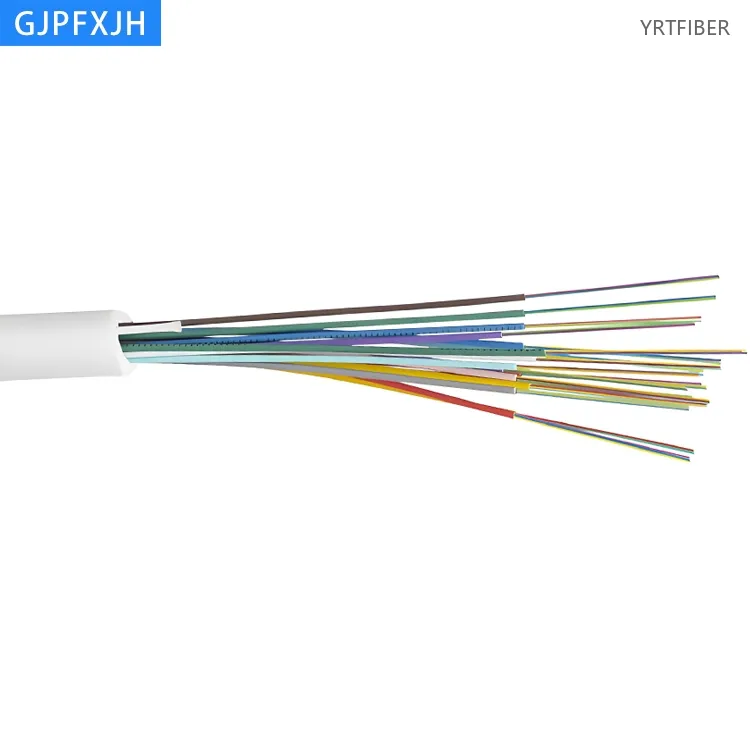
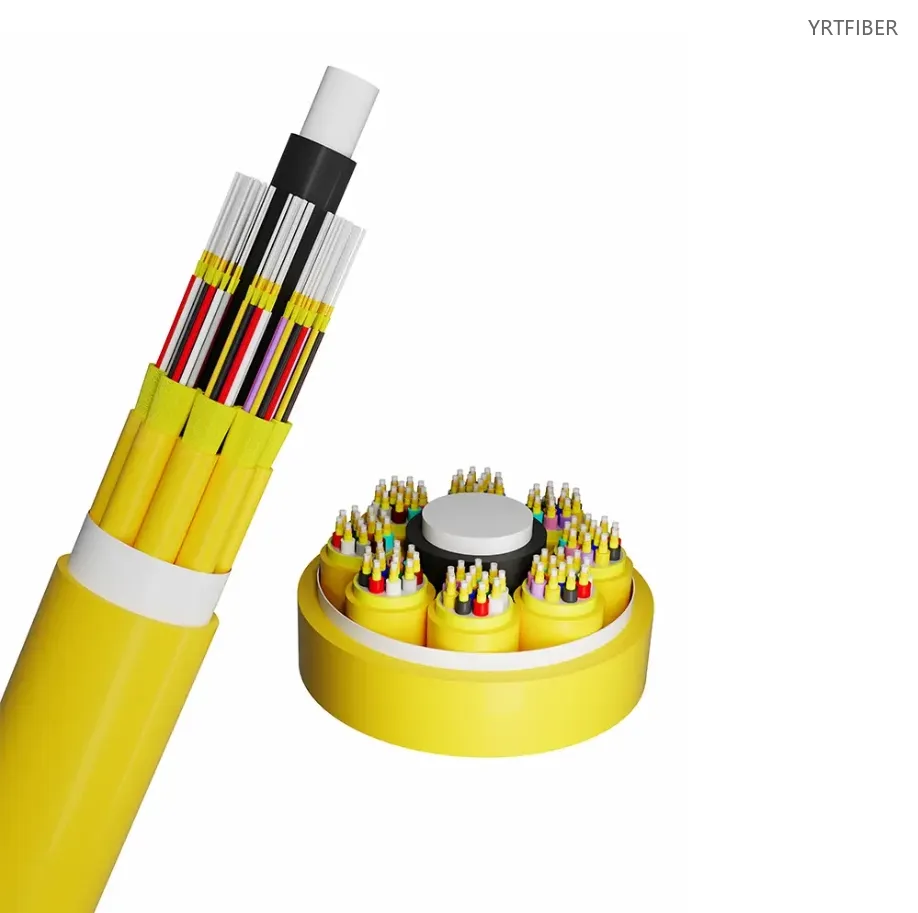
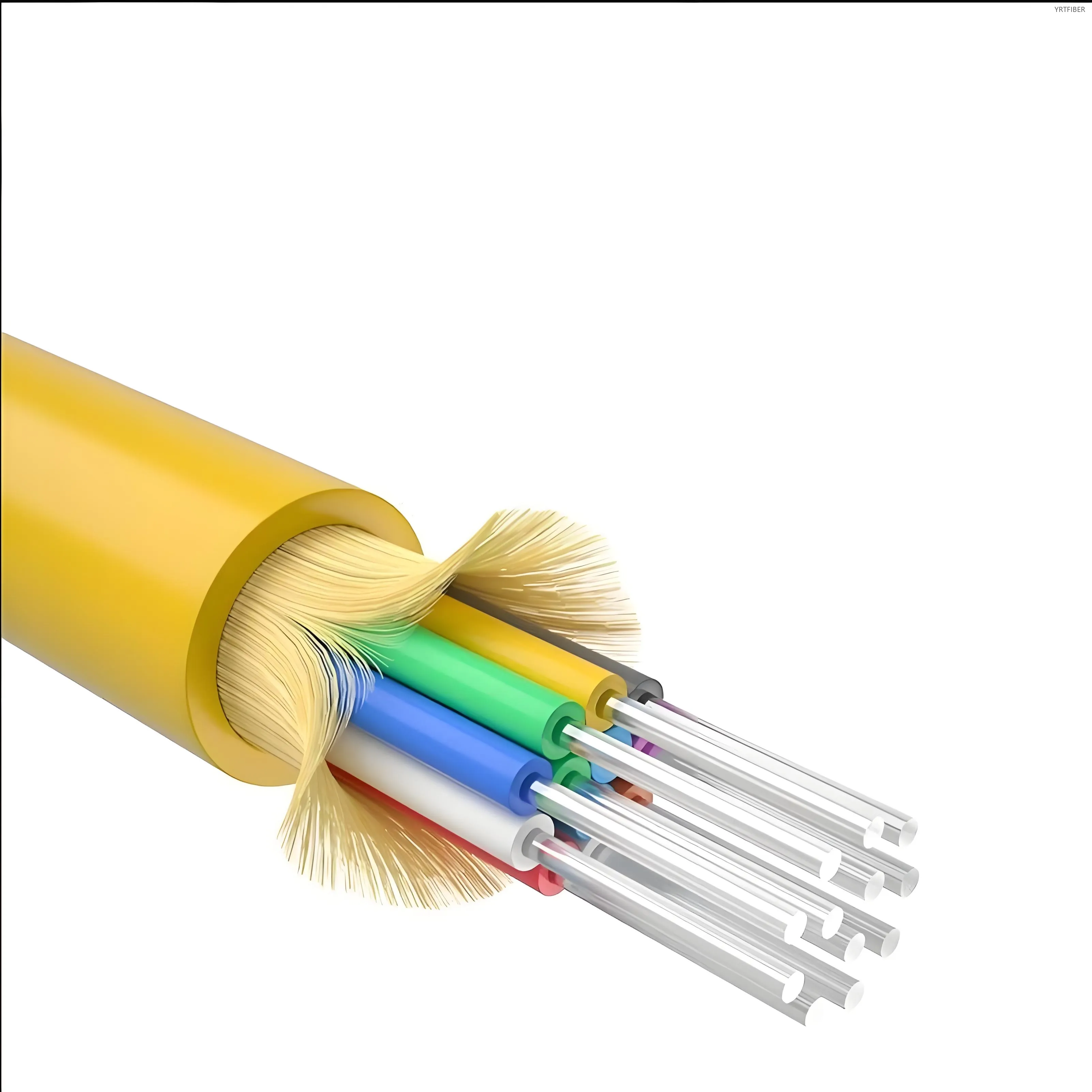
GJPFXJH Alev Geciktirici Kapalı Yükseltici Fiber Optik Kablo | G.652D / G.657A / B | Dikey Bina İçi Kablo
Fiber Type: ITU-T-G652D, G657A Fiber, G657B Fiber
It has good mechanical and environmental properties
Flame retardant (or non-flame retardant) performance meets standard requirements
The mechanical and physical properties of the sheath meet the requirements of relevant standards. Soft, flexible and convenient
The structure is well designed and easy to branch and connect Small size, light weight, easy installation
LSZH sheath ensures good flame retardancy
Especially suitable for building vertical wiring
What is GJPFXJH fiber optic cable
GJPFXJH is a robust, compact fiber-optic cable designed for high-reliability transmission in building backbones, campus networks, and equipment interconnects. It combines tightly protected fibers with non-metallic strength elements to resist pulling and micro-bending during installation, while maintaining low attenuation across long runs. The outer sheath is flame-retardant and low-smoke, suitable for use in densely occupied spaces and modern structured cabling environments. GJPFXJH supports high bandwidth applications such as 10/40/100G Ethernet, offers stable performance under everyday mechanical stress, and accommodates both horizontal and vertical routing in trays, conduits, and risers. Its clean, easy-to-terminate design helps reduce installation time and simplifies maintenance, making it a practical choice for upgrades or new deployments where safety, space efficiency, and long-term durability are priorities.
GJPFXJH Flame-Retardant Indoor Fiber Optic Cable Spesifikasyon parametreleri
- Spesifikasyon parametreleri
- OPTİK ÖZELLİKLER
| Characteristics | Conditions | Specified Values | Units |
|---|---|---|---|
| Geometrik özellikler | |||
| Kaplama çapı | 125.0±0.7 | mikrofon | |
| Kaplama döngüsellik | ≤0.7 | % | |
| Kaplama çapı | 242±5 | mikrofon | |
| Kaplama / kaplama eşmerkezlilik hatası | <12 | mikrofon | |
| Çekirdek / kaplama eşmerkezlilik hatası | ≤0.5 | mikrofon | |
| Kıvırmak | ≥4 | m | |
| optik özellikler | |||
| Zayıflama | 1310nm | ≤0.4 | dB / km |
| 1383nm | ≤0.4 | dB / km | |
| 1490nm | ≤0.3 | dB / km | |
| 1550nm | ≤0.3 | dB / km | |
| 1625nm | ≤0.3 | dB / km | |
| Zayıflama ve Wavelength max. Bir fark | 1285 ~ 1330nm | ≤0.03 | Mhz · km |
| 1525 ~ 1575nm | ≤0.02 | Mhz · km | |
| Dağılım katsayısı | 1550nm | ≤18 | ps / (nm · km) |
| 1625nm | ≤22 | ps / (nm · km) | |
| Sıfır dağılım dalga boyu | 1304~1324 | nm | |
| Sıfır dağılım eğimi | ≤0.092 | ps / (nm² · km) | |
| Polarizasyon modu dağılımı | |||
| PMD maksimum bireysel lif | ≤0.1 | ps / km¹ / ² | |
| PMD tasarım bağlantı değeri | ≤0.04 | ps / km¹ / ² | |
| Dalga boyunu kesen kablo | ≤1260 | nm | |
| Mod alan çapı | 1310nm | 8.8~9.6 | mikrofon |
| 1550nm | 9.9~10.9 | mikrofon | |
| Kırılma grup indeksi | 1310nm | 1.4691 | |
| 1550nm | 1.4696 | ||
| Çevresel özellikler | 1310nm, 1550nm ve 1625nm | ||
| Sıcaklık bisikleti | -60 ℃ ila + 85 ℃ | ≤0.05 | dB / km |
| Temperature-humidity bisiklet | -10 ℃ ila + 85 ℃ /% 4 ila% 98 RH | ≤0.05 | dB / km |
| Suya daldırma | 23 ℃, 30 gün | ≤0.05 | dB / km |
| Kuru ısı | 85 ℃, 30 gün | ≤0.05 | dB / km |
| Nemli ısı | 85 ℃,% 85 RH, 30 gün | ≤0.05 | dB / km |
| Mekanik şartname | |||
| Kanıt testi | ≥100 | kpsi | |
| Makro bükülmeye bağlı kayıp | |||
| 1 Dönüş @ 10mm Yarıçap | 1550nm | ≤0.5 | dB |
| 1 Dönüş @ 10mm Yarıçap | 1625nm | ≤1.5 | dB |
| 10 Dönüş @ 15mm Yarıçap | 1550nm | ≤0.05 | dB |
| 10 Dönüş @ 15mm Yarıçap | 1625nm | ≤0.30 | dB |
| 100 Dönüş @ 25mm Yarıçap | 1310 ve 1550 ve 1625nm | ≤0.01 | dB |
| Dinamik stres korozyon duyarlılık parametreleri | 20 | ||
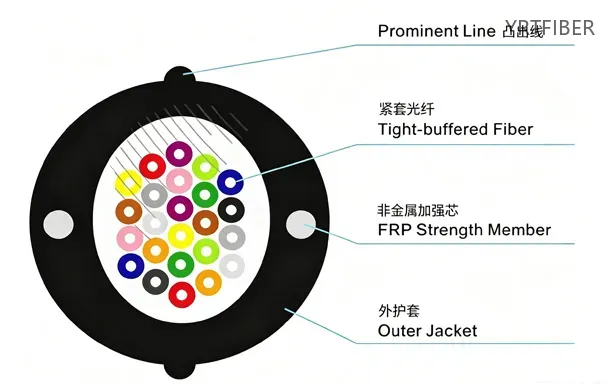
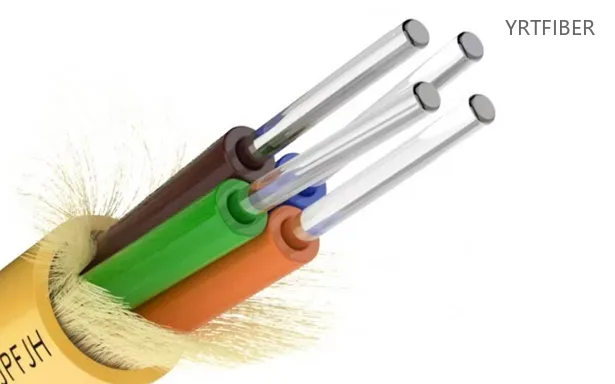
Ürün Yapısı ve Kompozisyonu
Faydaları GJPFXJH Flame-Retardant Indoor Fiber Optic Cable
Fiber Types & Mechanical/Environmental Performance
Supports ITU-T G652D, G657A, and G657B fiber types. Exhibits excellent mechanical and environmental properties, meeting all standard requirements.
Sheath Flexibility & Compliance
Soft, flexible, and easy to handle. The sheath's mechanical and physical properties comply with relevant standards, with flame retardant or non-flame retardant options meeting requirements.

Compact Design & Easy Installation
Well-designed structure allows easy branching and connection. Small size and light weight facilitate convenient installation.
LSZH Flame Retardancy & Vertical Wiring Application
LSZH sheath ensures good flame retardancy. Particularly suitable for building vertical wiring applications.
Mühendislik Uygulamaları GJPFXJH Flame-Retardant Indoor Fiber Optic Cable
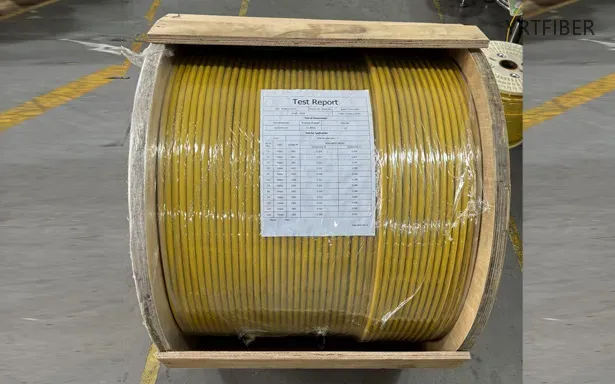
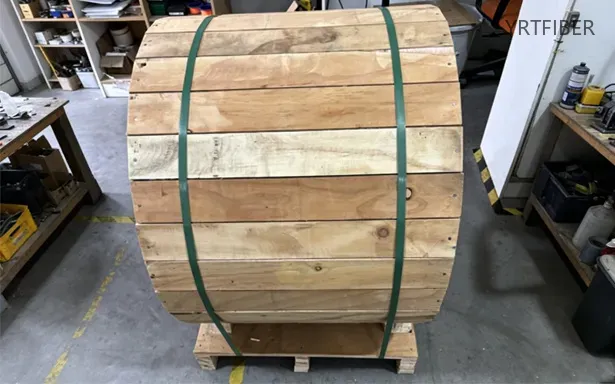
Nakliye ve Paketleme
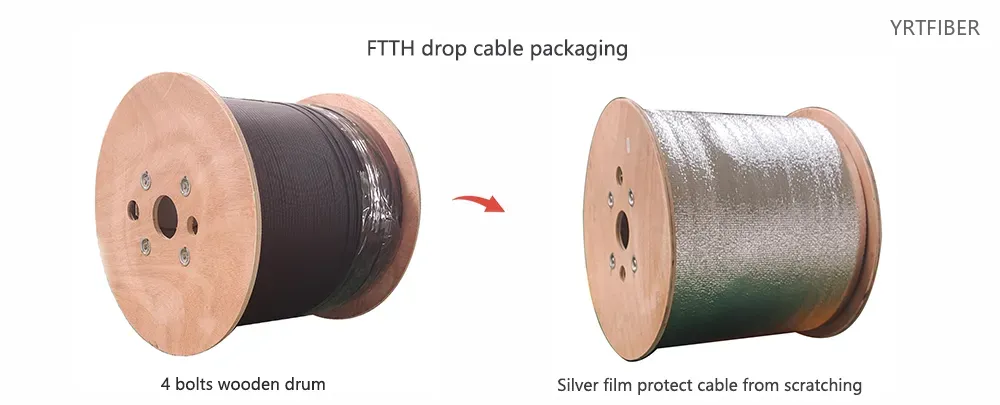
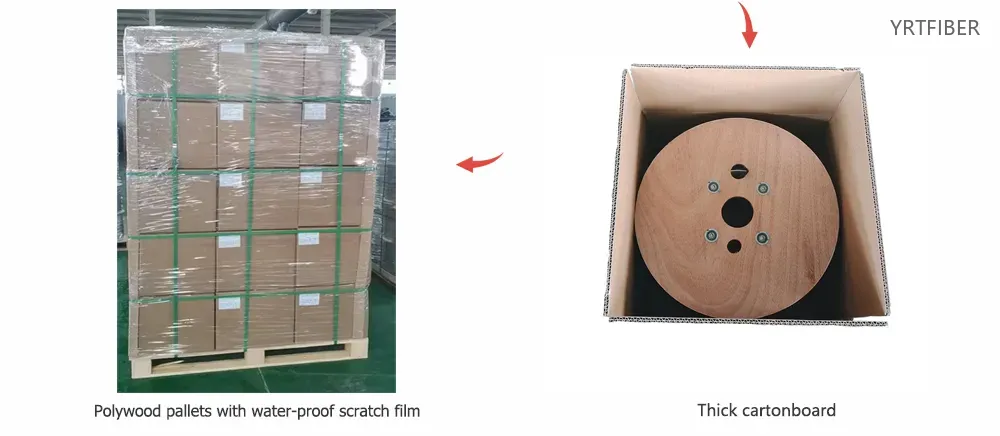
Packaging Detayları
Her rulo, tipik olarak çelik bidonlarla paketlenmiş 1-5 KM kablo içerir. Müşteri talebi üzerine özelleştirilmiş paketleme çözümleri mevcuttur.
Kılıf İşaretleme
Beyaz sıcak folyo girintisi aşağıdaki bilgilerle 1 metre aralıklarla uygulanır:
a. Satıcı adı: Guanglian (veya müşteri tarafından belirtildiği gibi)
b. Ürün tipi, fiber tipi ve fiber sayımı dahil olmak üzere standart kod
c. Üretim yılı (7 yıl geçerlidir)
d. Metre cinsinden uzunluk göstergesi
Sevkiyat Limanı
Mevcut limanlar: Qingdao, Guangzhou, Shenzhen
Tahmini Teslim Süresi
| Quantity (KM) | Estimated Delivery Time |
|---|---|
| 1–300 | Yaklaşık. 15 gün |
| ≥300 | Teslim süresi müzakere edilecek |
Not
Yukarıdaki ambalaj detayları sadece referans amaçlıdır. Nihai ambalaj boyutu ve ağırlığı sevkıyattan önce onaylanacaktır.
Ürün Karşılaştırması:
GJPFXJH vs GJFJH vs GJFJBV
| Feature / Dimension | GJPFXJH (Indoor Breakout) | GJFJH (Distribution Cable) | GJFJBV (Duplex Flat Cable) |
|---|---|---|---|
| Structural Features | Several 900μm tight buffered fibres housed in an LSZH sheath with a special cross‑section. Two parallel FRPs placed as strength members. External mark indicates opening direction. All‑dry design, no gel. | Multiple 900μm tight buffered fibres, aramid yarn as strength member, FRP central strength member (optional), PVC or LSZH outer sheath. Dry‑type water‑blocking between fibres and sheath. | Two 900μm or 600μm tight buffered fibres, each with an inner PVC sheath, covered with aramid yarns, then extruded with a flat PVC or LSZH outer sheath. “Duplex” figure‑8 cross‑section. |
| Strength Member | Two parallel FRP (Fiber Reinforced Plastic) rods – non‑metallic, high tensile stiffness, good bending resistance. | Aramid yarns (high tensile strength, flexibility) + central FRP (optional). Excellent tensile performance, low stretch, and resistance to micro‑bending. | Aramid yarns (excellent tensile performance, flexibility). Flat structure for compact fibre arrangement. |
| Outer Sheath | LSZH (Low Smoke Zero Halogen) – flame‑retardant, low smoke emission, halogen‑free, UV‑resistant variant available for outdoor use. | PVC or LSZH. PVC offers lower cost and good flexibility but releases halogen smoke when burned. LSZH provides flame‑retardancy for fire‑sensitive areas. | PVC (standard) or LSZH (on request). PVC provides good flame‑retardancy, durability, and UV resistance for indoor riser environments. |
| Fiber Core Capacity | 2 – 288 cores (typical: 2–24 cores in standard designs). | 2 – 144 cores, up to 288 cores in some designs. | 2 cores (duplex) – typical design for patch cords and jumpers. |
| Typical Applications | Vertical and horizontal building cabling, telecommunications/comms building backbone, campus networks, equipment interconnects, pre‑connection applications, riser cabling, indoor/outdoor distribution (with UV‑resistant sheath). | Indoor distribution, backbone cabling inside large buildings, entrance facilities, equipment room patching, horizontal cabling, FTTB (Fiber‑to‑the‑Building) applications. | Duplex optical fibre connecting jumpers/pigtails, indoor riser level and vertical cabling, interconnection between instruments and communication equipment, patch cord assemblies. |
| Engineering Pros | ① Easy branching and stripping – all‑dry design, no messy gel, clean termination; ② Flame‑retardant LSZH sheath, safe for densely occupied/fire‑sensitive spaces; ③ Non‑metallic, all‑dielectric structure – immune to EMI, no grounding required; ④ Small size, lightweight, easy installation; ⑤ Good mechanical and environmental performance; ⑥ FRP strength members resist bending and stretching; ⑦ Especially suited for pre‑connection – use only required fibres without cutting entire cable length. | ① Good flexibility and bend performance – aramid yarns resist micro‑bending; ② Wide range of fibre counts (2–144 cores) for varied applications; ③ Versatile – available in PVC (cost‑effective) or LSZH (fire‑safe); ④ Each sub‑cable contains aramid yarn, easy construction and connection; ⑤ Dry‑type water‑blocking, no gel, cleaner termination; ⑥ Central FRP adds structural integrity; ⑦ OFNR rating (UL approval) for riser applications. | ① Very low cost – economical for low fibre count patch cords; ② Compact flat structure – fibres arranged tightly; ③ Good flame‑retardant performance (PVC/LSZH jacket); ④ Tight buffered fibres with excellent strippability; ⑤ Aramid yarns provide high tensile strength; ⑥ Flexible and easy to handle – suitable for tight spaces; ⑦ Anti‑corrosion, water‑blocking, environment‑friendly; ⑧ Meets YDT1258.2‑2009 standard. |
| Engineering Cons | ① FRP strength members lack long‑term creep resistance of aramid (suitable for static indoor applications, not high‑dynamic flexing); ② LSZH sheath has slightly lower UV resistance than PVC for long‑term outdoor exposure; ③ Higher cost than PVC alternatives. | ① Aramid yarns can be more challenging to strip cleanly than FRP – loose fibres; ② No special extraction channel – requires more effort for mid‑span access; ③ PVC variant not suitable for plenum/riser spaces where LSZH is mandated; ④ Higher cost than GJPFXJH for low fibre counts; ⑤ LSZH sheath adds cost over PVC. | ① Limited to 2 fibres – not suitable for higher core counts; ② Flat shape less suited for bundled installations in conduits (awkward pulling); ③ Lower tensile strength (100–200N) compared to GJPFXJH/GJFJH; ④ Higher bend radius (60/30mm static/dynamic vs 20D/10D) – less flexible for tight corner routing; ⑤ PVC jacket not flame‑retardant to LSZH level, may not meet strict fire codes in some regions; ⑥ More common as patch cord/assembly cable, not designed for long‑haul backbone runs. |
| All‑Dielectric (Non‑Metallic) | Yes – FRP strength members, LSZH sheath, no metal components. | Yes – aramid yarns, FRP central member, LSZH/PVC sheath. | Yes – aramid yarns, PVC/LSZH sheath, no metal components. |
| Flame Retardancy | LSZH – low smoke, halogen‑free, flame‑retardant; meets OFNR/OFCR riser rating. Suitable for plenum/riser spaces in buildings. | LSZH variant – same low smoke, halogen‑free performance; meets UL OFNR requirements. PVC variant – flame‑retardant but produces dense smoke and halogen gases when burned. | PVC/LSZH – flame‑retardant; PVC variant UL94 V‑0 rated, LSZH variant meets IEC 60754‑2 for low halogen emission. |
GJPFXJH Flame-Retardant Indoor Fiber Optic Cable Seçim Kılavuzu
Building vertical and horizontal cabling between GJPFXJH, GJFJH and GJFJBV:
For building backbone cabling (riser and horizontal runs) where space is limited, safety is critical, and ease of field termination matters, GJPFXJH is recommended. Its special cross‑section with a marked opening direction allows quick access to individual 900μm tight‑buffered fibres, and the all‑dry design contains no messy gel, simplifying both installation and maintenance. The two parallel FRP strength members provide mechanical robustness for vertical riser installations, and LSZH sheathing ensures flame‑retardancy in densely occupied buildings. Typical applications include telecommunications and mobile‑communications building backbones, campus networks, and pre‑connection projects where only a subset of fibres need immediate termination on specific floors.
For general indoor distribution cabling in equipment rooms, patching areas, and entrance facilities that require versatility across a wide fibre count range (2–144 cores), GJFJH is a solid choice. Aramid yarn strength members give the cable high tensile strength and good bending performance, while the optional LSZH sheath provides flame‑retardancy comparable to GJPFXJH. However, GJFJH lacks the same easy‑access extraction channel, making mid‑span fibre branching more labour‑intensive. Choose GJFJH‑LSZH for fire‑sensitive riser environments where cost is a secondary concern.
For patch cords, pigtails, and short jumpers between communication equipment where only two fibres are required, GJFJBV is the most economical and flexible solution. Its flat duplex configuration is purpose‑built for interconnection applications, offering excellent strippability and compact arrangement. However, it is not suitable for backbone cabling, multi‑core distribution, or routing that requires multiple bends in conduits due to its larger bend radius requirements (60/30 mm compared to 20D/10D for GJPFXJH and GJFJH). Use GJFJBV only for low‑fibre‑count, short‑distance connectivity within racks and patching fields.
Fire‑retardancy and safety considerations:
Choose LSZH‑sheathed cables (GJPFXJH, GJFJH‑LSZH) for buildings with strict fire safety codes, plenum and riser spaces, or where smoke hazards are a concern. LSZH sheathing emits minimal smoke and no halogen gases, minimising harm to personnel and equipment in the event of a fire.
Choose PVC‑sheathed cables (GJFJH‑PVC, GJFJBV) for general indoor areas with moderate fire regulations (e.g., under‑floor, office LANs, residential buildings) where cost is a priority. PVC sheathing is flame‑retardant but releases dense smoke and halogen gases when burned – not suitable for high‑occupancy or confined spaces.
UV exposure and mixed indoor/outdoor deployments:
For applications that transition from indoor risers to outdoor routing (e.g., building‑to‑building links), GJPFXJH offers a UV‑resistant LSZH variant, providing flame‑retardancy and long‑term solar resistance. Standard GJFJH LSZH and PVC variants are not rated for continuous outdoor UV exposure without additional jacketing or conduit protection.
Core count and deployment strategy:
When installing pre‑connection or mid‑span access cabling where individual floors may require fibre termination without cutting the whole cable, GJPFXJH is the preferred choice. Its design allows clean extraction of specific fibre cores without disrupting the rest of the line, significantly saving construction time and reducing waste. GJFJH is better suited for scenarios requiring entire cable termination or patching at both ends, while GJFJBV is best for direct device‑to‑device connections in crowded equipment racks.
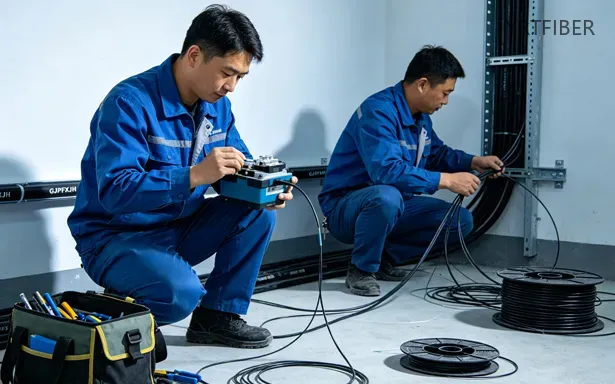
GJPFXJH Indoor Optical Cable Installation Instructions
Keep the cable’s bend radius at least 10 times the cable diameter during pulling and installation. Do not exceed the recommended tensile load (typically ≤200N for short-term pulling). Avoid crushing, kinking, or twisting the cable. When stripping the sheath, take care not to damage the internal tight-buffered fibers. For vertical riser runs, secure the cable at intervals of no more than 1.5 meters using proper clips or ties. After installation, clean and inspect all connectors before termination. Ensure the cable is routed away from heat sources and sharp edges.
YRTFIBER Ürün Kataloğunu İndirin
Fabrika Gerçek Atış
Sık Sorulan Sorular ve Hızlı Sorgulama
GJPFXJH Flame-Retardant Indoor Fiber Optic Cable FAQ
1. "Yükseltici kablo" ne anlama geliyor ve nerede kullanılıyor?
"Yükseltici", genellikle building şaftlarda veya kablo yükseltici odalarda, katlar arasında vertical kablo yönlendirmesini ifade eder. GJPFXJH, bu dikey bina içi yollar için gerekli olan yangın güvenliği standartlarını karşılayacak şekilde tasarlanmıştır.
2. Bu kablo alev geciktirici mi yoksa yanmaz mı?
GJPFXJH, IEC60332 ve diğer bina içi alev standartlarına uygun bir flame-retardant LSZH (Düşük Duman Sıfır Halojen) ceket kullanır. flame-retardant, yanmaz değil - alevlerin yayılmasını yavaşlatmak ve toksik dumanı azaltmak için tasarlanmıştır.
3. Hangi fiber türleri mevcuttur?
Bu kablo G.652D (standart SMF) ve G.657A / B 'yi (bükülmeye duyarlı olmayan lifler) destekler. G.657A / B özellikle raf kabloları veya duvara monte kutular gibi sıkı iç virajlar için kullanışlıdır.
4. Plenum alanlarında mı yoksa sadece yükselticilerde mi kullanılabilir?
GJPFXJH, riser uygulamaları için özel olarak tasarlanmıştır. pepum (hava dönüş tavanı) kullanımı için, daha yüksek alev değerlerine sahip OFNP / LSZH gibi bir plenum-rated kablosu gerekir.
5. Tipik uygulama senaryoları nelerdir?
GJPFXJH aşağıdakiler için idealdir:
Ticari binalarda katlar arasındaVertical kablolama
Kapalı telekom yükseltici şaftlar
FTTH / FTTB bina içi dağıtım
Ofis, veri merkezi ve otel fiber altyapısı
Sorgunuzu Gönderin
Aşağıdaki formu doldurun, 24 saat içinde size geri döneceğiz.


