

 Español
 Português
 لالعربية
 Русский
 Bahasa Indonesia
 Français
 Türkçe
 Bahasa Melayu

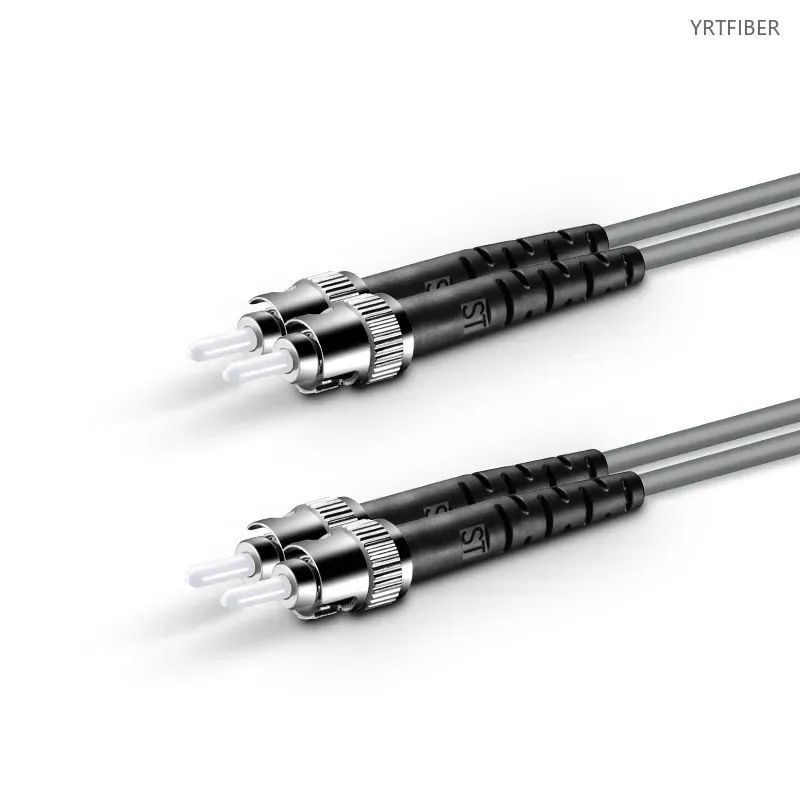
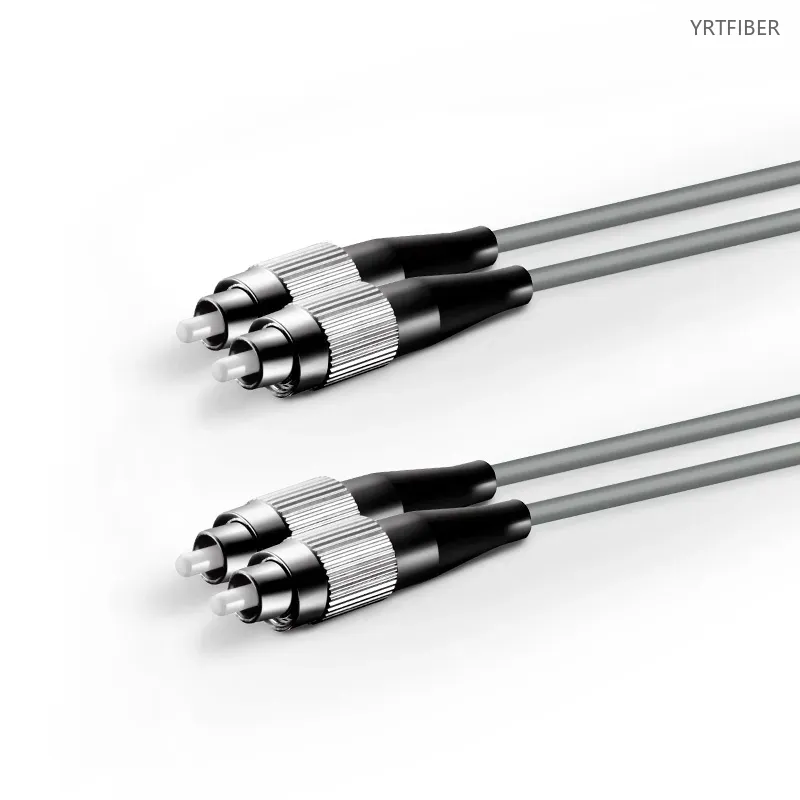
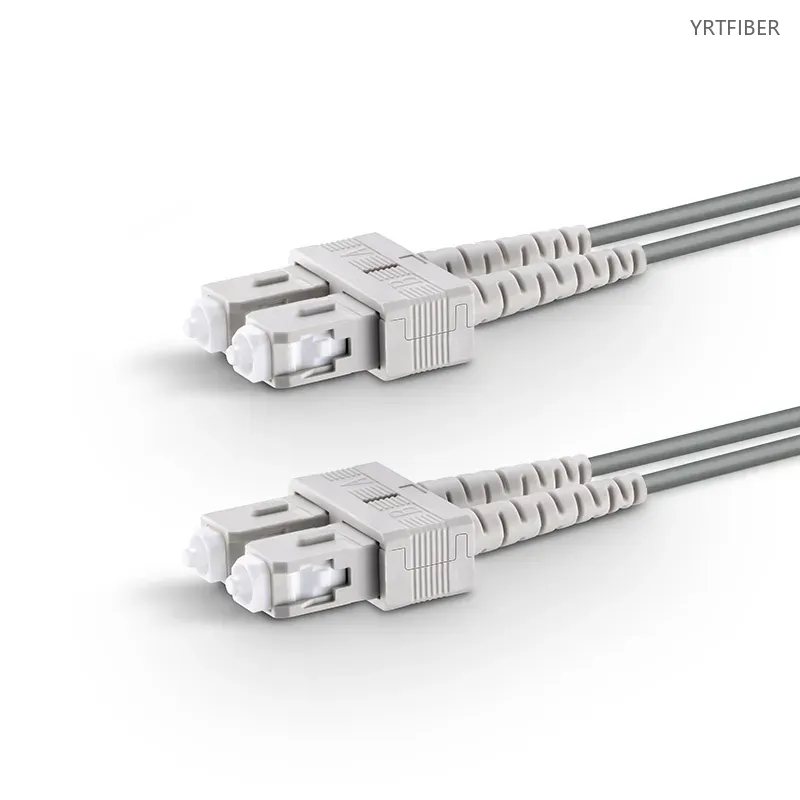
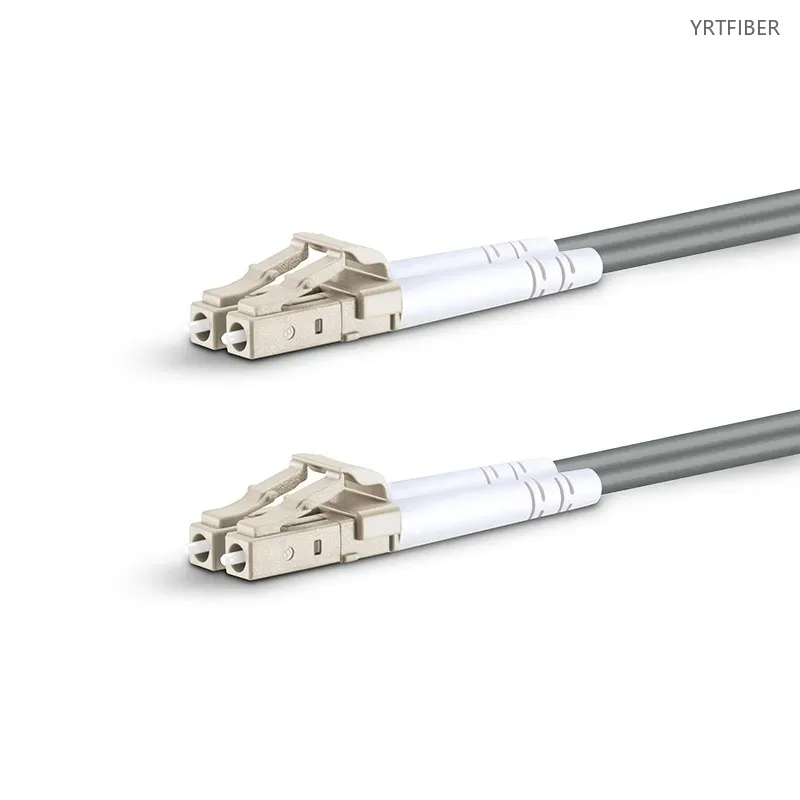
OM1/OM2 Armored Fiber Optic Patch Cord – Stainless Steel or Aluminum Armor, LSZH/PVC
Designed for Harsh Environments: Specifically crafted for harsh industrial sites or areas with strong electromagnetic interference.
Enhanced Protection: Features a stainless - steel or aluminum alloy armor layer (either braid or metal tube) outside the fiber, improving crush resistance, tensile protection, anti - rodent performance, and providing EMI/RFI shielding. This ensures more stable and durable short - distance links.
Fiber Options: Offers OM1 (62.5/125µm) suitable for legacy multimode systems and OM2 (50/125µm) with higher bandwidth performance. The EMB (Effective Modal Bandwidth) is 200MHz·km for OM1 and 500MHz·km for OM2.
Mechanical and Safety Design: The armor structure enhances bending resistance and safeguards against pulling, compression, abrasion, and accidental impact. Outer jacket options of LSZH or flame - retardant PVC ensure better fire performance and safe indoor deployment.
Optical Performance: Maintains stable insertion loss and return loss for multimode links. It has wide temperature adaptability, enabling reliable operation in fluctuating industrial environments.
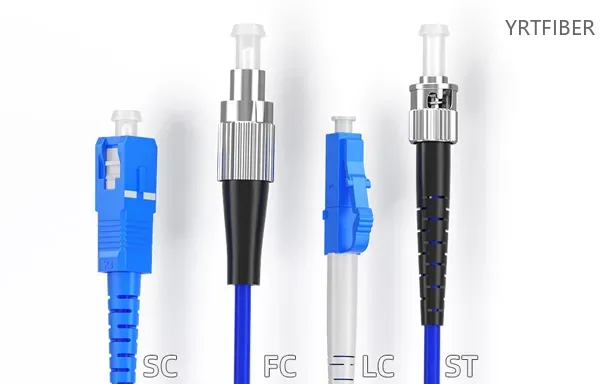
Connector Options: Supports LC/SC/FC/ST and high - density MPO/MTP (12/24 core) connectors. The polishing is mainly PC (Physical Contact).
What is an OM1/OM2 Armored Fiber Optic Patch Cord?
An OM1/OM2 armored fiber optic patch cord is a multimode patch cable designed for harsh industrial or high - EMI environments. It has an added stainless - steel or aluminum alloy armor layer for enhanced protection, offers OM1 and OM2 fiber options, has a mechanically and safety - conscious design, stable optical performance, and various connector options.
OM1/OM2 Armored Fiber Optic Patch Cord Specification parameters
- Specification parameters
- OPTICAL CHARACTERISTICS
Product Structure & Composition
Fiber Core: Consists of either OM1 (62.5/125μm) or OM2 (50/125μm) multimode fiber. These fibers are optimized for short - distance multimode data transmission, with OM2 providing higher bandwidth compared to OM1.
Armor Layer: A stainless - steel or aluminum alloy layer, which can be in the form of a braid or metal tube, surrounds the fiber. This layer provides protection against mechanical stress such as crushing, pulling, and abrasion. It also offers anti - rodent protection and shields against electromagnetic interference (EMI) and radio - frequency interference (RFI).
Outer Jacket: Available in LSZH (Low - Smoke Zero - Halogen) or flame - retardant PVC. LSZH is ideal for indoor use where fire - safety is a concern as it emits less smoke and no halogen - containing toxic gases in case of a fire. Flame - retardant PVC is a more cost - effective option while still providing good fire - resistant properties.
Connectors: Comes with LC/SC/FC/ST connectors for general - purpose connections and high - density MPO/MTP (12/24 core) connectors for more complex setups. The PC - polished connectors ensure good optical coupling.
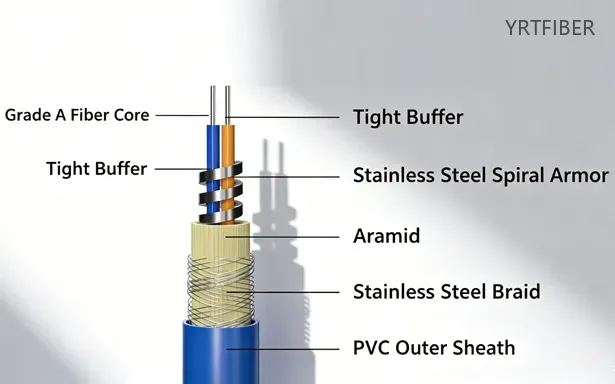
Benefits of OM1/OM2 Armored Fiber Optic Patch Cord
1. Environmental & Mechanical Durability
The addition of an armor layer makes the patch cord suitable for harsh industrial environments. It withstands mechanical stress, protects against rodents, and shields from electromagnetic interference. Combined with armor‑enhanced bending resistance and protection against various mechanical forces, plus the choice of LSZH or flame‑retardant PVC outer jackets, it provides both mechanical robustness and fire safety — crucial for indoor and outdoor industrial applications.
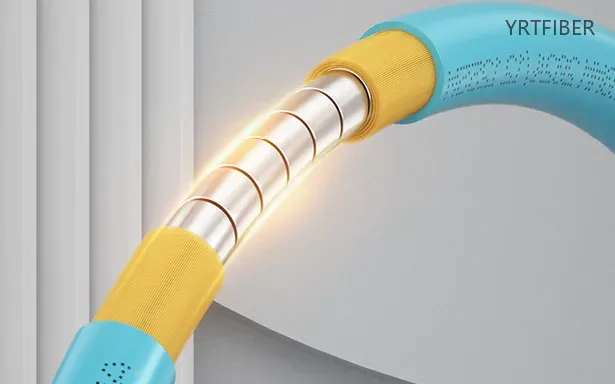
2. Stable Optical Performance
Maintaining stable insertion loss and return loss, along with wide temperature adaptability, ensures reliable multimode link performance. This is essential for continuous operation in industrial environments where temperature fluctuations are common.
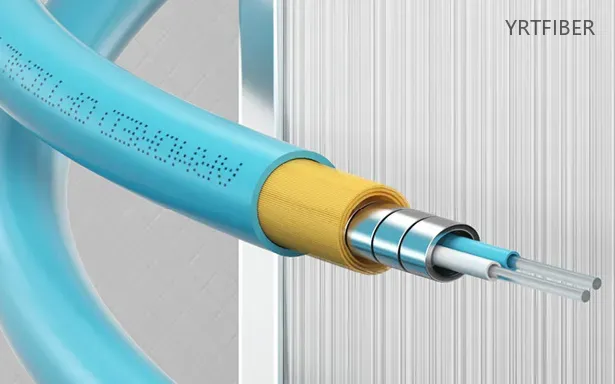
3. Connector Versatility
The availability of different connector types, including high‑density MPO/MTP, allows easy integration into various network setups. Whether for a simple connection or a complex high‑density installation, the patch cord meets the requirements
Engineering Applications OM1/OM2 Armored Fiber Optic Patch Cord

Data Center Rack Connections
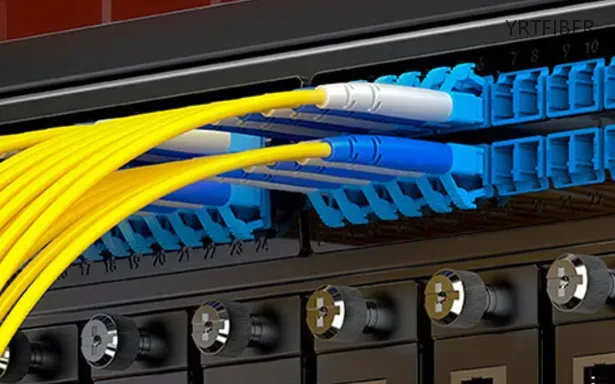
In data centers, the OM1/OM2 armored fiber optic patch cord can be used to connect racks. Its ability to resist electromagnetic interference and provide mechanical protection ensures reliable data transfer between different components in the data center environment.
Industrial Automation Networks
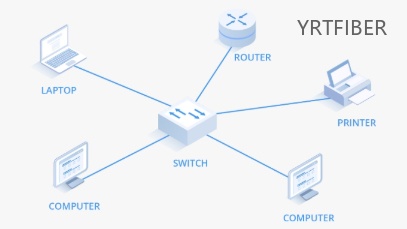
Industrial automation networks often operate in harsh environments with potential mechanical stress and electromagnetic interference. The armored patch cord can be used to connect sensors, actuators, and control systems, ensuring stable and reliable communication.

Security Monitoring Cabling
For security monitoring systems, especially in outdoor or industrial areas, the patch cord's anti - rodent, EMI/RFI shielding, and mechanical protection features make it suitable for cabling cameras, recorders, and other security equipment.
Medical Equipment Rooms (MRI/CT Areas)
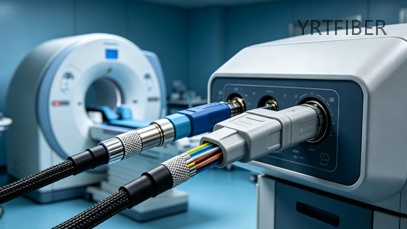
In medical equipment rooms, particularly in MRI/CT areas where strong electromagnetic fields are present, the OM1/OM2 armored fiber optic patch cord can be used to connect different medical devices. Its EMI/RFI shielding and mechanical protection ensure accurate data transfer and device operation.
Shipping & Packaging
Product Comparison:
| Feature / Dimension | OM1/OM2 Armored Patch Cord | Standard OM1/OM2 Patch Cord (Non-Armored) |
|---|---|---|
| Structural Features | Stainless steel or aluminum spiral armor between inner jacket and outer sheath. Outer diameter typically 3.0mm or 2.0mm (armored version). | No metallic armor - only PVC/LSZH outer jacket + aramid yarn strength members. Outer diameter typically 1.6mm or 2.0mm. |
| Crush / Impact Resistance | Up to 10× higher resistance compared to standard patch cords. Withstands stepping, heavy objects, or accidental crushing without fiber damage. | Limited crush protection - only aramid yarn provides basic tensile strength. Heavy pressure or impact can easily damage fibers. |
| Rodent / Pest Protection | Excellent - steel armor prevents rodent bites from damaging the fiber core. Ideal for cable trays, outdoor cabinets, or areas with pests. | None - rodents can easily chew through the soft PVC/LSZH jacket and aramid yarn, damaging the fiber. |
| Fire Safety (Jacket options) | LSZH (standard), PVC, OFNP (plenum) - armor does not affect flammability rating. | LSZH, PVC, OFNP - same options. |
| Typical Applications | Industrial environments (factories, warehouses), outdoor cabinets, direct burial (short runs), data center floor areas with foot traffic, cable trays where rodents are present, military/tactical field deployments. | Standard data center patching, office LAN, equipment rooms, raised floors, and controlled indoor environments with low mechanical risk. |
| Engineering Pros | ① Superior mechanical protection - crush, impact, rodent, and cut resistant; ② Suitable for harsh and high‑traffic environments; ③ Longer service life when subjected to physical stress; ④ Can be routed in high‑risk areas without extra conduit; ⑤ Available in OM1 (62.5μm) and OM2 (50μm) for legacy systems. | ① More flexible and easier to route in tight spaces; ② Lighter weight - reduces strain on connectors and patch panels; ③ Lower cost; ④ Smaller diameter allows higher density in cable managers; ⑤ Easier to strip and terminate in the field. |
| Engineering Cons | ① Heavier and stiffer - harder to handle in congested racks; ② Larger minimum bend radius - requires careful routing; ③ Higher material cost (typically 2-3× standard patch cords); ④ Armor may cause connector strain if not properly supported; ⑤ Not recommended for very tight bending or frequent flexing. | ① No protection against crushing, impact, or rodents - easily damaged in industrial or high‑traffic areas; ② Requires protective conduit or cable trays for physical safety; ③ Shorter lifespan when exposed to mechanical stress; ④ Not suitable for direct burial or outdoor cabinets without additional protection. |
OM1/OM2 Armored Fiber Optic Patch Cord Selection Guide
Choose OM1/OM2 Armored Patch Cords when:
The cable will be installed in industrial environments, factory floors, warehouses, or any location with heavy foot traffic or potential for being stepped on.
The routing path goes through cable trays shared with power cables where metal armor provides additional EMI shielding (though fiber is not sensitive, the armor prevents crushing).
Rodents (mice, rats) are present - such as in basements, attics, outdoor cabinets, or rural exchanges. The steel armor deters chewing.
The patch cord needs to be directly buried in shallow trenches or run through concrete floor slots without additional conduit.
The deployment is military, tactical, or field‑temporary where rough handling is expected.
Choose Standard (Non-Armored) Patch Cords when:
The environment is a controlled indoor data center, telecom room, or office LAN where physical risks are low.
Flexibility and small bend radius are critical - such as high‑density patching in crowded racks or cable managers.
Weight and bulk must be minimized - standard patch cords are lighter and reduce strain on connectors, especially for long horizontal runs.
Cost is a primary concern - armored patch cords are significantly more expensive.
Frequent moves, adds, and changes (MACs) are expected - the stiffness of armored cables makes daily handling more difficult.
Mixed deployment strategy: Use armored patch cords only in high‑risk zones (e.g., floor crossings, shared cable trays, rodent‑prone areas). For the majority of patching between panels within the same rack or row, standard patch cords are more practical and cost‑effective. When transitioning from an armored trunk to standard patch cords, use a patch panel or breakout kit to terminate the armor at a safe point.
Note: OM1 (62.5μm) is legacy and not recommended for new 10G+ installations. OM2 (50μm) supports 10G up to 82m and is obsolete for new builds but may still appear in upgrades. For new multimode installations, use OM3 or OM4. The armored vs. standard decision applies equally to OM3/OM4/OM5 and OS2 single‑mode patch cords.
Installation Instructions of OM1/OM2 Armored Patch Cord
Pre-Installation Check
Visually inspect the armored fiber optic patch cable: make sure the armor layer has no dents, cuts, or loose braiding; the outer jacket is not torn or worn; the connector ferrules are clean and free of scratches.
Connector Mating
LC: Align the key slot and push in until you hear a click.
SC: Align and push in until it locks.
ST: Insert and then twist to lock.
FC: Align the threads and screw in, avoiding cross-threading.
MPO/MTP: Align the keys and polarity, then push in to lock.
Wiring Requirements
Avoid sharp bends and maintain the minimum bend radius; secure with cable ties without damaging the armor or jacket; provide extra protection in areas with mechanical stress.
Testing
Use a light power meter to measure insertion loss and compare it to standard values; if the loss is too high, reinsert the connectors, clean them, and check if the fiber under the armor is damaged; also confirm that the return loss meets the standard.
Download YRTFIBER Product Catalog
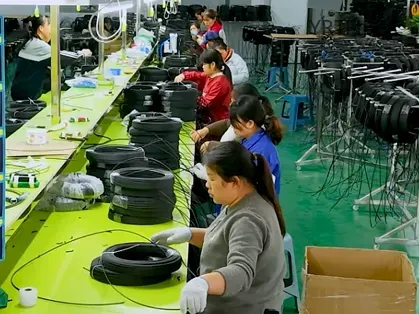
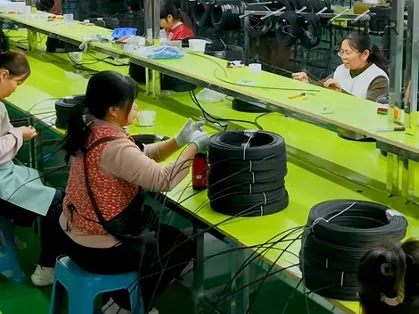
Factory Real Shot
State-of-the-Art Manufacturing Facilities
Our 60,000 sqm dust-proof workshop houses over 21 automated production lines . Equipment includes high-precision fiber cutters (±0.08 mm tolerance), FLC automatic termination machines, and UV curing systems, enabling a daily output of thousands of connectors with consistent quality.
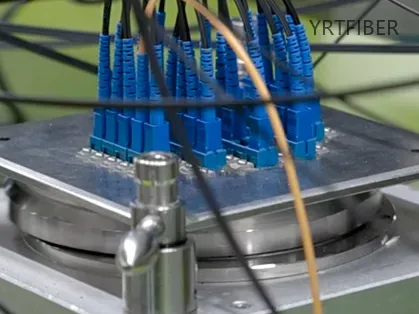
Precision Core Manufacturing Process
The process starts with micro-tolerance cutting (end-face angle ±0.5°) and six-axis fusion splicing (core deviation ≤1 μm). After multilayer jacketing with LSZH, PVC, or OFNP, connectors are polished on automated lines for PC, UPC, or APC finishes, achieving up to 7,000 connectors per 11-hour shift.
Rigorous Quality Assurance & Testing
Every patch cord undergoes 100% inspection: interferometric end-face analysis (400x), automatic contamination detection, and insertion/return loss testing via OTDR. Environmental samples also pass temperature, humidity, and pull-force tests per IEC/TIA standards.
Frequently Asked Questions & Quick Inquiry
OM1/OM2 Armored Fiber Optic Patch Cord FAQ
Why would I choose OM1 over OM2 in an armored fiber optic patch cord?
If you are connecting to legacy multimode systems that are designed for OM1 fiber (62.5/125µm) and do not require the higher bandwidth of OM2, OM1 would be a suitable choice. It can provide a cost - effective solution for maintaining or upgrading existing systems.
What is the difference between the stainless - steel and aluminum alloy armor?
Stainless - steel armor offers stronger corrosion resistance, making it suitable for environments where exposure to moisture or corrosive substances is likely. Aluminum alloy armor, on the other hand, is lighter, which can be beneficial for applications where weight is a concern, such as in installations where the cable needs to be routed over long distances or in areas with limited support structures.
Send Your Inquiry
Fill out the form below and we'll get back to you within 24 hours.


