

 Español
 Português
 لالعربية
 Русский
 Bahasa Indonesia
 Français
 Türkçe
 Bahasa Melayu

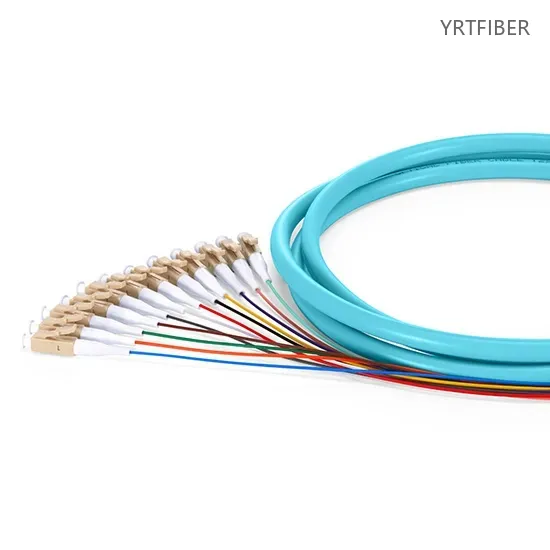
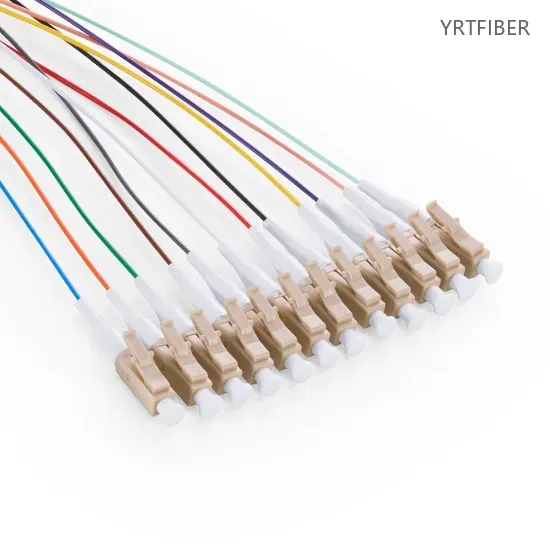
Multimode Dual-core Fiber Optic Pigtail with LSZH Jacket for Transceivers
Dual-core multimode fiber for bidirectional signal transmission.
Compatible with OM2. OM3. OM4 multimode fiber standards.
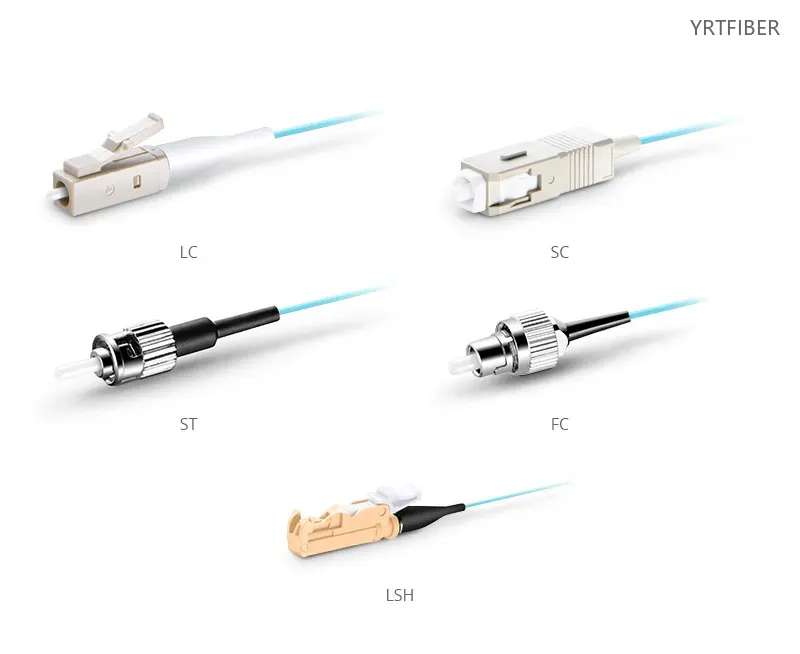
Pre-terminated with SC, LC, ST, or FC connectors (UPC polish).
LSZH outer sheath provides flame retardancy and low smoke emission.
Factory-tested for low insertion loss and return loss.
What is a Multimode Dual - core Fiber Optic Pigtail?
A multimode dual - core fiber optic pigtail is a component designed for high - performance interconnection between optical transceivers and patch panels or ODFs in LAN and data communication networks. It has a dual - core for bidirectional transmission, is compatible with multiple multimode standards, comes with various pre - terminated connectors, an LSZH jacket for safety, and is factory - tested for reliable performance.
Multimode Dual-core Fiber Optic Pigtail Specification parameters
- Specification parameters
- OPTICAL CHARACTERISTICS
| Connector A | LC UPC Simplex | Connector B | Unterminated |
| Fiber Count | 12 Fibers | Fiber Grade | Bend Insensitive |
| Fiber Mode | OM3 50/125μm | Wavelength | 850/1300nm |
| Jacket Color | Aqua | Cable Type | Tight-Buffered |
| Cable Outside Diameter (OD) | 0.9mm | Cable Jacket | PVC (Unrated) |
| Min. Bend Radius (Optical Fiber) | 7.5mm | Min. Bend Radius (Fiber Cable) | 20/10D (Dynamic/Static) |
| Connector Durability | 1000 Times | Tensile Strength (Long/Short Term) | 200/660N |
| Attenuation at 850nm | 0.30dB/km | Attenuation at 1300nm | 1.0dB/km |
| Insertion Loss | ≤0.3dB | Return Loss | ≥30dB |
| Vibration | ≤0.2dB | Interchangeability | ≤0.2dB |
| Operating Temperature | -20 to 70°C (-4 to 158°F) | Storage Temperature | -40 to 70°C (-40 to 158°F) |
Product Structure & Composition
Fiber Core: Comprises a dual - core multimode fiber structure. The multimode fibers are designed to support high - speed data transmission over short distances. The cores are optimized for different multimode standards (OM2. OM3. OM4), allowing for flexibility in application.
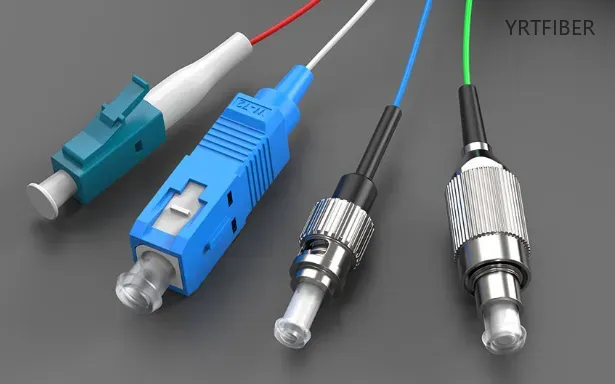
Connectors: The pigtail is pre - terminated with SC, LC, ST, or FC connectors. These connectors with UPC polish ensure a good optical connection with other network components. Each connector type has its own unique locking mechanism for secure attachment.
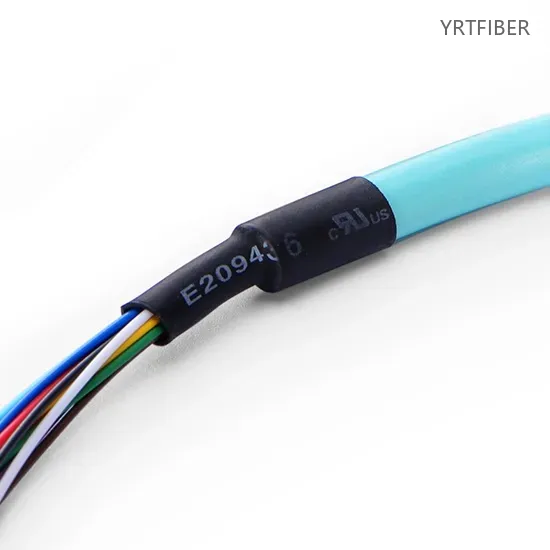
Outer Jacket: The LSZH outer jacket surrounds the fiber and connectors. It provides mechanical protection to the internal components and also has flame - retardant and low - smoke - emitting properties, making it suitable for indoor installations.
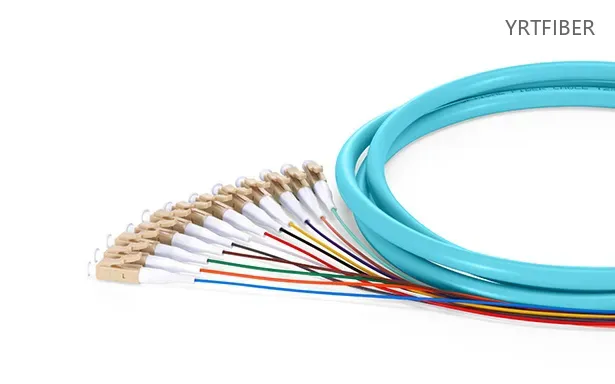
Benefits of Multimode Dual-core Fiber Optic Pigtail
Bidirectional Transmission
The dual - core design enables bidirectional signal transmission. This means that data can be sent and received simultaneously, doubling the communication efficiency in network connections between optical transceivers and patch panels or ODFs.
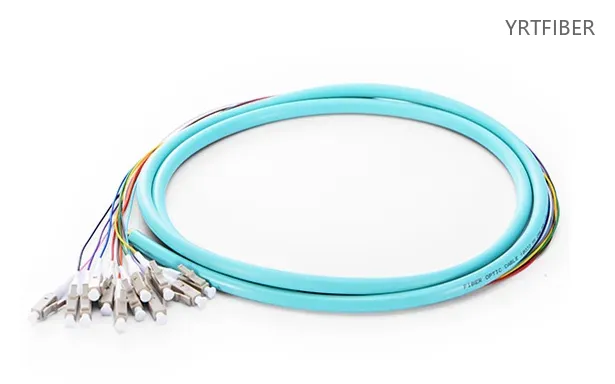
Standard Compatibility Safety - conscious Design
Compatibility with OM2. OM3. and OM4 multimode fiber standards allows for seamless integration into existing networks. Whether upgrading an older OM2 - based network or building a new OM4 - optimized setup, this pigtail can be used, reducing the need for complex re - cabling.The LSZH outer sheath is a significant advantage, especially in indoor environments. In case of a fire, it emits less smoke and no halogen - containing toxic gases, protecting the lives and equipment in the area.
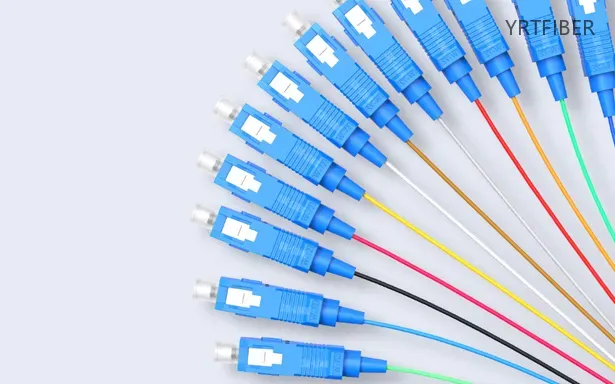
Connector Flexibility
With the availability of SC, LC, ST, or FC connectors, the pigtail can be easily connected to different types of optical devices. LC connectors are great for high - density cabling, SC connectors are known for their simplicity, ST connectors offer a quick - lock mechanism, and FC connectors provide a secure threaded connection.
Engineering Applications Multimode Dual-core Fiber Optic Pigtail

Local Area Networks (LANs)
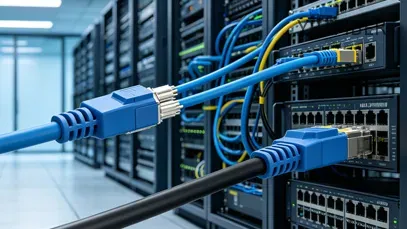
In LANs, the multimode dual - core fiber optic pigtail can be used to connect network switches to servers or other network devices. The bidirectional transmission feature helps in quickly transferring data between different components, and the LSZH jacket ensures safety in the office environment.
Campus Networks
Campus networks often require high - performance and safe cabling solutions. This pigtail can be used to connect different buildings' network closets or to link access points to the central network infrastructure. Its compatibility with multiple multimode standards allows for easy integration across different parts of the campus network.
Equipment Room Cabling
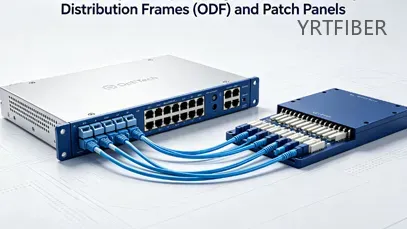
In equipment rooms, where space is often limited and safety is a top concern, the multimode dual - core fiber optic pigtail's high - density connector options (like LC) and LSZH jacket make it an ideal choice. It can be used to connect optical transceivers to patch panels or ODFs, ensuring reliable and safe signal transmission.
Shipping & Packaging
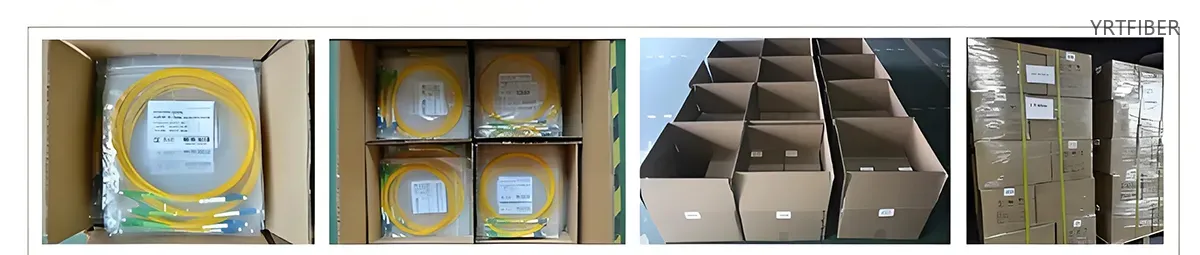

Product Comparison:
| Feature / Dimension | Multimode Dual-core Pigtail (OM4 Duplex) | Singlemode Dual-core Pigtail (OS2 Duplex) |
|---|---|---|
| Fiber Type / Core Diameter | Multimode (MM) 50/125µm, OM4 grade | Singlemode (SM) 9/125µm, OS2 low-water-peak |
| Number of Fibers | 2 fibers (duplex – Tx and Rx) | 2 fibers (duplex – Tx and Rx) |
| Connector Options (Pigtail end) | LC Duplex, SC Duplex, or two separate LC/SC connectors | LC Duplex, SC Duplex, or two separate LC/SC connectors |
| Typical Applications | Short‑reach 10G/40G/100G links (≤150m), data center TOR/EOR, SAN, HPC clusters, parallel optic breakout | Long‑haul backbone (>2km), metro core, PON, FTTx, campus connections, 5G fronthaul, carrier networks |
| Max Transmission Distance @10G | 550 meters (OM4) | >40 km |
| Max Transmission Distance @40G/100G | 150 meters (using SR4 parallel optics) | >2 km (using LR4 or DWDM) |
| Attenuation (typical) | ≤2.5 dB/km @850nm, ≤0.6 dB/km @1300nm | ≤0.4 dB/km @1310/1383/1550nm |
| Return Loss (UPC) | ≥35 dB (MM typical) | ≥55 dB (SM UPC) |
| Jacket Color (Standard) | Aqua (OM4) | Yellow (OS2) |
| Bend‑Insensitive Option | Yes (G.657.A2 compatible in MM? Typically OM4 with bend-optimized version) | Yes (G.657.A1/A2 widely available) |
| Relative Cost (per fiber) | Low (multimode transceivers cheaper, pigtail cost slightly higher than simplex) | Medium (fiber itself inexpensive but transceivers cost more) |
| Engineering Pros | ① Full duplex ready – one pigtail provides both Tx and Rx channels; ② Lower transceiver cost than SM; ③ Supports high parallel optics (MPO breakout); ④ Ideal for data center leaf‑spine; ⑤ OM4 high bandwidth (4700 MHz·km). | ① Extremely long reach; ② Future‑proof for 400G/800G; ③ Lowest attenuation; ④ Immune to modal dispersion; ⑤ Best for carrier and campus backbone. |
| Engineering Cons | ① Distance limited (≤550m @10G, ≤150m @100G); ② Requires two fibers (no BiDi); ③ Larger cable/bulk than simplex for same fiber count. | ① Higher transceiver cost; ② Core alignment more critical; ③ Cleaning/termination requires more skill; ④ Over‑specified for short‑reach links. |
Multimode Dual-core Fiber Optic Pigtail Selection Guide
Multimode Dual‑core (OM4 Duplex) pigtails are the standard for short‑reach, high‑speed optical links within data centers, server rooms, and high‑performance computing clusters where distances do not exceed 550 m for 10G or 150 m for 40G/100G. They are also the first choice when using parallel optic transceivers (QSFP‑SR4. OSFP‑SR8) because a single duplex pigtail can be paired with MPO‑to‑duplex breakouts or directly terminated on LC duplex ports. The lower cost of multimode transceivers and the mature 50µm core technology make OM4 duplex pigtails the most cost‑effective solution for intra‑row and middle‑of‑row cabling.
Singlemode Dual‑core (OS2 Duplex) pigtails are mandatory for any link requiring transmission distances beyond 550 m, outdoor or campus connections, long‑haul backbone, and carrier‑grade networks. They are also the future‑proof choice for greenfield installations where data rates may scale to 400G and 800G over the same fiber. Although transceivers are more expensive, the fiber itself is low‑cost and offers virtually unlimited bandwidth. For inter‑building, FTTH, and 5G fronthaul applications, OS2 duplex pigtails are the industry standard.
Multimode Single‑core (OM4 Simplex) pigtails are specialized for bidirectional (BiDi) transmission where one fiber carries both transmit and receive wavelengths (e.g., 10G BiDi SFP+, 25G BiDi). They are also used for fiber monitoring taps, sensing applications, or any scenario requiring only a single optical path. For standard duplex connections, two simplex pigtails can be used but will occupy twice the panel space and require careful pair management. Where density is less critical and BiDi is not employed, the duplex pigtail is the cleaner, more organized choice.
Selection summary table:
| Requirement | Recommended Pigtail |
|---|---|
| Standard 10G/25G/40G/100G duplex link ≤150m (data center TOR‑to‑server) | OM4 Duplex |
| Link distance >550m, campus/backbone, carrier network | OS2 Duplex |
| BiDi transmission (single fiber for both directions) | OM4 Simplex (or OS2 Simplex for long‑reach BiDi) |
| Upgrading legacy OM1/OM2 to 10G within distance limits | OM4 Duplex (backward compatible) |
| Single fiber monitoring or tapping | OM4 Simplex (matching core) |
Mixed deployment tip: Use OM4 duplex pigtails for TOR switch to server connections, OS2 duplex pigtails for core‑to‑core and inter‑building links, and OM4 simplex pigtails only where BiDi optics are deployed to save fiber pairs. For new builds, standardizing on OM4 duplex for all multimode needs and OS2 duplex for all single‑mode needs simplifies inventory and reduces confusion.
Installation of Multimode Dual-core Fiber Optic Pigtail
Pre - installation Inspection: Visually check the pigtail for any damage to the LSZH outer jacket. Examine the connectors; the UPC - polished ferrules should be clean and free from scratches. Ensure the fiber cores are not kinked or broken.
Connector Connection: For LC connectors, align the key with the keyway of the mating port and gently insert until it clicks into place. For SC connectors, align and push the connector into the port until it locks. For ST connectors, insert the connector into the port and rotate it to engage the bayonet - style locking mechanism. For FC connectors, carefully align and start threading the connector onto the port, avoiding cross - threading, and then tighten it.
Cable Routing: Route the pigtail carefully, avoiding sharp bends. Maintain a minimum bending radius as specified for the multimode fiber. Secure the pigtail in place using cable ties or clips to prevent it from being accidentally pulled or damaged.
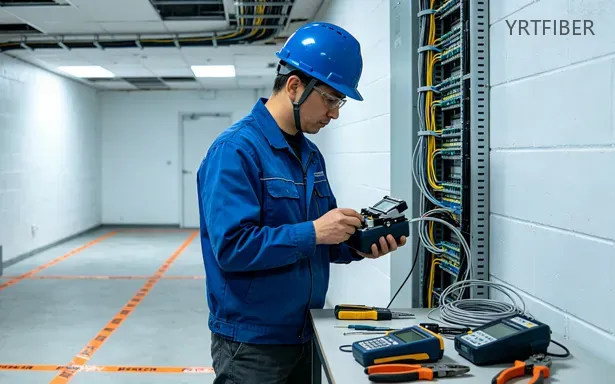
Testing: Use an optical power meter to measure the insertion loss. Compare the measured value with the factory - specified value. If the measured insertion loss is significantly higher, re - check the connections, clean the connectors if necessary, and inspect the fiber cores for any hidden damage. Also, check the return loss to ensure it meets the specified standards.
Download YRTFIBER Product Catalog
Factory Real Shot
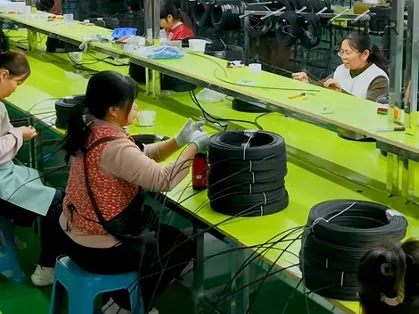
State-of-the-Art Manufacturing Facilities
Our 12,000 sqm dust-proof workshop houses over 30 automated production lines for single-core and MPO patch cords. Equipment includes high-precision fiber cutters (±0.08 mm tolerance), FLC automatic termination machines, and UV curing systems, enabling a daily output of thousands of connectors with consistent quality.
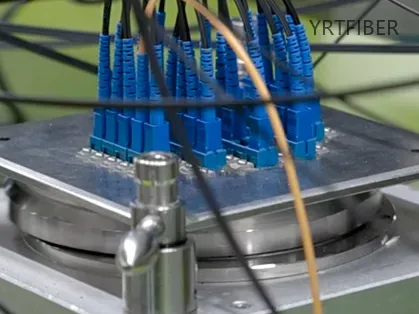
Precision Core Manufacturing Process
The process starts with micro-tolerance cutting (end-face angle ±0.5°) and six-axis fusion splicing (core deviation ≤1 μm). After multilayer jacketing with LSZH, PVC, or OFNP, connectors are polished on automated lines for PC, UPC, or APC finishes, achieving up to 7,000 connectors per 11-hour shift.

Rigorous Quality Assurance & Testing
Every patch cord undergoes 100% inspection: interferometric end-face analysis (400x), automatic contamination detection, and insertion/return loss testing via OTDR. Environmental samples also pass temperature, humidity, and pull-force tests per IEC/TIA standards.
Frequently Asked Questions & Quick Inquiry
Multimode Dual-core Fiber Optic Pigtail FAQ
Q1: What fiber type is used in this pigtail?
A1: It uses multimode fiber, available in OM2. OM3. or OM4 options.
Q2: How many cores does this fiber pigtail have?
A2: It has 2 cores (dual-core), suitable for bidirectional communication.
Q3: What is LSZH and why is it used?
A3: LSZH stands for Low Smoke Zero Halogen. It reduces smoke and toxic gas emissions in case of fire, ideal for indoor safety.
Q4: Which connectors are available for this pigtail?
A4: It supports SC, LC, ST, and FC connectors with UPC polishing.
Q5: Can this pigtail be used with transceivers?
A5: Yes, it’s designed for direct connection with optical transceivers in patch panels or network equipment.
Send Your Inquiry
Fill out the form below and we'll get back to you within 24 hours.


