

 Español
 Português
 لالعربية
 Русский
 Bahasa Indonesia
 Français
 Türkçe
 Bahasa Melayu


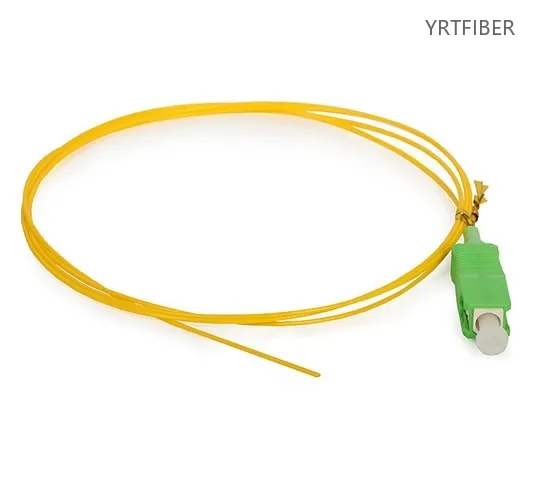
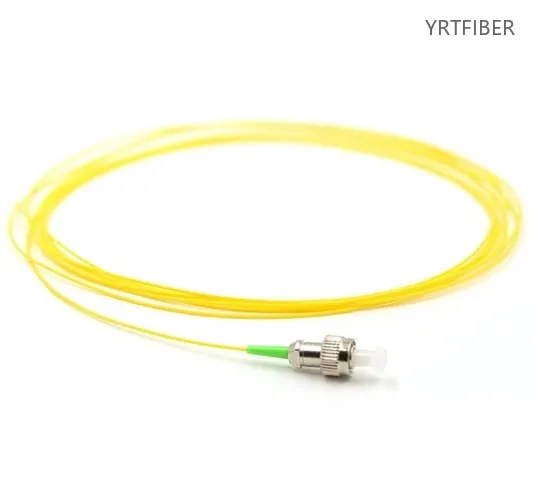
OS2 Single-Core Singlemode Fiber Optic Pigtail – LC/SC/ST/FC Connectors, 9/125µm
Supports Singlemode (G652D, G657A)
One end pre-terminated with LC, SC, ST, or FC connector; other end left bare for fusion splicing.
High-performance polish options: UPC or APC for singlemode, UPC for multimode.
Factory-tested for insertion loss and return loss to ensure network reliability.
Available in custom lengths and jacket types (PVC, LSZH).
What is an OS2 Single - core Single - mode Fiber Optic Pigtail
An OS2 single - core single - mode fiber optic pigtail with LC/SC/ST/FC connectors is a fiber - optic component that uses an OS2 - standard single - mode fiber and can be terminated with different connector types, enabling seamless integration into diverse fiber - optic networks for reliable long - distance data transmission.
OS2 Fiber Optic Pigtail Specification parameters
- Specification parameters
- OPTICAL CHARACTERISTICS
| Item | Single core LC/SC/ST/FC pigtail | Fiber Type | SM(G652/G657A) |
| Jacket Material | LSZH/PVC | Connector Type | LC/SC/ST/FC APC/UPC |
| Ferrule Materials | Ceramic | Cable Dimension | 0.9mm, 2.0mm, 3.0mm |
| Cable Color | SM: Yellow; | Testing Wavelengths | 1310±30/1550±30nm, 850±30/1300±30nm |
| Insertion Loss (dB) | ≤ 0.3dB | Return Loss (dB) | ≥ 50dB |
| Operating Temperature | -10°C to +70°C | Storage Temperature | -40°C to +85°C |
| Package | Poly bag | Length | Customize |
Product Structure & Composition
Fiber Core: OS2 single-mode optical fiber, 9/125µm, supports long-distance, low-loss transmission.
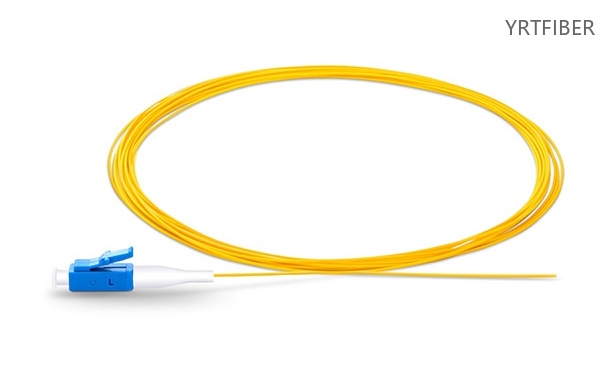
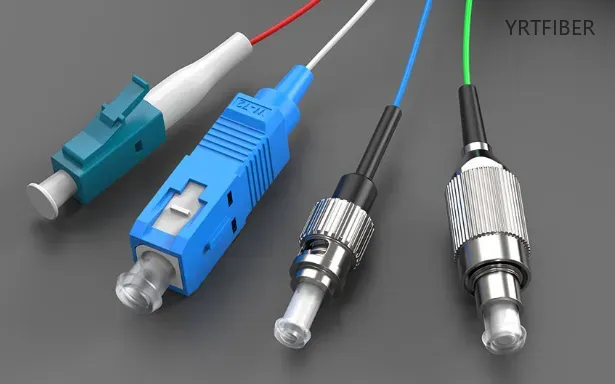
Connectors: Optional LC (high-density), SC (push-pull), ST (bayonet), FC (screw-on), convenient for plugging and unplugging.
Outer Jacket: Durable jacket, resistant to mechanical damage, suitable for various environments.
Benefits of OS2 Fiber Optic Pigtail
Connector Versatility
The availability of LC/SC/ST/FC connectors allows the pigtail to be used in a wide range of network setups. Whether it's a high - density data center (LC connectors), a more general - purpose network (SC connectors), or a setup requiring a secure connection (FC or ST connectors), users can choose the most suitable connector for their application.
Long - distance and High - bandwidth Capability
The OS2 single - mode fiber enables long - distance and high - bandwidth data transmission. This makes it ideal for applications such as long - haul telecommunications, data center backbones, and other scenarios where reliable, high - speed data transfer over extended distances is required.
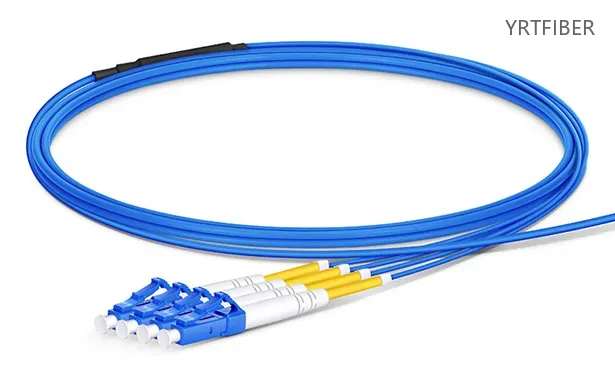
Reliable Signal Transmission
With low insertion loss and high return loss, the pigtail ensures reliable optical signal transmission. Minimizing signal degradation is crucial for maintaining data integrity, especially in long - distance and high - bandwidth applications.
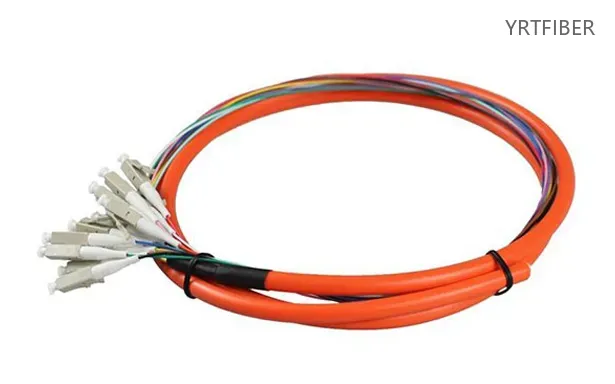
Engineering Applications OS2 Fiber Optic Pigtail
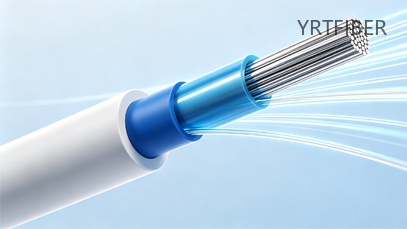
Telecommunications Networks
In telecommunications networks, the OS2 single - core single - mode fiber optic pigtail is used for long - haul connections between central offices, base stations, and other network nodes. The choice of connectors allows for easy integration with existing network equipment.
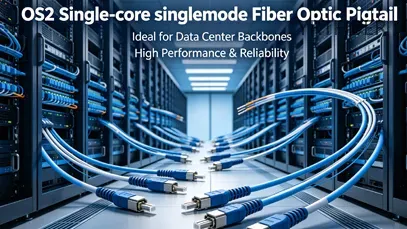
Data Center Backbones
Data center backbones require high - bandwidth and reliable connections. The pigtail can be used to connect different components within the data center, such as switches, routers, and storage systems. The LC connector option is particularly useful for high - density cabling in data centers.
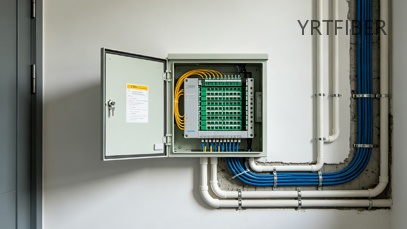
Fiber - to - the - Home (FTTH)
In FTTH applications, the pigtail can be used to connect the optical network unit (ONU) at the customer's premises to the optical distribution network (ODN). The SC connector is commonly used in this scenario due to its ease of use.
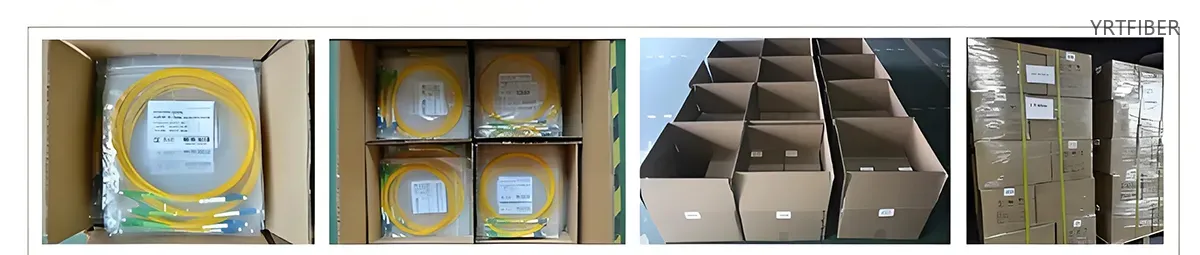
Shipping & Packaging

Product Comparison:
OS2 vs OS1a vs OM4
| Feature / Dimension | OS2 Singlemode Pigtail | OS1a Singlemode Pigtail | OM4 Multimode Pigtail |
|---|---|---|---|
| Fiber Type | Single-mode (SM) / 9/125µm | Single-mode (SM) / 9/125μm | Multimode (MM) / 50/125μm |
| Max Transmission Distance (10G) | ~40 km (single channel) + | ~10 km | ~550 m (OM4) / ~300 m (OM3) |
| Max Transmission Distance (100G) | >2 km (with proper modules) | Not recommended | ~150 m (with parallel optics) |
| Cable Construction | Loose tube / Low water peak Minimizes stress on fiber | Tight-buffered Protected for indoor use | Loose tube / Tight-buffered Omni-available |
| Dispersion Performance | Excellent (very low) Best for long-haul | Good (low, but higher than OS2) | Poor (high modal dispersion) Limit for high-speed |
| Insertion Loss (typical) | ≤0.3 dB | ≤0.3 dB | ≤0.3 dB |
| Return Loss (typical) – UPC | ≥55 dB | ≥55 dB | ≥35 dB |
| Return Loss (typical) – APC | ≥65 dB | ≥65 dB | N/A |
| Jacket Color | Yellow | Yellow | Aqua |
| Applications | Long-haul backbone, Metro core, PON, FTTx, CATV, 5G fronthaul, Data center spine/leaf | Premises backbone, Intra-building riser, Short haul campus, Patch panel termination | Data center TOR/EOR, Short-reach 10G/40G/100G, Storage (SAN), High-performance computing |
| Pros | Maximum distance High bandwidth (no limit) Future-proof (400G/800G) Lowest loss / attenuation Immunity to EMI Longest lifespan | More flexible/tougher Easier handling indoors No gel fill (clean) Good for short SM links | Lower transceiver cost (vs SM) High density (50μm core) VCSEL-optimized Low cost per port |
| Cons | Higher transceiver cost Light alignment more critical (small core) Termination skill higher Requires more precise cleaning | Shorter distance Higher attenuation Becoming obsolete Not suited for high speeds | Distance limited (550m@10G, 150m@100G) Higher modal dispersion Not for long-haul |
| Cost (Relative) | Fiber: Low Hardware: High | Fiber: Low Hardware: Medium | Fiber: Low Hardware: Low-Medium |
OS2 Fiber Optic Pigtail Selection Guide
Engineering selection between OS2. OS1a, and OM4 pigtails:
For long-haul backbone, metro core, FTTx, and greenfield deployments where maximum distance and future data rates are top priorities, OS2 is the definitive choice. With the lowest attenuation (≤0.4 dB/km) and ultra-low water peak, OS2 supports 10G to 400G+ links over tens of kilometers. Its loose tube construction minimizes stress on the fiber, making it ideal for outdoor/indoor environments. It also provides unlimited bandwidth and immunity to EMI. However, OS2 transceivers are more costly and require more precise alignment/cleaning.
For premises backbone, intra-building riser, and campus links under 10 km, OS1a is a proven workhorse. Its tight-buffered construction is tougher and cleaner (no gel fill), easier to handle, and suitable for typical enterprise indoor environments. With 1.0 dB/km maximum attenuation, it supports 1G and 10G out to 10 km. OS1a remains cost-effective for brownfield upgrades, but for greenfield installations, OS2 is the more future-proof choice.
For data center TOR/EOR, short-reach storage, and high-performance computing (HPC) at 40G/100G over ≤150m, OM4 is the optimized solution. It leverages VCSELs and parallel optics (MPO/MTP) for the lowest cost per gigabit at high density. The larger 50µm core simplifies alignment and cleans well. However, OM4 cannot support long-haul or inter-building distances beyond 550m at 10G and 150m at 100G.
Mixed deployment strategy: Use OS2 pigtails for backbone and inter-building splicing, OM4 pigtails for intra-row top-of-rack patching, and OS1a pigtails for legacy intra-building termination or in less demanding SM applications where tight-buffered handling is advantageous. For single‑mode splicing where a robust, gel‑free indoor cable is specified, OS1a remains appropriate. For all new outdoor, long‑reach, or high‑speed single‑mode infrastructure, standardize on OS2 to ensure compliance with current and emerging standards.
Installation Instructions of OS2 fiber optic cable
Pre - installation Inspection: Visually check the pigtail for any damage to the outer jacket. Examine the connector for clean ferrule and proper alignment of the fiber. Ensure that the fiber is not kinked or broken.
Connector Connection: For LC connectors, align the key with the keyway of the mating port and insert the connector until it clicks. For SC connectors, align the connector with the port and push it in until it locks. For ST connectors, insert the connector into the port and rotate it to lock the bayonet - style mechanism. For FC connectors, align the connector with the port and start threading it slowly to avoid cross - threading, then tighten it.
Cable Management: Route the pigtail carefully, avoiding sharp bends. Secure the pigtail in place using cable ties or clips to prevent it from being accidentally pulled or damaged.
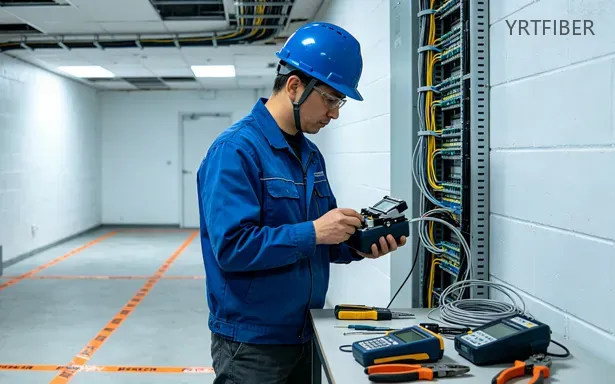
Testing: Use an optical power meter to measure the insertion loss. Compare the measured value with the specified value for the pigtail. If the measured value is significantly higher, re - check the connection, clean the connector if necessary, and inspect the fiber for any hidden damage.
Download YRTFIBER Product Catalog
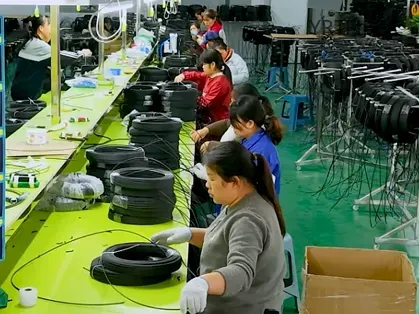
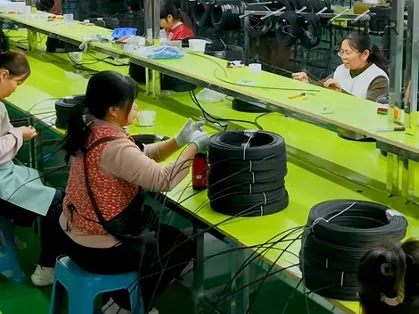
Factory Real Shot
State-of-the-Art Manufacturing Facilities
Our 60,000 sqm dust-proof workshop houses over 21 automated production lines. Equipment includes high-precision fiber cutters(±0.08 mm tolerance), FLC automatic termination machines, and UV curing systems, enabling a daily output of thousands of connectors with consistent quality.
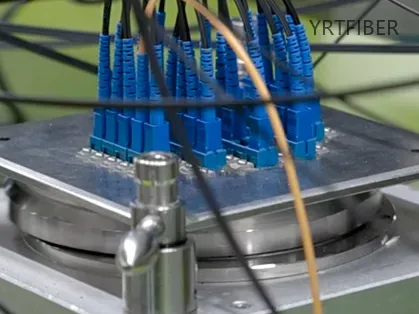
Precision Core Manufacturing Process
The process starts with micro-tolerance cutting (end-face angle ±0.5°) and six-axis fusion splicing (core deviation ≤1 μm). After multilayer jacketing with LSZH, PVC, or OFNP, connectors are polished on automated lines for PC, UPC, or APC finishes, achieving up to 7,000 connectors per 11-hour shift.
Rigorous Quality Assurance & Testing
Every patch cord undergoes 100% inspection: interferometric end-face analysis (400x), automatic contamination detection, and insertion/return loss testing via OTDR. Environmental samples also pass temperature, humidity, and pull-force tests per IEC/TIA standards.
Frequently Asked Questions & Quick Inquiry
OS2 Fiber Optic Pigtail FAQ
Q1: What is a single-core fiber optic pigtail used for?
A1: It’s used for fusion splicing into fiber networks, commonly in ODFs and telecom systems.
Q2: Is this pigtail single-mode or multimode?
A2: It is a single-mode fiber pigtail (G652D or G657A).
Q3: Which connectors are available?
A3: LC, SC, ST, and FC connectors are available with UPC or APC polish.
Q4: Can I choose the jacket material and length?
A4: Yes, both jacket type (PVC, LSZH) and length are customizable.
Q5: Is this pigtail factory-tested?
A5: Yes, each pigtail is tested for insertion loss and return loss before delivery.
Can I use an OS2 single - core single - mode fiber optic pigtail in a local area network?
While it can be used in a local area network, it may be overkill for short - distance applications. Multimode fiber optic pigtails are usually more cost - effective for local area networks where the distance is within a few hundred meters. However, if the local area network has future expansion plans for long - distance connections or requires extremely high - bandwidth, an OS2 single - mode pigtail could be a valid option.
Send Your Inquiry
Fill out the form below and we'll get back to you within 24 hours.


