

 Español
 Português
 لالعربية
 Русский
 Bahasa Indonesia
 Français
 Türkçe
 Bahasa Melayu

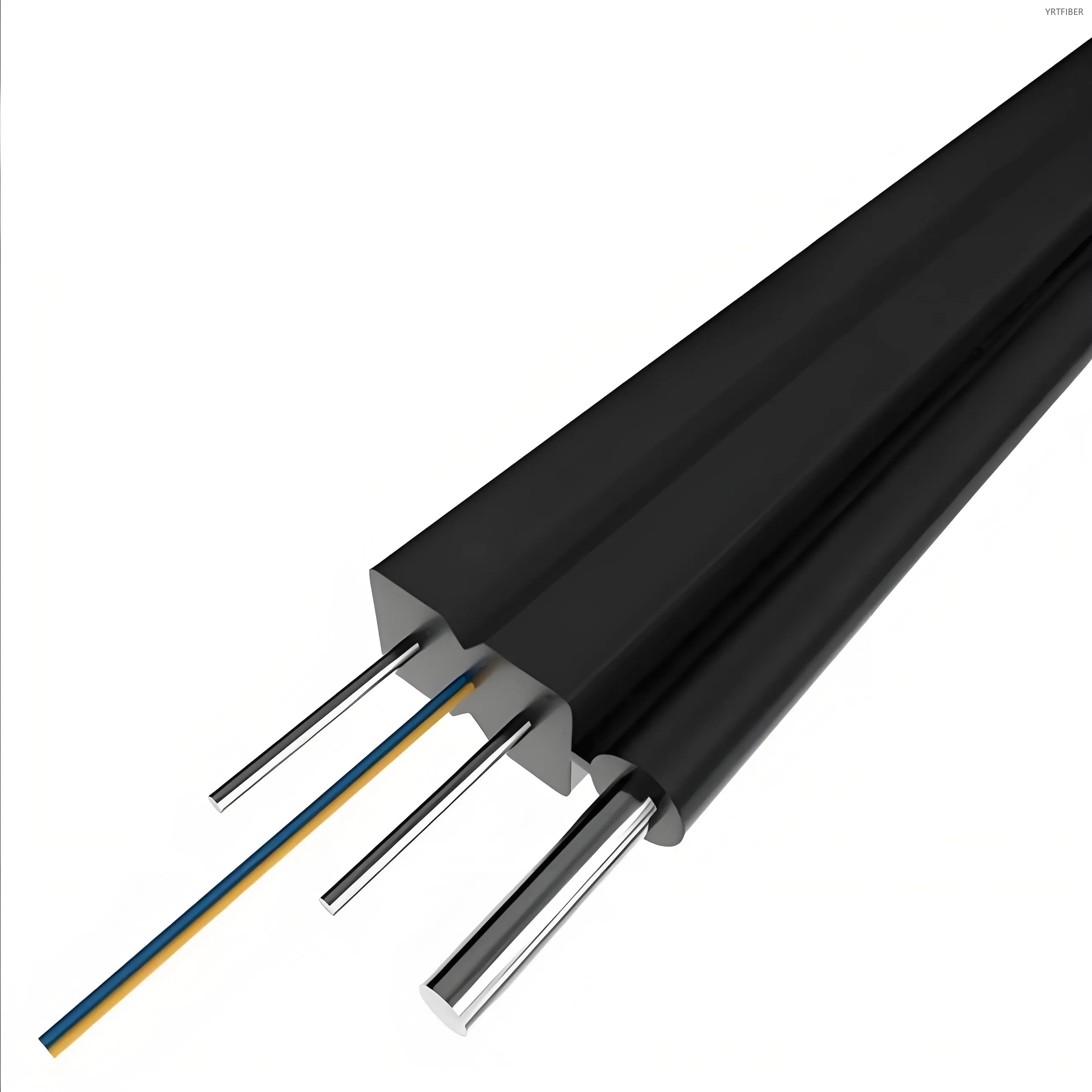
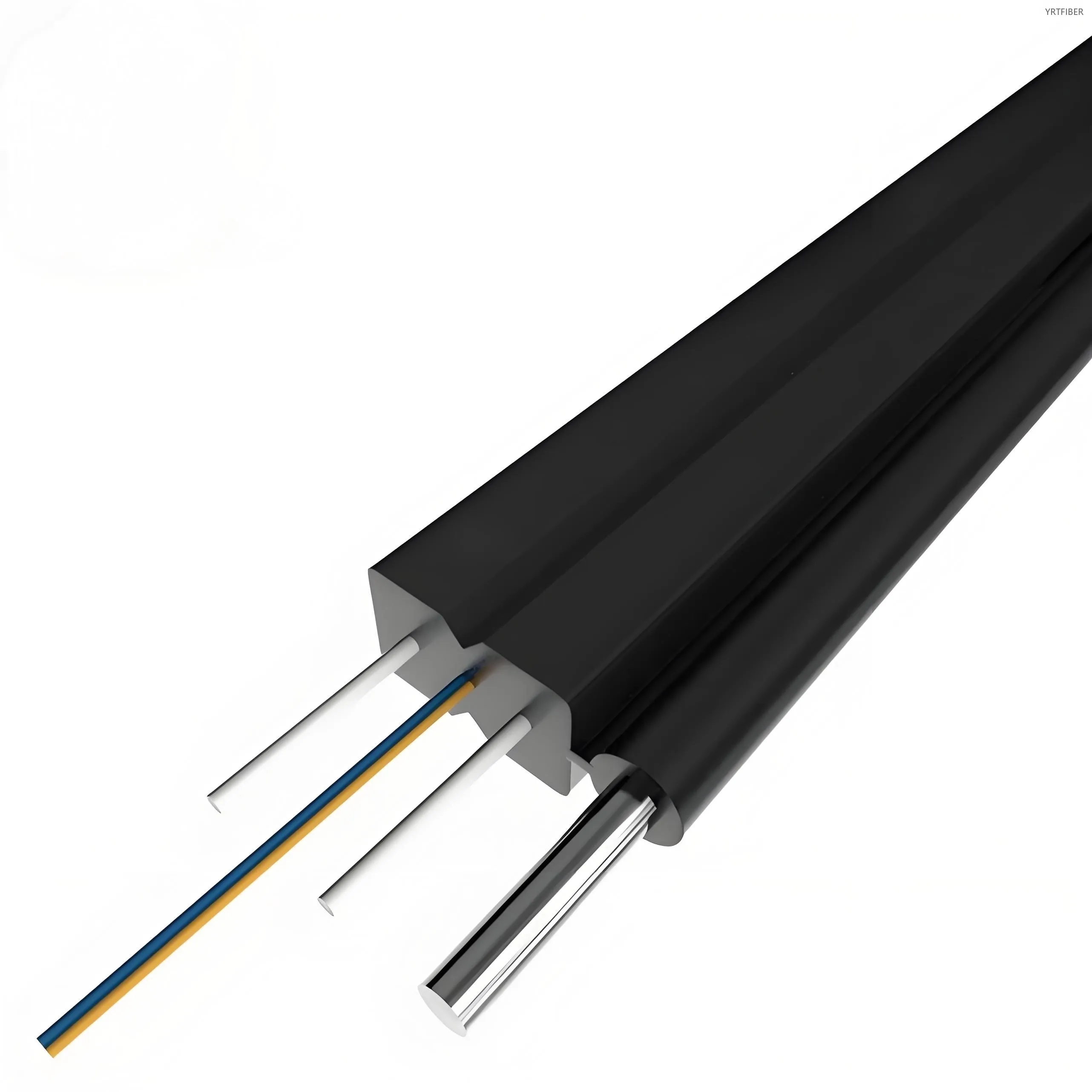
GJYXFCH FTTH Drop Fiber Cable with G652/G657 Fiber and FRP or Steel Reinforcement
Reinforced with FRP or galvanized steel wire for high tensile strength.
Available in 1-core and 2-core configurations with G657A fiber.
Flame-retardant, waterproof, and UV-resistant outer jacket.
Lightweight, flexible, and easy to install for drop cabling.
Low insertion loss and high return loss ensure reliable data transmission.
What is GJYXFCH ftth fiber optic cable
The GJYXFCH is a specialized fiber optic drop cable designed for FTTH (Fiber-to-the-Home) access networks and telephone communication systems. It features a strength member made of either FRP or galvanized steel wire, combined with G657A single-mode fiber, which provides excellent tensile performance and stable signal transmission. Key characteristics include high tensile strength, flame-retardant and waterproof properties, UV resistance, low insertion loss, and high return loss. Available in 1-core or 2-core configurations, the cable is lightweight, flexible, and easy to install, making it ideal for aerial-to-indoor transitions, vertical riser cabling, surface-mounted wiring in buildings, and temporary indoor fiber links. Its robust mechanical design and compliance with indoor safety standards ensure reliable, high-bandwidth connectivity in both residential and commercial FTTH deployments.
GJYXFCH FTTH Drop Fiber Cable Specification parameters
- Specification parameters
- OPTICAL CHARACTERISTICS
Optical Fiber Charactristic:
| G.652 | G.657 | 50/125μm | 62.5/125μm | ||
| Attenuation(+20℃) | @850nm | ≤3.5 dB/km | ≤3.5 dB/km | ||
| @1300nm | ≤1.5 dB/km | ≤1.5 dB/km | |||
| @1310nm | ≤0.40 dB/km | ≤0.40 dB/km | |||
| @1550nm | ≤0.30 dB/km | ≤0.30 dB/km | |||
| Bandwidth(Class A) | @850nm | ≥500 MHz·km | ≥200 MHz·km | ||
| @1300nm | ≥500 MHz·km | ≥500 MHz·km | |||
| Numerical Aperture | 0.200±0.015NA | 0.275±0.015NA | |||
| Cable Cut-off Wavelength | ≤1260nm | ≤1260nm | |||
Technical Parameter:
| Fiber Count | Cable Diameter (mm) | Cable Weight (kg/km) | Tensile StrengthLong /Short Term (N) | Crush ResistanceLong /Short Term (N/100mm) | Bending RadiusStatic /Dynamic (mm) |
|---|---|---|---|---|---|
| 1 | (2.0±0.) × (5.0±0.2) | 20 | 300 / 600 | 1000 / 2200 | 20 / 40 |
| 2 | (2.0±0.2) × (5.0±0.2) | 20 | 300 / 600 | 1000 / 2200 | 20 / 40 |
| 4 | (2.0±0.2) × (5.0±0.2) | 20 | 300 / 600 | 1000 / 2200 | 20 / 40 |
| 6 | (2.5±0.2) × (6.0±0.2) | 24 | 300 / 600 | 1000 / 2200 | 20 / 40 |
| 8 | (2.5±0.2) × (6.0±0.2) | 24 | 300 / 600 | 1000 / 2200 | 20 / 40 |
| 12 | (2.0±0.) × (5.0±0.2) | 20 | 300 / 600 | 1000 / 2200 | 20 / 40 |
Product Structure & Composition
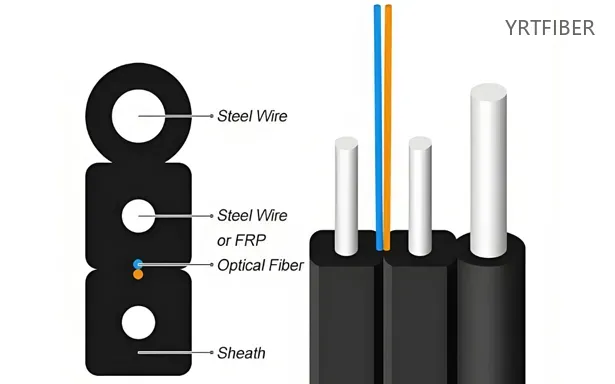
The GJYXFCH fiber optic drop cable consists of three main layers:
Strength member: Either galvanized steel wire or FRP (Fiber Reinforced Plastic) placed centrally or as a separate messenger, providing high tensile strength for aerial and vertical installations.
Optical fiber: G657A single‑mode fiber (1 or 2 cores), known for excellent bending performance, enabling tight indoor routing.
Sheath: A flame‑retardant, waterproof, and UV‑resistant outer jacket (typically LSZH material) that protects the fiber and allows safe indoor use.
Benefits of GJYXFCH FTTH Drop Fiber Cable
1. High Tensile Strength for Aerial and Vertical Installations
Reinforced with either FRP or galvanized steel wire, the GJYXFCH cable delivers excellent tensile performance. In engineering practice, this allows direct aerial spans from pole to building without additional support cables, and enables safe vertical riser runs in multi-story buildings. The high pull resistance minimizes fiber strain during long‑haul pulling, ensuring reliable deployment even in challenging outdoor-to-indoor transitions.
2. Superior Bend Resistance for Tight Indoor Routing
Equipped with G657A single‑mode fiber in 1‑core or 2‑core configurations, the cable maintains low insertion loss and high return loss even under severe bending. Engineering benefits include the ability to route around corners, along baseboards, and through narrow conduits with a bending radius as low as 15 mm. This eliminates the need for bulky bend‑limiting hardware and simplifies installation in space‑constrained indoor environments.
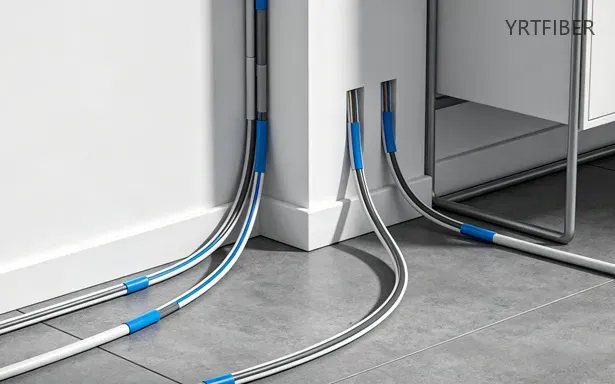
3. Durable Jacket for Mixed Outdoor/Indoor Environments
The flame‑retardant, waterproof, and UV‑resistant outer sheath makes the cable suitable for both exposed outdoor sections (e.g., aerial drops) and indoor runs without a transition splice. In engineering terms, this dual‑environment capability reduces the number of cable types needed on site, lowers joint failure risks, and ensures compliance with fire safety codes when deployed inside buildings or cable trays.
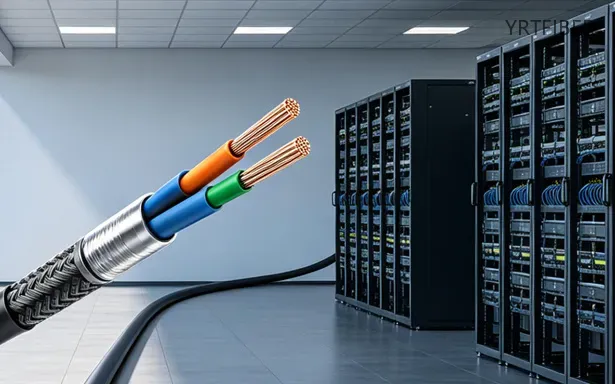
4. Lightweight and Flexible Design for Rapid Drop Cabling
Being lightweight and highly flexible, the GJYXFCH cable significantly speeds up field installation. Technicians can easily uncoil, cut, and terminate the cable with minimal effort, while the flat profile allows surface mounting with small clips or staples. These engineering features reduce labor costs and deployment time, making it the preferred choice for large‑scale FTTH projects where hundreds of subscriber drops must be completed quickly.
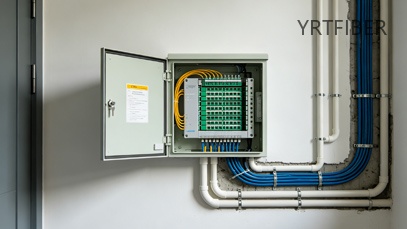
Engineering Applications GJYXFCH FTTH Drop Fiber Cable
1. Aerial-to-Indoor Transition in Rural FTTH Deployments
In rural or suburban areas, the GJYXFCH cable is directly installed from an outdoor aerial pole to the subscriber’s indoor wall outlet. Its integrated steel messenger enables self-supporting spans up to 50 meters without additional guy wires. Once inside, the messenger is stripped away, and the flexible 2.0×5.2 mm cable is routed along baseboards or through small holes. This eliminates the need for a separate transition box, reducing installation time and cost.
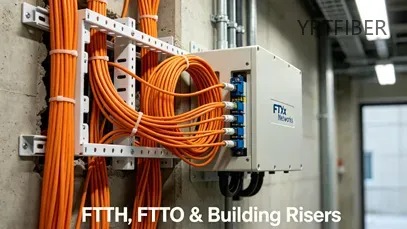
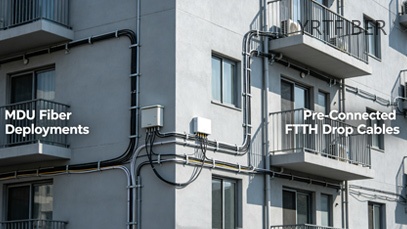
2. Vertical Riser Cabling in Multi-Dwelling Units (MDUs)
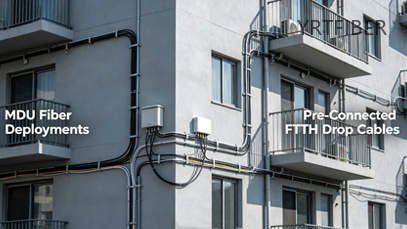
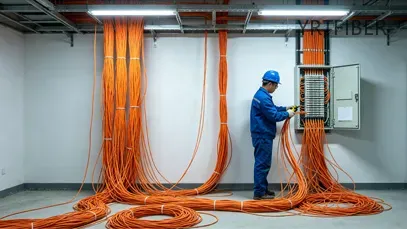
When deploying fiber to apartments in a multi-story building, the GJYXFCH cable is pulled through existing vertical shafts or conduits. With long-term tensile strength of 300 N, it withstands the weight of a 30‑meter vertical drop without damage. Its low smoke zero halogen (LSZH) sheath meets fire safety codes for indoor riser spaces, making it suitable for public hallways and stairwells in residential or office towers.
3. Surface-Mounted Wiring in Finished Office Renovations
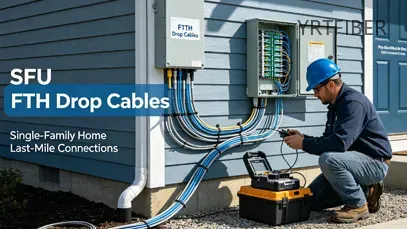
In retrofit projects where drilling inside walls is not allowed, the GJYXFCH cable is surface‑mounted along ceilings, door frames, and skirting boards using mini cable clips. Its small bending radius (15 mm static) allows tight 90° turns at corners without signal loss. The flat, low‑profile design blends with white or light‑colored interiors, providing a discreet and professional look for connecting workstations to an in‑building fiber distribution network.
4. Temporary or Event Fiber Links Indoors
For short‑term indoor applications such as trade shows, sports events, or emergency command centers, the GJYXFCH cable serves as a rugged yet flexible drop line. It can be quickly laid across floors (protected by cable mats) or suspended from temporary supports. The cable’s high crush resistance and easy field termination with pre‑connectorized ends enable fast deployment and retrieval, supporting reliable high‑bandwidth connections for video streaming, data aggregation, or VoIP services.
Shipping & Packaging
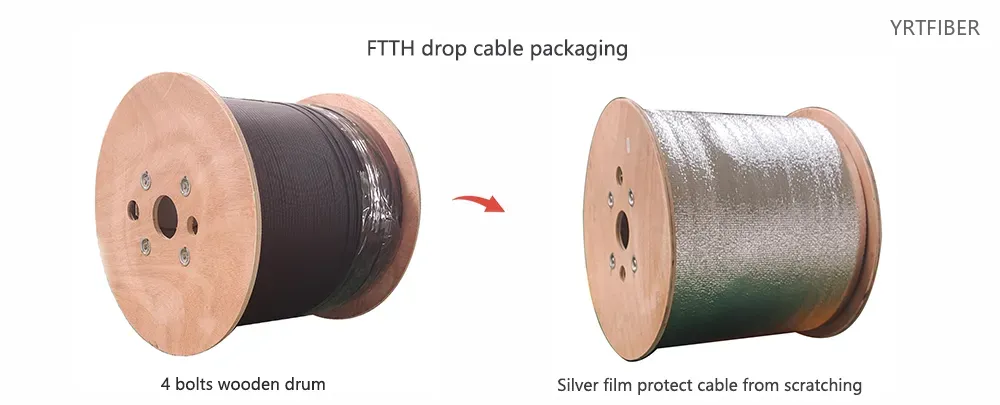
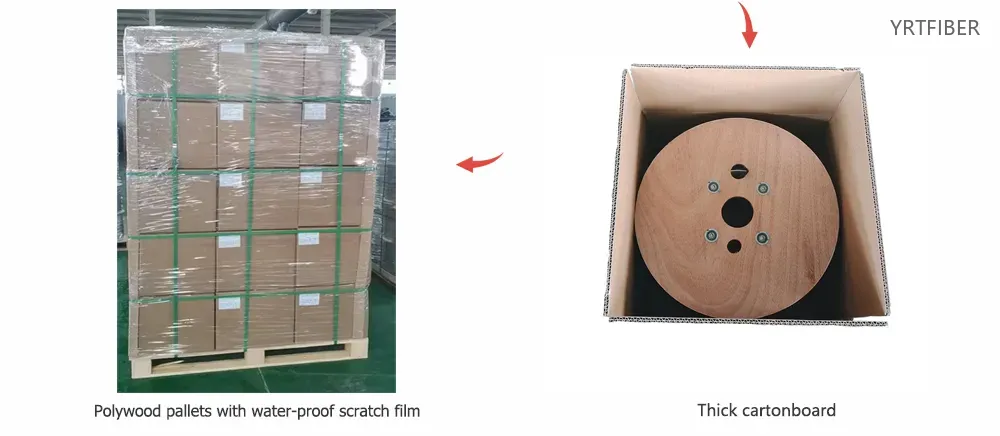
Packaging Details
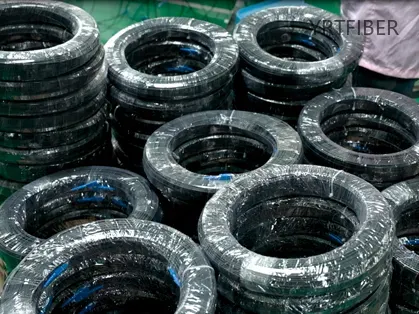
Each roll contains 1–5 KM of cable, typically packed in steel drums. Customized packaging solutions are available upon client request.
Sheath Marking
White hot foil indentation is applied at 1-meter intervals with the following information:
a. Supplier name: Guanglian (or as specified by the customer)
b. Standard code including product type, fiber type, and fiber count
c. Year of manufacture (valid for 7 years)
d. Length indication in meters
Port of Shipment
Available ports: Qingdao, Guangzhou, Shenzhen
Estimated Lead Time
| Quantity (KM) | Estimated Delivery Time |
|---|---|
| 1–300 | Approx. 15 days |
| ≥300 | Delivery time to be negotiated |
Note
The packaging details above are for reference only. Final packing size and weight will be confirmed before shipment.
Product Comparison:
GJYXFCH vs GJYXCH
| Feature / Dimension | GJYXFCH (Non-Metallic Strength Member) | GJYXCH (Metallic Strength Member) |
|---|---|---|
Structure & Material | Optical fiber at center; two parallel FRP or KFRP strength members; additional steel wire messenger outside; LSZH outer sheath. Hybrid construction: non-metallic inside + metallic messenger. | Optical fiber at center; two parallel steel wire strength members; additional steel wire messenger outside; LSZH outer sheath. Fully metallic construction. |
Typical Applications | Outdoor self‑supporting aerial installation; outdoor-to-indoor transition; FTTH drop from distribution point to subscriber premise. Suitable for areas sensitive to induced current or requiring lightweight deployment. | Outdoor self‑supporting aerial installation; outdoor-to-indoor transition; FTTH drop. Suitable for standard aerial deployments where electrical conductivity is not a concern. |
Fiber Core Capacity | 1 - 4 cores (typical), up to 12 cores in some designs. | 1 - 4 cores (typical), up to 12 cores in some designs. |
| Outer Sheath | LSZH (Low Smoke Zero Halogen) - flame‑retardant, low smoke, halogen‑free. Suitable for indoor/outdoor transition. | LSZH - same material and fire safety performance. |
Induced Current / EMI Immunity | Non-metallic strength members (FRP/KFRP) do not conduct current - no induced current from nearby power lines, minimal EMI risk, no grounding required for the cable core. | Metallic strength members (steel wires) can conduct induced current from nearby power lines, posing higher EMI risk; grounding may be required in certain HV environments. |
Flame Retardancy | LSZH - low smoke, halogen‑free, flame‑retardant. Meets indoor fire safety codes. | LSZH - same performance. |
Corrosion Resistance | FRP/KFRP strength members are corrosion‑free - immune to rust and chemical attack, ideal for coastal or industrial environments. | Metallic strength members are susceptible to rust and corrosion over long‑term exposure, especially if sheath is damaged. |
Relative Cost | Slightly higher due to FRP/KFRP material cost and more complex manufacturing process for hybrid construction. | Slightly lower - steel wire is more economical than FRP/KFRP, and fully metallic construction is simpler to manufacture. |
Engineering Pros | ① Hybrid design - combines the strength of steel messenger for aerial suspension with the EMI‑immunity of non‑metallic internal components; ② No induced current - safer for deployment near power lines; ③ Corrosion‑free parallel strength members - longer service life in harsh environments; ④ Slightly lighter weight, easier handling. | ① Fully metallic construction offers consistent mechanical properties; ② Lower material cost, more economical for standard aerial deployments; ③ Two parallel steel wires + steel messenger - triple steel reinforcement for high tensile strength; ④ Widely available, familiar to most installation crews. |
Engineering Cons | ① Slightly higher upfront material cost; ② FRP/KFRP may be less familiar to some field technicians for stripping/termination compared to steel wire; ③ Hybrid construction requires careful handling during mid‑span stripping to avoid damaging FRP members. | ① Metallic parallel strength members can induce current when installed near power lines; ② Susceptible to rust and corrosion in coastal or humid environments, especially if LSZH sheath is damaged; ③ Heavier than GJYXFCH, increasing handling effort; ④ Requires grounding consideration in certain environments. |
GJYXFCH FTTH Drop Fiber Cable Selection Guide
Engineering selection between GJYXFCH and GJYXCH:
Both cables are self-supporting bow-type FTTH drop cables designed for outdoor aerial deployment from distribution points (poles, wall-mounted boxes) directly to subscriber premises. The key differentiator is the material of the two parallel strength members located on each side of the optical fiber – GJYXFCH uses non-metallic FRP or KFRP (fiber-reinforced plastic / Kevlar fiber reinforced plastic), while GJYXCH uses metallic steel wire. All other structural features (central fiber, external steel wire messenger, LSZH outer sheath) are identical.
For deployment near power lines, high-voltage environments, or areas with frequent lightning strikes, choose GJYXFCH. The non-metallic FRP/KFRP parallel strength members eliminate induced current concerns, making this cable ideal for aerial routes where the FTTH drop runs parallel to or crosses overhead power distribution lines. This significantly reduces the risk of induced current passing into the subscriber's premises or damaging ONT equipment. It also requires no grounding, simplifying installation. The non-metallic members also provide superior corrosion resistance for coastal and industrial environments.
For standard FTTH aerial deployments where induced current is not a concern and cost is the primary driver, choose GJYXCH. The fully metallic construction uses steel wire for both the parallel strength members and the external messenger, providing robust mechanical performance at a lower material cost. This configuration is widely adopted globally and familiar to most installation crews, enabling faster deployment with standard tools. However, care must be taken to avoid damage to the LSZH sheath, as exposed steel wire would be susceptible to corrosion, especially in humid or coastal regions.
Consider the following factors when selecting:
Electrical environment: If the cable route is near power lines (>1kV) or in lightning-prone areas, GJYXFCH is strongly recommended to prevent induced current entering the subscriber premises.
Environmental conditions: For coastal regions, industrial zones with chemical exposure, or high‑humidity environments, GJYXFCH (non‑metallic strength members) offers better long‑term corrosion resistance.
Budget constraints: GJYXCH generally has slightly lower material cost, making it the default choice for large‑volume standard deployments where electrical and corrosion risks are minimal.
Installation practice: Both cables share the same dimensions, bend radius, tensile rating, and stripping groove design – installation procedures are nearly identical.
Weight consideration: GJYXFCH is approximately 10% lighter (18.9 kg/km vs. 21 kg/km for 2‑core), which can reduce transport costs and handling fatigue on large projects.
Both cables are equipped with G.657A1/A2 bend‑insensitive fiber, feature a novel groove design for easy tool‑free stripping, and meet YD/T 1997 and IEC 60794 standards. Typical aerial span is up to 50 m, and the LSZH sheath ensures flame‑retardant performance for outdoor‑to‑indoor transitions.
GJYXFCH Self-Supporting Drop Cable - Short Installation Guide
1. Pre‑installation check
Inspect the cable reel for sheath damage. Verify length and fiber core count. Keep the cable clean and dry.
2. Aerial installation (self‑supporting)
Mount suspension clamps on poles or building walls. Pay out the cable directly from the reel. Attach the integrated steel messenger to the clamps - do not tension the optical core. Use a pulling grip on the messenger only. Maximum short‑term tension: 600 N. Span up to 50 m.
3. Cable stripping & termination
Use the built‑in groove to slit the LSZH sheath. Remove the two FRP strength members (non‑metallic). Gently access the 900 μm tight‑buffered fiber. Clean and install a field‑mountable connector (SC/APC or LC/APC), or fusion splice to a pigtail. Keep minimum bend radius: 30 mm dynamic, 15 mm static.
4. Grounding & final check
The cable has non‑metallic strength members - no grounding required. However, the steel messenger may need bonding if local code requires. Test insertion loss with an optical power meter or OTDR. Expected loss: ≤0.5 dB for the complete drop assembly.
Download YRTFIBER Product Catalog
Factory Real Shot
1. Smart Manufacturing Base with Massive Production Capacity
YRTFIBER Communication Technology is located in Puyang, Henan Province, occupying an industrial facility of over 60 acres. The factory achieves an annual output value of RMB 100 million and employs more than 230 skilled technicians and engineers. With a cumulative cable production experience exceeding 150,000 km and an annual patch cord output of over 10 million pieces, the facility solidifies its position as a leading manufacturer of high-performance FTTH drop cables.
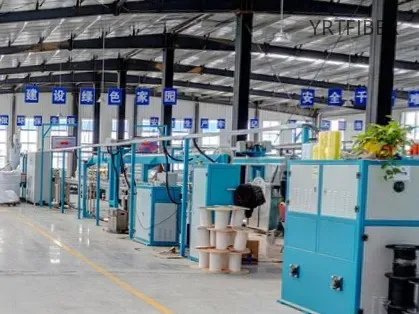
2. High-Efficiency Automated Production Lines
The facility is equipped with 21 professional production lines, including 7 dedicated butterfly cable lines and 8 jumper cable lines. These modern production platforms are capable of manufacturing a wide range of products, including FTTH drop cables such as GJYXCH, GJXH, GJXFH, as well as outdoor and indoor optical cables. Advanced extrusion and control equipment ensures consistent dimensional accuracy, stable processing speeds, and excellent surface finish of the cable sheathing. The dust-free workshop environment and high-performance machinery guarantee stable and reliable manufacturing throughout the year.
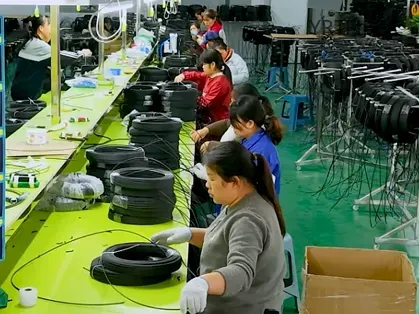
3. Strict Quality Control and Comprehensive Testing System
YRT has established a complete and rigorous quality management chain, covering raw material inspection, in-process monitoring, and final product validation. The test center is furnished with the latest optical, mechanical, and environmental testing instruments to ensure precise and reliable cable performance. Each batch of cables is systematically tested for mechanical strength, environmental durability, and optical transmission characteristics, fully meeting international standards.
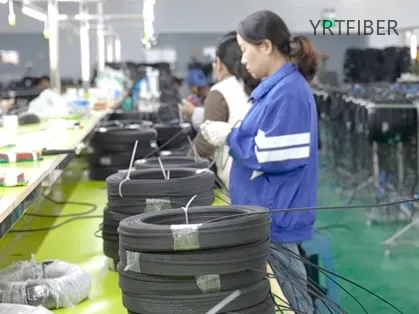
4. Certified Management System and Global Supply Capability
The company has obtained ISO9001, ISO14001, and ISO45001 management system certifications, demonstrating excellent control over quality, environment, and occupational health. Thanks to an integrated vertical supply chain and large-scale production capacity, YRT is able to offer fast delivery lead times and flexible packaging solutions to customers worldwide. With the combination of high-quality raw materials, automated machinery, and dedicated workers, the factory ensures that every meter of fiber optic cable meets the highest industry expectations.
Frequently Asked Questions & Quick Inquiry
GJYXFCH FTTH Drop Fiber Cable FAQ
Q2: What strength members are available?
A2: You can choose either FRP or galvanized steel wire.
Q3: What fiber type does it use?
A3: It uses G657A single-mode fiber, ideal for tight bending environments.
Q4: Is this cable suitable for outdoor use?
A4: Yes, it's waterproof, flame-retardant, and UV-resistant.
Q5: How many cores are available?
A5: 1-core and 2-core options are standard.
Send Your Inquiry
Fill out the form below and we'll get back to you within 24 hours.


