

 Español
 Português
 لالعربية
 Русский
 Bahasa Indonesia
 Français
 Türkçe
 Bahasa Melayu

GJBFJH Breakout Fiber Optic Cable – Indoor Distribution, G.652D/G.657A1/G.657A2
Superior Performance
- Low insertion loss and high return loss characteristics
- Excellent bending performance (especially G657A1/A2 variants)
Durable Construction
- Flame-retardant LSZH jacket material
- High-strength aramid yarn reinforcement
- Compact design with small bending radius
Installation Advantages
- Breakout design allows easy connectorization
- Flexible structure for routing in tight spaces
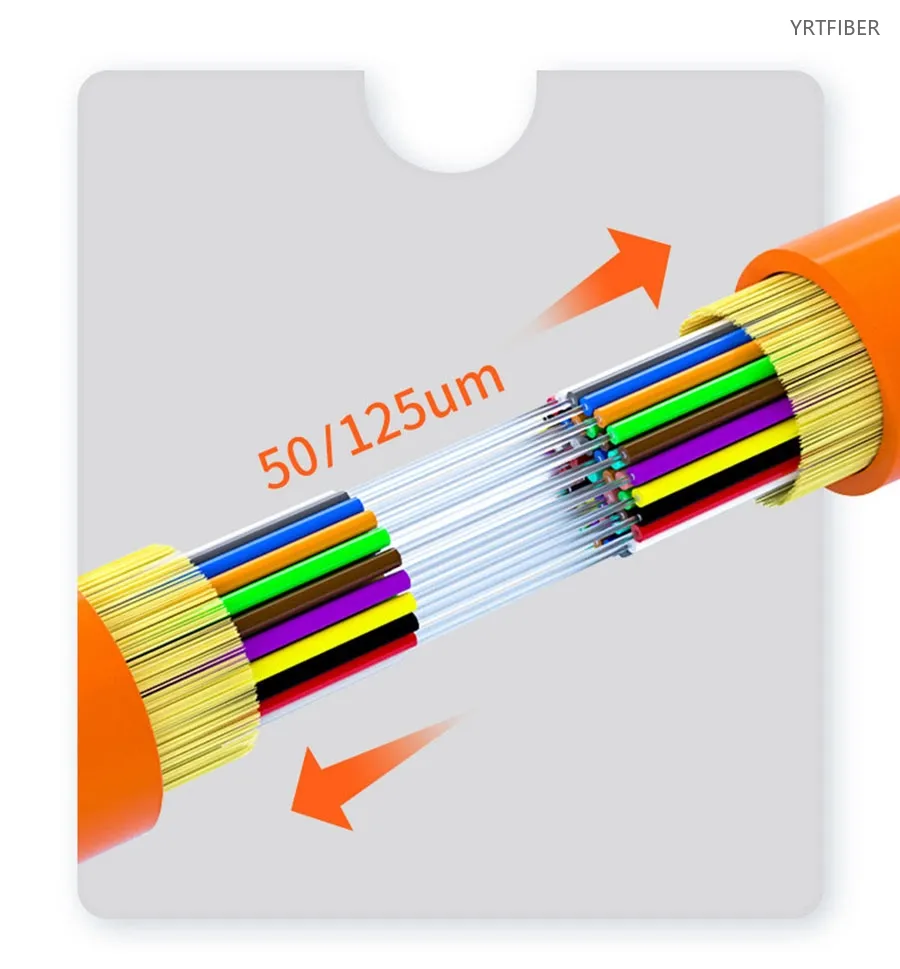
- Color-coded fibers for easy identification
What is GJBFJH indoor fiber cable
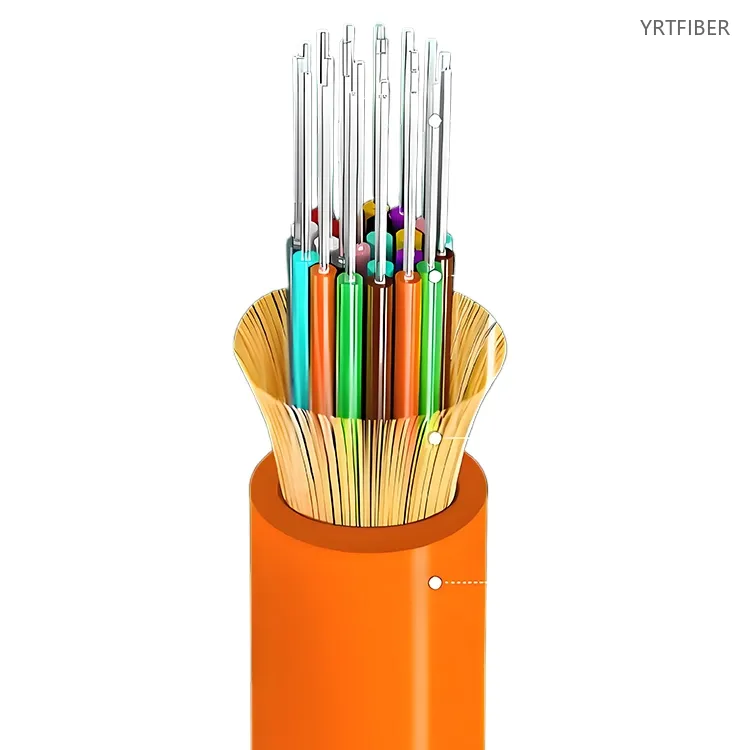
GJBFJH indoor optical cable is an indoor fiber optic cable that uses a branched bundle distribution structure, specially designed for demanding indoor environments such as data centers, enterprise networks, and fiber-to-the-home applications. It provides multiple single-mode fiber options including G652D, G657A1. and G657A2. It features low insertion loss and high return loss, and the G657 series additionally offers excellent bend resistance. The cable uses a flame-retardant, low-smoke, halogen-free jacket reinforced with high-strength aramid yarn, making it compact in structure with a small bending radius. The unique branched design makes on-site connector termination easier, and the color-coded fibers allow for quick identification. It complies with IEC 60794-1-2. RoHS, and IEC 60332-1 flame-retardant standards, and is widely suitable for indoor interconnection scenarios such as building backbone cabling and security system installation.
GJBFJH Breakout Fiber Optic Cable Specification parameters
- Specification parameters
- OPTICAL CHARACTERISTICS
| Model NO. | GJBFJH 4B1.3 | Connection Structure | 4 Fibers G652D |
| Material Shape | Round Wire | Allowed Lateral Pressure | 100(N/100mm)<1000(N/100mm) |
| Allowed Tensile Strength | 100N<1000N | Core | 4 |
| Certification | RoHS, CE, ISO9001 | Brand | YRTFIBER |
| Sheath Material | LSZH | Color | Yellow |
| Transport Package | Wooden Drum | Specification | Tight buffer fiber structure, Aramid yarn strength |
| Trademark | Hongan | Origin | China |
| HS Code | 8544700 | Production Capacity | 42000km |
| Optical fiber categoryFiber type | Attenuation (20 ℃) | Injection bandwidth (OFL) | Effective bandwidth | 10G Ethernet Link Length SX | Minimum bending radius | |||
|---|---|---|---|---|---|---|---|---|
| 1310/1550nm | 850/1300nm | |||||||
| Typical value | Value | Typical value | Value | |||||
| Unit | dB/Km | dB/Km | dB/Km | dB/Km | MHz·Km | MHz·Km | m | mm |
| G652D | 0.36/0.22 | 0.5/0.4 | --- | --- | --- | --- | --- | 16 |
| G657A1 | 0.36/0.22 | 0.5/0.4 | --- | --- | --- | --- | --- | 10 |
| G657A2 | 0.36/0.22 | 0.5/0.4 | --- | --- | --- | --- | --- | 7.5 |
| 50/125 | --- | --- | 3.0/1.0 | 3.5/1.5 | ≥500/500 | --- | --- | 30 |
| 62.5/125 | --- | --- | 3.0/1.0 | 3.5/1.5 | ≥200/500 | --- | --- | 30 |
| OM3 | --- | --- | 3.0/1.0 | 3.5/1.5 | ≥1500/500 | ≥2000 | ≤300 | 30 |
| OM4 | --- | --- | 3.0/1.0 | 3.5/1.5 | ≥3500/500 | ≥47000 | ≤550 | 30 |
| BI-OM3 | --- | --- | 3.0/1.0 | 3.5/1.5 | ≥1500/500 | ≥2000 | ≤300 | 7.5 |
| BI-OM4 | --- | --- | 3.0/1.0 | 3.5/1.5 | ≥3500/500 | ≥47000 | ≤550 | 7.5 |
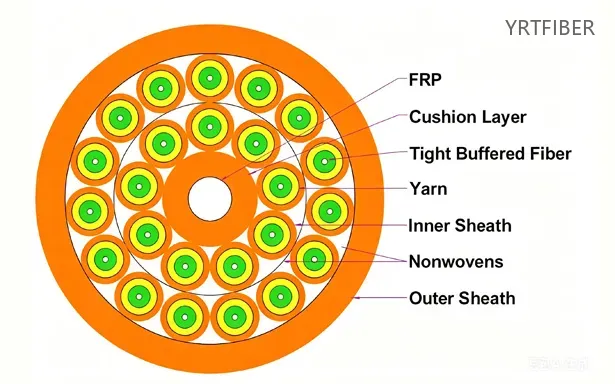
Product Structure & Composition
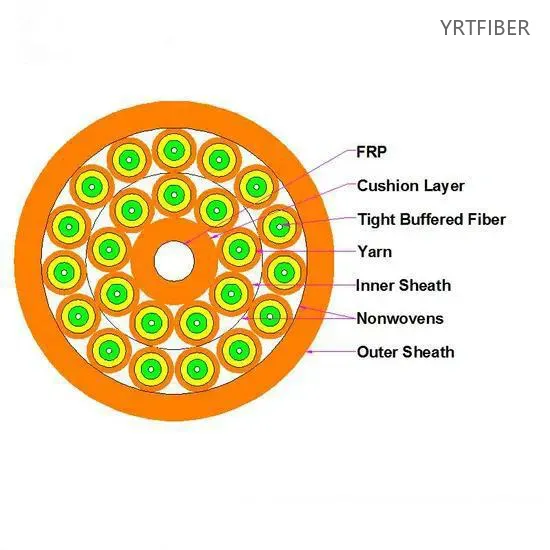
FRP – Non‑metallic central strength member, all‑dielectric, lightning‑proof.
Cushion Layer – Protects tight‑buffered fibers from lateral pressure.
Tight Buffered Fiber – Directly coated for easy, connector‑ready termination.
Yarn – Aramid yarn reinforcement for tensile strength and flexibility.
Inner Sheath – Forms separable sub‑units for branch wiring.
Nonwovens – Binding tape for structural uniformity and cushioning.
Outer Sheath – LSZH jacket providing environmental and flame‑retardant protection.
Benefits of GJBFJH Breakout Fiber Optic Cable
Outstanding Transmission Performance
Extremely low insertion loss and high return loss ensure signal integrity
Excellent bend resistance, with G657A1/A2 variants performing particularly well
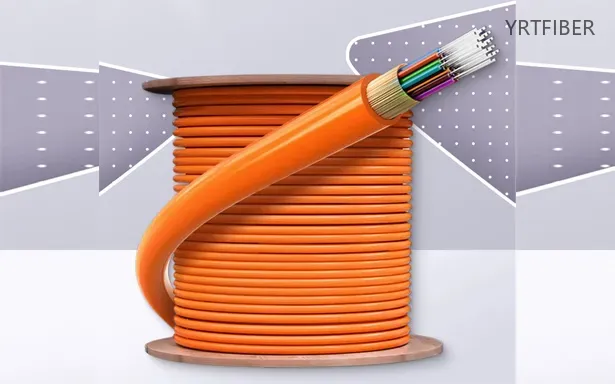
Robust and Durable Construction
Flame-retardant, low-smoke, halogen-free (LSZH) jacket enhances safety level
High-strength aramid yarn reinforcement provides reliable tensile strength
Compact structure with small bending radius, suitable for confined environments
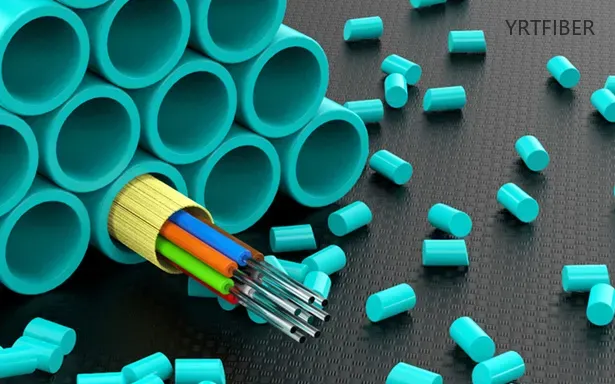
Convenient Installation Features
Branch design makes on-site connector termination easier
Flexible structure allows easy deployment in narrow spaces
Fiber color coding for clear, quick identification
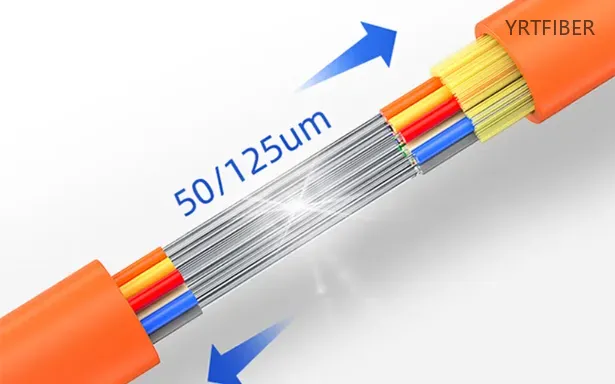
Engineering Applications GJBFJH Breakout Fiber Optic Cable
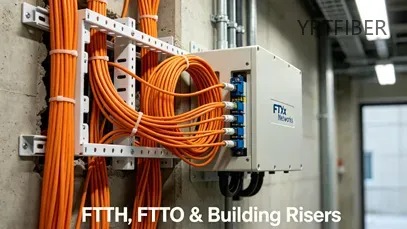
Multi-Floor Building Backbone
GJBFJH is ideal as a vertical riser cable in office buildings, MDUs, and hotels. Its SZ‑stranded sub‑units allow installers to access individual fibers on any floor without cutting the entire cable – simply open the jacket, extract the required sub‑unit, and route it directly to a subscriber or terminal box. LSZH sheath ensures fire safety in occupied riser shafts.
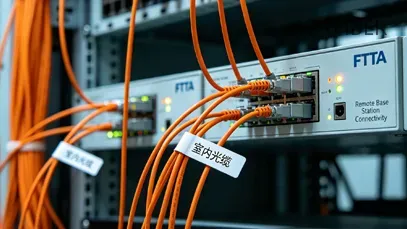
FTTH / FTTB Distribution to Apartments
In FTTH projects, the main cable from the building entrance can be terminated in the basement. Individual 2.0mm sub‑units are then routed horizontally through conduits to each apartment’s ONT. The dry (gel‑free) design keeps termination clean, and G.657 bend‑insensitive fiber supports tight corner routing inside walls.
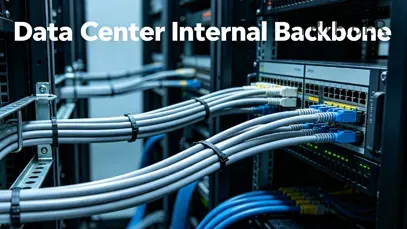
Data Center & Equipment Room Patching
Between ODFs, switches, and servers, GJBFJH eliminates breakout kits – each sub‑unit can be directly connectorized and plugged into active equipment. Small diameter and all‑dielectric construction save space and require no grounding. Available with single‑mode or multi‑mode fibers up to 48 cores.
Shipping & Packaging
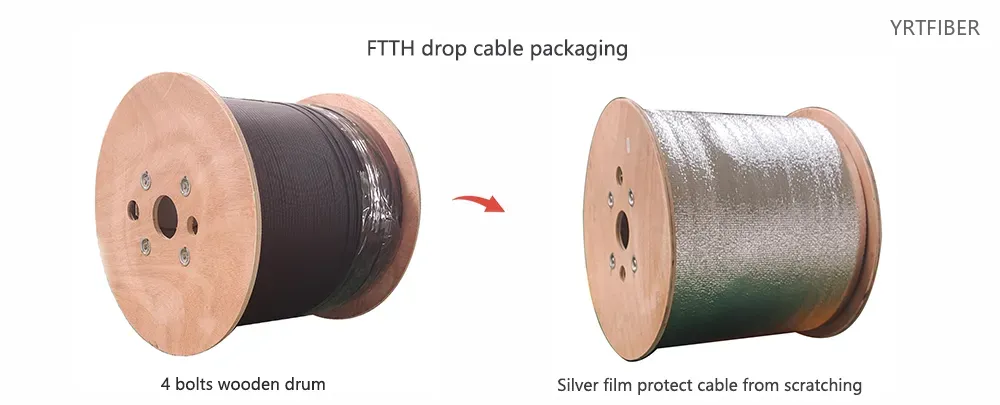
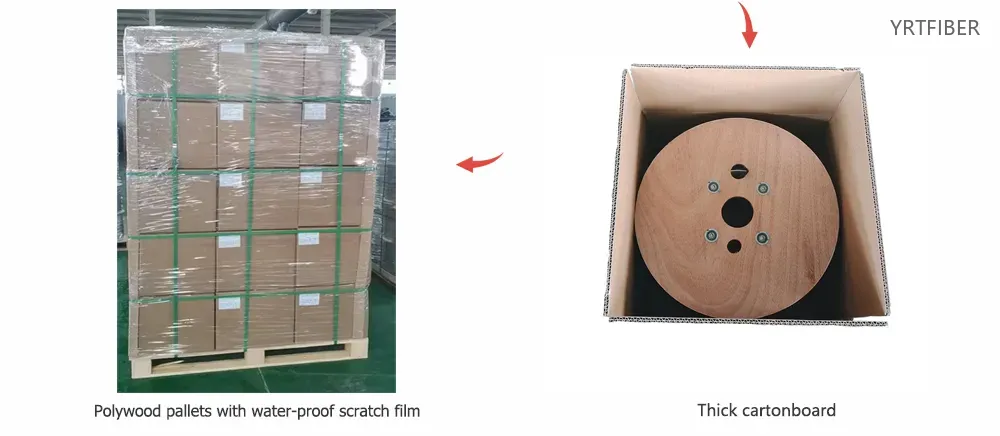
Packaging Requirements:
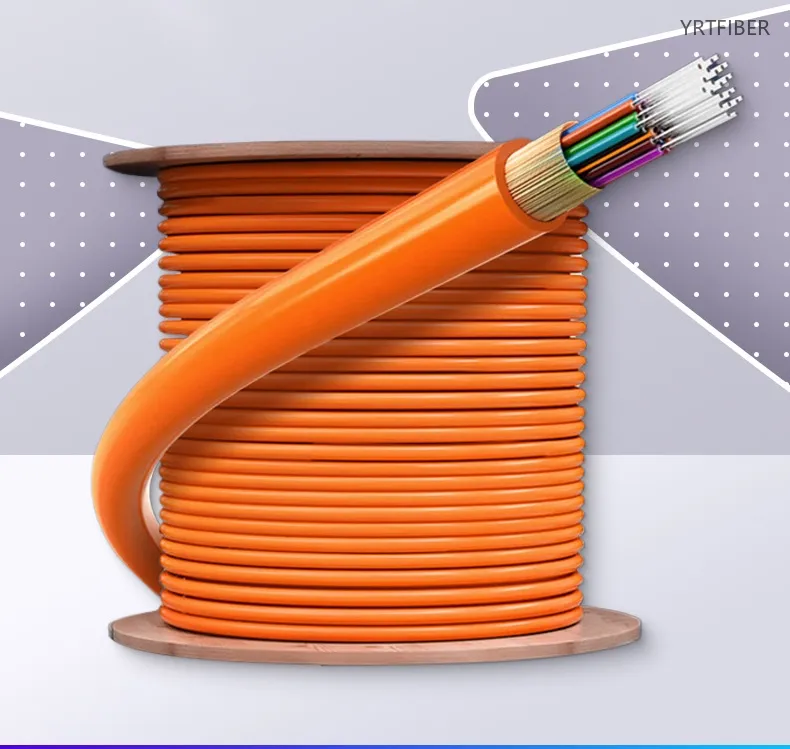
1:All cables shall be wound on treated wooden spools that are not returnable
2:Cable ends must be firmly secured to the spool and protected with waterproof shrink caps
3:Each spool must include:
Each spool must contain the following:
A protective outer layer of plastic wrapping
Reinforcing wooden slats to ensure stability
At least 1 meter of free cable end reserved for testing
A standard spool length of 3000mm (with a permissible tolerance of ±2%)
Cable Identification:
The outer jacket must display:
1、Unique sequential numbering every 1m (±1% variance permitted)
2. Additional repeating markings at 1-meter intervals must include:
Product code and fiber count
Manufacturer identification
Production date (month/year)
Total cable length
Standard Packaging Dimensions:
| Length | Container | Size (L×W×H) | Net Mass | Total Mass |
|---|---|---|---|---|
| 2 km | Wood spool | 90×75×90 cm | 156 kg | 220 kg |
| 3 km | Wood spool | 100×68×100 cm | 240 kg | 280 kg |
| 4 km | Wood spool | 109×75×109 cm | 300 kg | 368 kg |
| 5 km | Wood spool | 129×72×129 cm | 400 kg | 480 kg |
Technical Reference:
1、 Standard cable diameter: 10.0mm
2、Maximum span distance: 100m
3、Contact sales team for complete technical specifications
Spool Marking Standards:
Permanent markings (minimum 25-30mm height) must appear on both sides of each spool:
1、 Company name and trademark
2、Contained cable length
3、Cable specifications (type/fiber count)
4、Winding orientation
5、Weight measurements (gross/net)
Note: All wooden packaging materials must undergo proper fumigation treatment prior to use.
Product Comparison:
| Feature / Dimension | GJBFJV (Branch/BPON Cable) | GJFJV (Distribution Cable) | GJXH (Bow-type Drop Cable) |
|---|---|---|---|
| Structural Features | Stranded loose tube design, several 900μm tight-buffered fibres as sub-units, aramid yarns and non-metallic central strength member . Flame-retardant PVC or LSZH outer sheath. | Tight-buffered 900μm fibres (2-144 cores), aramid yarns strength member, flame-retardant PVC or LSZH outer sheath . | Flat "figure‑8"cross‑section, two parallel FRP strength members with central fibre core, LSZH sheath . Designed for G.657 bend‑insensitive fibre . |
| Fiber Core Capacity | 2-48 cores (typical: 2-24 cores) | 2-144 cores | 1-4 cores (typical 1-2 cores) |
| Typical Applications | Building vertical/horizontal backbone cabling, multi‑floor branch termination, LAN, telecom equipment interconnects, indoor/outdoor transitional wiring (with UV‑resistant LSZH) | Indoor distribution backbone, equipment room patching, riser/plenum cabling, FTTB (Fiber‑to‑the‑Building) | FTTH drop cable from distribution box to ONT, indoor wall/ceiling routing, residential broadband access |
| Engineering Pros | ① Stranded layer structure - supports mid‑span branching without disturbing entire cable; ② High tensile strength (200/660 N) ; ③ All‑dielectric - immune to EMI, no grounding; ④ LSZH variant available for fire‑rated spaces; ⑤ Good flexibility for duct/tray routing | ① Simple, compact design - low‑cost multi‑core indoor distribution; ② Good flexibility and bend performance; ③ Compatible with standard connector termination; ④ Lightweight, easy installation | ① Ultra‑compact flat profile (3.0×2.0mm) ② Excellent bend resistance (static: 5H, dynamic: 10H) ; ③ G.657 fibre compliant - tight corner routing; ④ Easy strip with no tools; ⑤ LSZH standard - fire‑safe for residential/office use |
| Engineering Cons | ① Larger diameter (7.2-12.5mm) and heavier (45-148 kg/km) ; ② Higher cost per core than GJFJV; ③ Requires careful management of branch sub‑units; ④ Limited to ≤48 cores - not ideal for high‑capacity backbone. | ① No central strength member - less resistant to longitudinal compression; ② Branching requires entire cable stripping - labour‑intensive for mid‑span access; ③ Not recommended for multi‑floor distributed termination. | ① Very low fibre capacity (≤4 cores); ② Low tensile strength (100/200 N) ; ③ Not suitable for vertical riser or long runs; ④ Requires additional support/conduit in high‑density cable trays. |
| Fire Safety / Sheath | PVC (default) or LSZH. LSZH meets strict building fire codes for plenum/riser spaces; PVC is flame‑retardant but halogen‑emitting. | PVC (OFNR/OFNP) or LSZH. LSZH variant mandatory for public buildings, tunnels, data centers with strict low smoke/halogen‑free requirements | LSZH (standard) or PVC (option). LSZH mandated for residential/office indoor compliance. |
| Cost (Relative) | Medium - stranded construction and multiple sub‑units increase material and labour cost. | Low - simple construction, most economical multi‑core indoor distribution. | Very low - minimal material, mass‑produced for FTTH last‑metre. |
| Maintenance Difficulty | Low - sub‑units allow isolated repairs; lighter per‑sub‑unit handling, but higher cable mass requires planning. | Low - easy access, simple termination; mid‑span branching requires stripping entire jacket - more disruptive for repairs. | Very low - simple flat shape, easy routing; field termination requires dedicated tools; but low fibre count limits maintenance flexibility. |
GJBFJH Breakout Fiber Optic Cable Selection Guide
Building backbone cabling between GJBFJV, GJFJV and GJXH:
For multi‑floor backbone cabling where frequent mid‑span branching is required to feed individual floors or rooms, GJBFJV is the preferred choice. Its stranded sub‑unit design allows you to access and terminate specific fibres without disturbing the rest of the line - a significant labour saving for distributed termination projects such as large office buildings, campuses, or retrofit deployments.
For simple point‑to‑point runs between equipment rooms or distribution frames (MDF/IDF) where the cable is terminated only at both ends and mid‑span access is not required, GJFJV is the best‑value solution. It supports a wide fibre count range up to 144 cores, its compact dimensions (4.8-6.2mm for 4‑12 cores) and low weight reduce material and transport cost, and it offers the same mechanical performance at a much lower price.
For last‑metre drop cabling from the building distribution point to the end user (e.g., home or office ONT), GJXH is the obvious choice. Its ultra‑compact flat profile, excellent bend resistance with G.657 fibre, and easy no‑tool stripping make it ideal for routing through tight corners, behind walls, under carpets, or in shallow conduits.
Fire safety and building code compliance:
All three cables are available in LSZH (Low Smoke Zero Halogen) sheathing, which is mandatory for public spaces, high‑rise risers, tunnels, data centers, and any occupied area where low smoke and halogen‑free requirements are enforced. For buildings without strict fire codes, PVC‑sheathed versions (standard for GJFJV and GJBFJV) offer lower cost but emit dense smoke and halogen gases when burned.
Core count and deployment strategy:
| Requirement | Recommended Cable |
|---|---|
| Multi‑floor backbone with distributed termination (branch at each floor) | GJBFJV |
| Point‑to‑point equipment room runs, high core counts (24-144 cores) | GJFJV |
| FTTH drop, ONT connection, indoor final metre, small office/home runs | GJXH |
Cost‑performance summary:
GJXH is the lowest‑cost solution for 1‑4 core last‑metre connections, offering ultra‑compact dimensions and excellent bend performance at minimal material cost.
GJFJV provides the most cost‑effective multi‑core indoor distribution for point‑to‑point backbone runs, with wide core count flexibility and low per‑core cost.
GJBFJV commands a cost premium over GJFJV for equivalent core counts, but this premium is justified by the labour savings and reduced disruption when performing mid‑span branch terminations on multi‑floor installations.
GJBFJH Indoor Breakout Cable – Short Installation Guide
Environment & inspection – Install at –5 °C to +50 °C (storage –20 °C to +60 °C); check sheath for damage before use.
Routing & pulling – Use trays, conduits, or shafts; avoid sharp bends and crushing. Max pull: 440 N (4‑core), 660 N (6–24), 1320 N (24–48) short‑term. Bend radius: ≥20D during pulling, ≥10D static.
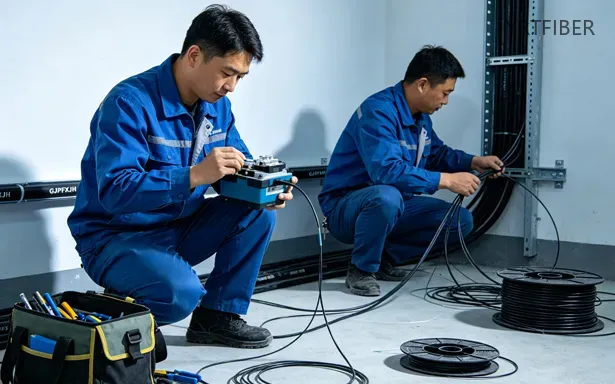
Mid‑span branching – Use ripcord to strip outer jacket and expose 2.0 mm sub‑units (900 µm tight‑buffered fibre + aramid). Extract needed sub‑units; store unused ones in enclosure.
Termination & splicing – Each sub‑unit has its own reinforcement – no breakout kit needed. Strip sub‑unit jacket, then connectorize or splice directly. Gel‑free dry design keeps termination clean.
Acceptance testing – Perform OTDR test for attenuation; verify continuity and insertion loss per fibre.
Download YRTFIBER Product Catalog
Factory Real Shot
1. Fiber Drawing and Screening Workshop
The factory is equipped with advanced vertical fiber drawing towers, using PCVD or OVD processes, capable of mass production of low-loss single-mode fibers such as G.652.D and G.657.A1. Drawing speed up to 2800 m/min, with double-layer acrylic resin applied online to ensure fiber strength and geometric consistency. After drawing, the tension screening machine automatically removes breakpoints, ensuring zero defects per kilometer of fiber optics.
2. Loose Fiber Extrusion and Paste Filling Line
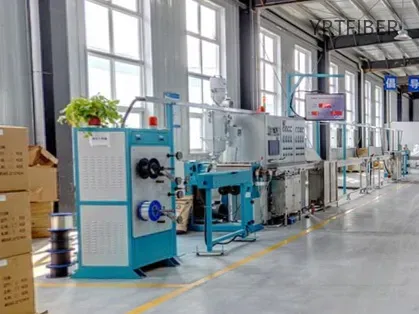
We have multiple high-speed loose sleeve extrusion production lines, where PBT or PE materials are precisely molded into loose tubes with an outer diameter of 1.8~2.5mm. The sleeve is automatically filled with thixotropic water-blocking paste, with online control of remaining length (±0.05%). After extrusion, ultrasonic cleaning and real-time feedback with a diameter laser diameter gauge ensure uniform casing wall thickness and bubble-free fabrication.
3. Cable forming and metal armor production line
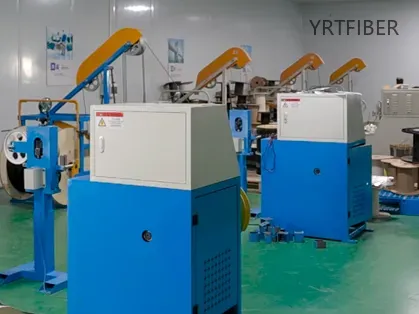
The factory is equipped with SZ stranding cable machines (maximum twisting pitch 30mm, 144 cores) and wire/steel strip armoring forming tables. It can complete the twisting and longitudinal wrapping of central reinforcement parts, loose sleeve tubes, filling ropes, and armor layers in one go. Steel strip welding uses continuous laser welding, adjustable welding speed, and is equipped with eddy current flaw detection. After cable formation, it immediately enters the double-sheath extrusion machine to produce PE or LSZH outer sheaths.
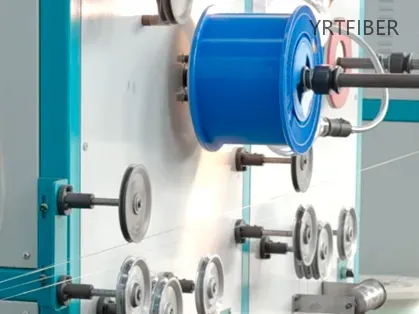
4. Quality inspection and environmental simulation laboratory
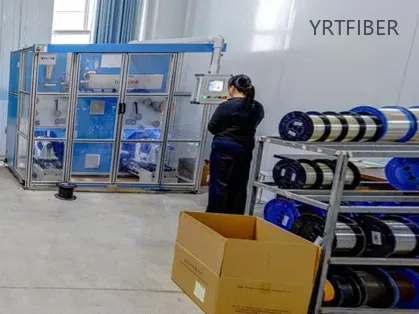
The laboratory is CNAS certified and equipped with OTDR, dispersion analyzers, tensile/compressive testing machines, high and low temperature circulation chambers (-40°C~85°C), and salt spray corrosion testers. Every batch of products passes 100% of the full tests before leaving the factory, including attenuation, tensile, flattening, temperature cycling, water seepage, and flame retardant (IEC 60332). The intelligent data management system can trace the complete production process of each reel.
Frequently Asked Questions & Quick Inquiry
GJBFJH Breakout Fiber Optic Cable FAQ
1. How does GJBFJH breakout cable differ from standard indoor fiber cables?
The GJBFJH features a reinforced breakout design with individually strengthened fibers, offering:
• 3x higher tensile resistance (600N vs typical 200N)
• LSZH jacket with IEC 60332-1 flame rating
• Pre-terminated fiber bundles for easier installation in data centers
2. What are the actual bending radius limits for G657A1/A2 fibers?
• G657A1: 7.5mm (installation)/15mm (operational)
• G657A2: 5mm (installation)/10mm (operational)
Practical example: Can make 90° turns around server rack corners without signal loss
3. Which fiber type should I choose for my FTTH deployment?
Our recommendation:
• G652D: Straight-line backbone runs (most cost-effective)
• G657A1: Moderate bend areas (apartment building risers)
• G657A2: High-density routing (smart home installations)
4. What certifications does the cable jacket have?
• Full compliance with:
- IEC 60332-1 flame test
- RoHS 2.0 directive
- OFNR rating documentation available upon request
5. Can I get custom connector configurations?
Yes, we offer:
• Any combination of LC/SC/FC/ST connectors
• APC or UPC polishing options
• Factory-preterminated assemblies with strain relief
(Lead time: 3-5 days for standard configurations)
Send Your Inquiry
Fill out the form below and we'll get back to you within 24 hours.


