

 Español
 Português
 لالعربية
 Русский
 Bahasa Indonesia
 Français
 Türkçe
 Bahasa Melayu

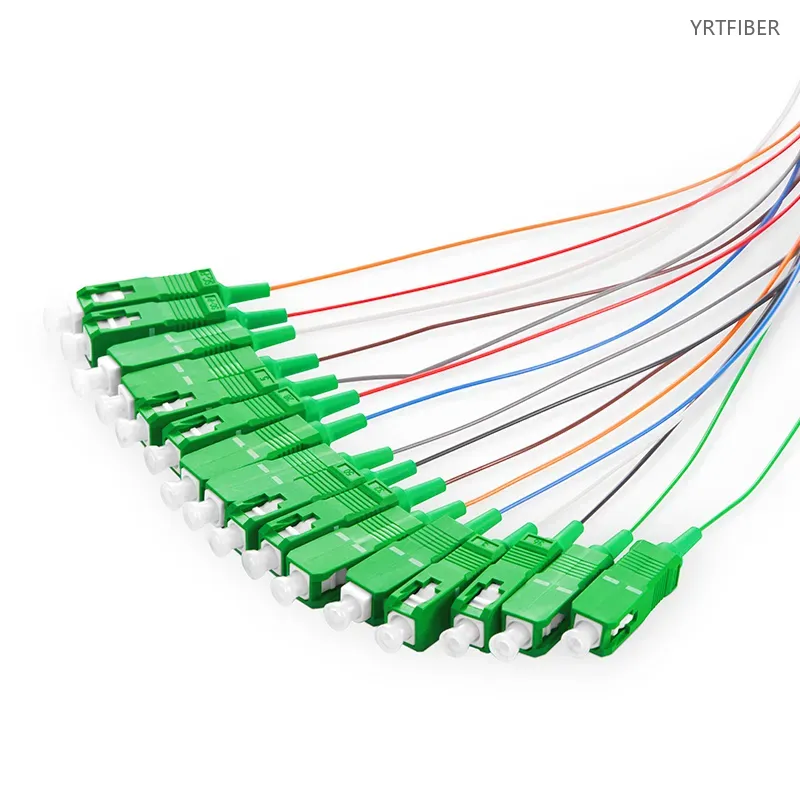
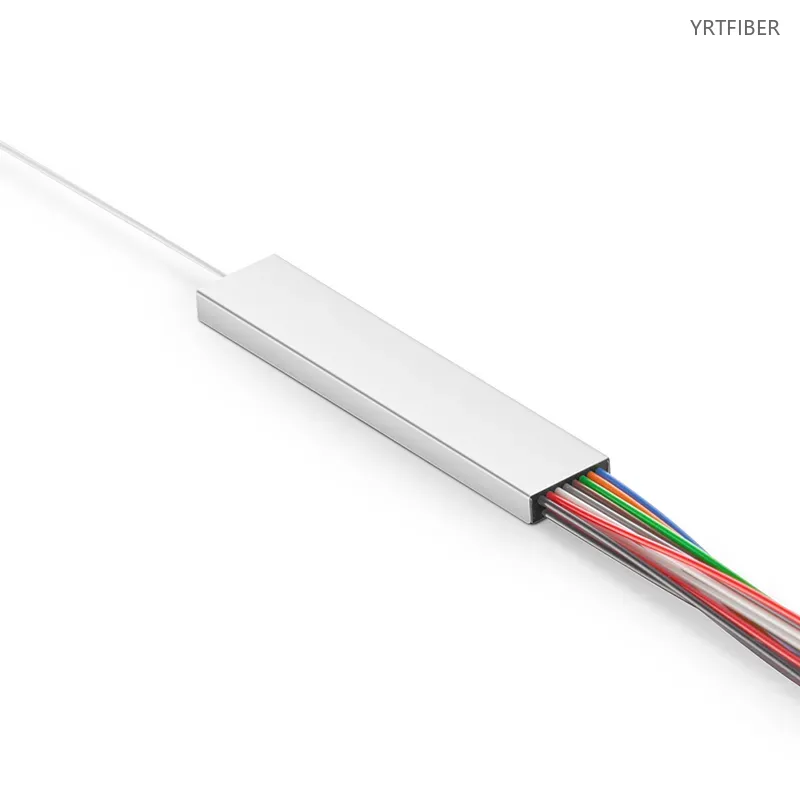
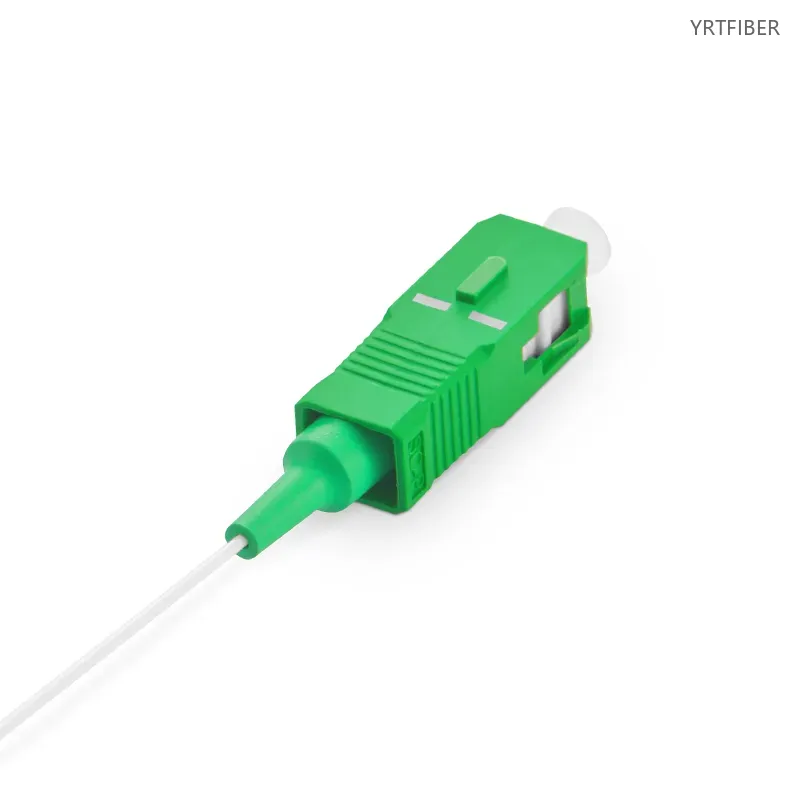
1x16 PLC Mini Fiber Optic Splitter – Steel Tube Design for Efficient Signal Distribution
1x16 configuration for splitting one optical signal into 16 paths.
Steel tube design for enhanced mechanical protection and durability.
Low insertion loss and high return loss for reliable signal distribution.
Compact and space-saving mini design, ideal for high-density fiber networks.
Compatible with single-mode fiber (G652D, G657A) for long-distance transmission.
What is 1x16 PLC mini fiber optic splitter
The 1x16 PLC mini fiber optic splitter with a steel tube design is a compact and reliable solution for optical signal distribution. Designed for high-density networks such as FTTx, LAN, and CATV, this splitter provides excellent performance with minimal loss, making it ideal for applications requiring space efficiency and durability.
1x16 PLC Mini Fiber Optic Splitter Specification parameters
- Specification parameters
- OPTICAL CHARACTERISTICS
| Package Style | Mini Module |
| Configuration Type | 1x 16 |
| Fiber Grade | G.657A1 |
| Fiber Mode | Singlemode |
| Connector Type | SC/APC |
| Split Ratio | Symmetrical |
| Insertion Loss | ≤13.8dB |
| Return Loss | ≥ 55dB |
| Loss Uniformity | ≤ 1.2dB |
| Directivity | ≥ 55dB |
| Polarization Dependent Loss | ≤ 0.3dB |
| Temperature Dependent Loss | ≤0.5dB |
| Wavelength Dependent Loss | ≤ 0.3dB |
| Operating Bandwidth | 1260~1650nm |
| Dimensions (HxWxD) | 3.15"x0.79"x0.24" (80x20x6mm) |
| Temperature | Operating -40 to 85°c (-40 to 185℉)Storage -40 to 85°c (-40 to 185℉) |
Product Structure & Composition
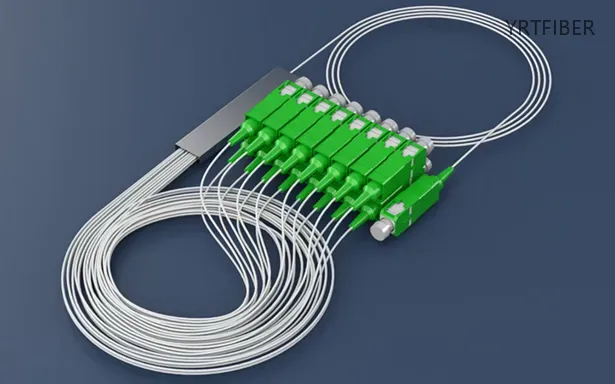
Optical Splitting Unit: At the core is the Planar Lightwave Circuit (PLC) - based optical splitting unit. This unit is engineered to divide the incoming optical signal from the single input port into 16 output ports evenly. It ensures consistent signal splitting across all channels, maintaining the integrity of the optical signal during distribution.
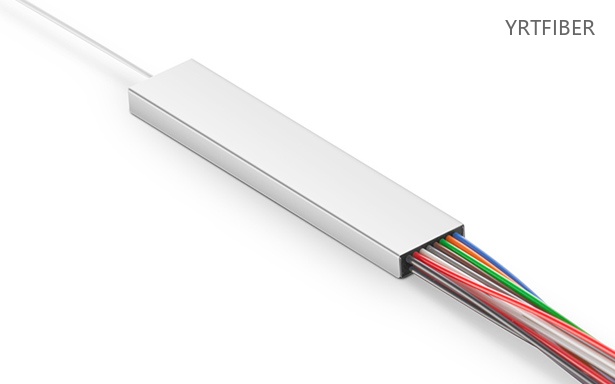
Steel Tube Housing: The steel tube housing encases the optical splitting unit. It serves as a robust protective layer, safeguarding the internal components from mechanical stress, such as impacts, vibrations, and accidental damage. The steel tube also contributes to the overall durability of the splitter.
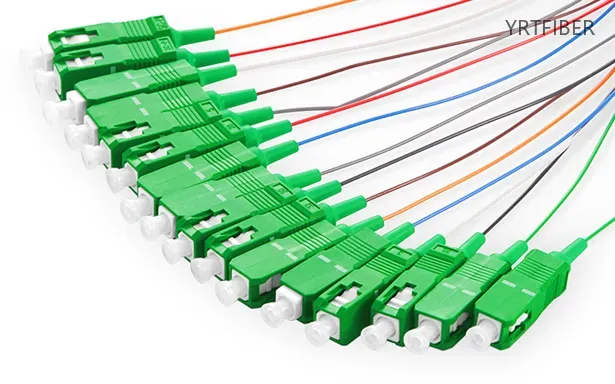
Connectors: The splitter is equipped with connectors suitable for single - mode fibers G652D and G657A. These connectors ensure a secure and efficient connection between the splitter and the external fiber optic cables.
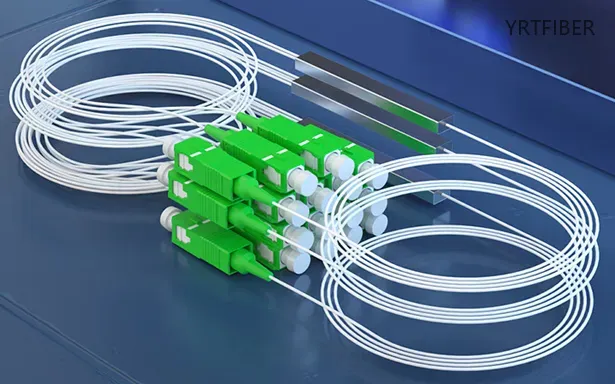
Benefits of 1x16 PLC Mini Fiber Optic Splitter
Enhanced Mechanical Durability
The steel tube design provides superior mechanical protection. In environments where the splitter may be subject to physical stress, such as in outdoor cabinets or areas with heavy equipment, the steel tube helps prevent damage to the internal optical components, ensuring long - term reliable operation.
Excellent Signal Performance
With low insertion loss and high return loss, the splitter ensures that the optical signals are distributed with minimal degradation. Low insertion loss means that the signal loses very little power as it passes through the splitter, while high return loss prevents signal reflections that could disrupt the overall signal quality, resulting in stable and reliable signal distribution.
Space - saving Compactness
The compact and mini design of the splitter is a significant advantage in high - density fiber networks. It occupies less space in patch panels, optical distribution frames, or other installation enclosures, allowing for more splitters to be installed in a limited area and enabling neater cabling arrangements.
Fiber Compatibility for Long - distance Transmission
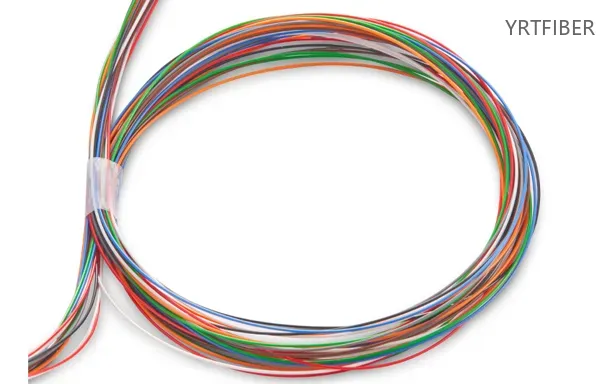
Compatibility with G652D and G657A single - mode fibers makes the splitter suitable for long - distance transmission requirements. These fiber types are commonly used in long - haul networks, and the splitter's compatibility ensures seamless integration into such networks, enabling efficient distribution of optical signals over extended distances.
Engineering Applications 1x16 PLC Mini Fiber Optic Splitter
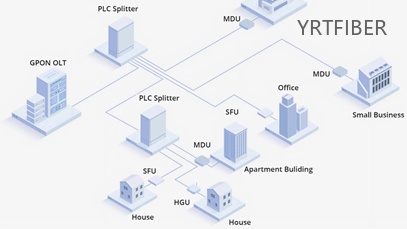
Widely Used in FTTX Projects and Data Communication Centers
["Optical splitter has played an important role in passive optical networks (like EPON, GPON, BPON, FTTX, FTTH, etc.) by allowing a single PON Interface to be shared among many subscribers."]
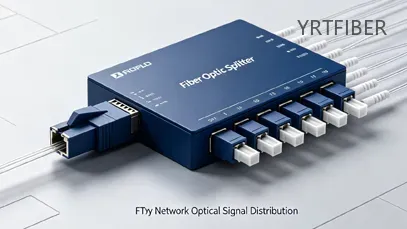
Fiber - to - the - x (FTTx) Networks
In FTTx networks, especially in Fiber - to - the - Home (FTTH) or Fiber - to - the - Building (FTTB) scenarios, the 1x16 PLC mini fiber optic splitter is used to distribute optical signals from the central office to multiple residential or commercial units. It helps in efficiently providing high - speed internet, voice, and video services to a large number of end - users.

Local Area Networks (LANs)
In LANs, the splitter can be used to expand the network connectivity within a building or a campus. For example, it can split the optical signal from a central switch to connect multiple workstations, servers, printers, and other network - enabled devices, facilitating seamless data sharing and communication.

Cable Television (CATV) Networks
In CATV networks, the 1x16 PLC mini fiber optic splitter plays a crucial role in distributing the optical signals carrying TV channels to multiple subscribers. It ensures that each subscriber receives a high - quality signal, enabling clear and reliable television viewing.
Shipping & Packaging
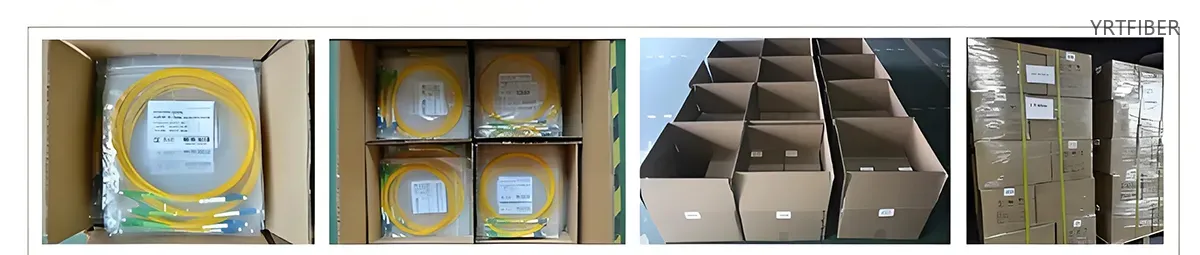

Product Comparison:
1x16 PLC Mini Fiber Optic Splitter vs 1x32 PLC Fiber Optic Splitter
| Feature / Dimension | 1x16 PLC Mini Fiber Optic Splitter | 1x32 PLC Fiber Optic Splitter |
|---|---|---|
| Splitting Configuration | 1x16. splitting into 16 paths | 1x32. splitting into 32 paths |
| Insertion Loss | Generally lower compared to 1x32 as there are fewer split paths | Slightly higher due to more channels being split |
| Mechanical Protection | Steel tube design for enhanced durability | May have different protection mechanisms, but more complex due to higher channel count |
| Space Occupancy | Compact and space - saving mini design, occupies less space | Also compact but may occupy more space due to additional output ports |
| Application Focus | Ideal for medium - density network applications like medium - sized FTTx projects, small to medium LANs, and CATV segments | Suited for large - scale high - density network applications such as large FTTx deployments, big data centers |
| Fiber Compatibility | Compatible with G652D, G657A single - mode fibers | Compatible with G652D, G657A single - mode fibers |
1x16 PLC Mini Fiber Optic Splitter Selection Guide
When choosing between a 1x16 PLC mini fiber optic splitter and a 1x32 PLC fiber optic splitter, consider the scale of your network and the number of connections required. If your network is of medium - density, such as a medium - sized FTTx project, a small to medium - sized LAN, or a segment of a CATV network where the number of end - users or devices to be connected is relatively limited, the 1x16 splitter is a suitable choice. It offers good signal performance, mechanical protection, and is space - efficient for these applications.
However, if you are dealing with a large - scale high - density network, like a major FTTx deployment or a large data center where a large number of connections are needed, the 1x32 splitter is more appropriate. It provides the necessary high - density splitting to meet the requirements of a large number of users or devices.
Parameter - Best Fit
| Parameter | Best Fit |
|---|---|
| Medium - density network applications | 1x16 PLC Mini Fiber Optic Splitter |
| Large - scale high - density network applications | 1x32 PLC Fiber Optic Splitter |
| Small to medium - sized FTTx projects | 1x16 PLC Mini Fiber Optic Splitter |
| Large FTTx deployments or big data centers | 1x32 PLC Fiber Optic Splitter |
Mixed deployment guidance:
In a large - scale network with a mix of high - density and medium - density areas, a combination of 1x16 and 1x32 splitters can be used. 1x32 splitters can be installed in areas with a high concentration of users or devices, such as the main distribution areas of a large FTTx network. 1x16 splitters can be deployed in areas with a lower density of connections, like in smaller sub - networks or for connecting a limited number of devices in a specific area of a data center. This approach optimizes cost - effectiveness and space utilization.
1×16 PLC Mini Fiber Optic Splitter - Quick Installation Guide
1. Pre-installation check
Inspect the steel tube housing for dents, scratches, or rust.
Ensure connectors are clean and port interfaces are free of debris.
Verify that input/output port labels are clear.
2. Fiber connections
Connect a single‑mode fiber (G652D or G657A) to the input port and push firmly until secure.
Similarly connect fibers to all 16 output ports. Label each output clearly for future maintenance.
3. Mounting
Install the splitter in a patch panel, distribution frame, or enclosure. Secure it with the supplied hardware, ensuring no strain on the fibers.
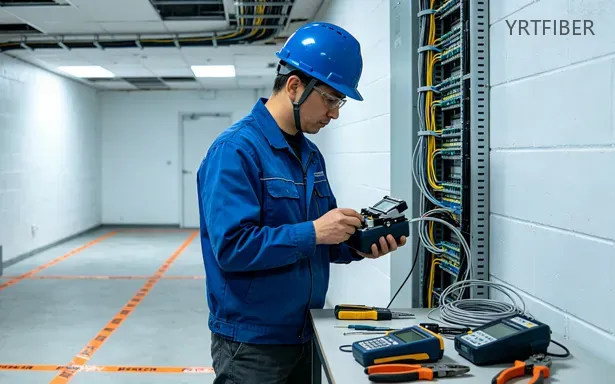
4. Testing
Use an optical power meter to measure insertion loss at each output port and compare with the specified values.
If losses are significantly higher, recheck connections, clean connectors, and inspect for internal damage.
Also verify return loss meets the required standards.
Download YRTFIBER Product Catalog
Factory Real Shot
State‑of‑the‑Art Manufacturing Facilities
Our 12.000 m²; dust‑proof workshop houses over 30 automated production lines for both single‑core and MPO patch cords. Key equipment includes high‑precision fiber cutters (±0.08 mm tolerance), FLC automatic termination machines, and UV curing systems. These operate in a fully coordinated workflow, achieving a stable daily output of thousands of connectors. A real‑time MES system tracks every production step, ensuring batch‑to‑batch consistency and full traceability.
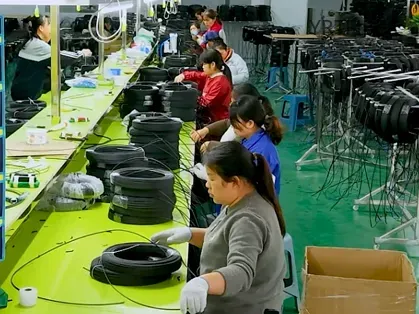
Precision Core Manufacturing Process
The manufacturing sequence starts with micro‑tolerance end‑face cutting (angle tolerance ±0.5°) and six‑axis fusion splicing (core deviation ≤1 μm). After multi‑layer jacketing using LSZH, PVC, or OFNP compounds, the connectors are polished on automated lines to achieve PC, UPC, or APC end‑face finishes. This efficient process yields up to 7.000 high‑quality connectors per 11‑hour shift, with every unit meeting stringent geometric and optical specifications.
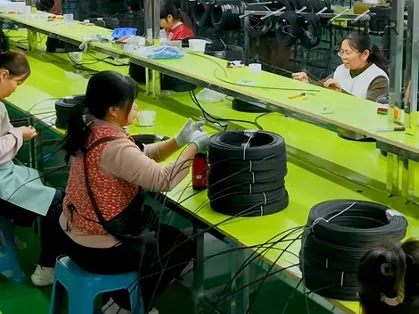
Rigorous Quality Assurance & Testing
Every patch cord undergoes 100% inspection, covering interferometric end‑face analysis at 400× magnification, automatic contaminant detection, and insertion/return loss measurements via OTDR. In addition, environmental samples are subjected to temperature cycling, humidity exposure, and pull‑force tests in compliance with IEC/TIA standards. This multi‑layer quality regime verifies both optical performance and mechanical robustness, guaranteeing that only zero‑defect products are shipped to customers.
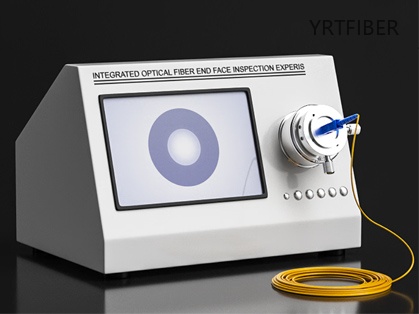
Frequently Asked Questions & Quick Inquiry
1x16 PLC Mini Fiber Optic Splitter FAQ
Q1: What is the 1x16 PLC mini splitter used for?
A1: It is used for splitting a single optical signal into 16 separate paths, commonly used in FTTx, CATV, LAN, and other high-density network applications.
Q2: What is the advantage of the steel tube design?
A2: The steel tube provides enhanced mechanical protection, ensuring durability and stability in harsh environments.
Q3: What fiber type does this splitter support?
A3: It supports single-mode fiber, including G652D and G657A, for long-distance transmission.
Q4: What connector options are available for this splitter?
A4: This splitter comes with SC, LC, FC, and ST connectors, with customized options available upon request.
Q5: What is the maximum distance for signal splitting?
A5: The splitter is ideal for long-distance transmission in telecom infrastructure and fiber optic networks.
Can the 1x16 PLC mini fiber optic splitter be used in outdoor environments?
Yes, the steel tube design provides enhanced mechanical protection, making it suitable for outdoor environments. However, additional weather - proofing measures may be required depending on the specific outdoor conditions, such as extreme temperatures, humidity, or exposure to corrosive elements.
What is the significance of low insertion loss and high return loss in this splitter?
Low insertion loss ensures that the optical signal loses minimal power as it passes through the splitter, which is crucial for maintaining signal strength over long - distance transmission and across multiple split paths. High return loss prevents signal reflections that could interfere with the original signal, ensuring reliable and stable signal distribution. Together, they contribute to the overall performance and reliability of the splitter in optical networks.
Send Your Inquiry
Fill out the form below and we'll get back to you within 24 hours.


