

 Español
 Português
 لالعربية
 Русский
 Bahasa Indonesia
 Français
 Türkçe
 Bahasa Melayu

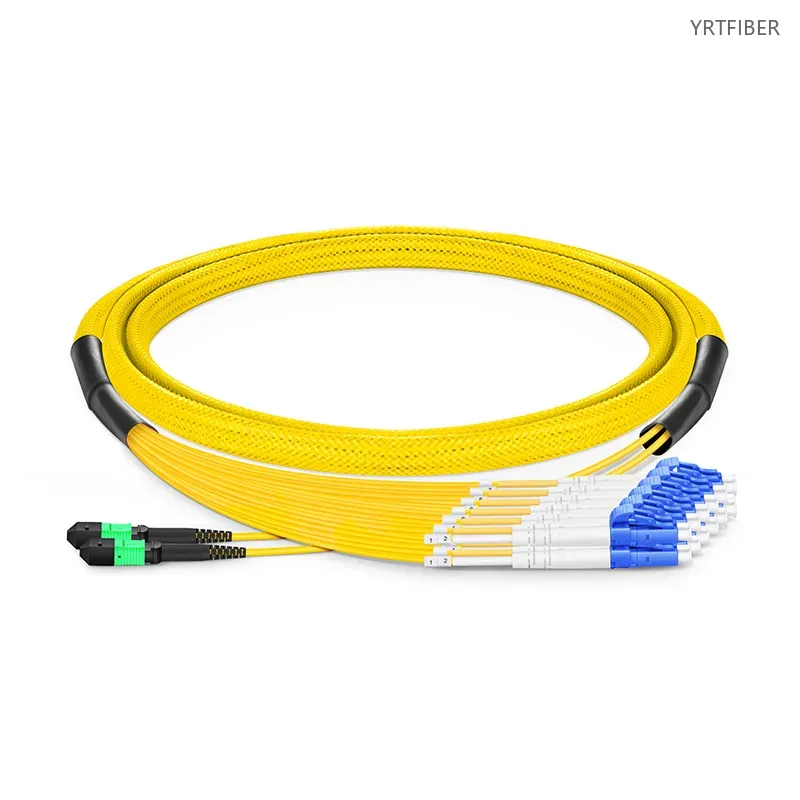
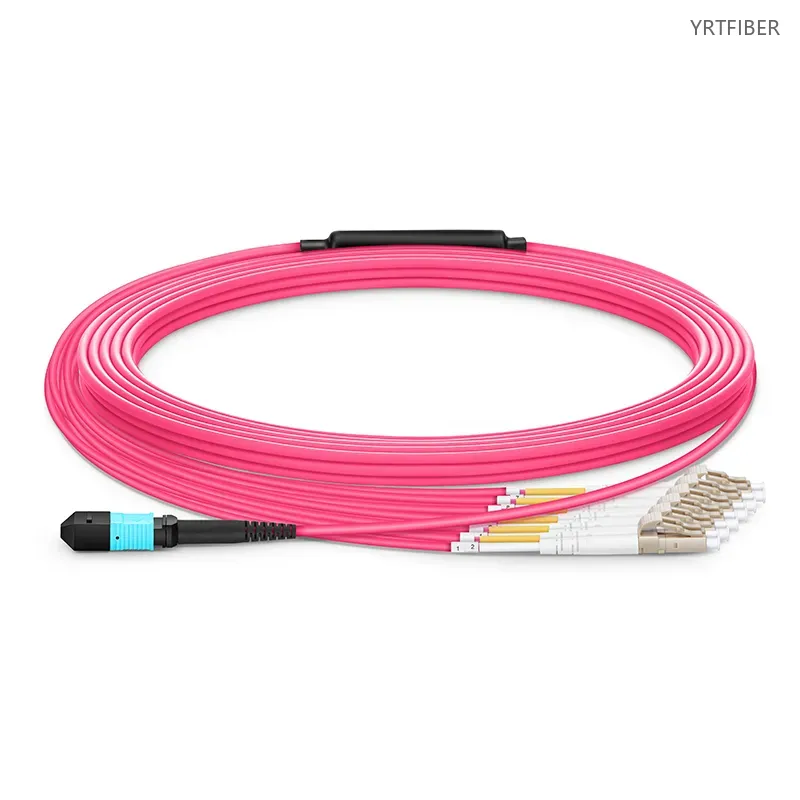
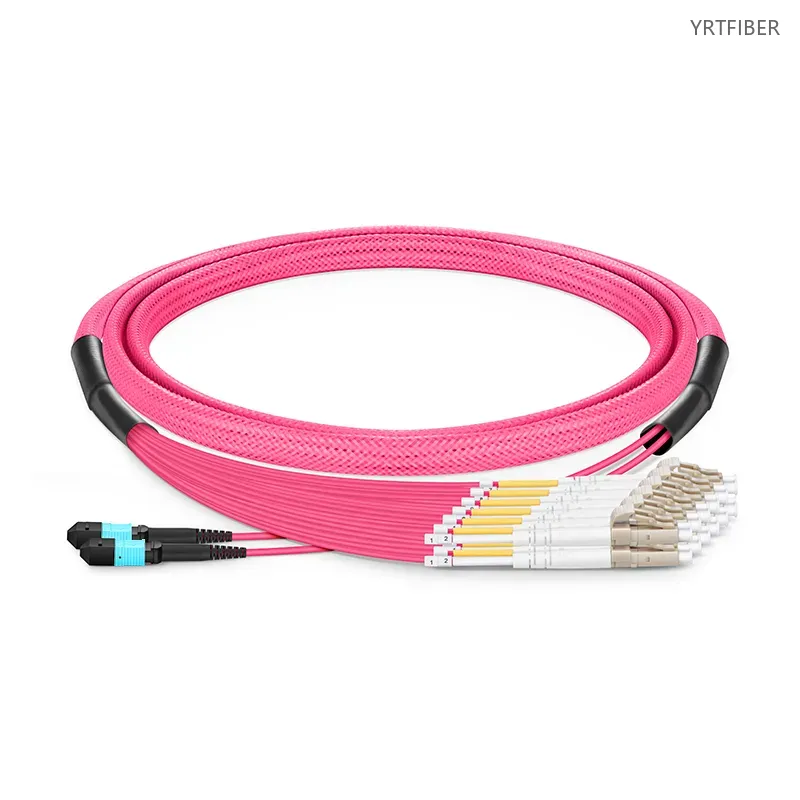
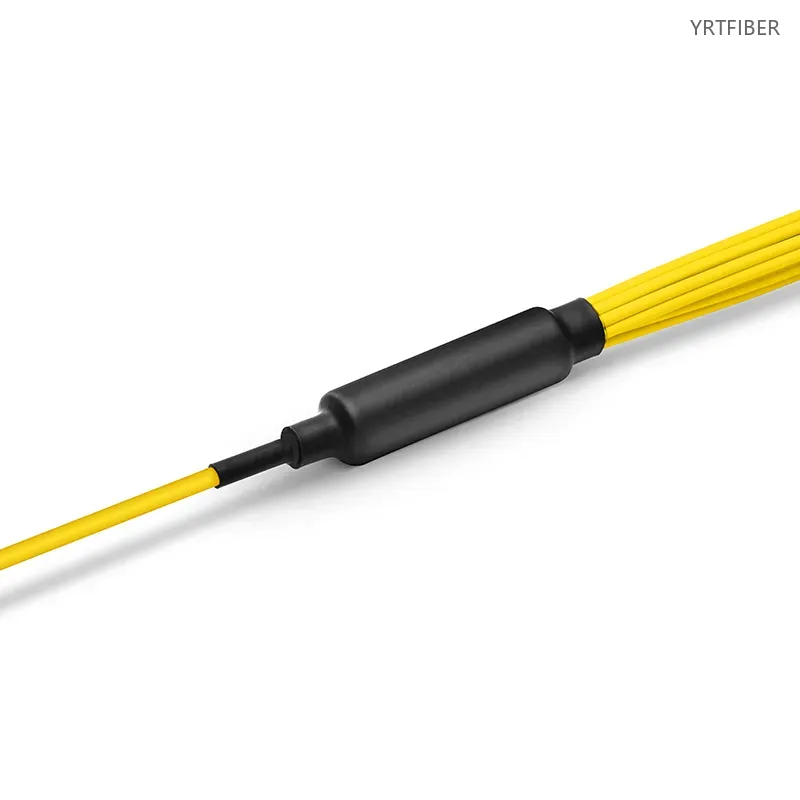
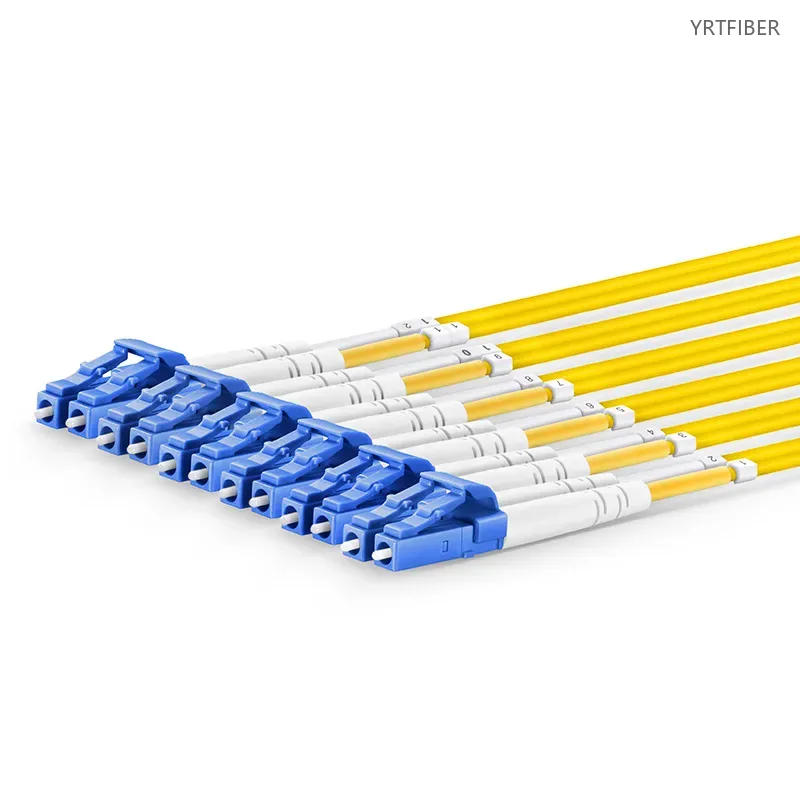
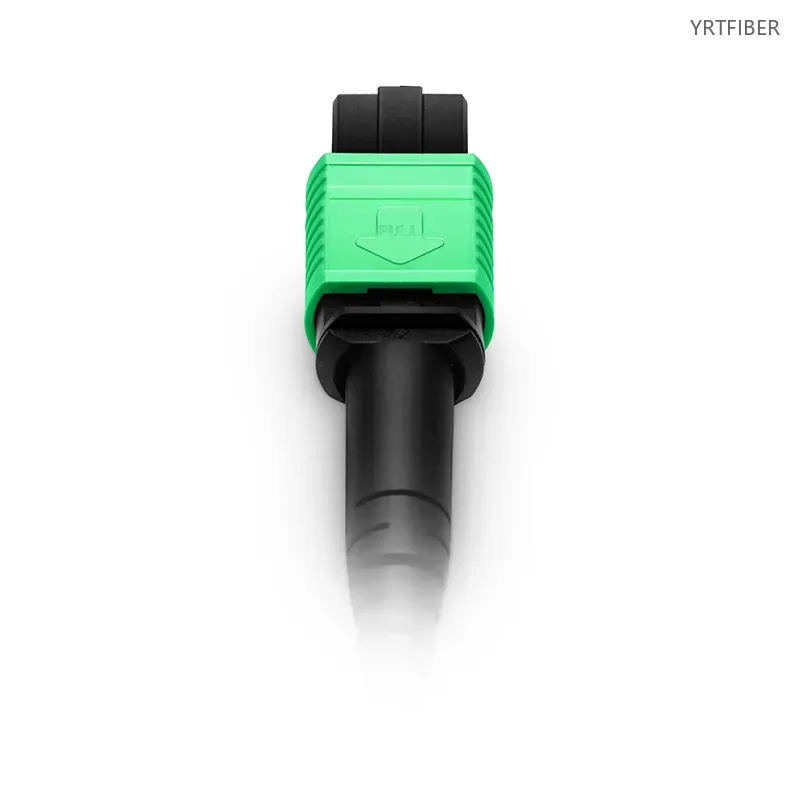
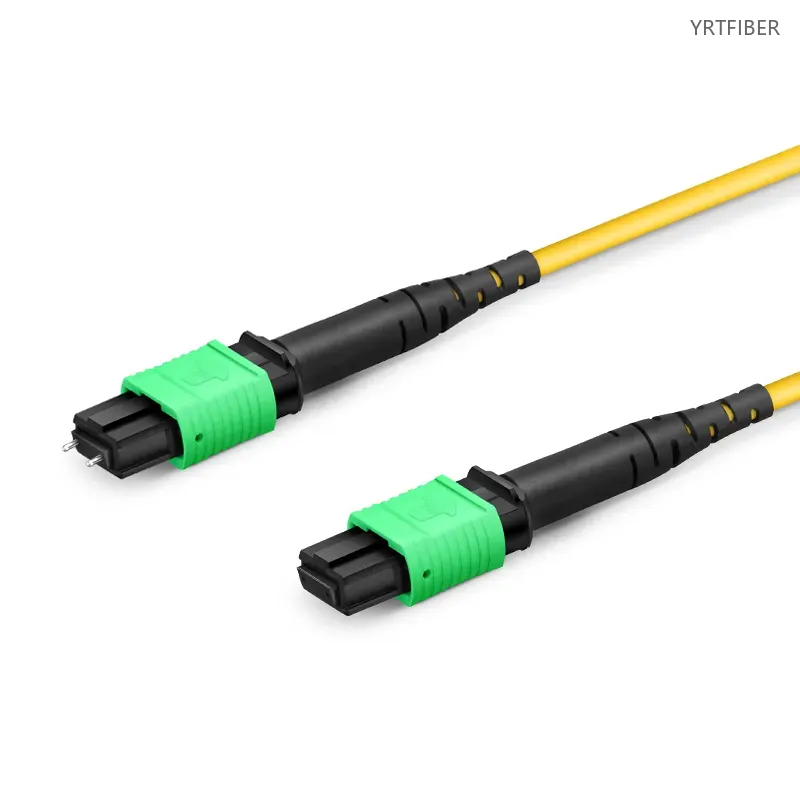
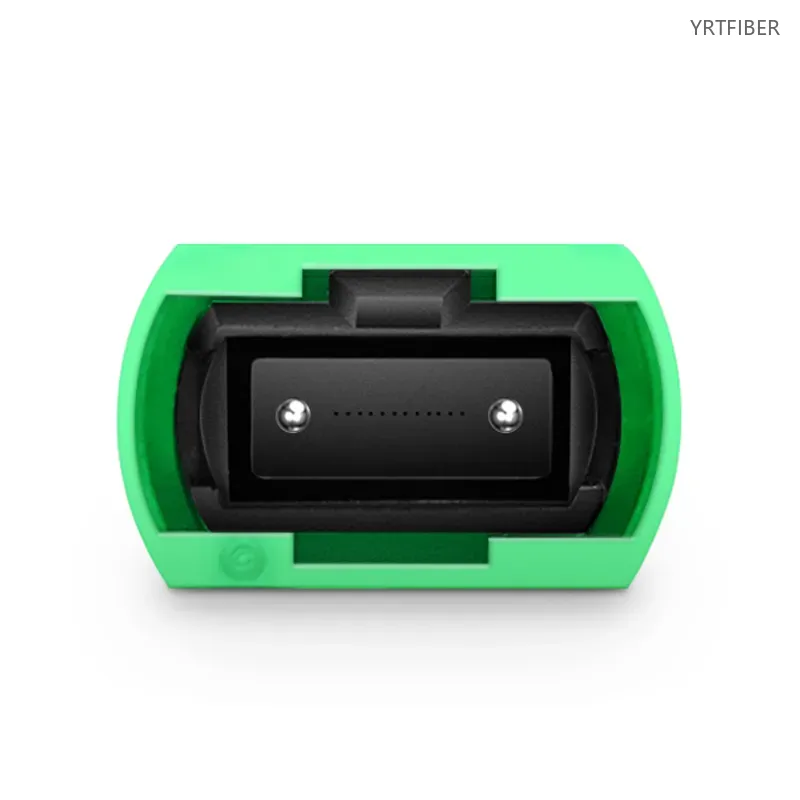
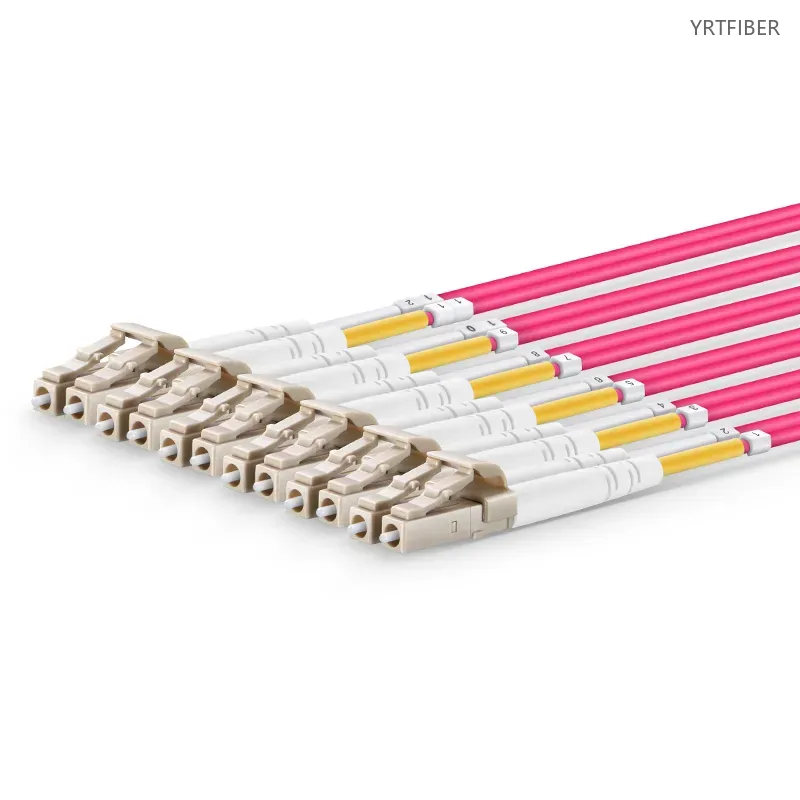
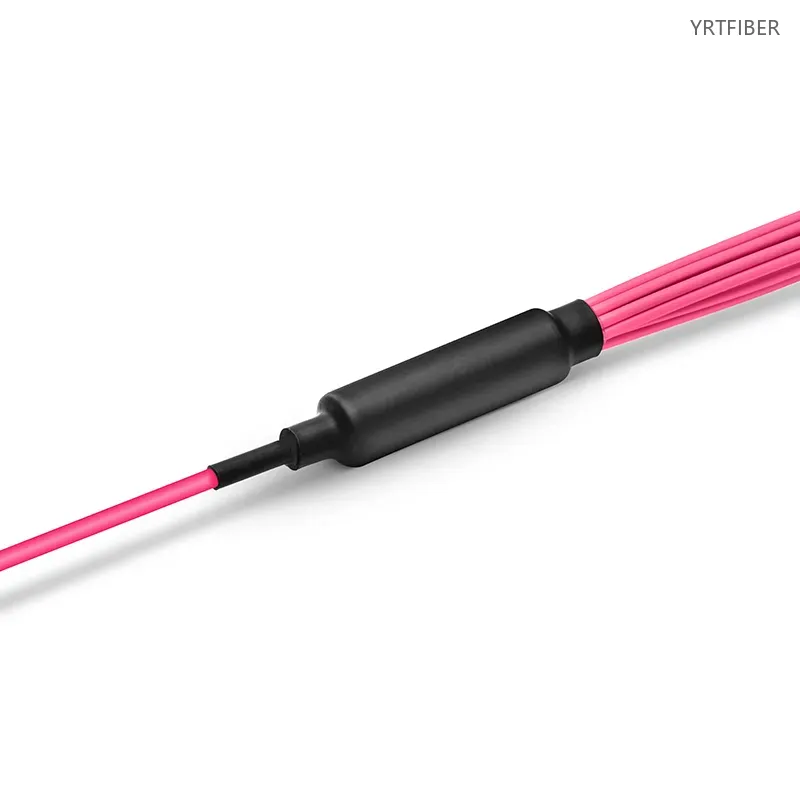
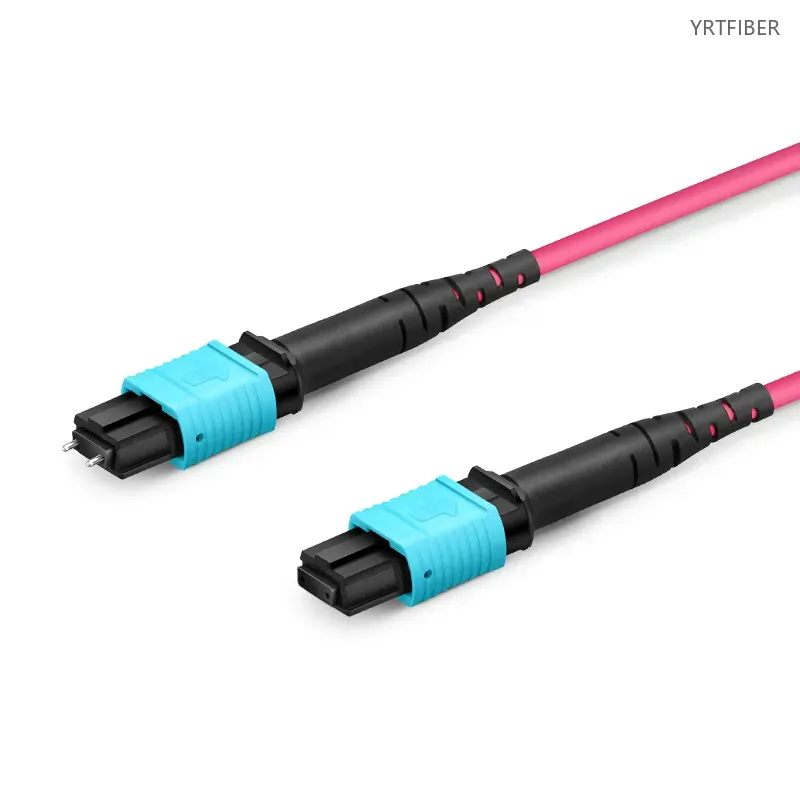
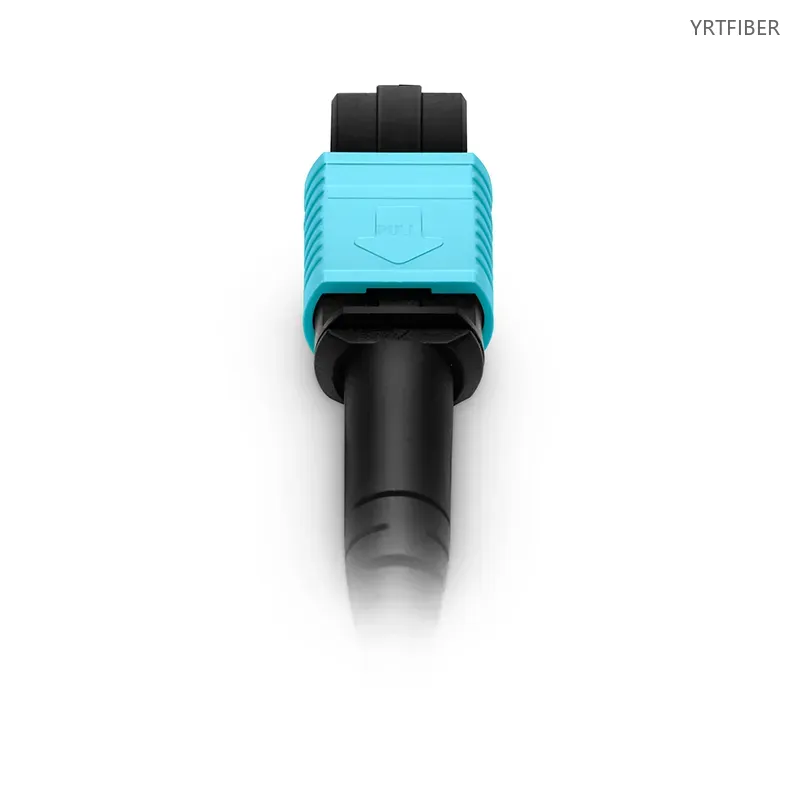
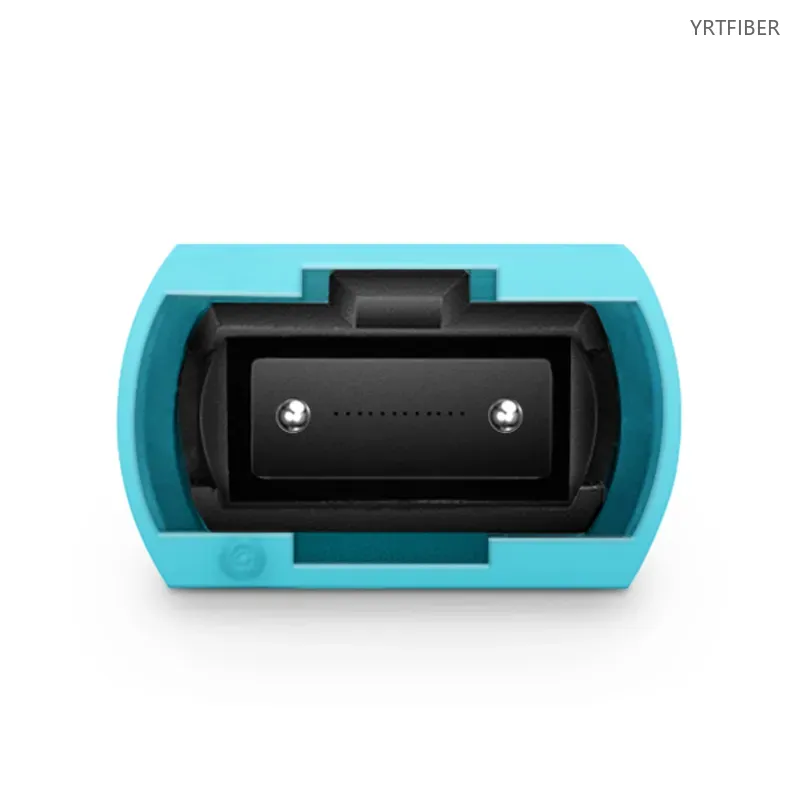
MTP-8 UPC (Female) to 4 x LC UPC Duplex MPO Fiber Jumper Cable for 40G Optical Modules
Designed to bridge MTP - 8 UPC (Female) interfaces with 4 x LC UPC Duplex interfaces, enabling seamless connection between different fiber - optic network components.
Features an MTP - 8 UPC (Female) connector on one end for high - density fiber aggregation, and four LC UPC Duplex connectors on the other end for individual or grouped connections.
Utilizes high - quality fibers to ensure low insertion loss and high return loss, guaranteeing excellent signal integrity during data transmission.
Suitable for various high - speed network applications, facilitating efficient data transfer in data centers, enterprise networks, and telecommunications setups.
What Is an MTP-8 UPC (Female) to 4 x LC UPC Duplex Fiber Patch Cord?
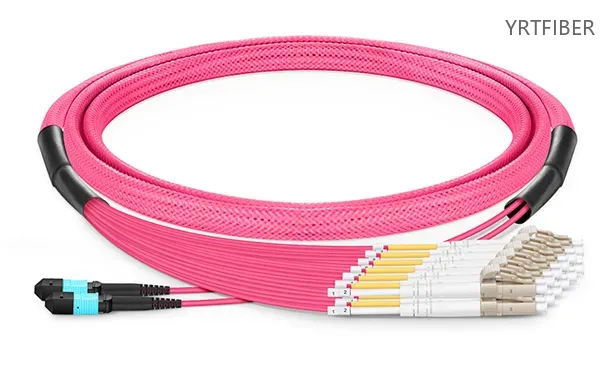
An MTP-8 UPC (Female) to 4 x LC UPC Duplex fiber patch cord is a specialized breakout cable that connects a single MTP-8 UPC (Female) interface to four LC UPC Duplex interfaces, enabling the transition from an 8-fiber multimode MPO/MTP connection to four individual duplex LC connections. This design makes it ideal for high-density cabling systems, commonly used to link 40G optical modules (such as 40G QSFP+ to 4 x 10G SFP+) or to break out an 8-core MPO trunk into four separate duplex channels.
The cable is engineered for high-speed data transmission with excellent signal integrity in diverse network environments. Its UPC polish on both the MTP and LC connectors ensures low insertion loss and minimal back reflection, while the female MTP connector's B-polarity key configuration guarantees proper fiber alignment and consistent channel mapping. Each LC UPC Duplex connector provides two fibers, together supporting the full 8-fiber count of the MTP connector.
Typical applications include 40G to 4 x 10G breakout in data centers, high-density patch panels, and backbone connections between switches, servers, and routers. The compact breakout design helps reduce cable clutter, simplify cable management, and improve airflow within racks, making it a cost-effective and space-saving solution for modern network infrastructure.
MTP-8 UPC (Female) to 4 x LC UPC Duplex fiber patch cord Specification parameters
- Specification parameters
- OPTICAL CHARACTERISTICS
MPO to LC/SC/FC/ST Patch Cord (OS2)
| Connector A | MPO | Connector B | LC/SC/FC/ST |
| Fiber Mode | OS2 9/125μm | Wavelength | 1310/1550nm |
| Glass Fiber | G.657.A1 | Minimum Bend Radius | 10mm |
| Trunk Outside Diameter (OD) | 3.0mm-17.3mm | Breakout Outside Diameter (OD) | 2.0mm (Duplex), 2.0/0.9mm (Simplex) |
| MPO Connector IL | ≤0.35dB | Standard Connectors IL | UPC≤0.2dB, APC≤0.3dB |
| MPO Connector RL | ≥60dB | Standard Connectors RL | UPC≥50dB, APC≥60dB |
MPO to LC/SC/FC/ST Patch Cord (OM4)
| Connector A | MPO | Connector B | LC/SC/FC/ST |
| Fiber Mode | OM4 50/125μm | Wavelength | 850/1300nm |
| 40/100G Ethernet Distance | 150m at 850nm | 10G Ethernet Distance | 400m at 850nm |
| Glass Fiber | Bend Insensitive | Minimum Bend Radius | 7.5mm |
| Trunk Outside Diameter (OD) | 3.0mm-17.3mm | Breakout Outside Diameter (OD) | 2.0mm (Duplex), 2.0/0.9mm (Simplex) |
| MPO Connector IL | ≤0.35dB | Standard Connectors IL | ≤0.2dB |
| MPO Connector RL | ≥20dB | Standard Connectors RL | ≥30dB |
Product Structure & Composition
MPO - 8 UPC (Female) End: The MTP - 8 UPC (Female) connector has a compact design that can house 8 fibers. It uses a precision alignment system to ensure accurate fiber - to - fiber connection, which is crucial for high - density and reliable data transfer.
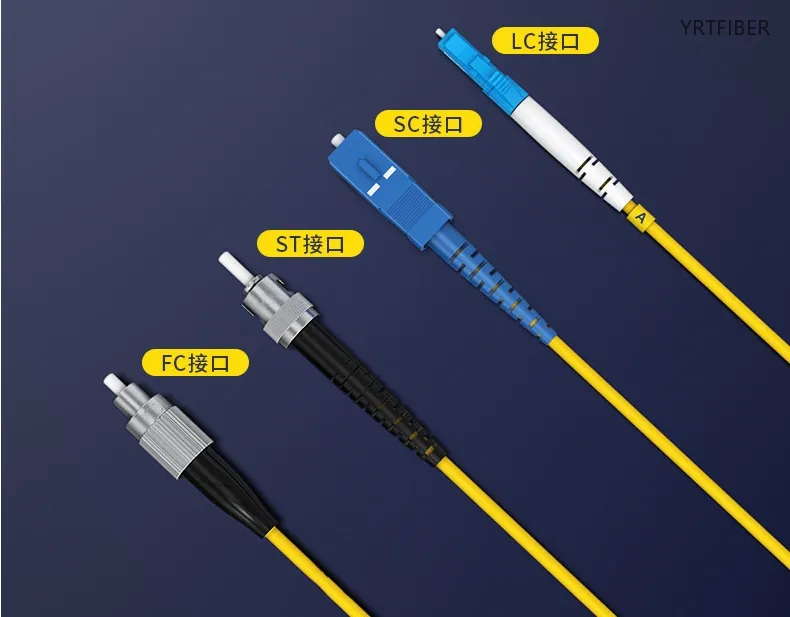
4 x LC UPC Duplex Ends: Each of the four LC UPC Duplex connectors is a small - form - factor connector, suitable for individual or grouped connections. The UPC polish on the ferrules provides a slightly convex end - face for low insertion loss and high return loss.
Fiber Core: High - quality fibers run through the cable, connecting the MTP - 8 UPC (Female) connector to the 4 x LC UPC Duplex connectors. These fibers are chosen to support high - speed data transmission.
Outer Jacket: Protects the internal fibers and connectors from mechanical damage. It is made of durable materials, which can be selected based on different environmental requirements.
Benefits of MTP-8 UPC (Female) to 4 x LC UPC Duplex fiber patch cord
Interface Compatibility
This patch cord enables seamless connection between MTP - 8 UPC (Female) and 4 x LC UPC Duplex interfaces. It bridges different network architectures, allowing for greater flexibility in network design and expansion.
High - density to Individual Connections
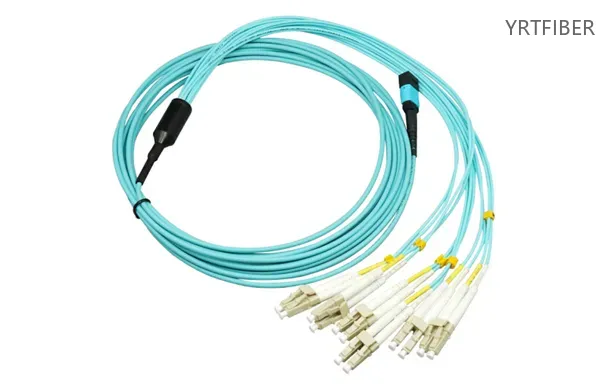
The MTP - 8 UPC (Female) end aggregates 8 fibers in a high - density manner, while the four LC UPC Duplex ends provide the option for individual or grouped connections. This is useful in data centers where high - density cabling needs to be split for specific device connections.
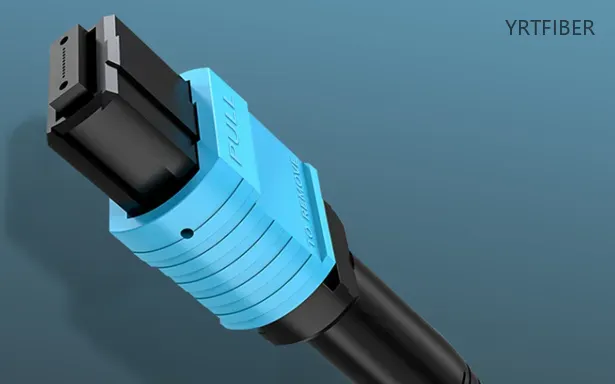
Excellent Signal Integrity
With low insertion loss and high return loss, the patch cord ensures reliable data transmission. This is essential for high - speed network applications where signal degradation can lead to data errors.
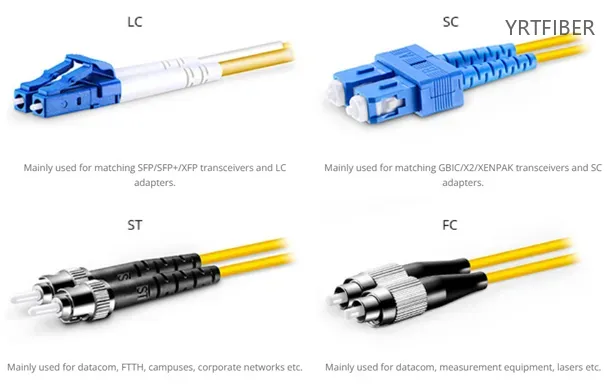
Engineering Applications MTP-8 UPC (Female) to 4 x LC UPC Duplex fiber patch cord

Data Centers
In data centers, the MPO fiber jumper cable is used to connect servers, switches, and storage devices. Its high - density design and support for high - speed data transmission make it ideal for enabling fast and reliable communication within the data center network.

Telecom Systems
Telecom systems benefit from the MPO fiber jumper cable's ability to support high - speed data transfer. It can be used to connect different network nodes, ensuring efficient signal transmission in the telecom infrastructure.
Shipping & Packaging
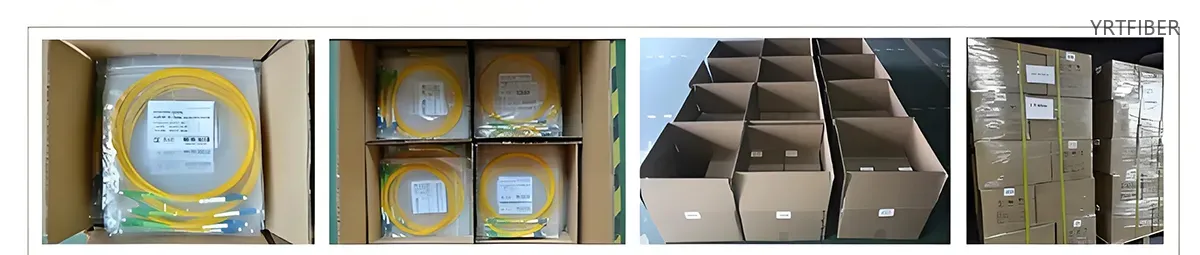

Product Comparison:
MPO vs MTP vs LC Patch Cord
| Feature | MPO Fiber Jumper Cable | MTP Fiber Cable | Duplex LC Patch Cord |
|---|---|---|---|
| Connector Type | Standard multi‑fiber connector (IEC 61754‑7). Plastic pin clamp. | High‑performance MPO version (US Conec). Metal pin clamp, removable housing. | Single‑fiber connector, duplex pair for Tx/Rx. 1.25mm ceramic ferrule. |
| Fiber Capacity | 8, 12, 16, 24, 48, 72 fibers per connector. | Same fiber counts (8‑144). Tighter tolerances, lower loss. | 2 fibers per duplex interface. |
| Port Density | Very high - 12 fibers in one connector replaces 6 LC duplex pairs. | Same as MPO, with better mechanical stability. | Low - 1U panel: ~144 fibers vs. 1152 with MPO‑24. |
| Typical Applications | 40G‑400G parallel optics, data center backbone, AI/HPC clusters. | Mission‑critical high‑density, hyperscale data centers, frequent rework. | Device access, edge patching, legacy systems, SFP/SFP+ links. |
| Insertion Loss (typical) | Std ≤0.7dB; Low‑loss ≤0.35dB (MM) / ≤0.25dB (SM). | Premium ≤0.35dB; Ultra‑low ≤0.15‑0.20dB. | 0.1‑0.35dB per pair. |
| Installation Speed | Plug‑and‑play - 144 fibers in minutes. | Same as MPO, plus removable housing for field rework. | Slow - each pair individually terminated. |
| Pros | High density, pre‑terminated, parallel optics ready. | All MPO benefits + lower loss, more durable, reworkable. | Simple, low per‑cable cost, easy replacement, no polarity rules. |
| Cons | Higher initial cost, polarity planning needed, special cleaning tools. | More expensive than generic MPO, trademarked design. | Very low density, slow large‑scale deployment, poor airflow in high density. |
MTP-8 UPC (Female) to 4 x LC UPC Duplex fiber patch cord Selection Guide
Breakout (Harness) cable → best for static, direct, point‑to‑point connections between a 40G/100G port and multiple 10G/25G ports. Low initial cost, but low reconfigurability. Ideal for intra‑cabinet or ToR deployments where cable runs are short and changes are rare.
Cassette / Module → best for structured, scalable cabling in large data centers (MDA/HDA/EDA). Supports frequent moves, adds, and changes. Clean front‑panel management and polarity flexibility justify the higher upfront cost. Use this when future‑proofing and maintainability are key.
Trunk cable → best for permanent backbone layers between distribution areas. Minimal cable bulk, lowest insertion loss, and organized pathways. Use as the fixed infrastructure; terminate trunks into cassettes at each end for equipment access.
Hybrid approach for large‑scale deployments:
Deploy MTP‑8 trunks as the backbone between floors or rows. Terminate trunks into cassettes at patch panels. From cassettes, use LC duplex patch cords to connect active equipment. For dedicated short links, use breakout harnesses directly – no cassette needed.
Polarity and gender notes:
Breakout cables are typically Type B with female MTP connectors. Always confirm polarity and gender with the transceiver and panel requirements.
Cassettes offer more flexibility; some support field‑changeable polarity.
MTP‑8 supports 8‑fiber parallel optics (e.g., 40G SR4. 100G SR4). For 12‑fiber or 24‑fiber applications, use MTP‑12 or MTP‑24 variants.
Installation Instructions of MTP-8 UPC (Female) to 4 x LC UPC Duplex fiber jumper
Pre - installation Inspection
Visually inspect the patch cord for any damage to the outer jacket. Check the MTP - 8 UPC (Female) connector and the 4 x LC UPC Duplex connectors for clean ferrules and proper alignment of fibers.
Connection
Align the MTP - 8 UPC (Female) connector with the corresponding male MTP - 8 port and insert it firmly until it locks. For the LC UPC Duplex connectors, align the keys with the keyways of the LC ports and insert them until they click into place.
Cable Routing
Route the patch cord carefully, avoiding sharp bends. Leave enough slack to prevent stress on the connectors.
Testing
Use an optical power meter to measure the insertion loss and return loss. Ensure that the values are within the specified range for proper data transmission.
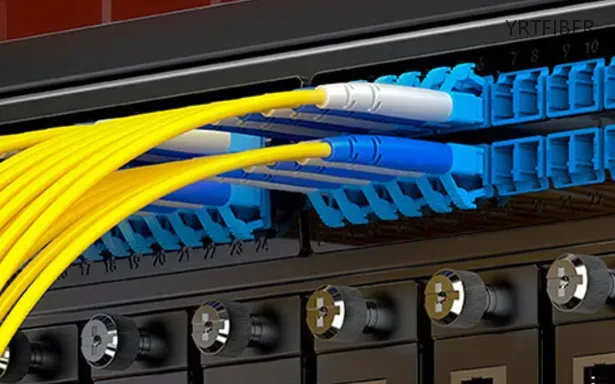
Download YRTFIBER Product Catalog
Factory Real Shot
Frequently Asked Questions & Quick Inquiry
MTP-8 UPC (Female) to 4 x LC UPC Duplex fiber patch cord FAQ
Q1: What is an MPO fiber jumper cable used for?
A1: MPO fiber jumper cables are used for high-speed data transmission in data centers, telecom, and 40G optical modules.
Q2: What connector type does the MPO fiber jumper cable use?
A2: It uses an 8-core female B-polar MPO/MTP connector for high-density connections.
Q3: Is this cable suitable for 40G optical modules?
A3: Yes, this cable is specifically designed for 40G optical module connections.
Q4: Can I choose the fiber type for the MPO jumper cable?
A4: Yes, options include OM3. OM4. and OM5 multimode fibers.
Q5: What jacket materials are available?
A5: We offer PVC, LSZH, and OFNP jackets based on environmental requirements.
Send Your Inquiry
Fill out the form below and we'll get back to you within 24 hours.


