

 Español
 Português
 لالعربية
 Русский
 Bahasa Indonesia
 Français
 Türkçe
 Bahasa Melayu

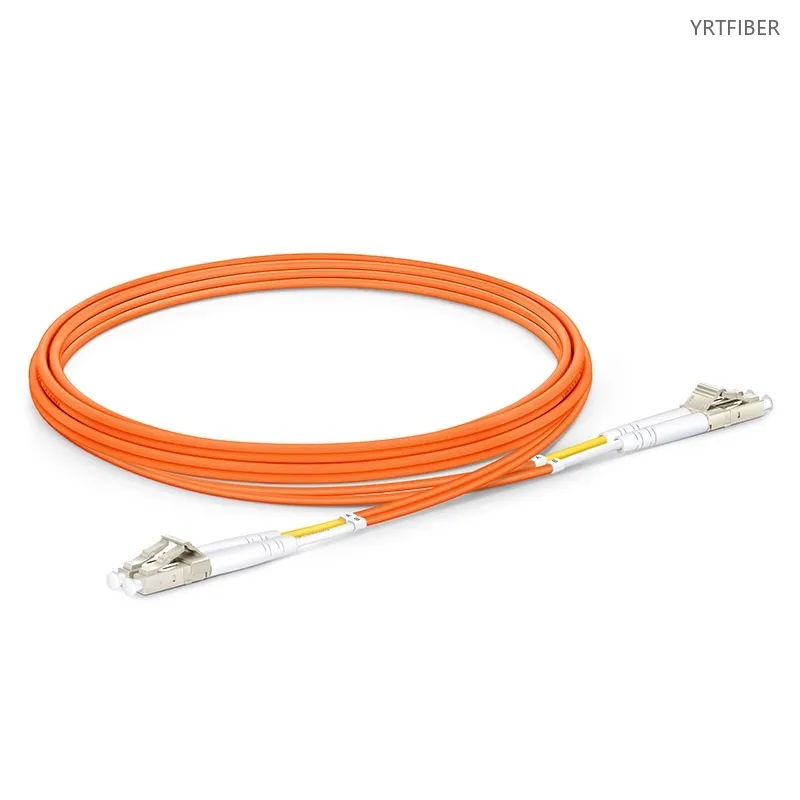
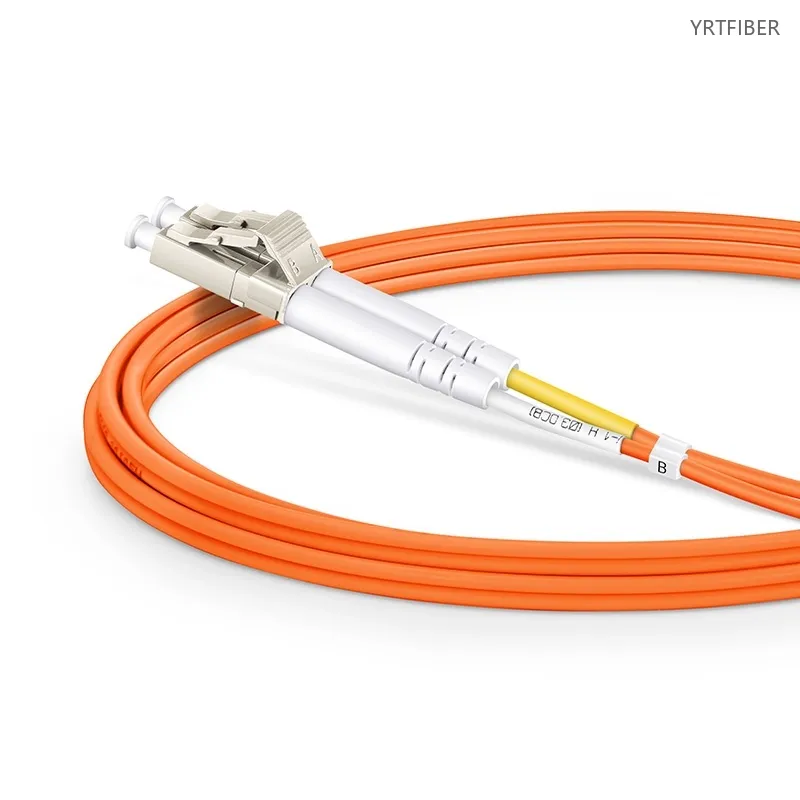
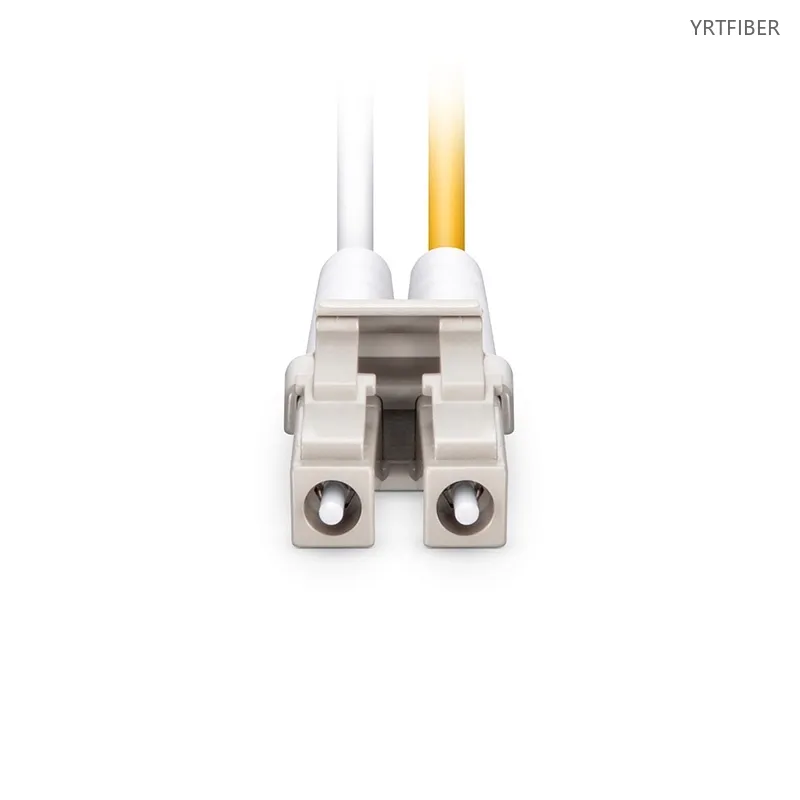
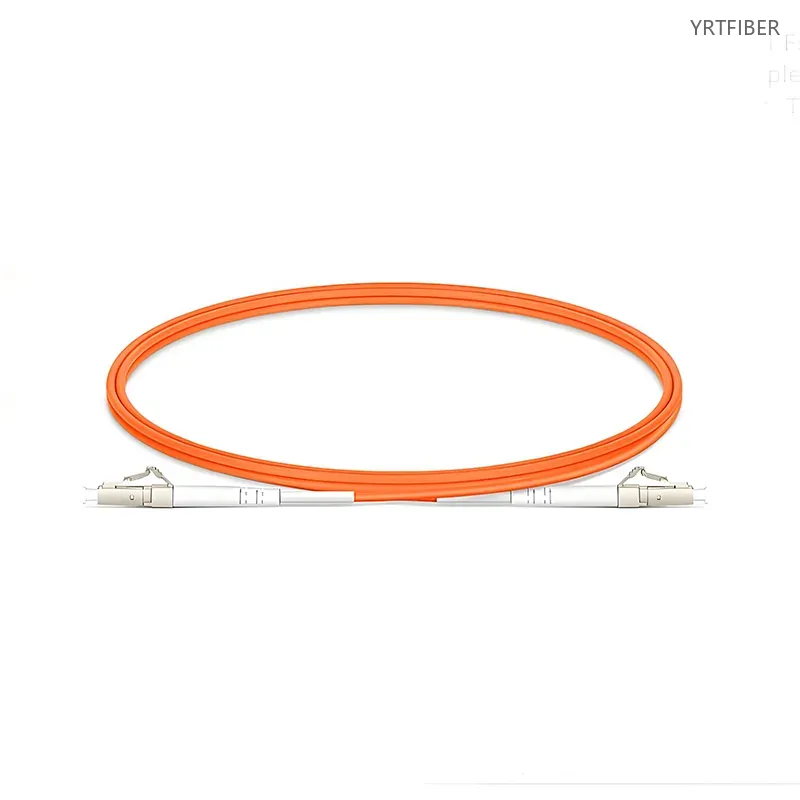
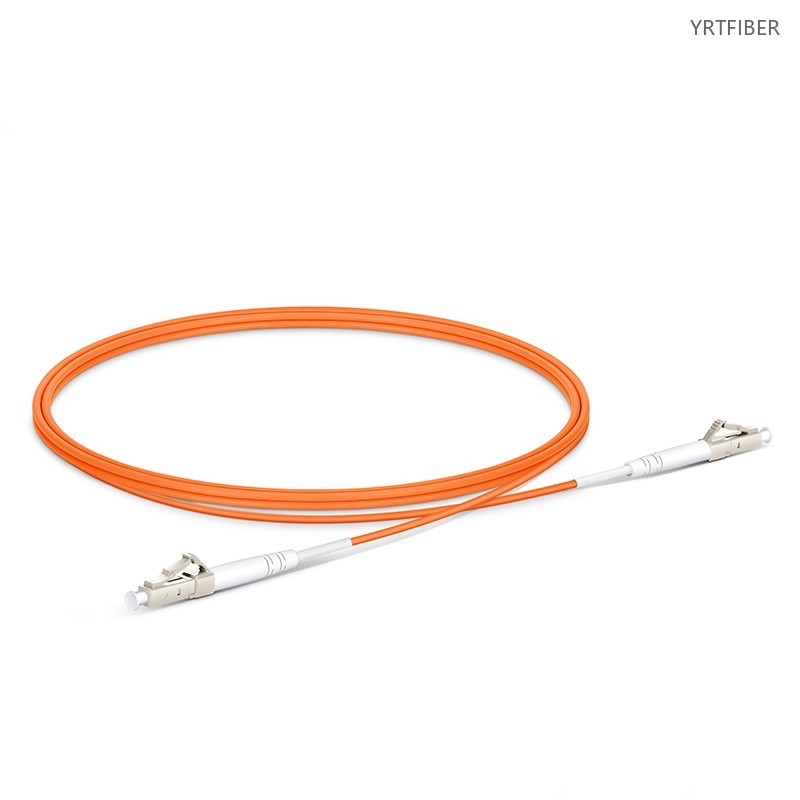
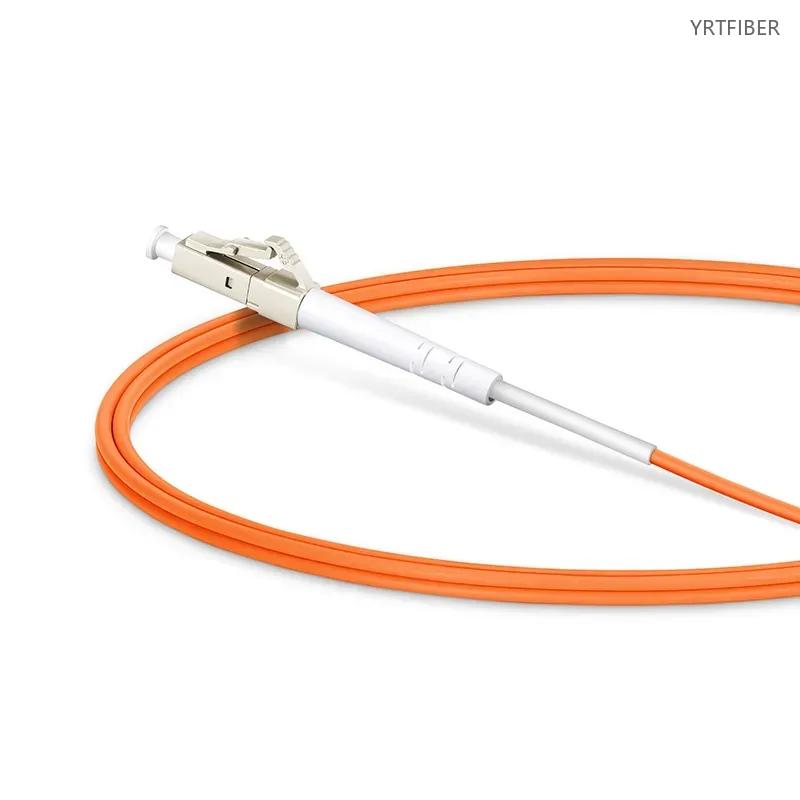
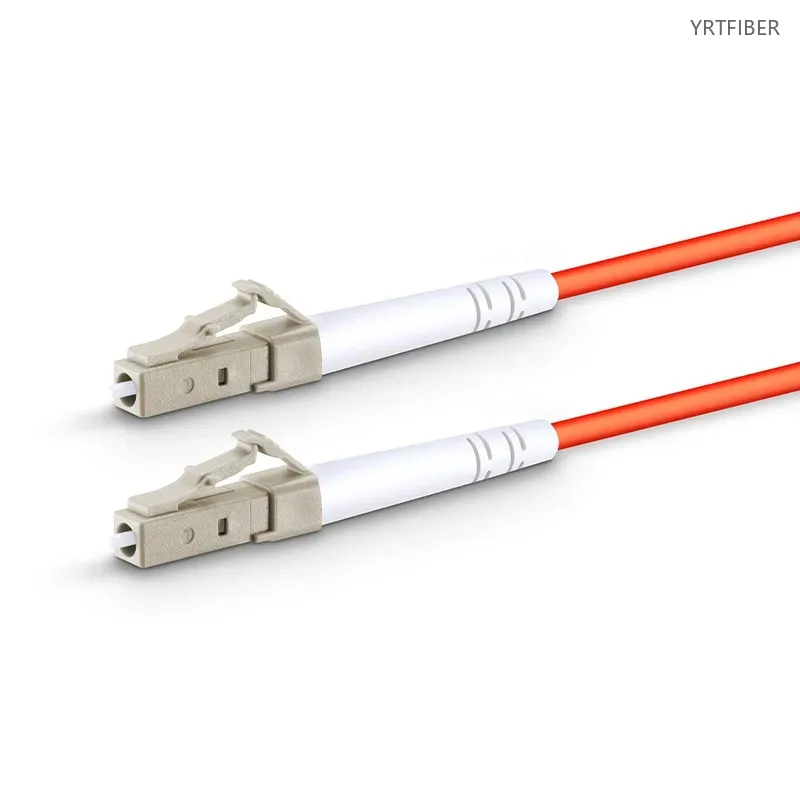
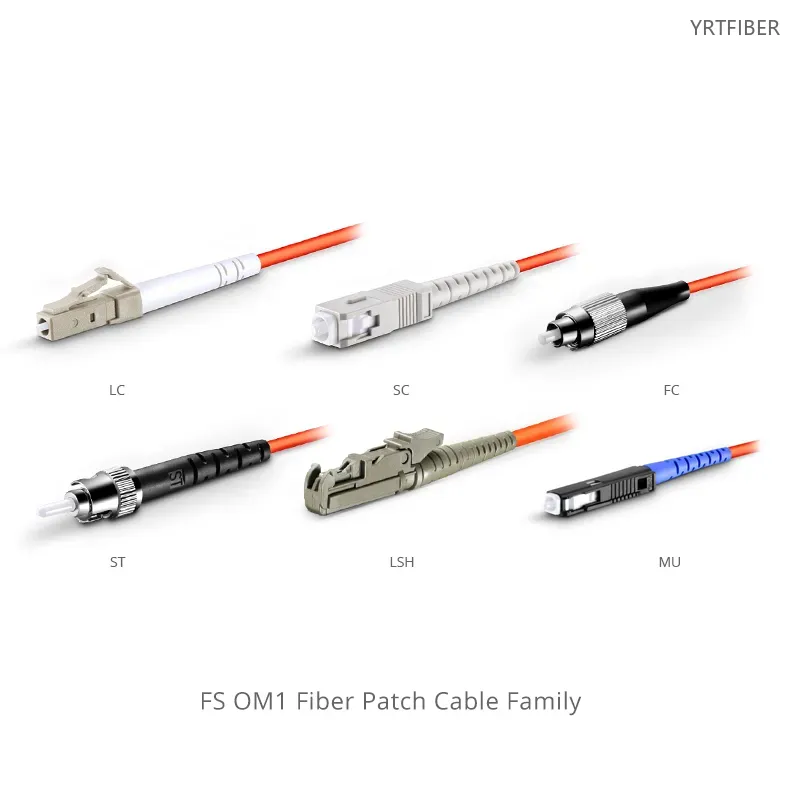
OM1 Simplex/Duplex Multimode Fiber Patch Cord – 62.5/125µm, 1G/10G, LC/SC/FC/ST
OM1 62.5/125μm multimode fiber for reliable data transmission.
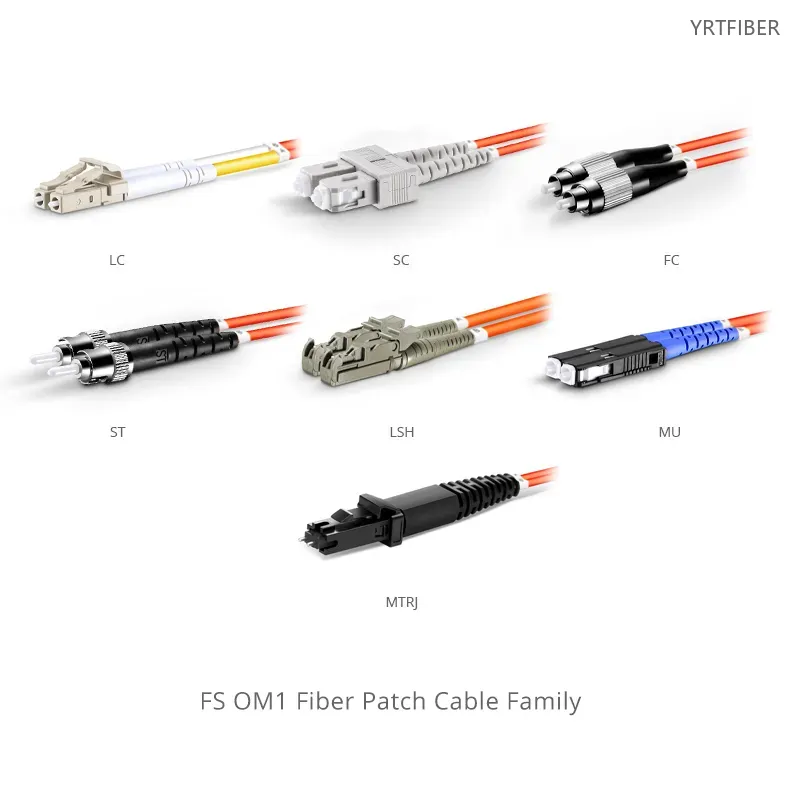
Compatible with LC, SC, FC, and ST connectors (UPC polish).
Available in simplex and duplex configurations for flexible installations.
Low insertion loss and high return loss for improved signal quality.
Jacket options: LSZH, PVC, OFNP for varying environmental needs.
What is an OM1 multimode fiber patch cord
An OM1 multimode fiber patch cord is a multimode fiber optic cable based on the 62.5μm core diameter standard, typically fitted with common connectors such as LC, SC, or ST at both ends. It primarily supports short-range data transmission (usually within 300 meters) and is suitable for legacy network environments-such as 100 Mbps or Gigabit Ethernet, industrial control systems, and medical imaging—as well as for maintaining compatibility with existing OM1 fiber systems. While cost-effective, it offers relatively limited bandwidth and is not recommended for 10 Gbps or higher-speed long-distance transmission.
OM1 Multimode Fiber Patch Cord Specification parameters
- Specification parameters
- OPTICAL CHARACTERISTICS
LC UPC Simplex Patch Cord (OM1)
| Specifications | |||
|---|---|---|---|
| Connector A | LC UPC Simplex | Connector B | LC UPC Simplex |
| Fiber Count | 1 Fiber | Fiber Grade | G.651 |
| Fiber Mode | OM1 62.5/125μm | Wavelength | 850/1300nm |
| RoHS Compliancy Status | Compliant | Cable Type | Tight-Buffered |
| Cable Outside Diameter (OD) | 2.0mm | Flame Rating | Riser (OFNR) |
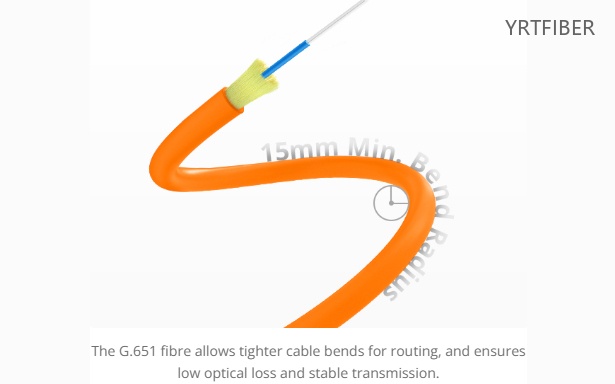
| Min. Bend Radius (Optical Fiber) | 15mm | Min. Bend Radius (Fiber Cable) | 20/10D (Dynamic/Static) |
| Connector Durability | 1000 times | Tensile Strength | 90/150N (Long/Short Term) |
| Insertion Loss | ≤0.3dB | Return Loss | ≥30dB |
| Attenuation at 850nm | 3.5dB/km | Attenuation at 1300nm | 1.5dB/km |
| Operating Temperature | -10 to 70°C (14 to 158°F) | Storage Temperature | -20 to 70°C (-4 to 158°F) |
LC UPC Duplex Patch Cord (OM1)
| Specifications | |||
|---|---|---|---|
| Connector A | LC UPC Duplex | Connector B | SC UPC Duplex |
| Fiber Count | 2 Fibers | Fiber Grade | G.651 |
| Fiber Mode | OM1 62.5/125μm | Wavelength | 850/1300nm |
| Polarity | A (Tx) to B (Rx) | Cable Type | Tight-Buffered |
| Cable Outside Diameter (OD) | 2.0mm | Flame Rating | Riser (OFNR) |
| Min. Bend Radius (Optical Fiber) | 15mm | Min. Bend Radius (Fiber Cable) | 20/10D (Dynamic/Static) |
| Connector Durability | 1000 times | Tensile Strength | 90/150N (Long/Short Term) |
| Insertion Loss | ≤0.3dB | Return Loss | ≥30dB |
| Attenuation at 850nm | 3.5dB/km | Attenuation at 1300nm | 1.5dB/km |
| Operating Temperature | -10 to 70°C (14 to 158°F) | Storage Temperature | -20 to 70°C (-4 to 158°F) |
Product Structure & Composition
The core structure of an OM1 multimode fiber patch cord consists of a silica core with a 62.5 μm diameter (for transmitting optical signals), surrounded by a 125 μm diameter cladding (to confine light propagation within the core), and an outermost coating of acrylate or nylon (to protect the fiber and enhance mechanical strength). Its core/cladding dimensions are larger than those of conventional single-mode fiber, facilitating light source coupling, though modal dispersion is more pronounced.

Benefits of OM1 Multimode Fiber Patch Cord
Stable and Reliable Core Transmission Performance
Utilizes 62.5/125μm multimode fiber supporting 850nm and 1300nm wavelengths, with typical bandwidths of 200/500 MHz·km, meeting requirements for short-range Fast Ethernet and Gigabit transmission. Features low insertion loss and high return loss, with a bend radius as low as 25mm, ensuring excellent signal quality and bend resistance.

Broad Connectivity Compatibility and Flexible Configuration
Compatible with various connectors such as LC, SC, FC, and ST (UPC polish), accommodating both legacy and current optical modules. Available in simplex and duplex configurations to meet flexible installation needs for point-to-point or dual-fiber bidirectional links.
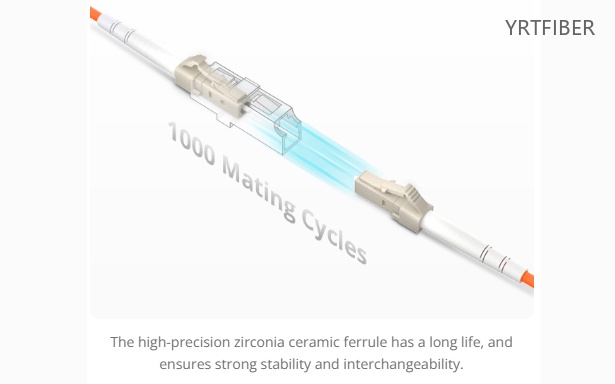
Versatile Environmental Adaptability and Cost-Effectiveness
Outer jacket options include LSZH, PVC, and OFNP to meet diverse fire safety requirements; the operating temperature range of -40°cto +85°c makes it suitable for indoor, outdoor, and industrial environments. Compliant with TIA/EIA-492AAAA standards and fully compatible with legacy OM1 systems, it offers significant cost savings over single-mode or OM3/OM4 fiber, making it an ideal choice for economical short-range cabling.
Engineering Applications OM1 Multimode Fiber Patch Cord
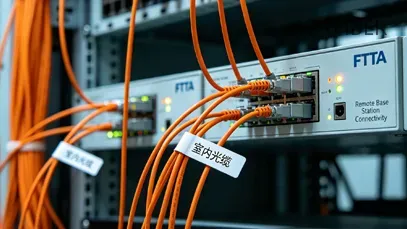
Campus Legacy Building Retrofitting:
Used to replace or repair existing 62.5μm core-diameter links connecting floor distribution closets to legacy switches, enabling localized network upgrades without the need for rewiring.

Industrial Short-Range Interconnect:
Connects devices such as PLCs and variable frequency drives (VFDs) within a 100-meter range; offers vibration resistance and cost-effectiveness, making it suitable for fiber-optic communication inside automation production line cabinets or between adjacent control cabinets.
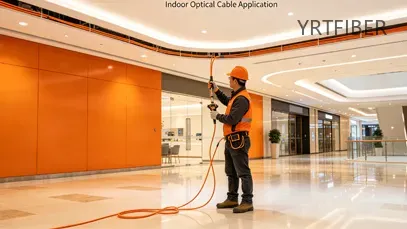
Medical Imaging Transmission:
Connects equipment such as endoscopes and C-arms to control rooms; provides immunity to electromagnetic interference and meets requirements for the real-time transmission of uncompressed video signals over distances of several tens of meters.

Data Center Legacy Equipment Maintenance:
Serves as a spare patch cord for 1G/2G storage networks or Fast Ethernet; used for temporarily connecting test instruments or replacing damaged links, thereby extending the service life of legacy SAN switches.
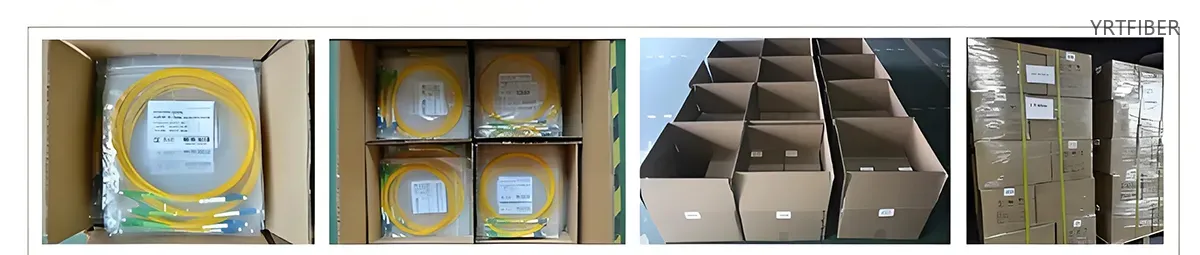
Shipping & Packaging

Product Comparison:
| Feature / Dimension | OM1 Multimode Fiber Patch Cord | OM4 Multimode Fiber Patch Cord |
|---|---|---|
| Core Diameter / Cladding | 62.5 / 125 μm. | 50 / 125 μm – smaller core reduces modal dispersion. |
| Jacket Color | Orange (industry standard, TIA‑598). | Aqua (water‑blue, TIA‑598) – distinct visual identification. |
| Typical Attenuation | ≤3.0 dB/km @ 850 nm; ≤1.0 dB/km @ 1300 nm. | ≤2.4 dB/km @ 850 nm; ≤0.6 dB/km @ 1300 nm – lower loss. |
| 1 Gigabit Ethernet (1000BASE‑SX) | Up to ~300 m (850 nm). | Up to ~1000 m (850 nm) – significantly longer reach. |
| 10 Gigabit Ethernet (10GBASE‑SR) | Up to ~33 m (850 nm) – very distance‑limited. | Up to ~550 m (850 nm) – optimal for modern 10G links. |
| 40/100 Gigabit Ethernet (40GBASE‑SR4 / 100GBASE‑SR10) | Not supported – insufficient bandwidth for parallel optics. | Up to ~150 m (850 nm, MPO/MTP) – standard for data center fabrics. |
| Supported Data Rates | 100 Mbps to 1 Gbps (traditional applications). | 1 Gbps to 100 Gbps (modern high‑speed networks). |
| Engineering Pros | ① Low cost – very economical for low‑speed legacy systems. ② Larger core provides greater alignment tolerance – less critical for field terminations. ③ Excellent connectivity with older equipment (100BASE‑FX, Fast Ethernet, legacy switches). ④ Good bend resistance due to large core diameter. ⑤ Robust standardization – mature, widely understood technology. | ① 10‑20× higher modal bandwidth than OM1 – supports high‑speed parallel optics. ② VCSEL laser optimized – enables 40G/100G with MPO/MTP. ③ Backward compatible with OM3/OM2 in most applications. ④ Optimal for modern data center fabrics up to 150 m @ 40/100G. ⑤ Lower attenuation and longer reach for campus backbones (1 km @ 1G). ⑥ Future‑proofed for next‑gen SWDM and 400G upgrades. |
| Engineering Cons | ① Extremely short 10G reach (33 m) – unsuitable for modern 10G infrastructure. ② Cannot support 40G/100G parallel transmission. ③ Obsolete for greenfield installations – performance ceiling limits network upgrades. ④ Larger core increases modal dispersion – signal degrades rapidly beyond 500 m for 1G. ⑤ Higher attenuation than OM4 – increased link loss. | ① Higher upfront material cost compared to OM1. ② Requires VCSEL laser sources – not compatible with legacy LED‑based equipment (transition may require media converters). ③ Over‑specified for sub‑50 m low‑speed patches. ④ Same Aqua jacket as OM3 – visual identification requires labeling. |
| Cost (Relative) | Lowest – most economical multimode fiber type. | Medium‑high – premium for high bandwidth and laser optimization. |
OM1 Multimode Fiber Patch Cord Selection Guide
OM1 and OM4 serve fundamentally different purposes in network architecture. OM1 is a legacy 62.5 μm core fiber designed for LED‑based systems with relatively low bandwidth (200 MHz·km), while OM4 is a modern 50 μm core fiber optimized for VCSEL laser sources with extremely high bandwidth (4700 MHz·km).
Choose OM1 patch cords only for: Maintaining and extending existing legacy networks that are already deployed with OM1 infrastructure, where replacement is cost‑prohibitive. These installations typically involve 100 Mbps to 1 Gbps links under 300 meters and do not require future upgrades beyond 1G. OM1 is also an economical choice for very short‑reach (≤30 m) monitoring links in industrial or test environments where only Fast Ethernet is required. It should never be selected for new greenfield installations.
Choose OM4 patch cords for: All new data center and enterprise network greenfield deployments requiring 10G, 40G, or 100G capacity. OM4 supports 10G links up to 550 m (vs. OM1's 33 m) and 40/100G parallel‑optic links up to 150 m with MPO/MTP connectors, making it the practical standard for modern data center cabling. OM4 is also recommended for campus backbones where 1G transmission distances up to 1 km are needed, and for future‑proofing when considering upgrades to SWDM or higher‑speed parallel optics.
Upgrade path from OM1: If OM1 infrastructure is currently in place, budget for a phased migration to OM4 or single‑mode fiber when data rates exceed 1Gbps or link distances exceed 33 m at 10G. Short‑term bridging can be achieved using media converters or mode‑conditioning patch cords (for 1G only), but these solutions add loss and complexity. For new builds, OM4 is the baseline recommendation for multimode - OM1 is no longer specified.
| Requirement | Recommended Fiber |
|---|---|
| Legacy system maintenance / 100 Mbps Fast Ethernet | OM1 |
| New building / campus backbone (10/25G) | OM4 |
| Modern data center (40/100G parallel optics) | OM4 |
| Very short monitors (<30 m, 1G) – legacy reuse | OM1 |
| 10G links >33 m | OM4 (or single‑mode OS2) |
| SWDM / 400G‑ready infrastructure | OM5 (if multiple wavelengths required) |
Compatibility note: OM4 is fully backward compatible with OM3 at the connector level, but mixing OM1 with OM4 in the same optical path is not recommended unless using mode‑conditioning patch cords (applicable only for 1G). Different core diameters (62.5 μm vs. 50 μm) cause significant mismatch loss (≥3 dB) when coupled directly.
OM1 Multimode Fiber Patch Cord – Quick Installation Guide
Inspect and Clean – Before connection, inspect both fiber end faces using a fiber microscope. Clean with a one-click cleaner or lint-free wipes with 99% isopropyl alcohol if any contamination is found.
Route Properly – Keep the bend radius greater than 25mm (approximately 1 inch). Avoid tight bends, kinks, or crushing the cable.
Connect Securely – Align connectors (LC, SC, FC, or ST) with the adapter port and push until a click is heard (for LC) or tighten the coupling nut (for FC/ST). Do not over-torque.
Manage Cable Slack – Use a horizontal or vertical cable manager to secure the patch cord. Maintain slight slack to relieve tension on connectors.
Verify Performance – After installation, use a visual fault locator (VFL) or power meter to confirm continuity and low loss.
Download YRTFIBER Product Catalog
Factory Real Shot
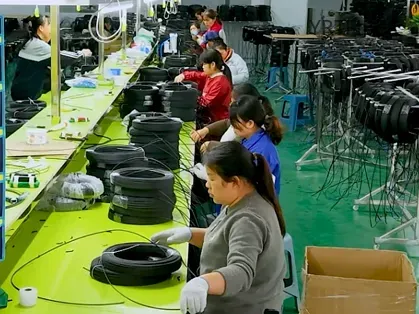
State-of-the-Art Manufacturing Facilities
Our 60.000 m²; dust-free workshop is equipped with over 21 automated production lines for both single-core and MPO patch cords. Key machinery includes high-precision fiber cutters (tolerance: ±0.08 mm), FLC automatic termination machines, and UV curing systems. This setup enables a daily output of thousands of connectors while maintaining consistent quality.
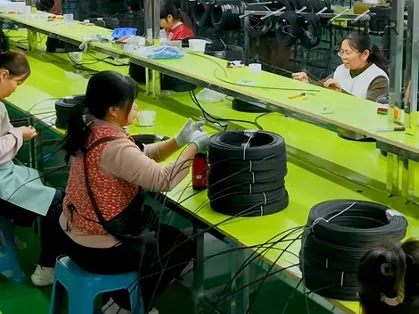
Precision Core Manufacturing Process
The process begins with micro-tolerance cutting (end-face angle tolerance: ±0.5°) and six-axis fusion splicing (core deviation ≤1 μm). After multilayer jacketing with LSZH, PVC, or OFNP materials, connectors undergo automated polishing for PC, UPC, or APC finishes. The line achieves up to 7.000 connectors per 11-hour shift.
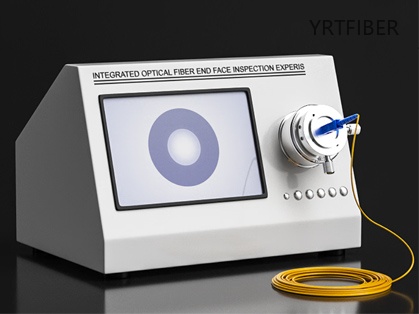
Rigorous Quality Assurance & Testing
Every patch cord is subject to 100% inspection, including interferometric end-face analysis (400x magnification), automated contamination detection, and insertion/return loss testing via OTDR. Additionally, environmental samples must pass temperature, humidity, and pull-force tests in compliance with IEC/TIA standards.
Frequently Asked Questions & Quick Inquiry
OM1 Multimode Fiber Patch Cord FAQ
Q1: What is OM1 fiber used for?
A1: OM1 fiber is commonly used for 1G Ethernet and other short-range network applications.
Q2: What connector types are available for OM1 patch cords?
A2: OM1 patch cords come with LC, SC, FC, and ST connectors in UPC polish.
Q3: Are OM1 patch cords available in simplex and duplex versions?
A3: Yes, OM1 patch cords are available in both simplex and duplex configurations.
Q4: What is the maximum transmission distance for OM1 at 1G?
A4: OM1 supports up to 275 meters for 1Gbps transmission over multimode fiber.
Q5: Can I customize the length and jacket material of OM1 patch cords?
A5: Yes, custom lengths and jacket types (PVC, LSZH, OFNP) are available upon request.
Send Your Inquiry
Fill out the form below and we'll get back to you within 24 hours.


