

 Español
 Português
 لالعربية
 Русский
 Bahasa Indonesia
 Français
 Türkçe
 Bahasa Melayu

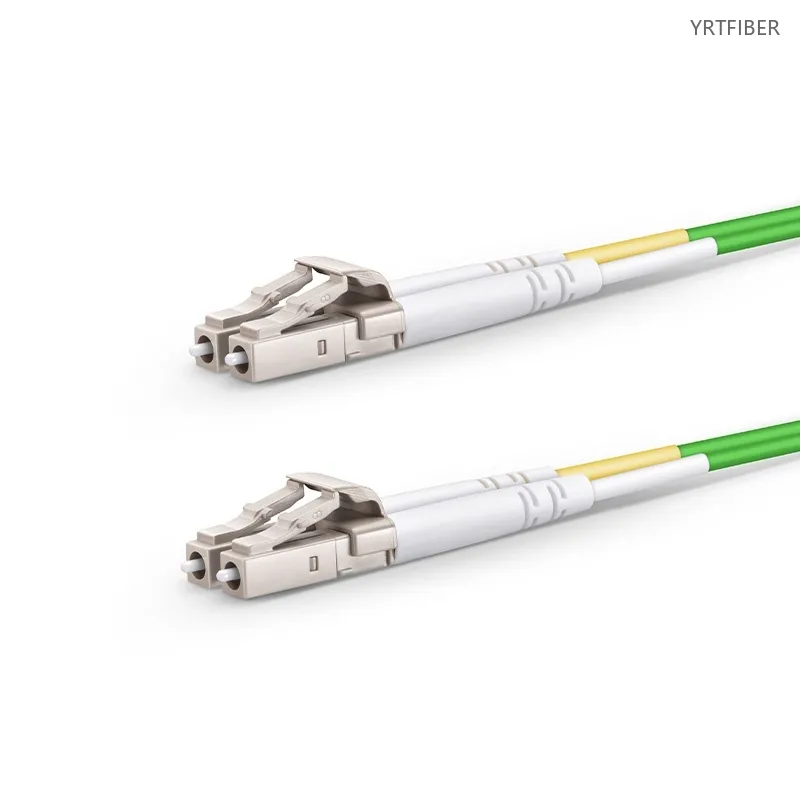
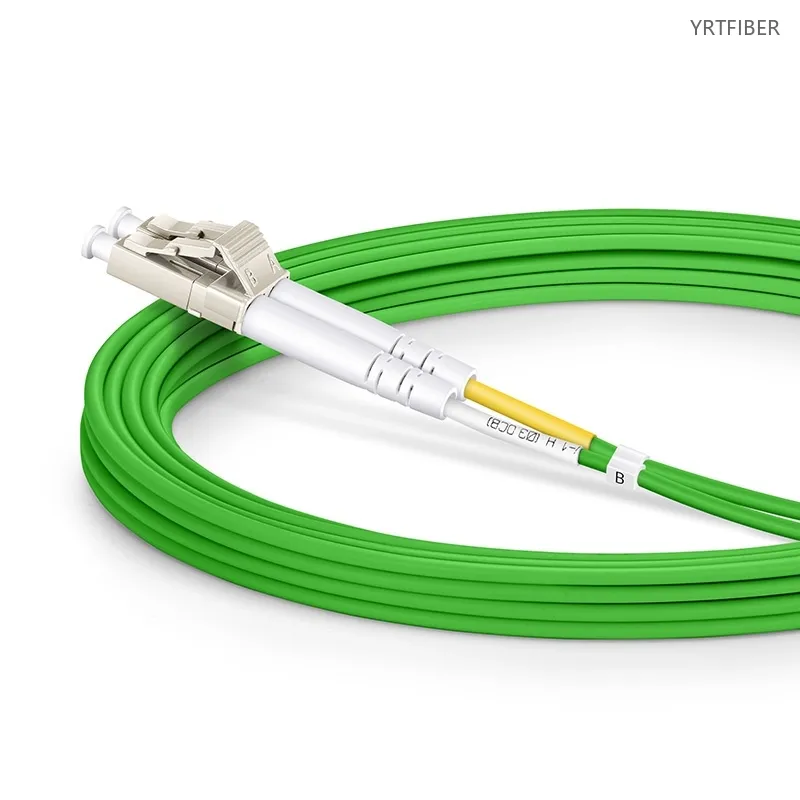
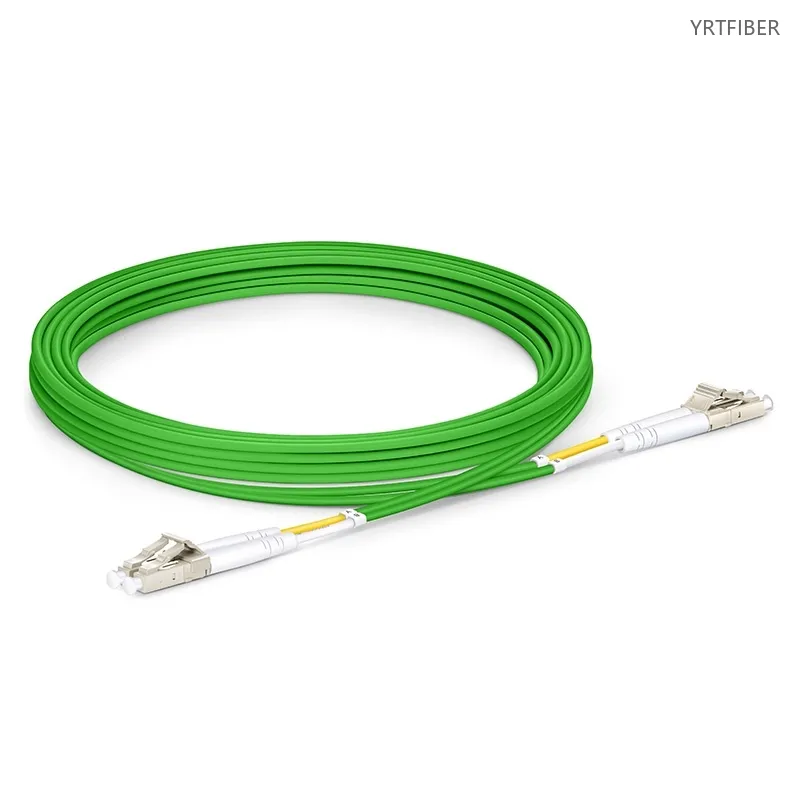
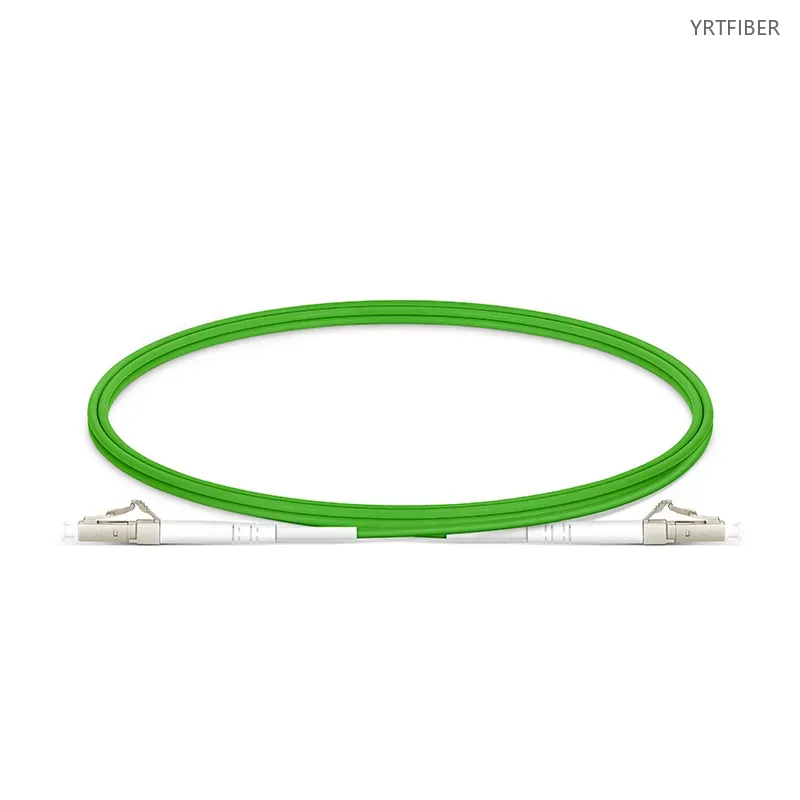
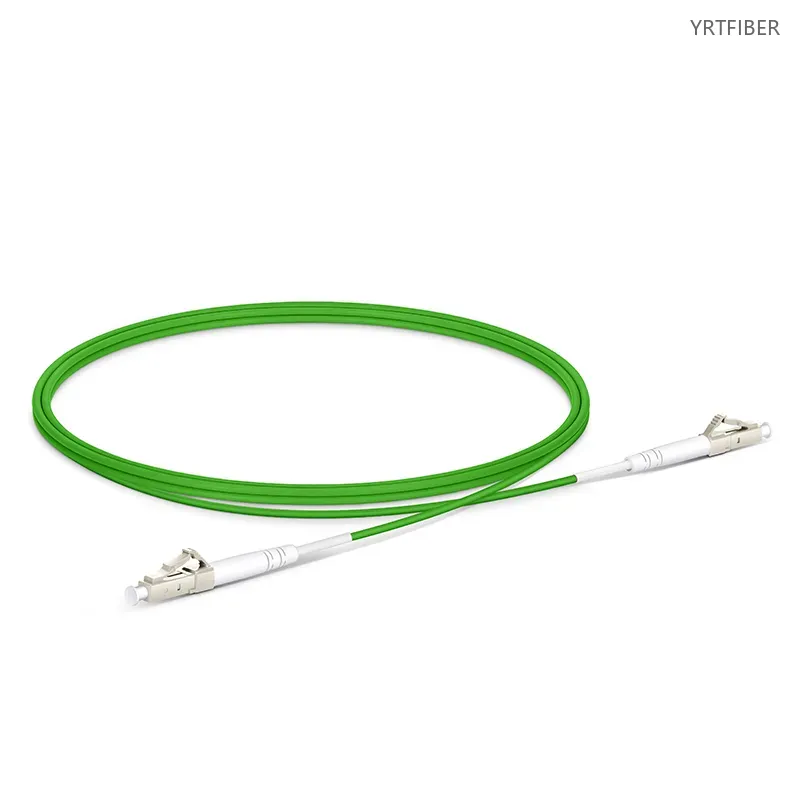
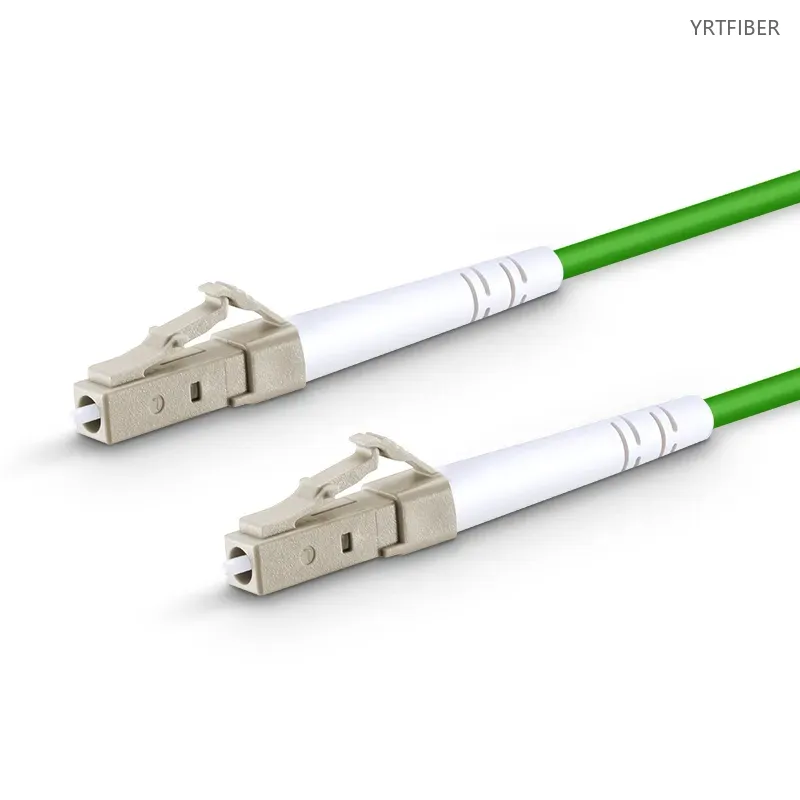
OM5 Multimode Fiber Patch Cord LC/SC/FC/ST/MPO/MTP Simplex Duplex
Engineered for ultra - high - speed optical transmission in next - generation data centers.
Features enhanced bandwidth and extended reach, enabling support for 40G/100G/400G applications over short distances.
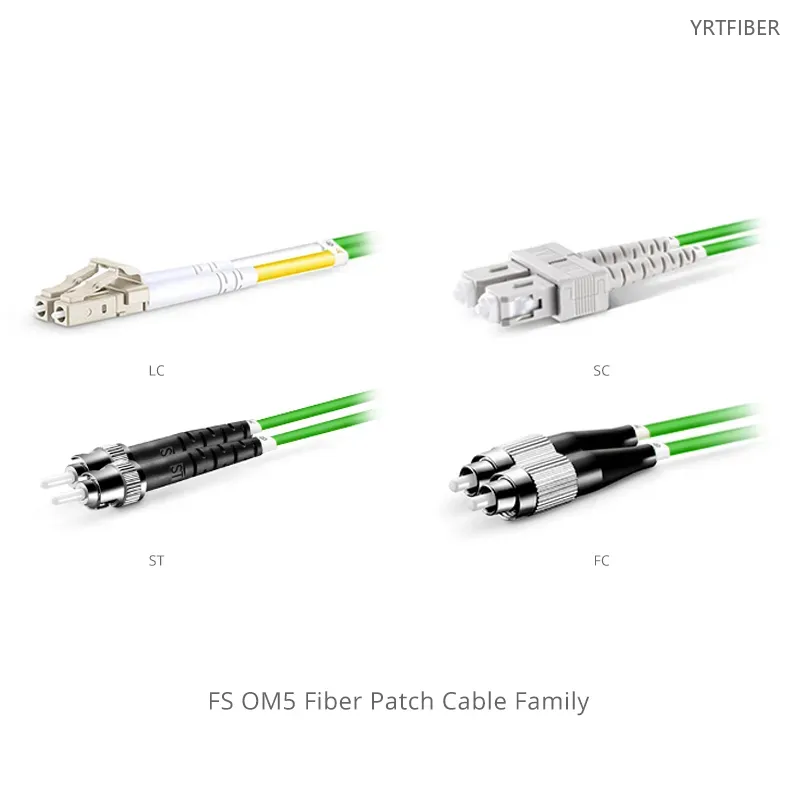
Comes in both simplex and duplex configurations, with LC, SC, FC, or ST connectors available.
Complies with TIA - 492AAAE standard, featuring OM5 50/125μm fiber core.
Supports short wavelength division multiplexing (SWDM) for 40G/100G/400G applications.
Offers various connector combinations such as LC/LC, SC/SC, FC/FC, ST/ST or MPO,MTP connectors.
Exhibits low insertion loss, high return loss, and is fully factory - tested.
Provides jacket options of OFNP to meet different installation requirements.
What is an OM5 Multimode Fiber Patch Cord?
An OM5 multimode fiber patch cord is a high - performance cable designed for ultra - high - speed optical transmission in next - generation data centers, compliant with TIA - 492AAAE standard, supporting 40G/100G/400G via SWDM, available in simplex/duplex with multiple connector options and different jacket materials.
OM5 Multimode Fiber Patch Cord Specification parameters
- Specification parameters
- OPTICAL CHARACTERISTICS
LC UPC Simplex Patch Cord (OM5)
| Connector A | LC UPC Simplex | Connector B | LC UPC Simplex |
| Fiber Count | 1 Fiber | Fiber Grade | Bend Insensitive |
| Fiber Mode | OM5 50/125μm | Wavelength | 850/1300nm |
| RoHS Compliancy Status | Compliant | Cable Type | Tight-Buffered |
| Cable Outside Diameter (OD) | 2.0mm | Flame Rating | Riser (OFNR) |
| Min. Bend Radius (Optical Fiber) | 10mm | Min. Bend Radius (Fiber Cable) | 20/10D (Dynamic/Static) |
| Connector Durability | 1000 times | Tensile Strength | 60/100N (Long/Short Term) |
| Insertion Loss | ≤0.3dB | Return Loss | ≥30dB |
| Attenuation at 850nm | 3.5dB/km | Attenuation at 1300nm | 1.5dB/km |
| Operating Temperature | -10 to 70°C (14 to 158°F) | Storage Temperature | -20 to 70°C (-4 to 158°F) |
LC UPC Duplex Patch Cord (OM5)
| Connector A | LC UPC Duplex | Connector B | LC UPC Duplex |
| Fiber Count | 2 Fibers | Fiber Grade | Bend Insensitive |
| Fiber Mode | OM5 50/125μm | Wavelength | 850/1300nm |
| Polarity | A (Tx) to B (Rx) | Cable Type | Tight-Buffered |
| Cable Outside Diameter (OD) | 2.0mm | Flame Rating | Riser (OFNR) |
| Min. Bend Radius (Optical Fiber) | 7.5mm | Min. Bend Radius (Fiber Cable) | 20/10D (Dynamic/Static) |
| Connector Durability | 1000 times | Tensile Strength | 90/150N (Long/Short Term) |
| Insertion Loss | ≤0.3dB | Return Loss | ≥30dB |
| Attenuation at 850nm | 3.5dB/km | Attenuation at 1300nm | 1.5dB/km |
| Operating Temperature | -10 to 70°C (14 to 158°F) | Storage Temperature | -20 to 70°C (-4 to 158°F) |
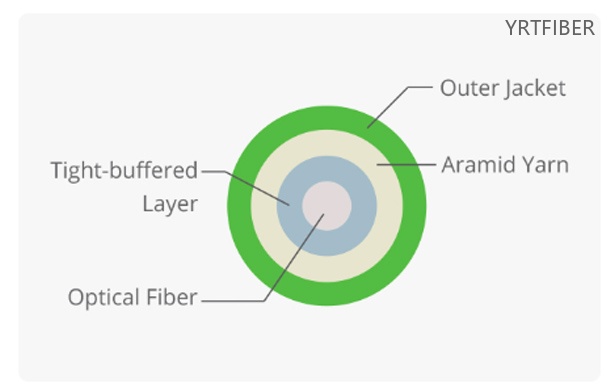
Product Structure & Composition
Fiber Core & Cladding: OM5 fiber uses a 50/125μm core-cladding structure per TIA-492AAAE. The 50μm core supports SWDM (Short Wavelength Division Multiplexing) for 40G/100G/400G short-reach transmission. The 125μm cladding confines optical signals.

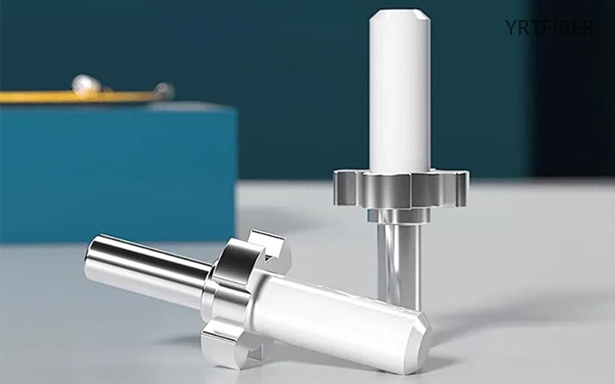
Connectors: Available in LC, SC, FC, ST,MPO,MTP and hybrid types (e.g., LC/LC, SC/SC). All are factory-tested for low insertion loss and high return loss. LC is ideal for high-density data centers; FC offers screw-type locking for secure connections.
Outer Jacket: OFNP (plenum-rated, strict fire code compliance).
Benefits of OM5 Multimode Fiber Patch Cord
Ultra - High - Speed Transmission Capability
OM5 multimode fiber patch cords are specifically designed to support 40G/100G/400G applications, making them ideal for next - generation data centers where data transfer rates are constantly increasing. Their ability to handle such high speeds over short distances is a significant advantage, ensuring seamless operation of data - intensive applications.
SWDM Support
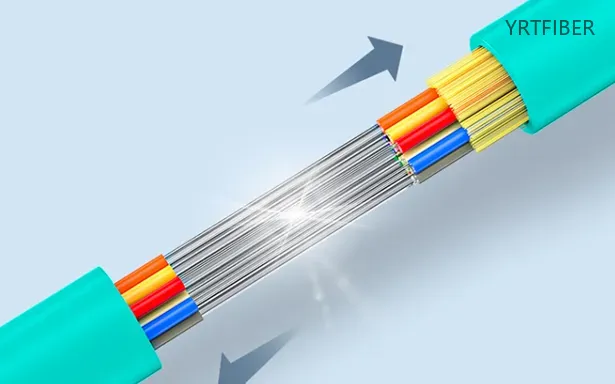
The support for short wavelength division multiplexing (SWDM) allows OM5 to transmit multiple data streams simultaneously over a single fiber by using different wavelengths. This feature not only increases the overall data capacity but also optimizes the use of fiber resources, making it a cost - effective solution for high - speed data transmission requirements.

Excellent Optical Performance
Featuring low insertion loss and high return loss, OM5 patch cords ensure reliable optical signal transmission. The factory - tested nature of these cords guarantees consistent performance, minimizing signal degradation and ensuring accurate data transfer.
Flexible Jacket Options
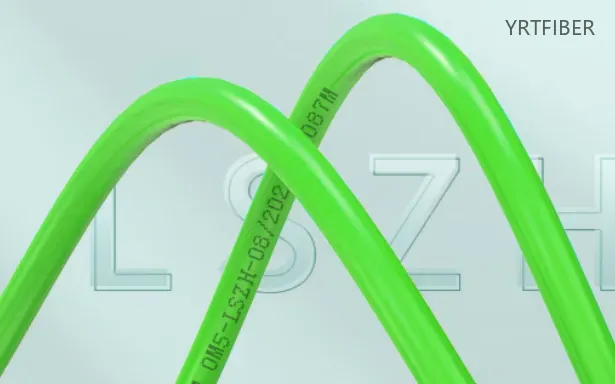
The availability of OFNP jacket options makes OM5 suitable for different installation environments. This flexibility ensures that the cable can be used in various settings while meeting safety and environmental requirements.
Engineering Applications OM5 Multimode Fiber Patch Cord

Next - Generation Data Centers
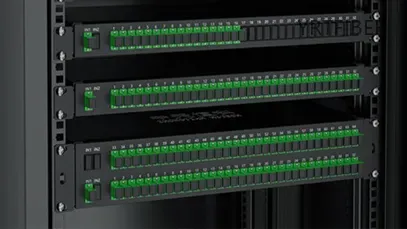
In next - generation data centers, OM5 multimode fiber patch cords are used to connect servers, switches, and storage devices. Their ability to support ultra - high - speed data transfer at 40G/100G/400G ensures that data - intensive applications such as big data analytics, cloud computing, and high - performance computing can operate smoothly.
High - Performance Computing (HPC) Environments
In HPC environments, where rapid data transfer between computing nodes is essential, OM5 patch cords play a crucial role. Their high - speed capabilities and support for SWDM enable efficient communication between multiple processors, accelerators, and storage systems, enhancing the overall performance of the HPC system.
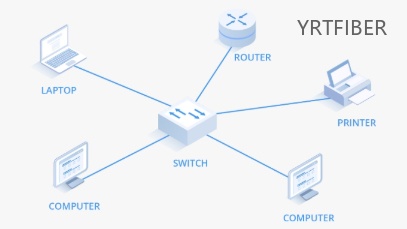
Enterprise Networks with High - Bandwidth Requirements
Enterprise networks that require high - bandwidth for applications like video - conferencing, virtualization, and large - scale data sharing can benefit from OM5 multimode fiber patch cords. The ability to support high - speed data transmission over short distances within the enterprise infrastructure ensures a seamless user experience.
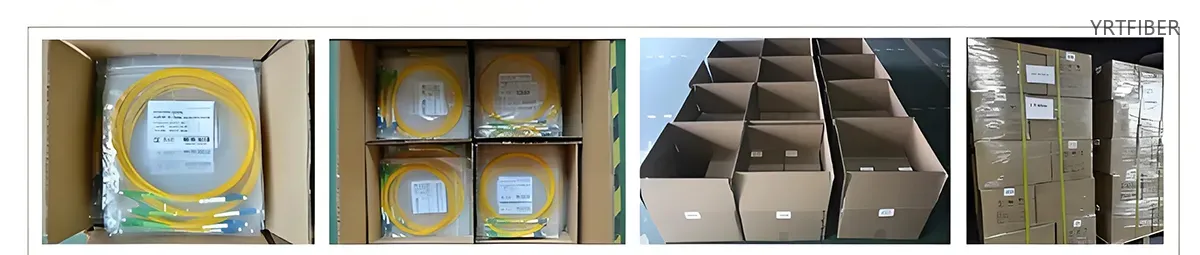
Shipping & Packaging

Product Comparison:
OM5 vs OM4
| Feature / Dimension | OM5 Multimode Fiber Patch Cord | OM4 Multimode Fiber Patch Cord |
|---|---|---|
| Fiber Core and Cladding | 50/125μm, compliant with TIA - 492AAAE, optimized for SWDM | 50/125μm, optimized for 850nm VCSEL |
| Supported Speeds and Distances | Supports 40G/100G/400G over short distances. Enhanced reach compared to OM4 for high - speed applications | Supports 10G/25G/40G/100G. Up to ~550 m at 10 GbE and up to ~150 m at 40/100 GbE (with MPO/MTP systems) |
| Optical Performance | High performance with low insertion loss and high return loss, optimized for SWDM - based high - speed transmission | Good performance with low insertion loss and high return loss, optimized for 850nm VCSEL - based high - speed transmission |
| Connector and Jacket Options | Multiple connector types (LC, SC, FC, ST) with various combinations. Jacket options: OFNP | Multiple connector types (LC, SC, FC, ST, MPO/MTP). Jacket options: OFNP |
| Cost (Relative) | Generally higher due to enhanced performance for ultra - high - speed applications | Lower than OM5 for standard high - speed applications |
| Typical Applications | Next - generation data centers, high - performance computing with 40G/100G/400G requirements | Data centers, SANs, and enterprise networks with 10G - 100G requirements |
OM5 Multimode Fiber Patch Cord Selection Guide
When choosing between an OM5 and OM4 multimode fiber patch cord, several factors need to be considered. If your application involves next - generation data centers, high - performance computing, or other scenarios that require 40G/100G/400G ultra - high - speed data transmission over short distances, OM5 is the better choice. Its support for SWDM and enhanced bandwidth make it suitable for these demanding applications.
However, if your network requirements are mainly within the 10G - 100G range, and cost - effectiveness is a significant factor, OM4 can be a more suitable option. It still provides reliable performance for many data center, SAN, and enterprise network applications at a relatively lower cost.
Parameter - Best Fit
| Parameter | Best Fit |
|---|---|
| 40G/100G/400G applications in next - generation data centers | OM5 |
| 10G - 100G applications with cost - effectiveness as a priority | OM4 |
| High - performance computing with ultra - high - speed requirements | OM5 |
| Data centers and enterprise networks with standard high - speed requirements | OM4 |
Mixed deployment guidance:
In a network with a mix of ultra - high - speed and standard high - speed requirements, OM5 can be used for high - bandwidth sections (such as server - to - switch connections for 40G/100G/400G applications), while OM4 can be used for less demanding connections (like general - purpose user device connections at 10G - 25G). This approach allows for cost - effective deployment while still meeting the performance needs of different parts of the network.
Installation Instructions
Pre-installation check: Check if the jumper's outer jacket is damaged and whether the connector locking mechanism is working properly.
Clean the connector: Use a lint-free swab moistened with isopropyl alcohol to wipe the end face of the ferrule, then dry it with a dry swab.
Connection: Align and insert the connector (you'll hear a 'click' with push-pull type, or slowly tighten for threaded type).
Cable management: Keep the bend radius at least 10 times the cable diameter, secure with zip ties or cable trays to prevent pulling.
Post-installation testing: Measure insertion loss with a power meter. If it’s noticeably high, recheck the connection, clean, or check for hidden damage.
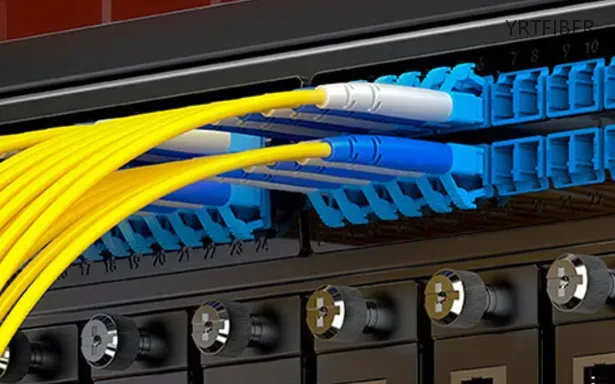
Download YRTFIBER Product Catalog
Factory Real Shot
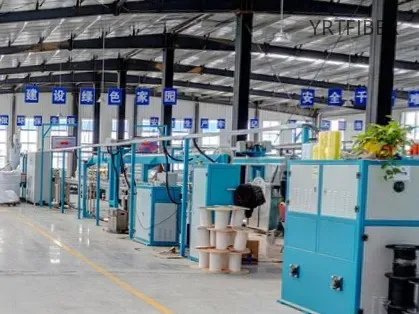
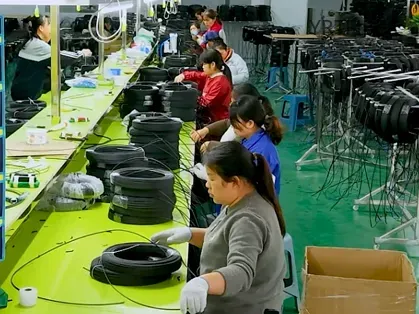
1. Class 10.000 Clean Workshop + Fully Automated Lines for Unmatched Consistency
We operate a 60000 m² temperature- and humidity-controlled clean workshop, with core areas meeting ISO Class 7 (Class 10.000) standards. The facility houses 12 fully automated patch cord assembly lines, where processes such as precise cutting, stripping, cleaning, and connector assembly are robotically coordinated to minimize human error. For OM3 multimode fiber, we have specially optimized stripping and coating handling parameters to preserve high bandwidth performance at 850 nm.
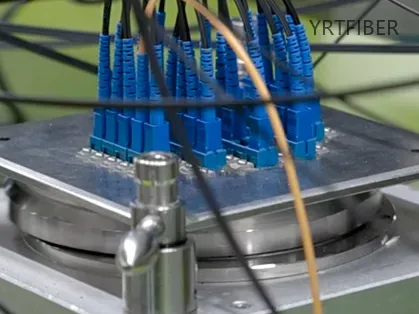
Micron‑Level Splicing & Ferrule Control
Our production line uses six‑core alignment fusion splicers with core offset ≤0.5 µm and end‑face angle tolerance ≤0.3°. Proprietary pneumatic crimping guarantees ferrule‑to‑fiber coaxiality <1 µm. Every connector is 3D‑interferometer‑inspected for radius, fiber height, and apex offset. As a result, our patch cords achieve insertion loss ≤0.2 dB and return loss ≥35 dB for high‑speed multimode transmissions.
Flexible Manufacturing & Rapid Response
We support custom lengths (0.3–100 m) with ±3 mm tolerance, multiple polarity schemes, jacket materials (OFNP), and various connector types. Our MES system tracks every step in real time, enabling sample delivery within 48 hours and bulk order lead times of just 5–7 days.
Frequently Asked Questions & Quick Inquiry
OM5 Multimode Fiber Patch Cord FAQ
Q1: What's the advantage of OM5 over OM4 patch cords?
A1: OM5 supports SWDM and extends distance for 100G/400G applications compared to OM4.
Q2: What connectors are available for OM5 patch cords?
A2: LC, SC, FC, ST ,MPO,MTP connectors in UPC polish are available.
Q3: Are both simplex and duplex types supported?
A3: Yes, OM5 patch cords are available in both simplex and duplex versions.
Q4: What jacket materials are offered?
A4: OFNP jackets are available for various environments.
Q5: Is OM5 backward compatible with OM3 and OM4?
A5: OM5 connectors are physically compatible with OM3/OM4 (interchangeable), but their transmission performance is different. OM5 is optimized for SWDM and performs best on devices that support SWDM; in traditional 850nm VCSEL systems, its performance is similar to or slightly better than OM4.
What is the main difference between OM5 and OM4 in terms of performance?
The main difference lies in the supported speeds and the underlying technology. OM5 is optimized for SWDM and can support 40G/100G/400G applications, while OM4 is optimized for 850nm VCSEL and has different speed - distance capabilities. OM5 generally has enhanced bandwidth and reach for ultra - high - speed applications compared to OM4.
Can OM5 be used in a 10G Ethernet network?
Yes, OM5 can be used in a 10G Ethernet network. However, for 10G applications, OM4 may be a more cost - effective option as OM5 is specifically designed for higher - speed 40G/100G/400G applications.
Why is OM5 more expensive than OM4?
OM5 is more expensive because it is engineered for ultra - high - speed applications. The manufacturing process for OM5 is more complex to meet the enhanced bandwidth and SWDM requirements, which contributes to its higher cost.
Send Your Inquiry
Fill out the form below and we'll get back to you within 24 hours.


