

 Español
 Português
 لالعربية
 Русский
 Bahasa Indonesia
 Français
 Türkçe
 Bahasa Melayu

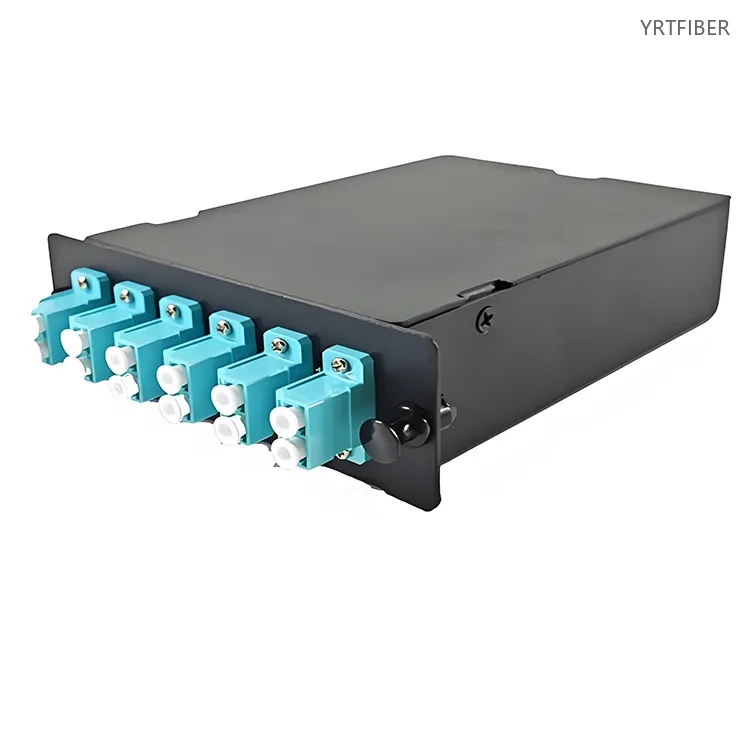
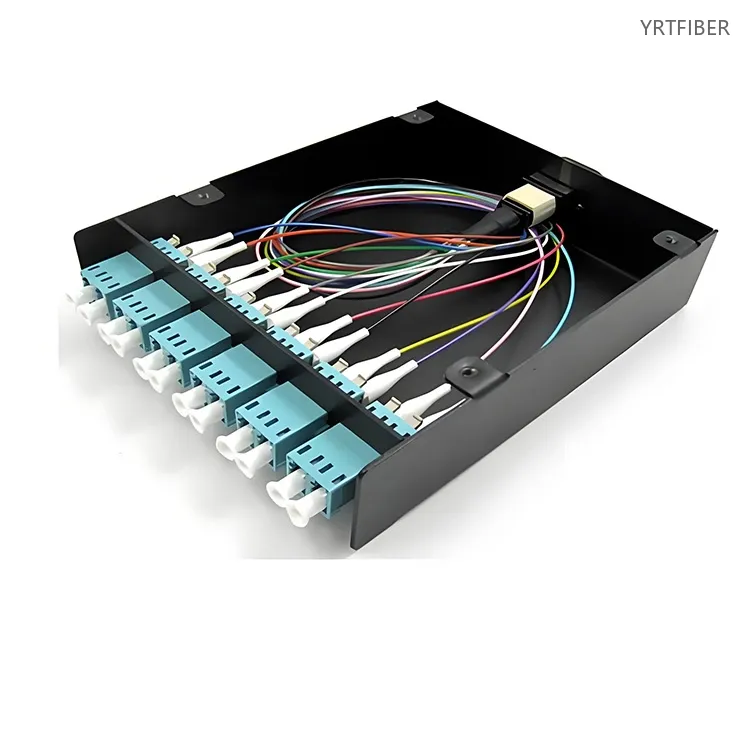
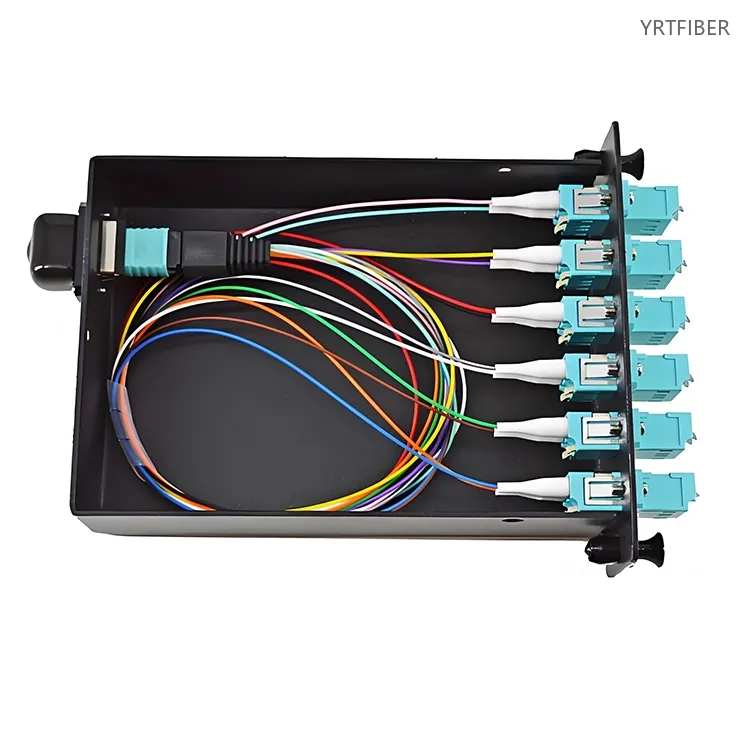
Sliding Rail ODF Distribution Frame – Pull-Out Sliding Tray Fiber Optic Distribution Frame for Rack Mount
Sliding‑rail ODF with pull‑out tray for easy access.
Supports splicing, termination, patching, distribution.
Compatible with SC/LC/FC/ST; for single‑mode & multimode.
Splice tray protects splices, maintains bend radius.
Clear routing and labeling for quick identification.
Front‑access, rack‑ or cabinet‑mountable.
Ideal for telecom rooms, FTTH/FTTx, data centers, enterprise.
What is a Sliding Rail ODF Distribution Frame?
A Sliding Rail ODF Distribution Frame is an optical distribution frame with a pull-out sliding tray design. It is used for fiber optic cable splicing, termination, patching and distribution, while allowing technicians to access the internal fiber management area more easily during installation and maintenance.
Sliding Rail ODF Distribution Frame Specification parameters
- Specification parameters
- OPTICAL CHARACTERISTICS
| Parameter | 12MS-6 | 12MS-12 | 12ML-6 | 24ML-6 |
|---|---|---|---|---|
| Fiber Type | SM, MM, OM3, OM4 | SM, MM, OM3, OM4 | SM, MM, OM3, OM4 | SM, MM, OM3, OM4 |
| Fiber Count | 12 | 12 | 12 | 24 |
| Number of Adapters per Panel | 6 | 12 | 6 | 6 |
| Adapter Type Front | SC Duplex | SC Simplex | LC Duplex | LC Quad |
| Adapter Color Front | Blue, Beige, Aqua, Purple | Blue, Beige, Aqua, Purple | Blue, Beige, Aqua, Purple | Blue, Beige, Aqua, Purple |
| Adapter Type Back | MPO/MTP | MPO/MTP | MPO/MTP | MPO/MTP |
| Adapter Color Back | Black | Black | Black | Black |
Product Structure & Composition
Sliding Rail Tray:
Pull-out design for easy splicing, connection, and maintenance.
Adapter Panel:
Configurable with SC/LC/FC/ST adapters to meet diverse fiber optic network needs.
Sponge Plate:
Protects splice points, prevents bending loss, and keeps fibers neat.
Cable Routing Area:
Guides fiber optic cables, pigtails, and patch cords, reducing crossovers and improving maintenance efficiency.
Labeling Area:
Clearly identifies ports for easy testing, troubleshooting, and expansion.
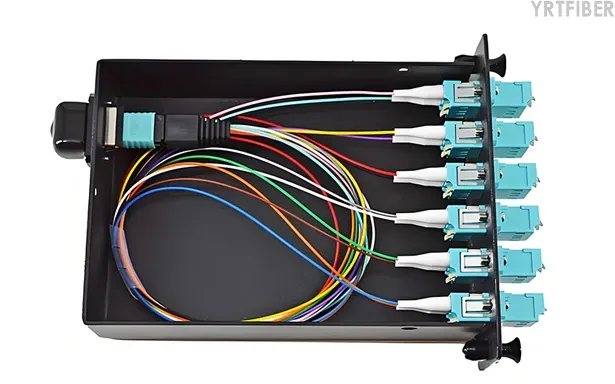
Benefits of Sliding Rail ODF Distribution Frame
Pull-Out Sliding Rail Design
The sliding rail tray can be pulled out for easier access to adapters, splice trays and internal fiber routing. This design is especially useful when the ODF is installed in a rack or cabinet with limited working space.
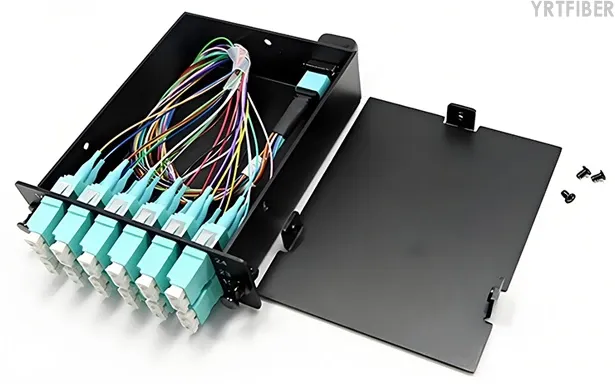
Convenient Maintenance and Operation
Compared with a fixed ODF frame, the sliding rail design makes inspection, splicing, patch cord connection and fiber adjustment more convenient. It helps reduce maintenance difficulty and improves operation efficiency.
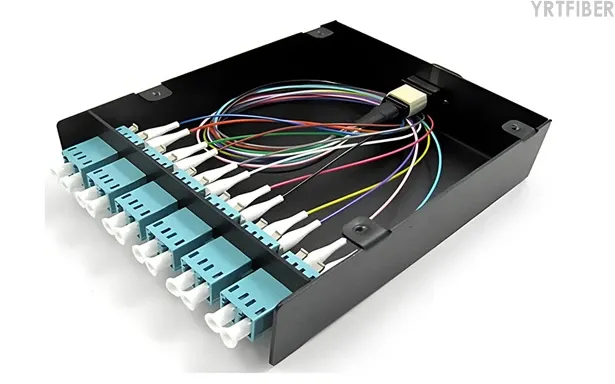
Organized Fiber Splicing and Patching
The frame integrates adapter panels, splice trays and cable routing areas in one unit. This helps keep fiber links clean, protected and easy to trace during network operation.
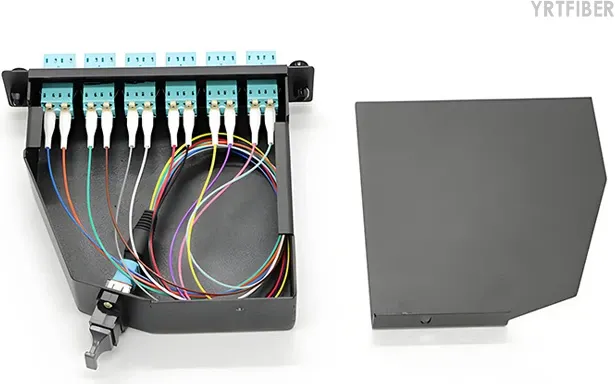
Flexible Adapter Compatibility
The ODF can be configured with SC, LC, FC, ST or other adapter types according to the project design. It supports different fiber connector standards for telecom, data center and enterprise network applications.
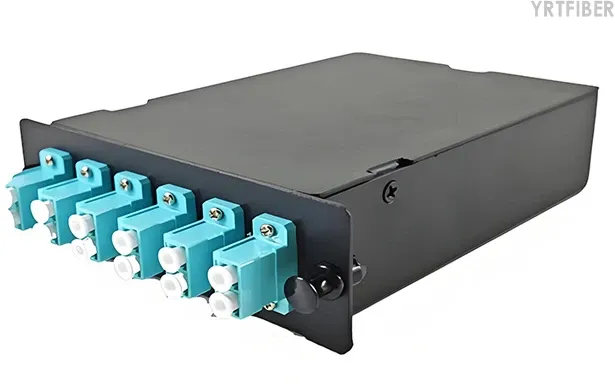
Engineering Applications Sliding Rail ODF Distribution Frame
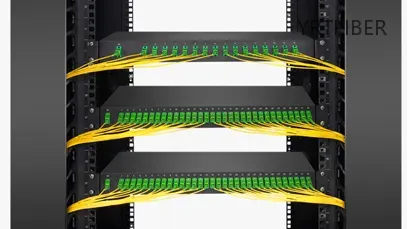
Telecom Equipment Room
In telecom equipment rooms, the stationary ODF distribution frame is used to organize fiber cable termination, cross-connection and patching between transmission equipment and outside plant cables.
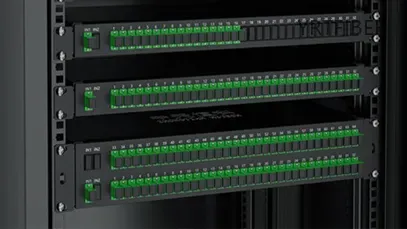
FTTH and FTTx Access Network
In FTTH and FTTx networks, the ODF can be used as a fiber distribution and management point for feeder cables, distribution cables and equipment-side patching.
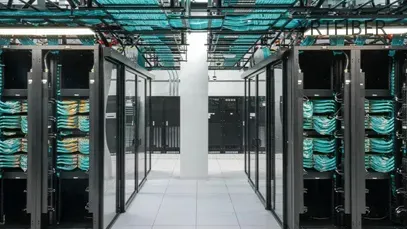
Data Center Fiber Cabling
For data centers, the frame provides stable fiber patching and cable management between servers, switches, optical transmission equipment and distribution areas.
Shipping & Packaging
Product Comparison:
Sliding Rail ODF vs Stationary Type ODF
| Feature / Dimension | Sliding Rail ODF Distribution Frame | Stationary Type ODF Distribution Frame |
|---|---|---|
| Structure | Pull-out sliding rail tray structure for easier internal access. | Fixed frame structure with stable installation. |
| Maintenance | More convenient for frequent inspection, splicing and patch cord adjustment. | Suitable for regular front operation and standard maintenance. |
| Installation Space | Useful in rack or cabinet environments where internal access is limited. | Suitable for sites where the front working space is enough. |
| Cost Position | Usually higher cost due to sliding rails and additional mechanical structure. | More economical for standard fiber management projects. |
| Stability | Flexible operation, but sliding parts should be handled carefully during maintenance. | High stability due to fixed installation and fewer moving parts. |
| Best Use | Data centers, telecom rooms and high-density sites requiring easier maintenance. | Standard telecom rooms, FTTH networks and cost-sensitive fiber management sites. |
Sliding Rail ODF Distribution Frame Selection Guide
Sliding Rail ODF vs Stationary Type ODF
| Feature / Dimension | Sliding Rail ODF Distribution Frame | Stationary Type ODF Distribution Frame |
|---|---|---|
| Structure | Pull-out sliding rail tray structure for easier internal access. | Fixed frame structure with stable installation. |
| Maintenance | More convenient for frequent inspection, splicing and patch cord adjustment. | Suitable for regular front operation and standard maintenance. |
| Installation Space | Useful in rack or cabinet environments where internal access is limited. | Suitable for sites where the front working space is enough. |
| Cost Position | Usually higher cost due to sliding rails and additional mechanical structure. | More economical for standard fiber management projects. |
| Stability | Flexible operation, but sliding parts should be handled carefully during maintenance. | High stability due to fixed installation and fewer moving parts. |
| Best Use | Data centers, telecom rooms and high-density sites requiring easier maintenance. | Standard telecom rooms, FTTH networks and cost-sensitive fiber management sites. |
Choose Sliding Rail ODF for Easier Maintenance
If the network requires frequent fiber inspection, patch cord adjustment or internal tray access, the sliding rail ODF is a better choice. Its pull-out design helps technicians work more conveniently in rack-mounted environments.
Choose Sliding Rail ODF for High-Density Cabinets
For data centers, telecom rooms and high-density fiber cabinets, the sliding rail design can reduce maintenance difficulty and improve accessibility when many patch cords and fiber links are installed together.
Choose Stationary ODF for Economical Standard Projects
If the project focuses more on stable structure and lower cost, and does not require frequent tray access, a stationary type ODF distribution frame may be more suitable.
Confirm Capacity, Adapter Type and Rack Size
Before selecting the ODF, confirm the required fiber capacity, adapter type, splice tray quantity, rack size, cable entry direction and patch cord routing requirements.
Download YRTFIBER Product Catalog
Factory Real Shot
Frequently Asked Questions & Quick Inquiry
Sliding Rail ODF Distribution Frame FAQ
What makes sliding‑rail ODFs more advantageous than fixed types?
The sliding‑rail design allows front or side extraction of the panel for maintenance, greatly simplifying cable access and reducing service time.
Can I customize port types and quantities?
Yes—ODF units offer modular adaptability supporting various adapter types (SC, LC, MPO) and can be expanded or reconfigured as your network grows.
Is it compatible with different rack standards?
It is designed to fit 19" racks and complies with ETSI/ANSI/EIA specifications, ensuring broad compatibility across global network infrastructures.
How does it protect fiber integrity?
Features like built‑in bend‑radius guards, fiber clips, and metal housing protect cables from damage, maintain signal quality, and guard against EMI.
What deployment environments are suitable?
Ideal for high-density settings such as data centers, telecom hubs, enterprise wiring closets, and FTTx access points—especially where space optimization and maintenance ease are critical.
Send Your Inquiry
Fill out the form below and we'll get back to you within 24 hours.


