

 Español
 Português
 لالعربية
 Русский
 Bahasa Indonesia
 Français
 Türkçe
 Bahasa Melayu

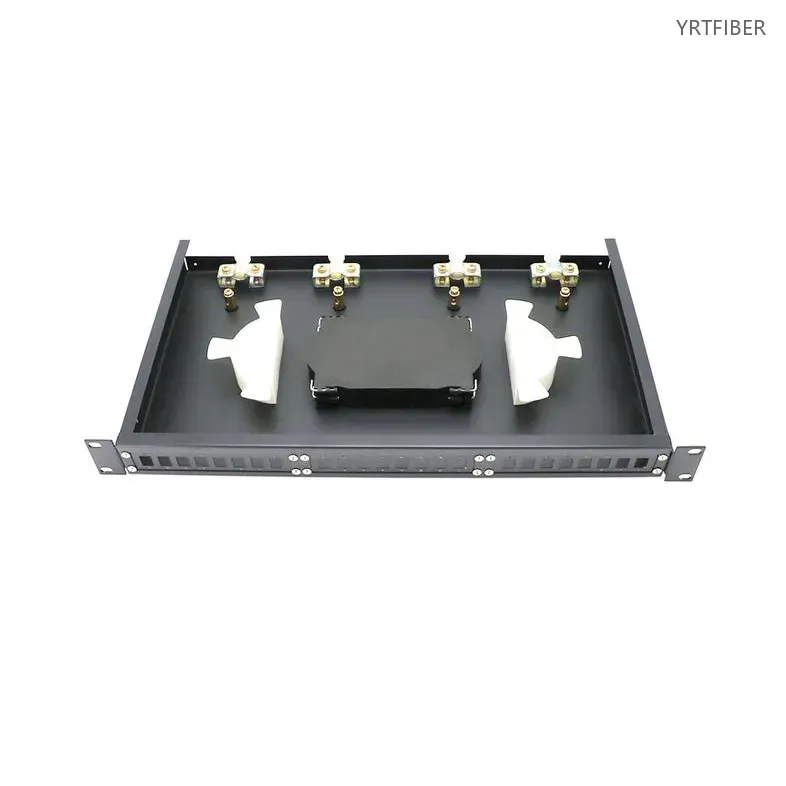
Stationary Type ODF Distribution Frame – Fixed Fiber Optic Distribution Frame for Telecom Rooms & Data Centers
Fixed ODF patch panels are used for fiber optic splicing, termination, distribution, and configuration.
Suitable for telecom equipment rooms, FTTH/FTTx networks, and data centers.
The fixed structure ensures stability and reliability, supporting various adapters such as SC/LC/FC/ST.
The clear internal layout and front-mounted operation facilitate connection, inspection, and maintenance.
Supports single-mode/multimode operation, includes a labeling area, and can be rack-mounted or cabinet-mounted.
What is a Stationary Type ODF Distribution Frame?
A Stationary Type ODF Distribution Frame is a fixed optical distribution frame used to manage fiber optic cable splicing, termination, patching and distribution in communication networks. It provides a stable and economical fiber management solution for telecom equipment rooms, FTTH access networks, data centers and enterprise fiber systems.
Stationary Type ODF Distribution Frame Specification parameters
- Specification parameters
- OPTICAL CHARACTERISTICS
| Material | ABS Or PC | Working Temperature | -40℃ ~ 55℃ |
|---|---|---|---|
| Connector Type | FC/LC/SC/ST And PC Or APC | No. of Fiber | 12-48 |
| Use | FTTX | Name | Fiber Optic Terminal Box |
| Highlight | Fiber Optic Terminal Box Fixed Type, 24 Core Fiber Optic Terminal Box, SC / FC Fiber Optic Terminal Box | ||
Product Structure & Composition
Stable Fixed Structure: Secure installation, suitable for long-term management in equipment rooms and communication sites.
Economical Fiber Management Solution: A cost-effective solution suitable for standard fiber optic splicing, termination, and cabling.
Organized Splicing and Patching: Integrated adapter panel, splice tray, and cabling area ensure clean and easy-to-maintain links.
Flexible Adapter Compatibility: Supports various adapters such as SC, LC, FC, and ST, adaptable to different fiber optic systems.
Benefits of Stationary Type ODF Distribution Frame
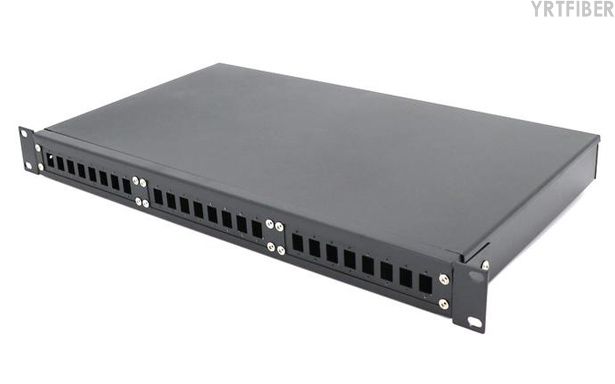
Stable Fixed Structure / Flexible Adapter Compatibility
The stationary design provides a firm and reliable installation structure, making it suitable for long-term fiber optic cable management in equipment rooms and communication network sites. The ODF can be configured with SC, LC, FC, ST or other adapter types according to network requirements, making it suitable for different fiber optic cabling systems.
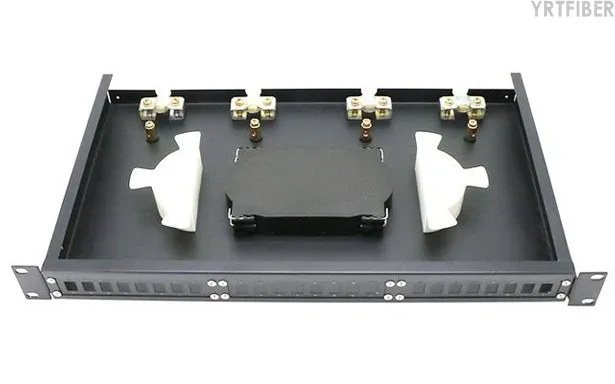
Economical Fiber Management Solution
Compared with more complex sliding or modular systems, the stationary ODF frame offers a cost-effective solution for standard fiber splicing, termination and patching applications.
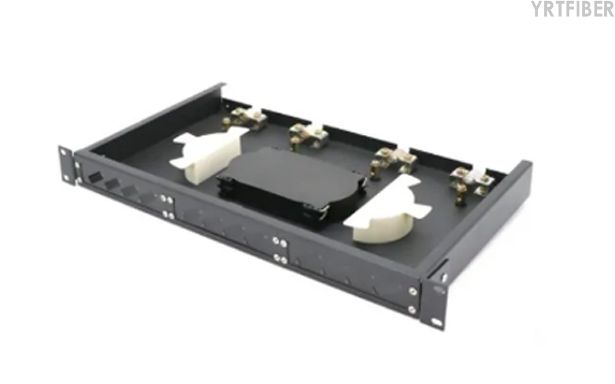
Engineering Applications Stationary Type ODF Distribution Frame
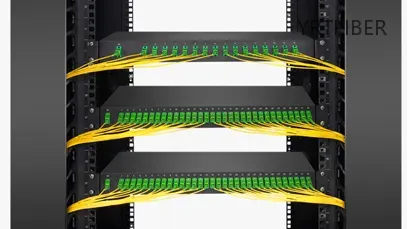
Telecom Equipment Room
In telecom equipment rooms, the stationary ODF distribution frame is used to organize fiber cable termination, cross-connection and patching between transmission equipment and outside plant cables.
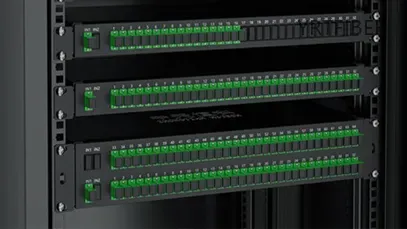
FTTH and FTTx Access Network
In FTTH and FTTx networks, the ODF can be used as a fiber distribution and management point for feeder cables, distribution cables and equipment-side patching.
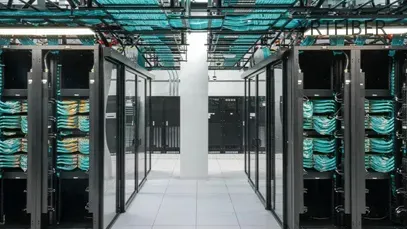
Data Center Fiber Cabling
For data centers, the frame provides stable fiber patching and cable management between servers, switches, optical transmission equipment and distribution areas.
Shipping & Packaging

Product Comparison:
Stationary Type ODF vs Sliding Type ODF
| Feature / Dimension | Stationary Type ODF Distribution Frame | Sliding Type ODF Distribution Frame |
|---|---|---|
| Structure | Fixed frame structure with stable installation. | Sliding tray or drawer structure for easier pull-out operation. |
| Cost Position | More economical for standard fiber management projects. | Usually higher cost due to sliding structure and additional hardware. |
| Maintenance | Suitable for front operation and regular maintenance. | More convenient when frequent access to internal trays is required. |
| Application | Telecom rooms, FTTH networks, enterprise cabinets and standard fiber distribution sites. | Data centers, high-density cabinets and sites requiring frequent fiber changes. |
| Stability | High stability due to fixed installation. | Flexible operation, but moving parts may require more care during use. |
| Recommended Use | Choose when stable, simple and economical fiber management is the priority. | Choose when easier tray access and frequent maintenance are more important. |
Stationary Type ODF Distribution Frame Selection Guide
Choose Stationary Type ODF for Stable Fiber Management
If the project requires a reliable and fixed fiber distribution point, the stationary type ODF is a suitable choice. It provides stable installation and organized fiber routing for long-term operation.
Choose Stationary Type ODF for Cost-Sensitive Projects
For standard telecom rooms, FTTH access sites and enterprise fiber networks, the stationary ODF provides essential splicing, patching and distribution functions without unnecessary mechanical complexity.
Choose Sliding Type ODF for Frequent Maintenance
If the network requires frequent internal access, repeated cable changes or easier tray pull-out operation, a sliding type ODF may be more suitable than a stationary type frame.
Confirm Port Capacity and Adapter Type
Before selection, confirm the required fiber capacity, adapter type, splice tray quantity, rack size, cable entry direction and patch cord management requirements.
Installation Instructions
Check the Frame and Accessories: Verify the ODF rack, adapter panel, splice tray, accessories, and labels to ensure the configuration matches the design.
Mount the ODF Securely: Secure the rack to the designated location in the server rack or server room, ensuring it is stable and level.
Introduce and Fix Optical Cables: Introduce the optical cables and clamp them securely, avoiding excessive stretching and maintaining proper bending radius.
Splice and Route Fibers: Splice according to the plan, cover with protective tubing, place in the tray, and neatly route the optical fibers to the adapter panel.
Connect Patch Cords and Label Ports: Connect patch cords to the corresponding ports and clearly label each link for easy maintenance in the future.
Test and Finish Installation: Test the optical path continuity and insertion loss. After confirming everything is correct, tidy up the patch cords; the device is ready for use.
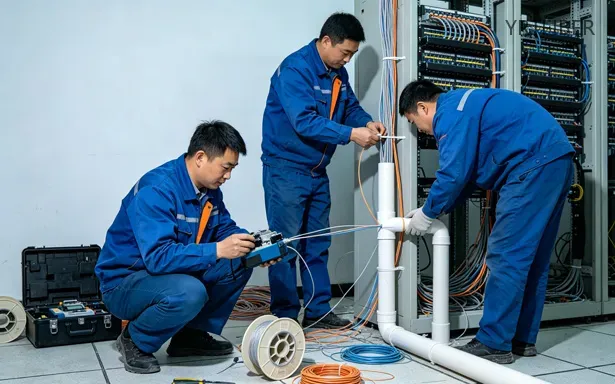
Download YRTFIBER Product Catalog
Factory Real Shot
Frequently Asked Questions & Quick Inquiry
Stationary Type ODF Distribution Frame FAQ
What is the main difference between stationary and sliding-rail ODFs?
The stationary ODF has a fixed tray for fiber adapters, making it simpler and more affordable—ideal for low‑maintenance scenarios—while sliding‑rail designs allow tray extraction for easier access but at higher cost
Which adapter types and port capacities are supported?
Supports SC, LC, FC, ST, E2000. MPO adapters, with modular port densities typically ranging from 12 to 48 ports per unit.
Is it suitable for use in small rack spaces or tight environments?
Yes. The compact fixed-frame design integrates seamlessly into standard 19″ racks, occupying minimal depth while allowing reliable fiber distribution.
How does the structure protect fiber cables?
Features like built-in cable loops, fiber clamps, and a secured enclosure help maintain proper bend radius, reduce signal loss, and provide basic EMI shielding.
What installation and labeling tools are included?
Tool-free installation is facilitated by snap buckle mechanisms. A paper label slot allows for easy handwritten or printed port identification.
What is a Stationary Type ODF Distribution Frame used for?
It is used for fiber optic cable splicing, termination, patching and distribution in telecom rooms, FTTH networks, data centers and enterprise fiber systems.
What is the main advantage of a stationary ODF?
The main advantage is stable structure and economical fiber management. It is suitable for standard fiber distribution sites that do not require frequent tray movement.
Can it support SC and LC adapters?
Yes. The frame can usually be configured with SC, LC, FC, ST or other adapter types according to project requirements.
Is it suitable for data centers?
Yes. It can be used in data centers for fiber patching and distribution, especially where a stable and economical fixed frame solution is required.
What should be checked before choosing an ODF?
Check fiber capacity, adapter type, splice tray quantity, installation space, rack compatibility, cable entry direction and maintenance requirements.
Send Your Inquiry
Fill out the form below and we'll get back to you within 24 hours.


