

 Español
 Português
 لالعربية
 Русский
 Bahasa Indonesia
 Français
 Türkçe
 Bahasa Melayu

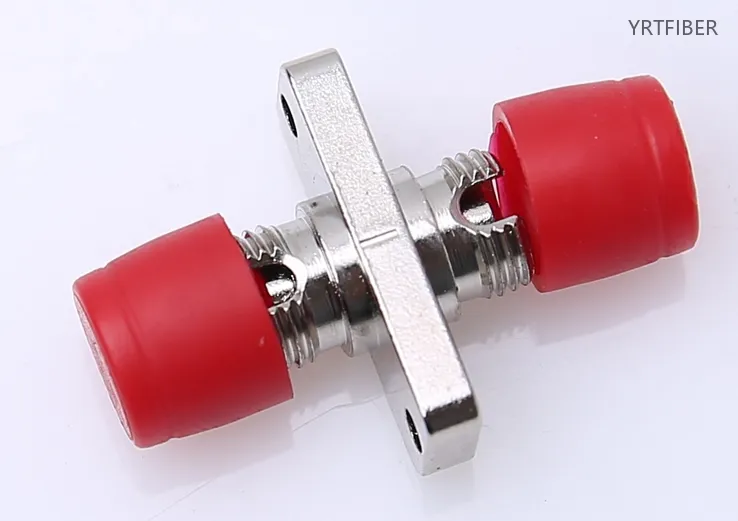
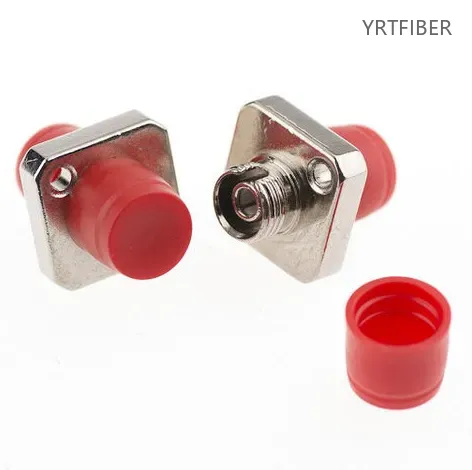
High-Precision FC Fiber Adapter – Durable FC Coupler with Thread Locking for Stable Connections
FC female adapter, simplex/duplex available, threaded locking.
Ceramic sleeve, insertion loss ≤0.2 dB, return loss ≥50 dB, compatible with single‑mode and multimode.
Nickel‑plated metal or flame‑retardant plastic housing, compliant with IEC and RoHS.
Flange for screw mounting to panels, ODFs, etc.
Operating temperature ‑40~85°C, >1.000 mating cycles.
What is an FC Fiber Optic Adapter?
The FC fiber optic adapter is a precision panel‑mount coupler that aligns and connects two FC connectors, featuring a threaded coupling nut for secure, vibration‑proof mating and a zirconia ceramic alignment sleeve for low‑loss optical transmission. It is a trusted solution in telecom central offices, CATV headends, and industrial environments where connection stability and durability are paramount, especially in legacy and high‑reliability networks.
FC Fiber Optic Adapter Specification parameters
- Specification parameters
- OPTICAL CHARACTERISTICS
1 Insertion loss
| Specification | Value |
|---|---|
| THE | ≤0.2dB |
| Repeatability | 200 times |
| Temperature | -40℃~85℃ |
2 Part material
| Part | Material | Quantity |
|---|---|---|
| FC-ADA Dust Cap | PE | 2 |
| Housing(assembly) | With | 1 |
| SLEEVE | ZrO2-White | 1 |
Product Structure & Composition
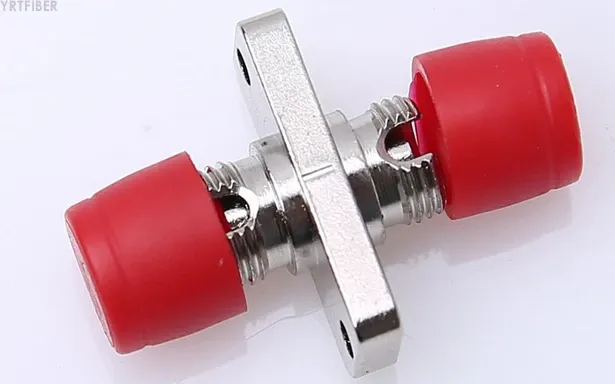
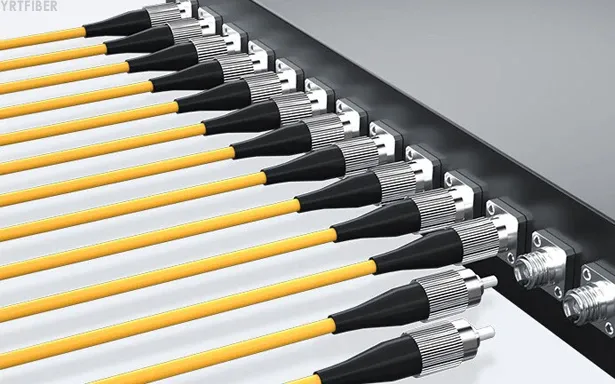
FC Interface and Threaded Coupling: The adapter presents FC female receptacles on both sides. FC connectors use a threaded coupling nut (M5×0.75) that screws onto the adapter's outer barrel, providing a firm, vibration‑resistant mechanical lock that prevents accidental disconnection.
Zirconia Ceramic Alignment Sleeve: Inside the adapter, a precision split sleeve made of zirconia ceramic aligns the ferrule ends of the mating connectors. This sleeve ensures accurate core‑to‑core alignment for low insertion loss and high return loss, critical for long‑haul and high‑speed links.
Keying and Alignment Slot: The adapter has a key slot that aligns with the connector's key to maintain correct ferrule orientation, preventing rotation that could degrade signal quality.
Flange Housing: The adapter is mounted via a round or rectangular flange with screw holes, allowing secure attachment to patch panels, optical distribution frames, and equipment enclosures. Housings are available in nickel‑plated metal for maximum durability or flame‑retardant plastic for cost‑effective indoor use.
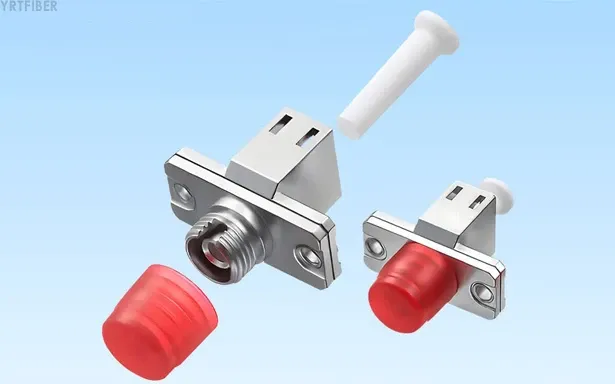
Benefits of FC Fiber Optic Adapter
Vibration‑Proof Threaded Connection
The threaded coupling nut provides a mechanical lock that is far more resistant to loosening from vibration or accidental tugs than push‑pull or bayonet designs. This makes the FC adapter the preferred choice for telecom central offices, railway communications, and industrial plants where connection integrity is critical.
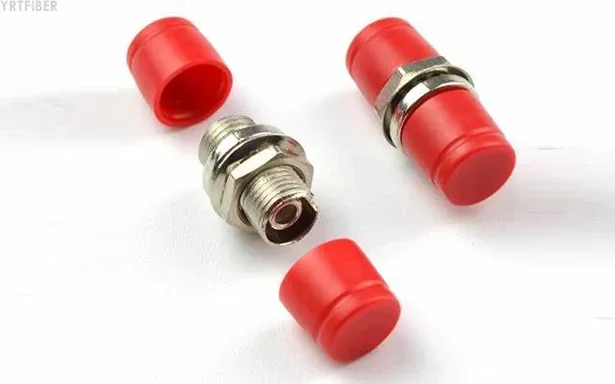
Precision Alignment for Low Insertion Loss
The zirconia ceramic alignment sleeve, combined with the keyed design, ensures that the ferrule end‑faces are perfectly aligned, yielding typical insertion loss of ≤0.2 dB and return loss ≥50 dB. This precision supports long‑distance single‑mode transmission and high‑bit‑rate systems with minimal signal degradation.
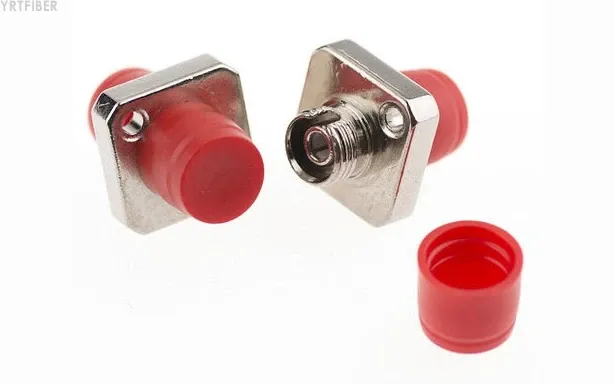
Robust Metal Housing for Harsh Environments
Nickel‑plated metal housings offer superior mechanical strength, corrosion resistance, and thermal stability. They protect the internal alignment components from physical stress and environmental factors, ensuring reliable operation in outdoor cabinets, industrial floors, and high‑humidity areas.
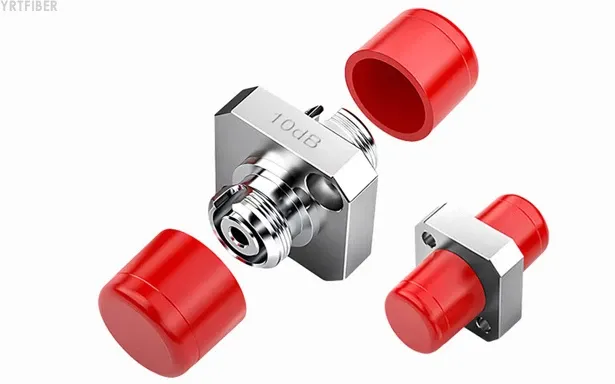
Standardized Flange Mounting for Easy Integration
The adapter's round or rectangular flange conforms to industry‑standard cutouts, simplifying installation in ODFs, splice enclosures, and patch panels. The screw‑mount design provides a permanent, secure fit, reducing maintenance needs and ensuring stable optical performance over the adapter's lifetime.
Engineering Applications FC Fiber Optic Adapter
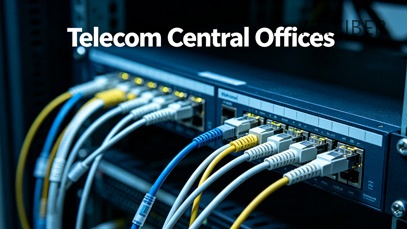
Telecom Central Offices and ODFs
FC adapters are widely deployed in central office optical distribution frames to terminate feeder and distribution cables. Their threaded connections ensure that patch cords remain secure even during frequent reconfiguration, maintaining network reliability for voice, data, and leased‑line services.
CATV and Broadband Cable Networks
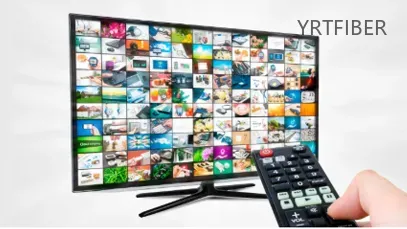
Cable television headends and distribution hubs rely on FC adapters for their ruggedness and low loss. The adapter connects optical transmitters, receivers, and amplifiers, ensuring high‑quality video signal delivery with minimal reflection.

Industrial and Railway Communication Systems
In environments subject to shock and vibration—such as railway signaling, factory automation, and power utility networks—the FC adapter's threaded coupling provides unmatched connection security, preventing service interruptions caused by loose connectors.
Test and Measurement Equipment
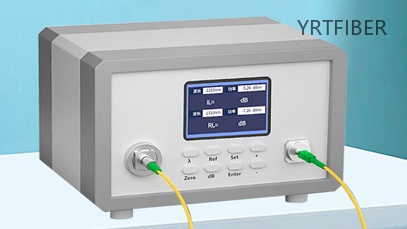
FC adapters are commonly used in optical test benches, OTDRs, power meters, and light sources. Their precise alignment and repeatability are essential for accurate measurements, and the threaded nut ensures the connection remains stable during lengthy testing procedures.
Shipping & Packaging
Product Comparison:
FC Adapter vs. SC Adapter (Simplex)
| Feature / Dimension | FC Adapter (Simplex) | SC Adapter (Simplex) |
|---|---|---|
| Structure / Form Factor | FC female on both ends. Threaded coupling nut. Round or rectangular flange for screw mounting. Metal or plastic housing. | SC female on both ends. Push‑pull latching mechanism. Flange or snap‑in mount. Typically plastic housing. |
| Coupling Mechanism | Threaded nut (M5×0.75) - requires manual screwing/unscrewing. Very secure, vibration‑resistant. | Push‑pull latch - insert until click, pull sleeve to release. Tool‑less, quick. |
| Typical Applications | Telecom ODFs, CATV, industrial, railway, test equipment, high‑vibration environments. | Data centers, enterprise networks, FTTH, general indoor patching. |
| Key Engineering Pros | - Superior mechanical locking - ideal for vibration‑prone installations. - Metal housing options for harsh conditions. - Proven reliability in legacy and carrier‑grade networks. | - Faster connection/disconnection. - Higher density (slightly smaller footprint). - Color‑coded housing for easy fiber type identification. |
| Key Engineering Cons | - Slower to connect/disconnect (requires rotating the nut). - Larger footprint, lower port density compared to SC/LC. | - Push‑pull latch less secure under vibration. - Plastic housing less robust for industrial use. |
| Tolerance to Vibration / Shock | Excellent; threaded nut resists loosening even under continuous vibration. | Good, but push‑pull latch can loosen over time in high‑vibration settings. |
| Housing Material Options | Nickel‑plated metal or UL94‑V0 plastic; metal is common for durability. | UL94‑V0 plastic (standard); metal optional for some variants. |
| Fiber Mode Options | Supports both single‑mode and multimode, with color coding (blue for SM, beige/black for MM). | Supports both single‑mode and multimode, with color coding. |
| Cost (Relative) | Moderate; metal versions slightly higher than plastic. | Generally cost‑effective and widely available. |
| Maintenance & Handling | Threaded connection requires care to avoid over‑tightening; periodic inspection of threads. | Easier and faster handling; cleaning and inspection standard. |
FC Fiber Optic Adapter Selection Guide
How to Choose the Right FC Fiber Optic Adapter
Selecting an FC adapter starts with fiber mode: choose a blue housing for single‑mode (G652D/G657A) and a beige or black housing for multimode. This follows TIA/EIA‑568 color standards and prevents cross‑connection.
Next, consider housing material. For indoor data centers and office environments, plastic housings are cost‑effective and adequate. For outdoor cabinets, industrial plants, or railway applications, choose nickel‑plated metal for superior mechanical strength, corrosion resistance, and thermal stability.
Decide between simplex and duplex based on your link requirement. Simplex handles one fiber (unidirectional); duplex supports bidirectional transmission with two fibers side‑by‑side.
Evaluate flange type: standard round flanges fit many ODF cutouts; rectangular flanges are used in certain panel designs. Ensure the adapter's mounting hole pattern matches your panel or enclosure.
Finally, assess the operating environment: if vibration is a concern (e.g., mobile equipment, industrial machinery), the FC adapter's threaded coupling is a decisive advantage over SC or LC. For standard rack‑mounted indoor patching, SC or LC may be more convenient, but FC remains the go‑to for mission‑critical fixed connections.
Installation Instructions
Panel Mounting
Ensure the panel cutout matches the flange size. Insert adapter from front, align with mounting holes, and secure with screws. For metal panels, add lock washers to resist vibration.
Connecting FC Cables
Inspect and clean the FC end‑face. Align key with slot, insert fully, then hand‑tighten the coupling nut (finger‑tight only). For duplex, repeat for the second port, ensuring proper polarity.
Cable Management and Labeling
Route single‑mode cables with ≥30 mm bend radius, secure with ties at intervals. Label ports with numbers, fiber pairs, and TX/RX direction. The metal housing accepts permanent marker or adhesive labels.
Download YRTFIBER Product Catalog
Factory Real Shot
Frequently Asked Questions & Quick Inquiry
FC Fiber Optic Adapter FAQ
What is the typical insertion loss of the FC adapter?
Typical insertion loss is ≤0.2 dB, with some high‑precision versions achieving ≤0.1 dB, ensuring minimal signal attenuation.
Can I use this adapter for both single‑mode and multimode?
Yes, the adapter is physically compatible with both. Use the color‑coded version (blue for SM, beige/black for MM) to maintain proper system identification.
How does the threaded coupling work?
FC connectors have a threaded nut that screws onto the adapter's outer barrel. Turn the nut clockwise until finger‑tight (do not over‑tighten). This provides a secure mechanical lock that prevents accidental disconnection.
How many mating cycles are supported?
The adapter is rated for over 1,000 mating cycles with negligible change in optical performance, offering long‑term reliability.
Is the adapter compliant with international standards?
Yes, it complies with IEC 61754‑13 (FC interface) and RoHS environmental directives. Metal versions also meet Telcordia GR‑326 requirements.
What is the operating temperature range?
Standard FC adapters operate from -40°C to +85°C, suitable for indoor and controlled outdoor environments.
How do I clean the adapter?
Use a dry cleaning cassette or swab designed for 2.5 mm ferrules (FC/SC/ST). Insert the tool into the adapter port and follow the manufacturer's instructions. Avoid touching the internal sleeve with metal objects.
Why choose FC over SC?
Choose FC when vibration resistance and mechanical lock are critical (industrial, railway, telecom outside plant). Choose SC for faster patching and higher density in data centers and enterprise LANs.
Are there sealed FC adapters for outdoor use?
Yes, sealed (IP‑rated) FC adapters with O‑rings and metal housings are available for outdoor and harsh environments.
Can I use a duplex FC adapter for bidirectional links?
Yes, duplex adapters hold two FC ports side‑by‑side, supporting separate transmit and receive fibers for full‑duplex communication.
Send Your Inquiry
Fill out the form below and we'll get back to you within 24 hours.


