

 Español
 Português
 لالعربية
 Русский
 Bahasa Indonesia
 Français
 Türkçe
 Bahasa Melayu


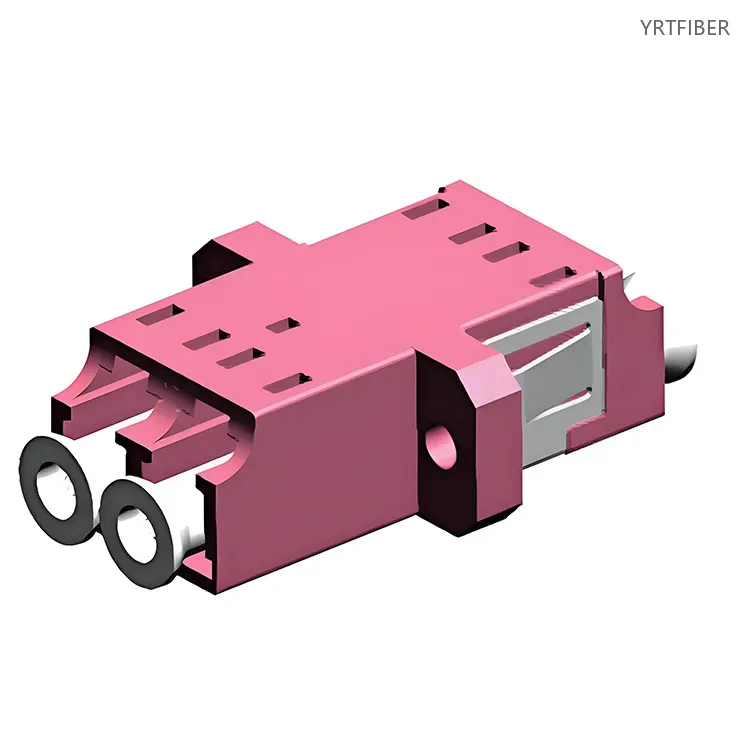
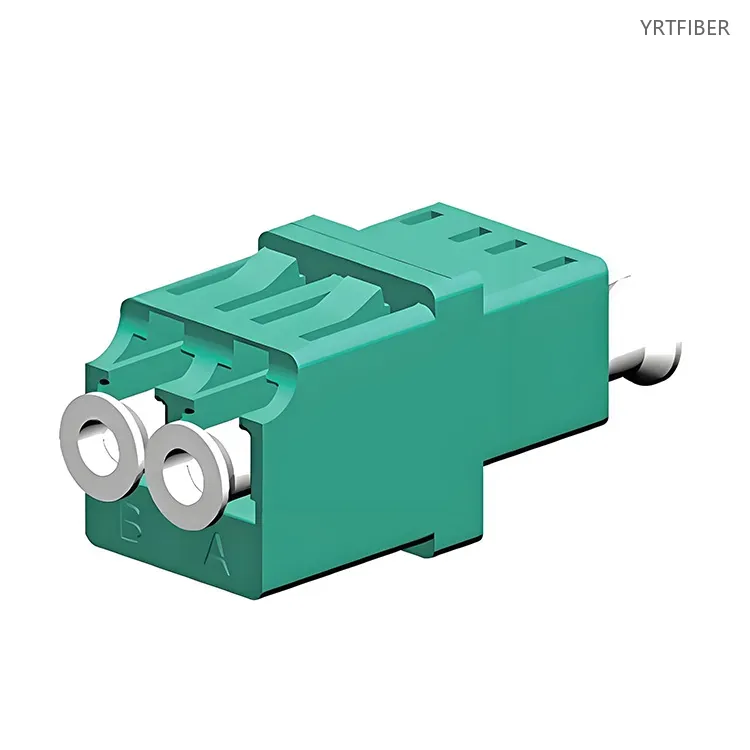
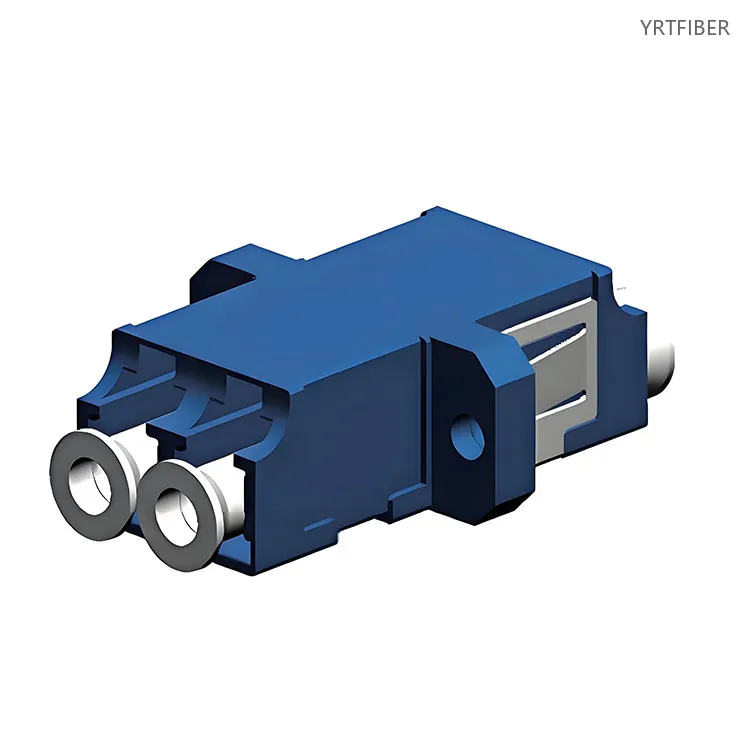
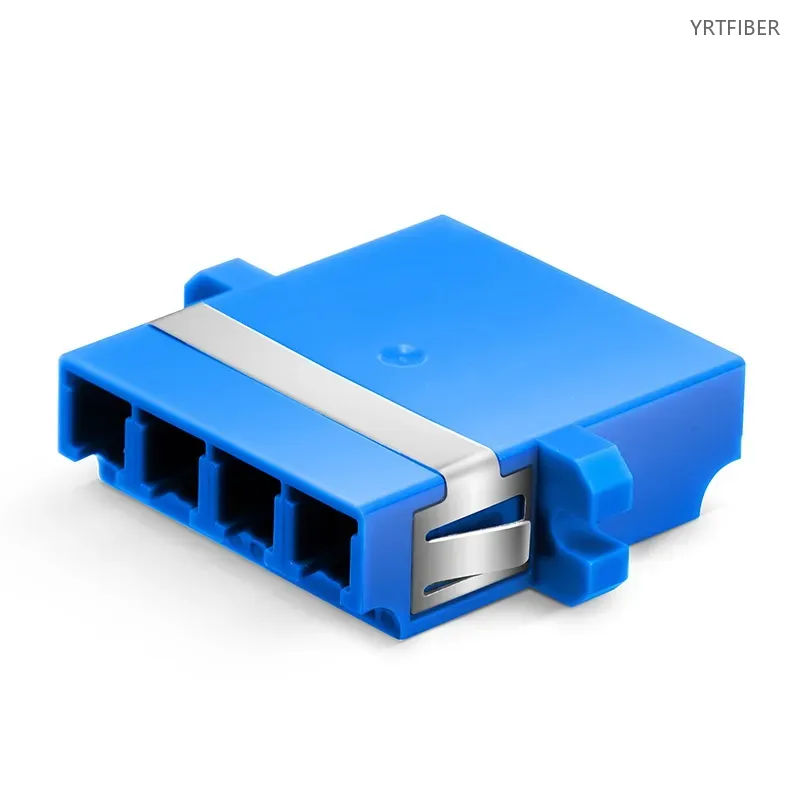
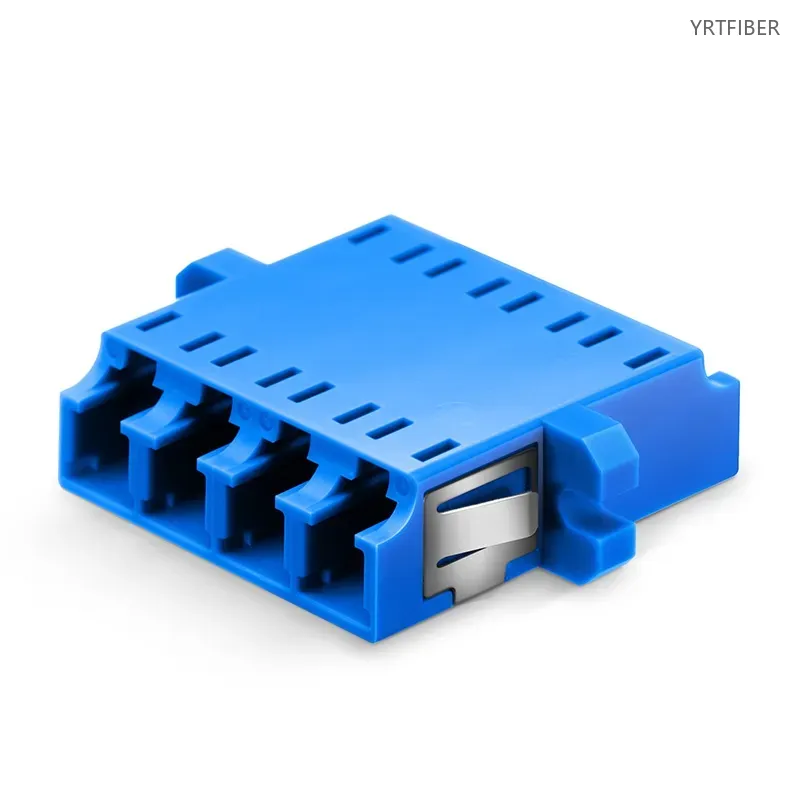
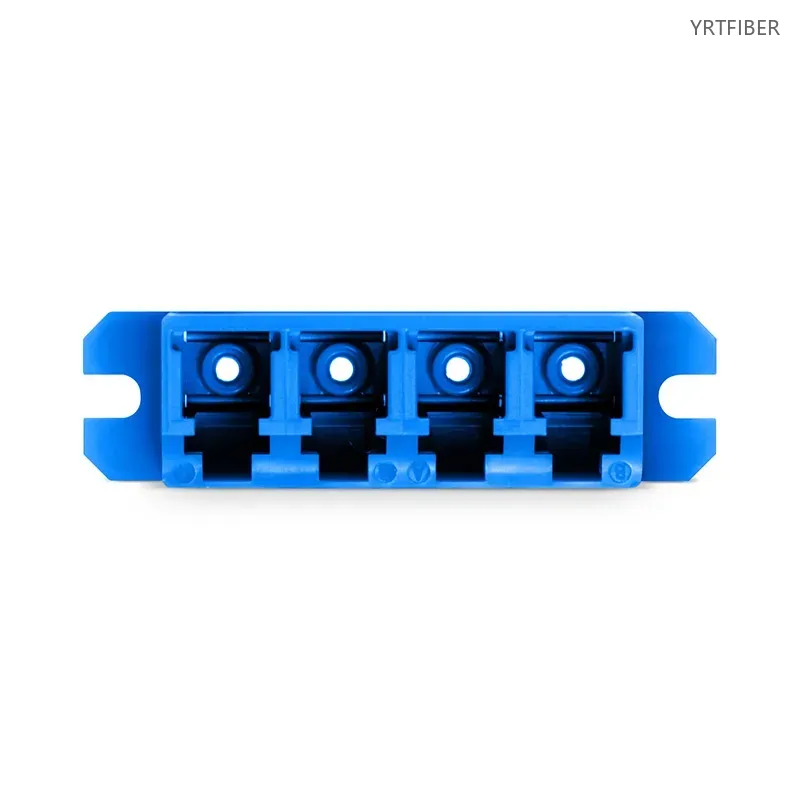
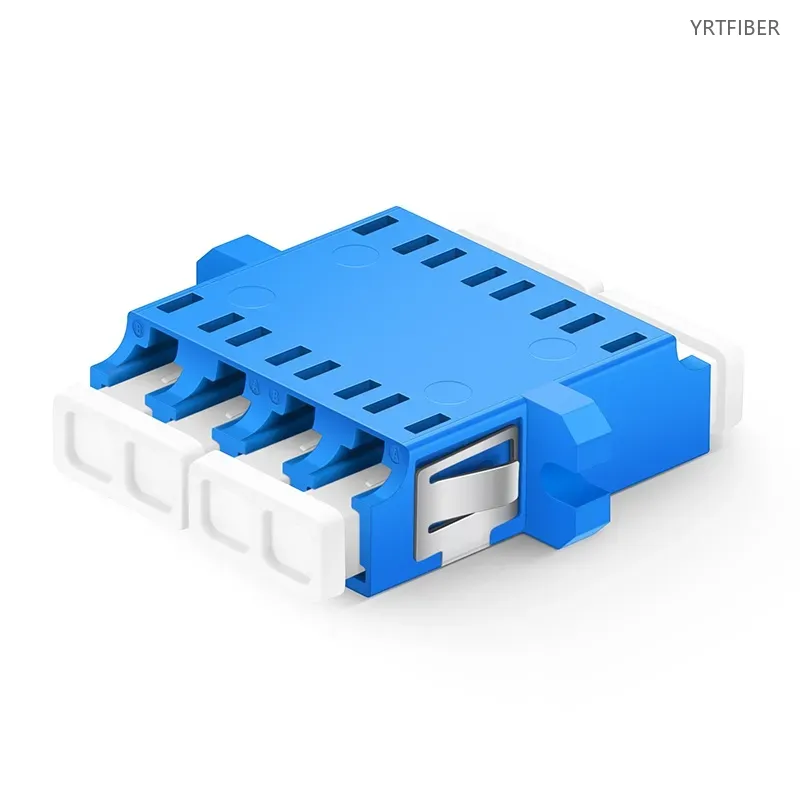
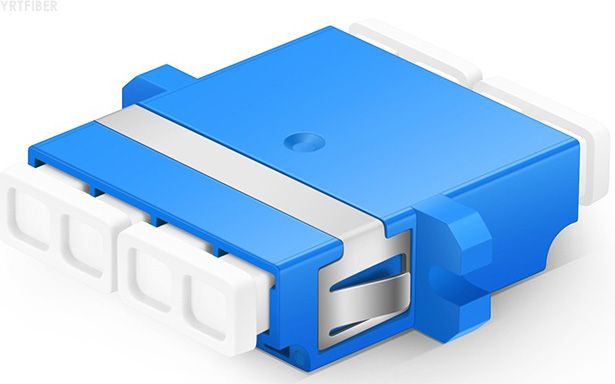
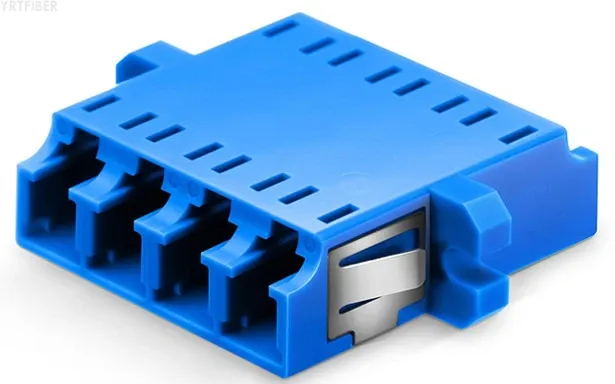
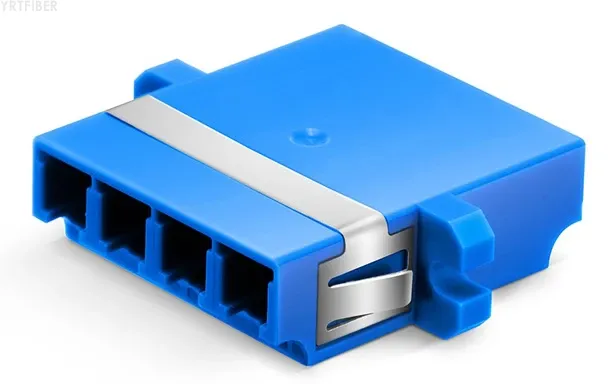
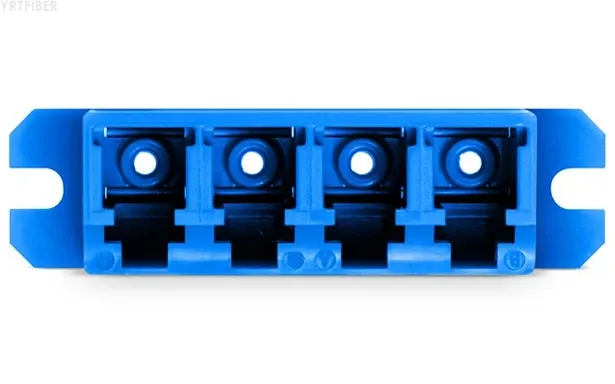
LC-LC Duplex Fiber Optic Adapter – Compact, High-Density Coupler for Network Panels
Duplex LC Interface: Supports seamless LC to LC connections for duplex transmission.
Integrated Flange Design: Enables easy and secure mounting to distribution panels or enclosures.
Low Insertion Loss: High-quality zirconia ceramic alignment sleeve ensures reliable optical performance.
Single-mode & Multimode Support: Compatible with both SM (blue) and MM (aqua) LC connectors.
High Durability: Engineered for over 1000 mating cycles with minimal performance degradation.
Space-Saving Size: Optimized for high-density deployments in limited spaces.
What is an LC-LC Duplex Fiber Optic Adapter?
The LC-LC Duplex Fiber Optic Adapter is a precision passive component designed to align and connect two LC duplex connectors, enabling reliable bi-directional optical signal transmission. Featuring a compact body with an integrated mounting flange and a zirconia ceramic alignment sleeve, it provides a low-loss, stable connection point essential for high-density fiber management in data centers, telecom cabinets, and patch panels.
LC‑LC Duplex Fiber Optic Adapter Specification parameters
- Specification parameters
- OPTICAL CHARACTERISTICS
| Name | Adapter / Coupler / Flange |
| Adapter Type | SC, LC, FC, ST, E2000 |
| Polishing Type | UPC, APC |
| Fiber Type | Single-mode, Multi-mode |
| Port Type | Single, Double |
| Sleeve Material | Ceramic / Bronze |
| Attenuation Value | 3 ~ 25 dB |
| Insertion Loss | ≤ 0.2 dB |
| Plug and Unplug Force | 200 - 600 g/f |
| Mating Durability | 1000 times, 0.2 dB |
| Repeatability | 0.1 dB |
| Interchangeability | 0.2 dB |
| Wavelength Range | 1260 ~ 1650 nm |
| Operating Temperature | -40℃ ~ +80℃ |
Product Structure & Composition
Housing and Flange:
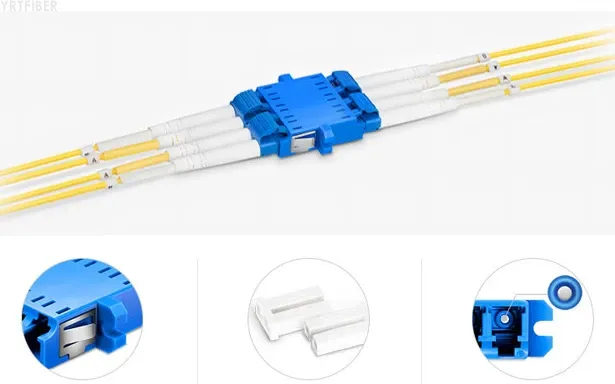
The adapter features a compact, durable housing with an integrated flange. This flange allows for quick and secure snap-in or screw mounting to standard distribution panels, enclosures, and patch panels, ensuring the adapter remains firmly in place during cable installation and maintenance.
Zirconia Ceramic Alignment Sleeve:
At the core of the adapter is a precision-machined zirconia ceramic alignment sleeve. This sleeve ensures the precise physical alignment of the two LC connector ferrules, which is critical for achieving low insertion loss and minimizing back reflection. The high-quality material also provides excellent wear resistance.
Duplex Interface:
The adapter is designed for duplex LC connectors, housing two fiber channels within a single compact unit. This design supports simultaneous transmission and reception over two fibers, effectively managing space and simplifying cable organization.
Benefits of LC‑LC Duplex Fiber Optic Adapter
High-Density Space-Saving Design
The compact duplex form factor of this adapter is specifically engineered for high-density applications. Its small footprint allows for a greater number of fiber connections within the limited real estate of a 1U patch panel or a densely populated data center cabinet. This helps network administrators maximize port density without compromising performance.
Precision Low-Loss Optical Performance
The adapter's zirconia ceramic alignment sleeve is the key to its superior performance. By providing micron-precision alignment of the LC connector ferrules, it ensures low insertion loss and high return loss, which are vital for maintaining signal integrity in high-speed networks. This reliable performance is consistent and repeatable, even after many connection cycles.
Durability and Long-Term Reliability
Built to withstand the rigors of a professional network environment, the LC-LC Duplex Adapter is tested for over 1000 mating cycles. The robust housing protects the internal alignment sleeve from damage, while the high-quality materials ensure that optical performance remains stable over time, reducing the need for frequent replacements and lowering total cost of ownership.
Versatile Compatibility and Ease of Use
This adapter offers broad compatibility with both single-mode (SM) and multimode (MM) LC connectors. The integrated flange simplifies the mounting process, and the color-coded housing (blue for SM, aqua for MM) provides instant visual identification, reducing the risk of cabling errors and saving valuable installation time.
Engineering Applications LC‑LC Duplex Fiber Optic Adapter
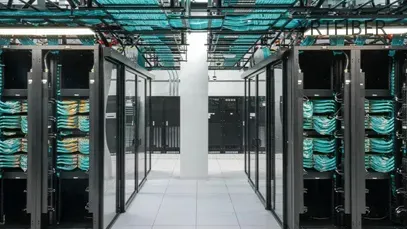
High-Density Data Centers
In modern modular data centers, space is at a premium. The LC-LC duplex adapter is an ideal solution for interconnecting top-of-rack (ToR) switches to patch panels. Its compact size allows for dense patching fields, supporting high-speed data flows between servers and network infrastructure.
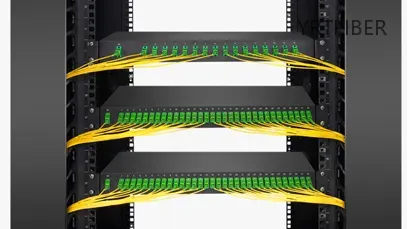
Telecom Distribution Cabinets
Within carrier-grade telecom cabinets and optical distribution frames (ODFs), this adapter provides a reliable, stable connection point for managing trunk and distribution cables. Its secure flange mounting ensures connections remain intact even in environments with minor vibrations, supporting critical telecom services.
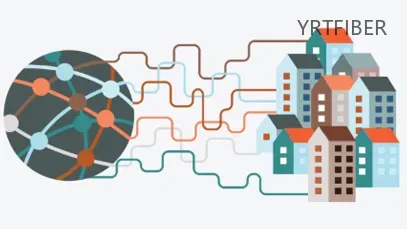
Fiber to the Home (FTTH) and FTTx Networks
In FTTH and other FTTx projects, this adapter is used in splice closures, terminal boxes, and distribution points. Its durable design and low-loss characteristics help deliver high-bandwidth services, such as high-speed internet and IPTV, to residential and business subscribers.
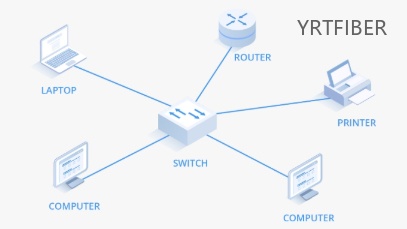
Enterprise Local Area Networks (LAN)
For enterprise LAN, WAN, and MAN systems, the adapter provides a flexible and secure patching solution. It is used in wiring closets and main distribution frames (MDFs) to connect switches, routers, and other active equipment, ensuring consistent network performance across the organization.
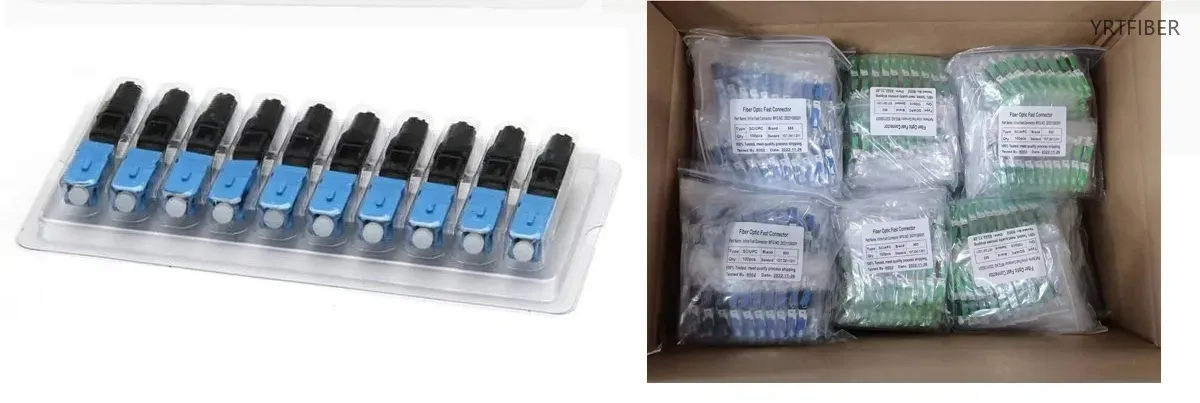
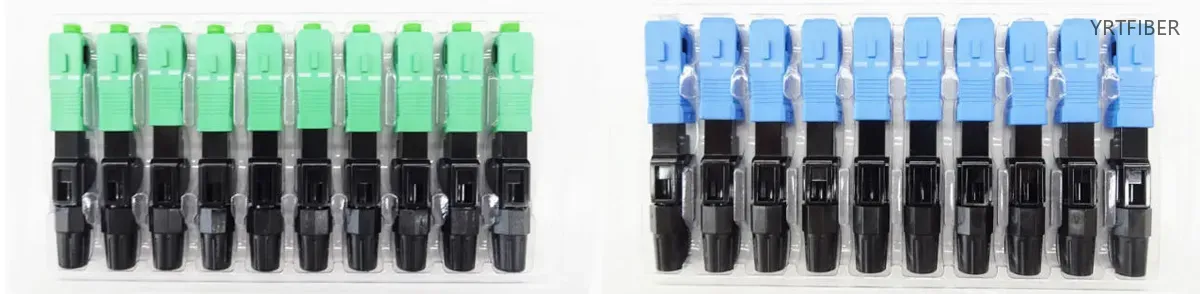
Shipping & Packaging
Product Comparison:
| Feature / Dimension | LC-LC Duplex Adapter | SC-SC Duplex Adapter | LC-LC Simplex Adapter |
|---|---|---|---|
| Connector Type | LC (Lucent Connector) - small form-factor, 1.25mm ferrule | SC (Standard Connector) - standard form-factor, 2.5mm ferrule | LC (Lucent Connector) - small form-factor, single port |
| Port Configuration | 2 ports (duplex) - supports one transmit/receive pair | 2 ports (duplex) - supports one transmit/receive pair | 1 port (simplex) - supports a single fiber connection |
| Typical Applications | High-density data centers, enterprise LAN, SFP/SFP+ transceivers, 10G/25G/40G/100G links | Telecom central offices, legacy enterprise networks, FTTH ODF frames, test equipment | Single‑fiber bidirectional (BiDi) links, fiber monitoring, simplex patch cord connections |
| Space / Port Density | Very high - occupies half the space of SC, enabling dense patching | Low - larger footprint, lower panel density | Very high - most compact, but only 1 fiber per adapter |
| Flange / Mounting | Metal or plastic flange; snap-in or screw mount | Metal or plastic flange; snap-in or screw mount | Metal or plastic flange; snap-in or screw mount |
| Insertion Loss (typical) | ≤0.2 dB (ceramic sleeve) | ≤0.2 dB (ceramic sleeve) | ≤0.2 dB (ceramic sleeve) |
| Repeatability | ≤0.1 dB (1000 mating cycles) | ≤0.1 dB (1000 mating cycles) | ≤0.1 dB (1000 mating cycles) |
| Keyed / Alignment | Standard LC keying (top key) for correct orientation | Standard SC keying (push‑pull) for alignment | Standard LC keying (top key) for correct orientation |
| Color Coding | Blue (UPC) or Green (APC) - matches connector color | Blue (UPC) or Green (APC) - matches connector color | Blue (UPC) or Green (APC) - matches connector color |
| Relative Cost | Medium - compact but precise manufacturing | Low - mature, widely manufactured | Medium - same as duplex but fewer ports |
| Engineering Pros | ① Highest port density - doubles the number of connections per rack unit compared to SC; ② Standard for modern transceivers (SFP, SFP+); ③ Push‑pull latching for fast patching; ④ Available in ceramic or phosphor bronze sleeves. | ① Robust, durable construction - less prone to breakage; ② Widely available and familiar to technicians; ③ Lower cost than LC for large legacy installations; ④ Easy to clean and inspect. | ① Smallest form factor for single‑fiber connections; ② Ideal for BiDi applications where two directions share one fiber; ③ Reduces connector count in simplex‑only links. |
| Engineering Cons | ① Smaller size makes cleaning slightly more delicate; ② More expensive than SC; ③ Plastic clip can break if mishandled. | ① Bulky for high‑density environments; ② Lower port count per panel; ③ Not compatible with SFP transceivers (requires adapter cable). | ① Requires two adapters for a duplex link, increasing panel space; ② Not suitable for standard duplex connections; ③ Less common in data center backbones. |
LC‑LC Duplex Fiber Optic Adapter Selection Guide
Choose the LC-LC Duplex Adapter when:
Deploying high‑density data centers, enterprise LANs, or modern equipment rooms where space is at a premium. The LC duplex adapter supports twice the port density of SC in the same panel area, making it the standard for 10G/25G/40G/100G links using SFP, SFP+, or QSFP transceivers.
The environment involves frequent patching and reconfiguration – the push‑pull latching mechanism allows fast, tool‑less insertion and removal.
New greenfield installations are being built – LC is the industry‑accepted default for high‑speed networks and modern fiber management systems.
Choose the SC-SC Duplex Adapter when:
Upgrading or maintaining legacy telecom networks, central offices, or older FTTH ODF frames where SC connectors are already deployed.
A more robust, mechanically durable connection is needed – the larger SC housing is less prone to breakage in rough handling environments.
The network is lower‑speed (1G) or budget‑sensitive – SC adapters are more economical per port.
Choose the LC-LC Simplex Adapter when:
Deploying single‑fiber bidirectional (BiDi) links where a single fiber carries both transmit and receive wavelengths (e.g., 10G BiDi SFP+, 25G BiDi).
Connecting monitoring taps, OTDR test ports, or simplex patch cords that do not require a duplex pair.
The application is specialized and does not warrant the additional panel space of a duplex adapter.
Mixed deployment strategy (recommended for large‑scale networks):
Use LC duplex adapters for all new server‑to‑switch and switch‑to‑switch connections in data center environments.
Use SC duplex adapters only in legacy interconnection areas, and only when replacing them with LC would be cost‑prohibitive.
Use LC simplex adapters only where BiDi optics are deployed – otherwise, standardize on LC duplex for simplicity and inventory management.
Key Decision Factors:
| Factor | LC Duplex | SC Duplex | LC Simplex |
|---|---|---|---|
| Best for | High‑density modern networks | Legacy / telecom environments | BiDi links, monitoring |
| Port Density per 1U (24 ports) | Up to 48 LC ports | Up to 24 SC ports | Up to 48 LC ports (but one fiber per port) |
| Transceiver Compatibility | SFP, SFP+, QSFP | GBIC (older), no SFP | SFP, BiDi SFP+ |
| Field Maintenance | Push‑pull, easy | Push‑pull, robust | Push‑pull, easy |
| Cost per port | Higher | Lower | Higher (per two‑fiber link) |
Note: The adapter color (blue or green) should match the connector polish – use blue for UPC, green for APC. Mixing UPC and APC connectors in the same adapter will damage ferrule end‑faces. Always verify the adapter's sleeve material – zirconia ceramic offers lower insertion loss and longer life than phosphor bronze for high‑mating environments.
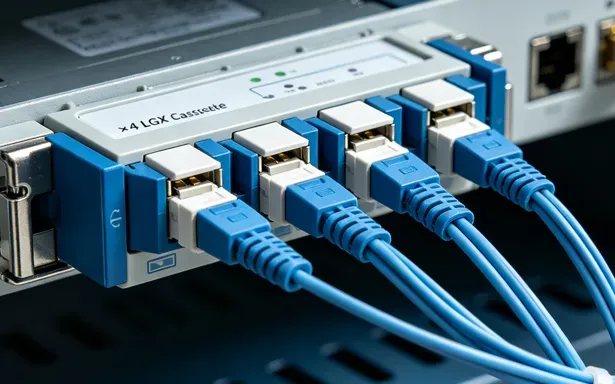
Installing LC-LC Duplex Adapter in a Panel
Ensure the panel cutout matches the adapter flange. Insert the adapter from the front (or rear, as per panel design) until flush, then secure with clips, snaps, or screws. Confirm firm seating to avoid movement.
Connecting Fiber Cables
Inspect connector end-faces with a microscope; clean if needed. Insert the LC connector into the adapter port until you hear/feel a click. Repeat on the other side. Connect Tx to Rx per system requirements.
Labeling & Cable Management
Label ports on both panel sides with circuit, panel, and port numbers. Route cables neatly with management bars and ties, avoiding sharp bends. This ensures airflow, easy troubleshooting, and network integrity.
Download YRTFIBER Product Catalog
Factory Real Shot
Frequently Asked Questions & Quick Inquiry
LC‑LC Duplex Fiber Optic Adapter FAQ
Q1: What connector polishing types are available?
A1: Standard is LC‑UPC duplex, with LC‑APC polish available upon request.
Q2: Is this adapter suitable for high-density installations?
A2: Yes. Its compact flange design supports high-density port deployment in panels or ODFs.
Q3: What optical performance can be expected?
A3: Expect low insertion loss (≤0.3 dB) and high return loss (≥50 dB) for reliable fiber coupling.
Q4: Where can I use this LC‑LC adapter?
A4: It's ideal for patch panels, telecom racks, data center interconnects, ODFs, and CATV/FTTH systems.
Q5: Do you offer customization or OEM support?
A5: Yes, we support OEM/ODM, and can customize connector types (e.g. SC-LC, FC-LC), polishing (UPC/APC), and packaging as needed.
What is the typical insertion loss for this LC-LC duplex adapter?
The typical insertion loss is less than 0.2 dB, ensuring minimal signal attenuation across the connection point.
Can this adapter be used for both single-mode and multimode applications?
Yes, the adapter is designed for both. However, ensure you are using the correctly color-coded version: blue for single-mode and aqua for multimode. The zirconia sleeve is compatible with both, but using the correct version ensures compliance with industry standards.
How do I clean the adapter to maintain optimal performance?
Use a specialized adapter cleaning tool, such as a dry cleaning cassette or a swab designed for LC adapters. Insert the tool into the adapter opening and follow the manufacturer's instructions to clean the end-face of the internal alignment sleeve. Regular cleaning helps maintain low insertion loss and prevents contamination-related signal degradation.
Is this adapter compatible with all LC connectors?
Yes, it is compatible with all standard LC connectors, including those with simplex and duplex designs, as long as they comply with the IEC 61754-20 standard.
What is the expected lifespan of this adapter in terms of mating cycles?
The adapter is engineered for durability and is rated for over 1000 mating cycles, maintaining its performance throughout its operational life.
Send Your Inquiry
Fill out the form below and we'll get back to you within 24 hours.


