

 Español
 Português
 لالعربية
 Русский
 Bahasa Indonesia
 Français
 Türkçe
 Bahasa Melayu

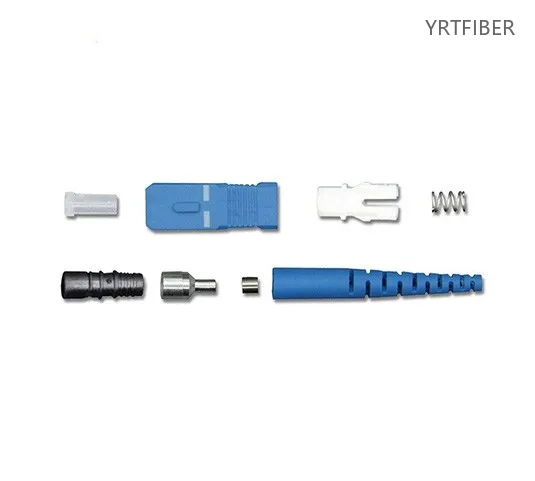
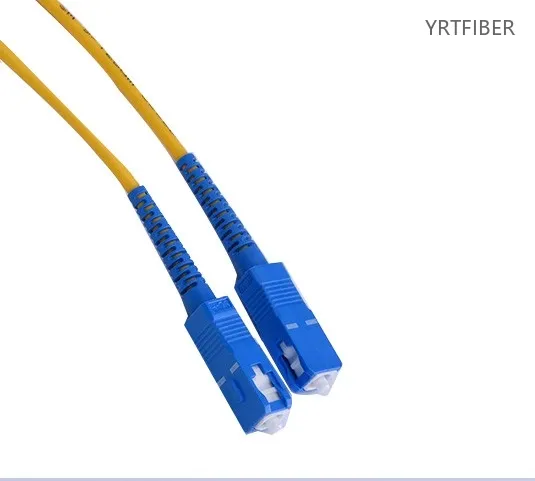
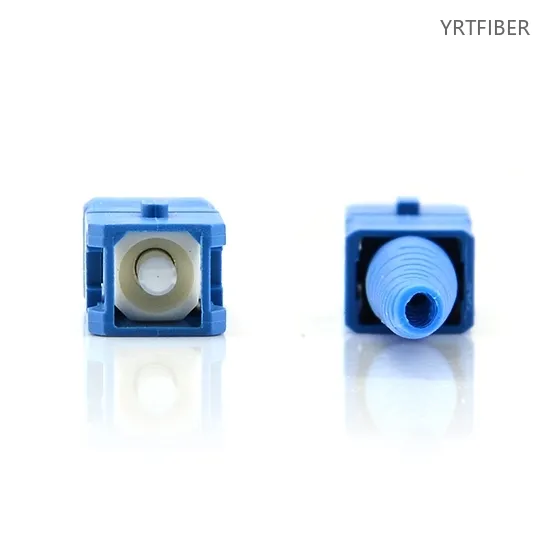
SC Fiber Connector for Stable and Cost-Effective Fiber Termination,UPC/APC
Push‑pull latching for tool‑free insertion and removal.
Available in UPC or APC (8° angle) polish.
2.5mm zirconia ferrule ensures low insertion loss: ≤0.15dB (UPC), ≤0.20dB (APC).
High return loss: ≥50dB (UPC), ≥60dB (APC) - APC suppresses back‑reflection.
Colour‑coded housings: blue (UPC SM), green (APC SM), beige/aqua (MM).
Flame‑retardant housing with strain‑relief boot, rated for >1.000 mating cycles.
Supports single‑mode and multimode fibers.
What are SC UPC and APC Fibre Optic Connectors?
The SC fibre optic connector is a push‑pull termination device that uses a 2.5mm zirconia ceramic ferrule to provide low‑loss, reliable connections for single‑mode and multimode fibres. The UPC (Ultra Physical Contact) version features a slightly convex, smooth polished end‑face that delivers low insertion loss and adequate return loss for most digital applications. The APC (Angled Physical Contact) version has an 8‑degree angled polish that virtually eliminates back reflections, making it the preferred choice for FTTx, CATV, and other reflection‑sensitive analogue and high‑speed digital links.
SC Fiber Connector Specification parameters
- Specification parameters
- OPTICAL CHARACTERISTICS
| Item | UPC | APC | ||
|---|---|---|---|---|
| Φ0.125mm | Φ0.25mm | Φ0.125mm | Φ0.25mm | |
| Radius of Curve(mm) | 7~25 | 10~25 | 5~12 | 5~12 |
| Return Loss(dB) | 50 | 50 | 55 | 55 |
| Apex Offset(um) | ≤50 | |||
| Fiber Height(nm) | -0.5 | |||
| Polishing Angle(°) | 8±0.3 | |||
| Testing wavelength(nm) | 1310 & 1550 | |||
| Insertion Loss | ≤0.3dB | |||
| Operating temperature | -40℃ ~ +80℃ | |||
| Cable diameter | 0.9mm, 2mm, 3mm | |||
| Service life | N>1000 | |||
| Dust Cap | LDPE | |||
| Connectors type | FC, ST, SC, LC | |||
| Polishing type | UPC, APC | |||
| Fiber type | Single-mode, Multi-mode | |||
| Port type | Simple, Double | |||
| Application | Drop cable / Patch cords / Pigtail | |||
Product Structure & Composition
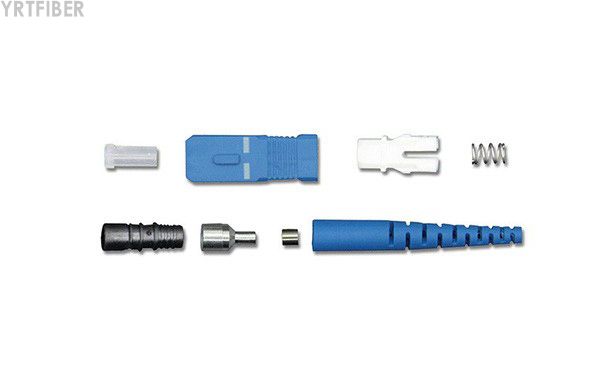
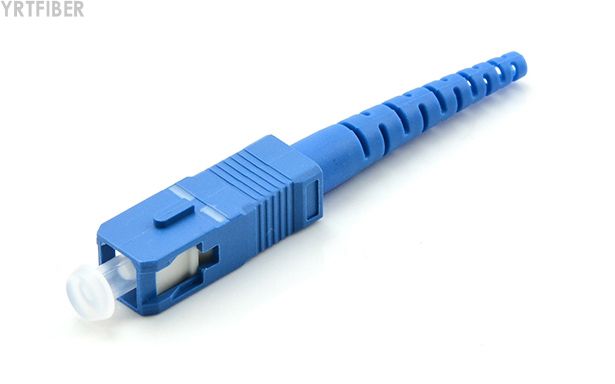
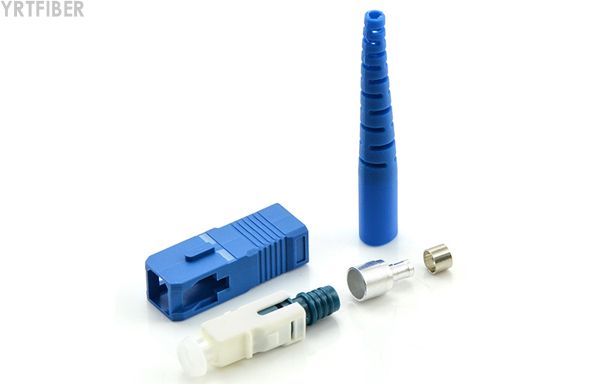
SC Ferrule and Push‑Pull Latch: The connector houses a 2.5mm zirconia ceramic ferrule that precisely aligns the fibre core. The rectangular push‑pull latch allows one‑handed mating - push the connector into the adapter until it clicks, and pull the outer sleeve to release.
UPC and APC End‑Face Polishes: The ferrule end‑face is polished to either UPC or APC finish. UPC is slightly convex and smooth, providing a low‑loss physical contact. APC has an 8‑degree angled surface that directs reflected light away from the source, drastically reducing back reflection.
Strain‑Relief Boot and Cable Compatibility: The connector includes a flexible boot that provides strain relief at the cable junction. It supports 900μm tight‑buffer, 2.0mm, and 3.0mm cable diameters, with colour‑coded boots (blue for UPC SM, green for APC SM, beige/aqua for MM).
Benefits of SC Fiber Connector
Reliable Push‑Pull Latching for Fast Deployment
The SC connector’s push‑pull mechanism allows quick, tool‑less connections and disconnections. A distinct click confirms secure latching, reducing installation time and eliminating the need for specialised tools – ideal for high‑volume patching in data centres and central offices.
Exceptional Return Loss with APC Polish for Reflection‑Critical Systems
The 8‑degree angled polish of the APC version provides return loss ≥60dB, effectively eliminating back reflections that can degrade analogue video signals, cause laser instability, or impair PON upstream performance. This makes APC the standard choice for FTTx, RF over fibre, and DWDM applications.
Engineering Applications SC Fiber Connector
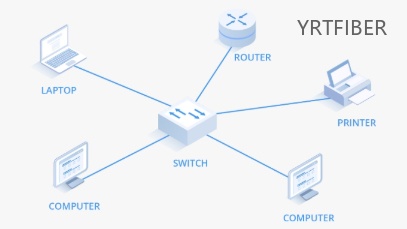
Optical fiber communication system

Fiber Access Network
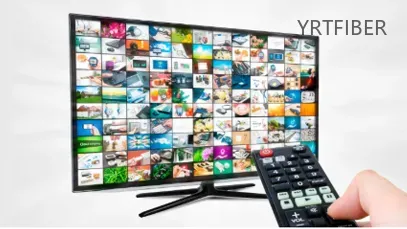
CATV
Shipping & Packaging
Product Comparison:
SC UPC vs. SC APC - Which Polish to Choose?
| Feature / Parameter | SC UPC Connector | SC APC Connector |
|---|---|---|
| Ferrule End‑Face Polish | Slightly convex, smooth surface (Ultra Physical Contact). | 8‑degree angled surface (Angled Physical Contact). |
| Typical Insertion Loss | ≤0.15dB (single‑mode), ≤0.10dB (multimode). | ≤0.20dB (single‑mode). |
| Typical Return Loss | ≥50dB (single‑mode), ≥35dB (multimode). | ≥60dB (single‑mode). |
| Reflection Suppression | Good - adequate for most digital signals. | Excellent - eliminates back reflections for analogue and high‑speed digital. |
| Colour Coding (Housing / Boot) | Blue for single‑mode, beige/aqua for multimode. | Green for single‑mode (no multimode APC). |
| Typical Applications | Data centres, enterprise networks, general telecom, 1G‑400G Ethernet. | FTTH, PON, CATV, RF over fibre, DWDM, high‑power lasers. |
| Compatibility | Fully interoperable with all standard SC adapters. | Fully interoperable with standard SC adapters; however, mixing UPC and APC on the same link is not recommended. |
| Cost (Relative) | Slightly lower than APC due to simpler polishing process. | Slightly higher due to angled polishing and inspection requirements. |
| Field Termination Complexity | Simpler - standard polishing process. | More complex - requires precise angle control during polishing. |
| Best For | Cost‑sensitive, high‑density digital links. | Reflection‑sensitive, high‑performance, or long‑reach links. |
SC Connector vs. LC Connector - Which Form Factor to Choose?
| Feature / Dimension | SC Connector (UPC/APC) | LC Connector (UPC/APC) |
|---|---|---|
| Ferrule Diameter | 2.5mm | 1.25mm |
| Housing Size | Larger (approximately double the footprint of LC). | Compact (half the size of SC). |
| Coupling Mechanism | Push‑pull latch with rectangular body. | Push‑pull latch with small, RJ‑45 style. |
| Port Density (per 1U panel) | Typically 24‑48 simplex/duplex ports. | Up to 48‑96 duplex ports. |
| Typical Applications | ODFs, CATV, FTTH, legacy systems, easy‑handling environments. | High‑density data centres, modern enterprise networks, compact equipment. |
| Advantages | - Easier to handle and clean due to larger size. - More robust latch. - Widely deployed with extensive legacy base. | - Higher density saves rack space. - Industry standard for SFP/QSFP transceivers. - Lower material cost per port. |
| Disadvantages | - Lower density compared to LC. - Bulkier cable management. | - Smaller size can be fiddly. - Less robust for high‑vibration environments. |
| Cost (Relative) | Similar to LC; slightly lower for some variants. | Comparable, with high‑density variants slightly more expensive. |
SC Fiber Connector Selection Guide
How to Choose Between SC UPC and SC APC Connectors
Selecting the right connector type depends on your application and performance requirements. For digital data transmission in data centres, enterprise LANs, and standard telecom links, the UPC version offers excellent performance at a lower cost. It provides more than sufficient return loss for most Ethernet and Fibre Channel applications.
For analogue video (CATV), FTTH/FTTx with PON, RF over fibre, or any system using high‑power lasers, the APC version is strongly recommended. The 8‑degree angle eliminates back reflections that can cause optical interference, signal distortion, or damage to sensitive transmitters.
Consider interoperability: UPC and APC connectors should not be mixed on the same link. Always match the connector polish on both ends of a patch cord and on the mating adapters. Check your equipment’s specification – many optical transceivers and ports are labelled for UPC or APC.
Finally, decide between SC and LC form factors. If space is at a premium and you need maximum port density, choose LC. If you prefer easier handling, have existing SC‑based infrastructure, or are deploying in CATV/FTTH outdoor cabinets where robustness is valued, SC remains a strong choice.
Installation Instructions
Preparing the Cable and Stripping
Strip jacket and buffer to specified lengths (expose 2‑3mm bare fiber) using a precision stripper to avoid damage.
Ferrule Termination and Adhesive Curing
Inject epoxy, insert fiber fully, cure per manufacturer's guidelines, then cleave excess just above the ferrule end‑face.
Polishing for UPC or APC Finish
Polish with appropriate films (APC uses 8° jig); inspect under 200x‑400x microscope to verify no scratches or debris.
Final Assembly and Cable Management
Assemble housing, crimp strain‑relief boot, label fiber and polish type. Route with minimum bend radius of 10× cable diameter.
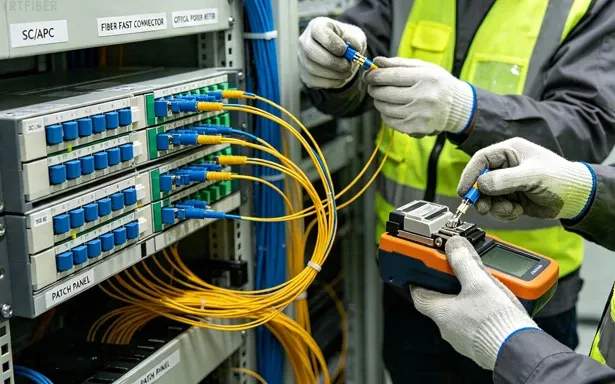
Download YRTFIBER Product Catalog
Factory Real Shot
Frequently Asked Questions & Quick Inquiry
SC Fiber Connector FAQ
What is the difference between UPC and APC on SC connectors?
UPC has a slightly convex polished end‑face that provides low insertion loss and good return loss. APC has an 8‑degree angled polish that significantly reduces back reflection, achieving higher return loss (≥60dB) at the cost of slightly higher insertion loss.
Can I mate a UPC connector with an APC connector?
No. The angled ferrule of APC will not mate correctly with the flat UPC ferrule, causing air gaps, high insertion loss, and potential damage to the ferrule end‑faces. Always use the same polish type on both sides of a connection.
Which polish type is better for FTTH?
APC is generally recommended for FTTH and PON applications because it provides superior return loss, reducing reflections that can degrade the performance of burst‑mode upstream signals.
What is the typical insertion loss of SC UPC vs APC?
SC UPC typical insertion loss is ≤0.15dB, while SC APC is ≤0.20dB. Both are well within the limits for most network standards.
How many mating cycles can these connectors withstand?
Both are rated for over 1,000 mating cycles with minimal increase in insertion loss (typically <0.1dB).
Are these connectors compatible with both single‑mode and multimode fibres?
Yes, but only specific variants. UPC is available for both single‑mode and multimode, while APC is typically offered only for single‑mode. The ferrule and polish are designed accordingly.
How do I identify UPC vs APC visually?
UPC connectors are colour‑coded blue (single‑mode) or beige/aqua (multimode). APC connectors are green for single‑mode. Additionally, the ferrule end‑face of APC will appear angled when viewed through a microscope.
What tools are needed for cleaning?
Use a dry cleaning cassette or lint‑free swab with isopropyl alcohol, specifically designed for SC connectors (2.5mm ferrule). For APC, swabs that match the 8‑degree angle are available, but standard swabs can also be used with care.
Can I field‑terminate these connectors?
Yes, pre‑polished mechanical splice or epoxy‑crimp field‑termination kits are available for both UPC and APC. However, factory termination is recommended for best performance.
What is the operating temperature range?
-40°C to +85°C, suitable for most indoor and outdoor (protected) environments.
Is the SC connector being phased out in favour of LC?
While LC dominates high‑density data centres, SC remains widely used in telecom, CATV, FTTH, and many enterprise installations. Both will coexist for the foreseeable future due to extensive deployed infrastructure.
Send Your Inquiry
Fill out the form below and we'll get back to you within 24 hours.


