

 Español
 Português
 لالعربية
 Русский
 Bahasa Indonesia
 Français
 Türkçe
 Bahasa Melayu

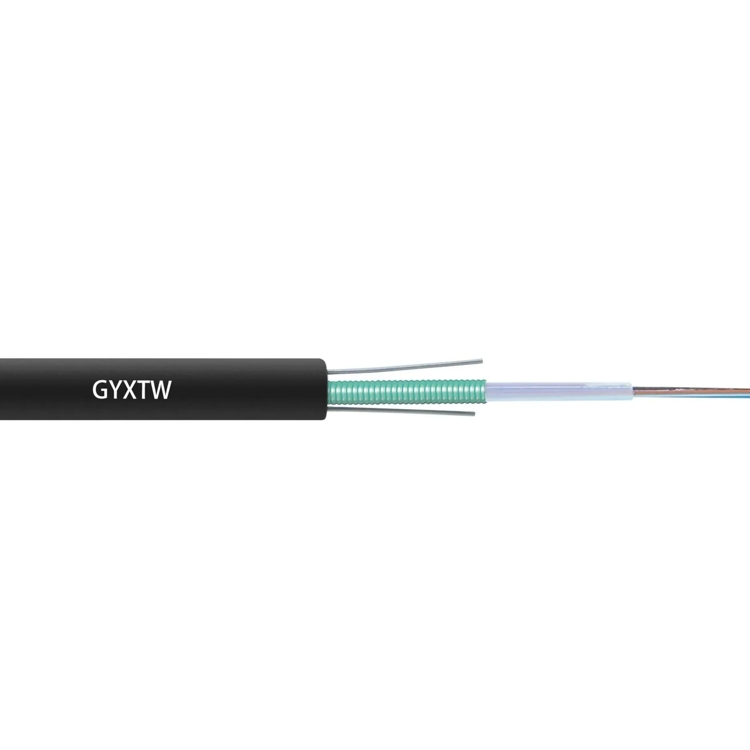
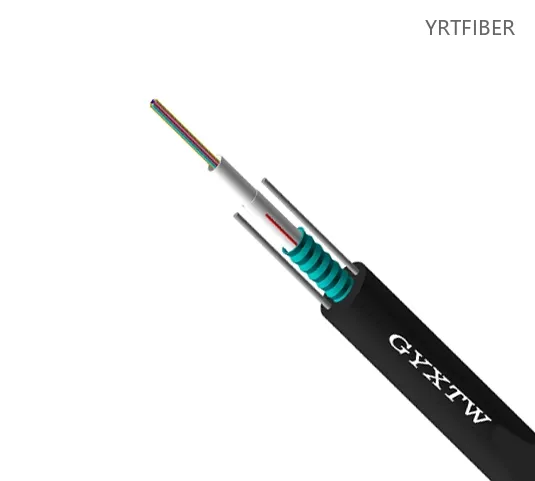
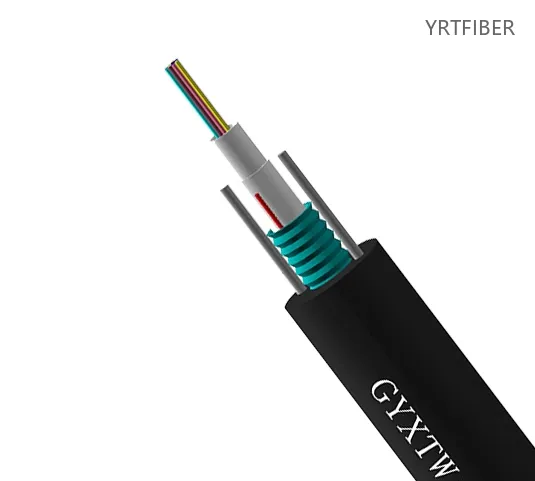
GYXTW Armored Fiber Optic Cable – Center Loose Tube, Dual Steel Wire
Good mechanical properties, good high temperature resistance
Loose casing with high strength and resistance to hydrolysis
Special casing fillers play a key role in protecting optical fibers
Anti-extrusion, good flexibility
PSP enhanced moisture resistance
Two parallel wires ensure tensile strength
Light weight, small diameter, easy installation
what is GYXTW Center Loose Armor Optical Cable
The GYXTW type optical cable places the optical fiber in a loose sleeve made of high modulus plastic, the sleeve is filled with waterproof filler, the sleeve is lengthwise wrapped with a layer of PSP, and the water-blocking material is filled between the PSP and the sleeve. Two parallel steel wires are placed on both sides of the steel strip, and the optical cable is covered with a PE sheath.
GYXTW Armored Fiber Optic Cable Specification parameters
- Specification parameters
- OPTICAL CHARACTERISTICS
optical properties
| G.652 | G.655 | 50/125μm | 62.5/125μm | |
|---|---|---|---|---|
| Attenuation (+20℃) | ≤3.0 dB/km @850nm | ≤3.0 dB/km @850nm | ||
| ≤1.0 dB/km @1300nm | ≤1.0 dB/km @1300nm | |||
| ≤0.36 dB/km @1310nm | ≤0.40 dB/km @1310nm | |||
| ≤0.22 dB/km @1550nm | ≤0.23 dB/km @1550nm | |||
| Bandwidth (Class A) | ≥500 MHz·km @850nm | ≥200 MHz·km @850nm | ||
| ≥1000 MHz·km @1300nm | ≥600 MHz·km @1300nm | |||
| Numerical Aperture | 0.200±0.015NA | 0.275±0.015NA | ||
| Cable Cut-off Wavelength | ≤1260nm | ≤1480nm | ||
| Storage/Operating temperature | -40℃ ~ +70℃ | |||
Technical parameters
| Model | Fiber Count | Outer Diameter (mm) | Weight (kg/km) | Tensile Strength Long/Short term (N) | Crush Resistance (N/100mm) | Bending Radius Static/Dynamic (mm) |
|---|---|---|---|---|---|---|
| GYXTW-4 | 4 | 8.0 | 95 | 600/1500 | 300/1000 | 10D/20D |
| GYXTW-6 | 6 | 8.0 | 105 | 1000/3000 | 1000/3000 | 10D/20D |
| GYXTW-8 | 8 | 8.0 | 132 | 1000/3000 | 1000/3000 | 10D/20D |
| GYXTW-12 | 12 | 8.0 | 148 | 1000/3000 | 1000/3000 | 10D/20D |
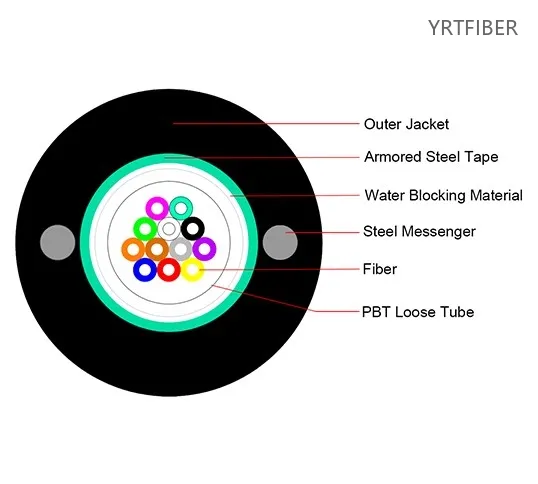
Product Structure & Composition
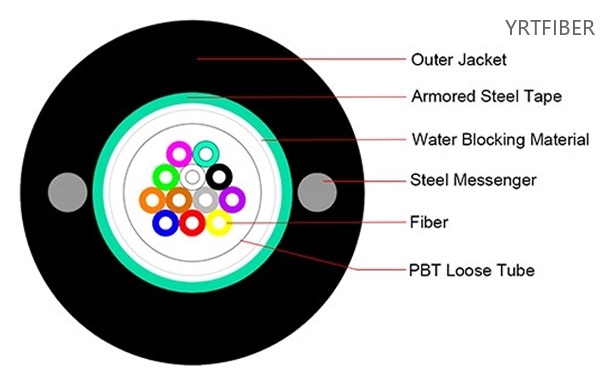
Outer Jacket: Protects the internal components from environmental factors such as moisture, UV radiation, and mechanical damage.
Armored Steel Tape:Provides additional mechanical protection against rodent bites, impact, and crushing forces.
Water Blocking Material:Prevents water from migrating longitudinally inside the cable if the outer jacket is damaged.
Steel Messenger:A strength member that supports the cable's weight and provides tensile strength for aerial installations.
Fiber:The optical fiber (usually single‑mode or multi‑mode) that transmits light signals for data communication.
PBT Loose Tube:Made of polybutylene terephthalate (PBT), it houses the optical fibers loosely, allowing them to move freely and protecting them from stress and moisture.
Benefits of GYXTW Armored Fiber Optic Cable
Mechanical & Thermal Performance
Good mechanical properties, high temperature resistance, anti‑extrusion, and good flexibility.
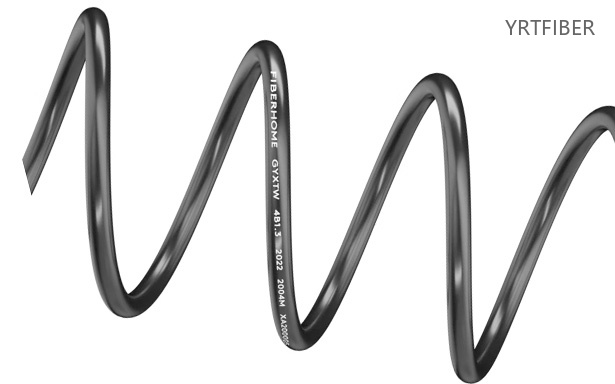
Fiber Protection & Loose Tube
High‑strength, hydrolysis‑resistant loose tube with special fillers that effectively protect optical fibers.
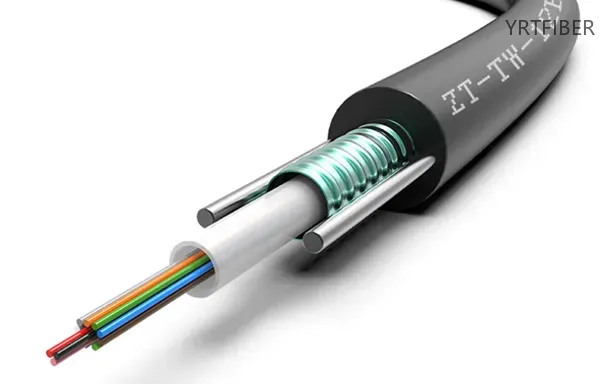
Moisture & Tensile Strength
PSP enhanced moisture resistance and two parallel wires for tensile strength.

Lightweight & Easy Installation
Light weight, small diameter, and easy installation.
Engineering Applications GYXTW Armored Fiber Optic Cable
Long-Haul and Inter-Office Trunk Communication
GYXTW cable is widely deployed in backbone and metropolitan trunk networks for long-distance, inter-office links. Its central loose-tube design keeps fiber attenuation low, while the corrugated steel-tape armor and two parallel steel wires provide strong crush resistance and moisture protection in duct or direct-burial installations
With a compact, lightweight build and a temperature range of −40 °C to +70 °C, the cable is easy to transport and lay, making it a cost-effective, high-reliability choice for large-scale carrier projects

Campus and Enterprise Building Interconnection
Modern university and corporate campuses need robust, scalable fiber connectivity between buildings. GYXTW cable is often run through underground ducts or along walls, offering high bandwidth and low signal attenuation with an armored jacket that withstands direct burial and accidental excavation
Available from 2 to 24 cores in single-mode or multimode, the cable provides a versatile, budget-friendly backbone for outdoor campus networking
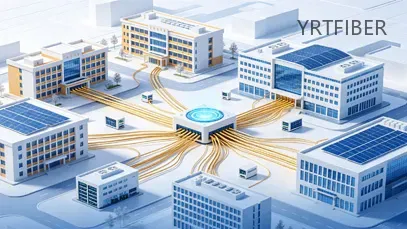
Smart Community and Security Surveillance Networks
In smart communities, high-definition IP cameras demand stable, high-bandwidth transmission. GYXTW cable can be ducted, directly buried, or attached to walls, and its steel-tape armor effectively resists rodent bites, accidental digging, and daily wear, ensuring 24/7 uninterrupted transmission of HD video streams
As an all-dielectric design in its fiber-carrying parts and a robust metal jacket, the cable inherently rejects electromagnetic interference, delivering smooth, clear video that eliminates the signal-attenuation problems common with copper links

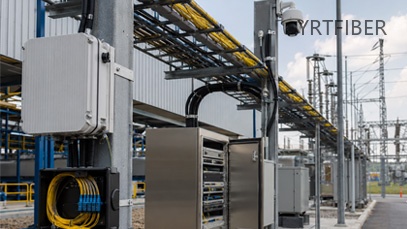
Industrial and Transportation Sector Private Networks
In harsh environments such as power plants, factories, and railway signaling systems, GYXTW cable reliably carries SCADA data, video surveillance, and control signals. Its double steel-wire reinforcement and corrugated steel tape maintain optical integrity under heavy vibration and mechanical shock
With a 50-year service life, all-section water-blocking, and UV-resistant PE sheath, the cable significantly reduces the need for frequent replacement in exposed industrial settings, offering a low-maintenance, durable solution
Shipping & Packaging
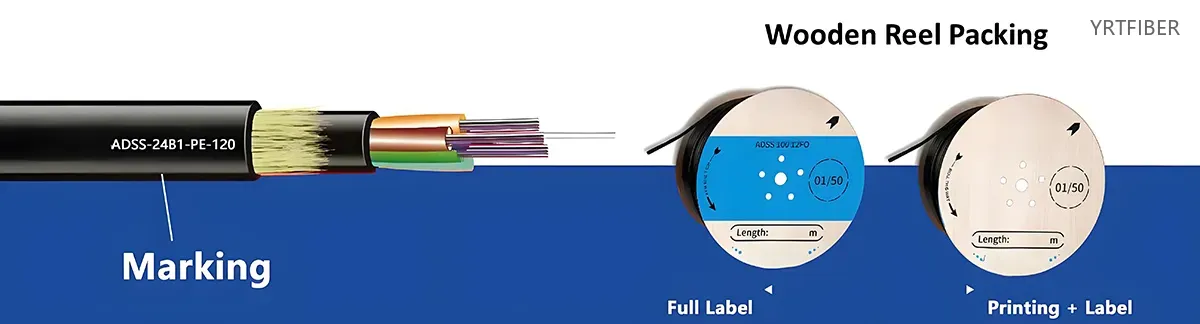
Packaging Requirements:
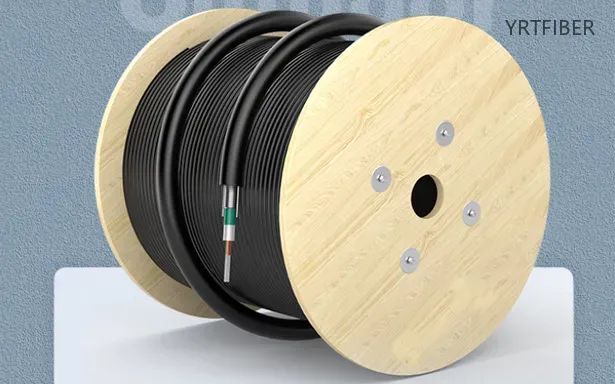
1:All cables shall be wound on treated wooden spools that are not returnable
2:Cable ends must be firmly secured to the spool and protected with waterproof shrink caps
3:Each spool must include: Protective plastic wrapping layer ,Reinforcing wooden slats for stability,Minimum 1m of free cable end for testing purposes, Standard spool length: 3000mm (±2% tolerance allowed)
Cable Identification:
The outer jacket must display:
1、Unique sequential numbering every 1m (±1% variance permitted)
2、 Additional repeating markings at 1m intervals showing: Product code and fiber count, Manufacturer identification, Production date (month/year),Total cable length
Standard Packaging Dimensions:
| Length | Container | Size (L×W×H) | Net Mass | Total Mass |
|---|---|---|---|---|
| 2 km | Wood spool | 90×75×90 cm | 156 kg | 220 kg |
| 3 km | Wood spool | 100×68×100 cm | 240 kg | 280 kg |
| 4 km | Wood spool | 109×75×109 cm | 300 kg | 368 kg |
| 5 km | Wood spool | 129×72×129 cm | 400 kg | 480 kg |
Technical Reference:
1、 Standard cable diameter: 10.0mm
2、Maximum span distance: 100m
3、Contact sales team for complete technical specifications
Spool Marking Standards:
Permanent markings (minimum 25-30mm height) must appear on both sides of each spool:
1、 Company name and trademark
2、Contained cable length
3、Cable specifications (type/fiber count)
4、Winding orientation
5、Weight measurements (gross/net)
Note: All wooden packaging materials must undergo proper fumigation treatment prior to use.
Product Comparison:
GYXTW (Central Tube Light Armor) vs GYTS (Stranded Steel Tape Armor) vs GYTA (Stranded Aluminum Tape Armor)
| Feature / Dimension | GYXTW | GYTS | GYTA |
|---|---|---|---|
| Structural Features | Center loose tube, fibers filled with water-blocking compound, one layer of PSP steel tape longitudinally wrapped, two parallel steel wires as strength members, PE outer sheath. | Stranded loose tube design around a central metal strength member, filled with water-blocking compound, corrugated steel tape armor (PSP) longitudinally wrapped, PE outer sheath. | Stranded loose tube design around a central metal strength member, filled with water-blocking compound, aluminum tape armor longitudinally wrapped, PE outer sheath. |
| Typical Applications | Outdoor aerial (needs separate messenger wire) and duct installation; access networks, FTTH, short-distance communication links (typically ≤5km), small core count applications. | Aerial (with messenger), duct, direct burial; core networks, metropolitan networks, trunk lines, long-haul backbone, harsh environments requiring high crush resistance. | Aerial (with messenger), duct, direct burial; core networks, metropolitan networks, access networks, areas with higher moisture corrosion requirements (aluminum tape performs better in corrosion resistance than steel). |
| Fiber Core Capacity | Typically 2–12 cores (some sources mention up to 24 cores). | Wide range: 2–288 cores. | Wide range: 2–144 cores. |
| Pros in Engineering | Compact structure, light weight, easy installation, low material cost, flexible and good bending resistance, suitable for low-core-count projects. | High crush and tensile strength, excellent mechanical and environmental performance, superior moisture protection (corrugated steel tape), suitable for harsh environments (direct burial, rocky terrain). | Aluminum tape offers better moisture and corrosion resistance than steel tape, long service life in conduit applications, lighter than steel tape armor, balanced mechanical protection. |
| Cons in Engineering | Limited core capacity, cannot be used for direct burial (requires additional conduit), steel tape offers moderate crush resistance, poorer moisture resistance compared to stranded designs. | Heavier and stiffer, harder to handle in ducts, higher material cost, steel tape is prone to corrosion if coating is damaged. | Aluminum tape has lower side pressure resistance than steel tape. |
| Cost (Relative) | Low – economically preferred for low core count and access layers. | Medium – steel tape armor increases material and shipping costs. | Medium – aluminum tape material cost is lower than steel tape, but manufacturing process is similar. |
| Maintenance Difficulty | Low – simple structure makes maintenance relatively straightforward; steel wires are prone to rust in harsh conditions. Suitable for non-critical access sections. | Moderate – heavy armor makes mid-span access and maintenance more difficult; requires careful rust inspection at cut points. Suitable for trunk lines. | Low – aluminum tape offers better corrosion resistance, easier mid-span maintenance than steel tape armor. Suitable for trunk lines and areas with higher moisture resistance requirements. |
| Typical Outer Diameter | Smaller diameter, typically 9.0–15.0 mm. | Slightly larger diameter, typically 9.5–17.0 mm. | Similar diameter range to GYTS, generally 10.0–16.0 mm. |
| Application Temperature | -40℃ to +70℃. | -40℃ to +60℃. | -40℃ to +60℃. |
GYXTW Armored Fiber Optic Cable Selection Guide
Installation of GYXTW Optical Cable
1:Pre-Installation Inspection
Verify cable type, length, and jacket integrity. Store in dry, clean environment before use.
2:Cable Pulling
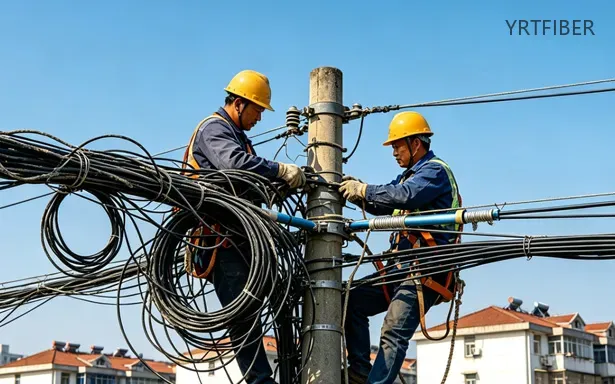
Use pulling grip on strength members. Max tension: 1000 N, speed: 15 m/min. Avoid bending below 20x cable OD during pulling (10x after installation).
3:Stripping & Splicing
Cut outer jacket and steel tape carefully. Remove water‑blocking material, open PBT loose tube, clean and fusion splice fibers. Ground or fix steel tape and parallel wires as required.
4:Post-Installation
Seal closure properly. For aerial lines, use hooks every 1.5–2 m. Perform final optical tests (loss, return loss) and record data.
Download YRTFIBER Product Catalog
Factory Real Shot
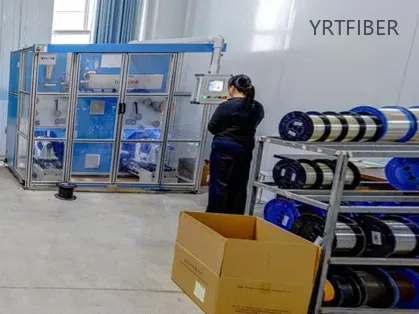
Raw Material Inspection
Technicians check incoming steel tape, PBT, water‑blocking material, and optical fibers before production.
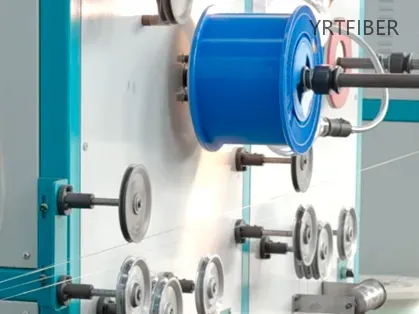
Fiber Coloring & Loose Tube Extrusion
Automated lines apply color coding to fibers and extrude PBT loose tubes with high precision.
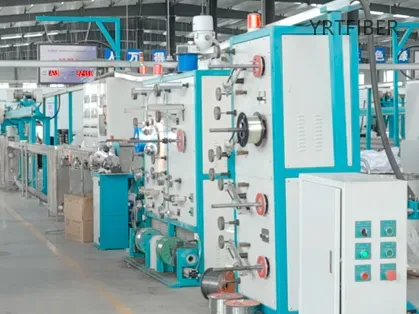
Armoring & Sheathing Line
Steel tape is longitudinally folded and welded, followed by outer jacket extrusion for mechanical protection.
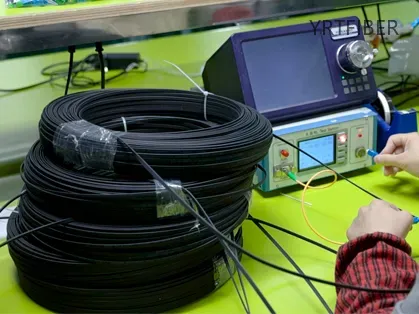
Final Testing & Spooling
Finished cables undergo tension, water penetration, and optical loss tests before being wound onto wooden reels.
Frequently Asked Questions & Quick Inquiry
GYXTW Armored Fiber Optic Cable FAQ
1. What is a GYXTW fiber optic cable?
GYXTW is a center loose tube armored cable, typically designed for outdoor use. It includes a single loose tube filled with water-blocking gel, surrounded by corrugated steel tape armor and two parallel steel wires for mechanical strength.
2. What fiber types and core counts are available?
The cable is available with 4, 6, 8, or 12 cores, and supports G.652D or G.655 single-mode optical fibers, suitable for long-distance and backbone networks.
3. What is the purpose of the steel armor and wires?
The corrugated steel tape armor provides enhanced crush resistance and rodent protection, while the dual steel wires offer additional tensile strength, making the cable suitable for aerial and buried installation.
4. What environments is this cable best suited for?
GYXTW is commonly used in:
Direct-burial applications
Aerial installation with messenger wire
Duct/pipeline installations
Rural long-distance fiber deployment
5. Is the GYXTW cable waterproof?
Yes. The central tube is filled with water-blocking gel, and the structure includes moisture-resistant components, making it well suited for damp or underground environments.
Send Your Inquiry
Fill out the form below and we'll get back to you within 24 hours.


