

 Español
 Português
 لالعربية
 Русский
 Bahasa Indonesia
 Français
 Türkçe
 Bahasa Melayu

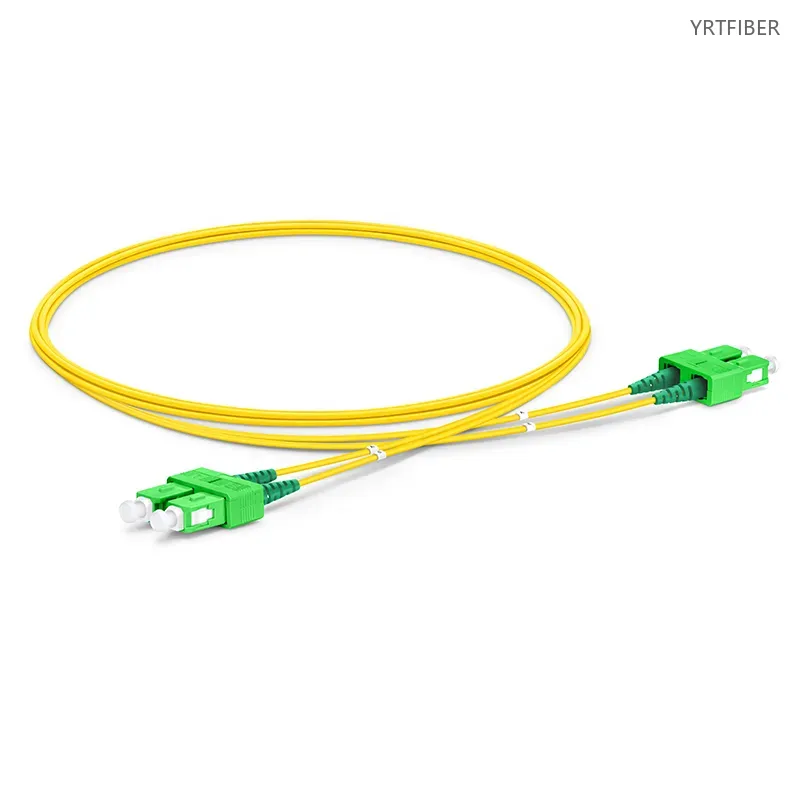
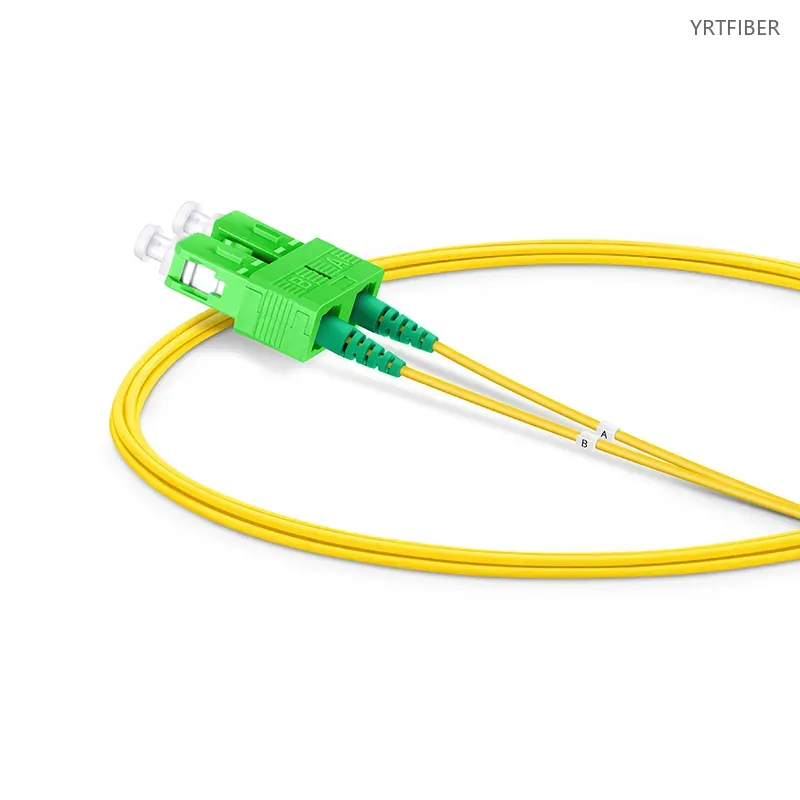
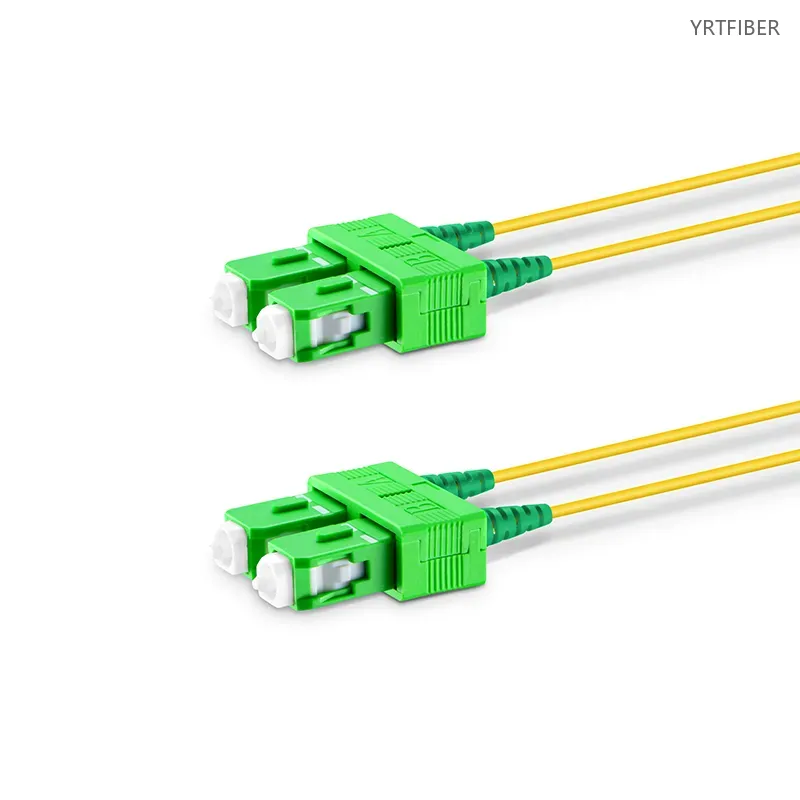
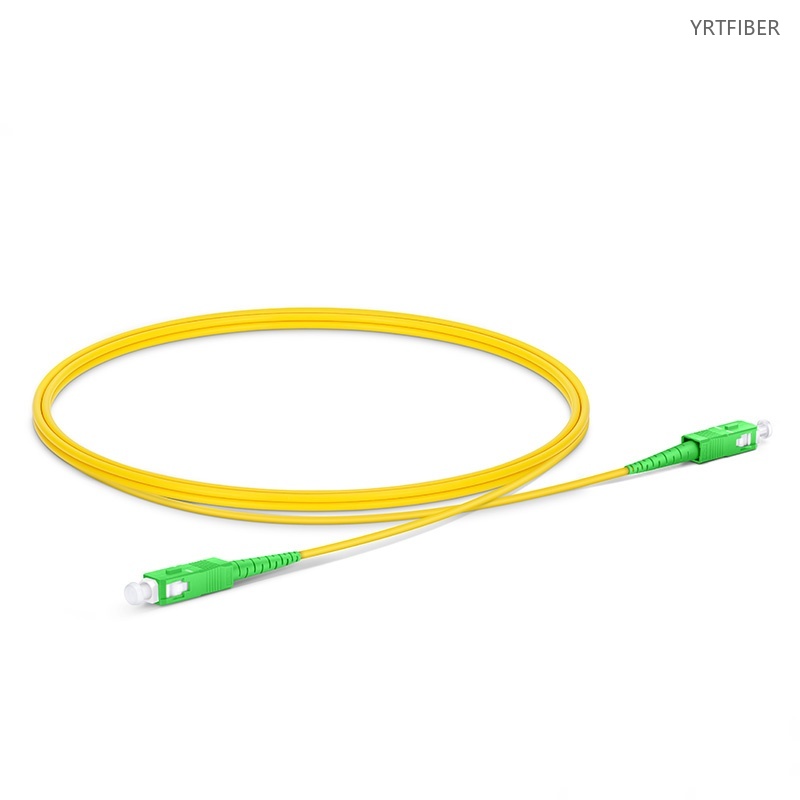
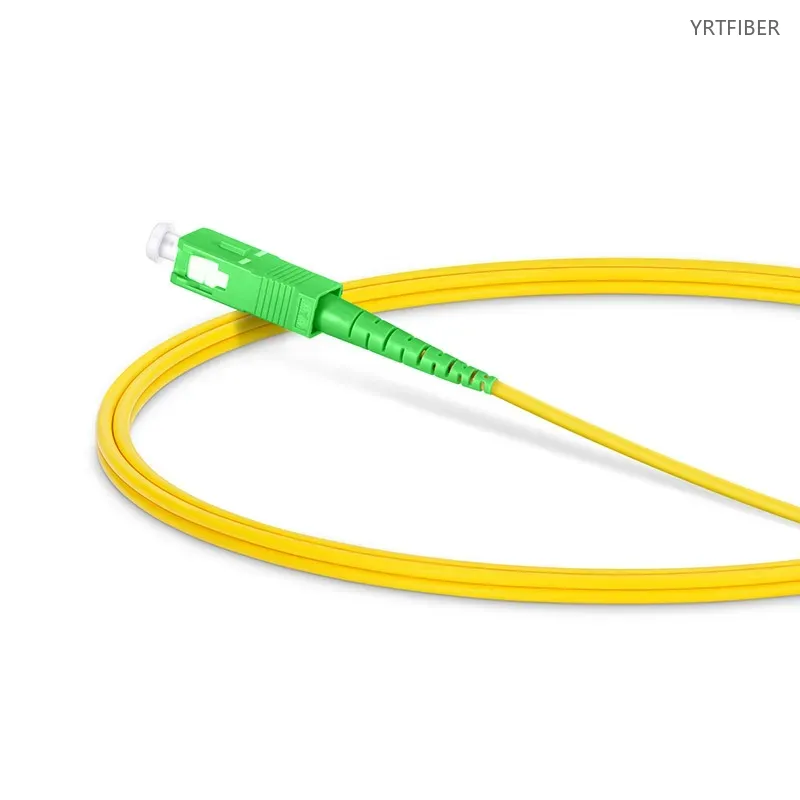
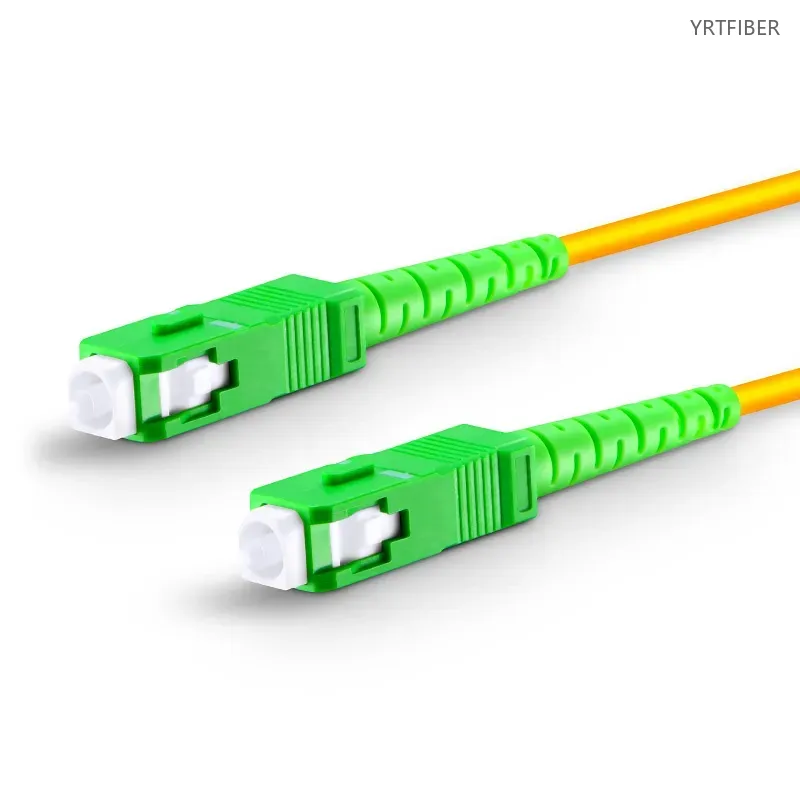
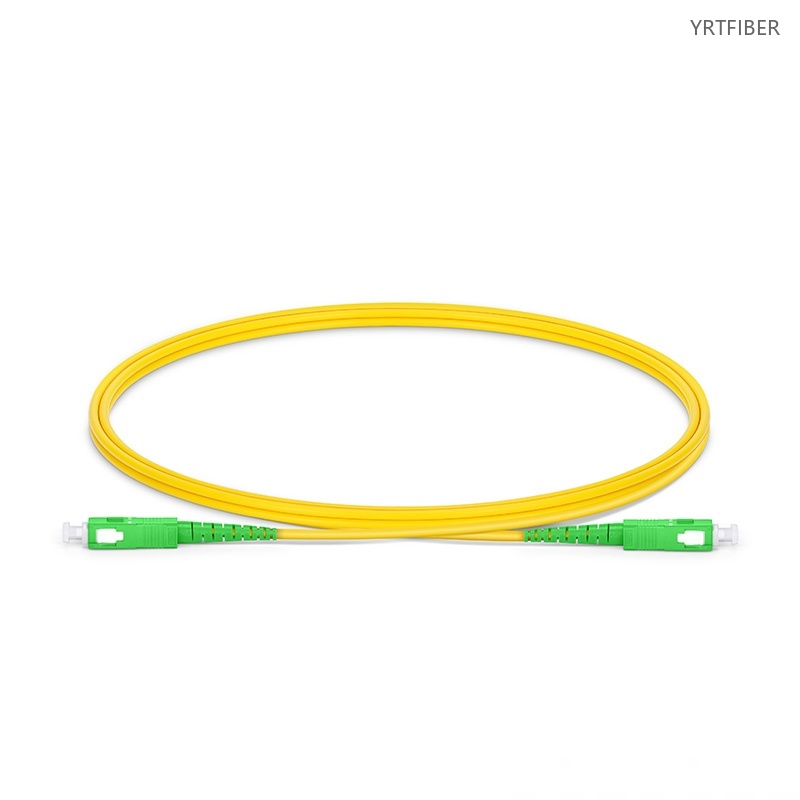
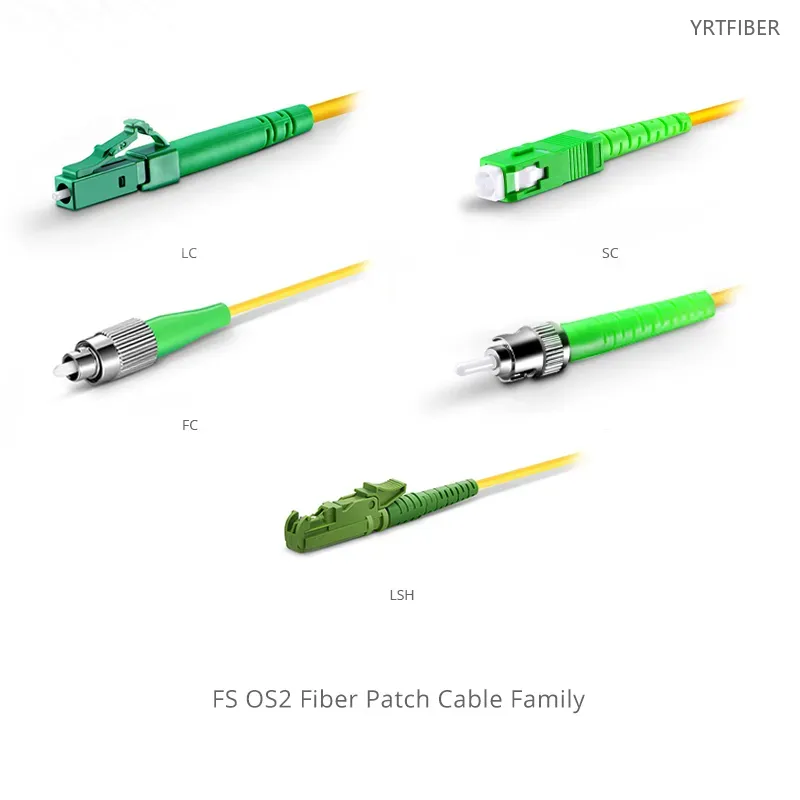
SC-SC APC Simplex/Duplex Single Mode (OS2) Fiber Patch Cord – G.657.A1, 2.0mm, Riser (OFNR)
SC - SC connectors with UPC or APC polish ensure stable connections for SC - interface fiber equipment.
Comes in both single - mode (G652D/G657A) and multimode (OM1 - OM4) fiber types to meet different transmission needs.
Exhibits low insertion loss and high return loss, guaranteeing excellent signal transmission performance.
Flame - retardant PVC, LSZH, or OFNP jacket is suitable for various environmental conditions.
Supports custom length and connector polish as per customer requests.
What is an SC - SC APC Single mode Fiber Patch Cord?
An SC - SC APC Single mode Fiber Patch Cord is a cable designed to link fiber equipment with SC interfaces. It offers both single - mode (G652D/G657A) and multimode (OM1 - OM4) versions, features SC - SC connectors with UPC or APC polish, and provides stable, low - loss signal transmission for applications like FTTH, LAN, and telecom networks.
SC-SC APC Single mode Fiber Patch Cords Specification parameters
- Specification parameters
- OPTICAL CHARACTERISTICS
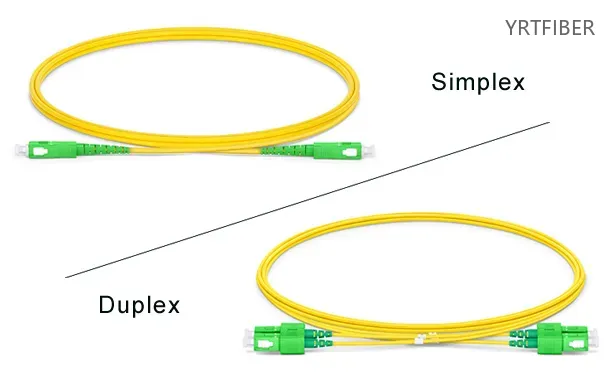
SC-SC APC Simplex
| Connector A | SC APC Simplex | Connector B | SC APC Simplex |
| Fiber Count | 1 Fiber | Fiber Grade | G.657.A1 (Compatible with G.652.D) |
| Fiber Mode | OS2 9/125µm | Wavelength | 1310/1550nm |
| Flame Rating | Riser (OFNR) | Cable Outside Diameter (OD) | 1.2mm |
| RoHS Compliancy Status | Compliant | Cable Type | Tight-Buffered |
| Min. Bend Radius (Optical Fiber) | 10mm | Min. Bend Radius (Fiber Cable) | 20/10D (Dynamic/Static) |
| Connector Durability | 1000 times | Tensile Strength | 20/40N (Long/Short Term) |
| Insertion Loss | ≤0.3dB | Return Loss | ≥60dB |
| Attenuation at 1310nm | 0.4dB/km | Attenuation at 1550nm | 0.3dB/km |
| Operating Temperature | -10 to 70℃ (14 to 158℉) | Storage Temperature | -20 to 70℃ (-4 to 158℉) |
SC-SC APC Duplex
| Connector A | SC APC Duplex | Connector B | SC APC Duplex |
| Fiber Count | 2 Fibers | Fiber Grade | G.657.A1 (Compatible with G.652.D) |
| Fiber Mode | OS2 9/125μm | Wavelength | 1310/1550nm |
| Flame Rating | Riser (OFNR) | Cable Outside Diameter (OD) | 1.2mm |
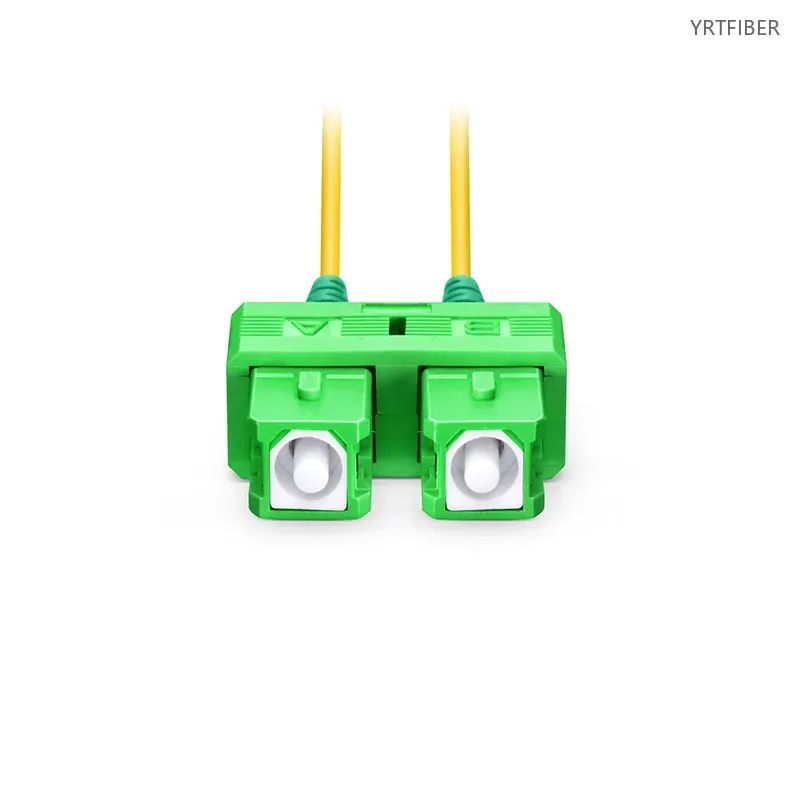
| Polarity | A (Tx) to B (Rx) | Cable Type | Tight-Buffered |
| Min. Bend Radius (Optical Fiber) | 10mm | Min. Bend Radius (Fiber Cable) | 20/10D (Dynamic/Static) |
| Connector Durability | 1000 times | Tensile Strength | 40/80N (Long/Short Term) |
| Insertion Loss | ≤0.3dB | Return Loss | ≥60dB |
| Attenuation at 1310nm | 0.4dB/km | Attenuation at 1550nm | 0.3dB/km |
| Operating Temperature | -10 to 70°C (14 to 158°F) | Storage Temperature | -20 to 70°C (-4 to 158°F) |
Product Structure & Composition
Fiber Core and Cladding: For single - mode, G652D fiber has a 9/125 µm core - cladding structure optimized for long - distance, low - loss transmission, while G657A offers bend - insensitive properties. Multimode fibers, such as OM1/OM2 with 62.5/125 µm and OM3/OM4 with 50/125 µm, are suitable for shorter - distance, higher - bandwidth applications. The cladding surrounds the core to keep the optical signal contained.

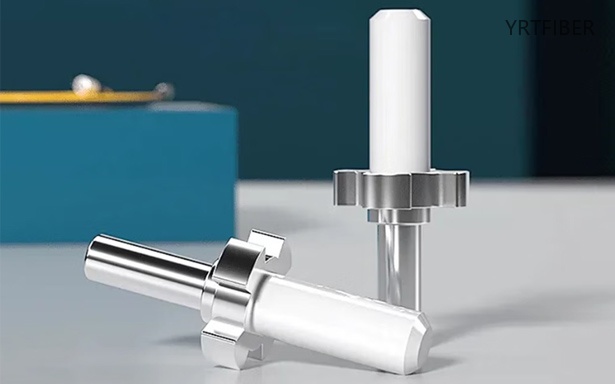
SC Connector: The SC connector has a rectangular plastic body and a 2.5mm zirconia ceramic ferrule. In the case of APC polish, the end - face of the ferrule is angled (usually 8°) to minimize back - reflection. The push - pull locking mechanism of the SC connector provides a quick and secure connection.
Outer Jacket: Made of flame - retardant PVC, LSZH, or OFNP materials. PVC is a common, cost - effective option for general - purpose use. LSZH is ideal for environments where fire - safety is a concern as it emits less smoke and no halogen - containing toxic gases when burned. OFNP is designed for plenum spaces where air circulation is high, ensuring fire - retardant performance. The jacket protects the inner fiber from mechanical damage.
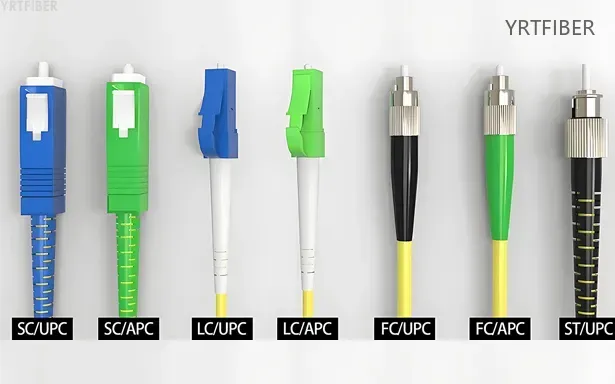
Benefits of SC-SC APC Single mode Fiber Patch Cords
Stable SC - SC Connectors
The SC - SC connectors with their push - pull locking mechanism offer a stable connection. Whether with UPC or APC polish, the 2.5mm zirconia ceramic ferrule ensures accurate fiber alignment, resulting in low insertion loss. In the case of APC polish, the angled end - face significantly reduces back - reflection, enhancing signal integrity.

Versatile Fiber Type Options
With support for both single - mode and multimode fibers, the SC - SC APC patch cord can be used in a wide variety of applications. Single - mode fibers are perfect for long - distance telecommunications and high - bandwidth, long - haul data transmission. Multimode fibers are well - suited for local - area networks, data centers with shorter - distance connections, and high - speed Ethernet applications.
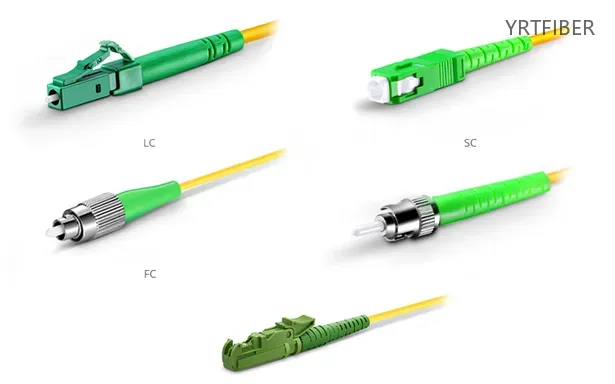
Excellent Transmission Performance
The combination of low insertion loss and high return loss in the SC - SC APC patch cord ensures reliable optical signal transmission. This is crucial for maintaining high - quality connections in FTTH, LAN, and telecom applications, minimizing signal degradation and ensuring efficient data transfer.
Environment - friendly and Durable Jacket
The availability of flame - retardant PVC, LSZH, or OFNP jackets makes the patch cord suitable for different environments. These materials not only provide mechanical protection to the fiber but also meet safety and environmental requirements. For example, LSZH jackets are preferred in public buildings, and OFNP jackets are necessary in plenum spaces.
Engineering Applications SC-SC APC Single mode Fiber Patch Cords
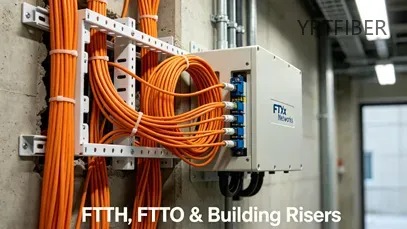
Fiber - to - the - Home (FTTH)
In FTTH applications, the SC - SC APC single - mode fiber patch cord is used to connect the optical network unit (ONU) at the customer premises to the optical distribution network (ODN). Its low insertion loss and high return loss ensure stable, high - speed broadband access over the fiber connection.
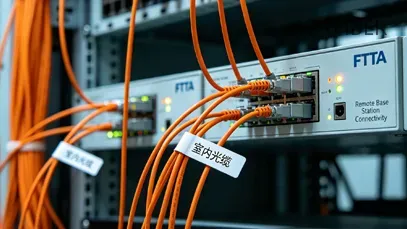
Local Area Networks (LAN)
Within LAN environments, the SC - SC APC patch cord can be used to connect switches, routers, and servers. The availability of multimode fibers in this patch cord makes it suitable for high - speed data transfer over short distances within the local network, enabling seamless communication between network devices.
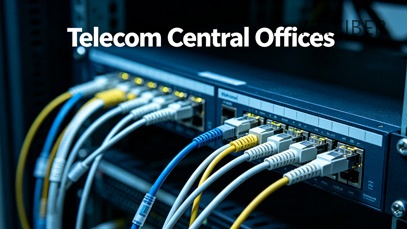
Telecom Networks
In telecom networks, the SC - SC APC patch cord plays a vital role in connecting various optical components in central offices, base stations, and long - haul transmission systems. Its single - mode fiber options are ideal for long - distance signal transmission, while the stable connectors and excellent transmission performance ensure reliable communication across the network.
Shipping & Packaging
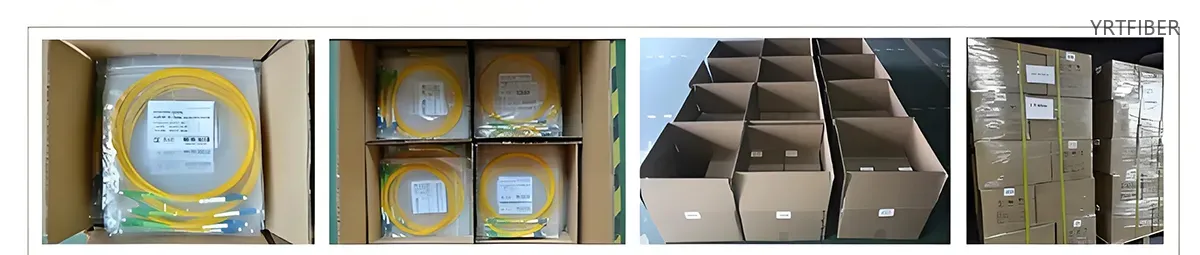

Product Comparison:
SC - SC APC vs SC - SC UPC
| Feature / Dimension | SC - SC APC Fiber Patch Cable | SC - SC UPC Fiber Patch Cable |
|---|---|---|
| Structure / Form Factor | Both have SC - SC connectors with a rectangular plastic body and 2.5mm zirconia ceramic ferrule. The APC ferrule has an angled end - face (usually 8°) for reduced back - reflection. | SC - SC connectors with 2.5mm zirconia ceramic ferrule. The UPC ferrule has a slightly domed end - face for good optical contact and low back - reflection, but less effective than APC in minimizing back - reflection. |
| Coupling Mechanism | Push - pull locking mechanism for quick connection and disconnection, common to both SC - SC APC and SC - SC UPC. | Same push - pull locking mechanism as SC - SC APC, providing easy and fast patching. |
| Typical Applications | Used in applications where minimizing back - reflection is crucial, such as long - distance telecommunications, high - performance data centers, and fiber - optic test and measurement equipment. | Commonly used in general - purpose fiber - optic connections, including LANs, some data center connections, and applications where extreme reduction of back - reflection is not the top priority. |
| Key Engineering Pros | - Extremely high return loss due to the angled end - face, significantly reducing back - reflection. - Suitable for high - bandwidth and long - distance applications where signal integrity is crucial. - Push - pull mechanism allows for quick and secure connections. | - Good mechanical stability due to the push - pull locking mechanism. - Low insertion loss, ensuring efficient signal transmission. - Widely used and well - understood in the industry, with a large base of compatible equipment. |
| Key Engineering Cons | - Higher manufacturing cost due to the precise angled polishing process. - Slightly more complex alignment during connection compared to UPC, as the angled end - face requires careful mating. - May not be necessary for applications with less stringent back - reflection requirements. | - Lower return loss compared to APC, which may lead to some signal reflection in high - performance applications. - The push - pull mechanism may be less secure in high - vibration environments if not properly installed. |
| Tolerance to Vibration / Shock | Good for normal indoor environments, but the angled end - face may be more sensitive to misalignment under high - vibration conditions if not properly secured. | Good for normal indoor environments, but the push - pull locking mechanism may loosen under sustained high - vibration or shock. |
| Cable Jacket Options | Available with flame - retardant PVC, LSZH, or OFNP jackets, providing options for different environmental requirements, from general indoor use to fire - safety - critical and plenum spaces. | Similar jacket options as SC - SC APC, including PVC, LSZH, and OFNP, to suit various installation environments. |
| Fiber Mode Options | Supports both single - mode (G652D, G657A) and multimode (OM1 - OM4) fibers, suitable for a wide range of applications. | Also supports single - mode and multimode fibers, offering flexibility in fiber mode selection depending on the application's requirements. |
| Cost (Relative) | Relatively higher cost due to the more complex APC polishing process and the precision required for the angled end - face. | Generally has a lower cost compared to SC - SC APC, especially for large - scale deployments, as the UPC polishing process is more common and less expensive. |
| Maintenance & Handling | Cleaning and maintenance require special attention to the angled end - face to avoid damage. The push - pull locking mechanism needs to be checked for proper locking. | Cleaning is relatively straightforward, but care must be taken with the domed UPC end - face. The push - pull locking mechanism also requires proper locking to ensure good optical contact. |
SC-SC APC Single mode Fiber Patch Cords Selection Guide
When choosing between an SC - SC APC and SC - SC UPC fiber patch cord
If your application involves long - distance signal transmission, high - performance data centers, or fiber - optic test and measurement where minimizing back - reflection is of utmost importance, the SC - SC APC is the better choice.
The angled end - face of the APC connector provides an extremely high return loss, which is essential for maintaining signal integrity over long distances and in high - bandwidth scenarios. For instance, in a long - haul telecom link, the high return loss of SC - SC APC helps prevent signal degradation caused by back - reflection. However, it's important to note that the APC polishing process is more complex, resulting in a higher manufacturing cost. Also, the alignment during connection is slightly more challenging due to the angled end - face. For applications where back - reflection reduction is not a critical factor, the additional cost of the SC - SC APC may not be justifiable.
For general - purpose fiber - optic connections, such as those in LANs, some data center connections, or applications where extreme back - reflection reduction is not the top priority, the SC - SC UPC is a more suitable option. It offers good mechanical stability with its push - pull locking mechanism and low insertion loss, ensuring efficient signal transmission. The UPC polishing process is more common and less expensive, making it a cost - effective choice for large - scale deployments. However, in applications that demand high - bandwidth and long - distance transmission with minimal back - reflection, the SC - SC UPC may not perform as well as the SC - SC APC.
Parameter - Best Fit
| Parameter | Best Fit |
|---|---|
| High - bandwidth long - distance transmission with low back - reflection | SC - SC APC |
| General - purpose fiber - optic connections with cost - effectiveness | SC - SC UPC |
| High - performance data centers with strict back - reflection requirements | SC - SC APC |
| Fiber - optic test and measurement equipment | SC - SC APC |
| Applications where cost is a major constraint and back - reflection requirements are moderate | SC - SC UPC |
| High - vibration environments (both need proper securing, but APC's angled end - face may be more sensitive to misalignment) | SC - SC APC / SC - SC UPC |
| Installations in fire - safety - critical areas (both should choose appropriate jacket materials like LSZH or OFNP) | SC - SC APC / SC - SC UPC |
| Applications with frequent connection and disconnection (UPC is relatively easier to handle in terms of connector maintenance) | SC - SC UPC |
Mixed deployment guidance:
In cases where existing SC - based equipment with UPC connectors needs to interface with new equipment that requires APC - terminated fibers, special hybrid patch cords can be used. If the deployment involves a combination of high - performance areas (like high - speed data transmission sections) and general - purpose connection areas in a data center, SC - SC APC can be used for the high - performance areas, and SC - SC UPC for the general - purpose areas. In industrial settings, if there are some high - precision measurement devices that demand low back - reflection, SC - SC APC can be used for those connections, while SC - SC UPC can be used for other general - purpose connections within the same facility to balance cost and performance.
Installation Instructions of SC-SC APC fiber patch cord
Pre - installation Inspection : Visually check the SC - SC APC fiber patch cord. Ensure the outer jacket has no cuts, abrasions, or bulges. Examine the SC connectors; the push - pull locking mechanism should be in good condition, and the ferrules should be clean and free from scratches.
Connector Cleaning: Use a lint - free cleaning swab dipped in isopropyl alcohol. Gently wipe the angled end - face of the APC ferrule in a direction following the angle. Be careful not to apply excessive pressure. After wiping, use a clean, dry swab to remove any remaining moisture.
Connection : Align the key on the SC connector with the keyway in the adapter or the receiving port of the optical device. Gently insert the connector and push until you feel a secure lock, indicating proper connection.
Cable Routing and Management : Route the patch cord while maintaining the minimum bending radius. For single - mode fibers, it's typically around 10 times the cable diameter. Use cable ties or trays to secure the cord in place for better cable management.
Post - installation Testing : After installation, use an optical power meter to measure the insertion loss. Compare the measured value with the specified value. If it's significantly higher, re - check the connection, clean the connectors if necessary, and inspect the cable for damage.
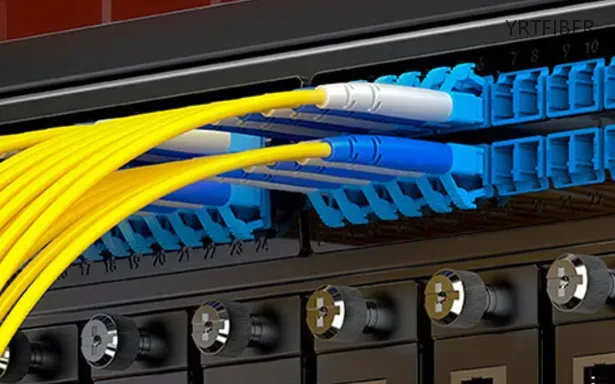
Download YRTFIBER Product Catalog
Factory Real Shot
State-of-the-Art Manufacturing Facilities
Our 60.000 m² dust-free workshop is equipped with over 21 automated production lines for both single-core and MPO patch cords. Key machinery includes high-precision fiber cutters (tolerance: ±0.08 mm), FLC automatic termination machines, and UV curing systems. This setup enables a daily output of thousands of connectors while maintaining consistent quality.
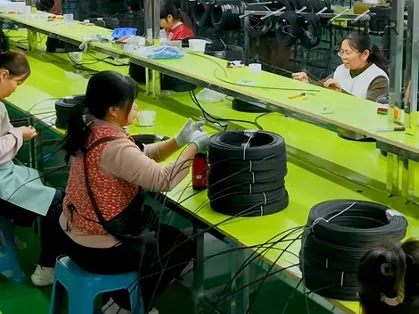
Precision Core Manufacturing Process
The process begins with micro-tolerance cutting (end-face angle tolerance: ±0.5°) and six-axis fusion splicing (core deviation ≤1 μm). After multilayer jacketing with LSZH, PVC, or OFNP materials, connectors undergo automated polishing for PC, UPC, or APC finishes. The line achieves up to 7.000 connectors per 11-hour shift.
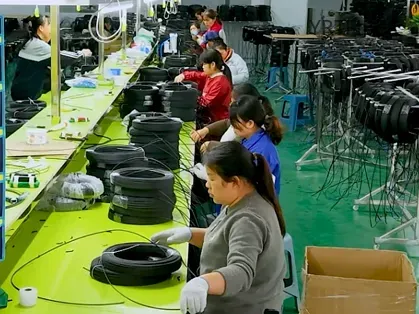
Rigorous Quality Assurance & Testing
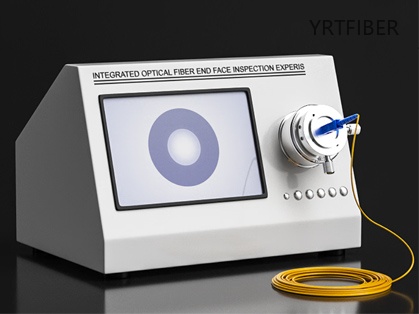
Every patch cord is subject to 100% inspection, including interferometric end-face analysis (400x magnification), automated contamination detection, and insertion/return loss testing via OTDR. Additionally, environmental samples must pass temperature, humidity, and pull-force tests in compliance with IEC/TIA standards.
Frequently Asked Questions & Quick Inquiry
SC-SC APC Single mode Fiber Patch Cords FAQ
Q1: Is the SC-SC patch cord compatible with SC/APC and SC/UPC ports?
A1: Yes, we offer both SC/APC and SC/UPC polishing options to match different port types.
Q2: Can this cable be used for both indoor and outdoor installations?
A2: Yes, with the right jacket type (PVC, LSZH, or OFNP), it can be used in various environments including indoor risers and outdoor ducts.
Q3: What’s the typical insertion loss for SC-SC patch cords?
A3: Typical insertion loss is ≤ 0.3 dB, ensuring excellent signal stability.
Q4: Are these patch cords suitable for high-density ODFs or rack systems?
A4: Yes, SC connectors are widely used in ODFs and high-density fiber patch panels.
Q5: What’s the difference between simplex and duplex SC-SC patch cords?
A5: Simplex has one fiber for one-way transmission, while duplex has two fibers for simultaneous bi-directional communication.
Send Your Inquiry
Fill out the form below and we'll get back to you within 24 hours.


