

 Español
 Português
 لالعربية
 Русский
 Bahasa Indonesia
 Français
 Türkçe
 Bahasa Melayu

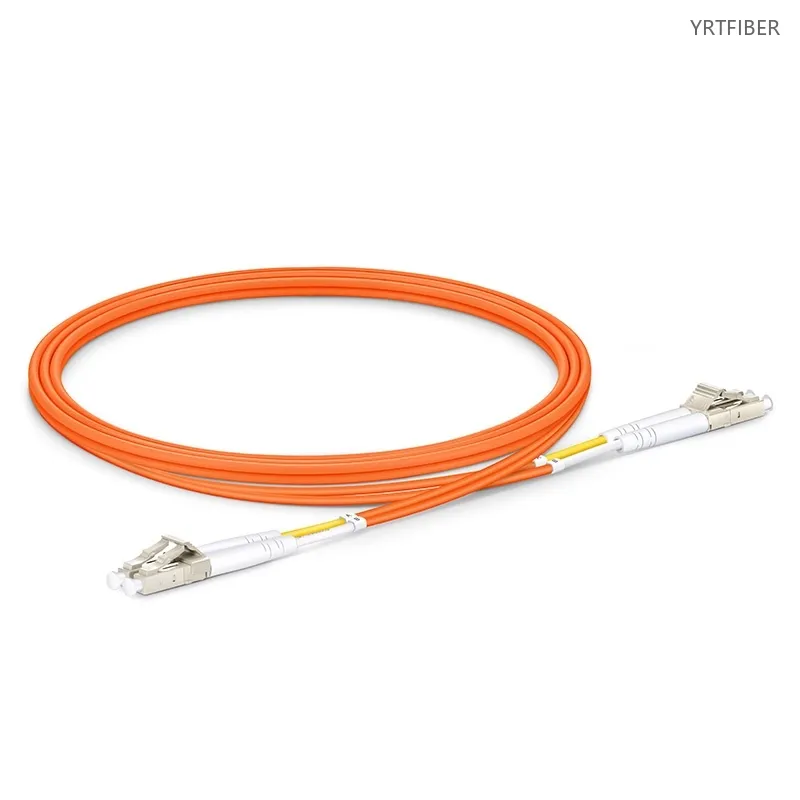
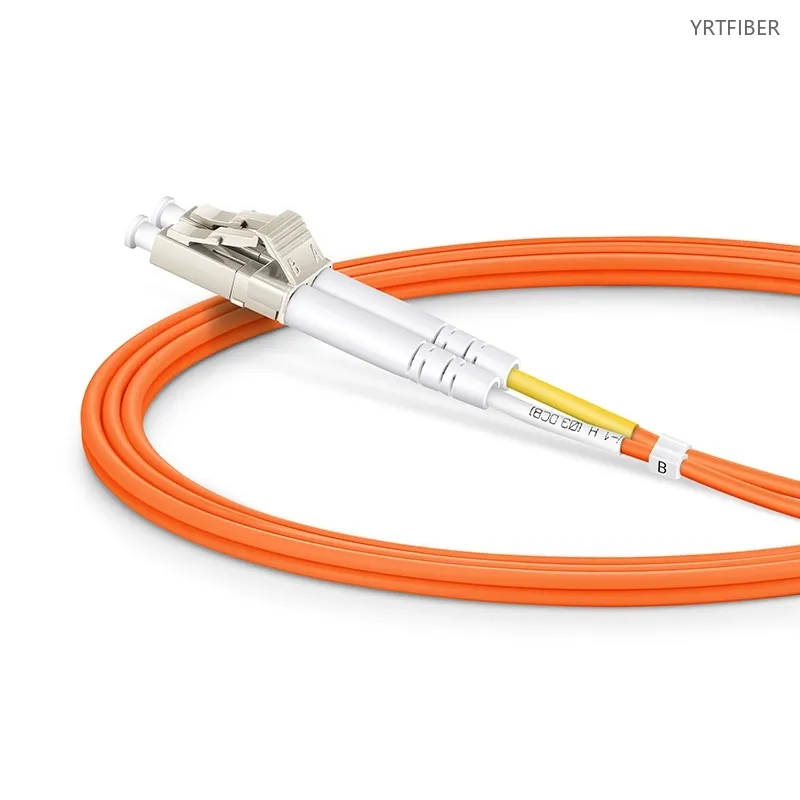
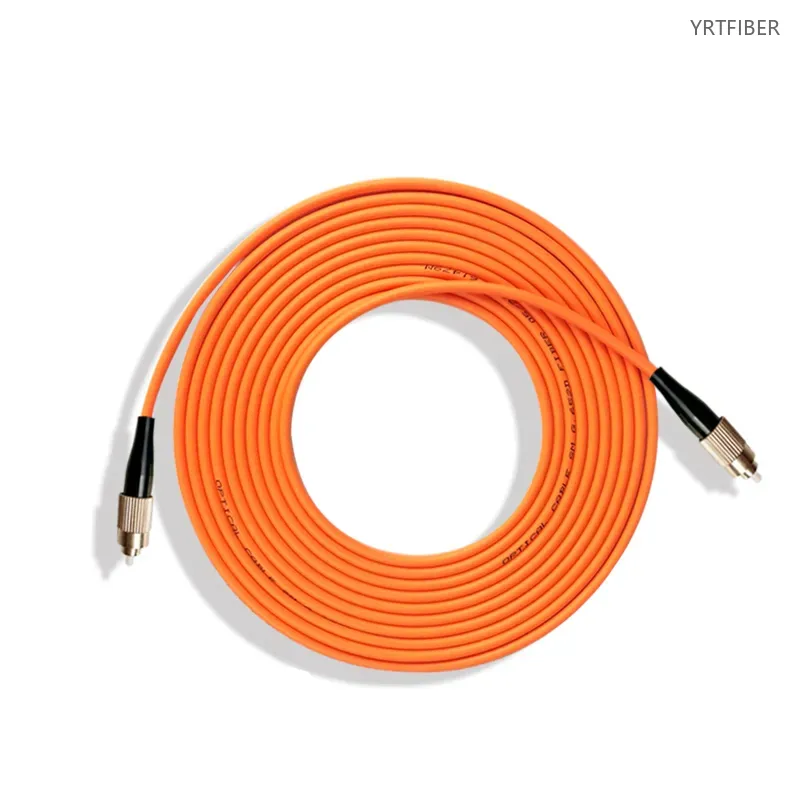
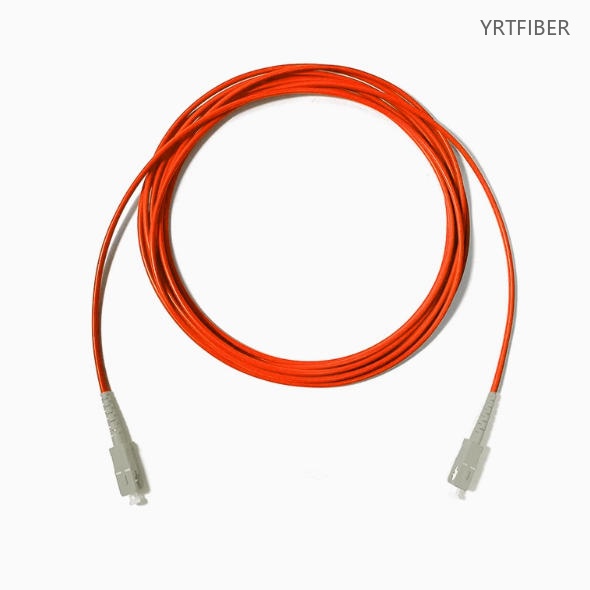
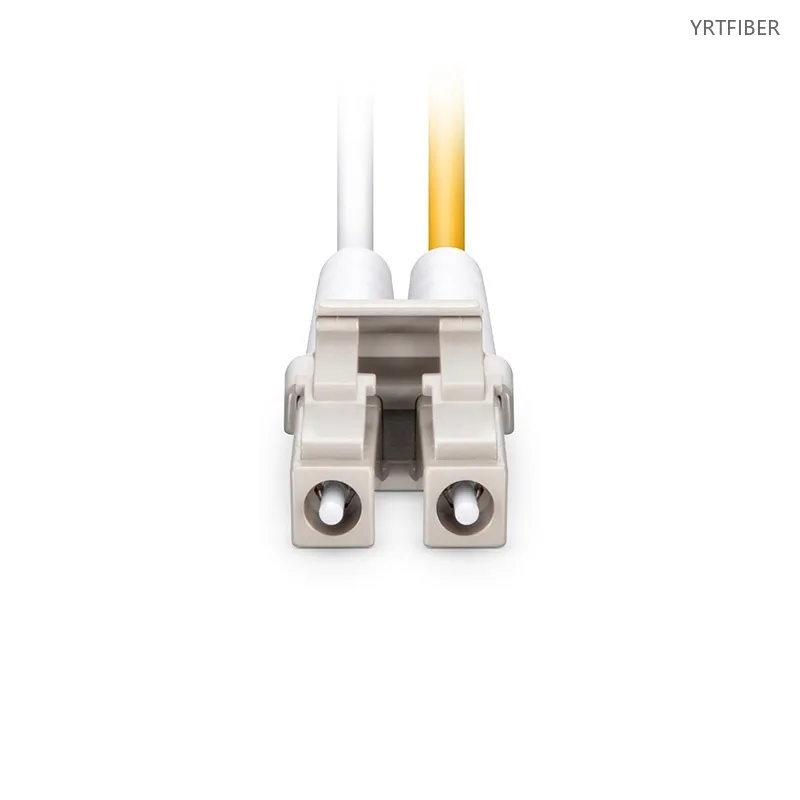
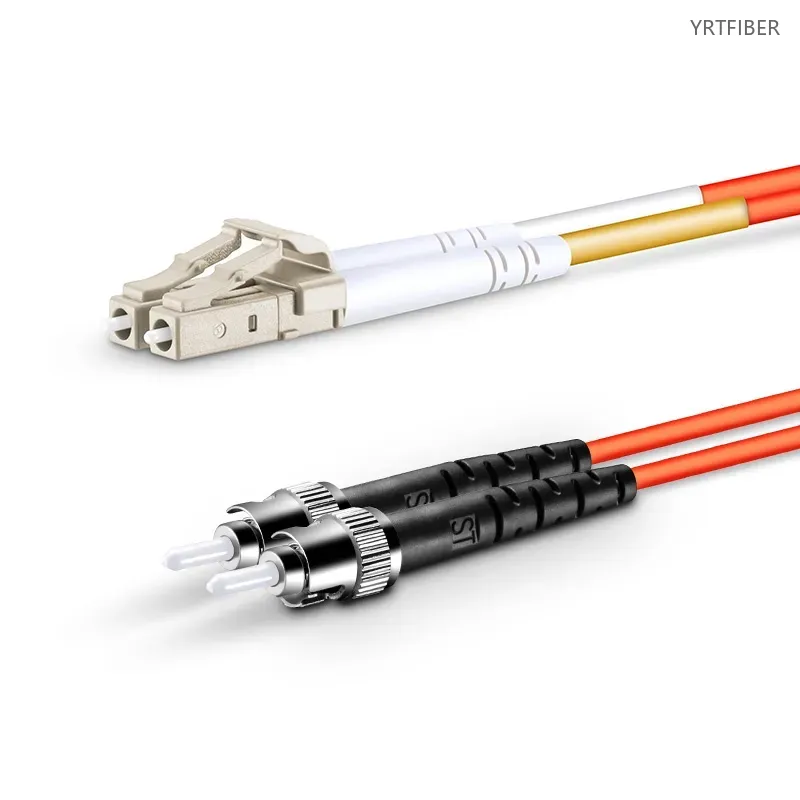
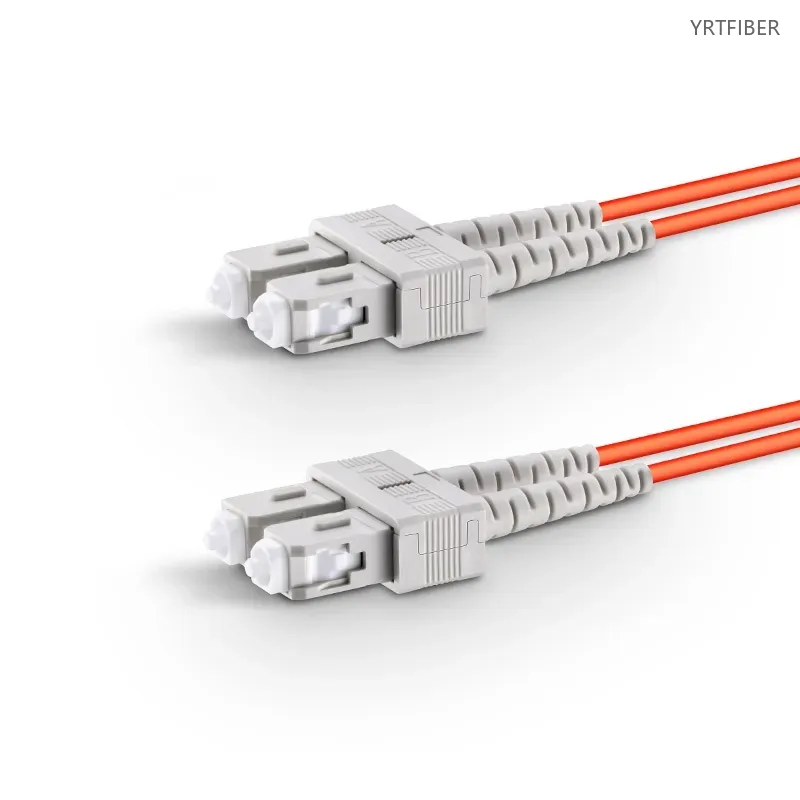
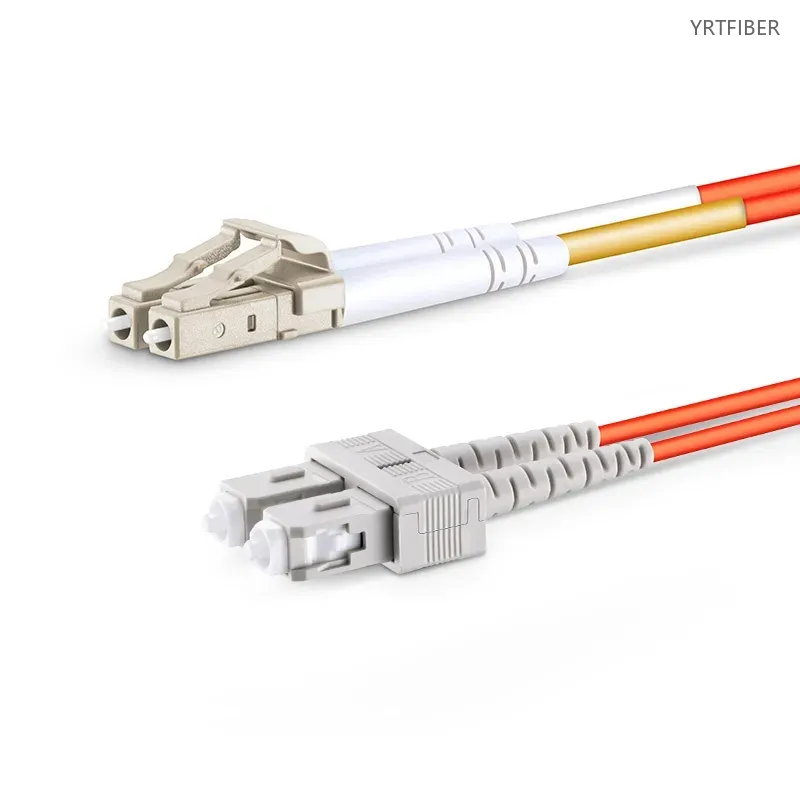
OM2 Simplex/Duplex Multimode Fiber Patch Cord – 50/125µm, 1G/10G, LC/SC/FC/ST
OM2 50/125 µm patch cord for LAN, ODF, and enterprise networks.
Available in simplex/duplex for 1G/10G Ethernet, optimized for LED and VCSEL sources.
Supports LC/SC/FC/ST connectors with UPC polish, offering low insertion loss and high return loss.
Jacket options: OFNP.
What is an OM2 50/125μm Multimode Fiber Patch Cord?
An OM2 50/125μm multimode fiber patch cord, or fiber jumper, is a cable designed for short - distance optical transmission in LANs, ODFs, and enterprise networks. It comes in simplex or duplex, supports 1G and 10G Ethernet, uses OM2 fiber optimized for LED and VCSEL sources, and offers various connector types with UPC polish and different jacket materials.
OM2 Multimode Fiber Patch Cord Specification parameters
- Specification parameters
- OPTICAL CHARACTERISTICS
| Connector A | LC UPC Duplex | Connector B | LC UPC Duplex |
| Fiber Count | 2 Fibers | Fiber Grade | Bend Insensitive |
| Fiber Mode | OM2 50/125μm | Wavelength | 850/1300nm |
| Polarity | A (Tx) to B (Rx) | Cable Type | Tight-Buffered |
| Cable Outside Diameter (OD) | 2.0mm | Flame Rating | Riser (OFNR) |
| Min. Bend Radius (Optical Fiber) | 7.5mm | Min. Bend Radius (Fiber Cable) | 20/10D (Dynamic/Static) |
| Connector Durability | 1000 times | Tensile Strength | 90/150N (Long/Short Term) |
| Insertion Loss | ≤0.3dB | Return Loss | ≥30dB |
| Attenuation at 850nm | 3.5dB/km | Attenuation at 1300nm | 1.5dB/km |
| Operating Temperature | -10 to 70°C (14 to 158°F) | Storage Temperature | -20 to 70°C (-4 to 158°F) |
Product Structure & Composition
Fiber Core & Cladding: OM2 fiber uses a 50/125μm core-cladding structure. The 50μm core works efficiently with LED and VCSEL sources for short-distance communication. The 125μm cladding guides and confines light for efficient transmission.

Connectors: Compatible with LC, SC, FC, and ST connectors, all with UPC polish for low insertion loss and high return loss. LC suits high-density data centers; SC offers easy push-pull operation; FC provides threaded secure connection; ST uses bayonet locking.
Outer Jacket: Available in LSZH (low smoke, halogen-free for fire-safe areas), PVC (cost-effective for general indoor use), and OFNP (plenum-rated for air-handling spaces, meeting strict fire codes).
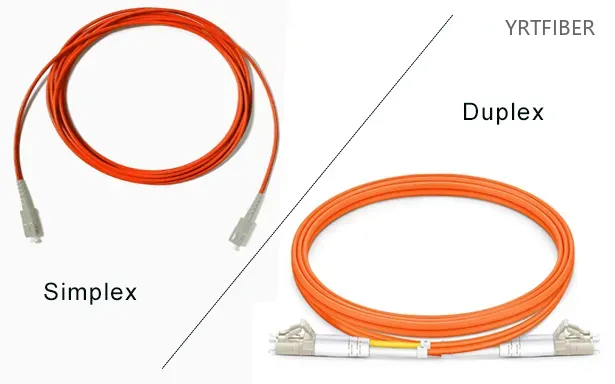
Benefits of OM2 Multimode Fiber Patch Cord
Optimized for Short - distance Transmission
OM2 multimode fiber patch cords are specifically designed for short - distance optical transmission, making them perfect for use within LANs, ODFs, and enterprise networks. Their optimized fiber for LED and VCSEL sources ensures stable and efficient data transfer over relatively short distances, which is crucial for these applications.
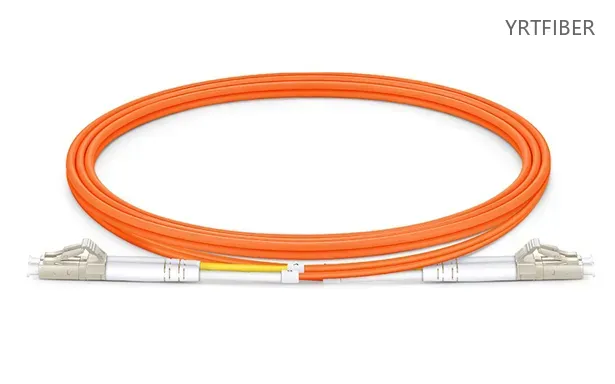
Versatile Connector Compatibility
The compatibility with LC, SC, FC, and ST connectors provides flexibility in network installation. Whether it's a high - density data center setup (where LC connectors are preferred), or a more traditional network infrastructure (where other connector types might be more suitable), users can choose the connector that best fits their requirements.
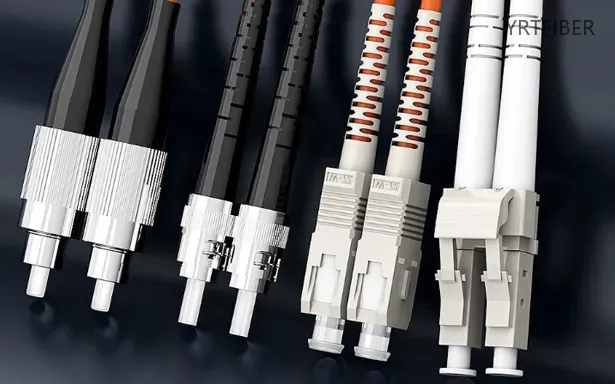
Reliable Optical Performance
With low insertion loss and high return loss, OM2 patch cords ensure reliable optical signal transmission. This means that the signals can be transmitted with minimal degradation, guaranteeing accurate data transfer and smooth network operation.
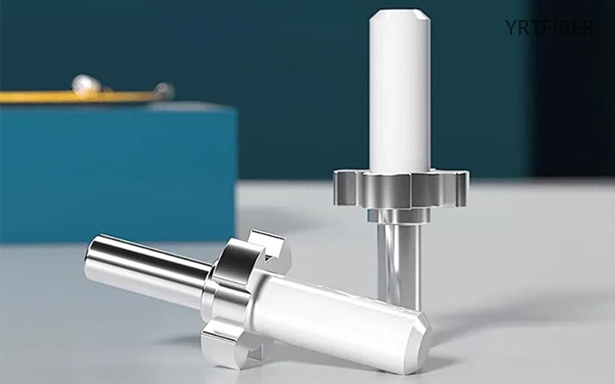
Flexible Jacket Options
The availability of OFNP jacket materials allows the OM2 patch cords to be used in different environments. This flexibility ensures that the cable can meet the safety and environmental requirements of various installation scenarios.
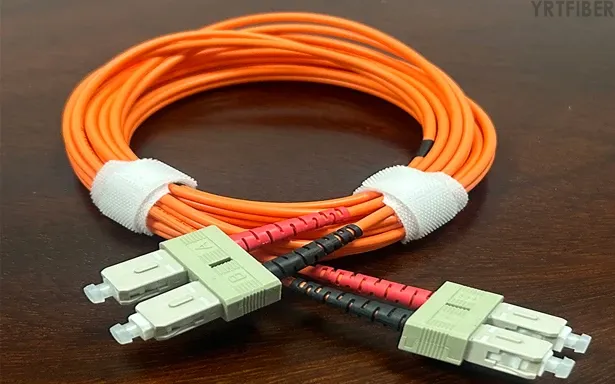
Engineering Applications OM2 Multimode Fiber Patch Cord

Enterprise park local area network backbone link
Between campuses or internal buildings in corporate campuses, OM2 patch cords are commonly used to build gigabit Ethernet backbone links. Its 50/125μm fiber core paired with an 850nm light source can stably support 1Gbps transmission up to 550 meters, covering most campus access layer to aggregation layer connection needs. Compared to OM3/OM4, OM2 is less expensive and is ideal for traditional network retrofit projects with limited budgets that do not need to upgrade to 10G or above.
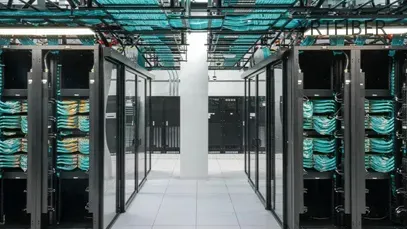
Interconnection of internal data center equipment (short-distance cabinets).
In standard cabinets or between adjacent cabinets, OM2 patch cords are used to connect servers, storage devices, and rack-top switches. For 10G speeds, OM2 supports link distances up to 82 meters, fully meeting cabling requirements within a single module or between adjacent modules. Its excellent bending performance and universal LC/SC interface facilitate flexible jumping on high-density patch panels, ensuring low insertion loss and high feedback loss transmission during daily data center operations.

Industrial automation and video surveillance systems
In environments with strong electromagnetic interference, such as factory workshops or large warehouses, OM2 patch cords serve as fiber optic links between PLC control cabinets and remote I/O modules or industrial switches. At the same time, paired with IP HD cameras, it enables long-distance, attenuation-free video backflow (up to 550 meters @ 100Mbps). Its Riser (OFNR) sheath is available to meet different fire resistance requirements, effectively isolating electromagnetic noise generated by motors and frequency converters, ensuring real-time reliability of control commands and video signals.

Fiber to Desktop (FTTD) office network
In government, financial, or design office environments with high bandwidth and confidentiality requirements, OM2 patch cords can be deployed directly to user workstations. Paired with desktop optical transceivers, it provides 1Gbps dedicated bandwidth to the desktop, eliminating the risk of electromagnetic leakage and lightning strikes associated with copper cables. OM2's lightweight structure and standard SC/LC interface facilitate flexible connection between wall information panels and desktop terminals, enabling a stable, high-speed all-optical office network.
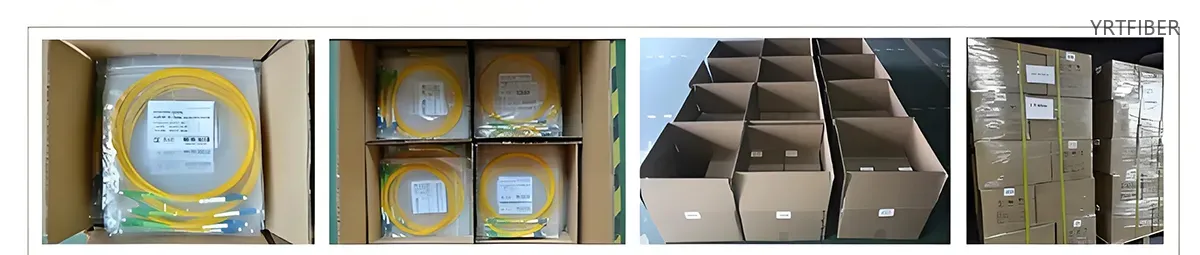
Shipping & Packaging

Product Comparison:
OM2 vs OM3
| Feature / Dimension | OM2 Multimode Fiber Patch Cord | OM3 Multimode Fiber Patch Cord |
|---|---|---|
| Fiber Core and Cladding | 50/125μm, optimized for LED and VCSEL | 50/125μm, optimized for 850nm VCSEL |
| Supported Speeds | 1G and 10G Ethernet | 10Gbps up to 300 meters, 40Gbps up to 100 meters |
| Optical Performance | Good low - loss and high - return performance for short - distance, lower - speed applications | Lower insertion loss and higher return loss optimized for higher - speed short - distance applications |
| Connector and Jacket Options | Compatible with LC, SC, FC, ST (UPC polish). Jacket options:OFNP ( LSZH, PVC can customized) | Available with LC, SC, FC, ST connectors in simplex or duplex. Jacket options:OFNP ( LSZH, PVC can customized) |
| Cost (Relative) | Generally lower cost for lower - speed, short - distance applications | Higher cost due to better performance for higher - speed applications |
| Typical Applications | General - purpose short - distance connections in LANs, ODFs, and enterprise networks | Data centers, SANs, and enterprise networks with higher - speed 10G - 40G requirements |
OM2 Multimode Fiber Patch Cord Selection Guide
When choosing between an OM2 and OM3 multimode fiber patch cord, consider your network requirements. If your application mainly involves general - purpose short - distance connections in LANs, ODFs, or enterprise networks, and the speed requirements are mostly 1G or 10G, OM2 is a suitable choice. Its lower cost and reliable performance for these speeds make it a cost - effective solution.
However, if your network demands higher - speed connections such as 40G, or if you need longer reach at 10G, OM3 would be more appropriate. OM3's optimization for 850nm VCSEL and better optical performance at higher speeds make it a better fit for more demanding data center and enterprise network applications.
Parameter - Best Fit
| Parameter | Best Fit |
|---|---|
| General - purpose 1G/10G short - distance connections in LANs, ODFs, and enterprise networks | OM2 |
| 40G applications or longer reach at 10G | OM3 |
| Cost - sensitive short - distance applications | OM2 |
| High - speed data center and enterprise network applications | OM3 |
Mixed deployment guidance:
In a network with a mix of general - purpose and high - speed requirements, OM2 can be used for less demanding connections like user - device connections at 1G or 10G. OM3 can be deployed for high - speed sections such as server - to - switch connections in data centers or high - bandwidth enterprise applications. This approach allows for cost - effective deployment while still meeting the performance needs of different parts of the network.
Installation Instructions (Short Version)
Pre-installation Inspection: Check the outer jacket for cuts, abrasions, or bulges. Ensure UPC-polished end-faces are clean and scratch-free, and connector bodies are undamaged.
Connector Cleaning:Use a lint-free swab with isopropyl alcohol. Gently wipe the ferrule end-face in a circular motion, then dry with a clean swab.
Connection:Align the connector key with the adapter or port keyway.
LC/SC: Push until you hear/feel a click.
FC: Thread carefully to avoid cross-threading, then tighten.
ST: Insert and rotate to engage the bayonet lock.
Cable Routing:Maintain a bending radius ≥10x cable diameter. Use ties or trays to secure the cord. Avoid sharp bends or kinks.
Post-installation Testing:Measure insertion loss with an optical power meter. If loss is too high, re-clean connectors and check for damage. Replace the cord if needed.
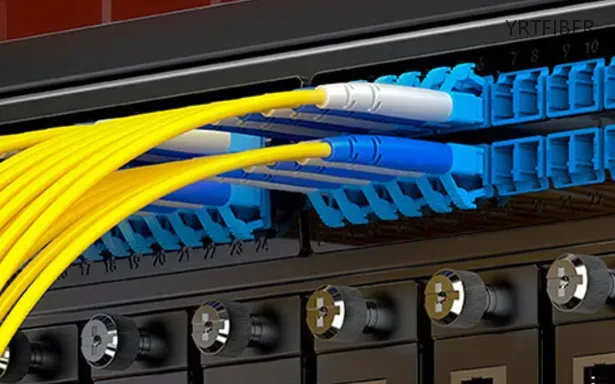
Download YRTFIBER Product Catalog
Factory Real Shot
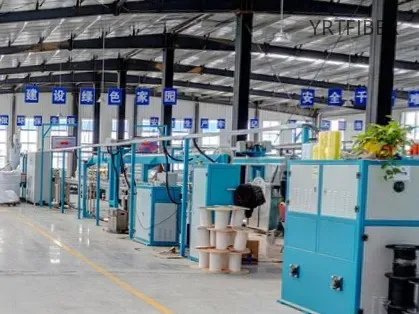
1. Class 10.000 Clean Workshop + Fully Automated Lines for Unmatched Consistency
We operate a 60000 m²; temperature- and humidity-controlled clean workshop, with core areas meeting ISO Class 7 (Class 10.000) standards. The facility houses 12 fully automated patch cord assembly lines, where processes such as precise cutting, stripping, cleaning, and connector assembly are robotically coordinated to minimize human error. For OM3 multimode fiber, we have specially optimized stripping and coating handling parameters to preserve high bandwidth performance at 850 nm.
Precision Core Manufacturing Process
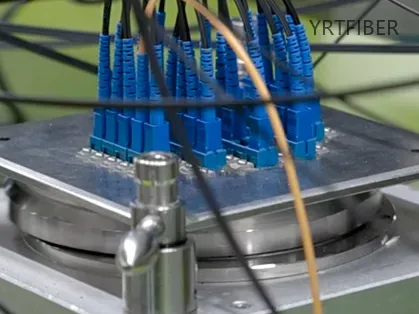
The process begins with micro-tolerance cutting (end-face angle tolerance: ±0.5°) and six-axis fusion splicing (core deviation ≤1 μm). After multilayer jacketing with LSZH, PVC materials, connectors undergo automated polishing for PC, UPC, or APC finishes. The line achieves up to 7.000 connectors per 11-hour shift.

Rigorous Quality Assurance & Testing
Every patch cord is subject to 100% inspection, including interferometric end-face analysis (400x magnification), automated contamination detection, and insertion/return loss testing via OTDR. Additionally, environmental samples must pass temperature, humidity, and pull-force tests in compliance with IEC/TIA standards.
Frequently Asked Questions & Quick Inquiry
OM2 Multimode Fiber Patch Cord FAQ
Q1: What is OM2 fiber used for?
A1: OM2 fiber supports 1G/10G Ethernet over short distances in LANs and ODFs.
Q2: Are OM2 patch cords available in duplex and simplex types?
A2: Yes, both simplex and duplex configurations are supported.
Q3: What connector options are offered?
A3: LC, SC, FC, and ST connectors are available with UPC polish.
Q4: What is the max transmission distance for OM2 at 10G?
A4: OM2 supports up to 82 meters for 10Gbps transmission using VCSEL.
Q5: Can I get custom length or jacket material?
A5: Yes, lengths and jacket types (LZSH,PVC,OFNP) can be customized as needed.
What is the main difference between OM2 and OM3 in terms of performance?
The main difference is in their supported speeds and optical performance optimization. OM3 is optimized for higher - speed applications, especially at 10G over longer distances and for 40G, with better optical performance in terms of lower insertion loss and higher return loss. OM2, on the other hand, is designed for general - purpose 1G and 10G short - distance connections, with relatively lower performance at higher speeds compared to OM3.
Can OM2 be used in a 10G Ethernet network?
Yes, OM2 can be used in a 10G Ethernet network. However, the maximum distance it can support at 10G is typically shorter compared to OM3. If longer distances are required at 10G, OM3 would be a better choice.
Why is OM3 more expensive than OM2?
OM3 is more expensive because it is designed for higher - speed applications. It requires more precise manufacturing processes to achieve its optimized performance for 850nm VCSEL and higher - speed data transmission, which contributes to its higher cost.
Send Your Inquiry
Fill out the form below and we'll get back to you within 24 hours.


