

 Español
 Português
 لالعربية
 Русский
 Bahasa Indonesia
 Français
 Türkçe
 Bahasa Melayu

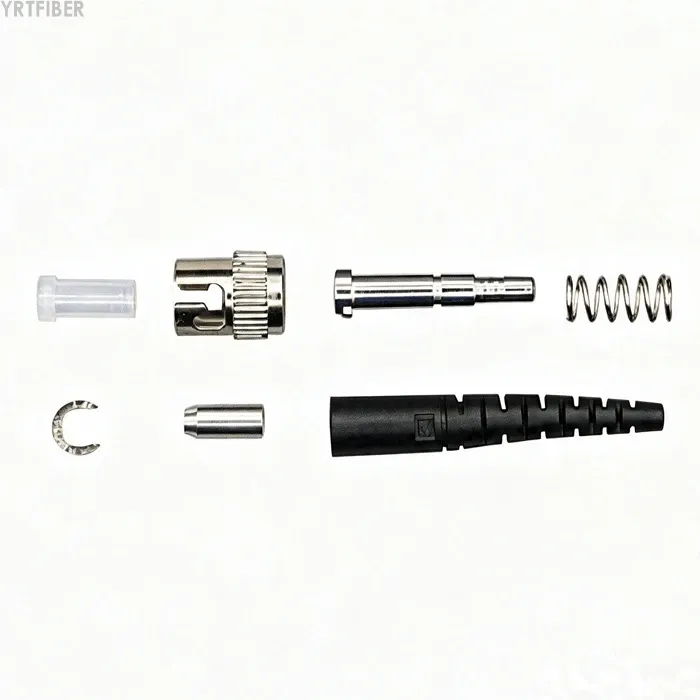
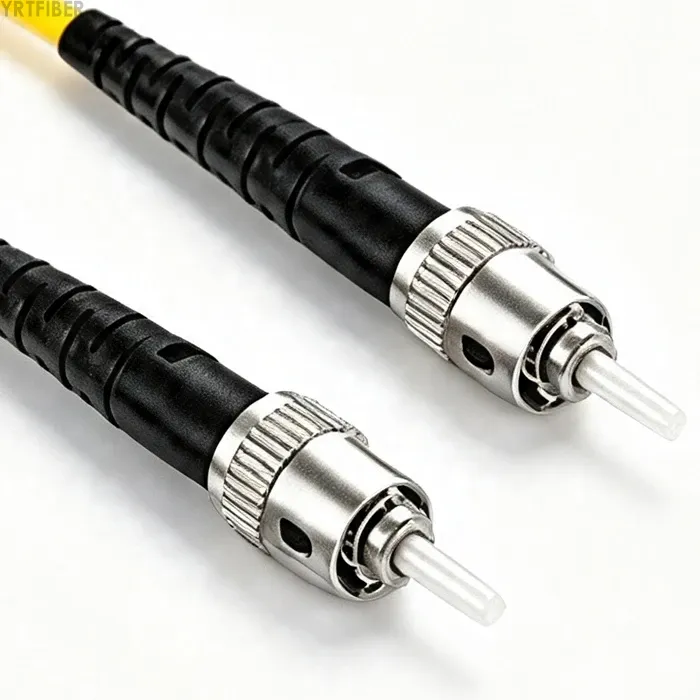
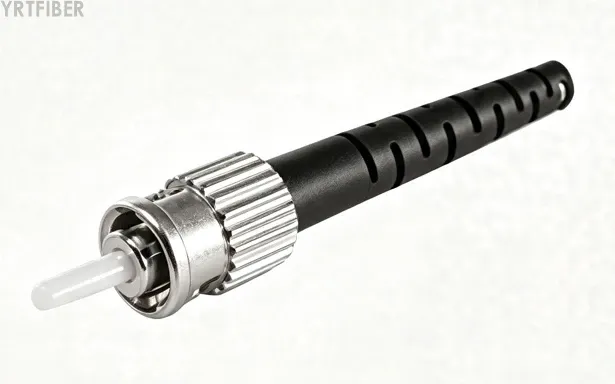
Plastic ST Connector with APC/UPC Polish for Fiber Network Applications
Bayonet twist‑lock coupling for quick, secure connections.
2.5mm zirconia ferrule ensures accurate alignment.
UPC and PC polished finishes available.
IL: ≤0.20dB (UPC), ≤0.25dB (PC); RL: ≥50dB (UPC), ≥40dB (PC).
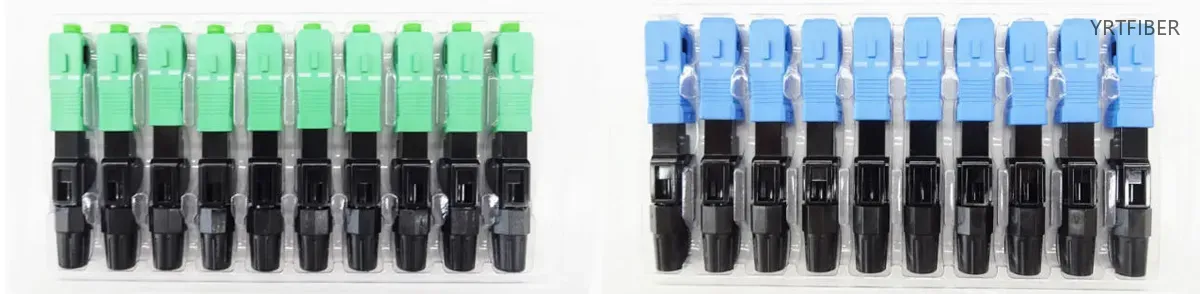
Colour‑coded: blue (UPC SM), black (MM), green (APC if available).
Durable metal or flame‑retardant housing with strain‑relief boot.
Rated for >1.000 mating cycles.
What is an ST Fibre Optic Connector?
The ST fibre optic connector is a bayonet‑style termination device that uses a 2.5mm zirconia ceramic ferrule to provide reliable, low‑loss connections for both single‑mode and multimode fibres. Its twist‑lock coupling mechanism ensures a secure, vibration‑resistant connection, making it a long‑standing standard in telecom, CATV, industrial, and test‑and‑measurement environments. Available with UPC or PC polished end‑faces, the ST connector offers good optical performance and excellent mechanical durability.
ST Connector Specification parameters
- Specification parameters
- OPTICAL CHARACTERISTICS
| Item | UPC | APC | ||
|---|---|---|---|---|
| Φ0.125mm | Φ0.25mm | Φ0.125mm | Φ0.25mm | |
| Radius of Curve(mm) | 7~25 | 10~25 | 5~12 | 5~12 |
| Return Loss(dB) | 50 | 50 | 55 | 55 |
| Apex Offset(um) | ≤50 | |||
| Fiber Height(nm) | -0.5 | |||
| Polishing Angle(°) | 8±0.3 | |||
| Testing wavelength(nm) | 1310&1550 | |||
| Insertion Loss | ≦0.3dB | |||
| Operating temperature | -40℃~ +80℃ | |||
| Cable diameter | 0.9mm, 2mm, 3mm | |||
| Service life | N>1000 | |||
| Dust Cap | LDPE | |||
| Connectors type | FC, ST, SC, LC | |||
| Polishing type | UPC, APC | |||
| Fiber type | Single-mode, Muti-mode | |||
| Port type | Simple, double | |||
| Application | drop cable/patch cords/pigtail | |||
Product Structure & Composition
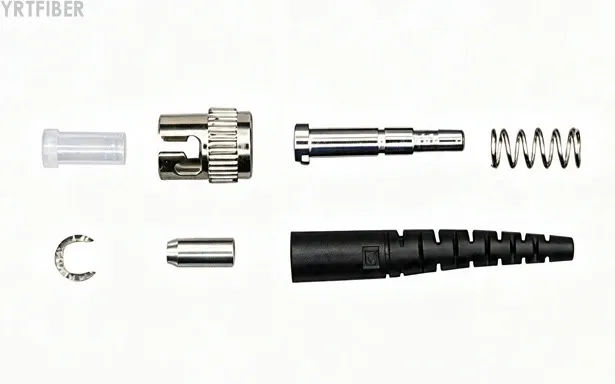
ST Ferrule and Bayonet Coupling
2.5mm zirconia ferrule precisely aligns fibre core. Bayonet coupling: twist clockwise to lock, counter‑clockwise to release – provides fast, secure, vibration‑resistant connection.
End‑Face Polishes – UPC and PC
UPC (convex, lower IL, higher RL) and PC (traditional, used in legacy systems) polishes available.
Strain‑Relief Boot and Cable Compatibility
Flexible boot provides strain relief; supports 900μm, 2.0mm, 3.0mm cables. Colour‑coded boots: blue (SM UPC), black (MM).
Benefits of ST Connector
Robust Mechanical Design for Vibration‑Prone Environments
The ST connector’s twist‑lock bayonet and nickel‑plated metal housing provide a secure, corrosion‑resistant mechanical connection that withstands over 1.000 mating cycles, cable pulls, and harsh industrial or railway conditions, ensuring long‑term reliability without accidental disconnection.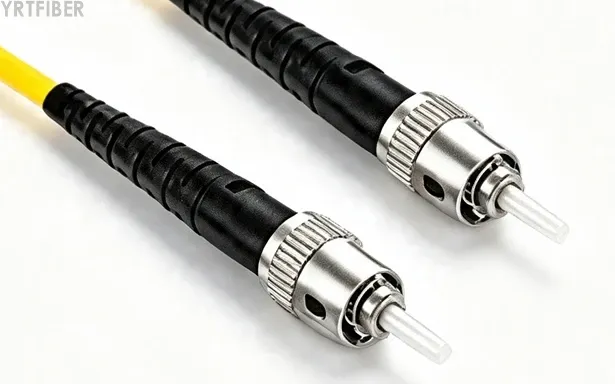
High Optical Performance and Easy Field Termination
With a precision zirconia ferrule and UPC polish, the connector achieves ≤0.20 dB insertion loss and ≥50 dB return loss for efficient short‑/medium‑distance transmission. It supports 900 μm, 2.0 mm, and 3.0 mm cables, and its simple ferrule design allows quick field termination via epoxy‑polish or pre‑polished mechanical splice, cutting installation time and cost.
Engineering Applications ST Connector

Telecom Optical Distribution Frames (ODFs)
ST connectors are widely used in legacy and current telecom ODFs for terminating feeder and distribution cables. Their bayonet locking ensures stable connections in high‑density patching areas, supporting voice, data, and leased‑line services.

Industrial and Railway Communication Networks
In environments subject to shock and vibration – such as factory floors, railway signalling, and power utility networks – the ST connector’s robust locking mechanism provides superior connection security, preventing service interruptions caused by loose connectors.
CATV and Video Transmission Systems
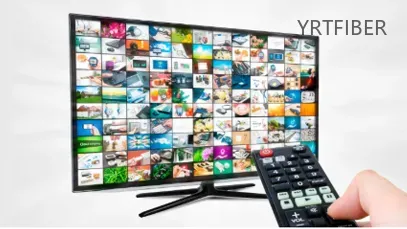
Cable television headends and distribution hubs often employ ST connectors for connecting optical transmitters, receivers, and amplifiers. The connector’s low loss and secure locking ensure high‑quality video signal delivery with minimal reflections.
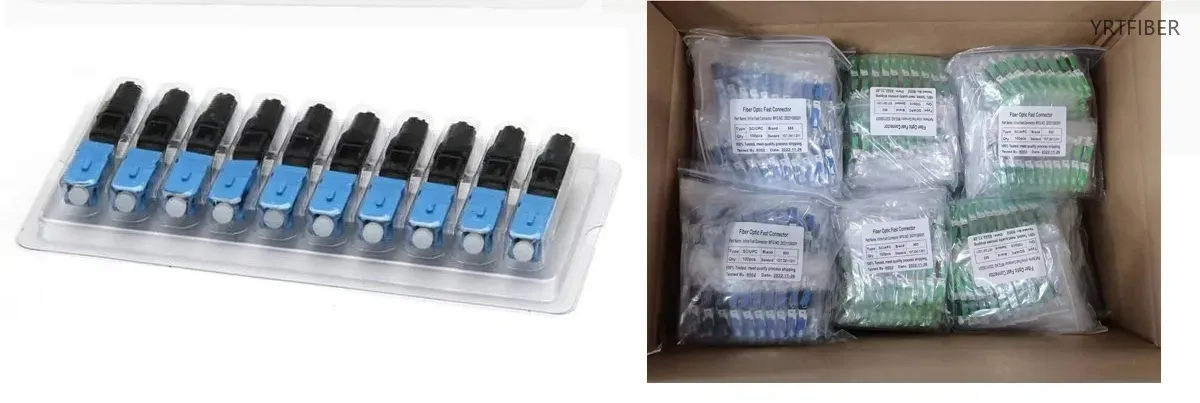
Shipping & Packaging
Product Comparison:
ST Connector (UPC) vs. SC Connector (UPC)
| Feature / Dimension | ST Connector (UPC) | SC Connector (UPC) |
|---|---|---|
| Coupling Mechanism | Bayonet twist‑lock - insert and twist to lock. | Push‑pull latch - push to connect, pull to release. |
| Housing Shape | Round metal or plastic housing. | Rectangular plastic housing. |
| Vibration Resistance | Excellent - twist‑lock provides positive mechanical retention. | Good, but push‑pull latch can loosen under severe vibration. |
| Typical Insertion Loss | ≤0.20dB (UPC) | ≤0.15dB (UPC) |
| Typical Return Loss | ≥50dB (UPC) | ≥50dB (UPC) |
| Port Density | Lower - larger round housing reduces density. | Higher - rectangular housing allows denser packing. |
| Typical Applications | Industrial, CATV, test equipment, legacy telecom, high‑vibration environments. | Data centres, enterprise networks, FTTH, general telecom. |
| Advantages | - Superior vibration resistance. - Robust metal housing options. - Fast twist‑lock connection. | - Higher density and smaller footprint. - Easier one‑handed push‑pull operation. - Lower cost for high‑volume deployment. |
| Disadvantages | - Bulkier, lower density. - Twist action requires two‑handed operation for some users. | - Less secure in high‑vibration environments. - Plastic housing less durable in harsh conditions. |
ST Connector Selection Guide
How to Choose the Right ST Fibre Optic Connector
Selecting an ST connector starts with determining your fibre type: choose a single‑mode variant (with blue boot) for long‑distance, high‑bandwidth links, or a multimode variant (with black boot) for short‑reach premises and campus networks. Ensure the connector’s ferrite polish matches your system requirements – UPC provides lower loss and higher return loss than standard PC.
Consider the cable diameter – ST connectors are available with boots for 900μm, 2.0mm, and 3.0mm cables. Match the boot to your cable’s outer jacket to ensure proper strain relief.
Evaluate your environmental conditions. For high‑vibration industrial or outdoor installations, the ST connector’s bayonet locking offers a clear advantage over SC or LC. For standard indoor patching with no vibration concerns, SC or LC may provide better density.
Finally, check termination type: factory‑terminated pigtails are recommended for best performance, but field‑installable ST connectors (epoxy‑polish or mechanical splice) are available for custom lengths and repairs.
Cable Stripping and Ferrule Preparation
Strip jacket and buffer to required length (2‑3mm bare fiber) using precision strippers; clean bare fiber with isopropyl alcohol.
Epoxy Application and Ferrule Insertion
Inject epoxy, insert fiber until it reaches the end‑face, cure per manufacturer’s instructions, then cleave excess flush with ferrule end.
Polishing for UPC or PC Finish
Polish ferrule end‑face with appropriate films for UPC or PC finish (use coarse‑to‑fine sequence for UPC). Inspect under microscope to verify scratch‑free surface.
Final Assembly and Strain‑Relief Boot Installation
Assemble housing and boot, crimp strain‑relief mechanism, label fiber type and polarity. Route cable with minimum bend radius of 10× cable diameter.
Download YRTFIBER Product Catalog
Factory Real Shot
Frequently Asked Questions & Quick Inquiry
ST Connector FAQ
What are the insertion loss and return loss specifications?
Typical insertion loss is ≤ 0.15 dB for single-mode and ≤ 0.25 dB for multimode. Return loss for UPC-polished connectors exceeds 55 dB, minimizing signal reflection.
How durable are these connectors?
They maintain consistent performance (< 0.2 dB variation) even after 500 mating cycles and perform reliably across temperatures ranging from −40 °C to +85 °C.
What is the coupling mechanism?
The ST connector uses a bayonet-style “stab and twist” mechanism with a keyed ferrule, allowing fast, tool-free mating—widely used in distribution panels.
Which fiber types are supported?
These connectors are compatible with both single-mode and multimode fibers, supporting standard core/cladding dimensions for diverse network applications.
Are customization and sample options available?
Yes—YRT Fiber offers OEM/ODM services, custom branding or packaging, and sample availability under request. Fast inquiry responses and full after-sales support are also provided.
What is the difference between ST and SC connectors?
ST uses a bayonet twist‑lock coupling, while SC uses a push‑pull latch. ST is more robust against vibration, while SC offers higher density and easier one‑handed operation.
What is the typical insertion loss of an ST UPC connector?
Typical insertion loss is ≤0.20dB, with premium versions achieving ≤0.15dB.
Can I use an ST connector for both single‑mode and multimode?
Yes, but you must select the variant designed for your fibre type – the ferrule bore and polish differ. Always match the connector to the fibre.
What colour boot is used for multimode ST?
Multimode ST connectors typically have a black boot, while single‑mode UPC versions use a blue boot. Some manufacturers may use beige for multimode, but black is common.
Can I field‑terminate an ST connector?
Yes, field‑termination kits (epoxy‑polish and pre‑polished mechanical splice) are available for ST connectors, allowing custom cable assembly in the field.
What is the return loss for PC vs UPC?
PC (Physical Contact) typically provides ≥40dB return loss; UPC provides ≥50dB, offering better reflection suppression.
Is ST available in APC polish?
APC (Angled Physical Contact) is less common for ST, but some manufacturers offer it with a green boot for single‑mode applications requiring very high return loss.
Send Your Inquiry
Fill out the form below and we'll get back to you within 24 hours.


