

 Español
 Português
 لالعربية
 Русский
 Bahasa Indonesia
 Français
 Türkçe
 Bahasa Melayu

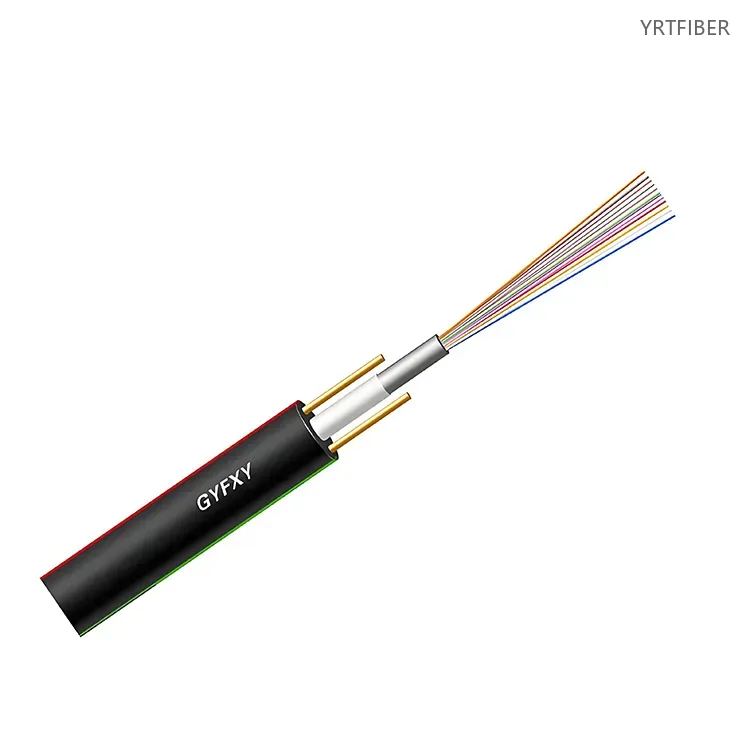
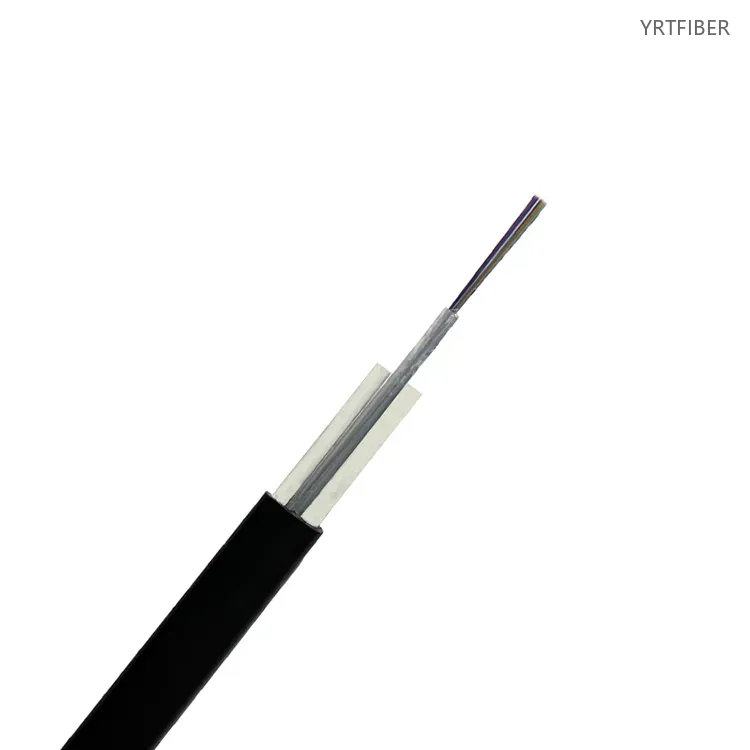
GYFBY/GYFXY Elliptical Flat Fiber Optic Cable – FRP Strength Members, PE Sheath
Excellent tensile strength and crush-resistance.
Compact, easy-to-access design allows for easy installation and handling.
Suitable for self-supporting aerial, direct buried, and duct FTTx drop installations.
The all-dielectric design with FRP strength members eliminates the need for bonding or grounding.
Optimized for fiber counts of 2.4. 6. 8. 12and 24 for minimizing deployment costs.
Outer Jacket protects cable from ultraviolet radiation.
What is GYFBY fiber optic cable?
GYFBY fiber optic cable is a flat-type outdoor fiber optic cable commonly used for FTTH and FTTx access networks. It is usually designed with a compact structure, FRP strength members, and a PE or HDPE outer sheath to provide stable optical transmission and mechanical protection in outdoor installation environments, Suitable for FTTx drop, short-span aerial and duct installation.
GYFBY/GYFXY fiber optic cable Specification parameters
- Specification parameters
- OPTICAL CHARACTERISTICS
Structural parameters
| Cable Type | Fiber Count | Cable Diameter (mm) | Cable Weight (Kg/km) | Tensile Strength Term N) | Crush Resistance Term N/100m) | Bending Radius Dynamic mm) |
|---|---|---|---|---|---|---|
| GYFBY-2~12 | 2~12 | 9.0 | 70 | 500/350 | 300/1000 | 15D/30D |
| GYFXY-2~12 | 2~12 | 10.2 | 90 | 600/350 | 400/1000 | 15D/30D |
Product Structure & Composition
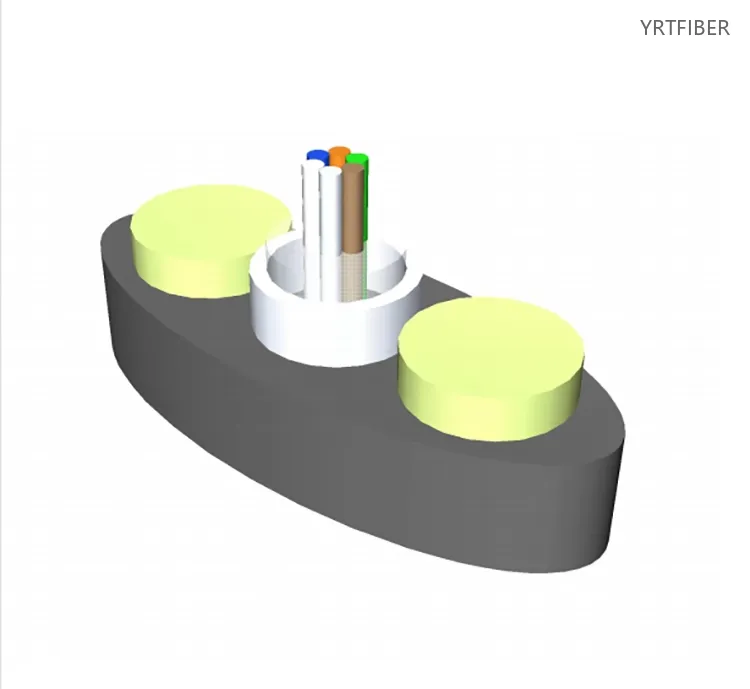
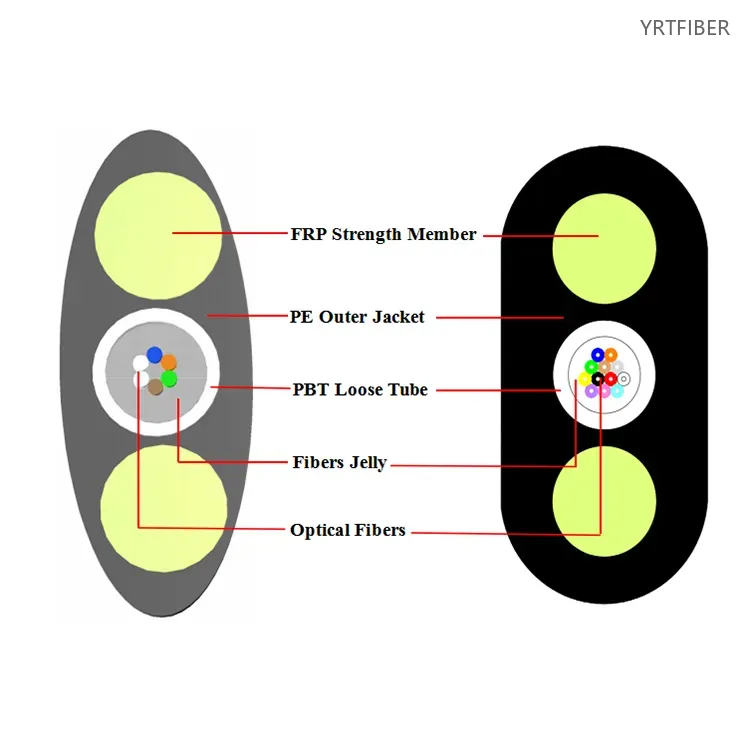
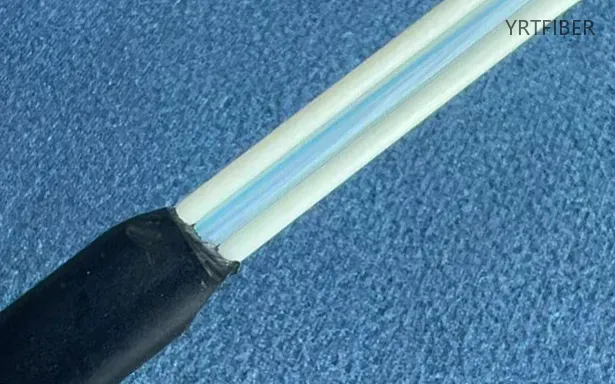
Flat, compact design – FTTH & outdoor access.
PBT loose tube + gel – moisture and stress protection.
Dual FRP strength members – tensile strength, EMI resistance.
PE outer jacket – weather, abrasion, long-term durability.
Benefits of GYFBY/GYFXY fiber optic cable
1. Strong Mechanical Performance
Excellent tensile strength and crush resistance ensure reliable protection during installation and long-term outdoor use. Available in 2. 4. 6. 8. 12. and 24 fiber counts to reduce deployment costs, with an all-dielectric structure and UV-resistant outer jacket for safe outdoor performance.
2. Flexible FTTx Deployment,Easy Installation and Handling
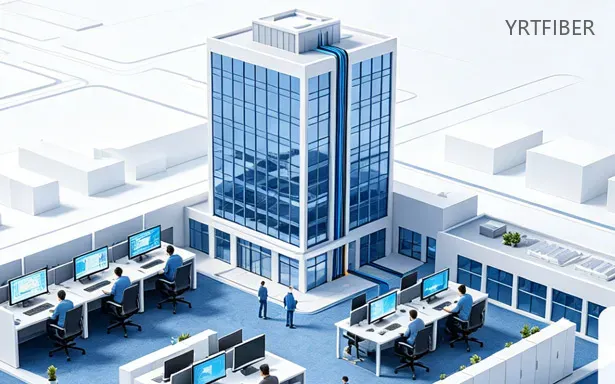
The compact, easy-access design makes the cable convenient to install, strip, route, and maintain. Suitable for self-supporting aerial, direct buried, and duct drop installations, meeting different access network requirements.
Engineering Applications GYFBY/GYFXY fiber optic cable
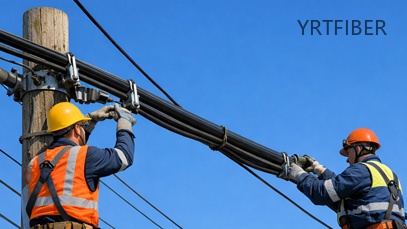
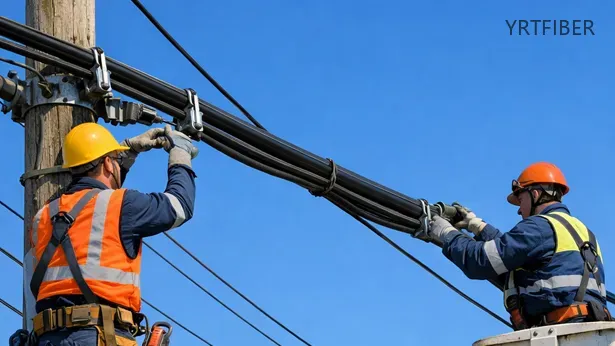
Aerial (Self‑supporting):
GYFBY’s flat, lightweight design with FRP strength members allows direct pole‑to‑pole installation without a separate messenger wire. It is commonly used for FTTH drop cables from distribution poles to subscriber premises, especially in rural and suburban areas.
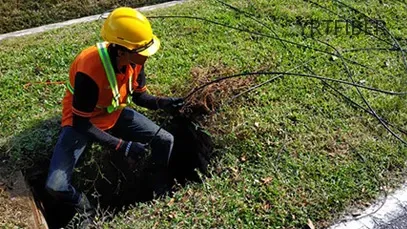
Duct & Direct Burial:
The compact flat profile easily fits into microducts or existing conduits for underground runs. For direct burial, the PE sheath and FRP rods provide good resistance to moisture, rodents, and moderate crush loads. However, rocky terrain may require additional sand bedding or protective conduit.
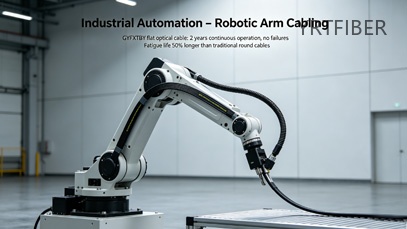
Industrial Automation – Robotic Arm Cabling
In an industrial automation project, a GYFXTBY flat optical cable was installed along the length of a robotic arm. The cable demonstrated exceptional flexibility and durability, operating continuously for two years without a single failure. Its fatigue life was estimated to be 50% longer than traditional round cables, making it a highly reliable choice for dynamic, moving applications where constant bending occurs.
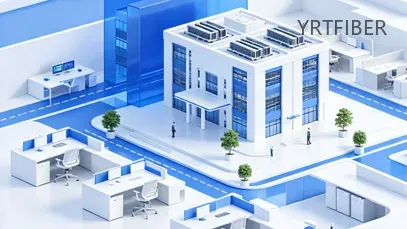
Office Building Fast Deployment
In an office building cabling project, the use of GYFXTBY flat optical cables resulted in a 25% reduction in installation time. The cable's lightweight and flexible nature enabled plug-and-play installation with quicker stripping and termination, reducing labor costs and project turnaround time. This demonstrates its efficiency in complex indoor environments.
Shipping & Packaging
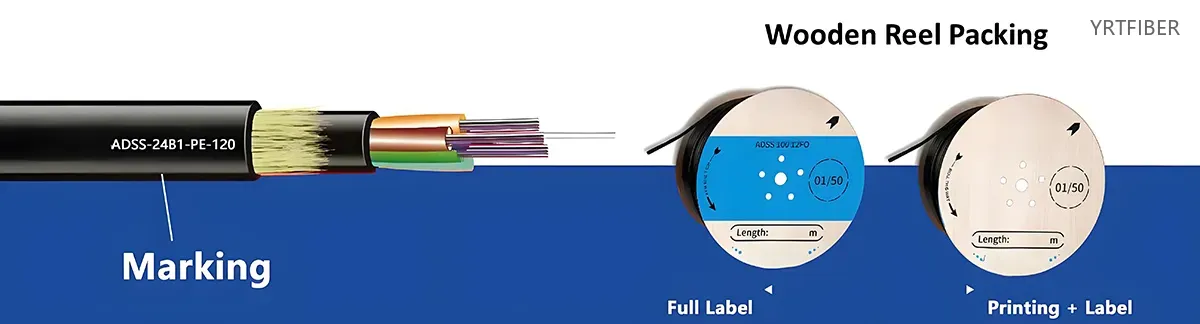
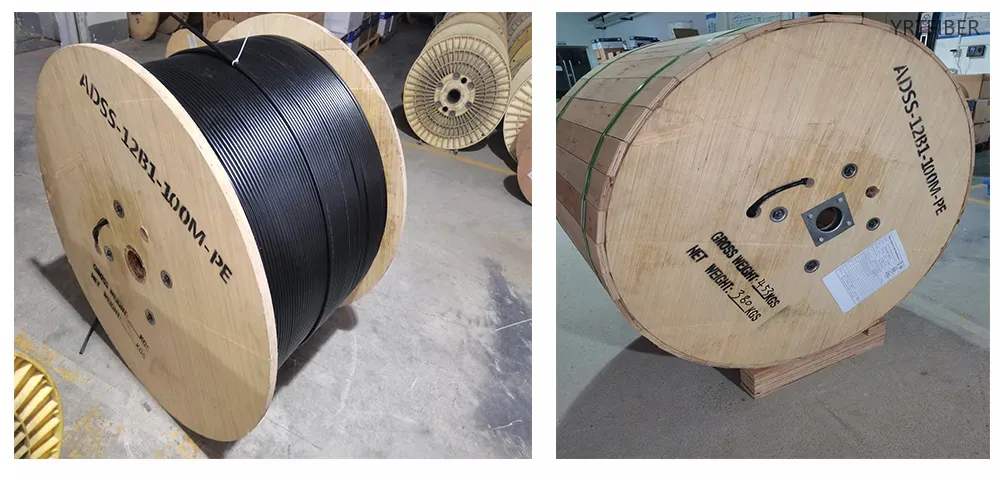
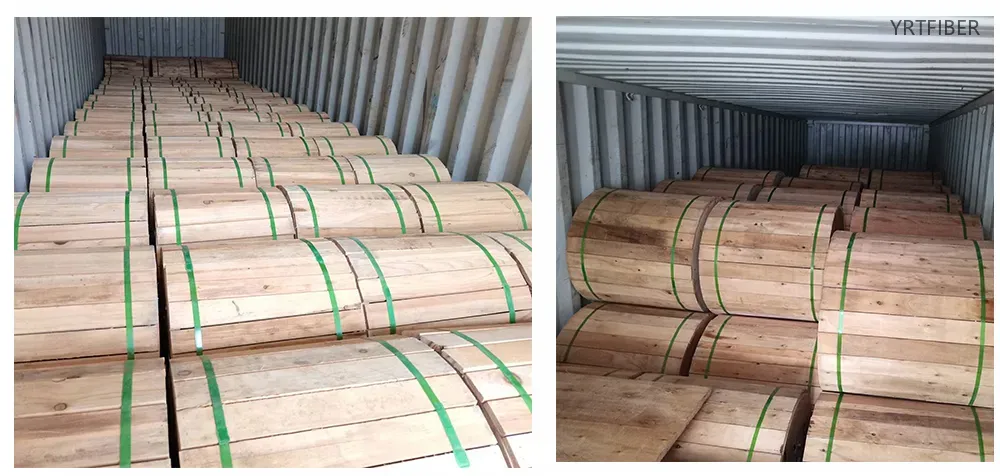
Packaging Requirements:
1:All cables shall be wound on treated wooden spools that are not returnable
2:Cable ends must be firmly secured to the spool and protected with waterproof shrink caps
3:Each spool must include:
1、 Protective plastic wrapping layer
2、 Reinforcing wooden slats for stability
3、 Minimum 1m of free cable end for testing purposes
4、 Standard spool length: 3000mm (±2% tolerance allowed)
Cable Identification:
The outer jacket must display:
1、Unique sequential numbering every 1m (±1% variance permitted)
2、 Additional repeating markings at 1m intervals showing:
1、 Product code and fiber count
2、 Manufacturer identification
3、 Production date (month/year)
4、Total cable length
Standard Packaging Dimensions:
| Length | Container | Size (L×W×H) | Net Mass | Total Mass |
|---|---|---|---|---|
| 2 km | Wood spool | 90×75×90 cm | 156 kg | 220 kg |
| 3 km | Wood spool | 100×68×100 cm | 240 kg | 280 kg |
| 4 km | Wood spool | 109×75×109 cm | 300 kg | 368 kg |
| 5 km | Wood spool | 129×72×129 cm | 400 kg | 480 kg |
Technical Reference:
1、 Standard cable diameter: 10.0mm
2、Maximum span distance: 100m
3、Contact sales team for complete technical specifications
Spool Marking Standards:
Permanent markings (minimum 25-30mm height) must appear on both sides of each spool:
1、 Company name and trademark
2、Contained cable length
3、Cable specifications (type/fiber count)
4、Winding orientation
5、Weight measurements (gross/net)
Note: All wooden packaging materials must undergo proper fumigation treatment prior to use.
Product Comparison:
| Feature / Dimension | GYFBY (Flat Outdoor Drop Cable) | GJFJH (Indoor LSZH Breakout Cable) | GJFJV (Indoor PVC Breakout Cable) |
|---|---|---|---|
| Typical Applications | FTTx last‑mile drop, outdoor aerial (self‑supporting), duct, direct burial. Connects distribution points to subscriber access points. | Indoor backbone cabling, building vertical risers, data centers, equipment rooms, high‑density cabling environments with fire safety requirements. | Indoor general‑purpose cabling, patch cords, pigtails, office LAN, communication equipment connections – environments without strict low‑smoke mandates. |
| Cable Structure | Flat elliptical shape, single loose tube, two FRP parallel strength members, PE sheath. All‑dielectric – no metallic components. | Tight‑buffered fibers (ф900μm/ф600μm) as subunits, aramid yarns as strength member, LSZH (Low‑Smoke Zero‑Halogen) outer jacket. Non‑metallic structure. | Same tight‑buffered fiber + aramid yarns construction as GJFJH, but with PVC (Polyvinyl Chloride) outer jacket instead of LSZH. |
| Pros in Engineering | Excellent tensile strength and crush resistance; compact flat design for easy handling; non‑metallic – no bonding/grounding required; UV‑resistant PE sheath. | Excellent flexibility and bending resistance; low smoke and halogen‑free – safe for fire‑sensitive areas; easy to strip and direct connector termination; non‑metallic – immune to EMI. | Lower material cost than LSZH; good flexibility and mechanical/environmental performance; easy stripping and termination; PVC provides good durability for general indoor use. |
| Cons in Engineering | Primarily outdoor‑rated – not optimized for indoor plenum use (PE jacket, no flame‑retardant rating). LSZH variant less common. | Higher cost than PVC due to LSZH material and stricter manufacturing; LSZH slightly less flexible than PVC in cold environments. | PVC releases dense smoke and toxic fumes when burned – unsuitable for fire‑sensitive spaces (e.g., high‑rise buildings, hospitals, subways). May fail building code requirements in plenum areas. |
| Cost (Relative) | Medium‑Low – economical for FTTH drop segments due to simple uni‑tube design and non‑metallic FRP reinforcement. Optimized for fiber counts up to 24 fibers. | Medium – LSZH material and tight manufacturing tolerances add cost; aramid yarns also increase price vs. polyester alternatives. | Low – most economical indoor breakout option; PVC is inexpensive, widely available, and easy to manufacture. |
| Maintenance Difficulty | Low – flat shape fits standard drop clamps; field splicing requires typical outdoor cable tools; no grounding required. Corrosion not a concern (non‑metallic). | Low – tight‑buffered fibers are easy to access and splice/terminate; LSZH jacket resists chemical degradation; non‑metallic – no rust. Ideal for high‑density environments where frequent patching occurs. | Low – same easy‑access tight‑buffered termination as GJFJH; PVC jacket remains flexible for long service life. However, poor fire performance may pose replacement risk if building codes change. |
| Flame Retardancy | PE jacket – flame retardant not specified for indoor plenum use. Typically lacks LSZH rating. Indoor deployment requires compliance verification. | LSZH jacket – certified for indoor flame‑retardant use. Low smoke, halogen‑free, meets fire safety standards for high‑rise buildings and public spaces. | PVC jacket – flame‑retardant but produces dense smoke and halogen gas. Not suitable for plenum/riser spaces per many building codes. |
GYFBY/GYFXY fiber optic cable Selection Guide
Choose GYFBY for outdoor FTTH drop applications – aerial, duct, or direct burial. Its flat, all‑dielectric design with UV‑resistant PE sheath offers excellent tensile strength and crush resistance with no grounding required. Ideal for connecting distribution points to subscriber premises. However, it lacks indoor flame‑retardant ratings, so verify local codes if used indoors.
Choose GJFJH for indoor backbone and riser cabling in fire‑sensitive environments – high‑rise buildings, data centers, hospitals, or public spaces. Its LSZH jacket emits low smoke and no halogens when burned, meeting strict safety standards. Though more expensive than PVC, it is the mandatory choice where fire codes require low‑smoke, halogen‑free materials.
Choose GJFJV for general indoor applications without strict low‑smoke requirements – office LANs, equipment rooms, and patch cord assemblies. It offers the same easy termination as GJFJH but at lower cost due to PVC sheathing. However, avoid it in plenum spaces or high‑occupancy buildings where smoke toxicity is a concern.
Quick summary:
Outdoor drop / burial → GYFBY
Indoor fire‑rated areas → GJFJH
General indoor, budget‑sensitive → GJFJV
GYFBY Installation Guide (Short)
1. Preparation: Inspect the cable for any sheath damage. Use proper stripping tools to remove the PE jacket without nicking the FRP strength members or the loose tube.
2. Aerial (self-supporting): Install the cable directly between poles using figure-8 clamps or drop hooks. Maintain sag of 1–2% of span length (typical span up to 100m). No separate messenger wire needed.
3. Duct installation: Pull the cable using a pulling grip attached to the FRP members, not the jacket. Use lubricant for long runs. Avoid exceeding the recommended pulling tension (typically ≤ 500N).
4. Direct burial: Lay the cable in a sand bed at least 30 cm deep. For rocky soil, use a protective conduit or additional sand layer. The PE sheath provides good moisture and rodent resistance.
5. Splicing & termination: The flat shape allows easy stripping. Use field-installable connectors or fusion splice to pigtails. Grounding is not required because GYFBY is all-dielectric (no metal).
6. Final check: Perform OTDR test to verify low attenuation and inspect for any kinks or excessive bends. Maintain minimum bend radius of 10× cable height during installation.
Download YRTFIBER Product Catalog
Factory Real Shot
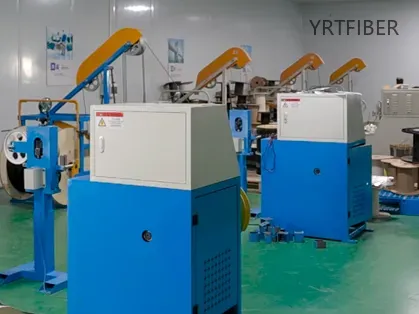
Stranding & Sheathing Line
General view of the cable core assembly zone.
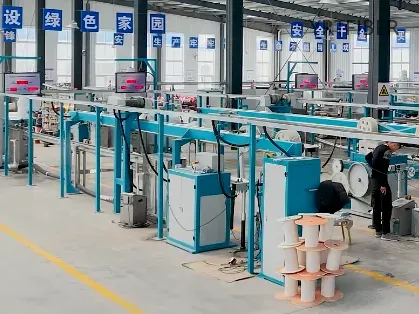
GYFTY53 Manufacturing Plant Overview
A clean and well‑organized production floor.
Raw Material Storage
FRP rods, loose tubes, steel tape, and PE compounds.
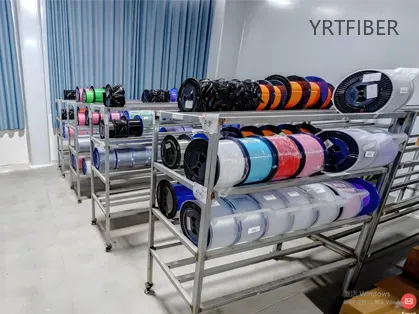
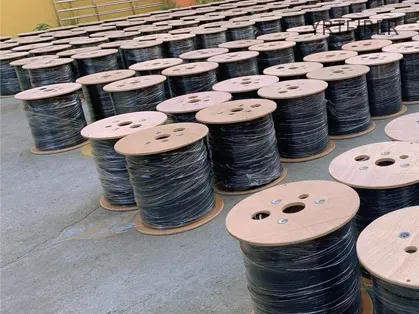
Factory Warehouse & Dispatch
Ready‑to‑ship fiber cable coils awaiting delivery.
Frequently Asked Questions & Quick Inquiry
GYFBY/GYFXY fiber optic cable FAQ
Q: samples available?
A: Yes,
What is GYFBY fiber optic cable used for?
GYFBY fiber optic cable is mainly used for last-mile internet connection, FTTH network construction, aerial deployment, and fiber access between buildings or telecommunication supports. It is also suitable for some indoor distribution scenarios when the cable design and sheath material meet the project requirements.
Is GYFBY fiber optic cable self-supporting?
Yes, many GYFBY fiber optic cables are designed as all-dielectric self-supporting drop cables. The FRP strength members provide tensile strength, so the cable can be installed in aerial FTTH applications without a separate metallic messenger wire in many short-span access network projects.
What are the advantages of GYFBY fiber optic cable?
GYFBY fiber optic cable offers a compact size, light weight, easy installation, good tensile performance, and resistance to electromagnetic interference. Its flat structure makes it convenient for FTTH deployment, while the non-metallic design helps reduce grounding requirements and improve installation efficiency.
What fiber count is available for GYFBY fiber optic cable?
GYFBY fiber optic cable is commonly available in low to medium fiber counts, such as 1, 2, 4, 8, 12, and sometimes up to 24 cores depending on the manufacturer. Common fiber types include G.652D, G.657A1, and G.657A2 for single-mode FTTH and access network applications.
What fiber types can be used in GYFBY cable?
GYFBY fiber optic cable can be made with single-mode fibers such as G.652D, G.657A1, and G.657A2. These fiber types are commonly used in FTTH and access networks because they support stable long-distance transmission and good bending performance.
Can GYFBY fiber optic cable be used outdoors?
Yes, GYFBY fiber optic cable is suitable for outdoor applications, especially aerial FTTH and access network installation. Its PE or HDPE sheath provides weather resistance, while the FRP strength members improve tensile strength and mechanical protection.
Send Your Inquiry
Fill out the form below and we'll get back to you within 24 hours.
Related Articles
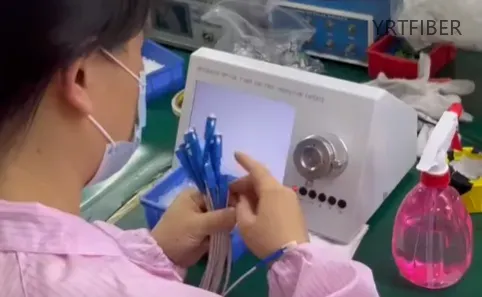
Flat Drop Fiber Patch Cord Testing Video | Ensuring Stable and Consistent Performance
Flat Drop Fiber Patch Cord Testing Video | Ensuring Stable and Consistent Performance
GYFTY53 Outdoor Armored Fiber Optic Cable – FRP Strength Member, Steel Tape Armor
GYFTY53 Outdoor Armored Fiber Optic Cable – FRP Strength Member, Steel Tape Armor
GYFTA53 Direct Burial Armored Fiber Optic Cable with FRP Strength Member
GYFTA53 Direct Burial Armored Fiber Optic Cable with FRP Strength Member


