

 Español
 Português
 لالعربية
 Русский
 Bahasa Indonesia
 Français
 Türkçe
 Bahasa Melayu

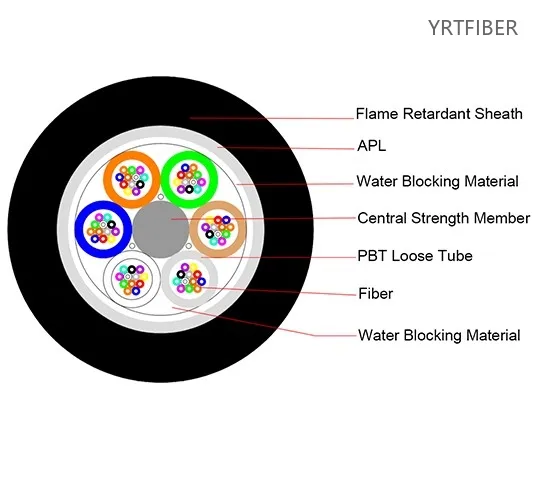
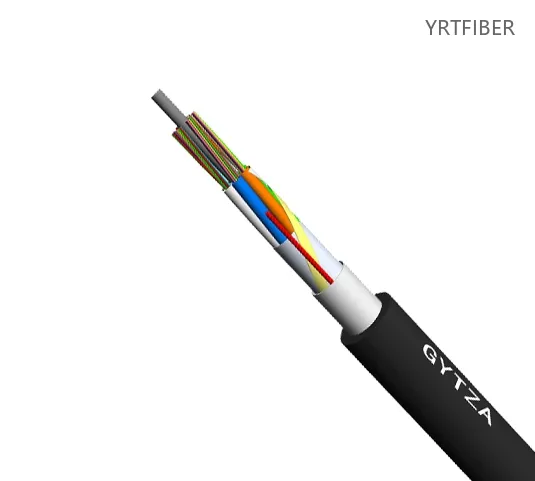
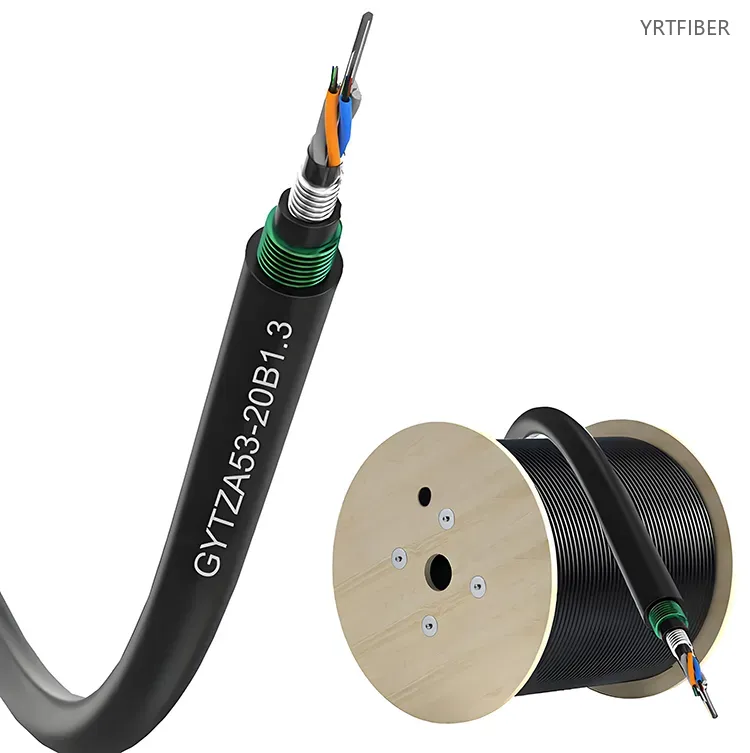
GYTZA Outdoor Flame-Retardant Stranded Loose Tube Fiber Optic Cable – G.652D/G.655
Good mechanical properties, good high temperature resistance
High-strength loose casing, resistant to hydrolysis
Special casing fillers play a key role in protecting optical fibers
Specially designed compact structure prevents loose casing shrinkage
Flame retardant outer sheath to protect optical fibers from fire
Aluminum polyethylene laminate as a moisture barrier
What is GYTZA Optic Fiber Cable
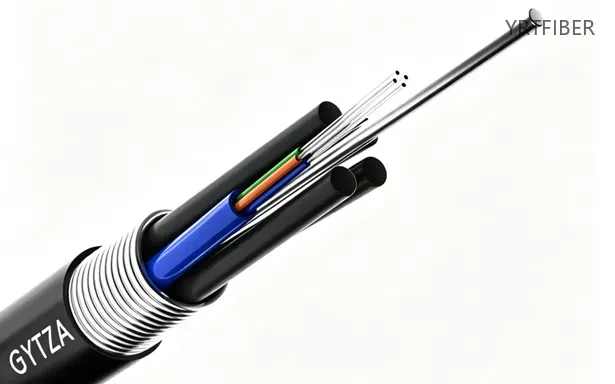
GYTZA type optical cable places 250 μm optical fiber in a loose sleeve made of high modulus plastic, the sleeve is filled with waterproof filler, the center is steel wire as a metal reinforcement, and the high-core cable is sometimes coated with PE. The sleeve and filler are twisted around the reinforcement to form a compact circular cable core. The cable core is wrapped with APL, and the APL is filled with waterproof filler. Finally, the cable is sheathed with flame retardant PE.
GYTZA fiber Optical Cable Specification parameters
- Specification parameters
- OPTICAL CHARACTERISTICS
optical properties
| G.652 | G.655 | 50 / 125μm | 62.5/125 μm | ||
| Attenuation (+20℃) | @850nm | ≤3.0 dB/km | ≤3.0 dB/km | ||
| @1300nm | ≤1.0 dB/km | ≤1.0 dB/km | |||
| @1310nm | ≤0.36 dB/km | ≤0.40 dB/km | |||
| @1550nm | ≤0.22 dB/km | ≤0.23dB/km | |||
| Bandwidth (Class A) | @850nm | ≥500 MHz·km | ≥200 MHz·km | ||
| @1300nm | ≥1000 MHz·km | ≥600 MHz·km | |||
| Numerical Aperture | 0.200±0.015NA | 0.275±0.015NA | |||
| Cable Cut-off Wavelength | ≤1260nm | ≤1480nm | |||
| Storage/Operating temperature | -40℃ ~+70℃ | ||||
Technical parameters
| Model | Fiber cores | Tubes | Fillers | Diameter (mm) | Weight (kgs) | Tensile (N) | Crush (N) | Bending radius | ||
| Long term | Short term | Long term | Short term | Static/ Dynamic | ||||||
| GYTZA-2~6F | 2~6 | 1 | 4 | 9.7 | 135 | 600 | 1500 | 300 | 1000 | 10D/20D |
| GYTZA-8~12F | 8~12 | 2 | 3 | 9.7 | 135 | 600 | 1500 | 300 | 1000 | 10D/20D |
| GYTZA-14~18F | 14~18 | 3 | 2 | 9.7 | 135 | 600 | 1500 | 300 | 1000 | 10D/20D |
| GYTZA-20~24F | 20~24 | 4 | 1 | 9.7 | 135 | 600 | 1500 | 300 | 1000 | 10D/20D |
| GYTZA-26~30F | 26~30 | 5 | 9.7 | 135 | 600 | 1500 | 300 | 1000 | 10D/20D | |
| GYTZA-32~36F | 32~36 | 6 | 10.2 | 147 | 1000 | 3000 | 300 | 1000 | 10D/20D | |
| GYTZA-38~48F | 38~48 | 4 | 1 | 11.2 | 167 | 1000 | 3000 | 300 | 1000 | 10D/20D |
| GYTZA-50~60F | 50~60 | 5 | 11.2 | 167 | 1000 | 3000 | 300 | 1000 | 10D/20D | |
| GYTZA-62~72F | 62~72 | 6 | 12.2 | 189 | 1000 | 3000 | 300 | 1000 | 10D/20D | |
| GYTZA-74~84F | 74~84 | 7 | 1 | 13.8 | 231 | 1000 | 3000 | 300 | 1000 | 10D/20D |
| GYTZA-86~96F | 86~96 | 8 | 13.8 | 231 | 1000 | 3000 | 300 | 1000 | 10D/20D | |
| GYTZA-98~108F | 98~108 | 9 | 1 | 15.2 | 271 | 1000 | 3000 | 300 | 1000 | 10D/20D |
| GYTZA-110~120F | 110~120 | 10 | 15.2 | 271 | 1000 | 3000 | 300 | 1000 | 10D/20D | |
| GYTZA-122~132F | 122~132 | 11 | 1 | 17.1 | 327 | 1000 | 3000 | 300 | 1000 | 10D/20D |
| GYTZA-134~144F | 134~144 | 12 | 17.1 | 327 | 1000 | 3000 | 300 | 1000 | 10D/20D | |
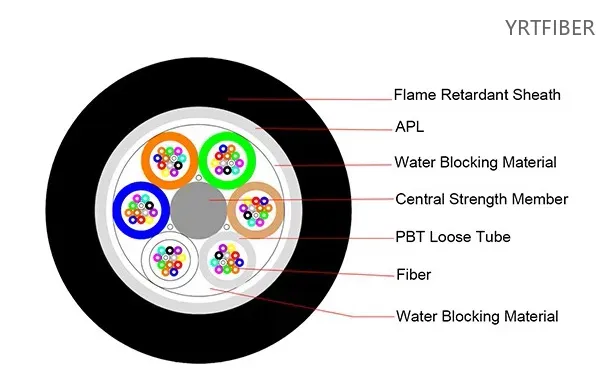
Product Structure & Composition
Flame Retardant Sheath – Outermost layer made of flame-retardant material; protects the cable and prevents flame spread.
APL (Aluminum‑Polyethylene Laminate) – Longitudinally applied tape that provides moisture barrier, electromagnetic shielding, and some crush resistance.
Water Blocking Material (first) – Typically water‑blocking yarn or powder; prevents water from penetrating longitudinally into the cable.
Central Strength Member – Usually FRP or steel wire; provides tensile strength and supports the loose tubes.
PBT Loose Tube – Made of PBT; contains optical fibers and filling gel, offering buffering and water protection.
Fiber – Optical fiber core for transmitting signals (single‑mode or multi‑mode).
Water Blocking Material (second) – Located outside the loose tube or around the strength member; together with the first one forms a dual water‑blocking system.
Benefits of GYTZA fiber Optical Cable
Strong mechanical & thermal performance
Good mechanical properties and high temperature resistance ensure reliable operation under harsh conditions.
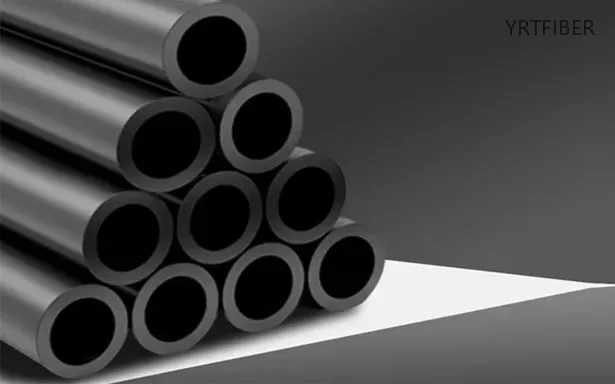
High-strength loose tubes
PBT tubes with hydrolysis resistance and specially designed compact structure prevent tube shrinkage while protecting fibers.
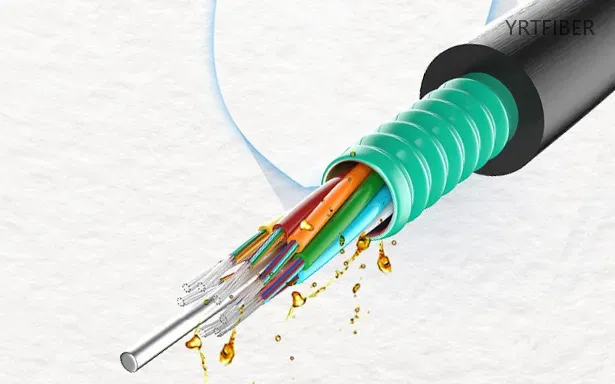
Effective fiber protection
Special filling compounds inside the tubes safeguard optical fibers from stress and moisture.
Dual-layer barrier design
Aluminum‑polyethylene laminate (APL) provides an excellent moisture barrier, while the flame‑retardant outer sheath protects against fire.

Engineering Applications GYTZA fiber Optical Cable
Core/Local Backbone Communication
Backbone pipelines or overhead connections between buildings; CATV and computer network transmission systems; communication core network and access network.
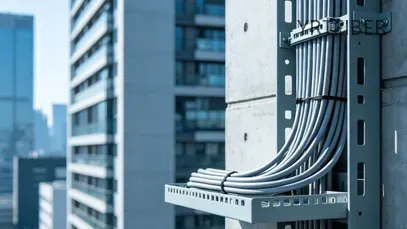
Overhead/Pipeline Laid Communication
Pipelines, cable trenches (conventional non-armored GYTZA); conduit laying (better moisture-proof and anti-rust performance than steel tape, longer lifespan).
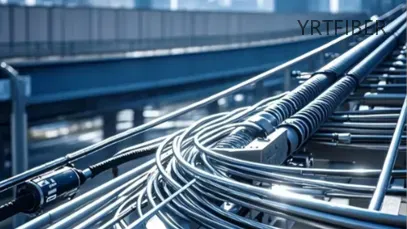
Railway and Tunnel Scenarios
Along railways (including Yumo Railway), tunnels (requires low-smoke, non-toxic; smoke density transmittance >80% when burning); subways (considering both armored protection and fire safety).
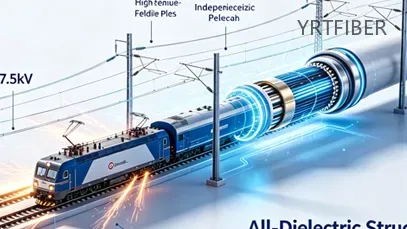
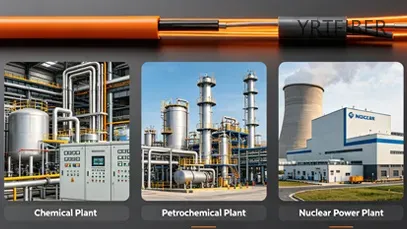
High Fire Protection Level Areas
Fire-resistant and flame-retardant places such as chemical plants, petrochemical plants, nuclear power plants, steel mills, power plants; mines; high-rise buildings, hospitals, schools, and other densely populated areas.
Shipping & Packaging
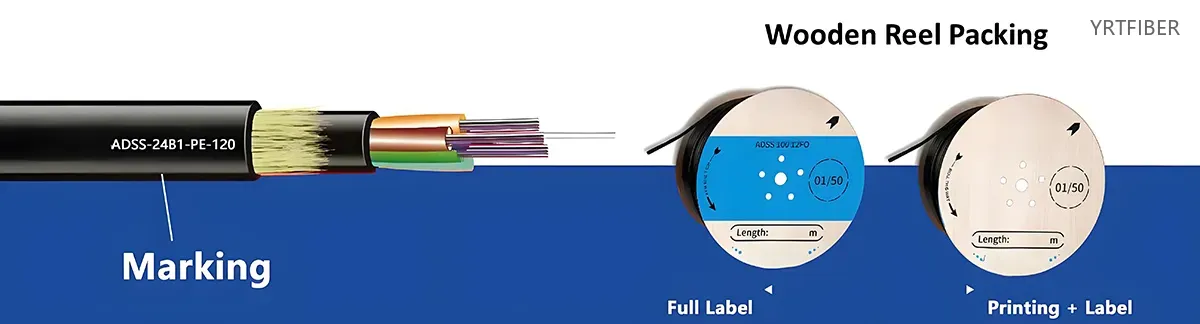
Packaging Requirements:
1:All cables shall be wound on treated wooden spools that are not returnable
2:Cable ends must be firmly secured to the spool and protected with waterproof shrink caps
3:Each spool must include:
A protective outer layer of plastic wrapping
Reinforcing wooden slats to ensure stability
At least 1 meter of free cable end reserved for testing
A standard spool length of 3000mm (with a permissible tolerance of ±2%)
Cable Identification:
The outer jacket must display:
1、Unique sequential numbering every 1m (±1% variance permitted)
2、 Additional repeating markings at 1m intervals showing:
Product code and fiber count
Manufacturer identification
Production date (month/year)
Total cable length
Standard Packaging Dimensions:
| Length | Container | Size (L×W×H) | Net Mass | Total Mass |
|---|---|---|---|---|
| 2 km | Wood spool | 90×75×90 cm | 156 kg | 220 kg |
| 3 km | Wood spool | 100×68×100 cm | 240 kg | 280 kg |
| 4 km | Wood spool | 109×75×109 cm | 300 kg | 368 kg |
| 5 km | Wood spool | 129×72×129 cm | 400 kg | 480 kg |
Technical Reference:
1、 Standard cable diameter: 10.0mm
2、Maximum span distance: 100m
3、Contact sales team for complete technical specifications
Spool Marking Standards:
Permanent markings (minimum 25-30mm height) must appear on both sides of each spool:
1、 Company name and trademark
2、Contained cable length
3、Cable specifications (type/fiber count)
4、Winding orientation
5、Weight measurements (gross/net)
Note: All wooden packaging materials must undergo proper fumigation treatment prior to use.
Product Comparison:
GYTZA vs GYTA vs GYTZS vs GYXTS
| Feature / Dimension | GYTZA (Layered Stranded Aluminum Strip Armored Flame-Retardant Optical Cable). | GYTA (Layered Stranded Aluminum Strip Armored Optical Cable). | GYTZS (Layered Stranded Steel Strip Armored Flame-retardant Optical Cable). | GYXTS (Central Bundle Tube Steel Strip Armored Optical Cable). |
|---|---|---|---|---|
| Sheath Material | Low smoke halogen-free flame-retardant polyolefin (LSZH) burns with low smoke, halogen-free, and non-corrosive gases. | Polyethylene (PE) has excellent UV resistance and is suitable for long-term outdoor exposure. | Low smoke halogen-free flame-retardant polyolefins (LSZH) or flame-retardant PE produce no large amounts of smoke or toxic gases when burned. | Polyethylene (PE) offers excellent UV resistance and outdoor environmental performance. |
| Armor Type | Single-layer coated aluminum tape (APL) longitudinally wrapped, double-sided lamination. | Single-layer coated aluminum tape (APL) longitudinally wrapped, double-sided lamination. | Double-sided coated steel strip (PSP) longitudinal wrapping. | Steel strip armor layer, some models also include a steel wire reinforcement layer. |
| Structure type | Layered twisting type: loose sleeve and filling rope reinforce the core around the metal center, with the cable core gaps filled with water-blocking filler. | Layered twisted type: Structure is the same as GYTZA. | Layered stranded type: Structure is the same as GYTA/GYTZA but uses steel belt armor instead of aluminum belt. | Central bundle tube: A single loose sleeve tube is located at the center of the optical cable, with two parallel steel wire reinforcements, resulting in a compact structure and a small outer diameter. |
| Fiber Core Capacity | 2~144 cores, some models can reach up to 216 cores. | 2~144 cores, with some models reaching up to 432 cores. | 2~432 cores. | 2~24 cores, mainly for scenarios with smaller chip counts. |
| Installation Methods | pipeline, overhead, and direct burial (specific models such as GYTZA53). | Mainly pipelines (commonly known as "pipeline optical cables"), but can also be overhead. | Pipelines and overhead structures. | Overhead, pipeline, and direct burial. |
| Typical Applications | Core nodes, important convergence nodes, and locations with strict flame-retardant requirements such as the main section (each section ≥ 500 meters), tunnels, subways, nuclear power plants, and high-rise buildings. | Mainly for outdoor pipeline installation, metropolitan area networks and access networks, suitable for outdoor humid environments. | Long-distance communication and inter-office communication require flame retardant performance but require higher side pressure resistance than GYTZA's outdoor overhead or pipeline scenarios. | Small chip digital optical communication, overhead, pipeline, direct buried, and other small and medium-chip scenarios. |
| Engineering Pros | (1) Aluminum strips have better moisture and rust resistance than steel strips, especially suitable for humid environments or long-term pipeline installation; (2) LSZH sheath is low smoke and halogen-free, does not release corrosive gases when exposed to fire, ensuring the safety of personnel and equipment; (3) Good mechanical properties, meeting standards such as YD/T 1114 and IEC 60794-1; (4) Compact structure, cable core filled with waterproof gel, excellent radial waterproofing. | (1) Aluminum strips have good moisture-proof and rust-proof properties, with a long service life when laid in pipelines; (2) Lower cost; (3) Lightweight; (4) Excellent waterproof performance, suitable for humid environments. | (1) Steel belt armor has superior lateral compression resistance to GYTZA aluminum strips, offering stronger bulletproof and rodent resistance; (2) LSZH sheaths provide flame retardant performance; (3) Excellent mechanical and environmental performance; (4) Steel strip longitudinal wrapping provides excellent moisture barrier and bulletproof capability. | (1) Compact structure, small size, light weight, easy to install; (2) Steel belt armor provides excellent compression resistance, moisture resistance, and bulletproof resistance; (3) Easy installation. |
| Engineering Cons | (1) The side compression resistance index of aluminum strips is lower than that of steel strip armor (such as GYTZS/GYTS), making them unsuitable for applications requiring extremely high lateral pressure; (2) Cables with higher prices than ordinary PE sheaths; (3) The flame-retardant outer sheath performs worse than PE sheath under long-term outdoor exposure. | (1) The side compression resistance of aluminum strips is lower than that of steel strip armor; (2) Does not have flame retardant properties; it will burn and produce smoke when exposed to fire; (3) Not suitable for indoor entry sections with fire safety requirements. | (1) Steel strips have weaker corrosion resistance in humid environments than aluminum strips, and their long-term service life is slightly lower than aluminum strip armor; (2) Higher cost than GYTZA; (3) Relatively heavy. | (1) Limited pin count (≤24 pins), not suitable for large-capacity applications; (2) Controlling the remaining length of the fiber in the central beam-tube structure is quite difficult, and performance is limited at the number of large cores. |
| Flame Retardancy (Flame Retardancy). | Class B and above, LSZH low smoke halogen-free, suitable for densely populated places with high fire prevention requirements. | It lacks flame retardant properties; when exposed to fire, the PE sheath will burn and produce smoke, making it unsuitable for indoor or fire-resistant scenarios. | Class B and above, LSZH low smoke halogen-free and excellent flame retardant performance. | It does not have flame-retardant properties and is not recommended for indoor fire protection sections. |
| Crush Resistance | Generally (aluminum strip armor, side compression resistance index is lower than steel belt). Aluminum strip armor provides basic protection and is suitable for conventional pipeline and overhead scenarios. | General (aluminum strip armor). | Stronger (steel strip armor has better side compression resistance than aluminum strip). | Relatively strong (steel belt armor + steel wire reinforcement). |
| Corrosion / Moisture Resistance | Excellent. Aluminum strip has better rust and moisture resistance than steel strip, making it advantageous for long-term use in humid environments or pipelines. | Excellent. Aluminum strip longitudinal wrapping provides excellent moisture protection for the optical cable. | Average. Steel belt armor has weaker rust and moisture resistance in humid environments than aluminum belts. | Average. Steel strip armor has weaker rust resistance than aluminum belt armor. |
| Cost | Moderately high (LSZH materials, flame retardant certification testing increase costs). | Medium (PE sheath costs less than LSZH). | Moderately high (steel strip + LSZH, cost slightly higher than GYTZA). | Lower (central bundle tube structure is simple, with significant cost advantages in small core count). |
| Maintenance Difficulty | Average. LSZH sheaths have weaker UV aging resistance than PE in outdoor environments, so long-term exposure requires more attention to sheath condition; Aluminum strips have good rust prevention and a low failure rate. | Low. PE sheaths have excellent UV resistance and aging resistance, aluminum strips have excellent rust and corrosion resistance, and require minimal maintenance. | Moderately high. Steel strip armor in humid environments requires regular corrosion inspection; The flame-retardant outer sheath performs worse than PE when exposed to outdoor conditions for extended periods. | Low. Simple structure with a small outer diameter, making installation and maintenance relatively convenient. |
GYTZA fiber Optical Cable Selection Guide
1: Engineering selection of flame-retardant optical cables:
Both GYTZA and GYTZS have flame-retardant properties, but with different focuses. GYTZA uses an aluminum tape protective layer, which provides better rust and moisture resistance than GYTZS, making it particularly suitable for long-term installation in humid environments or ducts. On the other hand, GYTZS features steel tape armoring, offering stronger resistance to lateral pressure, better bulletproof and rodent-proof capabilities compared to aluminum tape, making it suitable for aerial installations or scenarios with higher lateral pressure requirements.
2: Fire rating requirements:
For areas with high fire protection requirements or dense populations, such as the core machine room entry segment, tunnels, subways, and high-rise buildings, GYTZA or GYTZS should be prioritized. Specifically, the length of a single segment of entry optical cable should not be less than 500 meters.
3 : Applicable scenarios for non-flame-retardant optical cables:
GYTA is the classic 'duct optical cable.' Its PE sheath has good UV resistance and high long-term outdoor reliability, but it will burn in the event of a fire and is not suitable for indoor environments with fire protection requirements. GYXTS has a compact structure and is the most cost-effective, suitable for small-core aerial or duct installations, but it also lacks flame-retardant properties.
GYTZA Cable Installation Instructions (Brief)
Handling – Avoid sharp edges and excessive twisting. Uncoil without kinking.
Pulling – Use a pulling grip (e.g., mesh or swivel) attached to the strength member. Do not pull on the sheath alone.
Tension – Max tensile load: long term ≤ 1000 N, short term ≤ 3000 N (refer to datasheet).
Bending radius – During installation: ≥ 20× cable OD; after installation: ≥ 10× cable OD.
Temperature – Install at ambient temperature ≥ -10°C. Avoid extreme cold.
Flame & moisture – No special fireproofing needed due to LSZH/sheath, but follow local codes. APL provides moisture barrier; still keep cable ends sealed.
Fastening – Use non‑metallic or corrosion‑resistant ties. Do not over‑tighten.
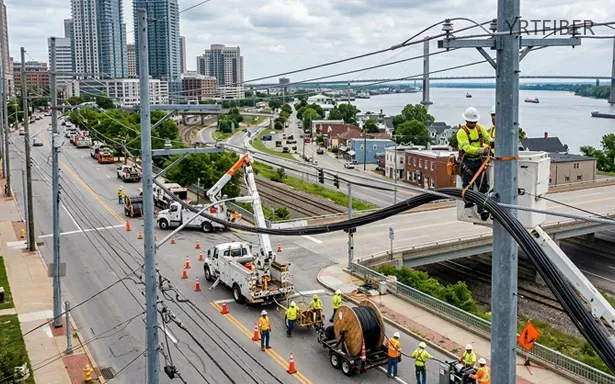
Download YRTFIBER Product Catalog
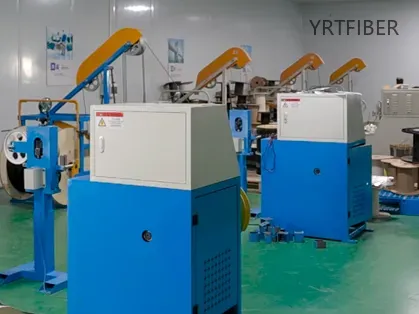
Factory Real Shot
Fully Integrated Optical Cable Manufacturing Facility
End‑to‑end process chain under one roof: fiber coloring, secondary coating, loose tube stranding, dual‑layer sheath extrusion. Segregated clean zones (coloring, extrusion, stranding, armoring, testing) ensure zero cross‑contamination and full traceability.
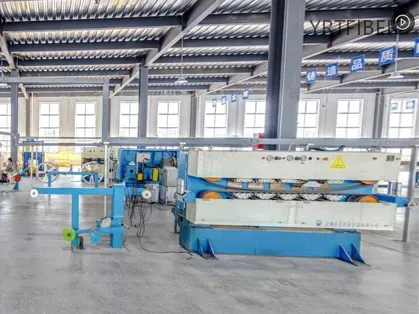
Guaranteed On‑Schedule Delivery
Each custom order is schedule‑locked against contract lead time; no deviation. A dedicated coordinator tracks from material release to final inspection, ensuring shipment on the agreed date.
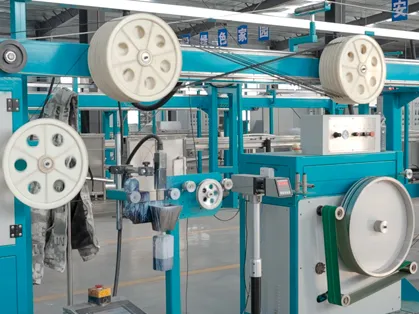
Continuous Production Line Availability
Hot‑standby extruder heads and dual pay‑offs enable instant changeover/maintenance without line stop. Automated monitoring of steel tape, PE compound, and water‑blocking material triggers replenishment alerts — eliminating stockout‑induced downtime.
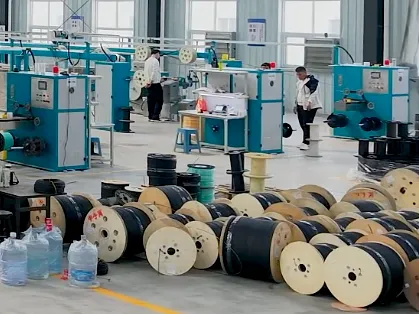
Deep OEM/ODM Customization Capability
Custom sheath color, print legend, spool size, packaging — from drawings/samples. Neutral or branded labeling available. ODM covers full cycle: concept design, material selection, rapid sample validation by in‑house cable engineers.
Frequently Asked Questions & Quick Inquiry
GYTZA fiber Optical Cable FAQ
1. What is the main advantage of GYTZA compared to GYTS or GYTA cables?
The key feature of GYTZA is its flame-retardant outer sheath, making it ideal for environments where fire resistance is required—such as industrial parks, tunnels, metro systems, or building-to-building outdoor links. While GYTS/GYTA focus on mechanical protection, GYTZA adds fire safety compliance.
2. Is this cable suitable for underground or duct installation?
Yes. GYTZA is designed for outdoor duct, trench, or conduit-based installations. Its stranded loose tube and water-blocking structure protect the fibers from moisture and mechanical stress.
3. What fiber specifications are available?
This cable supports G.652D (standard SMF) and G.655 (non-zero dispersion-shifted fiber) in configurations from 2 to 144 cores, allowing flexibility for metro, access, and backbone deployments.
4. Does the flame-retardant feature affect durability or flexibility?
No. The flame-retardant sheath maintains high resistance to UV, mechanical stress, and temperature, while complying with IEC 60332 or equivalent fire safety standards. It ensures long service life even under outdoor exposure.
5. What industries or projects typically use GYTZA cables?
GYTZA is commonly used in:
Industrial or petrochemical zones
Power plants and substations
Metro and transportation tunnels
Telecom backbone networks requiring fire-rated cables
Send Your Inquiry
Fill out the form below and we'll get back to you within 24 hours.


