

 Español
 Português
 لالعربية
 Русский
 Bahasa Indonesia
 Français
 Türkçe
 Bahasa Melayu

OPGW Central Stainless Tube Fiber Cable 12-144 Cores
Compact cable diameter and lightweight design minimize additional load on towers.
Centralized steel tube construction prevents secondary mechanical fatigue damage.
Offers low resistance to lateral pressure, torsion, and tensile forces (single-layer structure).
what is an OPGW Central Stainless Tube Optical Cable
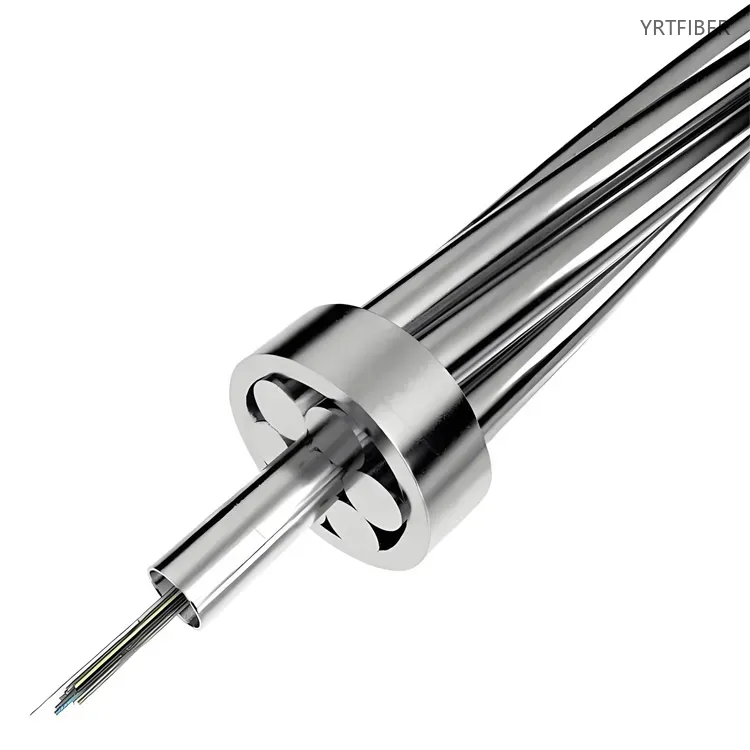
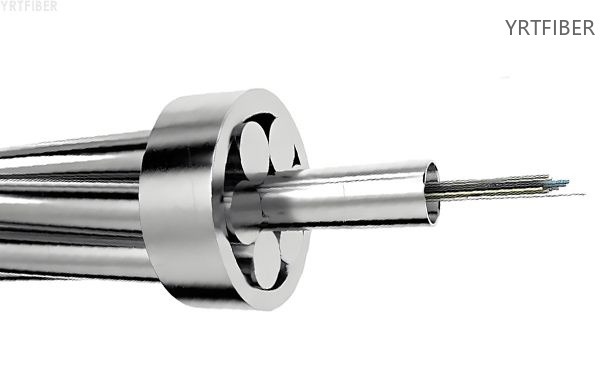
OPGW aerial optical cable with a central stainless steel tube, available in 12 to 144 fiber cores.
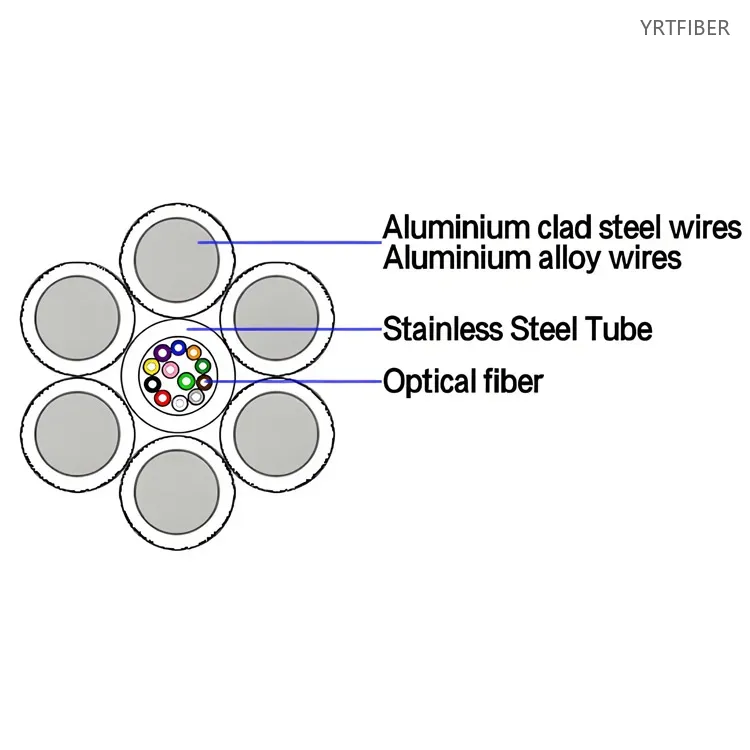
It is a type of OPGW (Optical Ground Wire) used on overhead power transmission lines. The optical fibers are placed inside a stainless steel tube at the center of the cable, protecting them from moisture, corrosion, and mechanical stress. Surrounding the tube are layers of aluminum-clad steel or aluminum alloy wires that provide tensile strength and conduct fault currents. This design allows the cable to serve simultaneously as a lightning/short-circuit protection ground wire and as a high‑reliability communication link, with fiber counts ranging from 12 to 144 cores.
OPGW Central Stainless Tube Optical Cable Specification parameters
- Specification parameters
- OPTICAL CHARACTERISTICS
| Standard | Description |
|---|---|
| ITU-TG.652 | Characteristics of a single mode optical fiber. |
| ITU-TG.655 | Characteristics of a non-zero dispersion-shifted single mode fibers optical. |
| EIA/TIA598 B | Color code of fiber optic cables. |
| IEC 60794-4-10 | Aerial optical cables along electrical power lines-family specification for OPGW. |
| IEC 60794-1-2 | Optical fiber cables - part test procedures. |
| IEEE1138-2009 | IEEE Standard for testing and performance for optical ground wire for use on electric utility power lines. |
| IEC 61232 | Aluminum-Clad steel wire for electrical purposes. |
| IEC 60104 | Aluminum magnesium silicon alloy wire for overhead line conductors. |
| IEC 61089 | Round wire concentric lay overhead electrical stranded conductors. |
Colors -12 Chromatography:
| No. | 1 | 2 | 3 | 4 | 5 | 6 |
|---|---|---|---|---|---|---|
| Color | Blue | Orange | Green | Brown | Gray | White |
| No. | 7 | 8 | 9 | 10 | 11 | 12 |
| Color | Red | Black | Yellow | Violet | Pink | Aqua |
Technical Parameter:
Typical design for Single Layer
| Specification | Fiber Count | Diameter (mm) | Weight (kg/km) | RTS (KN) | Short Circuit (KA2s) |
|---|---|---|---|---|---|
| OPGW-32 (40.6;4.7) | 12 | 7.8 | 243 | 40.6 | 4.7 |
| OPGW-42 (54.0;8.4) | 24 | 9 | 313 | 54 | 8.4 |
| OPGW-42 (43.5;10.6) | 24 | 9 | 284 | 43.5 | 10.6 |
| OPGW-54 (55.9;17.5) | 36 | 10.2 | 394 | 67.8 | 13.9 |
| OPGW-61 (73.7;17.5) | 48 | 10.8 | 438 | 73.7 | 17.5 |
| OPGW-61 (55.1;24.5) | 48 | 10.8 | 358 | 55.1 | 24.5 |
| OPGW-68 (80.8;21.7) | 54 | 11.4 | 485 | 80.8 | 21.7 |
| OPGW-75 (54.5;41.7) | 60 | 12 | 459 | 63 | 36.3 |
| OPGW-76 (54.5;41.7) | 60 | 12 | 385 | 54.5 | 41.7 |
Typical design for Double Layer
| Specification | Fiber Count | Diameter (mm) | Weight (kg/km) | RTS (KN) | Short Circuit (KA2s) |
|---|---|---|---|---|---|
| OPGW-96 (121.7;42.2) | 12 | 13 | 671 | 121.7 | 42.2 |
| OPGW-127 (141.0;87.9) | 24 | 15 | 825 | 141 | 87.9 |
| OPGW-127 (77.8;128.0) | 24 | 15 | 547 | 77.8 | 128 |
| OPGW-145 (121.0;132.2) | 28 | 16 | 857 | 121 | 132.2 |
| OPGW-163 (138.2;183.6) | 36 | 17 | 910 | 138.2 | 186.3 |
| OPGW-163 (99.9;213.7) | 36 | 17 | 694 | 99.9 | 213.7 |
| OPGW-183 (109.7;268.7) | 48 | 18 | 775 | 109.7 | 268.7 |
| OPGW-183 (118.4;261.6) | 48 | 18 | 895 | 118.4 | 261.6 |
Product Structure & Composition
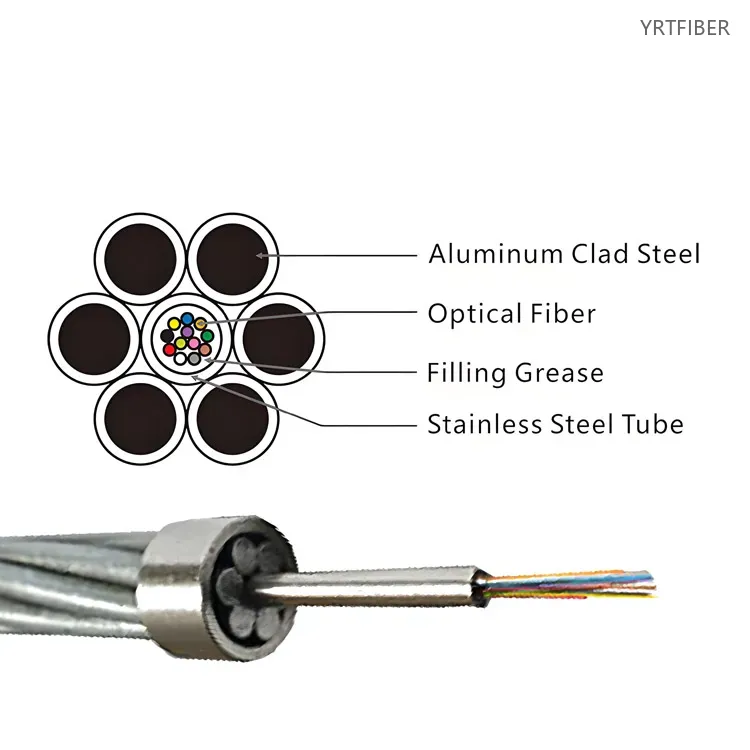
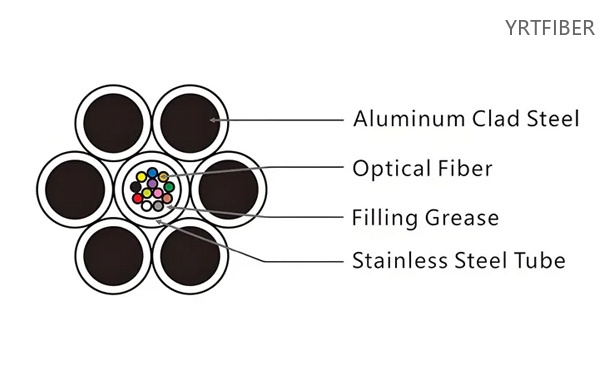
Aluminum Clad Steel
Stranded on the outer layers to provide tensile strength and electrical conductivity, while serving as grounding, lightning protection, and short-circuit current path.
Optical Fiber
Located inside the stainless steel tube, used for transmitting communication signals over long distances (data, voice, video, etc.).
Filling Grease
Fills the space around the optical fibers inside the stainless steel tube to provide water‑blocking, moisture protection, mechanical buffering, and fiber protection.
Stainless Steel Tube
The central protective tube for the optical fibers, offering high mechanical strength, crush resistance, and corrosion resistance to prevent moisture or damage to the fibers.
Benefits of OPGW Central Stainless Tube Optical Cable
Compact cable diameter and lightweight design minimize additional load on towers.
A smaller cable diameter and reduced weight mean that when the OPGW cable is installed on existing transmission towers, it adds only limited extra mechanical load. This helps avoid the need for costly tower reinforcement and maintains the structural integrity of the power line infrastructure, especially in long spans or harsh weather conditions.
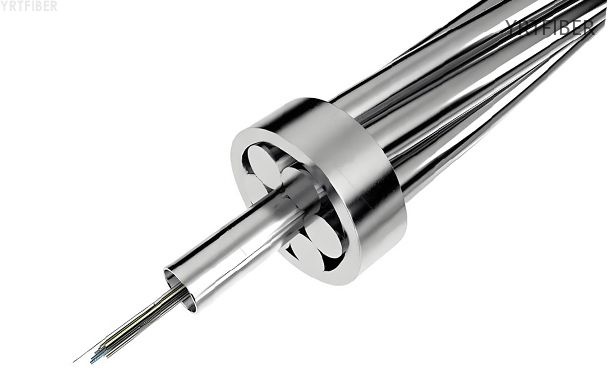
Centralized steel tube construction prevents secondary mechanical fatigue damage.
By placing all optical fibers inside a single, central stainless steel tube, the cable eliminates relative movement between fibers and the tube under bending or vibration. This design prevents repeated micro‑bending or fretting that could lead to secondary fatigue damage, ensuring long‑term optical performance and mechanical reliability over the cable's lifetime.
Offers low resistance to lateral pressure, torsion, and tensile forces (single-layer structure).
The single‑layer construction of the cable results in lower inherent resistance to external forces such as crushing, twisting, and pulling. This means the cable is more flexible and easier to install, but it also requires careful handling during deployment to avoid exceeding its mechanical limits. It is best suited for applications where extreme lateral or torsional loads are not expected.
Engineering Applications OPGW Central Stainless Tube Optical Cable
Overhead Ground Wire & Lightning Protection
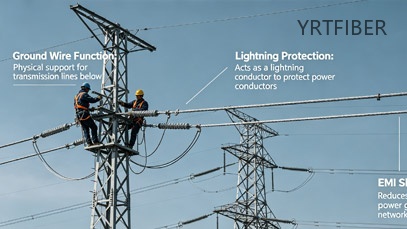
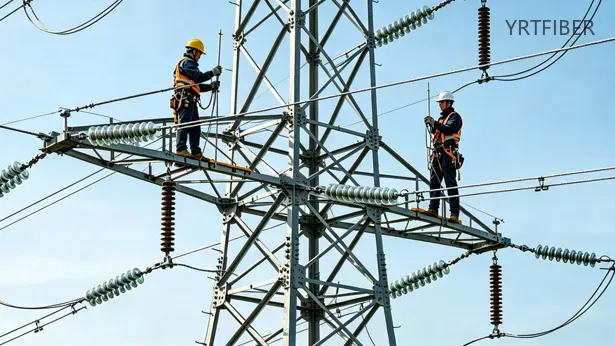
The OPGW cable directly replaces traditional overhead ground wires, combining three critical functions in one structure. It provides physical support for transmission lines, acts as a lightning shield to protect power conductors from lightning strikes, and offers EMI shielding - significantly reducing electromagnetic interference between short-circuit currents and communication networks.
In high‑voltage lines, the stainless steel tube's metallic structure efficiently conducts fault currents while safeguarding the internal optical fibers, ensuring both power system safety and communication integrity.
Power Communication Backbone Network
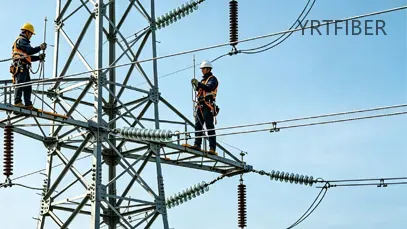
OPGW creates a dedicated, secure data highway for smart grid operation. It carries mission‑critical services such as relay protection signals, dispatch automation commands, and stability control data - all requiring ultra‑low latency and zero error rates.
With advanced fiber technologies (e.g., ultra‑low‑loss fibers), OPGW supports massive bandwidth (10G, n×10G, or even 400G per wavelength), meeting the ever‑growing data demands of modern power systems including real‑time monitoring and teleprotection.
Large‑Span & Complex Terrain Installations
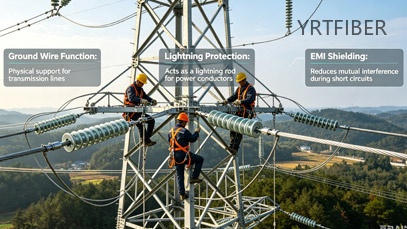
The stainless steel tube construction provides excellent tensile strength (typically >150 kN), making OPGW ideal for long‑span crossings over rivers, deep canyons, or mountainous areas. Its compact design reduces wind and ice loading, simplifying tower design.
Excellent corrosion resistance ensures a service life of 30+ years even in harsh environments - coastal zones with high salt spray, deserts, or industrial pollution zones - without significant performance degradation.

Ultra‑High Voltage (UHV) & Extreme Environments
For UHV lines, the 304L stainless steel tube offers superior electrochemical corrosion resistance compared to aluminum tubes, reliably withstanding the severe electrical and chemical stresses of UHV operation.
The structure also maintains stable fiber signal transmission across extreme temperature ranges (-60°C to +65°C) and exhibits lower temperature rise under short‑circuit current surges, ensuring communication continuity during grid faults.
Shipping & Packaging
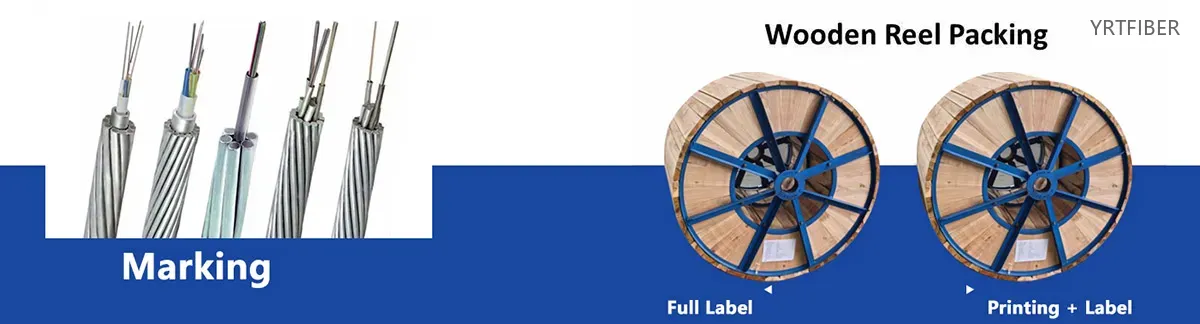
Packaging Requirements:
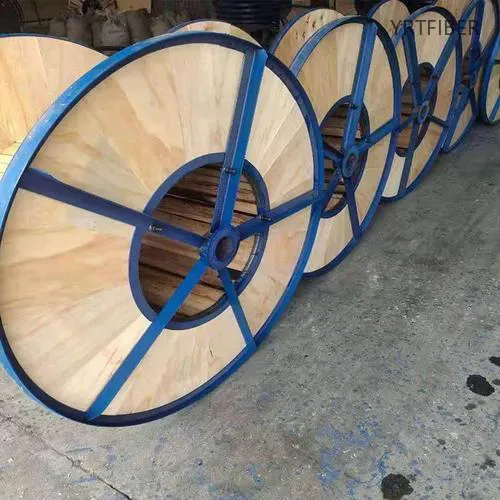
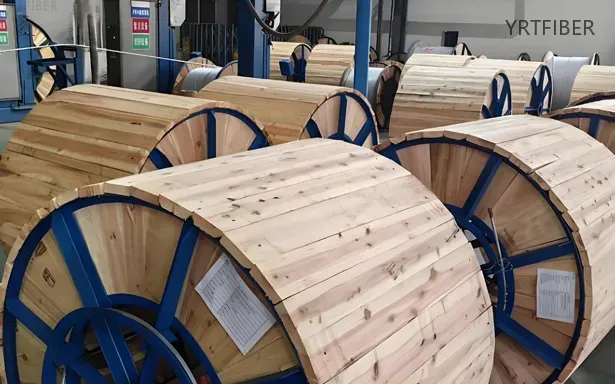
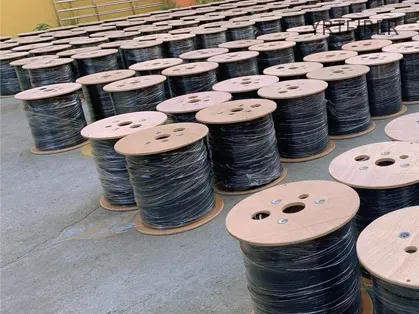
1:All cables shall be wound on treated wooden spools that are not returnable
2:Cable ends must be firmly secured to the spool and protected with waterproof shrink caps
Each spool must contain the following:
A protective outer layer of plastic wrapping
Reinforcing wooden slats to ensure stability
At least 1 meter of free cable end reserved for testing
A standard spool length of 3000mm (with a permissible tolerance of ±2%)
Cable Identification:
The outer jacket must display:
1、Unique sequential numbering every 1m (±1% variance permitted)
2. Additional repeating markings at 1-meter intervals must include:
Product code and fiber count
Manufacturer identification
Production date (month/year)
Total cable length
Standard Packaging Dimensions:
| Length | Container | Size (L×W×H) | Net Mass | Total Mass |
|---|---|---|---|---|
| 2 km | Wood spool | 90×75×90 cm | 156 kg | 220 kg |
| 3 km | Wood spool | 100×68×100 cm | 240 kg | 280 kg |
| 4 km | Wood spool | 109×75×109 cm | 300 kg | 368 kg |
| 5 km | Wood spool | 129×72×129 cm | 400 kg | 480 kg |
Technical Reference:
1、 Standard cable diameter: 10.0mm
2、Maximum span distance: 100m
3、Contact sales team for complete technical specifications
Spool Marking Standards:
Permanent markings (minimum 25-30mm height) must appear on both sides of each spool:
1、 Company name and trademark
2、Contained cable length
3、Cable specifications (type/fiber count)
4、Winding orientation
5、Weight measurements (gross/net)
Note: All wooden packaging materials must undergo proper fumigation treatment prior to use.
Product Comparison:
Aluminum PBT Tube OPGW VS Stainless Steel Tube OPGW VS Stainless Steel Tube OPGW (Central Tube) VS Aluminum Spacer OPGW
| Feature / Dimension | Aluminum PBT Tube OPGW | Stainless Steel Tube OPGW (Stranded) | Stainless Steel Tube OPGW (Central Tube) | Aluminum Spacer OPGW |
|---|---|---|---|---|
| Structural Features | Optical fibers are placed in a PBT loose tube, which is then encased in a seamless aluminum tube and stranded with steel/aluminum alloy wires. Aluminum tube is part of the conductive cross-section and serves as an optical unit protector. | Optical fibers are placed in a hermetically sealed stainless steel tube (laser-welded), which is stranded with aluminum-clad steel wires (ACS) and/or aluminum alloy wires. Stainless steel tube replaces one or more metal wires. | Stainless steel tube is placed at the cable's center, surrounded by one or more layers of stranded ACS/aluminum wires. No stranded optical units. | Optical fibers or loose tubes are placed in the spiral grooves of an aluminum alloy spacer, with a surrounding aluminum tube; all metal parts are fully metallic. |
| Typical Applications | Suitable for medium to high-voltage (110kV-220kV) transmission lines, general new construction, and environments requiring high corrosion resistance. | Preferred for 500kV-1100kV EHV/UHV transmission lines, new line construction, and projects needing compact design and easy ground wire matching. | Ideal for EHV/UHV lines, especially retrofitting projects where tower load capacity is limited, requiring direct replacement of traditional ground wires. | Used for medium-voltage lines, specialized anti-icing lines, and specific designs for special spans. |
| Pros in Engineering | Excellent corrosion resistance and vibration fatigue resistance due to seamless, uniform aluminum structure. Superior heat insulation protects fibers, and aluminum's low resistivity enhances short-circuit current capacity. | Most compact structure, smallest diameter, and lightest weight; mechanically matches traditional ground wires for easy replacement. Fastest heat dissipation with minimal impact on fibers during short-circuit events. | Very compact diameter, lightweight (minimal tower load), and highly resistant to side pressure and impact. Features good overall temperature performance, high production efficiency, and strong lightning resistance. | High fiber density and good side pressure resistance; spiral groove design provides ample fiber slack. Acts as a high-efficiency conductor, reducing transient current and industrial frequency overvoltage. |
| Cons in Engineering | Heavier and larger diameter than steel tube OPGW; fibers are more sensitive to short-circuit temperatures. For aluminum alloys, creep may occur under long-term tension, altering sag. | Welded seams pose corrosion risks, requiring protective gel. Stainless steel has poor galvanic compatibility with ACS wires, leading to galvanic corrosion. Welds also create stress points vulnerable to vibration fatigue. | Limited fiber capacity; with a 48-core design, it is less compact than stranded types. Fibers depend solely on tube-internal slack, limiting overall fiber slack. | Poor resistance to short-circuit currents; high heat transmission to the optical unit risks fiber damage. Complex manufacturing process results in higher costs and limited application. |
| Cost (Relative) | Aluminum PBT Tube OPGW has a moderate material cost, lower than steel tube OPGW. For low fiber counts (e.g., 24 cores), it is the most economical choice. | Higher material and manufacturing costs (including stringent production processes). However, due to its thin wall, the unit fiber cost may be lower for high fiber counts (e.g., 48 cores). | Comparable to stranded steel tube OPGW; manufacturing costs are relatively lower due to a simpler structure, but fiber slack design is more challenging. | High due to the complex structure requiring precise manufacturing and specialist design expertise for dedicated applications. |
| Maintenance Difficulty | Lower maintenance; the uniform material structure and high corrosion resistance reduce maintenance needs. | Higher maintenance; requires monitoring of weld integrity and corrosion at weld points. Protective gel may be needed but can affect grounding. | Lower maintenance; the simple central structure and high corrosion resistance keep maintenance costs low. Preventive inspections are still necessary for the long-term health of the stranded layers. | Lower maintenance; the metallic construction offers good durability. However, potential "ice shedding" risks during ice melting may require more frequent sag inspections. |
| Diameter / Weight (relative) | Larger diameter and heavier weight; a larger metal cross-section is needed for equivalent RTS. | Smallest diameter and lightest weight; under identical tensile strength, its total cross-section is minimized, imposing the smallest wind load and tower load. | Smallest diameter and lightest weight; similar to stranded type. | Larger diameter and heavier weight. |
| Ground Wire Compatibility | Moderate; while aluminum tube is part of the conductive cross-section, matching with ACS wires is not ideal and may require mechanical adjustments. | Excellent; best mechanical similarity to conventional ground wires, making it the preferred choice for replacing existing ground wires on older lines. | Excellent; similar to stranded type. | Moderate; primarily used in specialized applications rather than general replacement. |
OPGW Central Stainless Tube Optical Cable Selection Guide
OPGW Central Stainless Tube Cable - Installation Instructions (Brief)
Pre-installation check: Inspect cable and tube for damage; verify fiber count, length, hardware.
Stringing preparation: Use pay-off stand & tensioner; keep tension ≤20% of rated strength.
Pulling & laying: Use pulling grip (no direct tube clamping); keep constant speed; bending radius: ≥20x dia. (install), ≥15x (fixed).
Hardware installation: Tension towers - tension clamps; suspension towers - suspension clamps; add vibration dampers as needed.
Grounding & splicing: Ground OPGW for short-circuit path; splice loss ≤0.05 dB; mount closure watertight/dustproof.
Precautions: Low pressure/torsion resistance - avoid stepping, crushing, twisting, sharp edges. Stop if tube damaged.
Acceptance check: Measure attenuation, length, continuity; verify hardware, grounding, sag.
Download YRTFIBER Product Catalog
Factory Real Shot
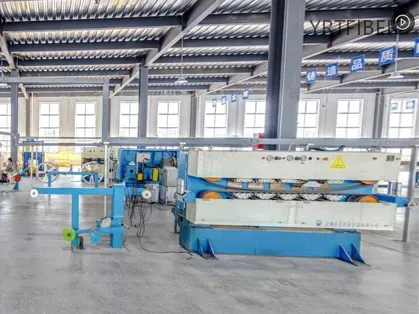
Cable Sheathing
Loose tubes, reinforcing members, and filler ropes are stranded into a cable core at specific pitches, then extruded into a PE or LSZH sheath. Armored models are further reinforced with steel strips and undergo a second extrusion. The production line is equipped with a deviation measurement and cooling system to ensure a uniform and smooth sheath.
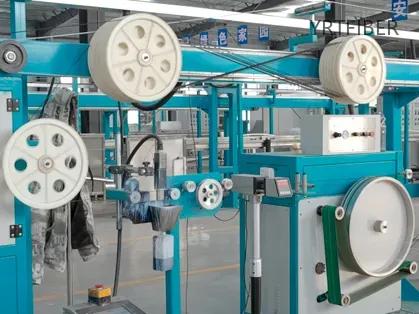
Loose Tube Extrusion Line
Colored fibers are fed into extrusion lines where PBT or PE material forms protective loose tubes, filled with water‑blocking gel.
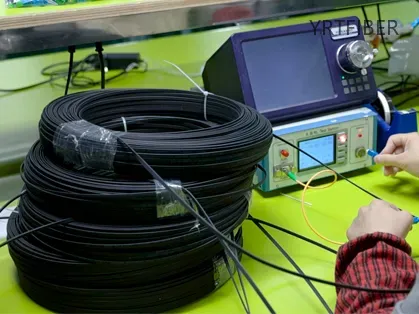
Quality Control Laboratory
Routine tests include tensile strength, crush resistance, temperature cycling, and water penetration to ensure compliance with industry standards.
Final Coiling & Packaging Zone
Finished cables are precisely coiled onto wooden or steel reels, wrapped with protective materials, and labeled for shipment.
Frequently Asked Questions & Quick Inquiry
OPGW Central Stainless Tube Optical Cable FAQ
1. What is OPGW-3 fiber optic cable used for?
OPGW-3 is an optical ground wire designed for high-voltage power transmission lines, combining electrical grounding with fiber optic communication. It protects against lightning and supports real-time data transmission for grid monitoring.
2. What is the structure of the OPGW-3 cable?
It features a central stainless steel loose tube that houses optical fibers. The tube is surrounded by aluminum-clad steel wires, which provide tensile strength and conduct grounding current, ideal for aerial high-voltage environments.
3. What fiber types and core counts are supported?
OPGW-3 supports 12 to 144 cores with G.652D or G.655C single-mode fibers, commonly used in long-haul, backbone, and substation communication networks.
4. What are the benefits of stainless steel tube construction?
The central stainless steel tube provides:
Excellent fiber protection
Thermal stability
Moisture and crush resistance
Perfect for use in extreme weather and high-stress conditions.
5. Is the cable suitable for long-span installations?
Yes. OPGW-3 is designed to withstand long spans, high tension, and extreme environments, making it ideal for transmission towers and utility corridors over rough terrain.
Send Your Inquiry
Fill out the form below and we'll get back to you within 24 hours.


