

 Español
 Português
 لالعربية
 Русский
 Bahasa Indonesia
 Français
 Türkçe
 Bahasa Melayu

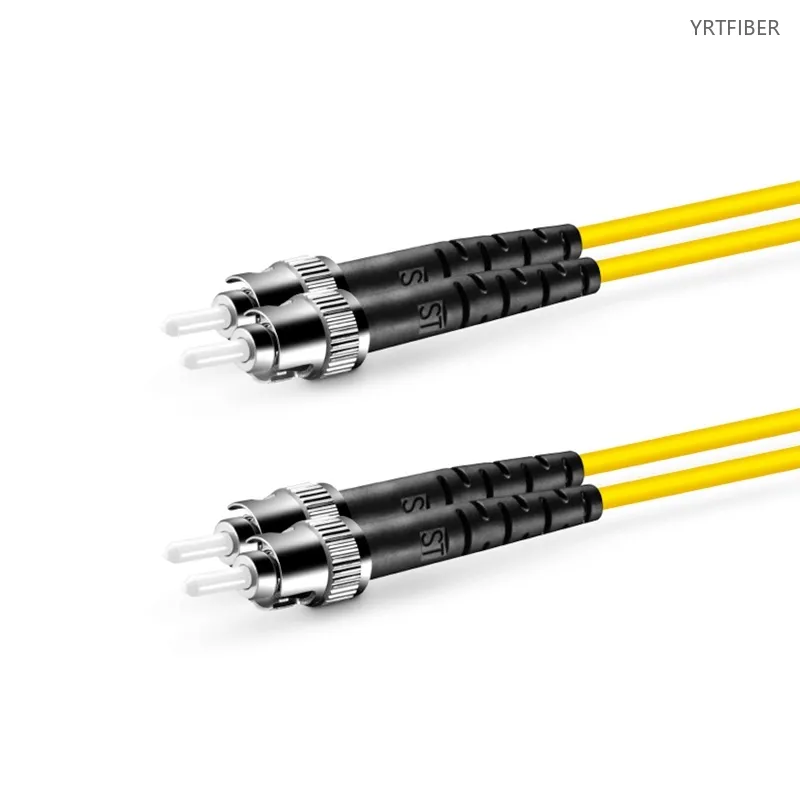
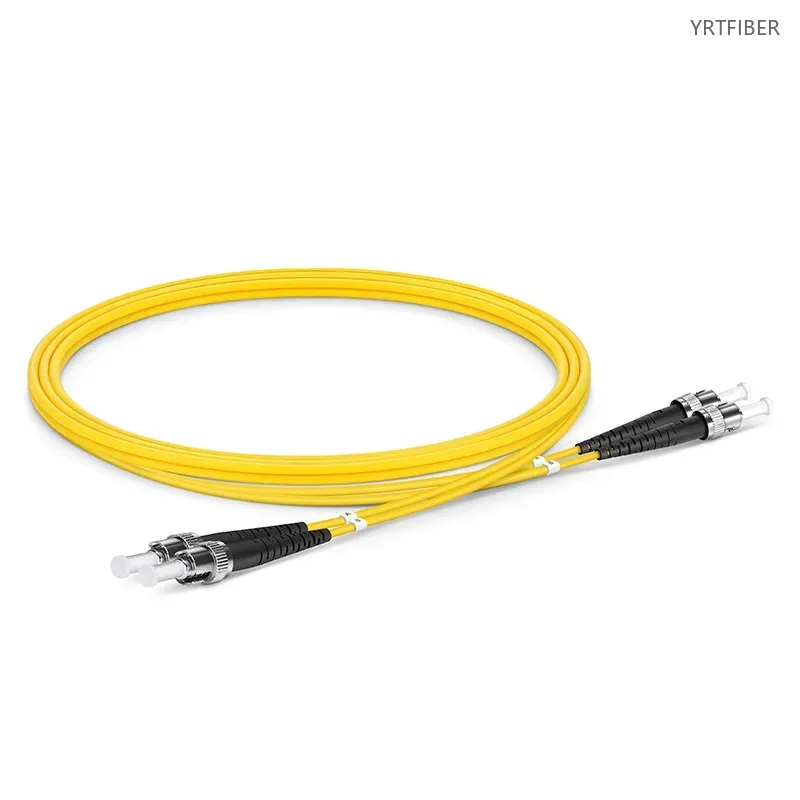
ST-ST UPC Fiber Optic Patch Cord / Jumper – Singlemode & Multimode
For ST interfaces: fast, reliable connections.
Pre-polished connectors for simple use.
Low insertion loss for efficient signal transmission.
G.657.A1 bend-insensitive fiber (min 10 mm bend radius).
Zirconia ferrule ensures high-performance transmission.
OFNR riser jacket for vertical/inter-floor safety.
Color-coded jackets simplify cable management.
Duplex zipcord design resists crimping and bending.
Pre-terminated for plug-and-play – saves time and cost.
Enterprise-grade reliable for data centers, telecom, and enterprise networks.
What is an ST - ST UPC Fiber Optic Patch Cord?
The ST - ST UPC Fiber Optic Patch Cord is a cable used to establish fast and reliable fiber connections between devices equipped with ST interfaces. It comes with pre - polished connectors, features low insertion loss, and is suitable for applications such as FTTH, ODF systems, and fiber communication lines, offering multiple advantages like superior bend performance and enhanced safety compliance.
ST-ST UPC Fiber Optic Patch Cord Specification parameters
- Specification parameters
- OPTICAL CHARACTERISTICS
| Connector A | ST UPC Duplex | Connector B | ST UPC Duplex |
|---|---|---|---|
| Fiber Count | 2 Fibers | Fiber Grade | G.657.A1 (Compatible with G.652.D) |
| Fiber Mode | OS2 9/125μm | Wavelength | 1310/1550nm |
| Polarity | A (Tx) to B (Rx) | Cable Type | Tight-Buffered |
| Cable Outside Diameter (OD) | 2.0mm | Flame Rating | Riser (OFNR) |
| Min. Bend Radius (Optical Fiber) | 10mm | Min. Bend Radius (Fiber Cable) | 10/5D (Dynamic/Static) |
| Connector Durability | 1000 times | Tensile Strength | 90/150N (Long/Short Term) |
| Insertion Loss | ≤0.3dB | Return Loss | ≥50dB |
| Attenuation at 1310nm | 0.4dB/km | Attenuation at 1550nm | 0.3dB/km |
| Operating Temperature | -10 to 70°C (14 to 158℉) | Storage Temperature | -20 to 70°C (-4 to 158℉) |
Product Structure & Composition
Fiber Core and Cladding: Utilizes G.657.A1 bend - insensitive fiber, which has a core diameter of 9/125 µm. The core is responsible for carrying optical signals, while the cladding helps contain the light within the fiber, enabling efficient transmission even in tight spaces due to its bend - insensitive property.
Zirconia Ferrule Connectors: The ST connectors are equipped with zirconia ferrules. These ferrules ensure precise alignment of the fiber cores when mated, minimizing insertion loss and providing reliable, high - performance transmission.

Outer Jacket: The flame - retardant OFNR riser - rated jacket provides mechanical protection to the inner fiber. It is designed to be used in vertical and inter - floor installations, ensuring safety by preventing the spread of fire. Additionally, the jacket is color - coded, which aids in quick and accurate identification during setup and maintenance.
Duplex Zipcord Design: The reinforced duplex zipcord design consists of two fibers side - by - side, held together in a way that minimizes the risk of damage from crimping or bending. This design is particularly useful in cable management scenarios where the cord may be subject to various mechanical stresses.
Benefits of ST-ST UPC Fiber Optic Patch Cord
Superior Bend Performance
The use of G.657.A1 bend - insensitive fiber allows for a minimum 10mm bend radius. This is highly beneficial in applications where space is limited, such as in data center cable trays or within wall cavities in FTTH installations. It reduces signal loss that could occur due to bending, ensuring stable signal transmission.

Precision Low - Loss Connectivity
The zirconia ferrule connectors offer reliable, high - performance transmission with minimal insertion loss. The precise alignment provided by the zirconia ferrules ensures that optical signals are efficiently transferred between connected devices, making it suitable for high - speed data transmission in telecom networks and data centers.

Enhanced Safety Compliance
The flame - retardant OFNR riser - rated jacket is a crucial safety feature. It is designed for vertical and inter - floor installations, ensuring that in case of a fire, the spread of flames is minimized. This makes it an ideal choice for buildings where fire safety is a top priority, such as commercial and residential complexes with multiple floors.

Engineering Applications ST-ST UPC Fiber Optic Patch Cord

Fiber - to - the - Home (FTTH)
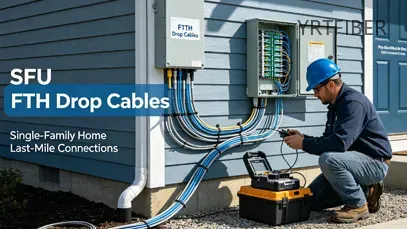
In FTTH applications, the ST - ST UPC Fiber Optic Patch Cord is used to connect the optical network unit (ONU) at the user end to the optical distribution network (ODN). Its superior bend performance and easy - to - manage color - coded jacket make it suitable for routing through tight spaces in residential buildings, providing high - speed and reliable broadband access to users.
Optical Distribution Frame (ODF) Systems
Within ODF systems, which are used to manage and distribute optical fibers in telecom networks, the ST - ST UPC patch cord's low insertion loss and durable duplex zipcord design are highly valued. It enables reliable connections between different optical components in the ODF, ensuring smooth operation of the network.

Data Centers
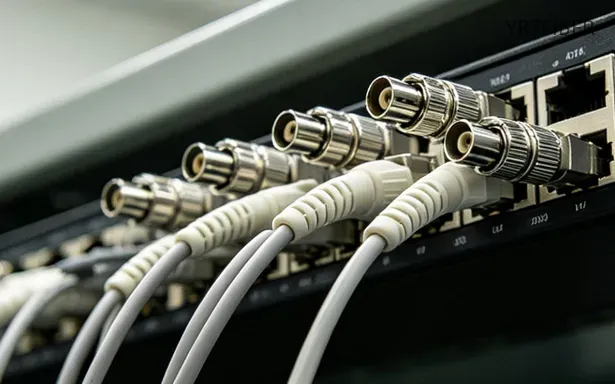
In data centers, where high - speed and reliable data transmission is crucial, the ST - ST UPC Fiber Optic Patch Cord meets the requirements. Its enterprise - grade reliability, precision low - loss connectivity, and easy cable management features make it suitable for connecting servers, storage devices, and networking equipment, facilitating efficient data flow within the data center.
Enterprise Networks
For enterprise networks, the ST - ST UPC patch cord provides consistent performance. Whether it's for connecting different departments' network equipment or for supporting high - bandwidth applications like video conferencing and data sharing, its quick - deploy pre - termination and low insertion loss features contribute to a seamless network experience.
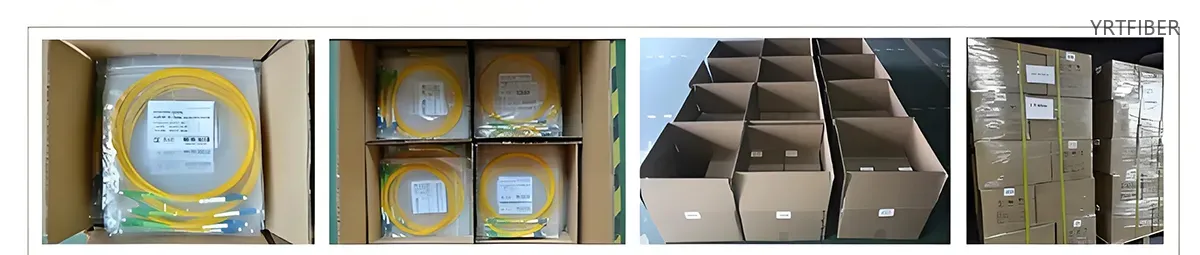
Shipping & Packaging

Product Comparison:
ST - ST UPC vs SC - ST UPC
| Feature / Dimension | ST - ST UPC Fiber Patch Cable | SC - ST UPC Fiber Patch Cable |
|---|---|---|
| Structure / Form Factor | Both ends have ST connectors with a bayonet - type coupling mechanism. The ST connector has a circular body with a 2.5mm zirconia ferrule. | One end has an SC connector with a rectangular body and push - pull locking mechanism, and the other end has an ST connector with a bayonet - type coupling mechanism. The SC connector has a 2.5mm zirconia ferrule, and the ST connector has a circular body. |
| Coupling Mechanism | Bayonet - type coupling for quick and secure connection. Rotating the connector locks it in place, providing a stable connection. | The SC end has a push - pull locking mechanism, which is easy to operate. The ST end has a bayonet - type coupling for secure connection. |
| Typical Applications | FTTH, ODF systems, data centers, and enterprise networks where both ends require ST - type connections for compatibility with existing equipment. | Used when one side of the connection needs an SC - type interface, such as in some modern telecom equipment with SC interfaces, while the other side needs to connect to legacy equipment with ST interfaces. |
| Key Engineering Pros | - Consistent connection type simplifies cable management in homogeneous ST - based systems. - Bayonet - type coupling provides a relatively quick and secure connection. - Color - coded jackets for easy identification. | - Flexibility to connect different interface types. - Push - pull mechanism on the SC end allows for easy connection and disconnection in some applications. |
| Key Engineering Cons | - Less flexible in terms of interface compatibility compared to the SC - ST combination. - Bayonet - type coupling may require some practice to ensure proper connection. | - The combination of two different connector types may lead to more complex cable management. - The push - pull mechanism on the SC end may be less secure in high - vibration environments compared to the bayonet - type coupling of ST. |
| Tolerance to Vibration / Shock | Good tolerance to vibration and shock due to the bayonet - type coupling, which provides a stable connection. However, it may be affected by extreme vibration if not properly installed. | The ST end has good vibration resistance, but the SC end's push - pull mechanism may be more prone to loosening under high - vibration conditions. |
| Cable Jacket Options | Flame - retardant OFNR riser - rated jacket is a common option for safety - critical installations. May also be available in other materials like PVC for general - purpose use. | Similar jacket options as ST - ST, but the choice may also depend on the specific requirements of the equipment connected to the SC end. |
| Fiber Mode Options | Primarily single - mode, suitable for long - distance and high - bandwidth applications. | Can support both single - mode and multimode fibers depending on the application requirements, as the SC connector is commonly used in both types of fiber systems. |
| Cost (Relative) | Generally cost - effective for applications where ST - ST connections are required, as it has a more straightforward manufacturing process compared to mixed - connector types. | May be slightly more expensive due to the complexity of manufacturing two different connector types on a single cable. |
| Maintenance & Handling | Color - coded jackets simplify maintenance. The bayonet - type coupling may require occasional inspection to ensure proper locking. Cleaning of the ST connectors is standard. | Requires attention to two different connector types during maintenance. The SC connector may need more careful handling due to its push - pull mechanism, and the ST connector needs standard cleaning and inspection. |
ST-ST UPC Fiber Optic Patch Cord Selection Guide
How to Choose the ST - ST UPC Fiber Optic Patch Cord
When choosing an ST - ST UPC Fiber Optic Patch Cord, several factors should be considered. First, assess the interface requirements of your devices. If both the source and destination devices have ST interfaces, and you want a consistent and straightforward connection, the ST - ST UPC cord is an obvious choice. This is often the case in legacy systems or homogeneous networks where ST - based equipment is prevalent.
Second, consider the installation environment. If the installation involves vertical or inter - floor runs where fire safety is a concern, the flame - retardant OFNR riser - rated jacket of the ST - ST UPC cord makes it a suitable option. Additionally, in spaces with limited room for cable routing, the superior bend performance of the G.657.A1 fiber can be a significant advantage.
Cost is another important factor. If cost - effectiveness is a priority and you don't need the flexibility of different connector types, the ST - ST UPC cord, with its relatively simple manufacturing process, can offer a more budget - friendly solution. However, if your network infrastructure includes a mix of equipment with different interface types, you may need to consider other options like the SC - ST UPC cord.
Finally, think about the level of vibration or shock in the operating environment. If the installation is in an area with significant vibration, the bayonet - type coupling of the ST - ST UPC cord can provide a relatively stable connection, but proper installation and regular inspection are necessary to ensure long - term reliability.
ST-ST UPC Fiber Patch Cord Installation Instructions
Remove protective dust caps from both ST connectors and equipment fiber ports.
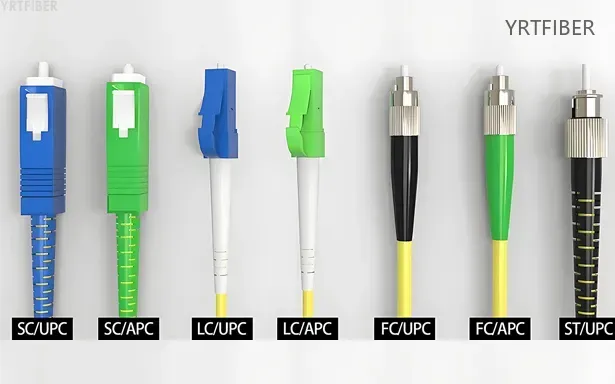
Match the bayonet notch of ST connectors with ports, insert fully and turn clockwise to secure connection.
Route the patch cord properly; do not bend or pull it forcibly.
Put dust caps back to protect end faces when unused.
Warning: Contamination on fiber end faces will cause signal loss.
Download YRTFIBER Product Catalog
Factory Real Shot
State-of-the-Art Manufacturing Facilities
Our 60.000 m²; dust-free workshop is equipped with over 21 automated production lines for both single-core and MPO patch cords. Key machinery includes high-precision fiber cutters (tolerance:±0.08 mm), FLC automatic termination machines, and UV curing systems. This setup enables a daily output of thousands of connectors while maintaining consistent quality.
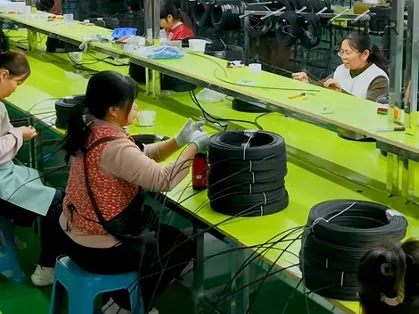
Precision Core Manufacturing Process
The process begins with micro-tolerance cutting(end-face angle tolerance: ±0.5°) and six-axis fusion splicing (core deviation ≤1 μm). After multilayer jacketing with LSZH, PVC, or OFNP materials, connectors undergo automated polishing for PC, UPC, or APC finishes. The line achieves up to 7.000 connectors per 11-hour shift.
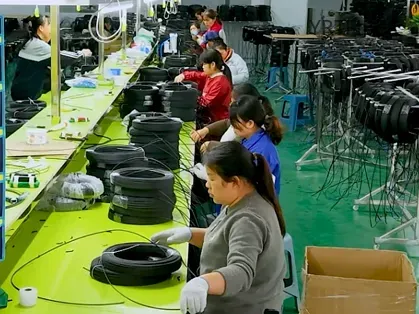
Rigorous Quality Assurance & Testing
Every patch cord is subject to 100% inspection, including interferometric end-face analysis (400x magnification), automated contamination detection, and insertion/return loss testing via OTDR. Additionally, environmental samples must pass temperature, humidity, and pull-force tests in compliance with IEC/TIA standards.
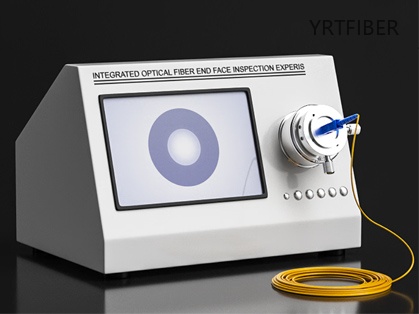
Frequently Asked Questions & Quick Inquiry
ST-ST UPC Fiber Optic Patch Cord FAQ
Q2: What fiber types are available?
A2: G652D and G657A single-mode fibers.
Q3: What polish type does it use?
A3: ST connectors are UPC polished by default.
Q4: Can I choose different jacket materials?
A4: Yes, PVC, LSZH, and OFNP jackets are available.
Q5: Is this patch cord factory tested?
A5: Yes, all cords are polished and insertion loss-tested before shipping.
Send Your Inquiry
Fill out the form below and we'll get back to you within 24 hours.


