

 Español
 Português
 لالعربية
 Русский
 Bahasa Indonesia
 Français
 Türkçe
 Bahasa Melayu
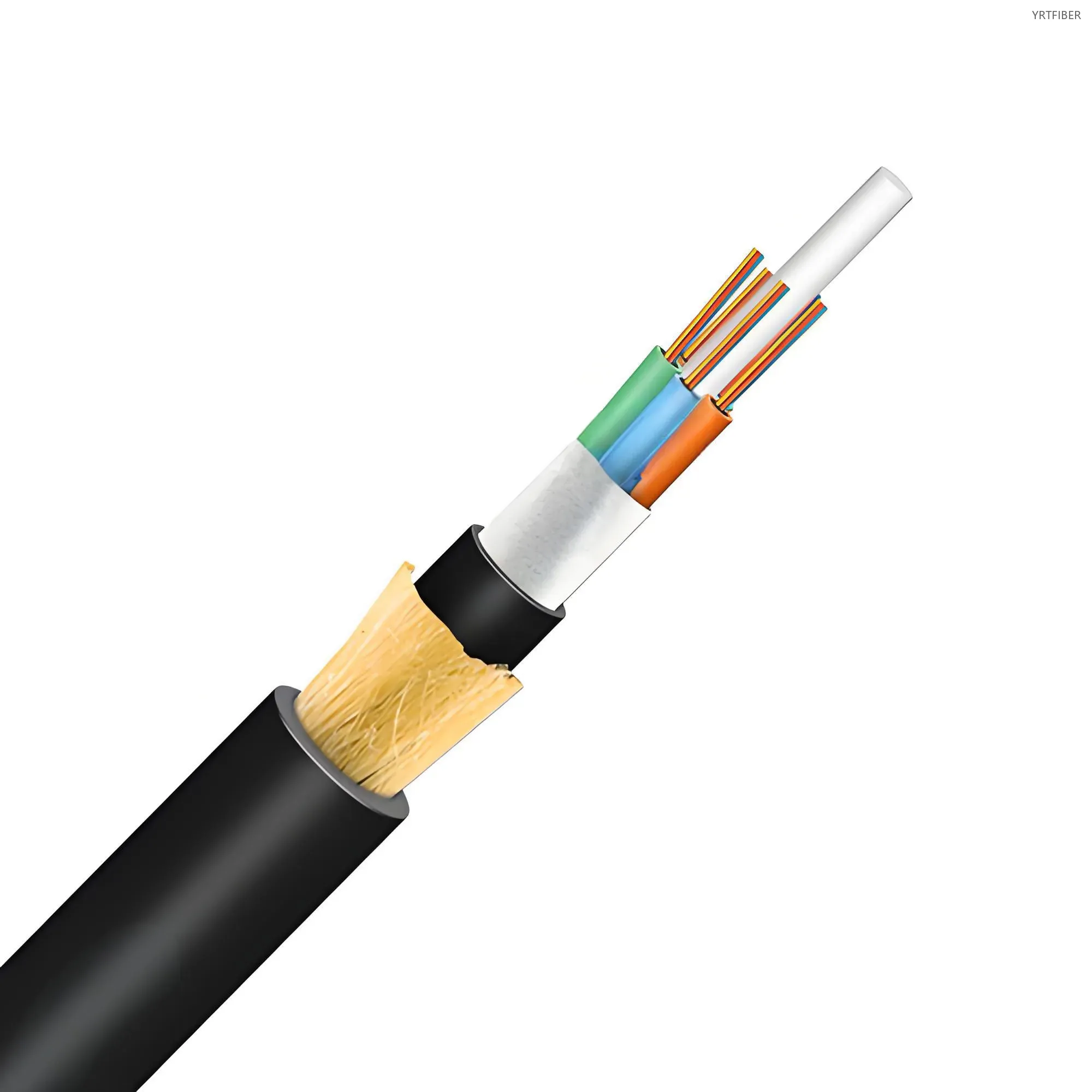
When buyers search for PE Sheath vs AT Sheath in ADSS Cable, they usually want a practical answer, not just a definition. The real question is this: which outer sheath is suitable for your line route, voltage environment, and project risk level? For procurement teams, distributors, and EPC contractors, choosing the wrong sheath can lead to unnecessary cost, poor service life, or installation risk. IEEE’s active ADSS standard covers ADSS cable for use on overhead electric utility facilities, and YRTFiber’s ADSS product page lists PE/AT as the available outer jacket options for its single-jacket ADSS cable.
In simple terms, PE sheath is generally used where the electrical environment is less severe, while AT sheath is selected when the cable will operate in stronger electric-field conditions and better tracking resistance is needed. A standards-related industry explanation citing YD/T 980-2002 and DL/T 788-2016 states that when the space potential in the ADSS installation area is not higher than 12 kV, an A-class outer sheath is used and black polyethylene is recommended; when the space potential is greater than 12 kV, a B-class outer sheath is used and black tracking-resistant polyolefin is recommended.
What Do PE and AT Mean in ADSS Cable?
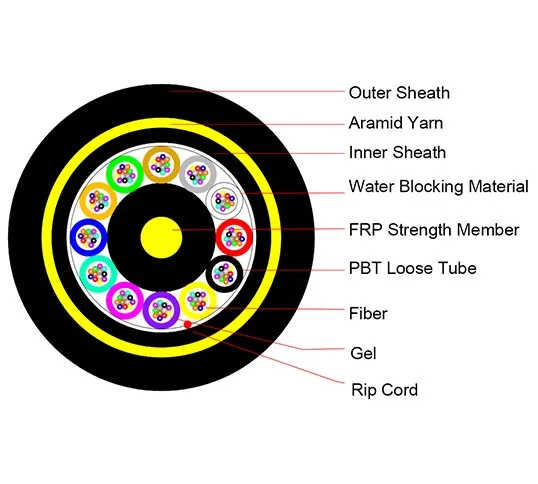
In ADSS cable, the sheath is more than just an outer covering. It is part of the cable’s long-term protection system. YRTFiber’s ADSS page describes the cable as a loose tube stranded structure with FRP non-metallic reinforcement, waterproof filler, aramid yarn, and a final PE or AT outer sheath. That means the jacket choice is one of the last and most application-specific decisions in the cable design.
PE sheath usually refers to a standard polyethylene outer jacket. It is widely used in outdoor cable because it offers good weather resistance, UV resistance, and mechanical protection in ordinary aerial environments.
AT sheath usually refers to an anti-tracking outer jacket material designed for harsher electrical environments where surface tracking and electrical erosion are a greater concern. The Chinese standards summary explains that tracking-resistant polyolefin is recommended when the installation zone’s space potential exceeds 12 kV.
When Should You Choose PE Sheath?
For many standard aerial telecom routes and lower-risk power corridor applications, PE sheath ADSS cable is the practical choice. If your route does not expose the cable to a high electrical stress environment, PE is usually enough for outdoor use. On YRTFiber’s product page, the ADSS single-jacket model is positioned for outdoor aerial installations, supports 2 to 288 cores, and uses PE/AT jacket options depending on project needs.
PE sheath is usually the better fit when your project has these characteristics:
ordinary aerial installation conditions
lower space-potential environment
standard utility or telecom pole routes
strong need for a straightforward and economical specification
no clear requirement for anti-tracking performance
For distributors and project buyers, this matters because not every ADSS project needs the more specialized sheath option. If the route conditions do not justify it, over-specifying the jacket can complicate procurement without adding meaningful value.
When Should You Choose AT Sheath?
You should consider AT sheath ADSS cable when the cable will be installed in a more demanding electrical environment, especially in routes associated with stronger electric-field exposure. The standards-related explanation tied to YD/T 980-2002 and DL/T 788-2016 sets the practical dividing line at 12 kV space potential: above that level, a tracking-resistant outer sheath is recommended.
That makes AT sheath more relevant when:
the cable is installed along higher-risk power transmission routes
the electrical environment is more severe
long-term outer sheath reliability is a top concern
the project owner or consultant requires anti-tracking performance in the technical specification
the installation route involves contamination, humidity, or conditions that can worsen surface electrical stress
For EPC contractors, this is often not just a material choice but a compliance and risk-control decision. If the project route clearly falls into a stronger electrical environment, AT sheath is usually the safer engineering answer.
PE vs AT Sheath in ADSS Cable: Practical Comparison
Here is the most useful way to compare them from a buyer’s perspective:
1. Electrical Environment
The biggest difference is not color, thickness, or basic cable appearance. It is electrical suitability. PE is commonly used in ordinary conditions, while AT is intended for stronger electric-field environments where tracking resistance becomes more important.
2. Project Risk
If the line route is ordinary and the project specification does not call for anti-tracking performance, PE may be sufficient. If the route has elevated electrical stress, selecting AT helps reduce the risk of outer sheath degradation over time. The industry standards summary specifically links the higher sheath class to tracking-resistant polyolefin.
3. Procurement Logic
For many buyers, the correct question is not “Which one is better?” but “Which one is appropriate for this project?” In international tendering and contractor supply, the best choice is the sheath that matches the route’s technical conditions and the owner’s specification sheet.
4. Communication With the Supplier
If your inquiry only says “ADSS cable,” the quotation may still be incomplete. A usable RFQ should clarify span, installation environment, voltage corridor or space-potential conditions, fiber count, sheath preference, and standards required. That reduces back-and-forth and helps suppliers recommend the correct PE or AT option faster.
A More Useful Selection Rule for Buyers
If you want a simple rule of thumb, use this:
Choose PE sheath for standard aerial ADSS projects where the electrical environment is not severe and no anti-tracking requirement is specified.
Choose AT sheath when the route is exposed to stronger electrical stress and the project needs tracking-resistant jacket performance.
This is the decision framework that matters most for buyers in developing-market infrastructure projects. In many actual tenders, what delays purchasing is not the cable itself, but unclear route conditions, incomplete technical data, and repeated quotation revisions. A clear PE-vs-AT decision at the inquiry stage improves response speed and reduces the risk of incorrect supply.
Common Mistakes When Choosing PE or AT Sheath
One common mistake is choosing only by price or by whatever the supplier quoted first. Another is copying a previous project specification without checking whether the new route has the same electrical conditions. A third is assuming that all ADSS cable jackets are interchangeable as long as the fiber count is correct. In reality, ADSS is used on overhead utility facilities, and both the route environment and the sheath class affect long-term suitability.
A better process is to confirm these points before placing the order:
installation type and route description
span length
line voltage or space-potential information, if available
fiber count and fiber type
required standards
environmental factors such as humidity, pollution, and exposure
Procurement Checklist: What to Send in Your RFQ
when sending an inquiry to a manufacturer:
ADSS RFQ checklist
project country and application
aerial route type
span length
required fiber count
fiber standard: G.652D, G.655. etc.
PE sheath or AT sheath request
operating voltage environment or space-potential data
installation quantity
required drum length
required standards and test documents
packing and delivery requirements
destination port or city
Conclusion
For most buyers, the difference between PE sheath and AT sheath in ADSS cable comes down to one question: what kind of electrical environment will the cable actually face? If the route is relatively standard, PE sheath is often the sensible choice. If the line environment is more severe and tracking resistance is needed, AT sheath is the better fit. The most reliable decision is always based on route conditions, project specification, and standards alignment—not on guesswork. The YRTFiber ADSS page supports both PE and AT outer jacket options, which makes it easier to match the cable structure to different aerial project requirements.
For project inquiries, you can naturally link anchor text such as ADSS fiber optic cable, single jacket ADSS cable, or PE/AT sheath ADSS cable to your product page to connect the informational article with the commercial landing page. YRTFiber‘s page describes the ADSS-S product as an all-dielectric self-supporting single jacket cable for outdoor aerial installations, with 2-288 cores, FRP reinforcement, aramid yarn, and PE/AT outer jacket options.
FAQ
What is the difference between PE sheath and AT sheath in ADSS cable?
PE sheath is generally used in less severe electrical environments, while AT sheath is used where better anti-tracking performance is needed in stronger electric-field conditions. A standards-related industry explanation places the dividing line at 12 kV space potential.
Is AT sheath always better than PE sheath?
Not always. AT is not simply “better” in every case. It is more suitable when the route environment requires tracking-resistant performance. If the project does not have that requirement, PE may be the more appropriate specification.
Does YRTFiber offer both PE and AT sheath for ADSS cable?
Yes. The YRTFiber ADSS single-jacket product page lists PE/AT as the available outer jacket option.
What information should I provide before asking for an ADSS quotation?
At minimum, provide the installation type, span, fiber count, fiber type, voltage or space-potential conditions if available, and whether PE or AT sheath is required. This is an engineering recommendation based on the product’s application context and the sheath classification guidance.
Author: Technical Marketing Team, Puyang yrt communication technology Co., Ltd.
Expertise: outdoor fiber optic cable selection, project support, tender document coordination, and export supply for utility and telecom infrastructure projects.


