

 Español
 Português
 لالعربية
 Русский
 Bahasa Indonesia
 Français
 Türkçe
 Bahasa Melayu
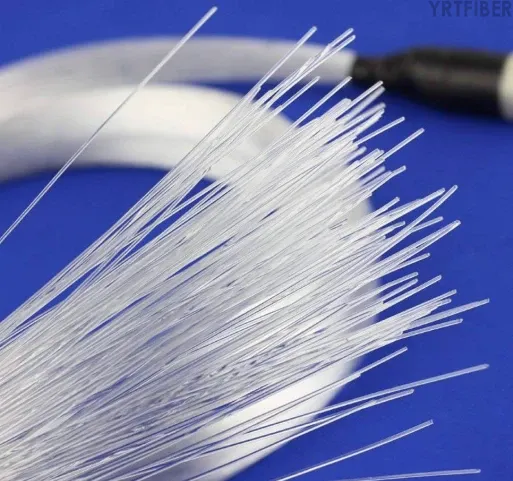
plastic optical fiber (POF) is a multimode optical fiber made entirely of polymer materials, with a large core diameter-typically 1 mm-that enables easy light coupling from LED sources and simple, low-cost termination. Unlike glass optical fiber (GOF), which is used for long-haul telecommunications, POF is designed for short-distance data transmission, in-vehicle networks, industrial automation, and illumination applications where ease of installation and cost efficiency are prioritized over ultra-low attenuation and high bandwidth. This article covers the definition, types, construction, manufacturing process, performance characteristics, applications, and applicable standards of plastic optical fiber.
What Is Plastic Optical Fiber?
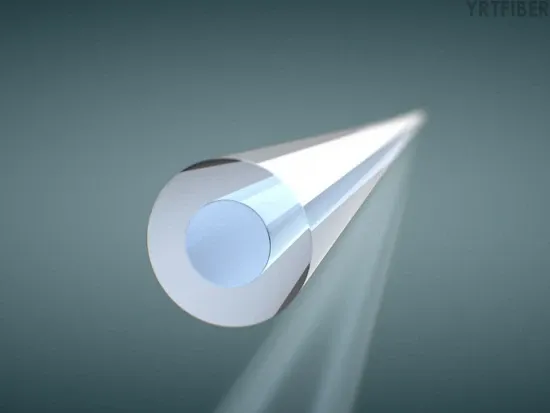
Plastic optical fiber (POF) is an optical fiber in which both the core and the cladding are made of plastic materials. The core is typically composed of polymethyl methacrylate (PMMA), while the cladding is made of fluorinated polymer. The refractive index of the core is higher than that of the cladding, so that light rays transmitted into the fiber are reflected back at the boundary between the core and the cladding.
Important distinction: POF is distinct from glass optical fiber (GOF) in both material and performance. GOF uses extremely pure silica glass and achieves attenuation as low as 0.2 dB/km at 1550 nm, whereas POF has typical attenuation of 0.15-0.2 dB/m at 650 nm-approximately 1,000 times higher. POF is therefore not a substitute for glass fiber in long-distance or high-bandwidth backbone applications, but rather a complementary technology for the "last hundred meters".
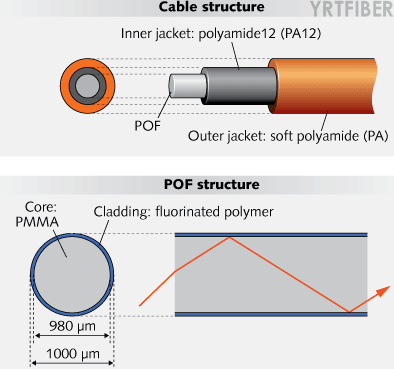
Types of Plastic Optical Fiber
POF is classified into two primary types based on refractive index profile:
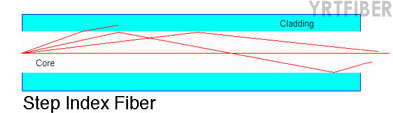
Step-Index POF (SI-POF)
Step-index POF has a uniform refractive index throughout the core, with an abrupt change at the core-cladding boundary. This is the most common and lowest-cost type of POF. However, SI-POF suffers from large intermodal dispersion, which limits its bandwidth-distance product to less than 10 GHz·km. Typical SI-POF has a core diameter of approximately 1 mm and a numerical aperture (NA) of 0.5.
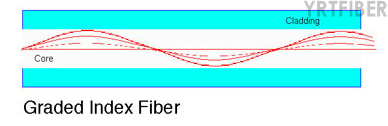
Graded-Index POF (GI-POF)
Graded-index POF has a refractive index that gradually decreases from the center of the core to the core-cladding junction. This profile compensates for intermodal delay by allowing light rays that take longer paths to travel faster. GI-POF offers significantly higher bandwidth than SI-POF, with current designs offering up to 2 GHz bandwidth at distances of 100 meters. Perfluorinated GI-POF (PF-GI-POF) is a higher-performance variant with core diameters ranging from 50 μm to 120 μm.
| Type | Refractive Index Profile | Core Material | Typical Core Diameter | Bandwidth | Typical Attenuation |
|---|---|---|---|---|---|
| SI-POF | Uniform core, abrupt step | PMMA | ~1,000 μm | <10 GHz·km | ~0.2 dB/m at 650 nm |
| GI-POF | Graded from center to cladding | PMMA or perfluorinated | 50-1,000 μm | Up to 2 GHz at 100 m | 60-200 dB/km |
How Is Plastic Optical Fiber Manufactured?
POF is manufactured using methods that differ significantly from glass optical fiber production. There are two primary manufacturing approaches:
Preform Drawing Method
In this method, a polymer preform with the desired refractive index profile is first fabricated-for example, by centrifugal deposition, in which a mixture of methyl methacrylate and benzyl methacrylate is fed into a rapidly rotating tube and polymerized by thermal reaction. The preform is then heated and drawn into fiber. This method, including closed polymerization and fiber drawing, has been effective in producing low-loss POF with attenuation as low as 55 dB/km at 568 nm wavelength.
Extrusion Method
Extrusion is a continuous process capable of producing POF at commercially useful speeds-for example, at least 1 m/s for 250 μm outer diameter fiber. In the diffusion-assisted coextrusion process, two or more polymeric materials containing additives for refractive index modification are fed separately into a coextrusion die, where a concentric multilayer structure is formed. Dopants diffuse during the fabrication process, and the refractive index profile can be controlled by adjusting the temperature of the diffusion zone and screw rotation speed. This method has been used to fabricate GI-POF with bandwidth higher than 600 Mbit/s at 100 m distance.
Post-Extrusion Treatment
A post-extrusion step can increase the molecular weight of the polymer matrix to a range of approximately 30,000 to at least 300,000, conferring good mechanical and thermal stability to the fiber.
Core Performance Characteristics
Attenuation
POF attenuation is wavelength-dependent and significantly higher than that of glass fiber. Typical SI-POF has attenuation of approximately 0.15-0.2 dB/m at 650 nm. PMMA-core POF has attenuation minima in the visible region between 520 nm and 670 nm. Perfluorinated GI-POF achieves lower attenuation of approximately 60 dB/km in the 1290-1320 nm O-band, though attenuation increases to approximately 200 dB/km in the S, C, and L bands. A theoretical lower limit of attenuation in perfluorinated POF at 850 nm has been found to be 10 dB/km.
Numerical Aperture
POF has a large numerical aperture (NA) typically in the range of 0.3 to 0.5. This large NA, combined with the large core diameter, makes POF highly tolerant to misalignment and enables easy coupling of light from inexpensive LED sources. The acceptance angle is typically 60°.
Bandwidth
SI-POF bandwidth is limited by intermodal dispersion. GI-POF offers substantially higher bandwidth, with current designs offering up to 2 GHz at 100 m. Research has demonstrated multi-gigabit transmission over POF for short-range communications.
Minimum Bend Radius
POF offers excellent flexibility. Typical minimum bend radius for simplex POF cable is 15 mm, and 25 mm for duplex configurations. This flexibility enables deployment in tight spaces and harsh environments.
Suitable and Unsuitable Applications
Suitable Applications
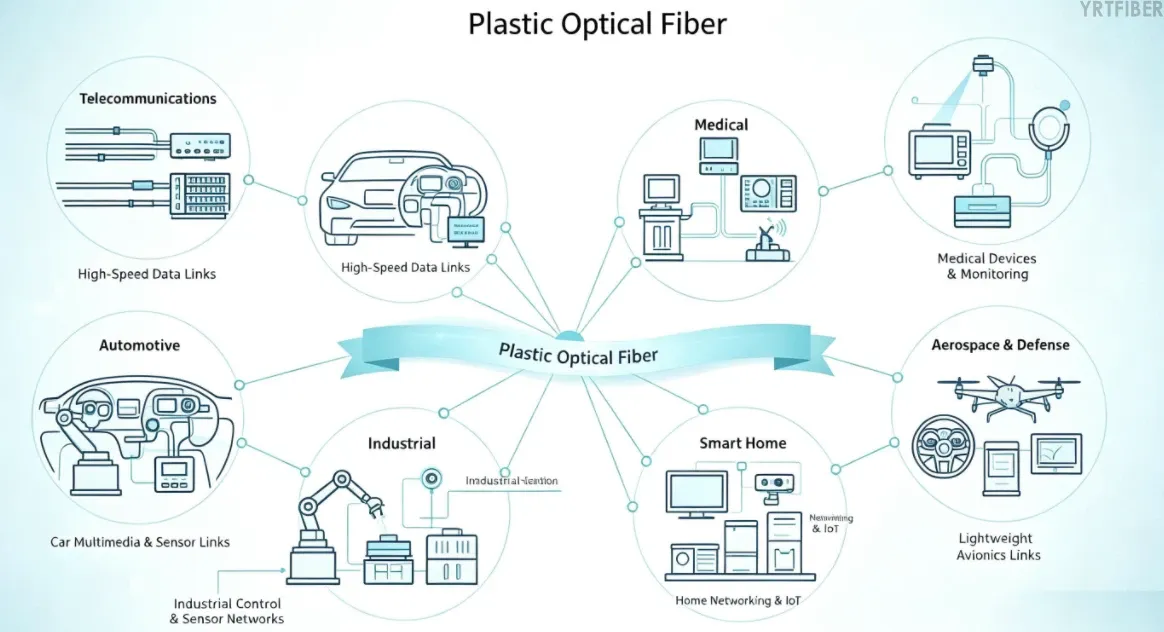
Automotive in-vehicle networks: POF is used for infotainment systems, lighting, multimedia networks, and sensor data transmission, offering EMI immunity and high-speed data transmission. Standards such as MOST and Flexray have been widely adopted for automotive POF applications.
Industrial automation: POF is used in robotics, industrial control systems, and factory automation where distances are short and electromagnetic interference is a concern.
Home networking: POF provides a low-cost, easy-to-install solution for in-home data networks.
Consumer electronics: Digital optical audio ports in TVs and consumer audio equipment commonly use POF.
Lighting and illumination: POF is widely used for decorative lighting, museum illumination of light-sensitive objects, swimming pool lighting, and starfield ceiling effects.
Medical sensors: POF's biocompatibility enables monitoring of physiological signs such as respiration rate, heart rate, foot pressure, and joint movement.
Cases Requiring Another Fiber Type
Long-haul telecommunications: POF's high attenuation (0.2 dB/m vs. 0.2 dB/km for glass fiber) makes it unsuitable for distances beyond a few hundred meters.
High-bandwidth backbone networks: Glass fiber offers bandwidth up to 100 GHz·km, far exceeding POF capabilities.
High-temperature environments: POF has lower temperature tolerance than glass fiber; typical operating range is -20°C to +70°C, with short-term capability up to +85°C.
Undersea or outdoor long-distance installation: POF is not designed for outdoor long-distance deployment and is not a substitute for outdoor-rated glass fiber cables.
Applicable Standards and Testing
International Standards
POF is covered by the following international standards:
IEC 60793-2: Applicable to category A4 optical multimode fibres with plastic core and plastic cladding, including step-index, multi-step index, and graded-index profiles. Sub-categories include A4a, A4b, A4c, A4d, A4e, A4f, A4g, and A4h.
IEC 60794-2-40: Family specification covering buffered A4 fibres and cabled A4 fibres for indoor use.
ETSI TS 105 175-1: Specifies POF cabling system requirements for 100 Mbit/s and 1 Gbit/s interoperability.
EN 50173-1 and EN 50173-4: Define channel losses and link budget requirements for POF in indoor applications.
Key Test Parameters
| Test | Purpose | Applicable Standard |
|---|---|---|
| Attenuation measurement | Measure signal loss at specified wavelength | IEC 60793-2 |
| Bandwidth measurement | Determine transmission capacity | IEC 60793-2 |
| Tensile performance | Measure mechanical strength | IEC 60793-2 |
| Macro bending loss | Assess performance under bending | IEC 60793-2 |
| Temperature and humidity cycling | Evaluate environmental stability | IEC 60793-2 |
POF vs. Glass Optical Fiber: Key Differences
| Parameter | Plastic Optical Fiber (POF) | Glass Optical Fiber (GOF) |
|---|---|---|
| Core material | PMMA or perfluorinated polymer | Silica glass |
| Core diameter | 0.25-2 mm | 8-62.5 μm |
| Typical attenuation | 0.15-0.2 dB/m at 650 nm | 0.2 dB/km at 1550 nm |
| Numerical aperture | 0.3-0.5 | 0.12-0.22 |
| Bandwidth | <10 GHz·km (SI); higher for GI | Up to 100 GHz·km |
| Termination | Cut with razor blade, minimal or no polishing | Requires precision cleaving and polishing |
| Connector cost | 10-20% of glass fiber connector cost | Higher |
| Installation | Easy, non-expert | Requires trained professionals |
| Transmission distance | Typically <100 m | Hundreds of kilometers |
Frequently Asked Questions
Is POF suitable for outdoor installation?
No. POF is primarily designed for indoor applications. Outdoor-rated glass fiber cables with proper moisture barriers, armoring, and UV protection are required for outdoor deployment. POF should not be used for outdoor long-distance or direct-burial applications.
Can POF replace glass fiber in all applications?
No. POF and glass fiber serve different market segments. POF is optimized for short-distance, low-cost, easy-to-install applications, while glass fiber is necessary for long-haul, high-bandwidth telecommunications.
What is the typical operating temperature range of POF?
Standard POF operates from -20°C to +70°C, with short-term capability up to +85°C. Perfluorinated and specialty POF variants may offer extended temperature ranges.
Does POF require grounding?
No. POF is an all-dielectric medium and does not conduct electricity, so it does not require grounding. This makes POF particularly suitable for electrically sensitive environments and applications where EMI immunity is required.
What is the difference between POF and HCS (Hard-Clad Silica) fiber?
POF has both core and cladding made of plastic, whereas HCS fiber has a glass core with a hard plastic cladding. POF offers larger core diameters and lower cost, while HCS provides lower attenuation than POF but higher cost.
Conclusion
Plastic optical fiber is a specialized member of the optical fiber family, distinguished by its polymer construction, large core diameter, high numerical aperture, ease of termination, and low cost. While POF cannot match the attenuation and bandwidth performance of glass optical fiber, it provides a cost-effective, flexible, and EMI-immune solution for short-distance applications including automotive networks, industrial automation, home networking, consumer electronics, lighting, and medical sensing. The development of graded-index POF and perfluorinated POF continues to expand the performance envelope of this technology. POF is governed by international standards including IEC 60793-2 and IEC 60794-2-40, which define the dimensional, mechanical, transmission, and environmental requirements for A4 category fibers.
References
The fiber optic Association (FOA). Plastic Optical Fiber (POF). Available at: https://www.thefoa.org/tech/pof.htm
Linden Photonics Inc. Glass Optical Fiber vs Plastic Optical Fiber: A Comprehensive Comparison. 2024
IEC 60793-2. Optical fibres - Part 2: Product specifications - Sectional specification for category A4 multimode fibres
IEC 60794-2-40. Optical fibre cables - Part 2-40: Indoor optical fibre cables - Family specification for A4 fibre cables
COMOSS Electronic Co., LTD. OptoLup™ POF Cable Data Sheet
ETSI TS 105 175-1. Plastic Optical Fibre System Specifications for 100 Mbit/s and 1 Gbit/s
IEEE Xplore. GI-POF Transmission At Different Bit Rates, Fiber Lengths and Wavelengths: 1310 and 1550 Nm. 2024
Kaino T, Jingugi K, Nara S. Low-loss plastic optical fibers. Optical Fiber Communication Conference, 1983


