

 Español
 Português
 لالعربية
 Русский
 Bahasa Indonesia
 Français
 Türkçe
 Bahasa Melayu

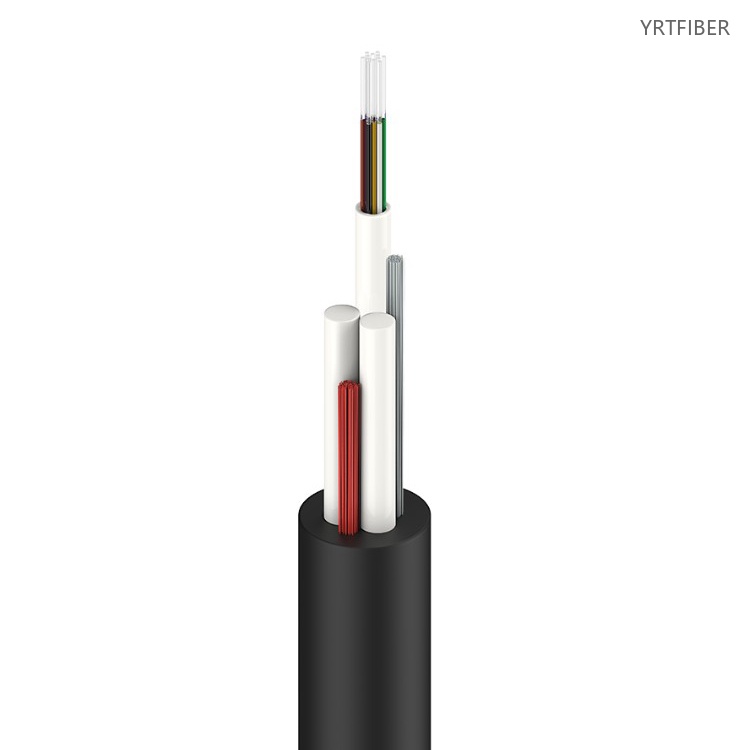
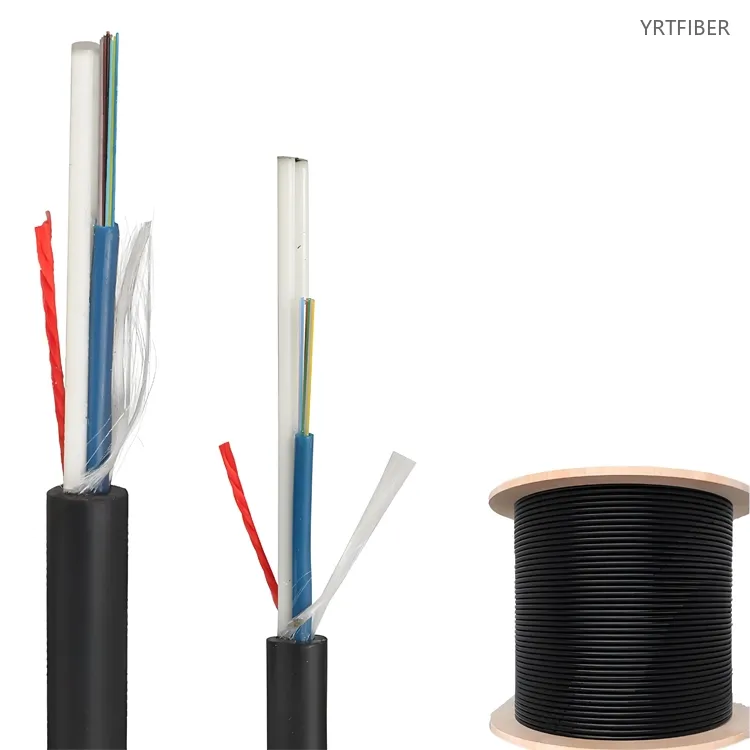
ASU80 Mini ADSS Aerial Self-Supporting Fiber Optic Cable – All-Dielectric, HDPE Sheath
Excellent tensile strength and crush-resistance.
Compact, easy-to-access design allows for easy installation and handling.
Proven all-dielectric loose tube construction Immune to electromagnetic fields.
Optimized for fiber counts of 4. 6. 8. 12and 24 for minimizing deployment costs.
Outer Jacket protects cable from ultraviolet radiation
What is ASU80 Fiber Optic Cable?
ASU80 is a lightweight, self-supporting, all-dielectric Optical Fiber Cable designed for aerial deployment in spans of up to 80 meters, commonly used in urban backbone, backhaul, and FTTH access networks.
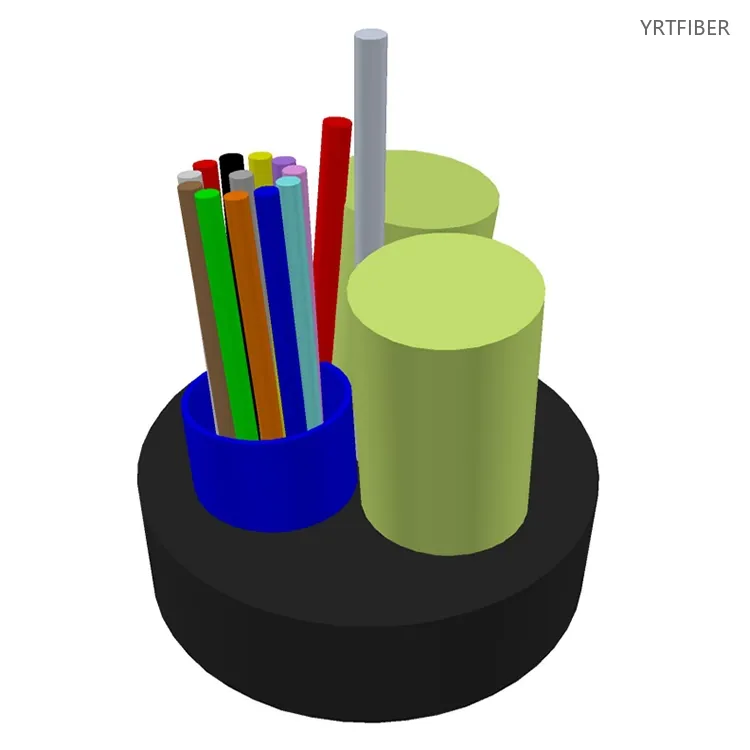
ASU80 belongs to the ASU (Aerial Self-Supporting, Single-tube) cable family, a cost-optimized alternative to traditional ADSS cables. The "U" in ASU stands for "single," referring to the single loose tube that makes up the cable's core. This single loose tube contains the optical fibers (typically 2 to 24 cores) and is filled with water-resistant gel to protect against moisture. The core is reinforced with two parallel FRP (Fiber Reinforced Plastic) strength members, making the cable completely dielectric—meaning it contains no metallic components and does not conduct electricity.
ASU80 Mini ADSS cable Specification parameters
- Specification parameters
- OPTICAL CHARACTERISTICS
| Model: | ASU80 | Material Shape: | Round Wire |
| Allowed Lateral Pressure: | 100(N/100mm)<1000(N/100mm) | Allowed Tensile Strength: | 1000N<10000N |
| Certification: | RoHS, CE, ISO9001, VDE, CCC | Cable Structure: | Mini ADSS |
| Installation Method: | Aerial Installation | Fiber Options: | Itu G652D, G657A, OM1, OM2, OM3, OM4 |
| Number of Fibers: | 2-144 Cores | Installation Tension: | 8000N |
| Bending Radius (During Installation): | 20 × Cable Outer Diameter | Strength Members: | Fiberglass Reinforced Plastic (FRP) |
| Outer Jacket Material: | Black Polyethylene (PE) | Certification: | ISO9001/CE/RoHS |
| Warranty Period (Years): | 2 years | Shipping Packaging: | Wooden Drum or Fumigated Wooden Drum |
| Specification: | CE SGS RoHS | Trademark: | Weicheng Optical Cable |
| Place of Origin: | Henan, China (Mainland) | Customs Code: | 85447000 |
| Production Capacity: | 10,000 km/month |
| Fiber Type: | G.652 | G.655 | 50/125μm |
| Color: | Transparent | Transparent | Transparent |
| Attenuation: | 850nm | <3.0 dB/km | |
| Attenuation: | 1300nm | <1.0 dB/km | |
| Attenuation: | 1310nm | <0.36 dB/km | <0.40 dB/km |
| Bandwidth: | 850nm | >500 MHz-km | >200 MHz-km |
| Bandwidth: | 1300nm | >500 MHz-km | >500 MHz-km |
| Numerical Aperture: | 0.200±0.015 NA | 0.275±0.015 NA | |
| Fiber Cable Cutoff Wavelength λcc: | <1260 nm | <1450 nm |
Product Structure & Composition
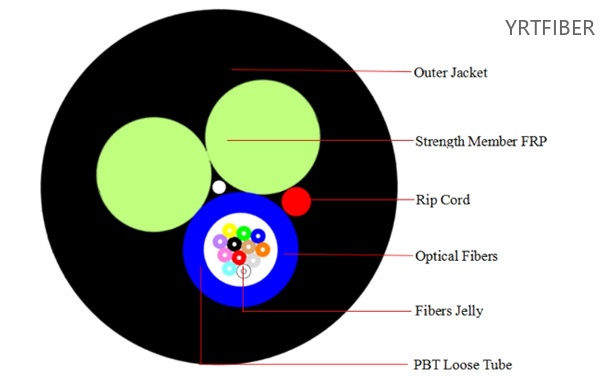
Outer jacket – PE material, provides mechanical protection, UV resistance, and weatherproofing for outdoor aerial use.
FRP strength members – Two parallel non‑metallic FRP rods, offering tensile strength and stiffness for self‑supporting aerial installation.
Rip cord – Nylon thread for slitting the jacket lengthwise to access the inner tube.
PBT loose tube – Hard PBT tube housing fibers, with crush resistance, moisture protection, and mechanical isolation.
Fiber jelly – Water‑blocking thixotropic gel filling the tube, preventing water ingress and cushioning against micro‑bending.
Optical fibers – Single‑mode or multi‑mode, carrying signals; typical count 2 to 24 fibers.
Benefits of ASU80 Mini ADSS cable
Excellent tensile strength and crush-resistance
Two parallel FRP strength members and a PBT loose tube enable the cable to withstand aerial installation tension and external crushing, ensuring fiber integrity during construction and long-term use.
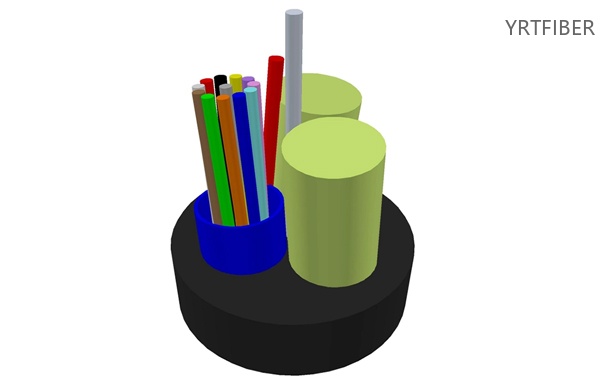
Compact, easy-to-access design for simple installation and handling
The flat, compact structure combined with a rip cord allows on-site stripping without special tools, providing quick fiber access and significantly reducing installation time and difficulty.

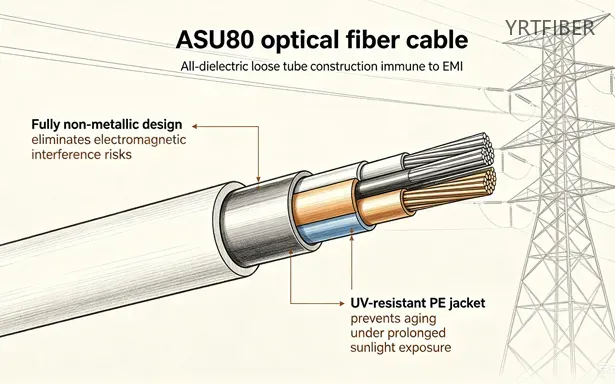
All-dielectric loose tube construction immune to EMI, UV‑protective outer jacket
Fully non-metallic design eliminates electromagnetic interference risks, making it safe for installation near power lines. The UV-resistant PE jacket prevents aging under prolonged sunlight exposure.
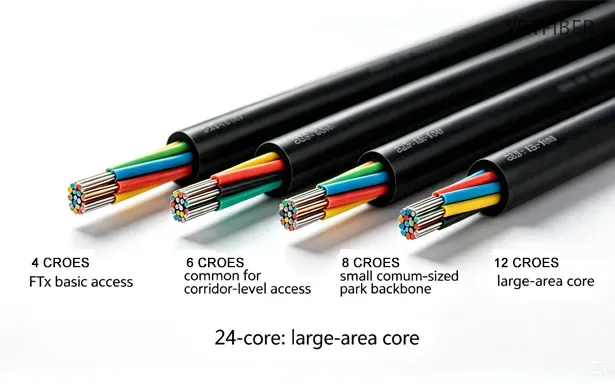
Optimized fiber counts (4. 6. 8. 12. 24) to minimize deployment costs
Offers the most common low fiber counts tailored for FTTx and access networks, avoiding excess fiber waste while keeping material and inventory costs low.
Engineering Applications ASU80 Mini ADSS cable
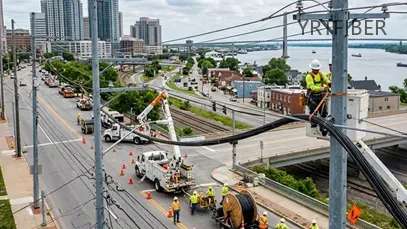
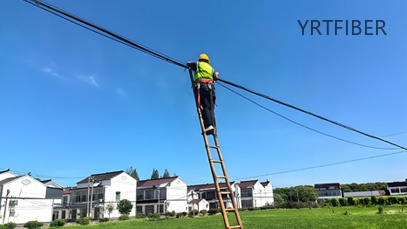
Urban FTTH & Access Networks
ASU80 cables are ideal for Fiber-to-the-Home (FTTH) deployments and access networks in urban areas. Their self-supporting design allows for spans up to 80 meters, perfectly matching the typical 40-meter distance between urban utility poles. The all-dielectric construction simplifies installation and eliminates grounding concerns.
This lightweight and compact cable enables rapid, cost-effective rollout of high-speed data, voice, and video services directly to residential and business users.
Rural Broadband & Long-Haul Trunking
Designed for use in both urban and rural networks, the ASU80 cable's robust performance makes it well-suited for long-distance trunk lines and bridging the digital divide in remote areas. Its UV-resistant PE outer sheath can withstand various outdoor weather conditions.
With low attenuation and high bandwidth, it maintains high-quality signal transmission over long-distance LAN backbones, serving as an economical solution to replace GYFTY cables in certain scenarios.
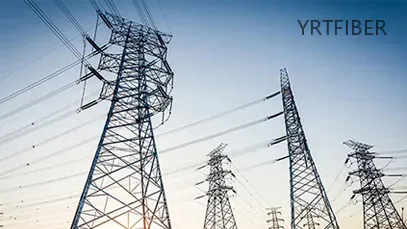
High-Voltage Power Line Communication
ASU80 is a fully dielectric, non-metallic cable, making it ideal for communication routes on overhead high-voltage power transmission systems. The all-dielectric material eliminates induced voltage and the risk of electrical discharge, ensuring safe operation in high EMI environments.
Its self-supporting system with FRP strength members also makes it suitable for lightning-prone zones and long-distance overhead lines, providing reliable communication for power grid monitoring and control.
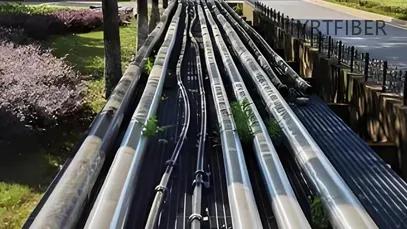
Duplex (Aerial & Pipeline) Installations
The cable's versatile design is certified for both aerial and ducted pipeline laying methods. Its compact, lightweight nature facilitates handling and installation in confined spaces like pipelines while also saving on transportation costs.
Filled with a special water-blocking compound, ASU80 guarantees critical fiber protection against moisture in underground ducts. This dual-use capability allows for seamless outdoor distribution and local area network communication.
Shipping & Packaging
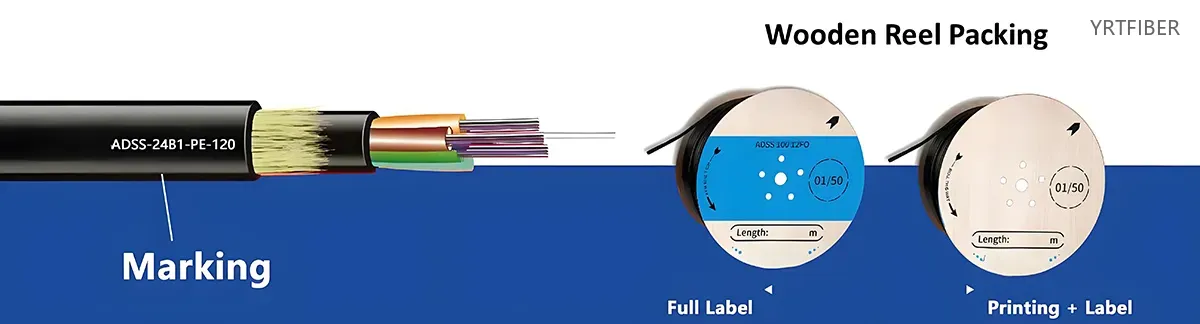
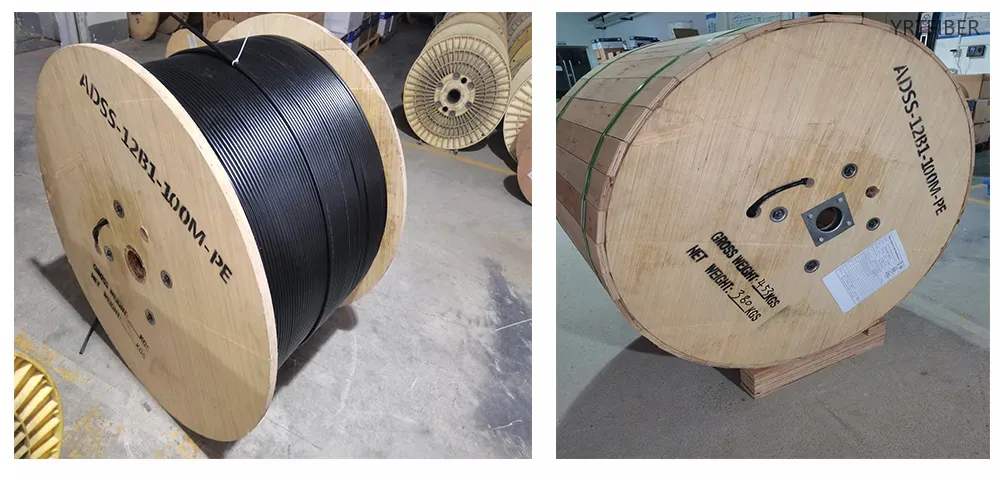
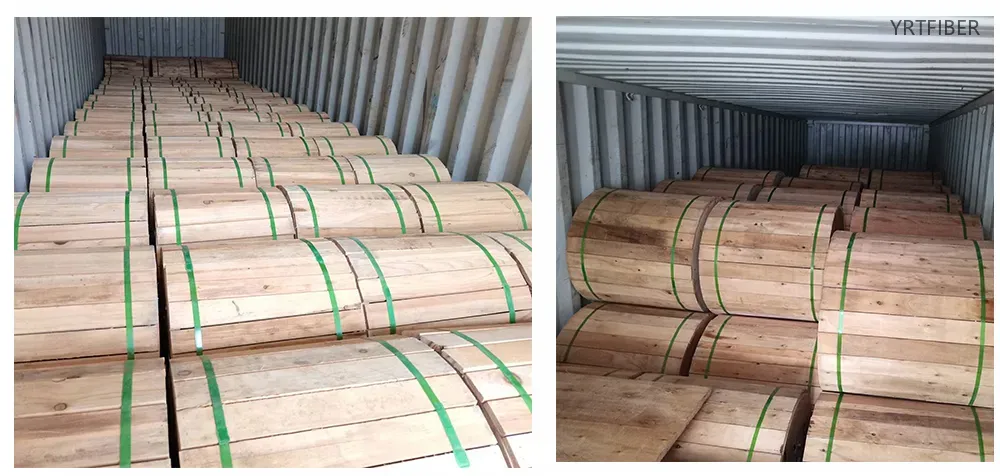
Packaging Requirements:
1:All cables shall be wound on treated wooden spools that are not returnable
2:Cable ends must be firmly secured to the spool and protected with waterproof shrink caps
3:Each spool must include:
1、 Protective plastic wrapping layer
2、 Reinforcing wooden slats for stability
3、 Minimum 1m of free cable end for testing purposes
4、 Standard spool length: 3000m (±2% tolerance allowed)
Cable Identification:
The outer jacket must display:
1、Unique sequential numbering every 1m (±1% variance permitted)
2、 Additional repeating markings at 1m intervals showing:
1、 Product code and fiber count
2、 Manufacturer identification
3、 Production date (month/year)
4、Total cable length
Standard Packaging Dimensions:
| Length | Container | Size (L×W×H) | Net Mass | Total Mass |
|---|---|---|---|---|
| 2 km | Wood spool | 90×75×90 cm | 156 kg | 220 kg |
| 3 km | Wood spool | 100×68×100 cm | 240 kg | 280 kg |
| 4 km | Wood spool | 109×75×109 cm | 300 kg | 368 kg |
| 5 km | Wood spool | 129×72×129 cm | 400 kg | 480 kg |
Technical Reference:
1、 Standard cable diameter: 10.0mm
2、Maximum span distance: 100m
3、Contact sales team for complete technical specifications
Spool Marking Standards:
Permanent markings (minimum 25-30mm height) must appear on both sides of each spool:
1、 Company name and trademark
2、Contained cable length
3、Cable specifications (type/fiber count)
4、Winding orientation
5、Weight measurements (gross/net)
Note: All wooden packaging materials must undergo proper fumigation treatment prior to use.
Product Comparison:
| Comparison Dimensions | ASU80 (Mini ADSS) | ADSS (All-Dielectric Self-Supporting) | AS Cable (Aerial Self-Supporting) |
|---|---|---|---|
| 1. Structure and Reinforcement | Single loose tube + double parallel FRP reinforcement, compact and lightweight design | Multiple loose tube structure + central FRP reinforcement + aramid yarn reinforcement layer, double sheath | Multiple loose tube structure (up to 12 tubes) + central FRP reinforcement, S-Z stranded |
| 2. Sheath and Armor | Single-layer PE outer sheath, metal-free, water-blocking tape + fiber grease filling | Double-layer sheath (HDPE/LSZH or PE/AT), UV4 rating, metal-free | Single or double-layer PE sheath, aramid yarn reinforcement layer, metal-free |
| 3. Core Functions | Miniature self-supporting optical cable, used for short spans (≤80m) aerial applications, replacing traditional ADSS on urban utility poles, economical and efficient | All-dielectric self-supporting optical cable, used for long spans (≤200m) aerial applications, especially suitable for high-voltage transmission lines | Self-supporting optical cable, used for urban backbone, backhaul and access networks, medium span, supports 144 cores |
| 4. Fiber Optic Capacity | Maximum 12 cores (core count limited by single loose tube structure) | Maximum 144 cores (high density achieved through multi-tube design) | Maximum 144 cores (12 tubes, 12 cores per tube) |
| 5. Electrical Characteristics | All-dielectric, metal-free, electromagnetic interference resistant, can be laid in the same tube as power cables | All-dielectric, aramid + FRP, no grounding required, suitable for high-voltage environments | All-dielectric, metal-free, electromagnetic interference resistant |
| 6. Waterproof and Moisture-proof | Loose tube filled with water-blocking fiber grease + water-blocking tape + moisture-proof design | Fully dry water-blocking or fiber-reinforced filling, double-layer sheath for enhanced moisture protection | Loose tube filling gel + water-blocking tape + PE outer sheath, full-section filling optional |
| 7. Span Capacity | ≤80 meters, suitable for urban pole spacing of 40-50 meters | ≤200 meters, suitable for long spans of high-voltage transmission towers | Multiple specifications of 80 meters/120 meters/150 meters, suitable for urban scenarios |
| 8. Application Scenarios | Urban backbone, FTTH access, short-span overhead, in the same conduit as power cables, lightning-prone areas | High-voltage transmission line communication (10kV-1000kV+), river crossings, mountainous areas | Metropolitan area distribution network, backhaul, user access, campus building interconnection, rural deployment |
| 9. Installation Methods | Self-supporting, simple deployment, uses small pre-twisted wire, compact size reduces operational complexity | Self-supporting, can be installed on live poles, requires special hardware | Self-supporting, usually requires suspension wire or direct pole installation, moderate complexity |
| 10. Cost | Lowest, compact design reduces materials, approximately 40% lighter than traditional ADSS | Higher, complex multi-layer structure + aramid yarn, high material and hardware costs | Medium, simpler than ADSS but more complex than ASU80 |
| 11. Compatible Voltage Levels | Up to 35kV distribution lines, suitable for medium and low voltage environments | 10kV to 1000kV+, including UHV | Typically used for communication poles (non-power), no specific voltage rating designed |
ASU80 Mini ADSS cable Selection Guide
Choose ASU80 (Mini ADSS) for short‑span aerial applications (≤80 m) in urban utility pole networks, FTTH access, or medium/low‑voltage (≤35 kV) distribution lines. Its compact, lightweight design (≈40% lighter than ADSS) and single‑loose‑tube construction make it the most economical choice for low‑core‑count (≤12 cores) deployments where span is short and hardware costs must be minimized. Best for pole‑to‑pole drops in residential areas.
Choose ADSS for long‑span (≤200 m) aerial routes, especially near high‑voltage power lines (10 kV to 1000 kV+). Its double‑sheath, aramid‑reinforced structure handles extreme spans, harsh weather, and high‑voltage environments without grounding. Ideal for river crossings, mountainous terrains, and utility backbone networks. However, it carries the highest material and hardware costs.
Choose AS Cable for medium‑span (80‑150 m) urban/metro backbone, backhaul, and campus interconnection where fiber counts up to 144 cores are required but high‑voltage compatibility is not needed. It offers a balance between cost and capacity, with S‑Z stranded multi‑tube design and moderate installation complexity – suitable for general aerial self‑supporting routes on communication poles.
Quick summary:
Short span, low cost, low core count (≤12) → ASU80
Long span, high voltage, high core count → ADSS
Medium span, medium cost, high core count (≤144) → AS Cable
Installation of ASU80 Fiber Optic Cable
Ensure poles are spaced ≤80m. Use preformed dead-end grips or suspension clamps. Maintain pulling tension ≤600N and bending radius ≥25D. Allow 1-2% sag for wind load. No grounding required. After installation, check for kinks and run OTDR test to verify fiber integrity.
Download YRTFIBER Product Catalog
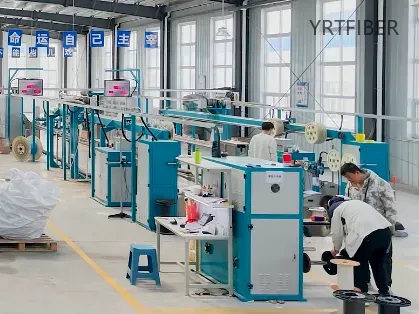
Factory Real Shot
Optical Fiber Cable Factory Workshop One
Several coloring machines run side by side, curing colored ink with UV lamps. An operator replaces an empty ink bottle while a cart holds finished colored fiber spools.
Fiber Optical Cable Factory Workshop Two
A worker loads a new bag of PBT material into the dryer hopper. The extruded loose tube passes through a water trough and dryer before take‑up.
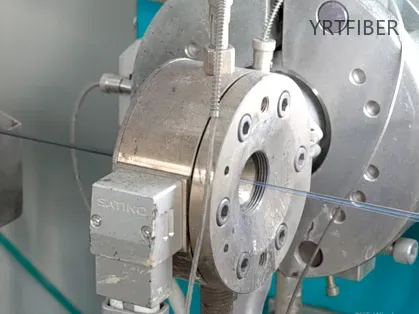
Fiber Optic Cable Factory Workshop Three
The metal strength member and loose tubes meet at the stranding table, coated with water‑blocking gel and through a sizing die. An operator adjusts the stranding pitch and checks the core appearance.
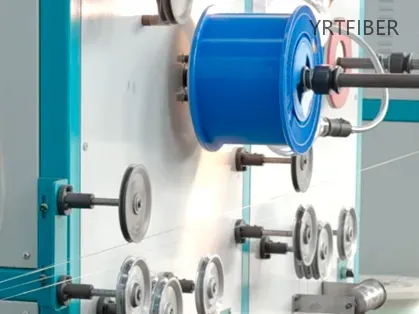
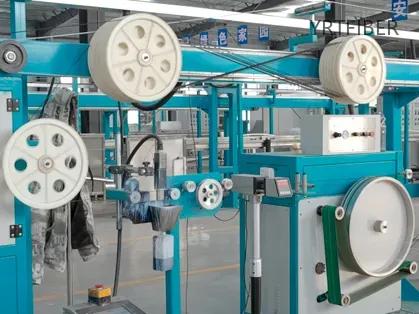
Fiber Optic Cable Factory Workshop Four
At the end of the double‑sheathing line. A worker measures the outer diameter with a caliper, signs off, and wraps the reel edges with stretch film for storage.
Frequently Asked Questions & Quick Inquiry
ASU80 Mini ADSS cable FAQ
1. What is the ASU80 Mini ADSS fiber optic cable?
The ASU80 is a compact, all-dielectric self-supporting (ADSS) aerial fiber optic cable designed for short span installations (typically 80m or 120m). It supports 1–12 core single-mode fibers and is ideal for FTTH and outdoor telecom networks. ASU80 is a lightweight mini ADSS fiber optical cable designed for short-span self-supporting aerial installation.
2. What fiber types are supported in this cable?
The ASU80 cable supports standard single-mode fiber types including G.652D, G.655, and G.657 (A/A2), making it compatible with various installation requirements and bending performance standards.
3. What is the cable's structure and construction?
It features a loose-tube design filled with water-blocking gel, FRP (Fiber Reinforced Plastic) strength members, and an HDPE outer jacket. This structure ensures excellent tensile strength, crush resistance, and weather durability.
4. What are the cable's mechanical and environmental specifications?
Tensile strength: up to 1500 N
Crush resistance: 2000 N/100mm
Temperature range: −40°C to +70°C
Bending radius: ≥10×OD (static), ≥20×OD (dynamic)
5. Where is this ADSS cable typically used?
This cable is used in outdoor aerial installations between poles or buildings, especially in environments where metallic elements are not allowed, such as near power lines. It’s suitable for FTTx, trunk, or distribution network deployments.
6. Does the cable require additional support or grounding?
No, ASU80 is a fully dielectric and self-supporting cable. It requires no metallic elements or external grounding, which simplifies installation and improves safety in high-voltage or EMI-prone environments.
Send Your Inquiry
Fill out the form below and we'll get back to you within 24 hours.
Related Articles

GYXTC8S Self-Supporting Figure 8 Aerial Fiber Optic Cable – G.652D/G.657
GYXTC8S Self-Supporting Figure 8 Aerial Fiber Optic Cable – G.652D/G.657
GYXTC-8Y Self-Supporting Figure 8 Uni-Tube Aerial Fiber Optic Cable
GYXTC-8Y Self-Supporting Figure 8 Uni-Tube Aerial Fiber Optic Cable
ADSS-S Single Jacket All-Dielectric Self-Supporting Aerial Fiber Optic Cable
ADSS-S Single Jacket All-Dielectric Self-Supporting Aerial Fiber Optic Cable


