

 Español
 Português
 لالعربية
 Русский
 Bahasa Indonesia
 Français
 Türkçe
 Bahasa Melayu

GYTZS Outdoor Flame-Retardant Armored Fiber Optic Cable – Steel Tape Armor, LSZH
G652D Single-Mode Fiber - Low attenuation, high bandwidth for long-distance transmission.
Flame Retardant - Meets IEC/EN fire safety standards, minimal toxic smoke emission.
Weatherproof & UV-Resistant - Robust PE/PVC sheath protects against moisture, sunlight, and extreme temperatures.
Armored Options Available - Steel wire or corrugated tape for extra durability.
Customizable Lengths & Fiber Counts - Tailored solutions for telecom, CCTV, and industrial networks.
What is GYTZS outdoor fiber optic cable?
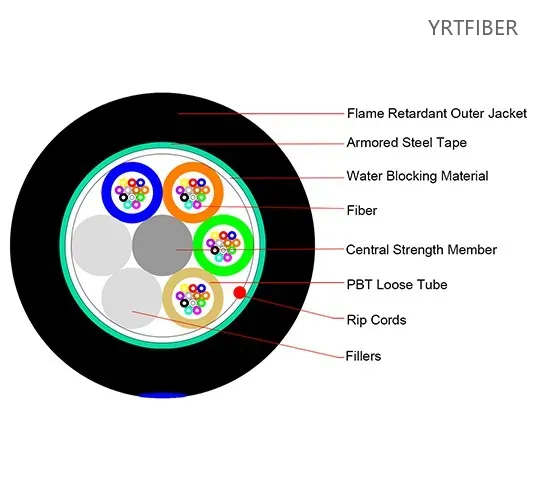
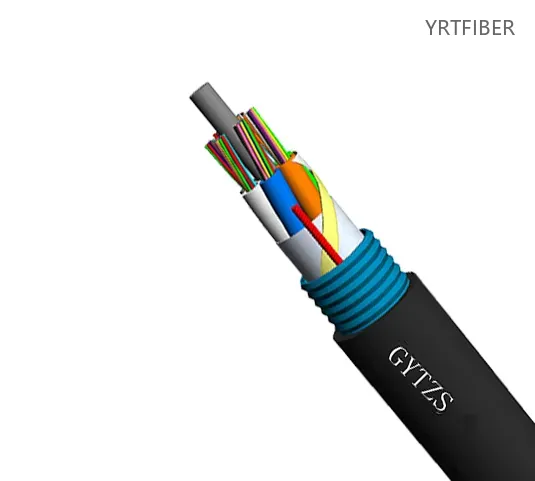
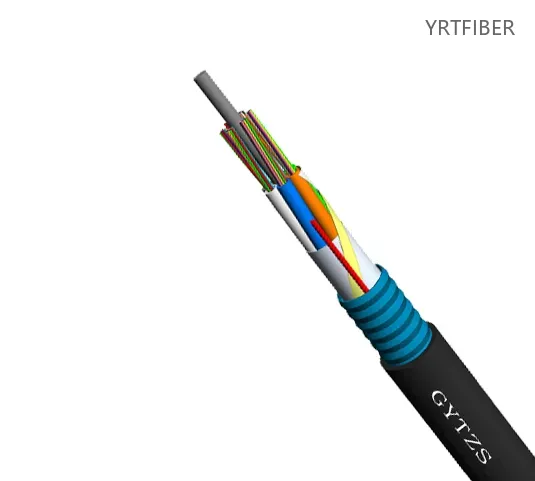
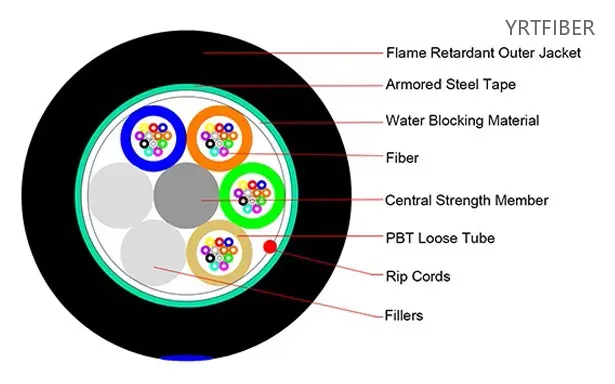
GYTZS is a flame-retardant armored outdoor fiber optic cable designed for telecom, FTTH, railway, power grid, tunnel and industrial communication networks. It uses a stranded loose tube structure, with optical fibers placed in PBT loose tubes around a central strength member. The cable includes water-blocking material, steel tape armor, rip cords, fillers and a flame-retardant outer jacket.
The steel tape armor improves crush resistance and rodent protection, while the water-blocking structure helps protect the fiber core from moisture in harsh outdoor environments. The flame-retardant outer jacket provides additional fire safety for applications where both outdoor durability and flame-retardant performance are required. G.652D and G.655 single-mode fibers, as well as customized fiber counts, are available according to project requirements.
GYTZS Outdoor Fiber Optic Cable Specification parameters
- Specification parameters
- OPTICAL CHARACTERISTICS
| Model | Fiber cores | Tubes | Fillers | Diameter (mm) | Weight (kgs) | Tensile (N) | Crush (N) | Bending radius | ||
| Long term | Short term | Long term | Short term | Static | ||||||
| GYTZS-2~6F | 2~6 | 1 | 4 | 9.7 | 135 | 600 | 1500 | 300 | 1000 | 10D/20D |
| GYTZS-8~12F | 8~12 | 2 | 3 | 9.7 | 135 | 600 | 1500 | 300 | 1000 | 10D/20D |
| GYTZS-14~18F | 14~18 | 3 | 2 | 9.7 | 135 | 600 | 1500 | 300 | 1000 | 10D/20D |
| GYTZS-20~24F | 20~24 | 4 | 1 | 9.7 | 135 | 600 | 1500 | 300 | 1000 | 10D/20D |
| GYTZS-26~30F | 26~30 | 5 | 9.7 | 135 | 600 | 1500 | 300 | 1000 | 10D/20D | |
| GYTZS-32~36F | 32~36 | 6 | 10.2 | 147 | 1000 | 3000 | 300 | 1000 | 10D/20D | |
| GYTZS-38~48F | 38~48 | 4 | 1 | 11.2 | 167 | 1000 | 3000 | 300 | 1000 | 10D/20D |
| GYTZS-50~60F | 50~60 | 5 | 11.2 | 167 | 1000 | 3000 | 300 | 1000 | 10D/20D | |
| GYTZS-62~72F | 62~72 | 6 | 12.2 | 189 | 1000 | 3000 | 300 | 1000 | 10D/20D | |
| GYTZS-74~84F | 74~84 | 7 | 1 | 13.8 | 231 | 1000 | 3000 | 300 | 1000 | 10D/20D |
| GYTZS-86~96F | 86~96 | 8 | 13.8 | 231 | 1000 | 3000 | 300 | 1000 | 10D/20D | |
| GYTZS-98~108F | 98~108 | 9 | 1 | 15.2 | 271 | 1000 | 3000 | 300 | 1000 | 10D/20D |
| GYTZS-110~120F | 110~120 | 10 | 15.2 | 271 | 1000 | 3000 | 300 | 1000 | 10D/20D | |
| GYTZS-122~132F | 122~132 | 11 | 1 | 17.1 | 327 | 1000 | 3000 | 300 | 1000 | 10D/20D |
| GYTZS-134~144F | 134~144 | 12 | 17.1 | 327 | 1000 | 3000 | 300 | 1000 | 10D/20D | |
Product Structure & Composition
PBT loose tubes + central strength member + water-blocking material + steel tape armor + flame-retardant outer jacket
Outer jacket: Flame‑retardant, UV‑resistant sheath that protects against weather and fire spread.
Steel‑tape armor: Corrugated or wrapped steel layer for crush, impact and rodent protection.
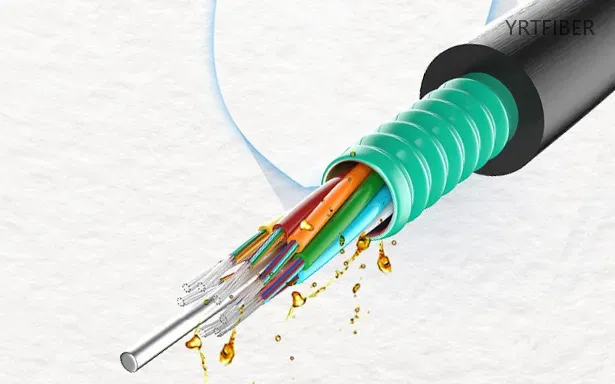
Water‑blocking layer: Gel or water‑swellable materials that prevent moisture ingress and migration.
Loose tubes (PBT): Polymer tubes that hold and protect groups of optical fibers, allowing thermal movement.
Optical fibers: Color‑coded fibers inside the loose tubes that carry signals.
Central metal strength member: Metallic rod/wire providing longitudinal tensile strength for pulling and aerial support.
Fillers and ripcords: Non‑metallic fillers to maintain geometry and ripcords/strength yarns for jacket removal and extra longitudinal strength.
Benefits of GYTZS Outdoor Fiber Optic Cable
High-Performance G652D Single-Mode Fiber
Features low attenuation and high bandwidth for reliable long-distance transmission.
Delivers stable signal quality for backbone, FTTH, and 5G backhaul networks.
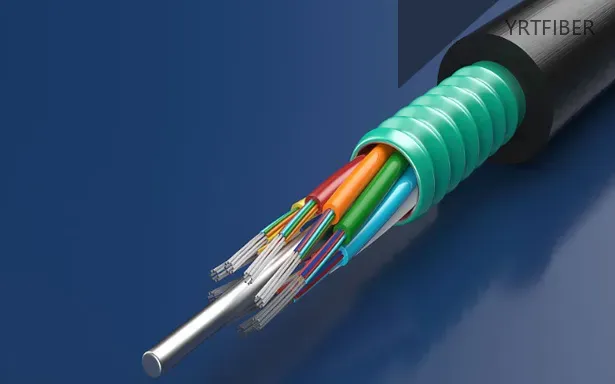
Flame Retardant Safety
out jacket meets IEC/EN fire safety standards, emitting minimal toxic smoke and zero corrosive halogens.
Significantly enhances personnel and equipment protection in tunnels, railways, and industrial sites.
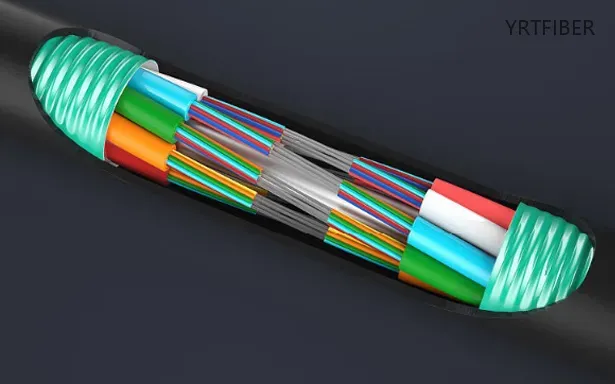
Weatherproof & Armored Protection
Robust UV-resistant sheath withstands moisture, sunlight, and extreme outdoor temperatures.
Optional steel wire or corrugated tape armor adds superior crush and rodent resistance.
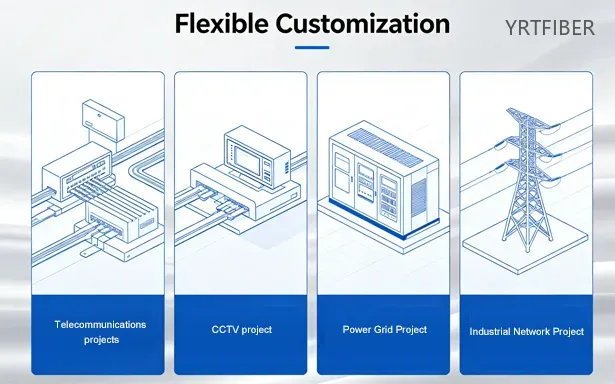
Flexible Customization
Available with customizable fiber counts and lengths to fit any project scale.
Tailored solutions for telecom, CCTV, power grids, and industrial networking deployments.
Engineering Applications GYTZS Outdoor Fiber Optic Cable
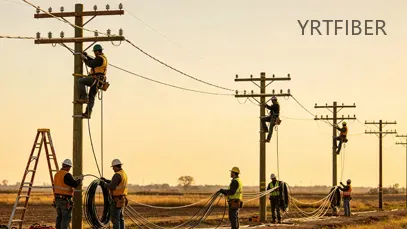
Aerial Installation
GYTZS flame-retardant optical cable is for outdoor aerial lines with fire-safety needs. It uses a non-self-supporting method, suspended below a steel messenger wire on poles with cable hooks. The central metal strength member and stranded structure ensure tensile strength (long-term ≈600N, short-term ≈1500N). Bending radius: ≥20× cable diameter during installation, ≥10× after fixation.
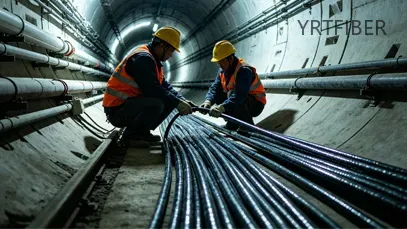
Duct Installation
Compact, lightweight and flexible, suitable for urban ducts, subways, tunnels and utility corridors. Low-smoke, halogen-free sheath reduces toxic emissions in fires; steel tape armor and water-blocking fill provide moisture and lateral-pressure protection. Duct runs need waterproofing and rodent protection but do not bear self-weight.
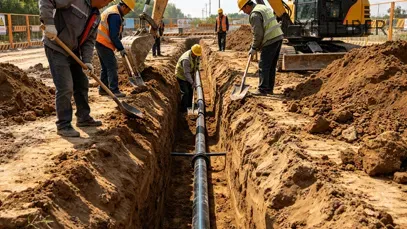
Direct Burial Installation
With steel tape armor and full-section water-blocking, it suits direct burial where ducts are unavailable. It resists soil pressure, rock impact and rodent damage; internal grease and water-blocking materials ensure long-term stability. Follow backfill standards and use sand/fine-soil bedding to protect the armor.
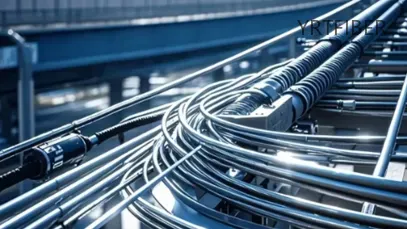
Other Typical Applications
Suitable for central offices, tunnels, chemical zones, data centers and LAN backbones requiring high core counts and fire/corrosion resistance. Derivative models exist for mining and termite-prone areas, meeting relevant standards.
Shipping & Packaging
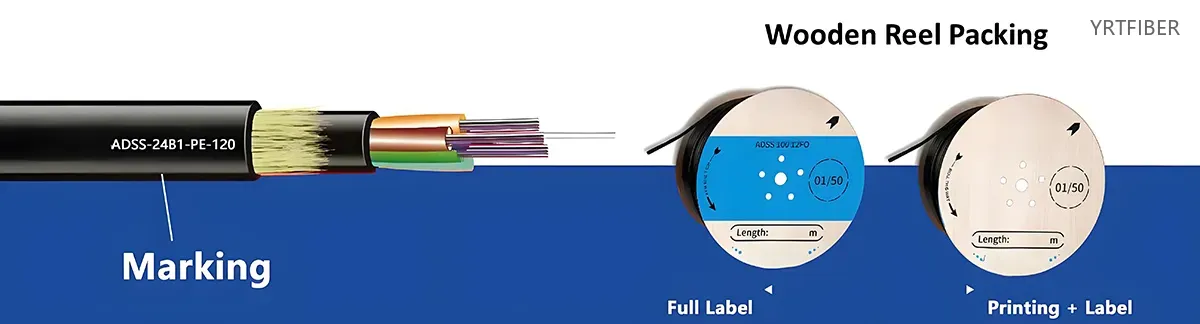
Packaging Requirements:
1:All cables shall be wound on treated wooden spools that are not returnable
2:Cable ends must be firmly secured to the spool and protected with waterproof shrink caps
3:Each spool must include:
1、 Protective plastic wrapping layer
2、 Reinforcing wooden slats for stability
3、 Minimum 1m of free cable end for testing purposes
4、 Standard spool length: 3000m (±2% tolerance allowed)
Cable Identification:
The outer jacket must display:
1、Unique sequential numbering every 1m (±1% variance permitted)
2、 Additional repeating markings at 1m intervals showing:
1、 Product code and fiber count
2、 Manufacturer identification
3、 Production date (month/year)
4、Total cable length
Standard Packaging Dimensions:
| Length | Container | Size (L×W×H) | Net Mass | Total Mass |
|---|---|---|---|---|
| 2 km | Wood spool | 90×75×90 cm | 156 kg | 220 kg |
| 3 km | Wood spool | 100×68×100 cm | 240 kg | 280 kg |
| 4 km | Wood spool | 109×75×109 cm | 300 kg | 368 kg |
| 5 km | Wood spool | 129×72×129 cm | 400 kg | 480 kg |
Technical Reference:
1、 Standard cable diameter: 10.0mm
2、Maximum span distance: 100m
3、Contact sales team for complete technical specifications
Spool Marking Standards:
Permanent markings (minimum 25-30mm height) must appear on both sides of each spool:
1、 Company name and trademark
2、Contained cable length
3、Cable specifications (type/fiber count)
4、Winding orientation
5、Weight measurements (gross/net)
Note: All wooden packaging materials must undergo proper fumigation treatment prior to use.
Product Comparison:
GYTZS vs GYTS vs GYTA vs GYTA53
| Comparison Factor | GYTZS Flame-Retardant Armored Cable | GYTS Steel Tape Armored Cable | GYTA APL Moisture Barrier Cable | GYTA53 Double Sheath Armored Cable |
|---|---|---|---|---|
| Construction Type | Stranded PBT loose tubes around a central strength member, water-blocking material, steel tape armor and flame-retardant outer jacket | Stranded loose tube structure with steel tape armor and PE outer sheath | Stranded loose tube structure with aluminum-polyethylene laminate moisture barrier and PE outer sheath | Stranded loose tube structure with moisture barrier, steel tape armor and double PE sheath |
| Fiber Count | Customizable fiber counts according to project requirements | 2 - 288 cores | 2 - 144 cores | 2 - 144 cores |
| Armor / Protection Type | Steel tape armor, water-blocking material, fillers and flame-retardant outer jacket | Corrugated steel tape armor | Aluminum-polyethylene laminate moisture barrier | Steel tape armor with double sheath protection |
| Flame Retardancy | Flame-retardant outer jacket for applications requiring improved fire safety | Standard PE sheath, no dedicated flame-retardant outer jacket | Standard PE sheath, no dedicated flame-retardant outer jacket | Standard PE sheath, no dedicated flame-retardant outer jacket |
| Water Blocking | Water-blocking material around the loose tube structure | Cable filling compound and water-blocking structure | APL moisture barrier and water-blocking structure | Water-blocking structure with reinforced sheath protection |
| Primary Applications | Telecom, FTTH, railway, power grid, tunnels and industrial outdoor networks where flame-retardant performance is required | Duct, aerial and general outdoor communication networks requiring steel tape armor | Duct and aerial-lashed installation where moisture protection is a key requirement | Direct burial, underground installation, harsh outdoor environments and rodent-prone areas |
| Tensile Strength | Subject to cable design and fiber count | Subject to cable design and fiber count | Subject to cable design and fiber count | Higher tensile performance for reinforced underground installation |
| Crush Resistance | Steel tape armor provides improved crush and rodent protection | Steel tape armor provides standard crush protection | Moderate mechanical protection with strong moisture resistance | High crush resistance with double sheath and armored structure |
| Min. Bending Radius | Subject to cable diameter and construction | Subject to cable diameter and construction | Subject to cable diameter and construction | Larger bending radius due to reinforced double sheath structure |
| Cost Level | Higher than standard PE outdoor cables due to flame-retardant jacket and armored structure | Cost-effective for general outdoor armored cable applications | Cost-effective for moisture-protected duct and aerial applications | Higher cost due to reinforced double sheath and armored protection |
| Installation & Maintenance Cost | Similar to other stranded loose tube armored cables, with added value in fire-sensitive outdoor or semi-enclosed environments | Easy to install and maintain for common duct or aerial outdoor applications | Requires careful handling to protect the aluminum-polyethylene laminate moisture barrier | Higher installation effort due to heavier cable structure and larger bending radius requirements |
GYTZS Outdoor Fiber Optic Cable Selection Guide
GYTZS Fiber Optic Cable Installation Guide
Clean the duct thoroughly before pulling.
Use a pulling grip attached to the central strength member.
Use cable lubricant. The LSZH jacket needs more lubricant than a standard PE jacket.
Keep pulling tension below 1500N.
Leave 5–10 meters of slack in every manhole for future splicing or rerouting.
Download YRTFIBER Product Catalog
Factory Real Shot
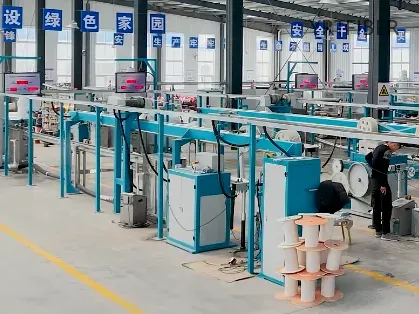
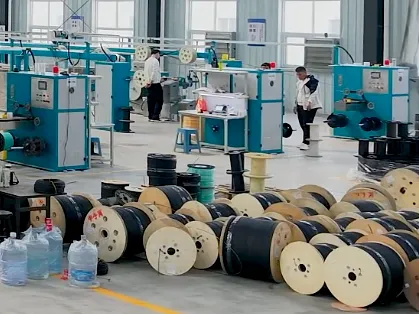
1. Factory Optical Cable Production Workshop
The workshop features a complete, continuous production line covering fiber coloring, loose‑tube extrusion, cable stranding, armor application and dual‑layer jacket extrusion. Processes are integrated for efficient, end‑to‑end manufacturing.
Work areas are organized by function: fiber coloring, loose‑tube extrusion, cabling/stranding, armor and jacket extrusion, and testing & packaging, with clear material and personnel flow for orderly operations.
2. Quality Control and Testing Center
A robust quality management system covers incoming material inspection, in‑process monitoring and final acceptance testing. Dedicated test stations and automated inspection equipment are deployed at critical stages.
Routine tests include optical performance (attenuation, return loss), mechanical tests (tensile, crush, bend) and environmental durability (temperature/humidity cycling, salt spray, flame tests). Samples are retained for traceability.
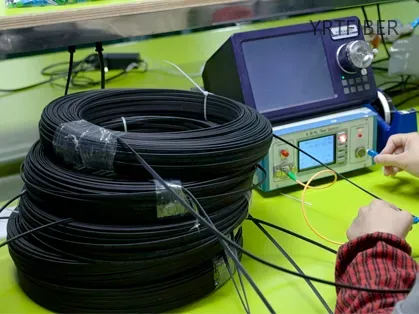
3. R&D and Technical Support
The facility maintains an independent R&D lab and pilot production line. Engineering teams handle new product development, structural optimization and material evaluation, enabling rapid prototype and sample validation.
Technical services include route and installation reviews, on‑site installation guidance and failure analysis. Engineers engage early in projects to reduce construction risk and optimize cost and performance.
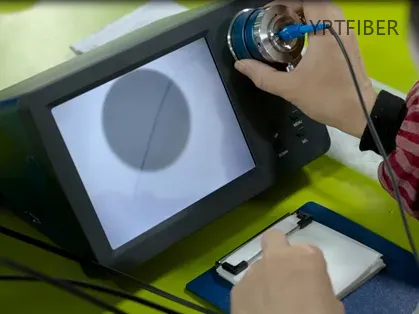
4. OEM/ODM and Customization Services
Custom manufacturing is available to customer drawings or samples, including jacket color, marking, reel specifications and packaging options. Neutral packaging or customer‑branded labeling and printed shrink film are supported.
ODM offerings cover structural design, material selection and sample production, with engineering coordination throughout the development and approval process.
Frequently Asked Questions & Quick Inquiry
GYTZS Outdoor Fiber Optic Cable FAQ
Q: Can you provide samples?
A: Yes, we can provide samples of a certain value.
Q: When can the sample order be delivered?
A: Usually within 7 days after confirmation.
Q: What is the delivery time for bulk orders?
A: Usually it is 15-20 days from the date of order placement, but it also depends on the quantity of the order. You need to confirm the specific delivery time with the sales manager.
What type of fiber optic cable is used outdoors only?
Answer: Outdoor‑specific cables include loose‑tube (gel‑filled) for moisture and thermal movement, armored/direct‑burial (steel tape or metal armor) for crush and rodent protection, ADSS (all‑dielectric self‑supporting) for long aerial spans, and messenger‑supported/non‑self‑supporting types that hang under a steel messenger wire. Choice depends on installation method (aerial, duct, direct burial) and environmental threats.
What is the downside of fiber optic internet?
Answer: Main drawbacks are higher initial deployment cost (trenching, poles, splicing), limited last‑mile availability in some areas, and physical vulnerability where cables are exposed (digging, construction, rodents). Repairs require trained technicians and specialized equipment; active network elements (ONTs, switches) still need power.
How do they bury fiber optic cable under a driveway?
Answer: Typical methods: trench and install a conduit/duct across the driveway or use directional boring to avoid surface disruption; pull the cable through the conduit; backfill with sand or fine soil and place warning tape above the conduit. For direct burial, use armored cable, deeper trenching, sand bedding, and compliant backfill. Follow local codes for minimum depth and protection.
What is the fiber optic cable color code for outdoor cables?
Answer: There is no universal jacket‑color standard for outdoor cable jackets (black is common for UV resistance). However, individual fibers inside follow standard color coding (TIA/EIA): Blue, Orange, Green, Brown, Slate (Gray), White, Red, Black, Yellow, Violet, Rose, Aqua for the first 12 fibers; higher counts use repeating or ribbon schemes. Always check the manufacturer’s datasheet for jacket and fiber color conventions.
Send Your Inquiry
Fill out the form below and we'll get back to you within 24 hours.
Related Articles

GYTY53 Heavy-Duty Direct Buried Cable – Dual Steel Tape Armor, Stranded Loose Tube
GYTY53 Heavy-Duty Direct Buried Cable – Dual Steel Tape Armor, Stranded Loose Tube
GYTS Stranded Loose Tube Armored Fiber Optic Cable – Steel Tape Armor, G.652D/G.655
GYTS Stranded Loose Tube Armored Fiber Optic Cable – Steel Tape Armor, G.652D/G.655
GYTA Stranded Loose Tube Light Armored Fiber Optic Cable – Aluminum Tape Armor, Anti-EMI
GYTA Stranded Loose Tube Light Armored Fiber Optic Cable – Aluminum Tape Armor, Anti-EMI


