

 Español
 Português
 لالعربية
 Русский
 Bahasa Indonesia
 Français
 Türkçe
 Bahasa Melayu
4 GYTA Cable: When to Use It for Standard Outdoor Duct Routes
5 GYTS Cable: When to Use It for Duct or Outdoor Routes Needing Steel Tape Armor
6 GYTA53 Cable: When to Use It for Direct Buried and Duct-to-Buried Routes
9 Mechanical Protection: Aluminum Tape vs Steel Tape vs Double Sheath
GYTA53, GYTS and GYTA are outdoor stranded loose tube fiber optic cables, but they are not interchangeable. GYTA is commonly selected for standard outdoor duct and conduit routes where an aluminum-polyethylene moisture barrier is enough. GYTS adds steel tape armor for stronger crush and rodent protection. GYTA53 adds an inner sheath, steel tape armor and outer sheath, making it more suitable for direct buried and duct-to-buried routes when the project specification confirms the required mechanical and water-blocking performance. This guide compares their structure, installation use, limitations, testing requirements and selection logic.
Quick Answer: Which Cable Should You Choose?
Choose GYTA when the route is mainly underground duct, conduit, handhole, manhole or outdoor distribution where the duct provides the main physical protection. Choose GYTS when the route still uses duct or outdoor access installation but needs stronger steel tape protection against crushing, rough handling or rodents. Choose GYTA53 when the route includes direct burial, stronger underground mechanical risk or duct-to-buried transition sections that require a double-sheath steel tape armored structure.
This is a selection starting point, not a substitute for the cable datasheet. The final decision must consider trench condition, duct condition, pulling route, fiber count, water exposure, rodent risk, grounding rules, cable diameter, bending radius and verified IEC 60794 test results.
What Are GYTA, GYTS and GYTA53 Cables?
GYTA, GYTS and GYTA53 are common outdoor loose tube optical cable structures used in telecom backbone, metro fiber, FTTx feeder, campus backbone and access networks. In these designs, colored optical fibers are placed inside loose tubes, the tubes are stranded around a central strength member, and the cable core is protected with moisture barriers, armor layers and an outer sheath according to the model.
In simple terms:
GYTA is a stranded loose tube outdoor cable with an aluminum-polyethylene moisture barrier and PE outer sheath.
GYTS is a stranded loose tube outdoor cable with steel tape armor and PE outer sheath.
GYTA53 is a stronger double-sheath outdoor cable based on a stranded loose tube core, normally using an aluminum-polyethylene inner sheath, steel tape armor and PE outer sheath.
The exact construction should always be confirmed from the manufacturer's cross-section drawing and datasheet. Model names are useful, but they do not replace project-specific specifications or test reports.
Core Difference Between GYTA53, GYTS and GYTA
| Item | GYTA | GYTS | GYTA53 |
|---|---|---|---|
| Basic cable core | Stranded loose tube | Stranded loose tube | Stranded loose tube |
| Moisture barrier | Aluminum-polyethylene layer is commonly used | Steel tape provides mechanical armor; water-blocking depends on cable design | Aluminum-polyethylene inner sheath plus additional protected layers |
| Armor or protection | Light metallic moisture barrier, not heavy armor | Steel tape armor | Steel tape armor over an inner sheath, with outer PE sheath |
| Sheath structure | Usually single PE outer sheath | Usually single PE outer sheath over steel tape armor | Double-sheath structure: inner sheath plus outer sheath |
| Typical route | Outdoor duct, conduit, telecom distribution | Duct, access, backbone and mechanically higher-risk outdoor routes | Direct buried, duct-to-buried transition and higher-risk underground routes |
| Mechanical protection | Lower than steel tape armored designs | Higher than GYTA | Higher and more layered than GYTS in typical buried designs |
| Cable diameter and weight | Usually lighter and smaller than armored alternatives | Heavier than GYTA | Usually largest and heaviest of the three |
| Installation flexibility | Easier to pull in duct when diameter and stiffness fit the route | More protection but less flexible than GYTA | Stronger protection but less convenient for narrow duct or frequent bends |
| Main limitation | Not a Direct Burial Cable by default | Steel tape armor does not automatically make every route direct-buried | More weight, larger diameter and higher cost; still needs test confirmation |
GYTA Cable: When to Use It for Standard Outdoor Duct Routes
GYTA cable is usually selected when the optical cable is installed in an underground duct, conduit, HDPE pipe or protected cable route. The cable core is normally made from loose tubes stranded around a central strength member. An aluminum-polyethylene layer acts as a moisture barrier and provides light protection, and a PE sheath protects the cable from outdoor handling and environmental exposure.
GYTA is a practical choice when the route protection comes mainly from the duct system. It is often used for telecom distribution networks, metro access routes, campus backbone links and outdoor conduit networks where the main concerns are water blocking, pulling performance, cable diameter and long-term optical stability.
GYTA is not the right default choice for direct burial in soil, rocky trenches or high rodent-risk areas unless the project has a separate protective duct or the exact cable design has been qualified for that environment. Aluminum tape should not be described as equivalent to steel tape armor.
Typical use cases:
Underground duct or conduit routes
Standard telecom access and distribution networks
Routes where cable diameter and pulling convenience matter
Projects needing an outdoor stranded loose tube cable without heavy armor
Cases requiring caution:
Direct burial without duct protection
Rodent-heavy routes
Road crossings, rocky soil or high crush-load areas
Power corridors where metallic components create grounding or induction concerns
GYTS Cable: When to Use It for Duct or Outdoor Routes Needing Steel Tape Armor
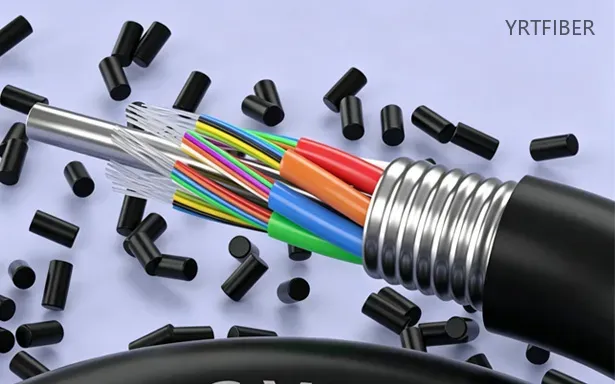
GYTS cable is a stranded loose tube outdoor cable with steel tape armor. The steel tape layer gives stronger lateral protection than the aluminum-polyethylene barrier used in GYTA. This makes GYTS useful when the route may face rough pulling, exposed handhole sections, rodent risk, higher crush risk or more demanding outdoor handling.
GYTS is often positioned between GYTA and GYTA53. It provides more mechanical protection than GYTA, while normally being less heavy and less layered than GYTA53. For many duct, access and backbone projects, GYTS is selected when the installer wants steel tape protection but does not need the double-sheath direct burial structure of GYTA53.
However, "steel tape armored" does not automatically mean "suitable for every direct burial installation." Burial suitability depends on soil condition, trench depth, stone protection, moisture exposure, rodent risk, crush test requirements, sheath design and the operator's engineering standard.
Typical use cases:
Outdoor duct routes with higher mechanical risk
Access and backbone links requiring steel tape armor
Handhole and manhole routes where the cable may be exposed to rough handling
Projects where rodent protection is more important than minimum cable weight
Cases requiring caution:
Direct burial in severe soil without confirming the datasheet and test report
Long aerial spans without a self-supporting design
Environments requiring non-metallic or all-dielectric cable construction
Narrow ducts where armor stiffness or diameter may limit pulling performance
GYTA53 Cable: When to Use It for Direct Buried and Duct-to-Buried Routes
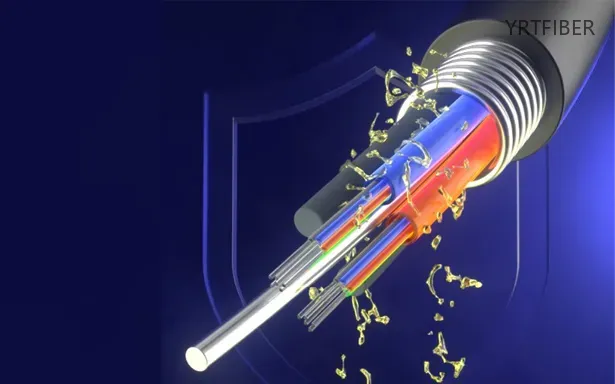
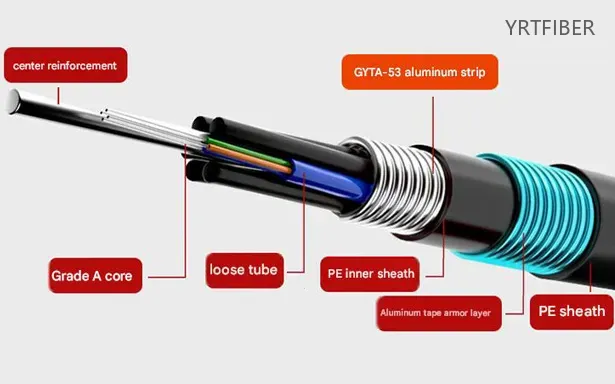
GYTA53 cable is normally selected when the route requires a stronger underground cable structure. Compared with GYTA and GYTS, GYTA53 typically uses a double-sheath design: a stranded loose tube core, aluminum-polyethylene inner sheath, steel tape armor and PE outer sheath. This layered structure improves protection for buried routes and for routes that transition between duct, handholes, cable chambers and soil.
GYTA53 is commonly used in telecom backbone, metro underground routes, rural broadband, transportation corridors and direct buried access networks. It is especially useful when a project specification requires steel tape armor plus an inner and outer sheath rather than a single-sheath armored cable.
The stronger structure also brings trade-offs. GYTA53 is usually heavier, larger in diameter, stiffer and more expensive than GYTA or GYTS. It may be unsuitable for a long narrow duct with many bends unless the duct diameter, pulling tension, sidewall pressure and bend radius are confirmed.
Typical use cases:
Direct buried fiber optic cable routes
Duct-to-buried transition sections
Underground backbone routes with higher mechanical risk
Rural or long-distance access routes where stronger sheath and armor layers are required
Cases requiring caution:
Tight duct routes where cable diameter or stiffness is a constraint
Indoor routes requiring flame-retardant or LSZH sheath
Aerial installation without a separate messenger or span-rated structure
Sites where metallic armor needs bonding, grounding or corrosion protection
Structure Comparison: Layer by Layer
| Layer or feature | GYTA | GYTS | GYTA53 |
|---|---|---|---|
| Optical fiber | G.652.D, G.655, G.657 or other specified fiber types | G.652.D, G.655, G.657 or other specified fiber types | G.652.D, G.655, G.657 or other specified fiber types |
| Loose tube | Usually PBT loose tubes with gel or dry blocking as specified | Usually PBT loose tubes with gel or dry blocking as specified | Usually PBT loose tubes with gel or dry blocking as specified |
| Cable core | Loose tubes stranded around central strength member | Loose tubes stranded around central strength member | Loose tubes stranded around central strength member |
| Strength member | Usually metallic central strength member unless otherwise specified | Usually metallic central strength member unless otherwise specified | Usually metallic central strength member unless otherwise specified |
| Water blocking | Cable-core filling, water-blocking yarn, tape or hybrid design | Cable-core filling, water-blocking yarn, tape or hybrid design | Cable-core filling plus layered sheath and armor system |
| Metallic layer | Aluminum-polyethylene moisture barrier | Steel tape armor | Aluminum-polyethylene inner sheath plus steel tape armor |
| Outer protection | PE outer sheath | PE outer sheath over steel tape | PE outer sheath over steel tape armor |
| Main engineering purpose | Moisture barrier and duct-ready outdoor protection | Steel tape mechanical protection | Stronger buried-route protection with double sheath |
Installation Selection Matrix
| Route condition | Recommended starting point | Reason | What to verify |
|---|---|---|---|
| Standard duct with good conduit protection | GYTA | Lower weight and easier handling than heavier armored structures | Pulling tension, duct fill ratio, bend radius, water exposure |
| Duct route with rodent or rough handling risk | GYTS | Steel tape armor improves mechanical protection | Crush resistance, armor corrosion, grounding rules, pulling stiffness |
| Direct buried route in normal telecom trench | GYTA53 | Double-sheath steel tape armored structure is more suitable for burial | Soil condition, trench design, water-blocking test, crush test |
| Mixed duct and buried route | GYTA53 or GYTS, depending on risk | Transition sections may need stronger armor and sheath protection | Which sections are buried, expected load, installation drawings |
| High-voltage or lightning-prone route requiring electrical isolation | Usually not GYTA/GYTS/GYTA53; consider all-dielectric alternatives | These models normally include metallic elements | Whether GYFTY, ADSS or another all-dielectric cable is required |
| Long aerial span | Not selected only by these model names | Aerial routes require span, sag, wind and ice design | ADSS, figure-8 or messenger-supported cable requirements |
| Indoor building route | Usually not these outdoor PE-sheathed models | Indoor routes may require LSZH, riser, plenum or flame-retardant sheath | Local fire code and sheath rating |
Mechanical Protection: Aluminum Tape vs Steel Tape vs Double Sheath
The most important practical difference is the protection layer.
GYTA uses an aluminum-polyethylene layer mainly as a moisture barrier and light protective layer. It is not the same as steel tape armor.
GYTS uses steel tape armor. Steel tape improves crush and rodent protection compared with GYTA, but the final performance still depends on tape thickness, sheath design, cable diameter and IEC 60794 test results.
GYTA53 uses a more layered structure. The inner sheath helps protect the cable core, the steel tape armor adds mechanical protection, and the outer PE sheath protects the armor and cable during buried service. This is why GYTA53 is usually preferred over GYTS for direct buried routes when the specification requires a stronger buried cable.
Do not publish one universal crush resistance value for these three cables. A valid value must be linked to the exact cable design, load length, test duration, test method and allowable attenuation change.
Water Blocking and Moisture Protection
All three cable types can be designed with water-blocking protection, but the method and performance are not identical. Outdoor cable may use filling compound, water-blocking yarn, water-blocking tape, dry water-blocking powder or a combined system.
GYTA relies on the cable core water-blocking design and aluminum-polyethylene moisture barrier. GYTS adds a steel tape layer but still needs proper water-blocking materials inside or around the cable core. GYTA53 usually provides a stronger layered structure for buried environments, but it still needs a verified water penetration test if the project requires it.
"Water-blocking" should not be written as "waterproof for all environments." A cable that passes a water penetration test for a specified sample length, water head and duration is not automatically suitable for long-term underwater, river, lake or sewer installation.
Fiber Type and Transmission Performance
GYTA, GYTS and GYTA53 are cable structures. They do not define the optical fiber category by themselves. The same cable family may be manufactured with G.652.D, G.655, G.657 or other specified fibers.
When writing a product page or purchasing specification, state the fiber type separately from the cable structure. For example, "GYTS with G.652.D single-mode fiber" is clearer than "GYTS fiber" because the cable model and fiber category are different technical facts.
Attenuation should also be stated by wavelength and fiber category. A single attenuation number without wavelength, measurement condition or fiber type is not technically complete.
Testing Requirements and Applicable Standards
GYTA53, GYTS and GYTA should be compared by tested performance, not only by model name. IEC 60794-3 covers outdoor optical fibre cables, while IEC 60794-1-1 and IEC 60794-1-2 provide generic requirements and general test-method guidance for optical fibre cables. ITU-T G.652, G.655 and G.657 define commonly used single-mode optical fiber categories.
| Test or check | Why it matters | Applicable reference | Result conditions to state |
|---|---|---|---|
| Optical attenuation | Confirms transmission performance after cabling | ITU-T G.652, G.655, G.657; IEC 60793 and IEC 60794 references where applicable | Fiber type, wavelength, cable length, measurement method, maximum attenuation |
| Tensile performance | Confirms cable behavior during pulling and service | IEC 60794-1-101:2024 tensile method, or IEC 60794-1-21 where specified | Short-term or long-term load, duration, allowable attenuation change, physical damage limit |
| Crush resistance | Compares lateral pressure resistance of GYTA, GYTS and GYTA53 | IEC 60794 mechanical test methods or project-specified method | Load, load length, plate shape, duration, attenuation change, sheath/core damage |
| Impact resistance | Checks response to installation impact or external strikes | IEC 60794-1-104:2024 or project-specified method | Impact energy, number of impacts, test position, attenuation change |
| Bend performance | Prevents macrobending and installation damage | IEC 60794-1-111:2023 bend method E11 or project-specified method | Mandrel diameter, number of turns, temperature if specified, attenuation change |
| Temperature cycling | Confirms optical stability under outdoor temperature change | IEC 60794-1-201:2024 temperature cycling method F1 or project specification | Temperature range, dwell time, cycle count, attenuation change |
| Water penetration | Confirms longitudinal water-blocking performance | IEC 60794-1-2 guidance and applicable water penetration method or project specification | Sample length, water head, duration, leakage acceptance criterion |
| Sheath and marking inspection | Confirms manufacturability, identification and delivery quality | Product datasheet, IEC 60794 family, customer specification | Diameter, sheath thickness, printing, meter marking, drum length |
Cost, Weight and Installation Trade-Offs
GYTA is usually the most economical and easiest to handle among the three when the route is already protected by duct. It keeps cable diameter and weight lower than steel tape armored alternatives, but it provides less mechanical protection.
GYTS usually costs and weighs more than GYTA because it adds steel tape armor. It is a practical middle option when a duct or outdoor route needs higher mechanical protection but not necessarily a double-sheath direct burial structure.
GYTA53 usually has the highest material use and weight because of its inner sheath, steel tape armor and outer sheath. It is selected for protection and route risk, not because it is automatically better in every project. In a narrow duct or a route with many bends, a lighter cable may install more reliably if the mechanical risk is low.
Selection Checklist
Confirm whether the route is duct, direct buried, aerial, indoor, or mixed.
Check whether the route has stones, rodents, standing water, road crossings, cable chambers or exposed handhole sections.
Choose GYTA for standard duct routes when light outdoor protection and moisture barrier are sufficient.
Choose GYTS when steel tape armor is required for stronger crush or rodent protection.
Choose GYTA53 when the route is direct buried or includes duct-to-buried transition sections requiring double-sheath armor.
Do not use GYTA, GYTS or GYTA53 as all-dielectric cable unless the exact construction proves there are no metallic elements.
Confirm fiber type separately: G.652.D, G.655, G.657, multimode or project-specific fiber.
Confirm cable diameter, minimum bend radius, pulling tension and drum length before installation.
Request test reports for the exact cable model, fiber count and structure.
Confirm bonding, grounding and corrosion requirements for metallic armor, aluminum tape, steel tape or steel strength members.
Common Selection Mistakes
Treating GYTA, GYTS and GYTA53 as the same cable with different names.
Assuming GYTS is always suitable for direct burial because it has steel tape armor.
Describing aluminum tape in GYTA as if it provides the same protection as steel tape armor.
Choosing GYTA53 for every outdoor route without checking duct size, pulling route and bending limits.
Treating the model name as the fiber type. GYTA53, GYTS and GYTA describe cable construction, not whether the fiber is G.652.D, G.655 or G.657.
Publishing tensile, crush or bend values without test conditions and standard references.
Ignoring grounding and corrosion when metallic cable elements are used.
Frequently Asked Questions
What is the main difference between GYTA53, GYTS and GYTA?
The main difference is the protection structure. GYTA uses an aluminum-polyethylene moisture barrier and PE sheath. GYTS uses steel tape armor and PE sheath. GYTA53 uses a stronger double-sheath steel tape armored structure, typically including an inner sheath, steel tape armor and outer PE sheath.
Is GYTA53 better than GYTS?
GYTA53 is stronger for many buried and underground transition routes, but it is not automatically more suitable for every project. It is heavier, larger and less flexible than GYTS in many designs. GYTS can be more suitable for duct routes that need steel tape armor but do not require a double-sheath buried cable.
Is GYTS suitable for direct burial?
GYTS may be used in some protected underground conditions if the project specification accepts it, but steel tape armor alone does not make every GYTS cable suitable for direct burial. For direct buried routes, GYTA53 or another buried-rated cable is usually a safer starting point, subject to datasheet and test confirmation.
Is GYTA an armored cable?
GYTA is commonly described as a light armored or aluminum tape moisture-barrier outdoor cable, depending on the market wording. Technically, its aluminum-polyethylene layer should not be treated as equivalent to steel tape armor. If the project requires strong crush or rodent protection, compare GYTS or GYTA53 instead.
Which cable should be used for duct installation?
GYTA is often selected for standard duct routes because it is lighter and easier to pull than heavier armored cables. GYTS is selected when the duct route has higher mechanical or rodent risk. GYTA53 may be selected when the route includes buried transition sections, but its larger diameter and stiffness must be checked against the duct layout.
Which cable should be used for direct buried installation?
GYTA53 is usually the preferred starting point among these three because it has a double-sheath steel tape armored structure. The final choice still depends on soil condition, trench depth, water exposure, rodent risk, expected crush load and the operator's installation standard.
Are GYTA53, GYTS and GYTA all-dielectric cables?
No. These cable types commonly include metallic elements such as aluminum tape, steel tape or a steel central strength member. If electrical isolation is required, consider an all-dielectric cable family such as GYFTY, ADSS or another design confirmed by the datasheet.
Can the same fiber count use all three cable types?
Often yes, but the cable diameter, tube plan, weight and mechanical performance will differ. Fiber count alone does not determine cable selection. The installation route and protection requirement are usually more important.
Conclusion
GYTA53, GYTS and GYTA are all outdoor stranded loose tube fiber optic cable structures, but they solve different installation problems. GYTA is the practical choice for protected duct and conduit routes. GYTS adds steel tape armor for outdoor duct, access and backbone routes needing stronger mechanical protection. GYTA53 adds a double-sheath armored structure for direct buried and duct-to-buried underground routes.
A practical selection method is to start with the route condition, then verify cable structure, water-blocking method, armor, sheath, fiber type, installation limits and IEC 60794 test data. Avoid selecting only by model name or by a single claimed value without test conditions.
References
IEC 60794-1-1:2023, Optical fibre cables - Part 1-1: Generic specification - General. https://webstore.iec.ch/en/publication/68873
IEC 60794-1-2:2021, Optical fibre cables - Part 1-2: Generic specification - Basic optical cable test procedures - General guidance. https://webstore.iec.ch/en/publication/64652
IEC 60794-3:2022, Optical fibre cables - Part 3: Outdoor cables - Sectional specification. https://webstore.iec.ch/en/publication/67229
IEC 60794-1-101:2024, Basic optical cable test procedures - Mechanical tests methods - Tensile, method E1. https://webstore.iec.ch/en/publication/82653
IEC 60794-1-104:2024, Basic optical cable test procedures - Mechanical tests methods - Impact performance. https://webstore.iec.ch/en/publication/82734
IEC 60794-1-111:2023, Basic optical cable test procedures - Mechanical tests methods - Bend, method E11. https://webstore.iec.ch/en/publication/77493
IEC 60794-1-201:2024, Basic optical cable test procedures - Environmental test methods - Temperature cycling, method F1. https://webstore.iec.ch/en/publication/78499
ITU-T G.652 (08/2024), Characteristics of a single-mode optical fibre and cable. https://www.itu.int/rec/T-REC-G.652
ITU-T G.655 (11/2009), Characteristics of a non-zero dispersion-shifted single-mode optical fibre and cable. https://www.itu.int/rec/T-REC-G.655
ITU-T G.657 (08/2024), Characteristics of a bending-loss insensitive single-mode optical fibre and cable. https://www.itu.int/rec/T-REC-G.657


